
Reviewed · PARIS TOURS
Behind the Scenes of the Roland Garros Stadium
Tennis history hides behind the stadium doors. This 90-minute tour gives you access to the player changing rooms and the corridor leading to the clay court, along with the press rooms and presidential stand. I like the way it shows Roland Garros as a working tournament venue, not just a famous court. I also like the strong tennis focus, especially the stories connected with Rafael Nadal, Roger Federer, Steffi Graf, and other champions. The main drawback is that the tour can involve plenty of walking and stairs, while some areas may close without notice.
You pay about $25.77 per person, a fair price for access you cannot get with a normal walk around Paris. The group can reach 30 people, and the English tour is popular enough that booking roughly 50 days ahead is common. Arrive 15 minutes early, though, because latecomers are not accepted and receive no refund.
In This Review
- Key things to know before you go
- Why Roland Garros feels different from an ordinary stadium tour
- Starting at 1 Avenue Gordon Bennett
- The changing rooms and the player experience
- Press rooms, interviews, and the tournament machine
- The presidential stand and Philippe-Chatrier access
- How much walking should you expect?
- English tours, group size, and guide quality
- Is $25.77 a fair price?
- Who will enjoy this most?
- Practical tips for a smoother visit
- Should you book the Roland Garros stadium tour?
- FAQ
- Where does the Roland Garros stadium tour start?
- Where does the tour end?
- How long does the tour last?
- Is the tour offered in English?
- What areas can I see during the tour?
- Is transportation included?
- Is food or drink included?
- How early should I arrive?
- Can I cancel for a refund?
Key things to know before you go
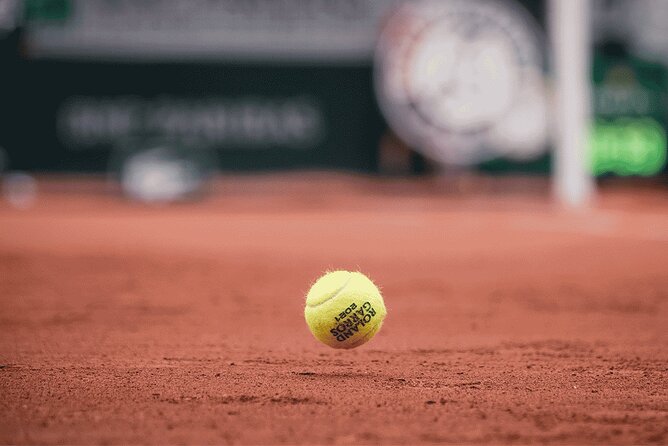
- Walk the players’ route: See the corridor that leads from the changing rooms toward the main clay court.
- Visit the press rooms: Learn how players face reporters after one of tennis’s biggest matches.
- Stand near center-court history: The tour includes access connected with the main stadium, including Philippe-Chatrier areas when available.
- Expect tennis stories: Guides often bring up Rafael Nadal, Federer, Graf, French tennis, and memorable Roland Garros moments.
- Allow for stairs and changing access: The route takes about 90 minutes, but event work can make certain spaces unavailable.
- Shop before or after: The Roland-Garros boutique is open from 9:30 a.m. to 6:30 p.m., with a 10 percent merchandise discount noted during the tour experience.
Why Roland Garros feels different from an ordinary stadium tour
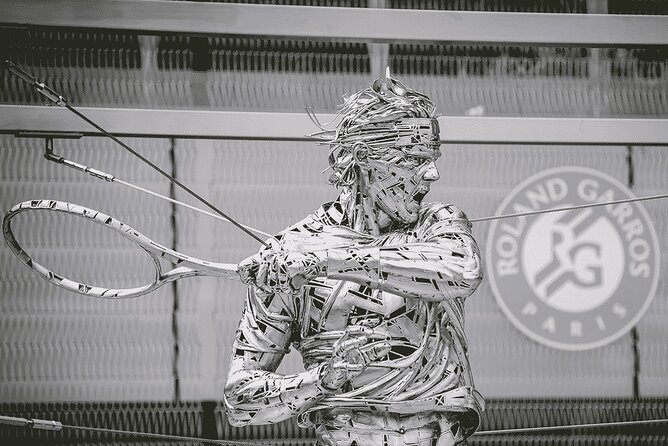
Roland Garros is not simply a sports arena with rows of seats. Its identity is tied to clay-court tennis, long rallies, sliding footwork, red dust, and the French Open’s very particular sense of ceremony.
This tour works because it takes you away from the public view. You see the parts of the tournament that television usually hides: where players prepare, where journalists work, and how competitors move toward the court before facing thousands of people.
I especially like that the route connects different sides of the event. The locker rooms show the player experience. The press rooms reveal the media machine. The presidential stand gives you a view of the official side of the tournament. The player corridor links everything together and gives the visit a clear story.
If you have only seen Roland Garros during the tournament on television, the visit can change how you understand it. The court is no longer just a background for a final. You begin to picture the complete journey, from preparation to match to press conference.
A few more Paris trips worth weighing up
- Paris: Louvre Museum Timed-Entrance Ticket
★ 4.6 · 71,977 reviews - Disneyland® Paris 1-Day Ticket
★ 4.6 · 49,412 reviews - Paris: Versailles Palace and Gardens Full Access Ticket
★ 4.6 · 41,579 reviews
Starting at 1 Avenue Gordon Bennett
The official meeting point is 1 Avenue Gordon Bennett, 75016 Paris, with the tour ending at the Roland-Garros boutique at 2 Avenue Gordon Bennett.
This is the part that deserves careful planning. The stadium grounds do not always make the tour entrance obvious from the street. A side entrance may be easy to find on a map, but not easy to understand once you arrive. Some visitors have had trouble getting clear directions from security, particularly when trying to reach the shop or the correct starting area.
I recommend arriving early and allowing time to ask questions calmly. Keep your mobile ticket ready, and do not assume a guard at every gate will know the tour details. The instructions say to arrive 15 minutes before departure, and this is not a suggestion you should ignore. Late arrival means you can be turned away.
The tour has a maximum of 30 people. That is not a tiny private group, but it is small enough for a guide to speak to the group without a microphone in every corner. The quality can depend on the guide. Guides such as Lionel have been praised for making the route lively and interactive, while one poor experience involved a guide who arrived late and did little to involve the group.
The changing rooms and the player experience
The changing rooms are among the strongest parts of the visit. A regular ticket to a tennis tournament lets you watch the match, but it does not show you where players prepare before walking onto court.
Here, you get a better sense of the human side of the French Open. The rooms are linked to the rituals before competition: changing clothes, gathering focus, discussing tactics, and waiting for the call to play. The attraction is not decoration. It is the knowledge that the world’s best players have used these spaces before stepping into the Paris sun.
The tour also brings attention to the player route. You follow the corridor leading toward the clay court, the same broad transition from private preparation to public pressure that players experience on match days.
That corridor may be more meaningful than a photo from the stands. It shows the physical distance between the locker room and the court, while the guide’s stories help you imagine the nerves and excitement packed into that walk.
Fans of Nadal often enjoy the references to his long connection with Roland Garros. Plaques and displays connected with his achievements are a special point for many visitors. You may also hear stories about Federer, Graf, and other champions who helped shape the tournament’s reputation.
The guide’s storytelling matters here. A passionate guide can turn a hallway into a memorable part of the visit. A flat presentation can make the same hallway feel like an ordinary passage. If your tour includes a guide such as Lionel, expect a more animated approach, but the exact guide is not guaranteed.
Press rooms, interviews, and the tournament machine
The press rooms add an important layer. Tennis fans often focus on the serve, the break point, and the trophy ceremony. The press conference afterward is part of the professional athlete’s job, yet it usually receives less attention.
At Roland Garros, you can see where players answer questions after the match. That makes the tournament feel larger than the action on the court. A Grand Slam event needs reporters, photographers, public relations staff, officials, and many people working behind the scenes.
I find this part useful even if you are not a serious tennis expert. It explains how the event reaches the outside world. A dramatic match does not end when the final ball lands. The player still has to talk about the result, face difficult questions, and explain what happened.
The press areas also help you picture the difference between attending a match and working at the French Open. From the spectator seats, you see the polished show. Behind the scenes, you see the practical spaces that keep the show moving.
The guide may point out small details and connect the rooms with famous tournament moments. That is where a good tour becomes more than a building visit. You are not only looking at doors and chairs. You are learning how Roland Garros handles the attention that comes with one of tennis’s major events.
A completely different sort of day in Paris:
- Paris: Evening River Cruise with Music
★ 4.4 · 22,721 reviews - Paris: Eiffel Tower Entry Ticket with Optional Summit Access
★ 4.4 · 20,035 reviews - Paris: Eiffel Tower Summit or Second Floor Access
★ 4.3 · 17,248 reviews - Paris: Louvre Guided Tour with Reserved Access & Boat Cruise
★ 4.3 · 16,353 reviews
The presidential stand and Philippe-Chatrier access
The presidential stand gives you a different view of Roland Garros. It represents the official and ceremonial side of the French Open, rather than the player or media experience.
Access to the main stadium is a major reason to book this tour, but you should keep expectations flexible. The exact court view can depend on what is happening at the stadium. One visit took place while an event was being prepared, with the court covered by a platform and photography restricted.
Other tours have included access around Philippe-Chatrier, the central stadium, and a close look at the clay surface. Some people even stepped onto the court when the guide did not object, but that should not be treated as part of the promised program. Follow the guide’s instructions and do not cross barriers for a better photograph.
The tour is strongest when you can connect the stadium spaces with the player route. Standing near the court entrance after seeing the changing rooms gives you a much better picture of the competition than simply sitting in a seat.
Still, this is not a full exploration of every part of the grounds. One limitation is that the visit may not include the smaller stadiums or outer courts. If you want to see every court at Roland Garros, this 90-minute route may feel selective.
How much walking should you expect?
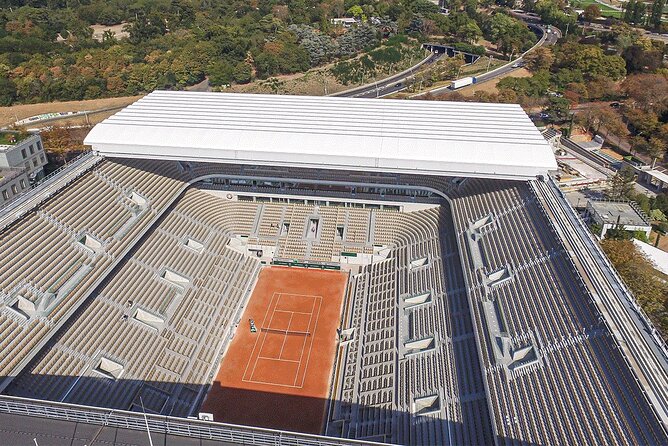
The tour lasts about an hour and 30 minutes, but it is not a seated presentation. Expect to walk through the grounds and use stairs. Comfortable shoes are a smart choice.
The pace should be manageable for most people, since most participants can take part, but the tour is not ideal if stairs or extended walking are difficult for you. The route moves through working stadium spaces, so you may pause while the guide explains a room or waits for access.
Use a bathroom before the tour ends. The boutique itself does not have a bathroom, and it may not be possible to return to the stadium after the guide leaves. A public bathroom across the street in the garden may be available, but it is better not to depend on that option.
Photography rules can also vary by area and by day. If an event is being prepared, access and photos may be limited. The attraction is the access itself, not a promise that every room will be open on every visit.
English tours, group size, and guide quality
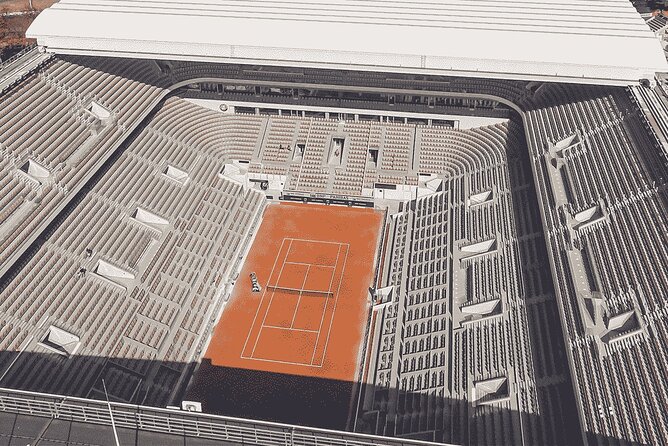
The advertised language is English. Some visits have involved mixed-language groups, and one guide handled three languages while accommodating English speakers. That can work well, but it may also mean the commentary takes longer or feels less detailed in one language.
The guide is a big part of the experience. The best guides tell stories about players, explain the tournament’s routines, and point out details you might otherwise miss. They also keep the group together, which matters in a large sports complex with several doors and corridors.
There have been occasional problems with late starts and unclear group arrangements. One group had difficulty understanding whether there were separate groups labeled A and B. Another group began late because the guide was nearby but did not make contact at the expected meeting point.
These issues do not describe every visit, but they are good reasons to arrive early, stay alert, and keep the confirmation details available. Once the tour starts, the experience is generally much stronger than the initial meeting process.
Is $25.77 a fair price?
At about $25.77, this is a good-value Paris activity if you care about tennis. A general sightseeing tour may show you the outside of Roland Garros, but this visit takes you into working areas that are normally reserved for players, officials, and media.
The value comes from access rather than length. Ninety minutes is enough to see the main behind-the-scenes areas without taking an entire day from your Paris plans. You do not receive food, drinks, or transportation, but those exclusions are reasonable for a stadium visit.
The fee includes the guided entrance tickets, and the experience uses a mobile ticket. A 10 percent shop discount can add a little extra value if you plan to buy French Open clothing, souvenirs, or tennis items. The boutique is open from 9:30 a.m. to 6:30 p.m., so check its hours against your tour time.
For a casual sports fan, the price may be harder to justify if the central court is partly closed or smaller outer courts are not included. For someone who follows the French Open, plays tennis, or has a favorite Roland Garros champion, the cost is modest compared with the access.
Who will enjoy this most?
I would choose this tour for:
- Tennis fans who want more than a seat in the stands
- Nadal supporters interested in his Roland Garros legacy
- Families with children who play tennis
- Visitors who have already attended the French Open and want to understand what happens behind the public areas
- Sports fans interested in media, player preparation, and major-event organization
It can also work as a distinctive Paris stop for someone who has already seen the major art museums and monuments. The setting is different from central Paris, and the experience feels tied to a real sporting institution rather than a standard sightseeing route.
I would think twice if you are looking for a broad tour of the entire grounds. The route focuses on selected behind-the-scenes areas, and the smaller stadiums or outer courts may not be included. I would also reconsider if you dislike stairs, need a guaranteed schedule, or want to wander independently.
Practical tips for a smoother visit
Book early if your Paris dates are fixed. The tour is often reserved about 50 days ahead, especially for the English option.
Arrive at least 15 minutes before the start time. Have your mobile ticket open before reaching the entrance. Because directions at the gates can be unclear, build in extra time rather than arriving exactly at departure.
Wear comfortable shoes. This is a walking tour with stairs, not a quick look from one seat.
Ask about current access if the stadium is preparing for an event. Some rooms may be closed, the court may be covered, and photography rules can change.
Visit the boutique before or after the tour if you want official merchandise. The tour ends there, but remember that the shop does not provide a bathroom.
Free cancellation is available when you cancel at least 24 hours before the local start time. Changes or cancellations made later are not accepted for a refund.
Should you book the Roland Garros stadium tour?
Book it if tennis is part of your reason for visiting Paris. The changing rooms, press rooms, presidential stand, and player corridor give you access to the tournament’s private side. The route also brings the French Open’s champions closer through plaques, stories, and places linked with their careers.
The strongest visits depend on a guide who cares about tennis and keeps the group together. Most of the time, that makes the tour lively and informative, but occasional late starts, unclear meeting instructions, or uneven guiding can affect the experience.
For about $25.77, I think the value is good, especially for Nadal fans, regular tennis players, and anyone who has watched Roland Garros on television for years. Go with comfortable shoes, arrive early, keep your expectations flexible about court access, and you will get a memorable look at how this famous clay-court tournament works from the inside.
FAQ
Where does the Roland Garros stadium tour start?
The tour starts at 1 Avenue Gordon Bennett, 75016 Paris, France.
Where does the tour end?
The tour ends at the Roland-Garros boutique at 2 Avenue Gordon Bennett, 75016 Paris, France.
How long does the tour last?
The tour lasts approximately one hour and 30 minutes.
Is the tour offered in English?
Yes. The experience is offered in English.
What areas can I see during the tour?
The route includes the press rooms, changing rooms, presidential stand, and the corridor leading players toward the clay court. Access can change if stadium activity makes a space unavailable.
Is transportation included?
No. Transfers are not included, so you must make your own way to the meeting point.
Is food or drink included?
No. Food and drinks are not included.
How early should I arrive?
You should arrive 15 minutes before the tour begins. Latecomers will not be accepted, and no refund is available for missing the start.
Can I cancel for a refund?
Yes. You can cancel up to 24 hours before the experience begins for a full refund. Cancellations or changes made less than 24 hours before the start time are not accepted.
Recently added around Paris
- Private Half-Day Guided Tour of Paris★ 4.5 · 48 reviews
- 2 hour outdoor group activity in Paris: SAINT GERMAIN★ 5.0 · 48 reviews
- Paris Dinner Show Opera Bel Canto★ 4.5 · 48 reviews
- Paris Vintage Tour by Night on a Sidecar with Champagne★ 5.0 · 48 reviews
- Secrets & Scandals of the Louvre – Limited to 6 Guests★ 5.0 · 48 reviews
- Paris Photoshoot: Eiffel Tower Exclusive Private Experience★ 5.0 · 48 reviews
- Paris: Louvre Mona Lisa Discovery Guided Tour with Ticket★ 4.9 · 48 reviews
- From Paris: Versailles Full-Day Guided Tour with Lunch★ 4.9 · 48 reviews
Paris Tours, compared.

Paris: Versailles Palace and Gardens Full Access Ticket
Read our review →

Paris: Eiffel Tower Entry Ticket with Optional Summit Access
Read our review →
Paris: Eiffel Tower Summit or Second Floor Access
Read our review →
Paris: Louvre Guided Tour with Reserved Access & Boat Cruise
Read our review →