Reviewed · VIP
Craft a Unique Parisian luxury bag
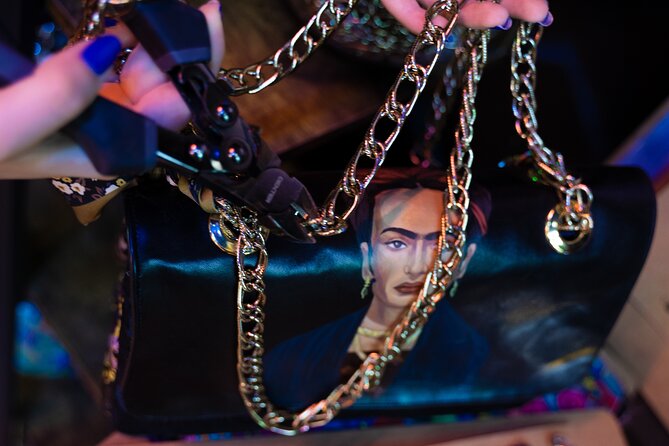
Choose fabric, shape, and sparkle. This three-hour workshop in central Paris lets you build a one-of-a-kind handbag with help from fashion specialists, even if your sewing skills begin and end with replacing a button. I like the hands-on design choices, especially the colorful fabrics and accessories, and I like the small-group setup, capped at eight people. The main catch is that the advertised price is only the starting point for many designs.
You meet at MiniMeLand Paris on Rue de Turbigo, in the central 2nd arrondissement, for a morning or afternoon session. I also like that guides such as Muna, Mona, Morgan, Moon, and Odélia have earned praise for their patience and encouragement. Still, you should allow closer to four hours, and possibly much longer for a complicated hard-sided bag, rather than treating three hours as a firm appointment.
In This Review
- Key points to know before you book
- Arriving at the Rue de Turbigo atelier
- Choosing the bag shape and the Parisian look
- Cutting patterns and learning what you actually make
- Adding handles, lining, chains, and sparkle
- Soft bags, hard bags, and the time question
- How the finished handbag measures up
- The real value at $173.75
- Who will enjoy this most
- Useful planning details for Paris
- Should you book this Paris bag workshop?
- FAQ
- Where does the purse-making workshop begin?
- How long does the workshop last?
- Do I need sewing experience?
- How many people can join the class?
- Is the $173.75 price the full cost of the handbag?
- Can I cancel for a full refund?
Key points to know before you book
- You design a real handbag: Choose the bag shape, fabric, stitching, lining, handles, chain, and decorative extras.
- The class suits beginners: A fashion guide talks you through the process, while professional sewing staff handle some of the more technical assembly.
- The price needs careful planning: The $173.75 booking price includes a credit toward the finished bag, but upgrades and separate bag components can add $100 to $300 or more.
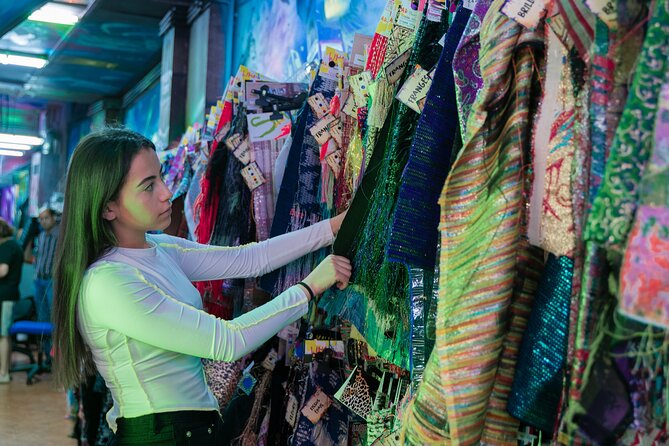
- Fabric selection is the heart of the activity: You can choose from designer and upcycled textiles, though not every fabric comes from a major French label.
- The advertised three hours is flexible: Some participants finish in roughly four hours, while difficult fabrics or construction problems can turn the workshop into an all-day affair.
- It works best as a relaxed Paris activity: Keep the rest of your schedule open, especially if you choose a hard bag or heavily decorated material.
Arriving at the Rue de Turbigo atelier
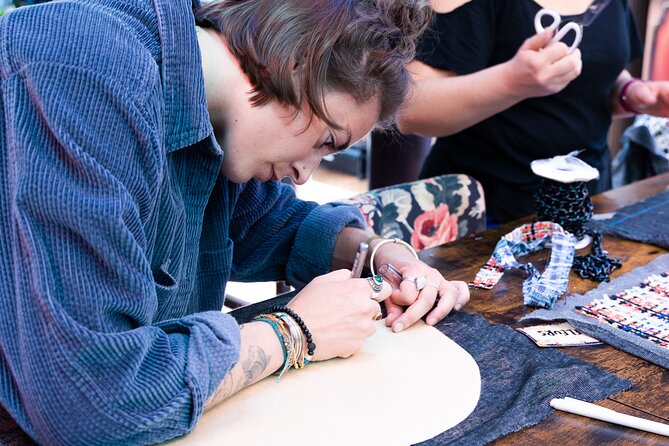
You make your own way to MiniMeLand Paris, at 25 Rue de Turbigo, 75002 Paris. The address is in central Paris and close to public transportation, so it can fit neatly into a day spent around the 2nd arrondissement, the Marais, or the grand department stores.
This is not a quiet, minimalist couture salon. The shop is colorful, playful, and full of sparkle, with accessories, hats, decorated jackets, and other fashion pieces displayed around the premises. That theatrical setting is part of the appeal. You start thinking creatively before you reach the worktables.
Your morning or afternoon appointment begins with a welcome and an explanation of the process. The group is meant to be small, with a maximum of eight participants in the supplied details, although one account found the class felt crowded. A small class should give you useful access to the instructor, but the amount of personal attention can depend on how many people need help at the same moment.
I would arrive ready to make decisions. You will choose a bag style, then select materials and details. If you are shopping with a friend, daughter, sister, mother, or grandmother, the design stage gives everyone something to discuss. It is social without requiring anyone to be an expert.
A few more Paris trips worth weighing up
- Paris: Louvre Museum Timed-Entrance Ticket
★ 4.6 · 71,977 reviews - Disneyland® Paris 1-Day Ticket
★ 4.6 · 49,412 reviews - Paris: Versailles Palace and Gardens Full Access Ticket
★ 4.6 · 41,579 reviews
Choosing the bag shape and the Parisian look
The first major decision is the style and size of your bag. Different shapes are available, including soft bags and hard bags, with several size options. The small hard-sided style can look especially polished, but it also requires more construction and may take longer.
Next comes the fabric. This is where the workshop feels most like a fashion studio. You can handle a wide range of colorful textiles, compare textures, and work out how several panels will look together. Designer and upcycled fabrics are part of the selection, but you should not assume every material is from Chanel or another famous French fashion house.
That distinction matters. The workshop teaches you about high-end French fashion workmanship and may offer fabrics associated with luxury production, but this is not a chance to make an official Chanel handbag. You are creating a custom piece from the materials available at the atelier.
The color tags and price categories deserve close attention. A fabric that initially appears to fit the included allowance may be placed in a higher pricing category later, so ask the staff to confirm the price before you cut anything. Several people enjoyed the design process but wished the full cost had been totaled earlier.
A good strategy is to choose your main fabric first, then limit the number of contrasting materials. It is easy to get carried away when faced with glitter, beads, rich textures, and bold colors. Too many fabrics can make the bag cost more and may produce a busier result than you intended.
Cutting patterns and learning what you actually make
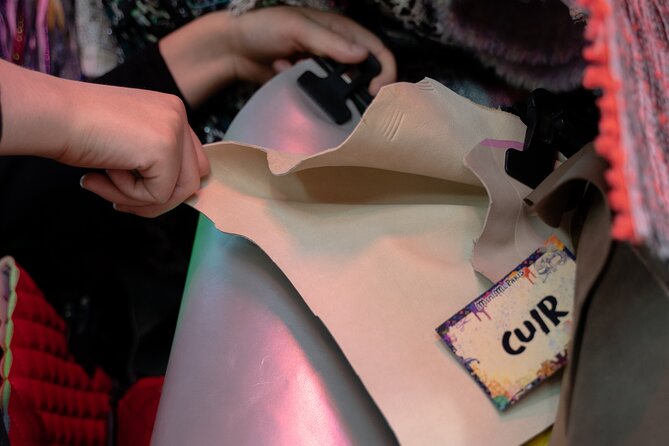
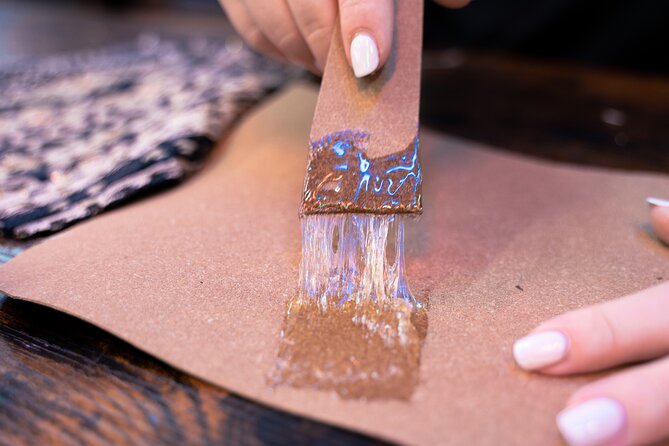
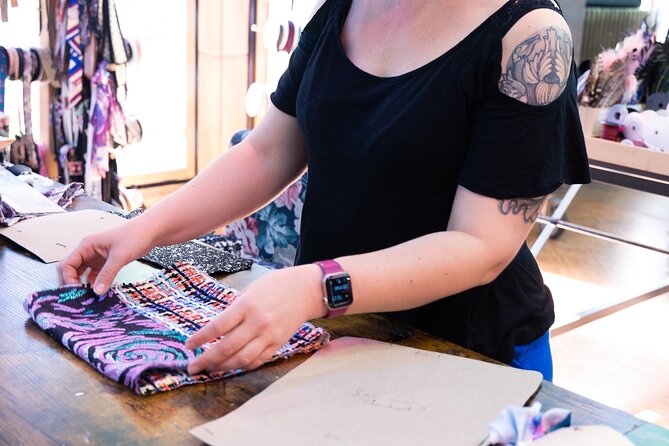
Once you have settled on the design, you receive pattern pieces for the bag. You cut the fabric to match the pattern and work with interfacing, which helps give the material structure.
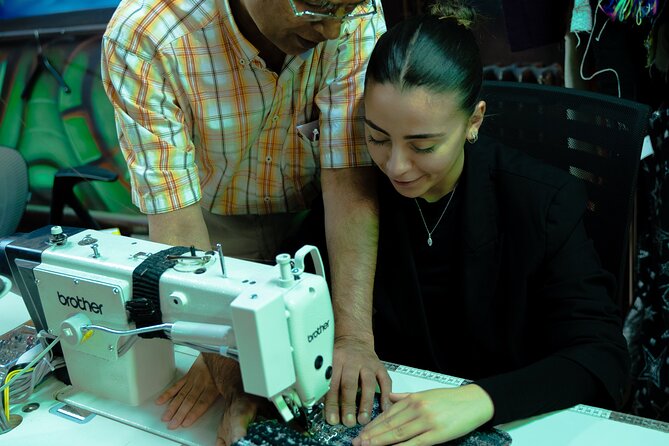
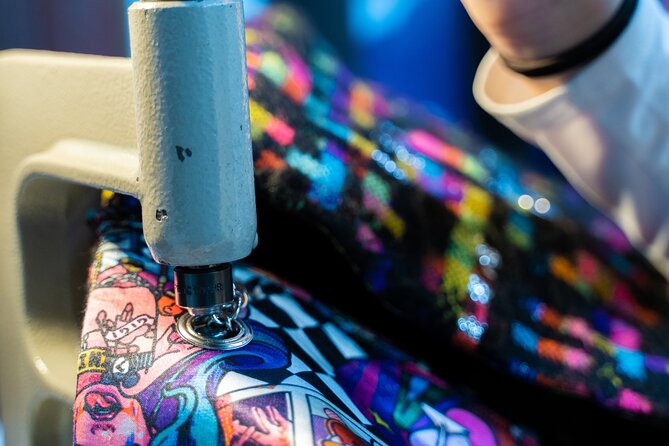
This is the most important point to understand: you participate in the making, but you do not necessarily construct every part yourself. Depending on the bag and your progress, you may cut pieces, attach or press interfacing, sew certain sections, and help place hardware. Professional sewing staff then complete technical work, assemble sections, or fix parts that need greater precision.
For a beginner, that arrangement is helpful. You can focus on the creative decisions without being left alone with a difficult machine or a complicated seam. People who sew regularly may feel shortchanged, however. One experienced sewer expected to do more of the construction and found that a professional took over because it was faster.
I would ask at the start which steps you will personally complete. If you want a true sewing lesson, say so clearly. If your priority is leaving Paris with a beautiful custom accessory, the staff-led construction may feel like a sensible division of labor.
The instructor remains important here. Muna and Mona are praised for patience, while Morgan, Moon, and Odélia are described as friendly, encouraging, and attentive. Alex, one of the tailors, is also singled out for careful assembly. The staff’s willingness to guide you is one of the strongest reasons to choose this activity over trying to make a bag alone.
Adding handles, lining, chains, and sparkle
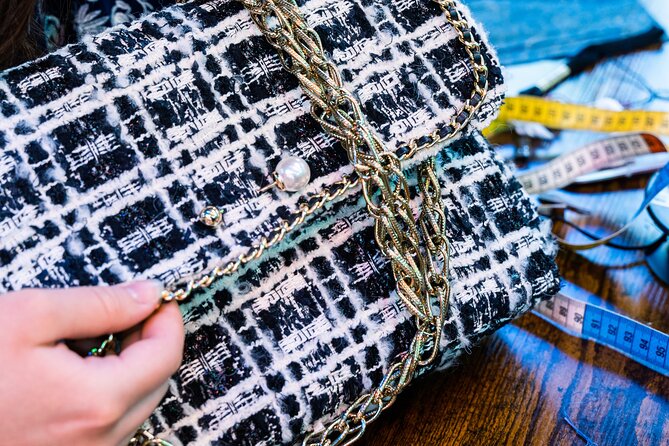
The bag is not just fabric panels. You may choose a lining, handle or chain, closures, patches, brooches, and other accessories. These details can change the whole appearance of the finished piece, from restrained and wearable to full Parisian party bag.
This is also where the budget can rise quickly. Some accounts describe separate prices for the sides, top, lining, chain, handle, and decorative pieces. The initial booking amount is applied toward the creation, but it does not mean every possible component is included at no extra cost.
Ask for a running total before you approve your final combination. Staff have been described as transparent about prices, and a price sheet is available, but you still need to pay attention. The clearest way to avoid an unpleasant surprise is to set your maximum budget before the workshop and tell the guide.
You can keep the design simple and stay closer to the included credit, or treat the class as a luxury splurge. Some people paid an additional $100 to $300, while one account reported a much higher final total after selecting numerous premium parts. Those are very different value propositions.
At its best, the extra cost buys a bag that reflects your taste and carries a story. At its worst, you pay a premium for a product you may not use often. Think of the money as covering both the finished accessory and the creative session, not simply the retail value of a handbag.
A completely different sort of day in Paris:
- Paris: Evening River Cruise with Music
★ 4.4 · 22,721 reviews - Paris: Eiffel Tower Entry Ticket with Optional Summit Access
★ 4.4 · 20,035 reviews - Paris: Eiffel Tower Summit or Second Floor Access
★ 4.3 · 17,248 reviews - Paris: Louvre Guided Tour with Reserved Access & Boat Cruise
★ 4.3 · 16,353 reviews
Soft bags, hard bags, and the time question
The official duration is approximately three hours. That can be realistic for a straightforward design, a cooperative group, and a smooth assembly. Several participants finished in about four hours, while one morning class ended around 1 p.m. after beginning at 9 a.m.
Allow more time for a hard bag. Structured designs need more preparation, careful fitting, and drying or setting time. Beaded fabrics can also slow the process because beads may need to be removed or adjusted before the material can pass safely through a sewing machine.
The timing problem is not just theoretical. Some people had to wait while fabric was prepared or while a tailor finished technical work. One particularly difficult session stretched far beyond the planned class, with repeated return visits before the bag was ready.
For that reason, I would not book a museum entry, train, airport transfer, dinner reservation, or theater ticket immediately afterward. If you have only 36 hours in Paris, this workshop can consume a large part of your visit. With a relaxed schedule, the extra time becomes less stressful.
An afternoon class deserves the same caution. You may not leave at the stated three-hour mark, especially if your materials require special treatment. The activity ends back at the meeting point, but the practical end time can vary.
How the finished handbag measures up
The finished bag is the reward, but expectations should be realistic. You leave with a custom-made item created from your selected fabrics and accessories. It will not look like a standard souvenir, and the combination of materials makes it personal.
Many designs turn out beautifully, especially when the maker takes time with color and pattern choices. The best results come from restraint. A strong primary textile, one complementary panel, and a well-chosen handle may look more polished than every glittery accessory on the table.
There is some risk of construction mistakes. A purse can be assembled incorrectly or need repair, and one account described leaving with a bag that was not put together as intended. That appears to be an exception rather than the norm, but it is a reason to inspect the bag before you leave.
Check the seams, hardware, lining, closures, and strap attachment points. If something looks wrong, raise it immediately while the team is still working on the piece. A custom bag is difficult to exchange later because it was made to your choices.
The finished item may also be more decorative than practical. One unhappy participant felt the result looked inexpensive despite the extra cost. That reaction is worth considering if you want a timeless everyday purse rather than a conversation piece.
The real value at $173.75
At $173.75 per person, this is not a bargain craft class. It becomes better value if you enjoy fashion, design, group activities, and the idea of bringing home something you helped create.
The booking payment functions as a credit toward the bag, described in the supplied experience details as roughly €145. The remaining price depends on your selections. A plain design may keep the extra cost manageable, while premium fabrics, larger sizes, hard construction, special linings, chains, and embellishments can push the final amount much higher.
I see three ways to judge the price:
- If you want a low-cost souvenir, skip it.
- If you want a professionally finished bag and an unusual activity, it may be worthwhile.
- If you want to learn serious handbag construction, ask exactly how much sewing you will do before booking.
The strongest value comes for people who would happily pay for a creative afternoon even if the bag were not perfect. You are buying time with family or friends, access to unusual fabrics, instruction, and a custom accessory. That is a different purchase from simply walking into a department store.
Price clarity is improving, but you should still take responsibility for the final number. Do not assume the advertised rate covers all materials. Before cutting fabric, confirm the cost of every major component.
Who will enjoy this most
This is a natural choice for fashion fans, accessory lovers, creative families, and friends looking for a shared Paris activity. It can work across generations, and children may enjoy the colors and decoration, though the supplied information only confirms that most participants can take part, not a specific minimum age.
You do not need sewing experience. A guide supports you throughout, and professional staff handle the more demanding assembly. That makes the workshop approachable for someone who wants the satisfaction of making a bag without mastering an entire trade in three hours.
The activity is less suitable if you dislike making many design decisions, need a strict finish time, or want every stitch to be your own. It is also a poor fit for a tightly packed Paris itinerary.
Small groups are part of the appeal, but the class can still feel full when several people need assistance. A private booking or smaller party may be worth asking about if you are organizing a birthday or family event, since group purse-making sessions have been arranged before.
Useful planning details for Paris
The experience is offered in English and uses a mobile ticket. You make your own way to the meeting point, and the activity returns there at the end. The location is near public transportation, which makes it easier to reach without arranging a private transfer.
The workshop is booked well ahead on average, around 42 days in advance. If you have a particular morning or afternoon in mind, reserve early rather than hoping to find a last-minute opening.
Free cancellation is available if you cancel at least 24 hours before the local start time. Changes or cancellations made inside that window are not accepted for a refund. The class also requires a minimum number of participants, so a cancellation by the provider would lead to another date or a full refund.
Should you book this Paris bag workshop?
Book it if you want a creative, social fashion activity and you will enjoy choosing fabrics as much as carrying the finished purse. The patient guides, colorful materials, and custom result can make this one of the more personal souvenirs you bring home from Paris.
Skip it if you need a fixed three-hour schedule, want a simple all-inclusive price, or expect to sew the entire bag yourself. My best advice is to reserve a relaxed day, choose a straightforward design, avoid heavily beaded fabric unless you have extra time, and request a complete price estimate before cutting.
With those expectations, this is a fun way to spend part of a Paris visit. It is not the cheapest handbag you will ever own, but it can be a memorable one.
FAQ
Where does the purse-making workshop begin?
It begins at MiniMeLand Paris, 25 Rue de Turbigo, 75002 Paris, France. The activity ends back at the same meeting point.
How long does the workshop last?
The stated duration is approximately three hours. You should allow extra time because some sessions last about four hours, and difficult fabrics or hard-sided bags can take considerably longer.
Do I need sewing experience?
No. The experience is designed for participants without sewing experience, and a fashion guide provides instruction and support throughout the process.
How many people can join the class?
The supplied details state that the activity has a maximum of eight participants. It is described as a small-group workshop.
Is the $173.75 price the full cost of the handbag?
No. The booking price includes a credit toward the bag, but fabrics, handles, chains, lining, panels, and accessories may cost extra. Confirm the complete price before you cut your materials.
Can I cancel for a full refund?
Yes, if you cancel at least 24 hours before the experience start time. Cancellations or changes made less than 24 hours before the start time are not refunded or accepted.
Recently added around Paris
- Private Half-Day Guided Tour of Paris★ 4.5 · 48 reviews
- 2 hour outdoor group activity in Paris: SAINT GERMAIN★ 5.0 · 48 reviews
- Paris Dinner Show Opera Bel Canto★ 4.5 · 48 reviews
- Paris Vintage Tour by Night on a Sidecar with Champagne★ 5.0 · 48 reviews
- Secrets & Scandals of the Louvre – Limited to 6 Guests★ 5.0 · 48 reviews
- Paris Photoshoot: Eiffel Tower Exclusive Private Experience★ 5.0 · 48 reviews
- Paris: Louvre Mona Lisa Discovery Guided Tour with Ticket★ 4.9 · 48 reviews
- From Paris: Versailles Full-Day Guided Tour with Lunch★ 4.9 · 48 reviews
VIP, compared.

Seine River Dinner Cruise with Live Singer by VIP Yacht de Paris
Read our review →
Nice: Party Bar Crawl with Club VIP, 6 Shots, and Games
Read our review →
Nice: Pub Crawl Yellow – Social Bars, Games & VIP Club Entry
Read our review →
Riviera Bar Crawl Party with Free Shots and VIP Entry
Read our review →

Catacombs of Paris Semi-Private VIP Restricted Access Tour
Read our review →
Nice: Bar/Pub Crawl with Free Shots and VIP Entry
Read our review →