
Reviewed · CITY TOURS
Marseille: Essential Guided Walking Tour of the City
Marseille rewards a good pair of shoes. This 150-minute walk links the city’s oldest quarters, the Vieux Port, Cannebiere, Saint-Victor, and Le Pharo, with local guide Charles adding history, humor, and practical advice along the way. I like the small groups, limited to eight people, and the way the route mixes major sights with quieter streets. I also like that Charles uses old photos and maps to explain how Marseille changed over time. The main consideration is the 5-kilometer route, with hills and uneven city streets, so this is not a good fit for wheelchair users or anyone hoping for a gentle, mostly seated introduction.
If you have only a short stay, this tour gives you a useful first look at Marseille without reducing the city to a postcard. You will hear about its Greek and Roman beginnings, its wartime troubles, its maritime life, and its modern neighborhoods. At $41 per person, the value is strongest if you want context, local recommendations, and a clear sense of where to explore next.
In This Review
- Key points to know before you book
- Starting beneath La Major Cathedral
- Le Panier, where Marseille feels most personal
- Church of Accoules and the old streets
- Rue de la République and Marseille’s changing face
- The Vieux Port, Marseille’s natural gathering place
- Cannebiere and the everyday city
- Saint-Victor Abbey and a useful pause
- Le Pharo and the best wide-angle views
- What makes Charles a strong guide
- Price, group size, and physical demands
- Who should choose this Marseille walk
- Should you book this tour?
- FAQ
- Where does the Marseille walking tour begin?
- How long does the tour last?
- What languages does the guide speak?
- How large is the tour group?
- How far do you walk?
- Is the tour suitable for wheelchair users?
Key points to know before you book
- A compact route with plenty of variety: In about two and a half hours, you move from La Major Cathedral and Le Panier to the harbor, Cannebiere, Saint-Victor, and Le Pharo.
- Charles sets the tone: His bilingual French and English guiding, humor, old photographs, and personal recommendations are central to the experience.
- The group stays small: With no more than eight participants, you can ask questions and still hear the guide clearly.
- Expect a real city walk: The route covers about 5 kilometers and includes hills, streets, waterfront paths, and sightseeing stops.
- The ending brings wide views: Le Pharo gives you a fine place to look back toward Marseille and the Mediterranean.
- Bring your own refreshments: Food and drinks are not included, so carry water and dress for the weather.
Starting beneath La Major Cathedral
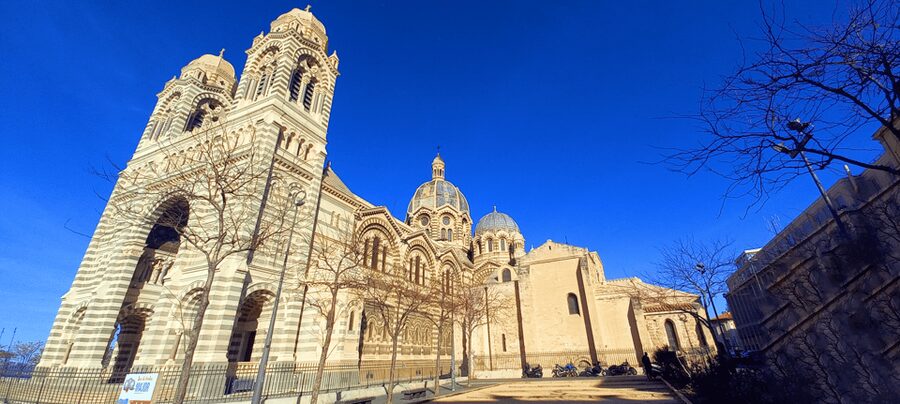
The meeting point is in front of Cathédrale Basilique Sainte-Marie-Majeure, usually called La Major. Look for Charles wearing a white cap. This is a memorable place to begin, with the cathedral’s Neo-Byzantine and Romanesque design giving you an immediate sense that Marseille is a city of layers.
The first guided visit lasts about 10 minutes. That may sound brief, but it works as an opening chapter rather than a full cathedral tour. You begin with the building, then widen the frame to Marseille itself, a city with around 2,600 years of recorded history.
I like this start because it places you near the waterfront while also putting the old city within reach. You are not beginning in a generic square or beside a tour bus. You start among one of Marseille’s major monuments, then continue on foot into the older streets.
More City Tours in Marseille
- Marseille: City Sightseeing Hop-On Hop-Off Bus Tour
★ 3.8 · 2,820 reviews - Marseille: City Highlights Guided Half-Day E-Bike Tour
★ 4.8 · 325 reviews - Marseille Shore Excursion: City Sightseeing Tour of Marseille
★ 4.0 · 321 reviews
Le Panier, where Marseille feels most personal
From La Major, the route turns into Le Panier, one of Marseille’s oldest districts. The neighborhood rises on a hillside above the Vieux Port and the sea, so you should expect some sloping streets and changes in elevation. This is part of the appeal, but it also explains why comfortable shoes matter.
The walk through Le Panier lasts about 30 minutes. Charles points out street art, painted walls, narrow lanes, and small architectural details that are easy to miss when you walk alone. The area has an artistic, bohemian feel, but the tour does not treat it as mere decoration. You get a sense of how old buildings, local life, and newer creative work sit side by side.
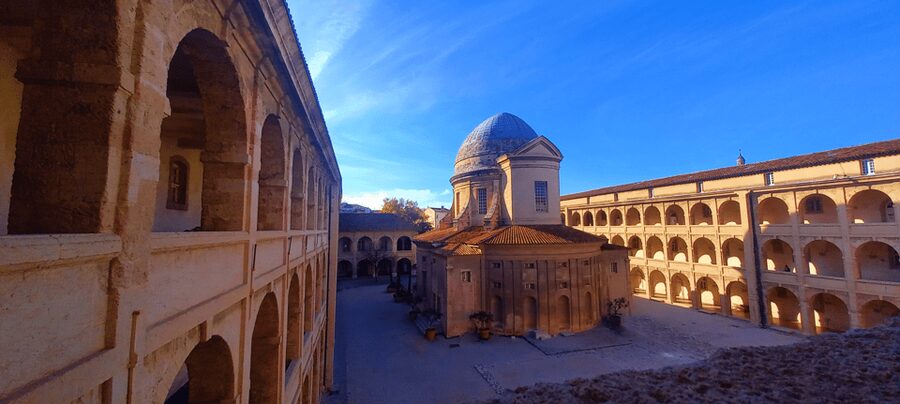
The Vieille Charité is one of the district’s key stops. This former hospital is one of Marseille’s most important historic buildings, and its presence helps explain the scale and purpose of the neighborhood. The calm Windmill Hill offers another change of pace. After the tighter lanes, the quieter setting lets you pause and take in the slope of the district.
This portion is especially useful early in your stay. You learn how to reach Le Panier, understand its shape, and spot areas worth revisiting at your own pace. You may also find that the neighborhood is less about checking off one monument and more about noticing how Marseille’s streets fit together.
Church of Accoules and the old streets
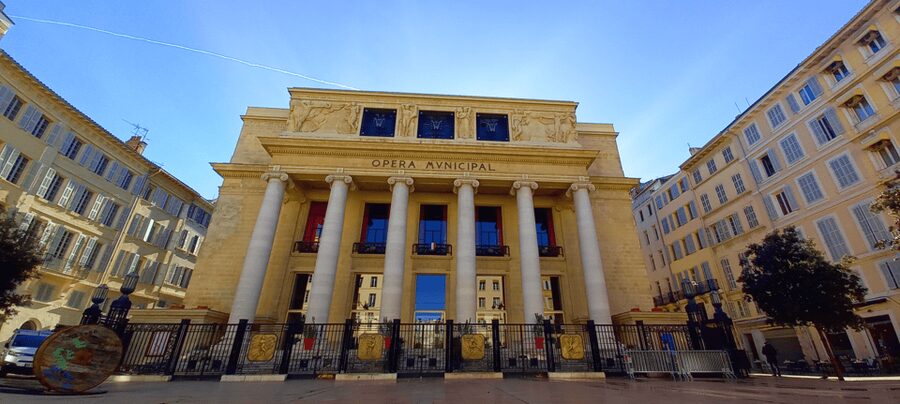
The itinerary continues to the Church of Accoules, with about 10 minutes for a guided visit. This stop adds another religious and historical marker to the route, but the larger value is the transition through the old quarter.
Charles uses stories and anecdotes to connect individual buildings to Marseille’s long past. His approach, based on the available details from the experience, is not simply to recite dates. He brings photographs and maps showing how the city looked before and how it developed. That can make the history easier to follow, especially if Marseille is your first stop in southern France.
This is also where a small group helps. You can ask why a building matters, how the district changed, or what to see later. Several people who joined the tour alone or with just one companion found the format personal and easy to follow. Charles is described as attentive to each person, not just the most vocal member of the group.
Rue de la République and Marseille’s changing face
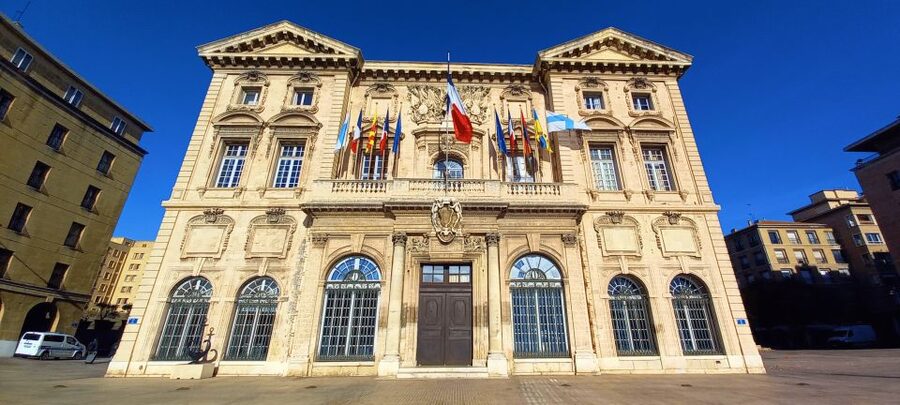
The walk then reaches Rue de la République, where you get about 10 minutes of sightseeing and explanation. This broad route offers a contrast with Le Panier’s narrow streets. Marseille can shift in character within a few minutes, and this part of the tour makes that change clear.
The route is not limited to ancient ruins or grand churches. It also shows how the city was reshaped over time. That balance is important. You see a Marseille that is old, but also one that has been rebuilt, expanded, argued over, and adapted.
I appreciate this kind of stop because it helps you read the city rather than simply photograph it. A guide can point out why one street feels formal and planned while another feels cramped and irregular. That context makes later independent walks more rewarding.
More Walking Tours in Marseille
- Marseille: Half-Day City Highlights Guided Walking Tour
★ 5.0 · 273 reviews - Marseille: No-Diet Club Local Food Tasting and Walking Tour
★ 4.8 · 173 reviews - Marseille: Walking Food Tour with Full Meal
★ 4.7 · 137 reviews - Marseille: Foodie Walking Tour of the Cours Julien District
★ 4.8 · 97 reviews
The Vieux Port, Marseille’s natural gathering place
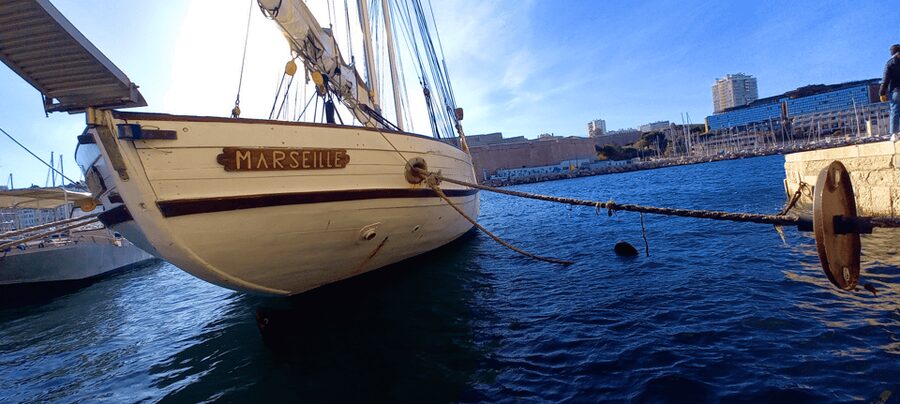
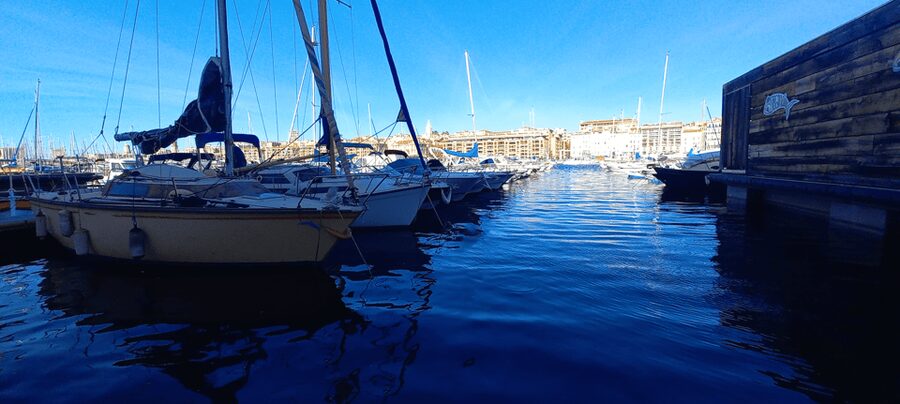
The Vieux Port receives about 15 minutes of guided sightseeing, though you will also pass through the harbor area as the tour continues. Fort Saint-Jean and Fort Saint-Nicolas guard the harbor from opposite sides, and boats and yachts fill the water between them.
This is the visual center of Marseille for many visitors, but the tour gives it more meaning than a quick photo stop. The port has been a focus of the city since ancient times. Its position explains much about Marseille’s identity, economy, and connection to the Mediterranean.
The harbor is lively, open, and full of movement. You may see picturesque boats bobbing in the water while cafes and waterfront activity frame the edges. Charles explains why this place mattered in the ancient Greek and Roman periods and why it remains central now.
Do not expect a long private viewing or a detailed fort interior visit. The tour is about orientation and interpretation. You see how the harbor relates to the surrounding neighborhoods, then continue along the city streets instead of remaining at the waterfront.
Cannebiere and the everyday city
The route takes you along Cannebiere, Marseille’s famous main street. Galleries, workshops, boutiques, cafes, bistros, and restaurants line the way. This section gives you a chance to see the city in motion, rather than only its monuments.
Cannebiere is useful for practical reasons too. If you want to return later for food, shopping, or a simple walk through central Marseille, you will already have a sense of the area. Charles also provides recommendations for museums, restaurants, and other activities, sometimes following up with suggestions for the rest of your stay.
That local advice is one reason I consider the tour more valuable at the beginning of a trip than at the end. You can use the information immediately. If you are visiting for just a day, it may also help you decide what deserves your limited free time.
The street section is not a quiet historical walk. Cars, pedestrians, shops, and city noise are part of the scene. If you want only secluded lanes and grand views, this will feel less polished. If you want to understand how Marseille functions as a living city, it earns its place.
Saint-Victor Abbey and a useful pause
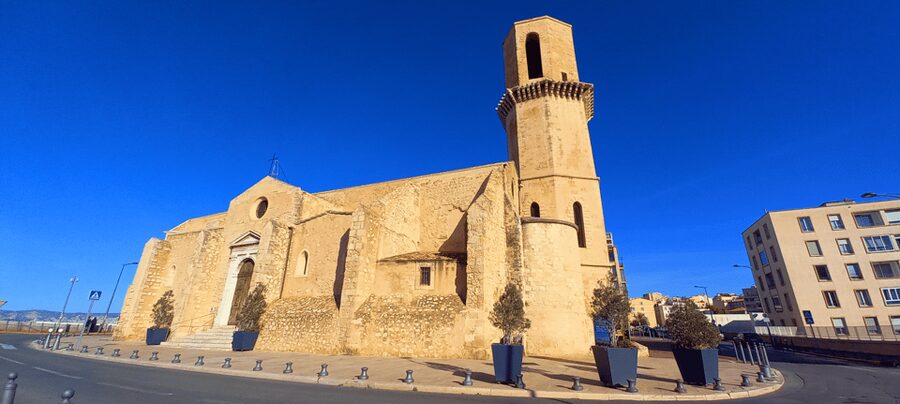
The walk continues to Abbaye Saint-Victor, with about 15 minutes for sightseeing and another 20-minute break. The abbey brings the focus back to Marseille’s religious and early history, while its position near the harbor links it to the wider story of the city.
The break matters. A 5-kilometer walk in Marseille is not a tiny stroll, especially when the route includes hills and stops in the sun. You should use the pause to drink water, rest your feet, and take in the views along the way.
Food and drinks are not included, so bring your own water and a snack if you need one. Sunglasses, weather-appropriate clothes, and comfortable shoes are sensible choices. One useful detail from the experience is that Charles can choose shaded stopping places when possible, which is helpful during hot weather.
The tour description gives the total time as 150 minutes, while some past outings have lasted a little longer than two and a half hours. Allow a bit of flexibility rather than scheduling a tight connection immediately afterward.
Le Pharo and the best wide-angle views
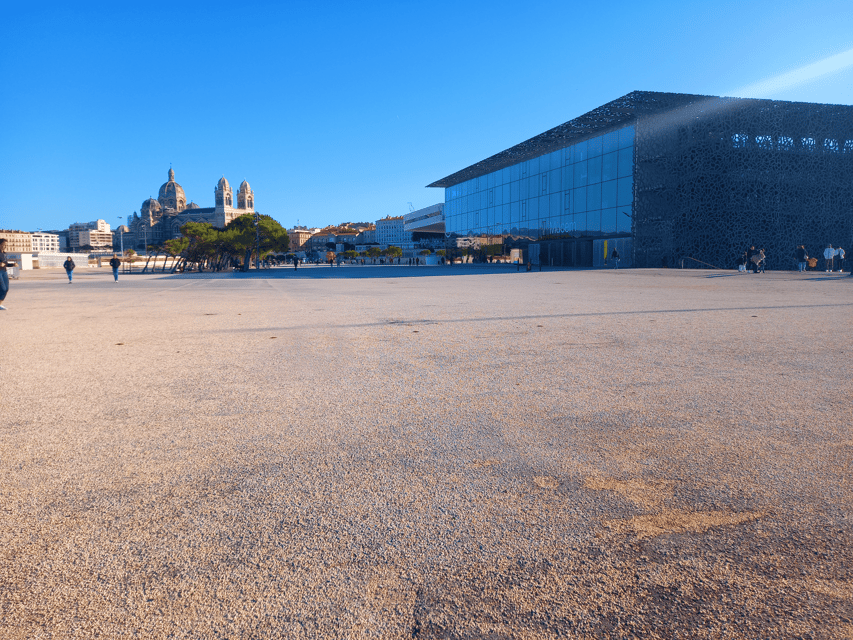
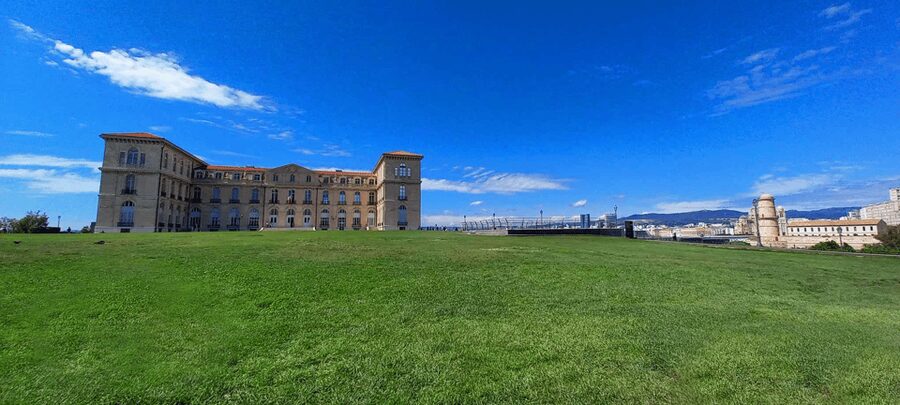
The final major stop is Palais du Pharo, reached after a 30-minute visit and walk. Emperor Napoleon III built the grand palace in the mid-19th century for Empress Eugenie. Its ornate exterior and broad terraces make it one of the more impressive architectural stops on the route.
Le Pharo is also where the tour opens up visually. After the lanes of Le Panier and the busy streets around the harbor, the terraces give you room to look across the water and back toward Marseille. This is the kind of closing view that helps tie the route together.
The palace is not presented as a long interior visit. The value comes from the setting, the exterior, and the sweeping outlook. You also get a final chance to connect the harbor, forts, old neighborhoods, and Mediterranean coast in one view.
From here, the tour can finish at Le Pharo or return toward the Old Port, depending on the arrangements for your group. That gives you some flexibility. If you plan to continue sightseeing, the Old Port is a convenient place to carry on. If you are ready for a break, Le Pharo offers a more open end to the walk.
What makes Charles a strong guide
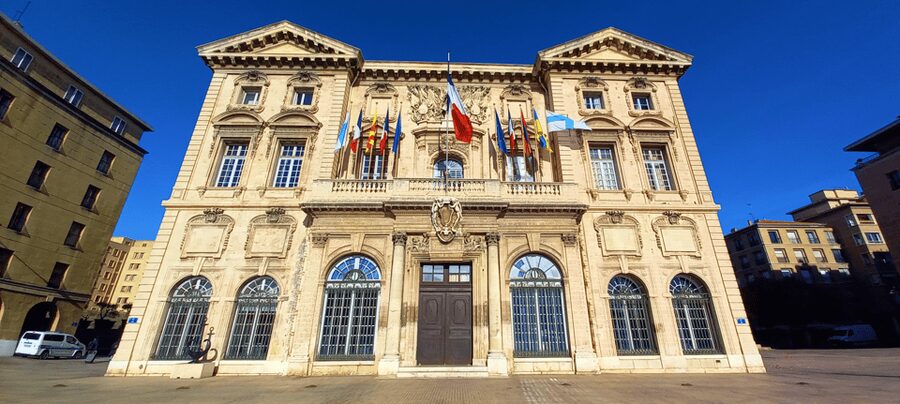
The clearest strength of this experience is Charles. He guides in French and English, and the English-language feedback consistently describes him as clear, warm, funny, and easy to understand. His interest in Marseille comes through in the way he connects dates, buildings, personal stories, and present-day life.
His use of old maps and photographs is particularly useful. Marseille has changed a great deal, and visual material helps you understand that change instead of trying to picture it from a list of names. His humor also keeps the historical material from becoming a string of facts.
Charles appears to adjust the walk to the group. He makes room for questions, gets to know participants, and offers restaurant and museum suggestions based on their interests. Solo participants have found the atmosphere welcoming, while couples and small groups have appreciated the personal attention.
Of course, a guide’s style is subjective. If you prefer to wander silently with an audio guide and stop only where you choose, a scheduled group walk may feel too structured. If you want conversation and explanation, Charles is a major reason to book this particular tour rather than simply following a map.
Price, group size, and physical demands
At $41 per person, the tour is fairly priced for a small-group walk led in two languages, especially if you value local advice and historical explanation. You are paying for more than a route between landmarks. You are getting a planned sequence, a guide who can answer questions, and help understanding places that might otherwise seem disconnected.
The group limit of eight is a real advantage. It keeps the walk from feeling like a parade and makes it easier to hear Charles in city streets. It also raises the chance of receiving useful suggestions for your own interests.
The physical demands deserve equal attention. The route covers approximately 5 kilometers and includes hills, old streets, and extended time on foot. It is not suitable for wheelchair users. Comfortable clothing, sturdy walking shoes, water, sunglasses, and protection suited to the weather are essential.
The tour offers free cancellation up to 24 hours before departure and a reserve-now, pay-later option. These terms are useful if your Marseille plans are still shifting, but the main booking decision should be your ability to manage the walking distance.
Who should choose this Marseille walk
I would choose this tour at the start of a first visit. It gives you a working map of Marseille, introduces the major districts, and leaves you with ideas for later meals, museums, and independent walks.
It suits history-minded visitors, first-time visitors, couples, solo participants, and anyone arriving with only a short window in the city. The small group and bilingual format also make it a good choice if you want to ask questions without feeling lost in a large crowd.
It may not suit you if you have limited mobility, dislike hills, need a very slow pace, or want a tour focused on one building in great depth. It also is not a food tour, and no drinks or snacks are provided.
Should you book this tour?
Book it if you want Marseille explained as a real city, not just a collection of attractive views. The route covers a lot, but it does so with a useful rhythm: cathedral, old quarter, harbor, main street, abbey, and palace terrace.
The strongest reasons to choose it are Charles’s engaging style, the small group, the old visual materials, and the practical recommendations for the rest of your visit. I would book it early, wear proper shoes, bring water, and leave room in the schedule in case the walk runs beyond the stated 150 minutes.
Skip it if the 5-kilometer route feels too demanding or if you prefer total freedom over a guided plan. For most able walkers making a first visit to Marseille, though, this is a well-shaped introduction with enough history to make the city’s rough edges, grand monuments, and seaside character easier to understand.
FAQ
Where does the Marseille walking tour begin?
The tour begins in front of Cathédrale Basilique Sainte-Marie-Majeure, also called La Major Cathedral. The guide wears a white cap.
How long does the tour last?
The stated duration is 150 minutes, or about two and a half hours. You should allow some extra flexibility because some tours have lasted a little longer.
What languages does the guide speak?
The live tour is available in French and English.
How large is the tour group?
The group is limited to eight participants.
How far do you walk?
The route covers about 5 kilometers and includes city streets, hills, waterfront areas, and sightseeing stops.
Is the tour suitable for wheelchair users?
No. The tour is not suitable for wheelchair users because of the route and walking conditions.
Recently added around Marseille
- Avignon, Les Baux, St Remy and Arles from MARSEILLE★ 4.5 · 48 reviews
- Marseille: Frioul Archipelago Catamaran Cruise with Lunch★ 4.4 · 49 reviews
- Marseille: Self-Guided Smartphone Tour by E-Scooter★ 4.7 · 50 reviews
- Cassis National Park E-Mountain Bike Experience with Virtual Guide★ 5.0 · 52 reviews
- Provence : Aix en Provence, Cassis and Marseille Private Tour★ 4.5 · 53 reviews
- Lavender Small-Group Tour In Valensole from Marseille★ 4.5 · 53 reviews
- Rando-Palmée Getaway Around an island★ 4.0 · 54 reviews
- Marseille : Calanques Catamaran Cruise with Lunch & Wine★ 4.8 · 54 reviews
City Tours, compared.
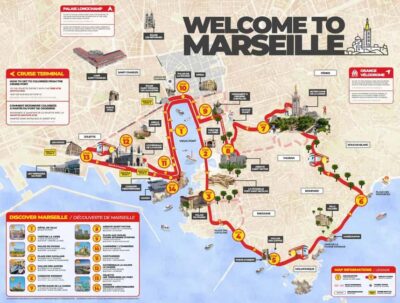
Marseille: City Sightseeing Hop-On Hop-Off Bus Tour
Read our review →
Eiffel Tower Summit Option with Seine River Cruise and City Tour
Read our review →
Paris in a Day: Louvre or Orsay, Eiffel Tower, City Walk & Cruise
Read our review →
Lyon City Hop-on Hop-off Sightseeing Bus Tour
Read our review →
Paris: Eiffel Tower Hosted Tour, Seine Cruise and City Tour
Read our review →

Paris: City and River Seine Tour on an Amphibious Bus
Read our review →Browse the lists this tour appears in