
Reviewed · LOUVRE MUSEUM TOURS
Mona Lisa & Louvre Masterpieces Tour with Reserved Access
Paris has museums, but the Louvre has a traffic problem. This three-hour guided visit makes the giant museum far easier to handle, taking you to the Mona Lisa, Venus de Milo, and Winged Victory without leaving you to wander its vast halls alone. I like the reserved entry and the way guides such as Summer, Omar, Anna, and Saeed turn famous works into clear, memorable stories.
I also like that your ticket lets you remain inside after the guided portion and explore at your own pace. The main drawback is the pace: you cover a lot of ground, and the Mona Lisa can be difficult to see through the crowd. You will spend much of the tour standing and walking, so comfortable shoes are essential.
In This Review
- Key points to know before booking
- Why a guide helps inside the Louvre
- Meeting at the Arc de Triomphe du Carrousel
- The Louvre Pyramid and the museum’s unusual layers
- The major paintings, from Leonardo to French Romanticism
- Venus de Milo and Winged Victory
- The Great Sphinx of Tanis and ancient collections
- Michelangelo, Canova, and the Apollo Gallery
- Napoleon Apartments and royal decoration
- Facing the Mona Lisa in a crowded room
- Two hours of free time after the tour
- Optional wine, cheese, and charcuterie at Ô Chateau
- Is the $80 price good value?
- Who should book this Louvre tour?
- Should you book the Mona Lisa and Louvre Masterpieces Tour?
- FAQ
- Where does the Louvre tour meet?
- How long is the guided Louvre tour?
- Is Louvre entry included?
- Does the tour skip all security lines?
- What language is the tour offered in?
- Can I stay inside the Louvre after the guided tour?
- Is the Mona Lisa included?
- Is a personal headset provided?
- Can I bring a large bag or luggage?
- Can I cancel the booking?
Key points to know before booking
- Reserved Louvre entry: You avoid the main ticket queue, but every visitor still passes through museum security.
- A strong first visit: The route covers famous works by Leonardo da Vinci, Raphael, Caravaggio, Michelangelo, Canova, and others.
- More than paintings: You see Greek and Roman antiquities, royal rooms, grand interiors, and the Louvre’s older foundations.
- Mona Lisa reality check: You get to the painting, but viewing space is limited and the room can be crowded.
- Stay longer afterward: The guided visit ends at the Mona Lisa, and you can continue exploring the museum on your own.
- Optional food-and-wine finish: The upgrade adds wine, artisanal cheese, and charcuterie at Ô Chateau in central Paris.
Why a guide helps inside the Louvre
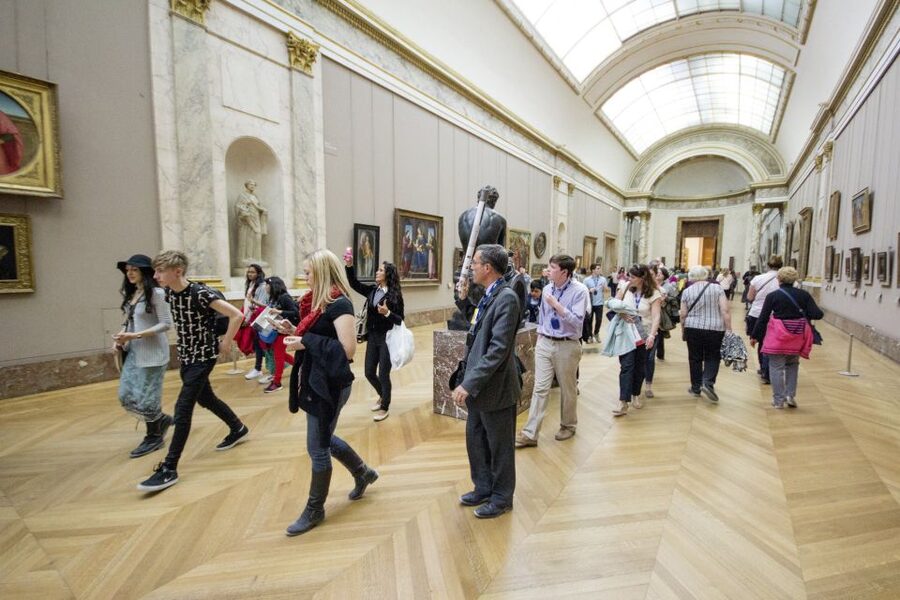
The Louvre is not just large. It is confusing. Three major wings, long corridors, stairways, galleries, and different art periods can quickly turn a museum visit into a tiring march.
I think the guide is the main reason to choose this experience instead of buying a basic entry ticket. You receive a clear route through the museum and an explanation of why each major work matters. A good guide helps you notice details you would likely miss, such as the way a figure is posed, how a painting reflects its time, or why a royal room looks so lavish.
The strongest praise goes to the guides’ ability to manage crowds while keeping the group together. Anna, Summer, Omar, Saeed, Natalia, Addie, and others are repeatedly praised for being clear, friendly, patient, and engaging. That matters in a place where it is easy to lose sight of your group after one crowded staircase.
You wear a personal headset, which is useful when the gallery is noisy. Instead of trying to stand directly beside the guide, you can look at the artwork while still hearing the explanation.
This is an English-language tour. If your art background is limited, the guide gives you enough context to make the works easier to understand without requiring a degree in art history.
More Louvre visits and skip-the-line options:
- Paris: Louvre Museum Timed-Entrance Ticket
★ 4.6 · 71,977 reviews - Paris: Louvre Guided Tour with Reserved Access & Boat Cruise
★ 4.3 · 16,353 reviews - Louvre Museum Masterpieces Guided Tour with Access
★ 4.5 · 12,023 reviews
Meeting at the Arc de Triomphe du Carrousel
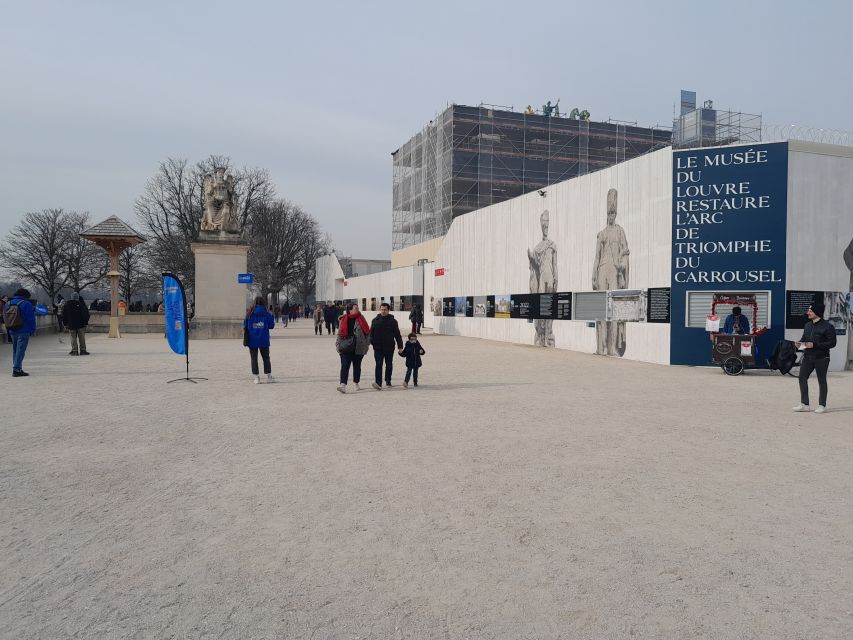
The tour begins beside the Arc de Triomphe du Carrousel, not at the Louvre Pyramid entrance. This is an important detail. If you walk straight to the Pyramid and wait there, you may be in the wrong place.
Stand with your back to the Pyramid. You will see the arch across the road, near the entrance to the Tuileries Garden. The tour coordinators wear blue and wait to the left of the arch beside the wall railing.
The meeting point is central and easy to recognize, but give yourself enough time to locate it. The Louvre area is busy, and the arch may be less obvious if you are focused on the Pyramid.
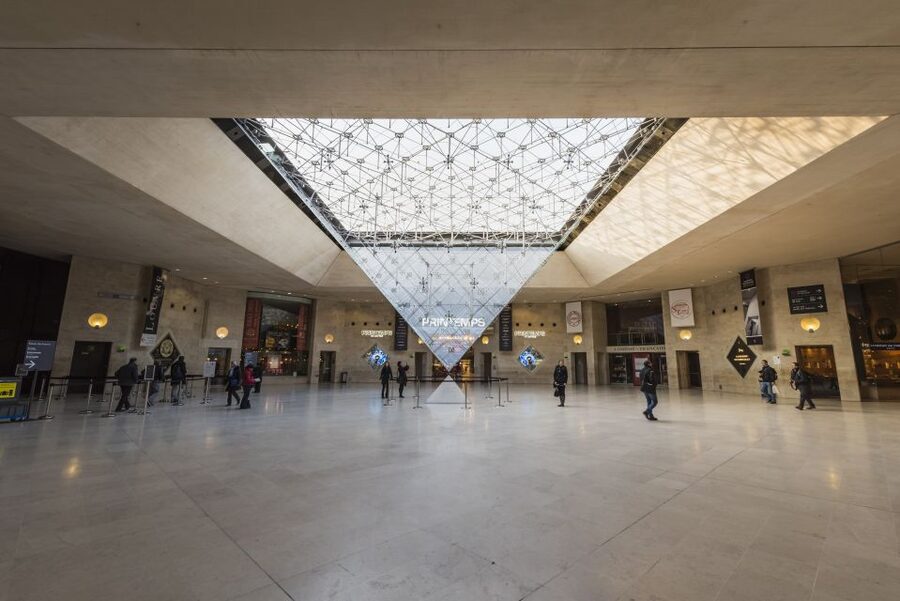
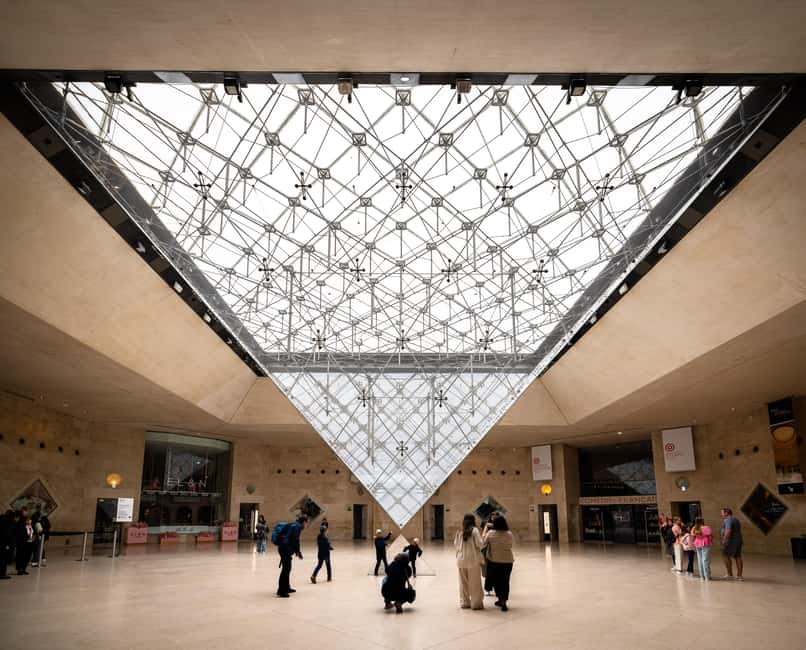
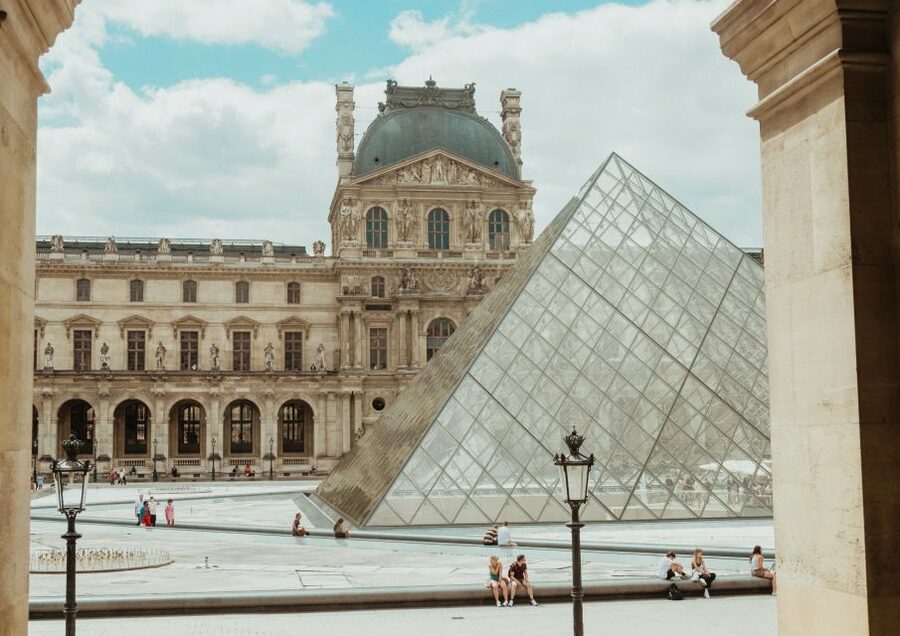
From there, the guide begins with the Louvre Pyramid. This short introduction and photo stop gives you a useful sense of the museum’s modern entrance before you enter the much older palace complex.
The Louvre Pyramid and the museum’s unusual layers
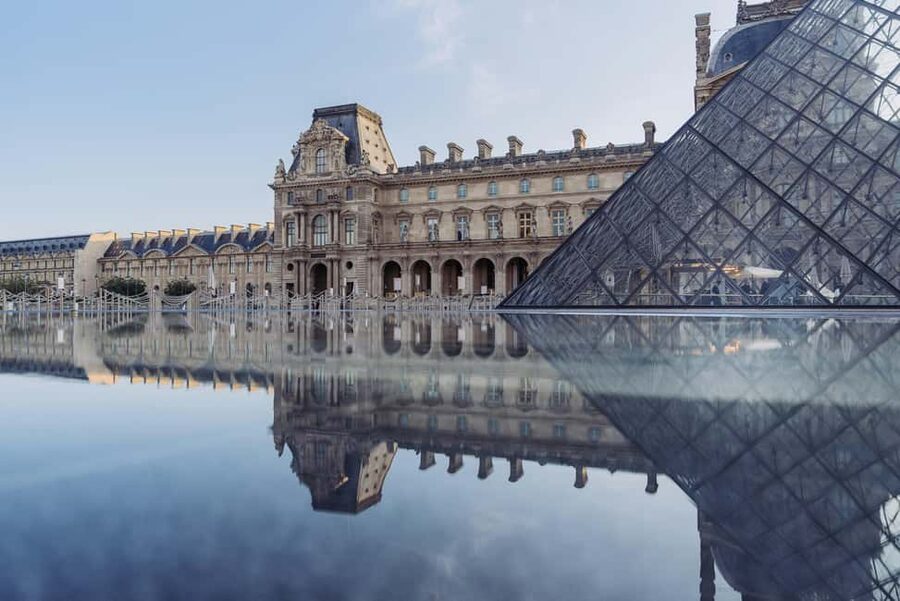
The Pyramid is one of Paris’s most familiar sights, but the Louvre itself reaches far beyond the glass structure. The museum combines former royal spaces, grand galleries, later additions, and foundations dating back roughly 800 years.
One particularly interesting part of the experience is the chance to see traces of the earlier Louvre beneath the present museum. The building is part palace, part fortress site, and part national museum. That physical mix helps explain why getting around can feel so complicated.
I like that the visit treats the building as part of the attraction. You are not simply moving from painting to painting. You are also walking through rooms shaped by French royal power and later museum design.
The Pyramid stop lasts about 30 minutes as part of the guided introduction. It is a good place for photographs, but the real value comes once the guide starts connecting the exterior to the museum’s past.
The major paintings, from Leonardo to French Romanticism

The route focuses on the Louvre’s best-known works. Leonardo da Vinci’s Mona Lisa is the big goal, but it is not the only painting that deserves your attention.
You also see works connected with Leonardo and Raphael, along with Renaissance art by major Italian masters. The guide’s explanations help you understand how these artists used composition, gesture, expression, and religious or political themes.
Caravaggio brings a different mood, with strong contrasts of light and dark and a more forceful sense of drama. Michelangelo’s work appears in sculpture as well as in the wider Renaissance story. The tour also brings in the passion of French Romantic painting, giving you a look beyond the Italian masterpieces.
The pace is designed for a first visit. You stop at major works long enough to hear the story and take in the main details, then move on before the sheer size of the museum wears you down.
That approach has a tradeoff. If you are an artist, art student, or repeat visitor, you may want more time in front of individual works. Alana, one particularly art-focused participant, appreciated the route but would have preferred a slower pace. The good news is that you can stay inside afterward and return to the rooms that caught your eye.
A few more Paris trips worth weighing up
- Disneyland® Paris 1-Day Ticket
★ 4.6 · 49,412 reviews - Paris: Versailles Palace and Gardens Full Access Ticket
★ 4.6 · 41,579 reviews - Paris: Evening River Cruise with Music
★ 4.4 · 22,721 reviews - Paris: Eiffel Tower Entry Ticket with Optional Summit Access
★ 4.4 · 20,035 reviews
Venus de Milo and Winged Victory
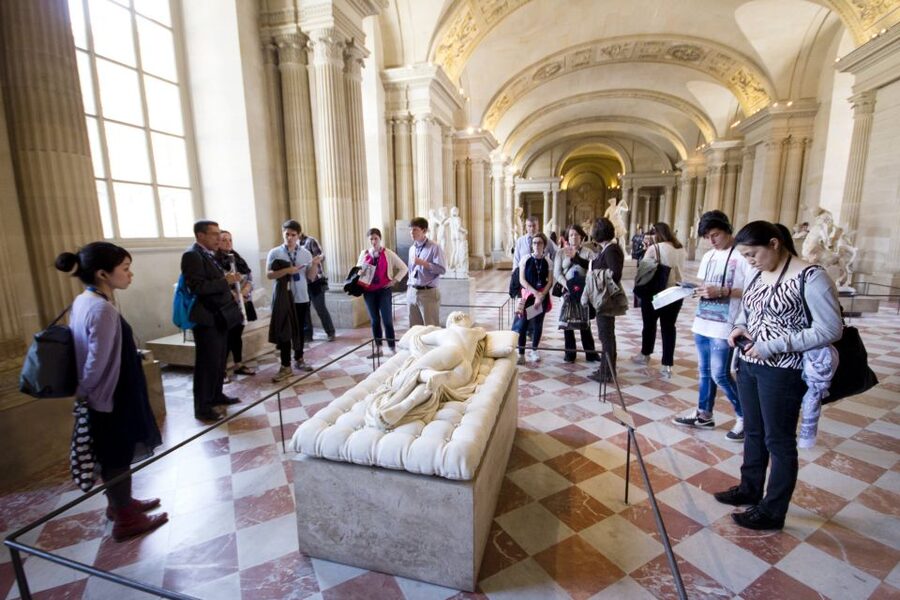
The classical collection gives the tour some welcome variety. The Venus de Milo is instantly recognizable, but a guide can help you look beyond the missing arms and famous outline to the sculpture’s balance, posture, and presentation.
The Winged Victory of Samothrace is another major stop. Positioned dramatically at the top of the Daru staircase, it is difficult to miss. Its forward movement and flowing drapery make it feel active even though it is carved in stone.
These two sculptures are among the Louvre’s essential sights, and seeing them on a planned route saves you from hunting through the museum map. The guide also helps place Greek and Roman art beside the later works, making the visit feel like a connected story rather than a pile of unrelated masterpieces.
Expect crowds around both famous sculptures. You may need to pause at the edge of the space rather than walk straight up to the work. The headset helps you hear while the group gathers.
The Great Sphinx of Tanis and ancient collections
The Great Sphinx of Tanis is one of the tour’s more unusual highlights. More than 4,000 years old, it gives you a powerful change of scale and period after the Renaissance galleries.
The Louvre’s ancient collections can be overwhelming because they cover such a long span of time. A guide gives you a short path through the Greek and Roman antiquities and points out why particular objects deserve attention.
I value this part of the tour because many first-time visitors rush toward the Mona Lisa and skip the ancient rooms. The Sphinx offers a reminder that the Louvre is not only a museum of European painting. Its collections reach into some of the earliest known periods of large-scale sculpture and civilization.
You should not expect a full treatment of the ancient collections in one visit. The Louvre needs days for that. Instead, this tour gives you a useful introduction and a few strong reasons to return.
Michelangelo, Canova, and the Apollo Gallery
The sculpture stops include Michelangelo’s Dying Slave and Antonio Canova’s Psyche Revived by Cupid’s Kiss. They offer two very different ideas of the human body and emotion.
Michelangelo’s figure feels powerful even in an unfinished state. Canova’s sculpture is lighter and more polished, with an especially delicate sense of movement between the two figures. The guide’s comparison makes the contrast easier to see.
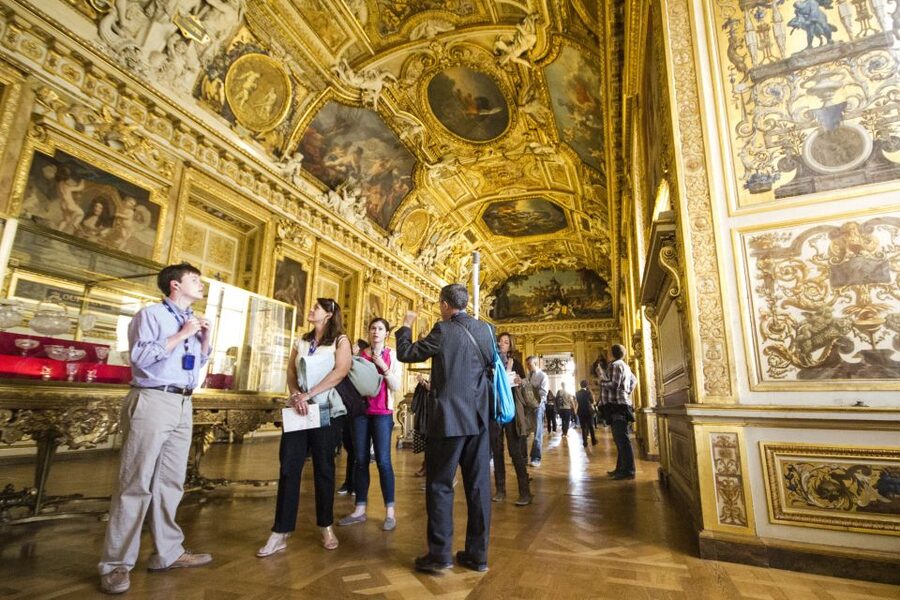
The Apollo Gallery adds another change of mood. This grand room is tied to the Louvre’s royal past and is known for ornate decoration and ceiling detail. You may find yourself looking upward as much as at the objects displayed inside.
This is where the museum’s interiors become as important as its art. The gallery helps you understand how the Louvre once functioned as a statement of royal wealth and authority.
Napoleon Apartments and royal decoration
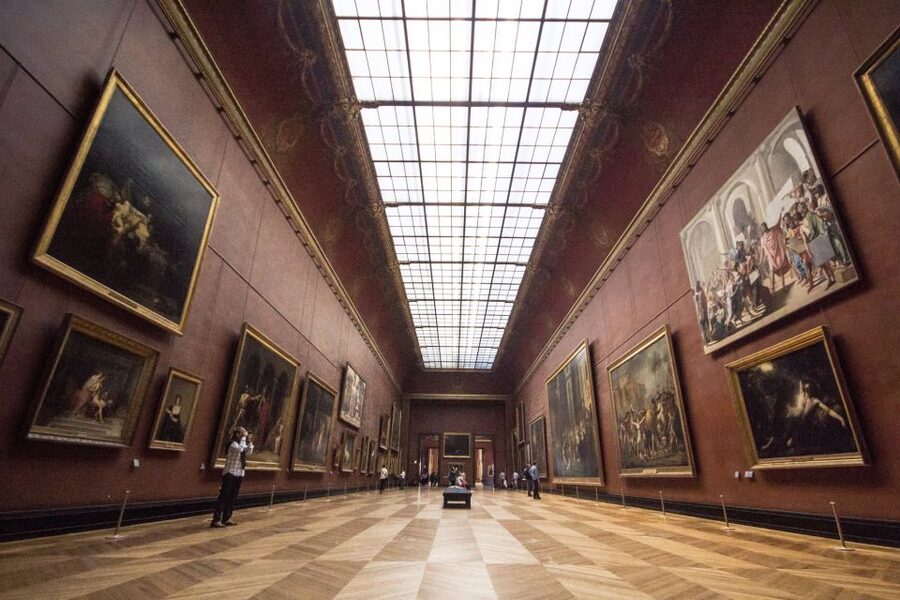
The Napoleon Apartments preserve the opulent style of the Second Empire. Rooms filled with elaborate decoration can feel almost excessive, especially after the restraint of classical sculpture galleries.
That excess is the point. The apartments show how power was expressed through furniture, color, materials, scale, and ceremony. They also give your feet a break from studying individual canvases, since the room itself becomes the subject.
A guide is especially useful here because the details can blur together. You receive a clearer idea of how the rooms were used and why the decoration looks so theatrical.
The apartments may be a highlight for anyone interested in architecture, design, monarchy, or French political history. If your only goal is painting, you may prefer to spend your free time returning to the galleries instead.
Facing the Mona Lisa in a crowded room
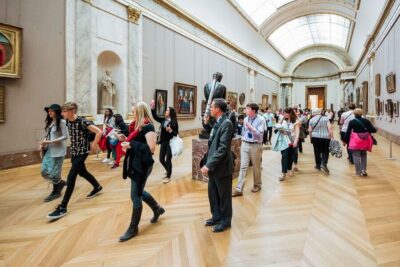
The tour finishes at Leonardo’s Mona Lisa. This is practical because the painting is often the one sight you most want to find, and the guide knows how to get the group there without wasting time.
You should set your expectations correctly. Reserved access does not give you a private viewing or extra space around the painting. The room can be crowded, and the painting itself is smaller than many people expect. You may have only a short chance to look before the crowd shifts.
Several guides offer practical advice for getting a better view. Summer is praised for helping the group handle the crowds, while other guides are noted for arranging the group so people can see and hear without blocking one another.
The Mona Lisa is worth seeing, but do not judge the entire Louvre by this one crowded moment. The painting’s fame creates much of the pressure. The rest of the museum often gives you more room and more time to appreciate what you are seeing.
The guided route ends here, which is a sensible design. You have seen the headline work, and you can then decide how much longer to stay.
Two hours of free time after the tour
The schedule includes about two and a half hours of guided touring, followed by up to two hours of free time. The advertised activity duration is 210 minutes, so check the exact timing for your chosen departure. The free period may extend your visit beyond the main guided portion.
Use this time with a plan. The Louvre is too large to explore randomly after a busy tour. You can return to a favorite painting, visit a room the group passed quickly, or follow one collection that interested you.
I recommend noting the names of rooms and works during the guided portion. Your guide may cover more than a dozen major pieces, and it is easy to forget where you saw a particular sculpture once the group moves on.
The free time also softens the main weakness of the tour. You may feel rushed during some stops, but you are not forced to leave the museum as soon as the guide says goodbye.
Optional wine, cheese, and charcuterie at Ô Chateau
The upgrade adds a wine tasting at Ô Chateau, a high-end Parisian wine bar. It includes selected wines paired with artisanal cheese and charcuterie.
This is not part of the standard tour, so check that you select the upgrade if you want it. The route finishes with two possible drop-off points: the Louvre Pyramid or Ô Chateau.
The tasting makes sense if you want to turn the museum visit into a longer Paris outing. It gives you a seated food-and-wine experience after several hours on your feet. If you prefer to keep your afternoon open, the basic tour is the better choice.
Is the $80 price good value?
At $80 per person, this is not the cheapest way into the Louvre. You are paying for more than admission: reserved access, an English-speaking guide, a headset, and a planned route through some of the museum’s most sought-after rooms.
I think the price is fair for a first Louvre visit, especially during a busy period. The cost of lost time can be high if you spend part of your day waiting in line or trying to understand the museum map. The guide also gives you context that a simple ticket does not provide.
The value is weaker if you already know the Louvre well or prefer to move at your own speed. You will still be part of a group, and the guide controls the pace through the main route.
Parties of seven or more may be split into different groups at the meeting point. That is worth considering if you are traveling with extended family or a large friend group.
Who should book this Louvre tour?
I would choose this tour for a first-time visitor who wants the famous works without spending hours figuring out the building. It also suits anyone who prefers stories and explanation over reading labels alone.
The tour is a good fit if you want:
- A planned introduction to a huge museum
- Help finding the most famous paintings and sculptures
- A guide who can manage crowds and keep the group together
- Time to explore alone after the guided route
- An optional food-and-wine experience afterward
I would hesitate if you use a wheelchair, have a mobility impairment, or dislike extended standing and walking. The experience is not suitable for wheelchair users or people with mobility impairments.
Leave luggage at your accommodation. Baby strollers, large bags, and oversize luggage are not allowed, and anything larger than 55 by 35 by 20 centimeters cannot enter the museum. Bring comfortable shoes, because the Louvre is a workout disguised as culture.
Should you book the Mona Lisa and Louvre Masterpieces Tour?
Book it if this is your first Louvre visit and you want an efficient, informed start. The best part is not simply reaching the Mona Lisa. It is learning how the palace, sculpture, painting, and royal rooms fit together while someone else handles the route.
Skip it if you want several quiet hours with one collection or already know exactly what you want to see. For most first-time visitors, though, the $80 cost buys useful structure, reserved entry, and a far better chance of leaving with a clear sense of the Louvre instead of a sore neck and a confusing map.
FAQ
Where does the Louvre tour meet?
The meeting point is beside the Arc de Triomphe du Carrousel, not at the Louvre entrance. With your back to the Louvre Pyramid, look across the road toward the Tuileries Garden. Coordinators in blue wait to the left of the arch beside the wall railing.
How long is the guided Louvre tour?
The guided portion lasts about two and a half hours. The advertised activity duration is 210 minutes, and the schedule also allows about two hours of free time afterward, so check the exact timing when booking.
Is Louvre entry included?
Yes. The price includes a pre-reserved Louvre entrance ticket and reservation fee.
Does the tour skip all security lines?
No. Reserved access lets you avoid the main ticket queue, but all visitors must pass through museum security before entering.
What language is the tour offered in?
The tour is conducted in English with a live English-speaking guide.
Can I stay inside the Louvre after the guided tour?
Yes. After the guided route ends at the Mona Lisa, you can use the available free time to explore the museum independently.
Is the Mona Lisa included?
Yes. The route ends at the Mona Lisa. The room can be crowded, and viewing space may be limited.
Is a personal headset provided?
Yes. A personal headset is included so you can hear the guide clearly throughout the visit.
Can I bring a large bag or luggage?
No. Large bags, oversize luggage, and baby strollers are not allowed. Items larger than 55 by 35 by 20 centimeters cannot enter the museum.
Can I cancel the booking?
You can cancel up to 24 hours in advance for a full refund. You can also reserve now and pay later, which keeps your plans flexible.
Recently added around Paris
- Private Half-Day Guided Tour of Paris★ 4.5 · 48 reviews
- 2 hour outdoor group activity in Paris: SAINT GERMAIN★ 5.0 · 48 reviews
- Paris Dinner Show Opera Bel Canto★ 4.5 · 48 reviews
- Paris Vintage Tour by Night on a Sidecar with Champagne★ 5.0 · 48 reviews
- Secrets & Scandals of the Louvre – Limited to 6 Guests★ 5.0 · 48 reviews
- Paris Photoshoot: Eiffel Tower Exclusive Private Experience★ 5.0 · 48 reviews
- Paris: Louvre Mona Lisa Discovery Guided Tour with Ticket★ 4.9 · 48 reviews
- From Paris: Versailles Full-Day Guided Tour with Lunch★ 4.9 · 48 reviews
Louvre Museum Tours, compared.

Paris: Louvre Guided Tour with Reserved Access & Boat Cruise
Read our review →
Louvre Museum Masterpieces Guided Tour with Access
Read our review →
Paris: Louvre Museum Entry Ticket With Host and River Cruise
Read our review →
Paris: Priority Access Louvre with Host -Direct to Mona Lisa
Read our review →
Louvre Museum – Exclusive Guided Tour (Entry Included)
Read our review →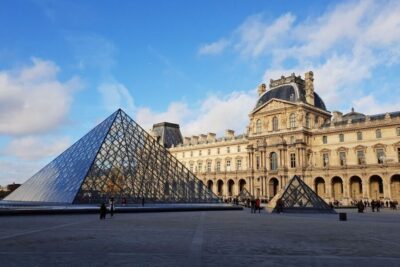
Paris: Louvre Reserved Ticket and River Cruise Combo
Read our review →
Paris: Louvre Museum Hosted Entry and Mona Lisa Audioguide
Read our review →Browse the lists this tour appears in