
Reviewed · GIVERNY & MONET TOURS
Orangerie & Monet’s Water Lilies Exclusive Tour w/ Reserved Entry
Monet’s lilies deserve more than a quick photograph. This two-hour Orangerie tour gives you reserved entry and a guide who can explain why the paintings matter, not just point at them. I like the efficient focus on the museum’s best works, and I like the choice between a private guide and a small group.
The main caution is price: at $143.91 per person, this is a serious spend for a two-hour museum visit. The value depends on how much you want context and conversation, since temporary exhibitions are not included and occasional museum closures can happen without warning.
In This Review
- Key points to know before booking
- Why the Orangerie makes a smart Paris museum stop
- Entering Monet’s oval Water Lilies rooms
- Seeing Cézanne, Matisse, and Picasso downstairs
- What the guide adds to a two-hour visit
- Private or small group, choose with care
- Is $143.91 good value for two hours?
- Meeting in the Tuileries Gardens
- Timing, security, and possible changes
- Who will enjoy this Orangerie tour most?
- Should you book it?
- FAQ
- How long does the Orangerie tour last?
- Is museum admission included?
- Does the tour include Monet’s Water Lilies?
- Which other artists might I see?
- Is the tour private or small group?
- Is wheelchair access included?
- Can I bring a large suitcase into the museum?
- Can I cancel for a full refund?
Key points to know before booking
- Monet’s Water Lilies are the star: The huge panels occupy two specially designed oval rooms and deserve quiet time after the guide’s explanation.
- Reserved entry saves effort: You still pass through security, but your timed access avoids arranging ordinary admission yourself.
- The tour covers more than Monet: Expect selected works by Cézanne, Renoir, Matisse, Picasso, Modigliani, Utrillo, and others.
- Private and small-group choices differ: A private booking gives your party its own guide. Wheelchair access is listed for the private option, not the small-group option.
- Guides bring strong art knowledge: Belen, Dunja, Anatole, Marcel, Zdravko, Emma, Michel, and others have been praised for clear explanations and a relaxed pace.
- Plan around the museum rules: Large bags and suitcases are not allowed, and some rooms require very quiet conversation.
Why the Orangerie makes a smart Paris museum stop
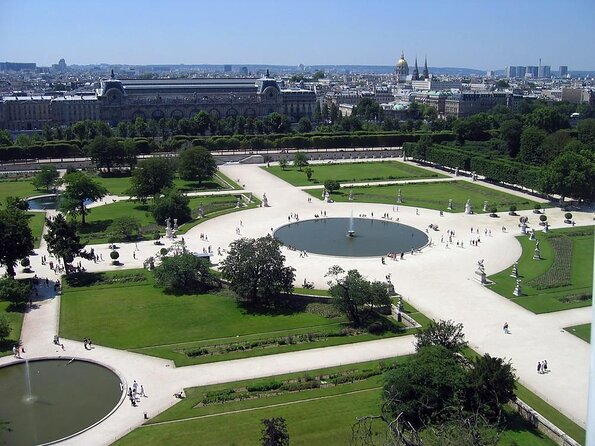
The Musée de l’Orangerie sits in the Tuileries Gardens, beside one of central Paris’s most pleasant walking routes. The building began life as an orangery, a glasshouse used to protect citrus trees, before becoming a museum in the early twentieth century.
That setting matters. After the grand scale of the Louvre or the broad sweep of the Musée d’Orsay, the Orangerie feels manageable. You can see a major collection without spending half a day marching from room to room. I find that useful on a Paris trip, where your feet and attention both have limits.
The museum is best known for Monet’s Water Lilies, but stopping there alone would sell the place short. The lower-level collection includes paintings from the late nineteenth and early twentieth centuries, with works by artists who pushed beyond traditional Impressionism.
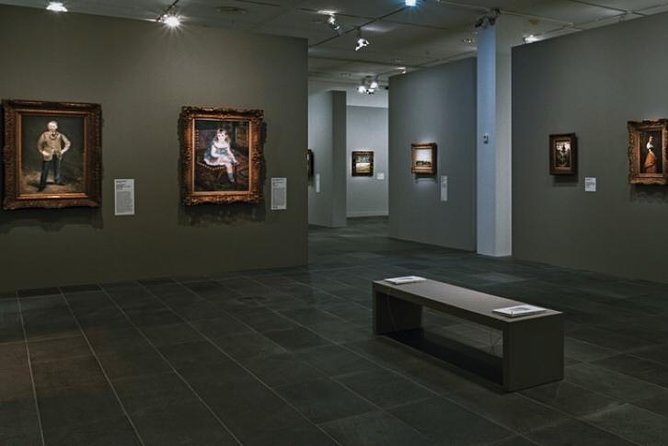
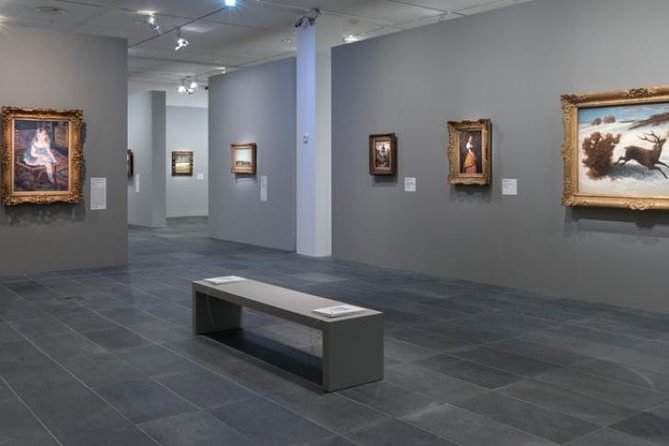
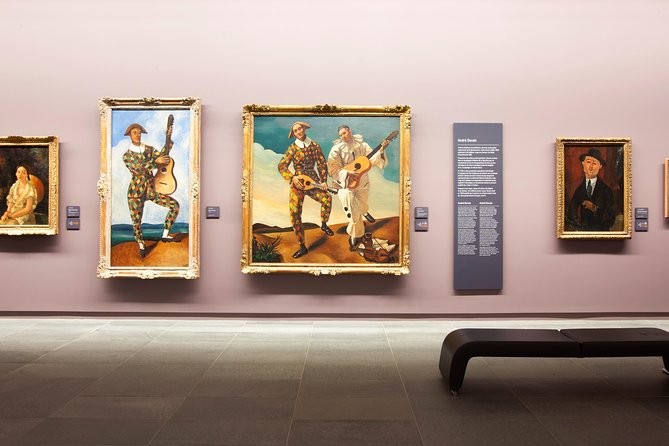
You might see Cézanne’s studies of fruit and flowers, Matisse portraits, Picasso nudes from different stages of his career, and paintings by Renoir, Modigliani, and Utrillo. The collection also includes artists such as Derain, Soutine, Laurencin, and Rousseau. The exact display can change during the year, so think of the tour as a guided look at the museum’s core collection rather than a guarantee of every named work.
More Giverny and Monet trips from Paris:
- From Paris: Giverny Day Trip with Audio Guide or Live Guide
★ 4.3 · 2,372 reviews - From Paris: Giverny, Monet’s House, & Gardens Half-Day Trip
★ 4.5 · 2,174 reviews - Versailles Palace and Giverny Monet House Visit with Lunch
★ 4.0 · 1,948 reviews
Entering Monet’s oval Water Lilies rooms
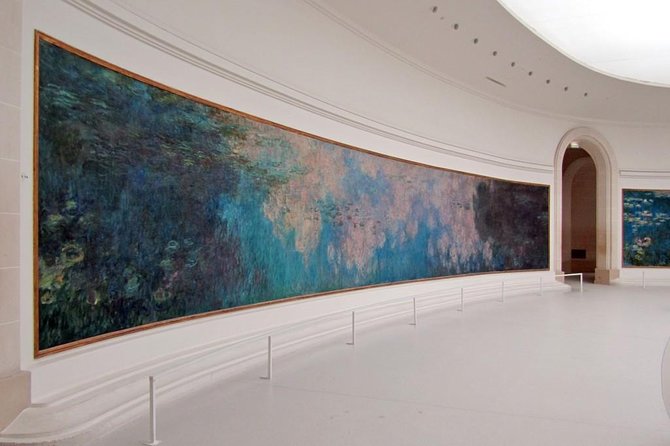
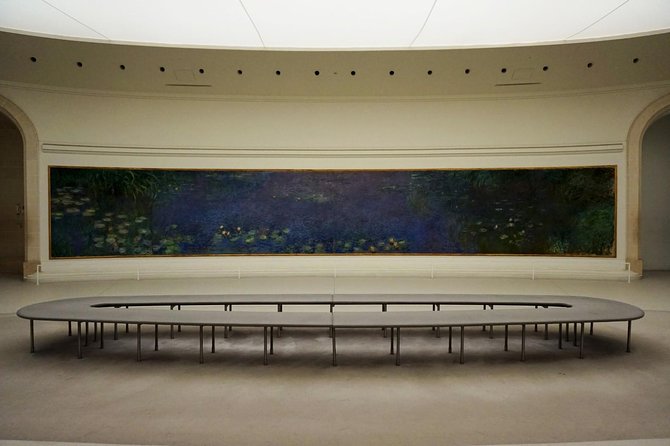
The Water Lilies rooms are the emotional center of the visit. Monet donated the series to France through his friendship with Georges Clemenceau, the French statesman who helped arrange their public presentation. The paintings were designed for a particular experience, not simply hung as separate framed pictures.
The long panels curve around two oval rooms. You are surrounded by water, reflections, reeds, sky, and shifting color. There is no single point where the whole series reveals itself. You move your eyes across the surface and notice that the paintings feel different from close up than they do from a few steps away.
A guide can help you slow down and look properly. That sounds simple, but it is easy to enter, snap a picture, and move on. A good explanation of Monet’s life, his garden, his changing eyesight, and the way the panels were conceived gives you a reason to spend time with the paintings.
The best guides also leave room for silence. Marcel was especially praised for offering context about Monet while allowing quiet reflection in the rooms. That balance is important. A running lecture would work against the calm of the gallery.
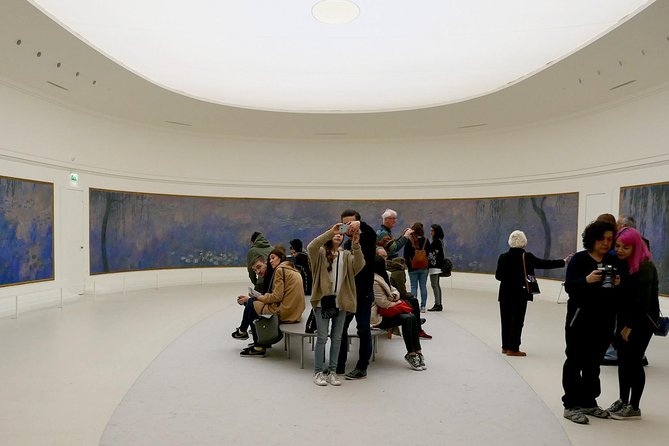
You should also expect some limits on conversation. Certain rooms may require very quiet or restricted speech. Your guide will explain those rules before you enter, so you can listen first and then look without being hurried.
Seeing Cézanne, Matisse, and Picasso downstairs
After Monet, the tour usually turns to the museum’s other collection. This is where a guide earns the fee. Without help, you may recognize a few famous names but miss the connections between them.
Cézanne’s fruit and flower studies show his interest in shape and structure. They are not just pleasant still lifes. A guide can direct your eye toward the way objects are arranged and why his approach mattered to artists who came later.
Matisse offers a different mood through portraiture and color. Picasso’s nudes let you compare several phases of his career rather than treating him as a single, unchanging figure. That chronological view is useful if you know the names but have never had time to connect the work.
The collection also opens a door into less familiar artists. Guides have pointed out Derain, Soutine, Laurencin, and Rousseau, giving the visit more range than a Monet-only itinerary. You may also encounter temporary displays such as the Heinz Berggruen collection, which has included Picasso, Klee, and Matisse, but temporary exhibitions are not part of the standard admission promise.
The museum’s scale helps here. You can focus on selected pictures instead of trying to absorb everything. A strong guide will choose highlights and explain why they deserve your attention, without rushing you from canvas to canvas.
What the guide adds to a two-hour visit
Art museums can be rewarding alone, but the Orangerie is particularly well suited to guided interpretation. The paintings are famous enough to attract a quick crowd, yet subtle enough that a few well-timed observations can change what you see.
Belen has been praised for placing the artists in their social and artistic setting before leading visitors to Monet. That order makes sense. You first gain a sense of the period and the artistic arguments around Impressionism, then approach the Water Lilies with better tools.
Dunja has been singled out for presenting art history almost like a live class while keeping the experience enjoyable. Anatole has received praise for his passion, clear explanations, and ability to make Impressionism easier to understand. He has also guided families with teenagers and a ten-year-old, so his approach can work across age groups.
Zdravko, sometimes called Z, has used photographs on a tablet to add visual background. This can be useful when discussing an artist’s studio, an earlier version of a subject, or the original setting of a painting. It is a small detail, but it shows how a guide can use more than a memorized speech.
The strongest pattern is the pacing. Several guides have been appreciated for explaining the major works without making the visit feel hurried. You should still expect a structured tour, not two hours of independent wandering. If you want time alone with every painting, tell the guide early and plan to remain after the formal tour ends.
A few more Paris trips worth weighing up
- Paris: Louvre Museum Timed-Entrance Ticket
★ 4.6 · 71,977 reviews - Disneyland® Paris 1-Day Ticket
★ 4.6 · 49,412 reviews - Paris: Versailles Palace and Gardens Full Access Ticket
★ 4.6 · 41,579 reviews - Paris: Evening River Cruise with Music
★ 4.4 · 22,721 reviews
Private or small group, choose with care
A private tour is the better fit if you want to ask questions, set the pace, or tailor the visit to your family’s interests. Only your party participates, and the guide can spend more time on Monet, modern art, or the artists you already know.
It also makes more sense for families with mixed interests. A younger child may need shorter explanations and more movement, while an adult may want to discuss technique or art history. A private guide can adjust more easily than a fixed group.
The small-group option can lower the cost per person and add a social element, but it gives you less control. The supplied details also make an important distinction: wheelchair access is included for the private option but does not apply to the small-group choice. If accessibility affects your booking, select the private format and confirm the current arrangements.
The tour information also describes this as a private activity in one place while offering a small-group choice elsewhere. Treat the option you select as the deciding detail, and check your confirmation carefully. Do not assume that every booking receives the same format or accessibility provisions.
Is $143.91 good value for two hours?
At $143.91 per person, this is not a budget museum ticket. You are paying for more than admission. The price covers the guided tour, reserved entry, entrance fees, and, for a private booking, a guide dedicated to your party.
That can be worthwhile if Monet is one of the main reasons you came to Paris. A guide who explains the purpose of the oval rooms, the Clemenceau connection, and the progression from Impressionism to later modern art can turn a short visit into one of the most memorable art stops of your trip.
The value is weaker if you are already comfortable reading art on your own or if you mainly want a quick look at the Water Lilies. The museum is relatively compact, and independent visitors can appreciate the paintings without a paid guide. You may prefer a regular admission ticket and extra time to look quietly.
The price also makes group size important. For a couple or family, a private booking spreads the cost across your party and buys flexibility. For one person, the per-person amount feels harder to justify unless expert interpretation is a high priority.
Because the tour is often booked around 46 days ahead, popular time slots may disappear well before a Paris visit. That does not prove every date sells out, but it is a useful planning signal if Monet is central to your itinerary.
Meeting in the Tuileries Gardens
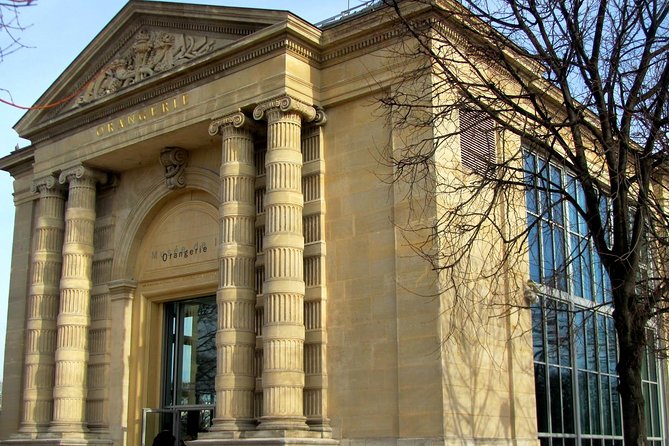
The meeting point is at the Musée de l’Orangerie in the Tuileries Gardens, 75001 Paris. The tour ends at the same place, so you are not left at an unfamiliar neighborhood after the museum visit.
The area is close to public transportation. Hotel pickup and drop-off are not included, so plan to reach the gardens independently by metro, taxi, or Uber. Build in time to find the exact meeting point. One guide, Zdravko, was praised for sending clear location information ahead of time, which is the kind of practical contact you want before a timed museum appointment.
You must provide a mobile phone number with the country code. That matters if the guide needs to reach you about the meeting point or an operational change. Keep your phone charged and check messages before leaving for the museum.
Wear ordinary neat clothing suitable for museum entry. Large bags and suitcases are not allowed, and only handbags or small, thin backpacks can pass through security. Do not arrive with luggage and hope for a solution at the door.
Timing, security, and possible changes
The tour lasts about two hours. You should have a moderate level of physical fitness, since museum visits involve walking and standing, although the exact amount depends on your guide and pace.
Reserved entry reduces one layer of uncertainty, but it does not mean you can ignore security. Increased security measures can create lines even on tours advertised with reserved or fast access. Allow extra time before the start, especially if you are crossing central Paris from another appointment.
The museum can occasionally close without advance warning. If opening is delayed by more than an hour beyond the scheduled tour start, an appropriate alternative may be offered. The stated terms do not promise a refund or discount in that situation.
That policy is worth noting before you book an important same-day connection. Keep your schedule flexible, and avoid placing a train, dinner reservation, or airport transfer immediately after the tour.
Free cancellation is available if you cancel at least 24 hours before the local start time. Changes or cancellations inside that window are not accepted for a refund.
Who will enjoy this Orangerie tour most?
I would choose this tour for you if Monet is high on your Paris list and you want more than a self-guided glance. It is also a good match if you find modern art confusing, enjoy learning through stories, or want a compact museum visit between other Tuileries and central Paris plans.
Families can benefit from the private option. The guide can keep a younger child involved while giving adults enough context to understand the art. The family experience led by Anatole suggests that a well-paced private visit can work with children aged 10, 15, and 17.
It is less suitable if you dislike guided schedules or prefer to read every label at your own speed. The tour focuses on highlights, so it will not cover every painting in equal depth. You may also find the cost high if Monet is only a minor interest.
Should you book it?
Book this Orangerie tour if you want a compact, well-explained visit centered on Monet’s Water Lilies, with the option of a private guide and reserved entry. The strongest reason to go is not simply access. It is the chance to understand how the paintings were conceived, then connect them to Cézanne, Matisse, Picasso, and other artists in the collection.
Choose the private format if you value questions, flexible pacing, family-friendly explanations, or the listed wheelchair provision. Choose the small-group option only if you are comfortable with less control and have confirmed its exact accessibility details.
If you already know the Orangerie well, buy a normal ticket and take your time. For a first visit, especially one built around Monet, the guide can make the $143.91 price worthwhile.
FAQ
How long does the Orangerie tour last?
The experience lasts approximately two hours.
Is museum admission included?
Yes. The tour includes the guided museum visit, reserved entry, and entrance fees.
Does the tour include Monet’s Water Lilies?
Yes. Monet’s Water Lilies are the main focus of the visit, along with selected works from the museum’s wider collection.
Which other artists might I see?
The collection includes works by Cézanne, Matisse, Picasso, Modigliani, Renoir, Utrillo, Derain, Soutine, Laurencin, and Rousseau. Displays can vary during the year.
Is the tour private or small group?
You can choose a private guide or a small-group option. A private booking means only your party participates. The supplied details distinguish the private option from the small-group option for wheelchair access.
Is wheelchair access included?
Wheelchair access is listed for the private option. It does not apply to the small-group option.
Can I bring a large suitcase into the museum?
No. Large bags and suitcases are not allowed. Only handbags or small, thin backpacks can pass through security.
Can I cancel for a full refund?
Yes, if you cancel at least 24 hours before the experience start time. Cancellations or changes made less than 24 hours ahead are not refunded or accepted.
Recently added around Paris
- Private Half-Day Guided Tour of Paris★ 4.5 · 48 reviews
- 2 hour outdoor group activity in Paris: SAINT GERMAIN★ 5.0 · 48 reviews
- Paris Dinner Show Opera Bel Canto★ 4.5 · 48 reviews
- Paris Vintage Tour by Night on a Sidecar with Champagne★ 5.0 · 48 reviews
- Secrets & Scandals of the Louvre – Limited to 6 Guests★ 5.0 · 48 reviews
- Paris Photoshoot: Eiffel Tower Exclusive Private Experience★ 5.0 · 48 reviews
- From Paris: Versailles Full-Day Guided Tour with Lunch★ 4.9 · 48 reviews
- Paris: Louvre Mona Lisa Discovery Guided Tour with Ticket★ 4.9 · 48 reviews
Giverny & Monet Tours, compared.

From Paris: Giverny Day Trip with Audio Guide or Live Guide
Read our review →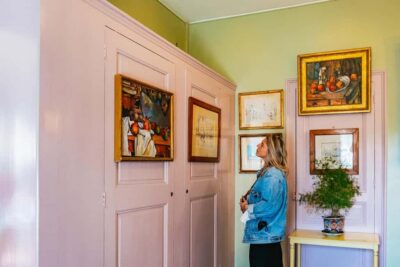
From Paris: Giverny, Monet’s House, & Gardens Half-Day Trip
Read our review →
Versailles Palace and Giverny Monet House Visit with Lunch
Read our review →
Giverny Monet’s Home and Gardens Half Day Tour from Paris
Read our review →
Giverny Small-Group Half Day Trip with Monet’s Gardens from Paris
Read our review →
From Paris: Giverny and Versailles Palace Guided Day Trip
Read our review →
Giverny and Monet’s House Half Day Trip from Paris Guide or Audio
Read our review →
Giverny and Versailles Small Group Day Trip from Paris with Lunch
Read our review →Browse the lists this tour appears in