Reviewed · TICKETS
Paris : Atelier des Lumières admission ticket
Art does not stay on the wall here. At Paris’s Atelier des Lumières, paintings spread across the floors, walls, and old ironwork of a former foundry, turning a museum visit into a moving visual show. I like the unusual setting, and I like that the exhibitions run continuously, so you are not tied to a guide or one fixed presentation.
The current program brings together Pablo Picasso and Henri Rousseau in two very different digital presentations. I also appreciate the family angle: children ages 4 to 12 can use L’Atelier des Enfants, a hands-on space linked to Rousseau. The main drawback is that the experience is about projection, music, color, and movement rather than seeing original paintings in a quiet gallery.
At about $20 per person, this is a fair Paris activity if you enjoy modern presentation and want a break from traditional museums. The 4.5 rating from 91 reviews suggests strong overall satisfaction, but I would check the current exhibition dates before booking since digital programs change.
In This Review
- Key Points Before You Book
- Why the Foundry Setting Matters
- Picasso, Art in Motion, From Spain to Paris
- Rousseau in a World of Plants and Animals
- L’Atelier des Enfants for Ages 4 to 12
- How the Continuous Format Works for Your Day
- Is $20 a Fair Price?
- Who Will Enjoy This Experience Most?
- Practical Advice Before You Go
- Should You Book Atelier des Lumières?
- FAQ
- Where is the Atelier des Lumières located?
- What exhibitions are included?
- Does the ticket include the children’s area?
- How long is the ticket valid?
- Is the Atelier des Lumières open every day?
- Can I cancel my booking?
- Is the experience wheelchair accessible?
Key Points Before You Book
- A former foundry becomes the gallery: Industrial walls, pillars, and open floor space give the show a character that a standard museum room cannot match.
- Two artists, two very different moods: Picasso brings bulls, cabarets, fractured forms, and Guernica, while Rousseau offers plants, animals, and dreamlike scenes.
- Continuous presentations make timing easier: You can choose an available starting time without needing to catch a single guided performance.
- Families get a dedicated creative space: L’Atelier des Enfants introduces children ages 4 to 12 to digital art through Rousseau’s world.
- The ticket covers both current exhibitions: Admission includes the Atelier des Lumières and access to the children’s area.
- Plan around the access rules: Strollers, baby carriages, luggage, and large bags are not allowed, and the experience is not suitable for children under 2 or people with epilepsy.
Why the Foundry Setting Matters
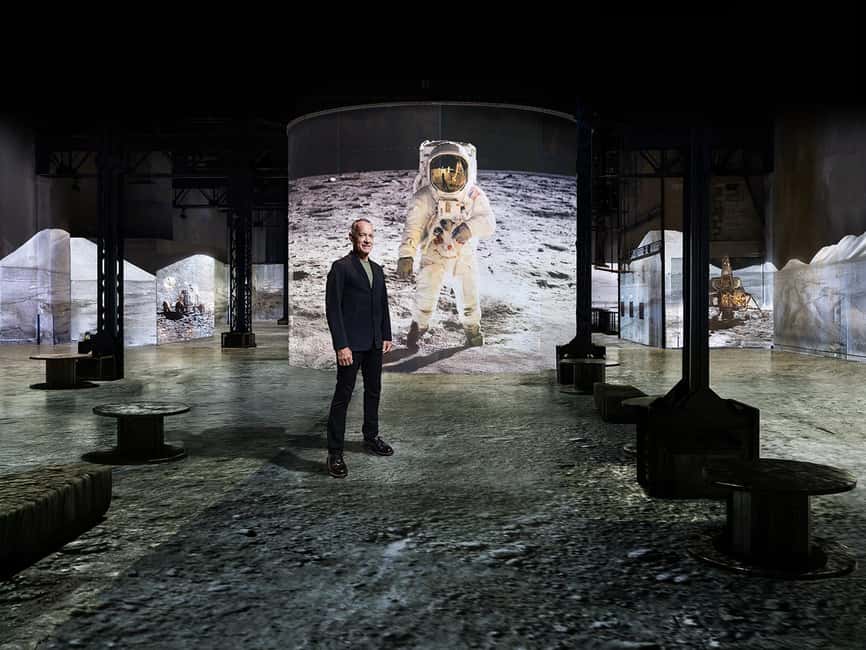
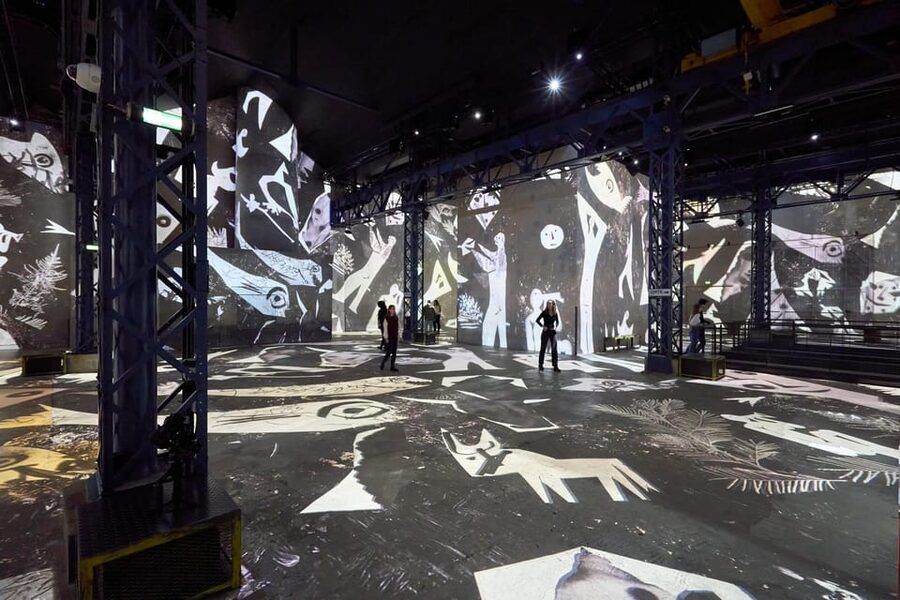
The first thing I value here is the building itself. Atelier des Lumières operates inside a former foundry, so you are not entering a polished white cube designed only for paintings. The old industrial structure gives the projections height, scale, and texture.
That setting changes how you look at the art. A Picasso image can stretch across a wall and break apart over pillars. A Rousseau jungle scene can cover the floor and make the room feel like part of the artwork. You are not simply moving from frame to frame. You are watching art change around you.
This is also why the visit feels different from a normal museum stop. You can stand in one place and watch images pass across several surfaces, or move around to see how the old building alters the picture. I would give yourself time to look up, down, and behind you instead of focusing on one wall.
The building may appeal most to people who like art with a strong sensory element. If you prefer labels, dates, and original canvases viewed at close range, the format may feel less satisfying. The projections offer a broad reading of the artists, but they do not replace a visit to the museums that hold the original works.
A few more Paris trips worth weighing up
- Paris: Louvre Museum Timed-Entrance Ticket
★ 4.6 · 71,977 reviews - Disneyland® Paris 1-Day Ticket
★ 4.6 · 49,412 reviews - Paris: Versailles Palace and Gardens Full Access Ticket
★ 4.6 · 41,579 reviews
Picasso, Art in Motion, From Spain to Paris
The Picasso presentation follows the artist from his native Spain to France, where he spent most of his life. Its route through his work is broad rather than narrowly academic, using famous subjects and major visual changes to create a moving portrait of the artist.
You can expect the bullring to play an important role early in the presentation. That setting connects Picasso with Spain and with the recurring bull imagery that appears across his work. The digital format lets shapes and figures shift quickly, so the bull becomes part of a larger visual flow rather than a single fixed symbol.
The program then moves into the nightlife of Parisian cabarets. This gives the presentation a social and theatrical turn. Instead of seeing Picasso only as a serious modernist, you get a sense of the city life, performance, and movement that fed parts of his art.
The section featuring Les Demoiselles d’Avignon focuses on shape and color. The original painting is famous for its fractured forms and challenging faces, but a projected version gives you a different way to notice its structure. Parts of the composition can expand across the room, making the arrangement feel less like a single rectangle and more like a set of forms in motion.
Guernica brings a sharper change in tone. Its striking force is not softened by the presentation, although the digital format means you encounter the work as part of a flowing sequence rather than in the stillness of a museum gallery. I would expect this part to be among the most serious moments of the show.
The exhibition also includes work from later periods, including Picasso’s 1958 portrait of a young girl after Cranach the Younger. That detail matters because it shows the program is not limited to the best-known early paintings. You get a sense of Picasso’s continuing experiments with materials, styles, and old artistic sources.
I like this presentation best as an introduction or visual refresher. It can help you recognize themes before visiting the Musée Picasso Paris or the Museum of Modern Art in New York, which holds Les Demoiselles d’Avignon. Still, I would not treat the show as a substitute for the originals. Projection can reveal scale and movement, but it cannot provide the surface, brushwork, or physical presence of a painting.
Rousseau in a World of Plants and Animals
The second presentation shifts from Picasso’s sharp angles and dramatic conflicts to Henri Rousseau’s dreamlike scenes. Rousseau was self-taught and is described here as a pioneer of naive art in France, a style often linked with direct, simplified, and childlike-looking forms.
That childlike quality does not mean the work is simple. Rousseau studied vegetation and animals from places he observed in Paris, including the greenhouses and menagerie of the Jardin des Plantes. The result is a world that feels exotic while drawing from careful observation close to home.
The digital presentation uses that contrast well. You may find yourself surrounded by plants, foliage, and animals that appear more imagined than geographically exact. The effect is gentle and dreamlike, making this section a natural counterpoint to Picasso’s sharper subjects.
I think Rousseau’s program may work especially well for families and for anyone who wants a calmer visual rhythm. It also gives you a useful reminder that an artist does not need to travel widely to create an imagined elsewhere. Rousseau built his world from what he could study in Paris, then transformed those observations through painting.
The weakness is similar to the Picasso presentation. You see reproductions enlarged and animated, not original canvases. If your main goal is to examine Rousseau’s brushwork or compare individual paintings, a traditional museum would serve you better. If your goal is to see his animals and plants take over an entire room, the Atelier format has a clear advantage.
L’Atelier des Enfants for Ages 4 to 12
Families should pay attention to L’Atelier des Enfants. This is a dedicated area for children ages 4 to 12, where young visitors become creators of digital exhibitions rather than simply watching one.
The space introduces children to digital art through Henri Rousseau’s work. That makes the visit more active for younger children, especially those who may lose patience in a conventional gallery. Instead of asking a child to stand quietly in front of a painting, the activity gives art a playful, hands-on frame.
The children’s space is included with admission. That improves the value for families, since you are not adding a separate ticket for the child-focused section.
There are two practical limits. Children under 2 are not considered suitable for the experience, and baby strollers or baby carriages are not allowed. You should also avoid bringing luggage or large bags, since those cannot enter. Pack light and plan for a visit without a stroller.
I would choose this attraction for families with children old enough to take part in the activity, not for parents looking for a place to settle a very young child. The age range is specific, and the rules matter.
A completely different sort of day in Paris:
- Paris: Evening River Cruise with Music
★ 4.4 · 22,721 reviews - Paris: Eiffel Tower Entry Ticket with Optional Summit Access
★ 4.4 · 20,035 reviews - Paris: Eiffel Tower Summit or Second Floor Access
★ 4.3 · 17,248 reviews - Paris: Louvre Guided Tour with Reserved Access & Boat Cruise
★ 4.3 · 16,353 reviews
How the Continuous Format Works for Your Day
The presentations run continuously, which is one of the most useful features of the ticket. You do not need to arrive for a single theatrical start, and you can check available starting times when choosing your visit.
The ticket is valid for one day. That gives you some room to build the visit into a larger Paris plan, though the provided information does not specify how long you should remain inside. I would allow enough time to see both artist programs without rushing, especially if you want to watch sections more than once.
A continuous format also suits different types of visitors. You can stay with the Picasso presentation for its full sequence, focus on Rousseau, or move between the two current programs. The experience is designed around repeated broadcasts rather than a guide leading a fixed route.
This flexibility comes with a small tradeoff. A continuous show may feel less like a carefully timed performance, since you can enter during an ongoing sequence. If you care about seeing every section in a precise order, check the timing when you arrive and give yourself a little patience as the program cycles.
The venue is open seven days a week. That makes it useful on a day when your museum plans are full or when you need an indoor activity that does not depend on weather. I would still check the available time before making firm plans.
Is $20 a Fair Price?
At $20 per person, the ticket is not a bargain basement attraction, but it offers a reasonable return if you value scale and presentation. You receive admission to the Atelier des Lumières, access to both current digital exhibitions, and entry to L’Atelier des Enfants.
The price works best when you treat this as a full cultural stop rather than a quick photo opportunity. The former foundry, two artists, continuous programs, and family area give you several reasons to stay. For a solo visitor who only wants to glance at projections, the value is weaker.
I would also compare the cost with what you want from art in Paris. A traditional museum ticket may offer original works and more historical context. Atelier des Lumières gives you a visual event that can make familiar masterpieces easier to approach, but it cannot offer the physical artwork itself.
The flexible cancellation policy helps reduce the risk. You can cancel up to 24 hours in advance for a full refund, and you can reserve now while paying later. Those options are useful if your Paris schedule is still changing.
Who Will Enjoy This Experience Most?
I would recommend the Atelier des Lumières to you if you fit one or more of these descriptions:
- You like digital art, projection, music, and large-scale visual shows.
- You want to see Picasso and Rousseau presented in a lively, accessible way.
- You are visiting Paris with children ages 4 to 12.
- You have already seen traditional museums and want a change of pace.
- You prefer an attraction open seven days a week with continuous presentations.
- You want an indoor art activity that does not depend on a guided group.
I would be more cautious if you want original paintings, quiet galleries, or detailed wall text. The program pays tribute to major artists, but it does so through movement and atmosphere. It is best understood as an interpretation of their work, not a replacement for a museum collection.
The experience is also not suitable for people with epilepsy. That restriction is important because the show uses changing digital images and visual effects. Check the access rules before booking if anyone in your party may be affected.
Practical Advice Before You Go
Bring as little as possible. Baby strollers, baby carriages, luggage, and large bags are not allowed, so a small personal bag is the safer choice.
Check availability before choosing your time. Although the presentations run continuously and the venue is open every day, the ticket information directs you to available starting times rather than promising unrestricted arrival at any hour.
Think about your group’s ages. Children under 2 are not suitable for the experience, while the dedicated children’s area is intended for ages 4 to 12. That leaves a practical gap for families with toddlers, especially because strollers cannot enter.
Give yourself permission to watch rather than rush. The strongest part of the Atelier is the way images fill the old foundry, and you need a little time to notice how they move across the building. The program may be easy to fit into a busy day, but it is more rewarding when you do not treat it as a ten-minute stop.
Should You Book Atelier des Lumières?
I would book it if you want a large-scale art experience that feels different from a standard Paris museum. Picasso provides drama and changing forms, Rousseau brings plants and animals into a dreamlike setting, and the former foundry gives both presentations a strong sense of place.
Families with children ages 4 to 12 get extra value from the included children’s area. The $20 price is reasonable for a visit that includes two current exhibitions, though less compelling if you only want to study original paintings.
My advice is simple: book when the idea of seeing art move through an industrial building excites you. Skip it, or choose a traditional museum instead, if your priority is quiet concentration on authentic canvases. Also check the bag, age, and epilepsy restrictions before paying. For the right audience, this is one of Paris’s more unusual ways to spend an hour or two with art.
FAQ
Where is the Atelier des Lumières located?
The Atelier des Lumières is in Paris, in the Île-de-France region of France. It is housed in a former foundry.
What exhibitions are included?
Admission includes the current immersive digital exhibitions Picasso, Art in Motion and Le Douanier Rousseau, Au Pays des Rêves.
Does the ticket include the children’s area?
Yes. Admission includes access to L’Atelier des Enfants, designed for children ages 4 to 12.
How long is the ticket valid?
The ticket is valid for one day. Starting times depend on availability, so check the available time when booking.
Is the Atelier des Lumières open every day?
Yes. The venue is open seven days a week, with continuous broadcasts of the exhibitions.
Can I cancel my booking?
Yes. You can cancel up to 24 hours in advance for a full refund.
Is the experience wheelchair accessible?
Yes. The Atelier des Lumières is wheelchair accessible. Strollers, baby carriages, luggage, and large bags are not allowed.
Recently added around Paris
- Private Half-Day Guided Tour of Paris★ 4.5 · 48 reviews
- 2 hour outdoor group activity in Paris: SAINT GERMAIN★ 5.0 · 48 reviews
- Paris Dinner Show Opera Bel Canto★ 4.5 · 48 reviews
- Paris Vintage Tour by Night on a Sidecar with Champagne★ 5.0 · 48 reviews
- Secrets & Scandals of the Louvre – Limited to 6 Guests★ 5.0 · 48 reviews
- Paris Photoshoot: Eiffel Tower Exclusive Private Experience★ 5.0 · 48 reviews
- Paris: Louvre Mona Lisa Discovery Guided Tour with Ticket★ 4.9 · 48 reviews
- From Paris: Versailles Full-Day Guided Tour with Lunch★ 4.9 · 48 reviews
Tickets, compared.
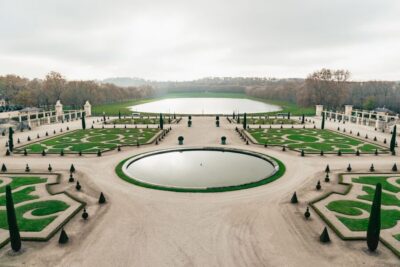
Paris: Versailles Palace and Gardens Full Access Ticket
Read our review →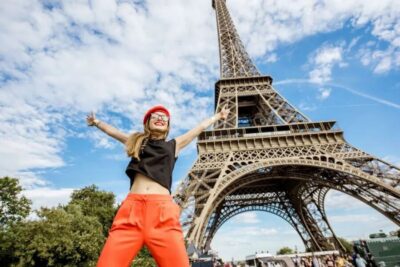
Paris: Eiffel Tower Entry Ticket with Optional Summit Access
Read our review →
Paris: Moulin Rouge Cabaret Show Ticket with Champagne
Read our review →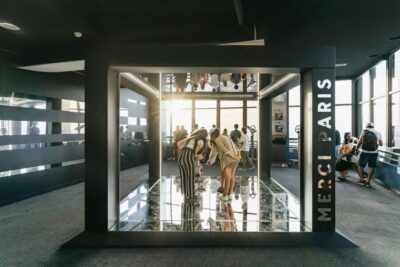
Paris: Montparnasse Tower Observation Deck Entry Ticket
Read our review →
Paris: Louvre Museum Entry Ticket With Host and River Cruise
Read our review →