Reviewed · TICKETS
Paris: Aura Invalides Immersive Experience Entry Ticket
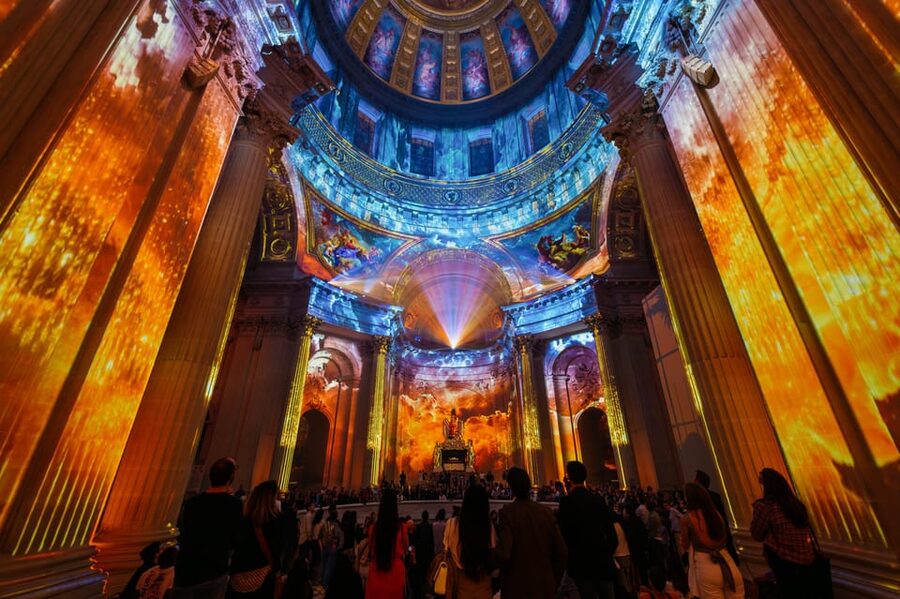
Paris glows differently after dark. At Aura Invalides, orchestral music and projected light turn the Dôme des Invalides into a moving stage, drawing your attention to Napoleon I’s tomb, six chapels, and a vaulted ceiling rising 90 meters overhead. I like the way the show respects the monument instead of treating it as a blank screen, and I like that you move through parts of the building rather than sit through one fixed presentation. The main caution is practical: it can be cold, crowded, loud, and hard to navigate for anyone with mobility or sensory concerns.
This is not a traditional guided history visit. The architecture is the star, with only some narrative and historical material woven into the presentation. You should also know that the ticketed time is not the exact show time. Entry begins around that session, then the performance starts about 20 minutes later, so arriving at the correct Place Vauban entrance matters.
In This Review
- Key points at a glance
- Why Aura Invalides feels different from an ordinary light show
- Arriving at Place Vauban, not the Esplanade
- The first look inside the Dôme
- The six chapels and the moving middle section
- Napoleon I’s tomb under changing light
- Music, projection, and the final emotional lift
- What $33 buys you in Paris
- Cold interiors, stairs, and what to bring
- A practical plan for your evening
- Who should book Aura Invalides?
- FAQ
- Where does Aura Invalides begin?
- How long does the experience last?
- Is Aura Invalides a guided tour?
- Can I arrive late?
- Are children allowed?
- Is the experience accessible to wheelchair users?
- Can I bring a stroller or luggage?
- Are food, drinks, or toilets available inside?
Key points at a glance
- Napoleon’s tomb becomes part of the show: Light and sound draw attention to the monument’s central feature, though some people may wish the tomb received even more visual treatment.
- The show lasts about 50 minutes: That is long enough to feel worthwhile, but short enough to fit neatly into an evening in Paris.
- You move during parts of the presentation: This gives you changing views of the chapels and architecture, rather than one seat-bound spectacle.
- The setting is genuinely historic: The Dôme’s paintings, chapels, dome, and acoustics provide much of the emotional power.
- Plan for a cold, stair-filled visit: Wear warm clothes, leave bulky belongings elsewhere, and expect an ambulatory experience.
- The $33 price is fair for a special evening event: It makes the most sense if you value atmosphere, music, and visual art more than detailed historical interpretation.
Why Aura Invalides feels different from an ordinary light show
Many light shows can be staged in a warehouse, gallery, or purpose-built venue. Aura Invalides has a much harder and more interesting job: it must work with a real monument whose proportions, paintings, tombs, and religious design already command attention.
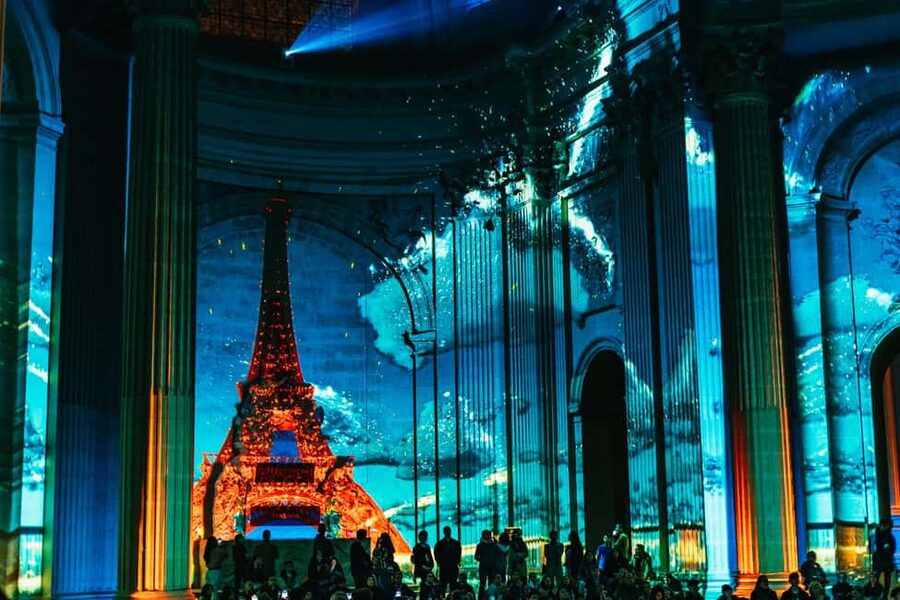
That is why the presentation feels less like a standard laser show and more like a visual conversation with the building. Projections trace architectural lines, lighting shifts the mood of the chapels, and spatialized sound gives the vast interior a strong sense of scale. The technology is impressive, but the Dôme gives it meaning.
I especially like the contrast between old and new. The show does not replace the monument’s identity with flashy effects. Instead, it asks you to look again at features you might otherwise pass quickly, including decorative painting high on the vaulted ceiling and the six chapels arranged around the central space.
The effect can be peaceful, dramatic, or solemn. Some moments feel almost contemplative. Others bring a sudden rush of music and color. If you enjoy experiences that create a mood rather than explain every detail, this is a strong choice.
If your main goal is a clear history lesson, set your expectations lower. There is some narrative and historical context, but the event is primarily a sound and light performance. You will leave with a fresh emotional impression of Les Invalides, not with a full account of French military history.
A few more Paris trips worth weighing up
- Paris: Louvre Museum Timed-Entrance Ticket
★ 4.6 · 71,977 reviews - Disneyland® Paris 1-Day Ticket
★ 4.6 · 49,412 reviews - Paris: Versailles Palace and Gardens Full Access Ticket
★ 4.6 · 41,579 reviews
Arriving at Place Vauban, not the Esplanade
The entrance detail is important enough to repeat: enter via Place Vauban, on the Dôme des Invalides side. The site identifies the Ecole Militaire and St François Xavier metro stations as nearby access points.
Do not go to the Esplanade entrance. No visitors are admitted there for this experience, and the two entrances are about a 12-minute walk apart. That is an avoidable mistake, especially in winter or when you are cutting the timing close.
There may be a line outside. One particularly useful practical tip is not to arrive far too early expecting the queue to move immediately. Ticket checks may begin at the session time, followed by entry into the building. Once inside, the show itself begins approximately 20 minutes after the time printed on your ticket.
That gap is not a second performance or a guided introduction. It is simply part of the entry process and preparation for the presentation. Build it into your evening plans, and do not schedule a restaurant reservation for immediately after the printed ticket time.
Late arrivals are not admitted after the experience begins. I would aim to reach Place Vauban with enough time to find the entrance, pass through ticket control, and settle in without rushing.
The first look inside the Dôme
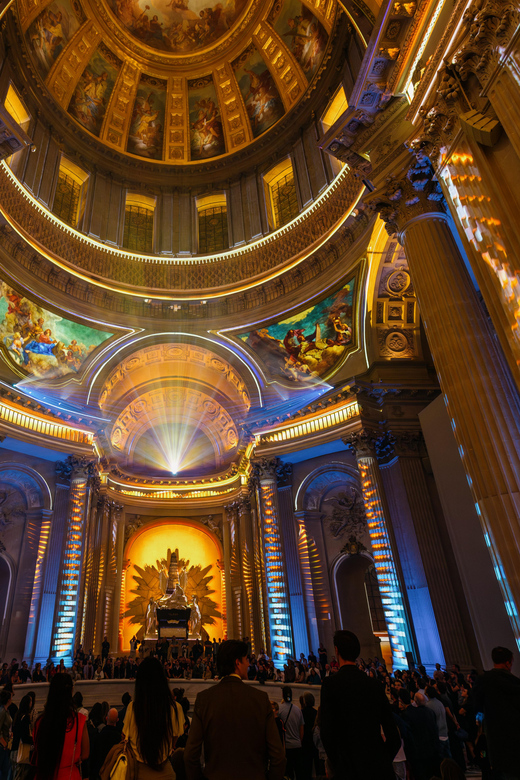
The first few minutes are about getting your bearings. You enter a monumental interior where the central dome, chapels, paintings, and tomb architecture can be difficult to take in all at once. The darkness and lighting design gradually guide your attention.
The Dôme’s scale is part of the show’s power. The vaulted ceiling reaches roughly 90 meters, so projections and lighting can make the building feel even taller. Music also matters here. The acoustics carry orchestral passages through the space, adding weight to scenes that might feel ordinary in a smaller room.
You are not simply watching a rectangle on a wall. You are looking up, across, and around. Depending on where you stand or sit, the same sequence can feel different. That variety is one reason the ambulatory format works well.
The site is not arranged like a theater with comfortable numbered seats. People may sit on staircases or benches, while others stand. The steps can offer a good view, but they do not necessarily have a sturdy backrest. If sitting comfortably is important to you, do not assume every spot will feel like a normal auditorium seat.
One helpful tip from the experience itself is to look for a position facing the main screen or projection area, while keeping enough sightline to the dome and chapels. Some information appears on the screen, so a position directly opposite it can be useful. Still, do not become too concerned about claiming the perfect view. You will have chances to move and see different parts of the building.
The six chapels and the moving middle section
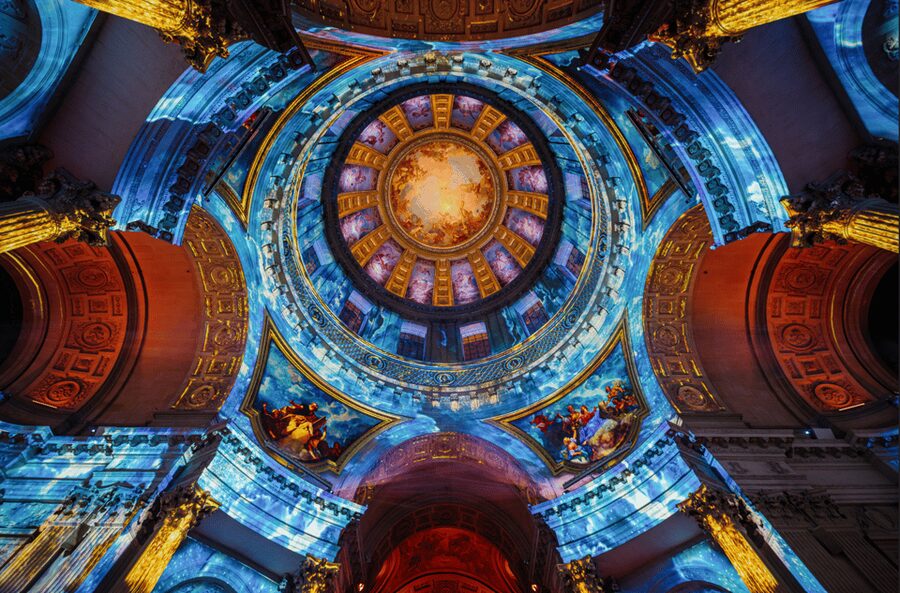
The presentation unfolds in three parts, using image technology, lighting, sound, and special effects. The middle portion is especially valuable because it gives you a chance to move through the building and examine the six chapels.
This is where Aura Invalides feels most connected to the site. Instead of watching the architecture from one position, you can shift your viewpoint and notice how the lights change the paintings, curves, and recesses. Some people find this more engaging than a fixed show because you are not being told exactly where to look every second.
A portion of the program includes time to wander around the chapels and view the tombs. The length has been described as roughly 15 minutes in one account, but the key point is that you should not worry if you cannot see everything from your initial place. Movement is built into the experience.
That freedom has a tradeoff. The building can become crowded, and movement may be less comfortable during busy sessions. If the room fills heavily, you might have to stand or wait for space to open near a staircase. The show remains easy to follow, but the experience is not always quiet or spacious.
I would treat this part as a chance to observe rather than rush. Look at the way projected color runs along an arch or catches a painted surface. Notice how a chapel can appear intimate one moment and monumental the next. The show works best when you let the building lead your eye.
A completely different sort of day in Paris:
- Paris: Evening River Cruise with Music
★ 4.4 · 22,721 reviews - Paris: Eiffel Tower Entry Ticket with Optional Summit Access
★ 4.4 · 20,035 reviews - Paris: Eiffel Tower Summit or Second Floor Access
★ 4.3 · 17,248 reviews - Paris: Louvre Guided Tour with Reserved Access & Boat Cruise
★ 4.3 · 16,353 reviews
Napoleon I’s tomb under changing light
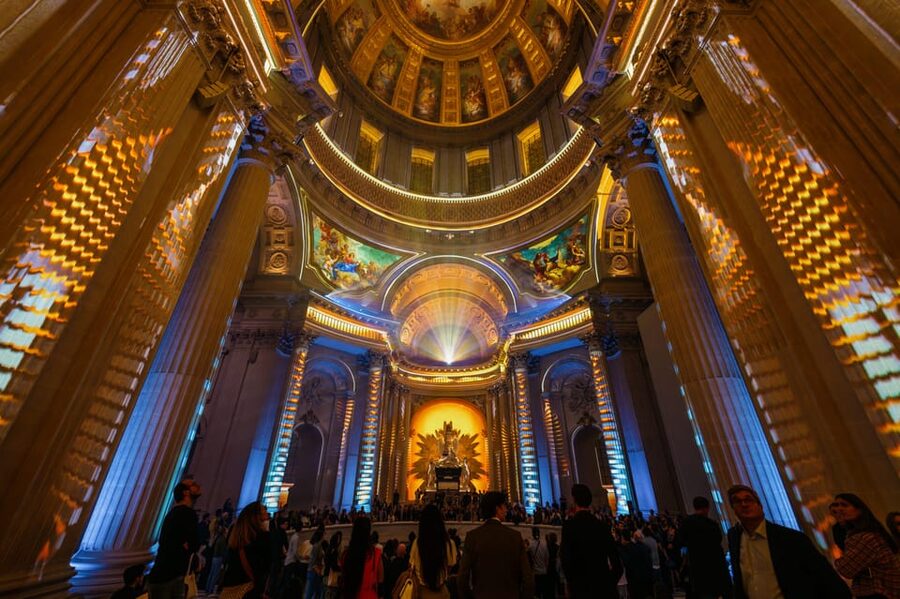
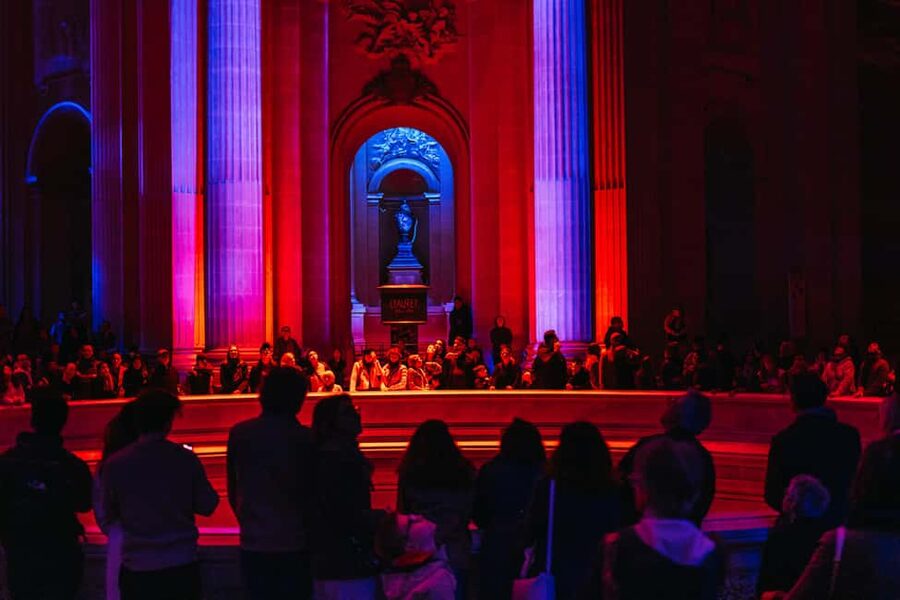
Napoleon I’s tomb is the emotional center of the Dôme. Even without any special effects, it gives the space a strong historical and ceremonial focus. Aura Invalides uses the tomb as one of the main visual anchors, placing modern projection and sound beside a monument connected to one of France’s most famous figures.
The result can feel solemn rather than merely spectacular. Music, darkness, and changing illumination create a sense of collective contemplation. You may find yourself paying attention not only to Napoleon’s tomb, but also to the way people around you fall quiet during the more reflective sections.
There is a fair criticism here. The central pit and tomb are so important that some viewers may wish the effects did more with them. The show draws attention to the tomb, but it does not turn every moment into a dramatic eruption from the center. If you arrive expecting a constant laser spectacle focused on Napoleon, you may find the treatment more restrained than anticipated.
I consider that restraint mostly a strength. Les Invalides is a functioning historic monument, not a concert arena. The best sections make the tomb feel present without overwhelming the building around it.
Music, projection, and the final emotional lift
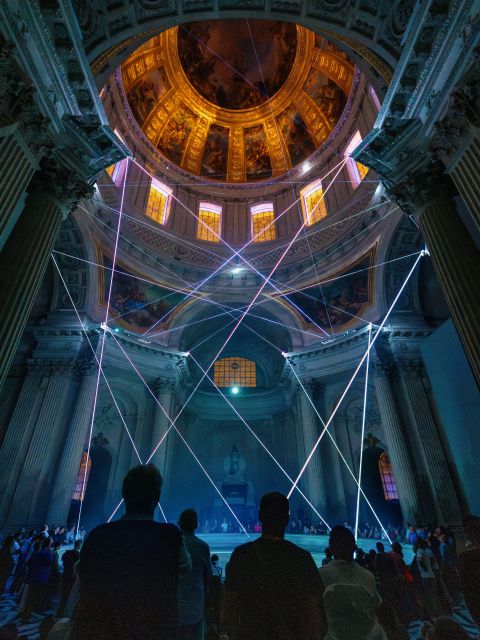
The show’s strongest praise is aimed at its combination of light, music, and architecture. The orchestral score gives the presentation its emotional shape, while video mapping supplies movement and color. Neither element works alone as well as the two together.
The music ranges from quiet and reflective to grand and dramatic. In the louder passages, the building’s acoustics add real force. Sensitive listeners should take the warning seriously: there are flickering lights and high sound levels. Young children and anyone with sound sensitivity may want earplugs or suitable headphones.
The final section brings the separate parts together. By this point, you have seen the dome from different angles, walked near the chapels, and watched the lighting shift the character of the interior. The closing effect is less about teaching a final historical fact and more about leaving you with an emotional response to the monument.
That response varies from person to person. Some people find the show calming and unifying. Others focus on the visual drama and the novelty of seeing Napoleon’s tomb at night. The common thread is that the setting does much of the heavy lifting.
The 50-minute length is well judged. A shorter event might feel thin for a $33 ticket, while a much longer one could become repetitive, especially when you are standing or sitting on steps. Here, the presentation has enough time to develop without taking over your entire evening.
What $33 buys you in Paris
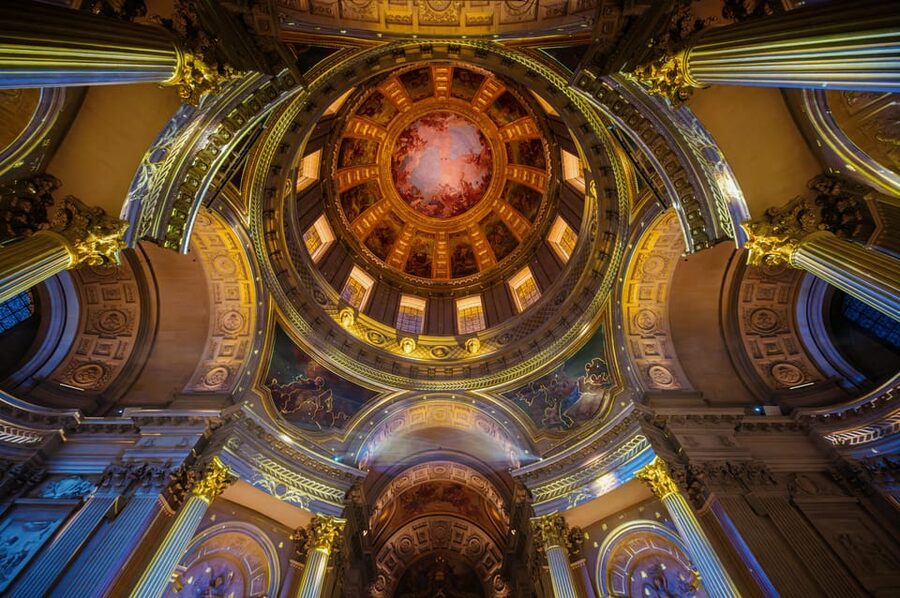
At about $33 per person, Aura Invalides is not a cheap add-on like a quick viewpoint or casual museum visit. It is also not an all-night event. You are paying for a timed, specially produced performance inside one of Paris’s most important monuments.
The value depends on what you want. I think the price is reasonable if you appreciate classical music, lighting design, architecture, or unusual evening activities. The combination would be difficult to reproduce on your own, even if you visit Les Invalides during daylight hours.
The value is weaker if you expect a standard museum admission with a full guide, detailed labels, and freedom to explore at your own pace. Food and drinks are not included, and there are no catering facilities on site. There are also no toilets or changing rooms, so take care of those needs before entering.
A smart plan is to visit the monument in daylight if you want historical background, then attend Aura Invalides later for the visual transformation. One experience helps you understand what you are seeing. The other changes how you feel about it.
The ticket includes only entry to Aura Invalides. Still, the show can fit neatly between dinner and another evening activity, provided you account for the 20-minute delay after the stated session time and allow time to exit.
Cold interiors, stairs, and what to bring
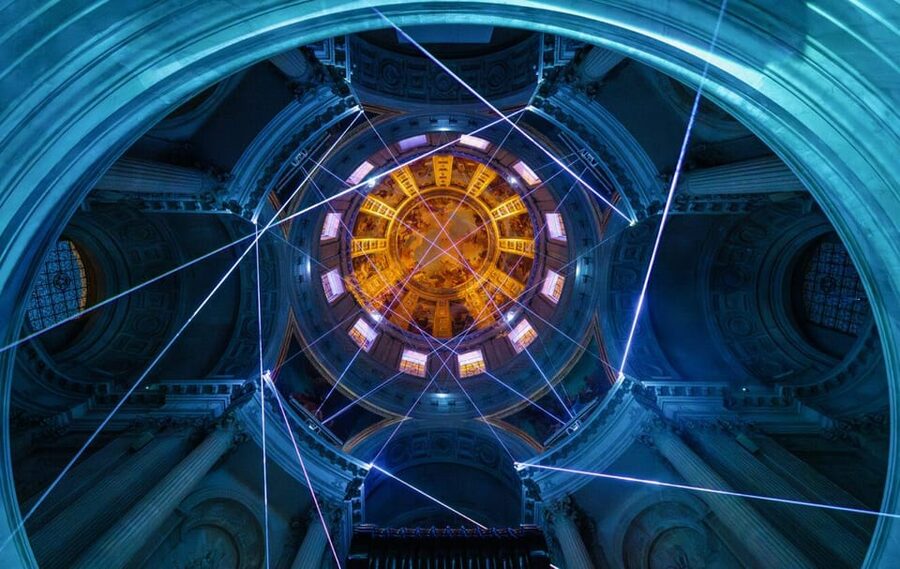
The Dôme is a major historic monument, and it can be quite cold inside. Wear warm clothing, even if the Paris weather outside feels mild. You may also wait outdoors before entry, where wind can make the line feel colder than expected.
This is an ambulatory experience. There are stairs inside and outside the Dôme, and wheelchair users should not book it. Baby strollers are not allowed, and neither are luggage or large bags. The site has no storage facilities, so arrive with only what you can comfortably carry.
Food, drinks, and smoking, including electronic cigarettes, are prohibited throughout the site. These rules are easy to follow, but the lack of toilets and catering makes planning before arrival essential.
Children under five are not recommended for the show. The flashing lights, loud sound, stairs, darkness, and length may be a lot for very young children. Older children who enjoy music and visual effects may have a wonderful time, but bring hearing protection if they are sensitive to volume.
The show is suitable for solo visitors, couples, families with older children, and friends looking for something different after the usual Paris sights. It is also a good indoor option during winter, when an evening river walk or outdoor viewpoint may be less appealing.
A practical plan for your evening
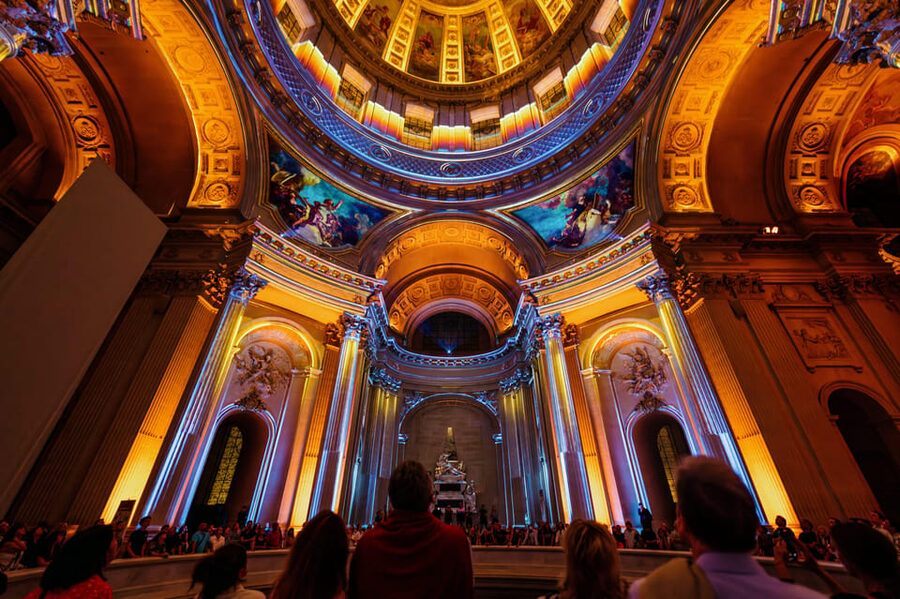
I would begin by checking the exact session time and confirming that the entrance listed is Place Vauban. Then I would use the restroom and eat beforehand, since neither is available inside.
Arrive dressed for a cold wait and avoid bringing a suitcase, large backpack, or stroller. Keep your ticket ready on your phone if that is how you received it. Once inside, find a view that lets you see the main projection area, but be ready to stand or move during the walking portion.
Do not panic if the show does not begin at the printed time. The performance starts about 20 minutes after the indicated session time. Do not arrive late after the actual start, though, because late entry is not permitted.
During the show, look beyond the projections. Watch the paintings, dome, arches, chapels, and tomb change under the light. That is where the experience earns its price.
Who should book Aura Invalides?
I would book this if you have already seen several conventional Paris sights and want an evening activity with a strong sense of place. It is especially good for anyone who enjoys music, visual art, architecture, or atmospheric experiences that do not depend on a long spoken explanation.
I would hesitate if you dislike loud sound, flickering lights, crowds, stairs, or standing. I would also choose a daytime visit instead if your main purpose is to learn the detailed story of Les Invalides and Napoleon.
For most suitable visitors, though, Aura Invalides offers a memorable change of pace. The building is not just a backdrop. Its height, paintings, chapels, acoustics, and tomb shape the entire event. At $33, it is a fair splurge for a 50-minute Paris evening that feels genuinely different from a standard museum visit.
FAQ
Where does Aura Invalides begin?
Enter via Place Vauban, on the Dôme des Invalides side, near the Ecole Militaire or St François Xavier metro stations. Visitors will not be admitted through the Esplanade entrance.
How long does the experience last?
The show lasts about 50 minutes. The performance begins approximately 20 minutes after the session time shown on your ticket.
Is Aura Invalides a guided tour?
No. The ticket provides entry to the Aura Invalides show. There is some narrative and historical material, but the experience is mainly a multimedia light, sound, and projection presentation.
Can I arrive late?
No. Latecomers are not admitted after the experience begins. Allow time to reach Place Vauban and pass through the entry line.
Are children allowed?
Children under five are not recommended for the experience. The show includes flickering lights, high sound volume, stairs, and movement through the building.
Is the experience accessible to wheelchair users?
No. The experience is not suitable for wheelchair users. It is ambulatory and includes stairs inside and outside the Dôme des Invalides.
Can I bring a stroller or luggage?
No. Baby strollers, luggage, and large or bulky items are not allowed, and the site has no changing rooms or storage facilities.
Are food, drinks, or toilets available inside?
No. The site has no catering facilities or toilets. Food, drinks, and smoking, including electronic cigarettes, are prohibited throughout the site.
Recently added around Paris
- Private Half-Day Guided Tour of Paris★ 4.5 · 48 reviews
- 2 hour outdoor group activity in Paris: SAINT GERMAIN★ 5.0 · 48 reviews
- Paris Dinner Show Opera Bel Canto★ 4.5 · 48 reviews
- Paris Vintage Tour by Night on a Sidecar with Champagne★ 5.0 · 48 reviews
- Paris Photoshoot: Eiffel Tower Exclusive Private Experience★ 5.0 · 48 reviews
- Secrets & Scandals of the Louvre – Limited to 6 Guests★ 5.0 · 48 reviews
- From Paris: Versailles Full-Day Guided Tour with Lunch★ 4.9 · 48 reviews
- Paris: Louvre Mona Lisa Discovery Guided Tour with Ticket★ 4.9 · 48 reviews
Tickets, compared.

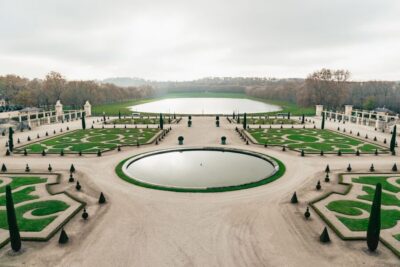
Paris: Versailles Palace and Gardens Full Access Ticket
Read our review →
Paris: Eiffel Tower Entry Ticket with Optional Summit Access
Read our review →
Paris: Moulin Rouge Cabaret Show Ticket with Champagne
Read our review →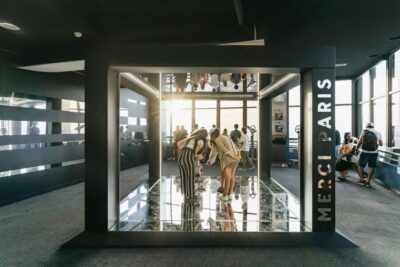
Paris: Montparnasse Tower Observation Deck Entry Ticket
Read our review →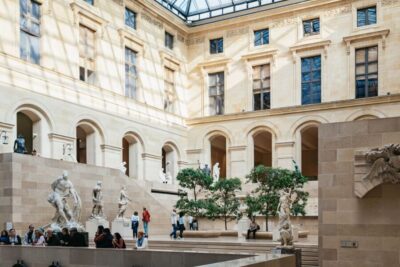
Paris: Louvre Museum Entry Ticket With Host and River Cruise
Read our review →