
Reviewed · SEINE RIVER CRUISES
Paris: Cruise on the Saint-Martin Canal and the Seine River
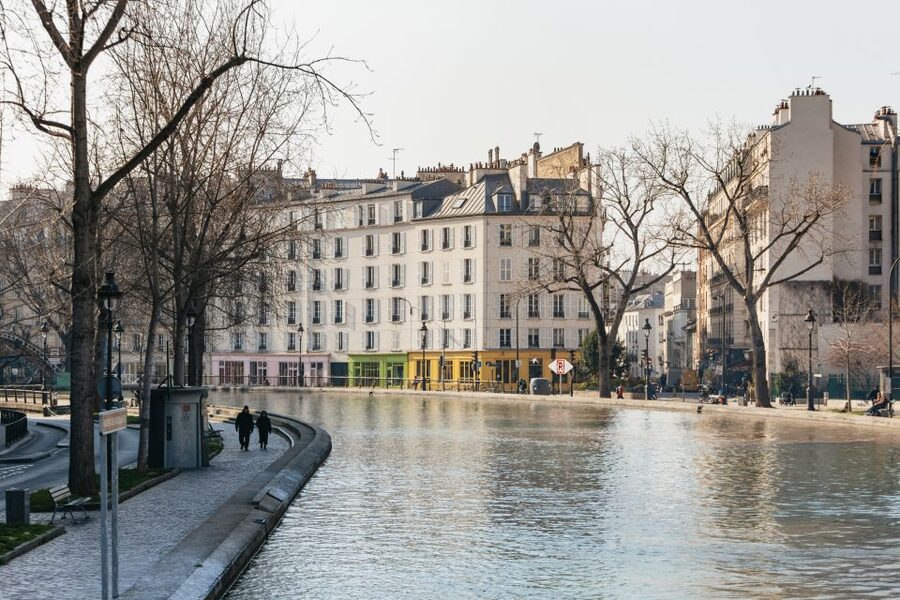
Paris has a secret side best seen by water. This 2.5-hour cruise links the Canal Saint-Martin with the Seine, giving you quiet neighborhoods, working locks, bridges, and a mile-long tunnel before the grand finale near Notre Dame. I like the unusual route and the strong live commentary in French and English. The main drawback is that the nine locks slow the boat, and the meeting point at Parc de la Villette can be tricky to find.
I also like the value. At about $28 per person, you get a long one-way journey across several parts of Paris, rather than another short loop on the central Seine. The tunnel beneath the city is memorable, and the cruise ends near the Musée d’Orsay, making it easy to pair with a museum visit or a walk along the river. Bring a jacket, and do not expect a food service beyond drinks at the onboard bar.
In This Review
- Key points to know before you go
- Why this Paris canal cruise is different
- Starting at Parc de la Villette
- Bassin de la Villette and the Rue de Crimée bridge
- The locks near Récollets and Hotel du Nord
- Pedestrian bridges, chestnut trees, and canal-side Paris
- The mile-long underground canal vault
- Emerging at Port de l’Arsenal and Place de la Bastille
- The final Seine stretch to Musée d’Orsay
- Commentary, comfort, and onboard service
- Is $28 a fair price?
- Who should book this cruise?
- Practical tips for a smoother ride
- Should you book the Canal Saint-Martin and Seine cruise?
- FAQ
- How long is the cruise?
- Where does the cruise begin?
- Where does the cruise finish?
- How do I find the departure point from the Metro?
- Which languages are available?
- Does the cruise pass through locks?
- Does the cruise enter an underground tunnel?
- Does the cruise operate in bad weather?
- Is food included?
- Can I cancel the booking?
Key points to know before you go
- Nine canal locks turn the journey into a close look at Parisian water engineering, but they also create stretches of waiting.
- The underground vault lasts more than a mile, with small openings that send shafts of light onto the water and walls.
- The route begins at Parc de la Villette in the 19th district and finishes near the Musée d’Orsay after passing Notre Dame.
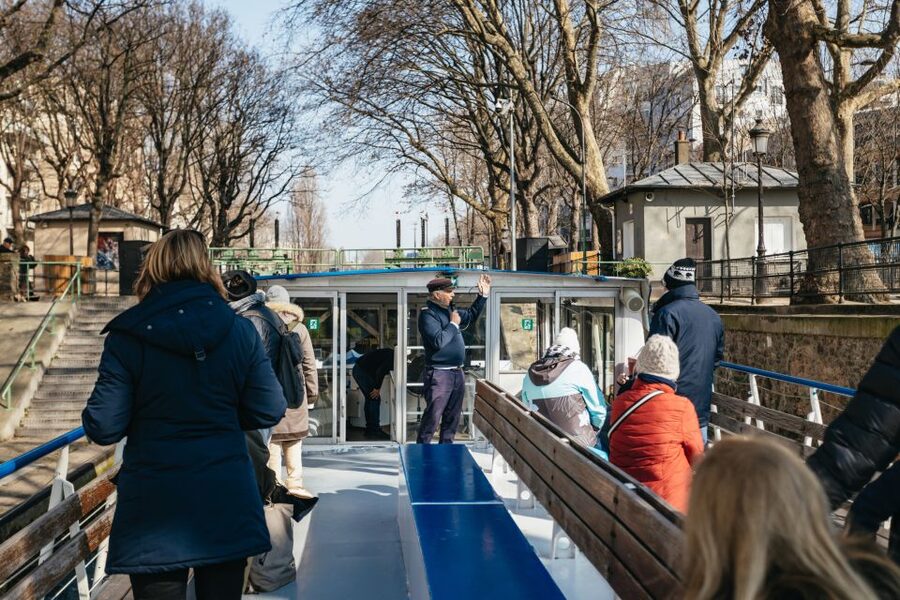
- Live French and English commentary adds stories about Paris, films, neighborhoods, canals, and old water systems.
- Open-air and indoor seating let you adjust to the weather, though some departures may feel crowded on the upper deck.
- The trip runs in rain or shine, with daily departures mainly from May through August and limited availability at other times.
Why this Paris canal cruise is different
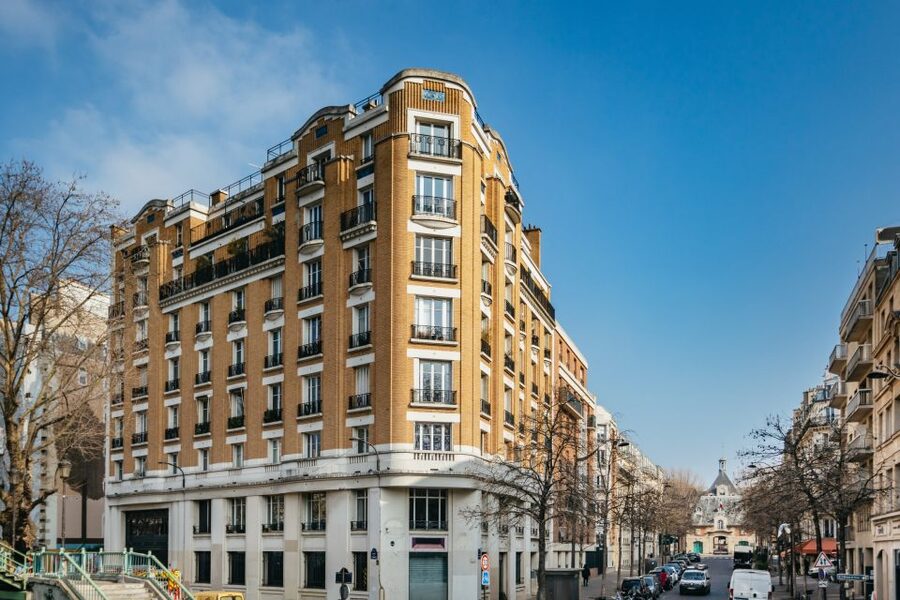
A standard Seine cruise gives you the postcard version of Paris: the Eiffel Tower, grand facades, Notre Dame, and the Louvre seen from a broad river. This cruise gives you that river view only at the end. Most of the journey follows Canal Saint-Martin, where Paris feels more local, slower, and less polished.
You pass through a chain of locks, slide under low bridges, and watch the canal change height one section at a time. The route also reveals parts of the city that are easy to miss on foot, including the Bassin de la Villette, the Récollets area, and the canal paths near the former Hotel du Nord.
The experience is best understood as a moving lesson in how Paris works. You are not simply looking at monuments. You are seeing how a city built waterways, moved water, handled boats, and created public spaces beside the canals.
That makes this a good choice if you have already seen the central sights or want something less predictable. If your main goal is a long, uninterrupted view of the Eiffel Tower, choose a classic Seine cruise instead.
More Boat Tours in Paris
- Paris: Evening River Cruise with Music
★ 4.4 · 22,721 reviews - Paris: Louvre Guided Tour with Reserved Access & Boat Cruise
★ 4.3 · 16,353 reviews - Paris: Big Bus Hop-On Hop-Off Tour with Optional Cruise
★ 4.4 · 13,279 reviews
Starting at Parc de la Villette
The meeting point is outside Parc de la Villette at 211 Avenue Jean Jaurès in Paris’s 19th district. From the Porte de Pantin Metro station, use Exit 1, walk straight ahead, and follow the Galerie de la Villette, the pedestrian route with the gray, wave-shaped roof.
Continue toward the canal. Look for the white Paris Canal board on the left. This last step matters because Parc de la Villette is large and can feel like a maze, especially if you arrive by taxi or ride-share and are dropped at the back of the park.
Allow extra time to find the boat. One useful improvement would be clearer directions for cars and ride-share vehicles, since the exact departure point is not obvious from every approach. Public transport is the safer choice for arriving without a last-minute hunt.
The boat begins in the center of the park near the Bassin de la Villette. This opening section is calm and spacious, with water framed by modern park facilities and long pedestrian paths. It does not look like the Paris of picture books, and that is part of the point.
Boarding early is wise if you want to sit with your group or claim a place outside. On some departures, a large portion of the upper deck is taken by folding chairs, and a full boat can make movement awkward. Groups of more than 40 people are possible at any time of year.
Bassin de la Villette and the Rue de Crimée bridge
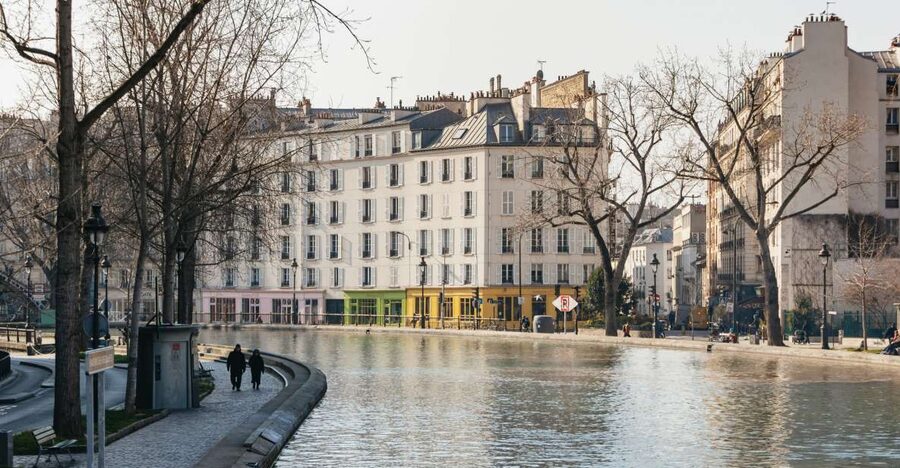
The boat moves from the basin toward the Rue de Crimée bridge, a high bridge that crosses the waterway. The canal is narrow enough for you to notice its working parts, yet wide enough for a relaxed ride.
This is a good time to settle in and listen to the guide. Commentary is given in French and English, often switching between the two languages. The strongest guides keep it lively with history, local stories, and humor rather than reciting a list of dates.
English clarity can vary by guide and by the boat’s sound system. On some departures, people have found it hard to hear or understand parts of the commentary. Sitting near the guide or inside near the speakers may help, though you give up some open-air views.
You will see Paris from a different angle here. Instead of grand riverfront buildings, you get canal walls, bridges, planted paths, and everyday neighborhood scenes. People walk, fish, and sit beside the water. The setting feels more like a local recreation route than a sightseeing circuit.
The locks near Récollets and Hotel du Nord
The first lock comes near the Récollets Center. The boat enters a chamber, gates close, and the water level changes before the next gate opens. This process repeats nine times during the canal portion.
The locks are not a minor detail. They are one of the main reasons to choose this cruise, especially if you enjoy machinery, city planning, or old infrastructure. You can watch the crew and canal system work at close range, rather than hearing about it from a museum label.
The first few locks are usually the most absorbing because you are learning the process. After the fourth or fifth, the pattern can feel repetitive. The boat may spend a good part of the journey stationary while water levels equalize. If you need constant motion and a long list of landmarks, this may test your patience.
For everyone else, the slower pace is useful. It gives you time to look around and notice details along the canal. The guide may explain how the waterway shaped Paris, how the locks operate, and how the surrounding neighborhoods changed.
The Hotel du Nord is one of the route’s better-known sights. Its name is linked with the classic French film Hôtel du Nord, which gives the canal a connection to Parisian cinema as well as urban history. The commentary may also touch on stories that are not obvious from the water, including old transport systems and the city’s water supply.
More Seine river cruises:
- Paris: Seine Cruise & Crepe Tasting near the Eiffel Tower
★ 4.4 · 11,231 reviews - Paris: Seine River Panoramic Views Dinner Cruise
★ 4.3 · 10,611 reviews - Paris: Eiffel Tower Access by Elevator & Seine River Cruise
★ 4.6 · 7,329 reviews - Paris: 3-Course-Dinner Cruise on the Seine with live music
★ 4.7 · 7,248 reviews
Pedestrian bridges, chestnut trees, and canal-side Paris
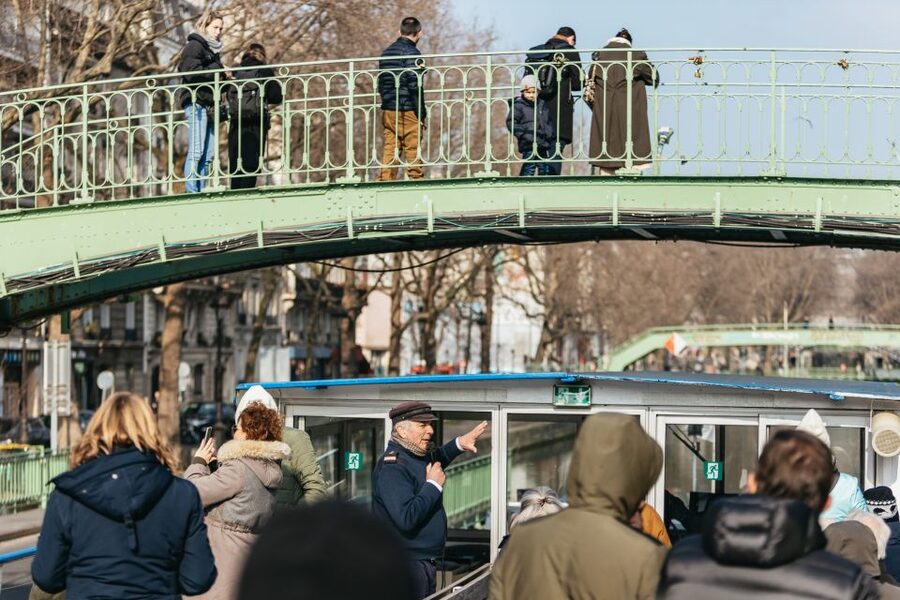
After the early locks, the canal becomes particularly pleasant. Pedestrian bridges cross above the boat, chestnut trees line portions of the water, and anglers sit along the banks.
This is the section for slowing down. The cruise does not present one major monument after another. Instead, it lets you observe how Parisians use the canal as a place to walk, pause, fish, and enjoy the water.
The boat’s one-way route also gives the day a practical shape. You begin in the northeast of Paris and finish near the historic center. There is no need to return to the original departure point after the cruise.
Seating is split between an open upper deck and a lower deck with large windows that can be opened for fresh air. The lower level also has a bar selling drinks, including wine on some departures, but food is not provided. Bring a snack if you want lunch on the boat, particularly because the cruise ends after midday.
The open deck is best for photographs and fresh air, but it can be chilly even in warmer months. Spring and autumn departures may feel cold outside, and a light rain can change the comfort level quickly. The cruise operates in rain or shine, so dress for conditions instead of trusting the forecast alone.
The mile-long underground canal vault
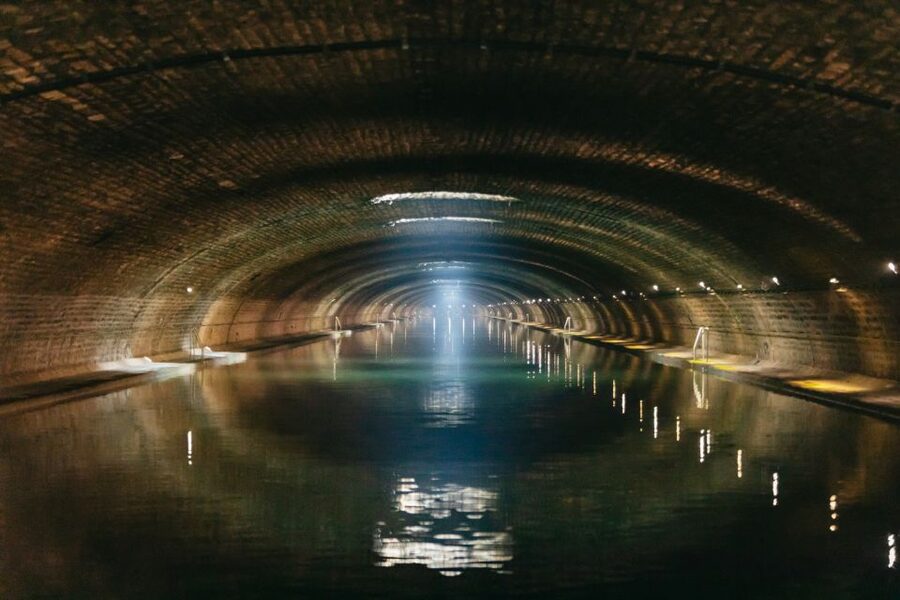
The most unusual section arrives when the boat enters the underground canal. For more than a mile, the route passes through a dark vault beneath the streets of Paris.
The tunnel is not completely black. Small openings allow light to reach the water, creating bright patches and reflections on the walls. The effect is especially striking when sunlight bounces across the surface and breaks up the darkness.
This is the part that makes the cruise more than a scenic ride. You are passing through an engineered space that most people never see from street level. The sudden change from leafy canal paths to darkness gives the trip a clear dramatic middle.
The tunnel lasts long enough to feel like a real part of the route, not a quick novelty. It is also a good reason to keep your expectations realistic. This is not an illuminated tourist attraction with displays along the walls. It is a working underground waterway, atmospheric because of its simplicity.
If you are taking photographs, the low light will be difficult. I would put the camera away for part of the passage and watch the light move instead. The experience is more about mood and engineering than perfect pictures.
Emerging at Port de l’Arsenal and Place de la Bastille
The boat returns to daylight at Port de l’Arsenal. Ahead, you see the July Column at Place de la Bastille, one of the clearest visual markers on the route.
This moment works because of the contrast. A few minutes earlier, you were under the city in darkness. Now you are facing one of Paris’s famous public spaces, with the canal opening into a wider urban setting.
Port de l’Arsenal also marks the change from Canal Saint-Martin to the Seine. The first part of the cruise has been narrow, enclosed, and technical. The river section is broader and more familiar, with open views and major landmarks.
The transition gives you a sense of how different Paris can feel within one boat ride. It also explains the cruise’s appeal for repeat visitors. You see central Paris, but only after spending most of the morning or afternoon in areas that a normal sightseeing boat does not cover.
The final Seine stretch to Musée d’Orsay
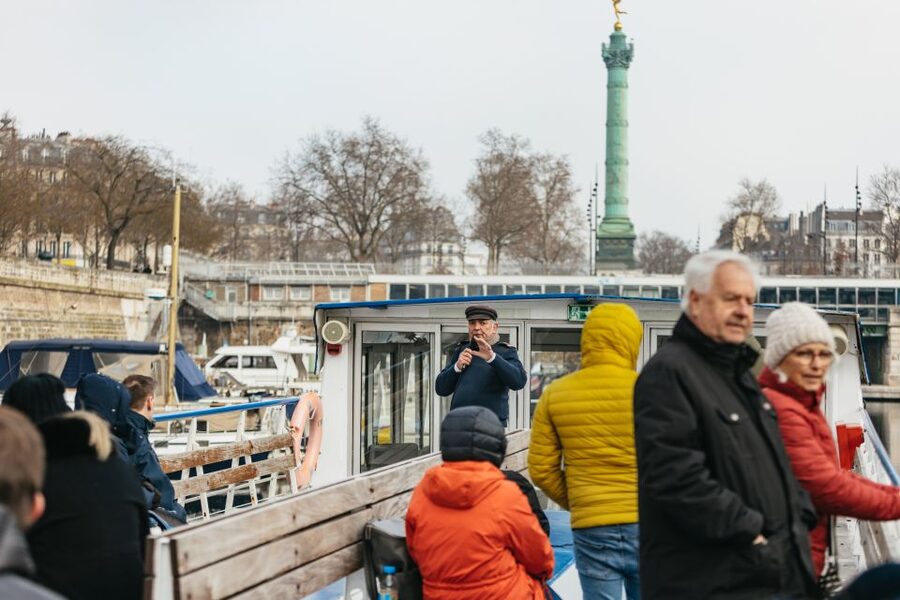
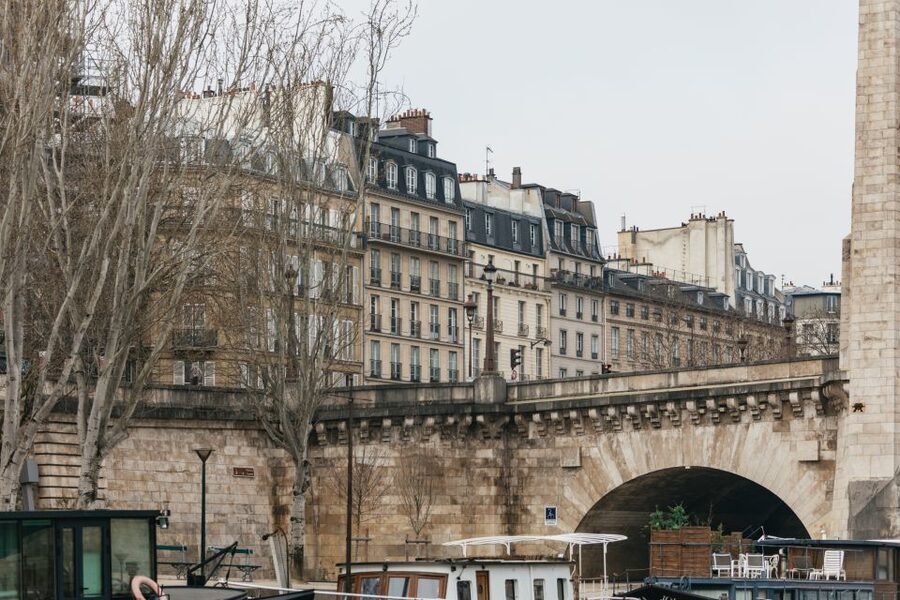
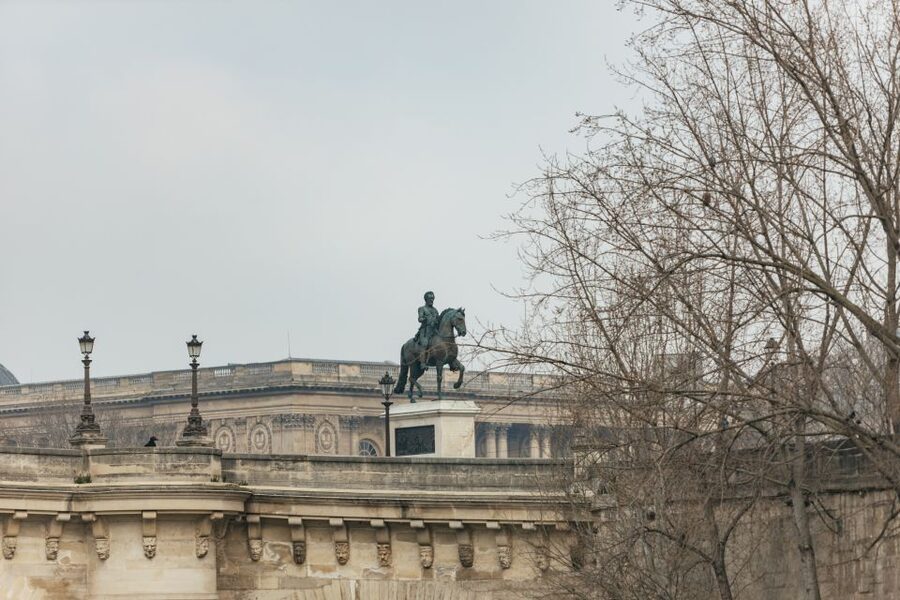
The Seine section is shorter than the canal section. The boat passes the Île Saint-Louis and Île de la Cité, then continues by Notre Dame before finishing near the Musée d’Orsay.
This is the classic Paris finish. The river opens the views, and the stone facades, bridges, and cathedral create the grand visual payoff that the earlier canal route deliberately holds back.
Some people may find the Seine portion too brief. The boat does not continue far upriver toward every major river landmark, and the final stretch is mainly a scenic transfer to the Musée d’Orsay. If you want a full central-Seine circuit, choose a dedicated one-hour river cruise instead.
Still, ending at the Musée d’Orsay is convenient. You can visit the museum afterward, walk along the Left Bank, or continue toward the Tuileries and Louvre area. Check your personal schedule before booking, since the boat does not return you to Parc de la Villette.
The arrival point also makes the cruise useful as a sightseeing route rather than only a round-trip activity. You see less familiar Paris first, then finish in the heart of the city.
Commentary, comfort, and onboard service
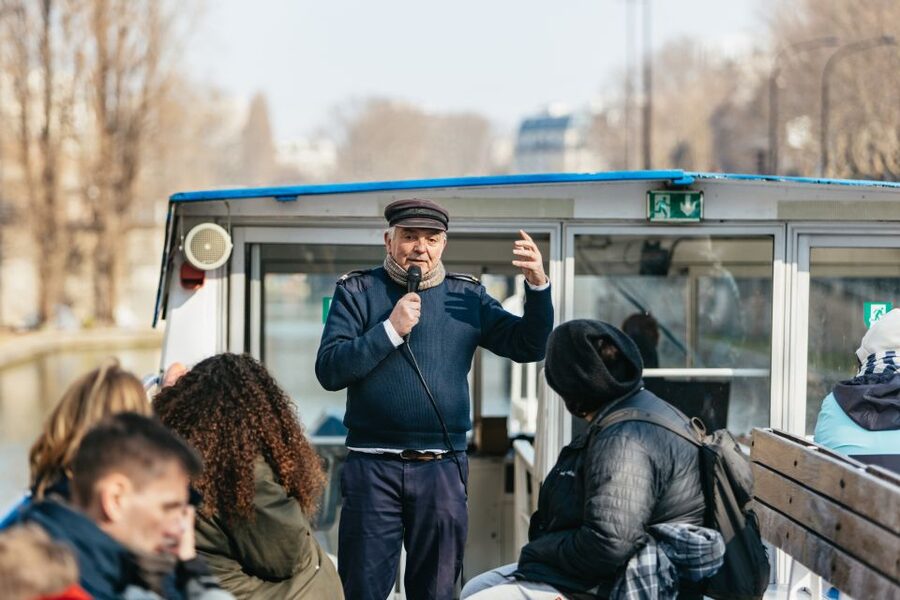
The live guide is central to the quality of this experience. The best commentary connects the locks, canal design, neighborhoods, films, and monuments into one story. Guides named François and Bruno have been praised for clear historical detail, humor, and an ability to keep the ride engaging for the full 2.5 hours.
The commentary is intended to be bilingual in French and English. Some departures have also included German commentary, but French and English are the listed languages, so do not count on German being available.
Sound quality is worth considering. At times, the microphone has been difficult to hear, and an accent or fast delivery can make English sections challenging. The guide may be excellent, yet you can still miss information if you sit too far away or the boat is noisy.
The boat offers both indoor and outdoor seating. The lower deck is useful in bad weather, with windows that provide views while offering more shelter. The upper deck gives you the best sense of the canal, bridges, and sky, but it can become crowded when the boat is full.
There is a bar, but no food service is included. Drinks may be available for purchase, including wine, but bring your own snack if you want something to eat. The cruise is long enough that this small bit of planning makes a difference.
Is $28 a fair price?
At $28, this is good value for a 2.5-hour cruise with a bilingual guide and a route that combines two very different waterways. A short Seine cruise may give you more famous monuments per minute, but it will not include nine locks, canal-side neighborhoods, or the underground vault.
The price is especially fair if you treat the cruise as both transportation and sightseeing. You start at Parc de la Villette and finish near the Musée d’Orsay, covering a substantial stretch of Paris without retracing your steps.
The value is weaker if you dislike slow travel. Waiting at nine locks means the boat does not cover as much ground as a fast river cruise. You are paying for the process as well as the scenery.
Free cancellation up to 24 hours before departure and reserve-now, pay-later booking make it easier to fit the cruise around a changing schedule. Availability is strongest from May through August, while departures outside those months can be limited. Check the exact date and start time before building your day around it.
Who should book this cruise?
I would recommend it to families, couples, and repeat visitors who want a calm activity with a bit of engineering and local color. It works well for a mixed-age group because you can watch the locks, listen to stories, photograph the tunnel, or simply sit and enjoy the ride.
It is also a strong choice for anyone who has already taken a standard Seine cruise. You still get Notre Dame, the islands, and central river views, but the main experience happens elsewhere.
You may want to skip it if you have only one day in Paris and need to cover the Eiffel Tower, Louvre, Arc de Triomphe, and other essential sights. The northern departure point takes time to reach, and the locks make the schedule leisurely.
People sensitive to cold should plan carefully. The outdoor deck can be chilly, and the cruise runs in all weather. A jacket is useful even on a pleasant day.
Practical tips for a smoother ride
- Arrive early at Parc de la Villette, especially if you want outdoor seats or need time to find the canal.
- Use Porte de Pantin Metro station, Exit 1, and follow the Galerie de la Villette roof toward the water.
- Sit where you can hear the guide clearly, particularly if English commentary matters to you.
- Bring a jacket, even in summer, because the boat is exposed and the underground section can feel cool.
- Pack a snack. Drinks may be sold onboard, but food is not provided.
- Expect the nine locks to take time. Think of them as part of the attraction, not an interruption.
- Plan what you will do near the Musée d’Orsay after arrival, since the cruise is one-way.
- Keep the day flexible in poor weather. Heavy conditions can affect the trip or its final section.
Should you book the Canal Saint-Martin and Seine cruise?
Book it if you want Paris beyond the usual postcard route. The nine locks, canal bridges, underground vault, Port de l’Arsenal, and final approach to Notre Dame create a varied 2.5-hour outing for a reasonable price.
Do not book it expecting a fast monument tour or a full-length Seine cruise. The ride is deliberately slow, commentary quality can vary, and the meeting point needs careful navigation.
For my money, this is one of the better Paris choices for a second visit, a family afternoon, or anyone curious about the city’s working side. Bring a coat, allow time to find the boat, and enjoy the locks as part of the story.
FAQ
How long is the cruise?
The cruise lasts about 2.5 hours.
Where does the cruise begin?
It begins at Parc de la Villette in Paris’s 19th district, near 211 Avenue Jean Jaurès.
Where does the cruise finish?
The boat finishes near the Musée d’Orsay after traveling along the Seine.
How do I find the departure point from the Metro?
Use Porte de Pantin station, Exit 1. Walk straight ahead and follow the Galerie de la Villette, the pedestrian area with a gray undulating roof, until you reach the canal and the white Paris Canal board.
Which languages are available?
Live commentary is provided in French and English. Some departures may also include German commentary, but French and English are the listed languages.
Does the cruise pass through locks?
Yes. The route passes through nine locks on the Canal Saint-Martin.
Does the cruise enter an underground tunnel?
Yes. The boat passes through an underground vault more than one mile long, with openings that let in small amounts of light.
Does the cruise operate in bad weather?
Yes. The cruise takes place rain or shine.
Is food included?
No food is included. Drinks may be available at the onboard bar, and bringing your own snack is practical.
Can I cancel the booking?
You can cancel up to 24 hours in advance for a full refund. A reserve-now, pay-later option is also available.
Recently added around Paris
- Private Half-Day Guided Tour of Paris★ 4.5 · 48 reviews
- 2 hour outdoor group activity in Paris: SAINT GERMAIN★ 5.0 · 48 reviews
- Paris Dinner Show Opera Bel Canto★ 4.5 · 48 reviews
- Paris Vintage Tour by Night on a Sidecar with Champagne★ 5.0 · 48 reviews
- Paris Photoshoot: Eiffel Tower Exclusive Private Experience★ 5.0 · 48 reviews
- Secrets & Scandals of the Louvre – Limited to 6 Guests★ 5.0 · 48 reviews
- Paris: Louvre Mona Lisa Discovery Guided Tour with Ticket★ 4.9 · 48 reviews
- From Paris: Versailles Full-Day Guided Tour with Lunch★ 4.9 · 48 reviews
Seine River Cruises, compared.
Paris: Seine Cruise & Crepe Tasting near the Eiffel Tower
Read our review →
Paris: Seine River Panoramic Views Dinner Cruise
Read our review →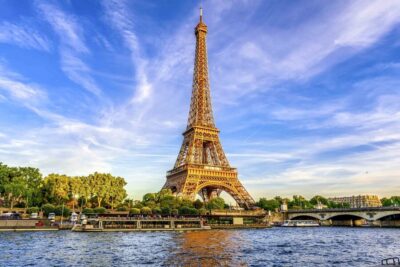
Paris: Eiffel Tower Access by Elevator & Seine River Cruise
Read our review →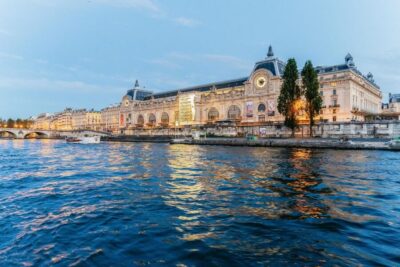
Paris: 3-Course-Dinner Cruise on the Seine with live music
Read our review →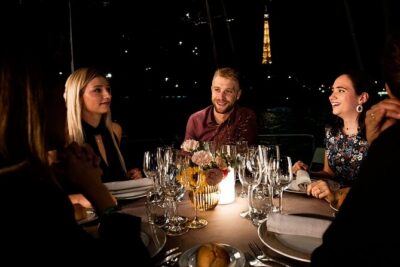
Bateaux Parisiens Seine River Gourmet Dinner & Sightseeing Cruise
Read our review →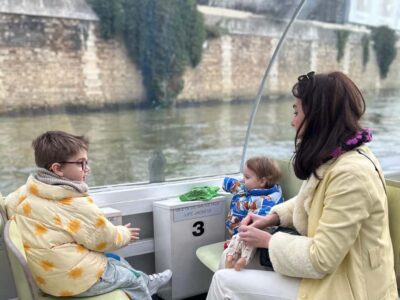
Paris: Hop-On Hop-Off Seine Cruise Pass with 9 Stops
Read our review →
Paris : 3-Course Gourmet Dinner Cruise on Seine River
Read our review →Browse the lists this tour appears in