
Reviewed · EVENING EXPERIENCES
Paris: Discovery Hop-On Hop-Off and Paris by Night Tour
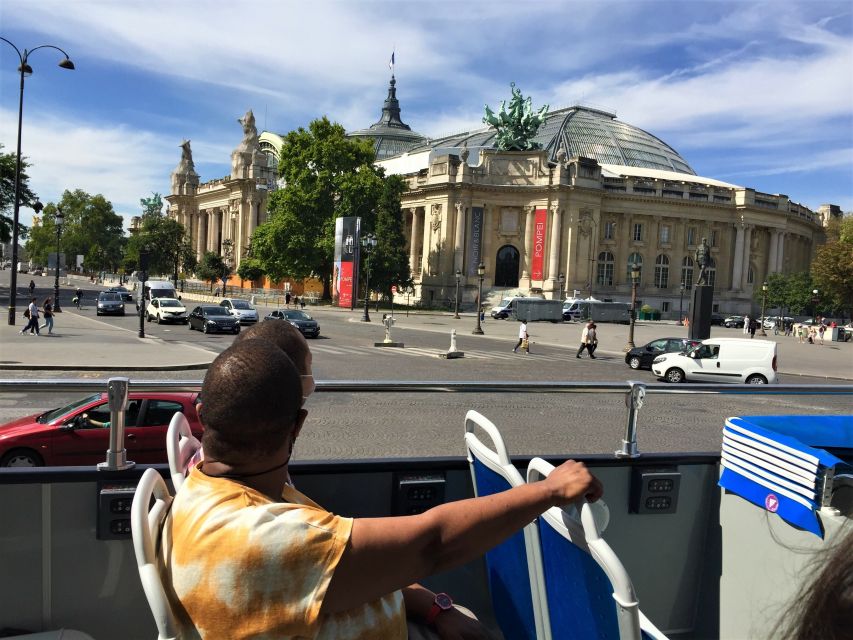
Paris rewards a good ride plan. I like the wide daytime route linking the Louvre, Notre-Dame, Eiffel Tower, and Montmartre area, and I like having a two-hour evening circuit to see Paris lit up without changing hotels or metro lines. The main catch is traffic: daytime stops can take longer than expected, so this works best as a sightseeing framework, not a precision transport service.
At $65 per person, the experience can be good value if you use the bus for a full day, or across the selected one to three day period, and add the night ride. It is less convincing if you only stay on board for a short panoramic loop. Audio commentary is included in 10 languages, though the quality of the content may not satisfy anyone seeking serious historical detail.
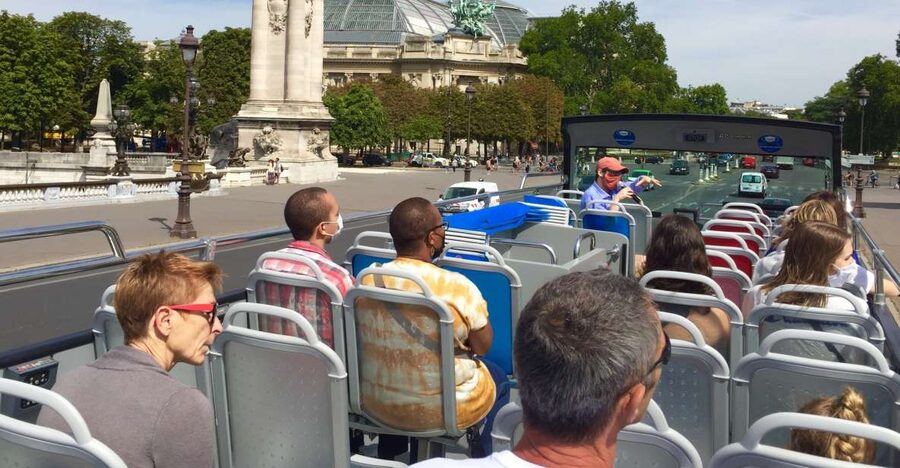
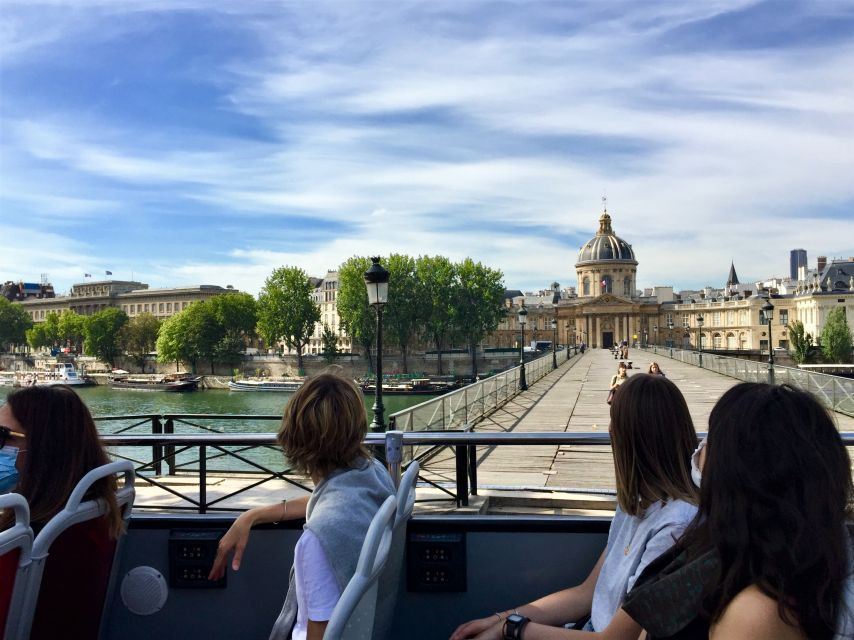
The open-top seats give you excellent views of grand boulevards and monuments. I would use the bus to get oriented, hop off at two or three major sights, and save the night tour for a relaxed first or last evening in Paris.
In This Review
- Key points to know before booking
- What this Paris bus tour actually gives you
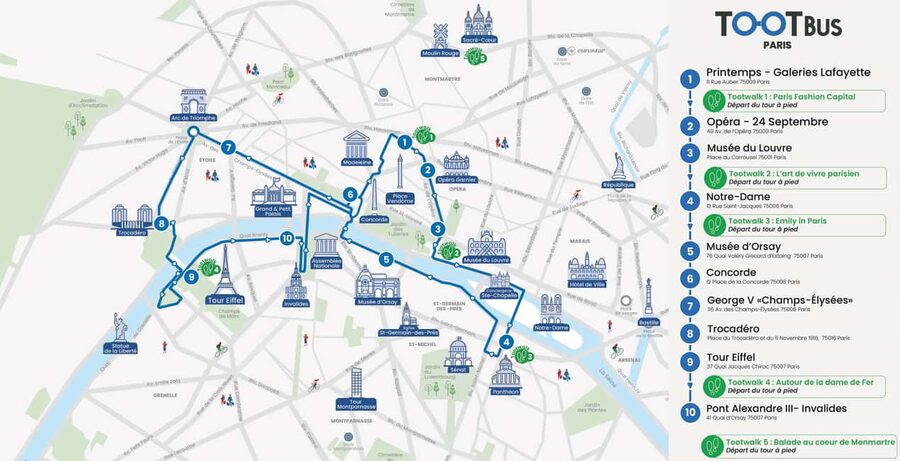
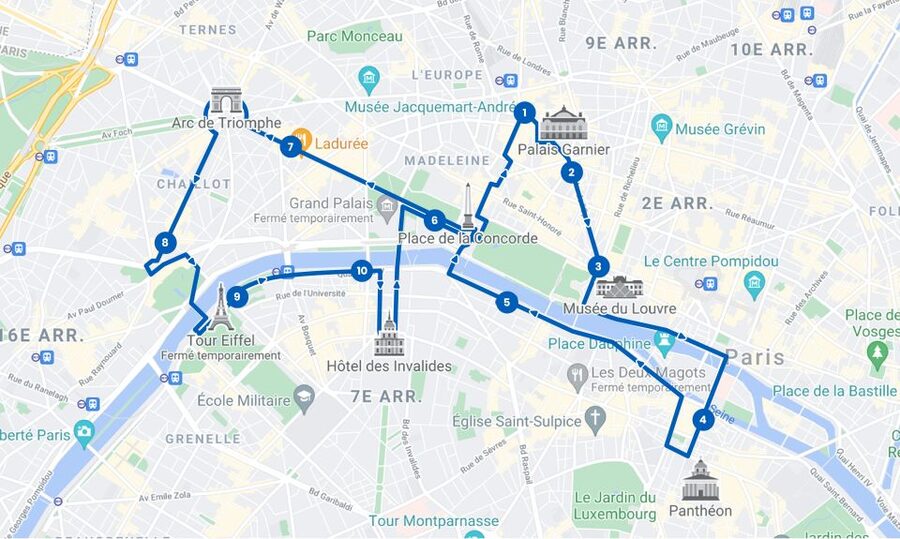
- The blue route, stop by stop
- Opéra, Printemps, and Galeries Lafayette
- Louvre Museum and the current stop change
- Notre-Dame, Sainte-Chapelle, and the Latin Quarter
- Pantheon and Luxembourg
- Musée d’Orsay
- Place de la Concorde and the Champs-Élysées
- Arc de Triomphe and the Lido area
- Trocadéro and the Eiffel Tower
- Pont Alexandre III and Les Invalides
- Why the night tour is the stronger half
- The audio guide: useful orientation, not a history course
- Five walking tours add value between bus rides
- How to get good value from the $65 price
- Who should book this experience
- Should you book the Paris Discovery and Night Tour?
- FAQ
- Where does the daytime hop-on hop-off route start?
- Where is the Louvre stop?
- Where does the night tour depart?
- How long is the night tour?
- Which languages are available for the audio guide?
- Is there an audio guide for children?
- How long is the daytime ticket valid?
- Are the buses wheelchair accessible?
- What are the approximate daytime operating hours?
Key points to know before booking
- The night tour lasts about two hours and departs from Place du Carrousel du Louvre at the time printed on your e-ticket.
- The daytime network covers major Paris sights, including the Louvre, Notre-Dame, Musée d’Orsay, Arc de Triomphe, Trocadéro, and Eiffel Tower.
- Traffic affects the pace, especially during the day, so avoid planning timed museum entries around exact bus arrival times.
- The app tracks buses in real time, which is useful when you are deciding whether to keep waiting or walk to the next stop.
- Children get their own audio commentary in English and French, while adult commentary is available in Spanish, Chinese, English, French, German, Italian, Japanese, Arabic, Portuguese, and Russian.
- The Louvre stop has been relocated from Place du Carrousel to Comédie-Française at 3 Avenue de l’Opéra until further notice.
What this Paris bus tour actually gives you
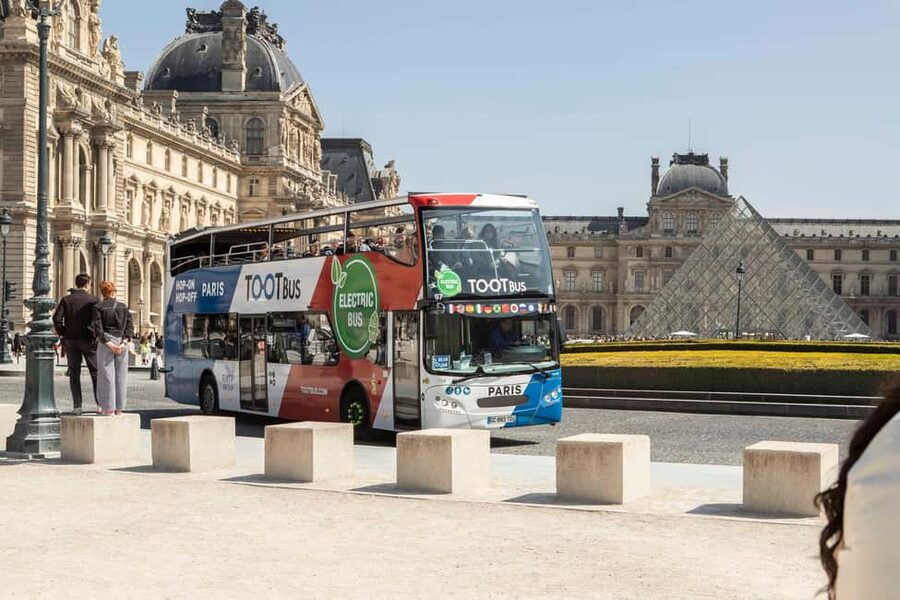
This Tootbus package combines two different experiences. During the day, you get a hop-on hop-off pass for the blue route, valid for the period you select, from one to three days. At night, you take a separate two-hour panoramic ride through illuminated Paris.
That combination matters. The daytime bus is practical when you want to connect far-flung sights without spending all day studying metro maps. The night ride is slower and more scenic. You stay aboard and watch the city pass by from the open top deck, rather than trying to squeeze a second round of sightseeing into a busy evening.
The starting point is at 23 Boulevard des Capucines near Opéra and the department stores. You do not have to begin there, though. You can redeem the ticket at any designated stop on the route. That flexibility is useful if you are staying near the Louvre, Latin Quarter, Eiffel Tower, or Musée d’Orsay.
The current rating is 4.1 from 125 ratings, which fits the experience well. Organization and the views receive strong praise, while the commentary and stop timing are the more uneven parts.
More evening trips in Paris:
- Paris: Evening River Cruise with Music
★ 4.4 · 22,721 reviews - Paris: Day or Sunset Cruise with Drink, Ice Cream or Dessert
★ 4.4 · 4,225 reviews - Paris: Big Bus Panoramic Night Tour by Open-Top Bus
★ 4.4 · 4,168 reviews
The blue route, stop by stop
Opéra, Printemps, and Galeries Lafayette
The main starting point at 23 Boulevard des Capucines places you beside Palais Garnier, Printemps Haussmann, and Galeries Lafayette. This is a smart place to begin because you are already in one of Paris’s grandest shopping and architecture districts.
Palais Garnier is the star here. Even from a bus, the ornate exterior gives you a quick introduction to the theatrical side of Second Empire Paris. The nearby department stores add a very different mood, with grand façades and famous shopping interiors.
This stop is convenient, but it is not ideal for a quick museum visit. The surrounding streets can be busy, and the bus may sit in traffic. Use it as a starting point or a return point rather than expecting a fast transfer.
Louvre Museum and the current stop change
The route passes the Louvre, one of the most useful places to leave the bus. You can visit the museum, walk through the Tuileries Garden, or continue toward the Seine and central Paris on foot.
Pay close attention to the stop location. The Louvre stop has been relocated to Comédie-Française at 3 Avenue de l’Opéra until further notice. The old address at Place du Carrousel may still appear in older directions, so check the current information before setting out.
The Louvre is far too large for a quick visit. If the museum is your main goal, reserve a separate entry time and allow the bus plenty of slack. A delayed bus could easily disrupt a tightly planned museum reservation.
A few more Paris trips worth weighing up
- Paris: Louvre Museum Timed-Entrance Ticket
★ 4.6 · 71,977 reviews - Disneyland® Paris 1-Day Ticket
★ 4.6 · 49,412 reviews - Paris: Versailles Palace and Gardens Full Access Ticket
★ 4.6 · 41,579 reviews - Paris: Eiffel Tower Entry Ticket with Optional Summit Access
★ 4.4 · 20,035 reviews
Notre-Dame, Sainte-Chapelle, and the Latin Quarter
The Notre-Dame stop is at 13 Rue Saint-Jacques. From here, you are well placed for Notre-Dame Cathedral, Île de la Cité, Sainte-Chapelle, and the Latin Quarter.
This is one of the most rewarding places to hop off because several major sights sit close together. You can walk beside the Seine, explore the island, then cross toward the bookshops, cafés, and streets of the Latin Quarter.
The bus is useful for getting you to the area, but walking is the real pleasure here. Narrow streets and historic courtyards do not reveal themselves from the upper deck. Think of the bus as your link to the neighborhood, not your complete visit.
Pantheon and Luxembourg
The Pantheon and Luxembourg stop, at 2 Place Edmond Rostand, opens a quieter side of central Paris. The Luxembourg area gives you a break from the grand traffic corridors, with broad garden paths and a more local rhythm.
This stop suits anyone who wants a shorter walking break between major monuments. It is also a practical place to divide your day. You could visit Notre-Dame in the morning, stop for lunch around the Latin Quarter, and then continue toward the Pantheon before returning to the bus.
Do not assume the bus will arrive exactly when the app predicts. The advertised frequency is about every 10 to 15 minutes in the cooler season, and roughly every 7 to 10 minutes from late June through late September. Traffic can still affect the actual wait.
Musée d’Orsay
The Musée d’Orsay stop at 76 Quai Valéry Giscard d’Estaing is especially useful for art lovers. The museum occupies a former railway station and is known for its Impressionist collection, though the bus experience itself only gives you the arrival point and a view of the surrounding Seine district.
If you plan to visit, buy or reserve admission separately. The hop-on hop-off ticket does not include museum entry. This is another stop where a full visit can take several hours, so do not combine it with too many other timed activities.
The riverside location also makes this a pleasant place to leave the bus and walk toward the Louvre, Place de la Concorde, or the Invalides area. You might find walking faster than waiting during a congested afternoon.
Place de la Concorde and the Champs-Élysées
Place de la Concorde is one of Paris’s biggest urban spaces, linking the Tuileries, Champs-Élysées, and the Seine. From the upper deck, the scale is easier to appreciate than it is from street level.
The route then continues along the Champs-Élysées toward the Arc de Triomphe. This is a good stretch for simply staying on board. You get a broad view of the avenue, monumental buildings, and the flow of Paris traffic without spending energy walking the entire distance.
The drawback is the same one that affects the rest of central Paris: traffic. A drive that looks short on a map can take much longer at busy times. The Champs-Élysées is a poor place to make a tight dinner reservation based on the bus schedule.
Arc de Triomphe and the Lido area
The Arc de Triomphe stop at 135 Avenue des Champs-Élysées places you at the western end of the famous avenue. The monument is impressive from the street, and its rooftop provides a major city view if you choose to visit separately.
The nearby Paris Lido stop continues the route through the polished entertainment district. This part of the ride is more about Parisian scale and ceremony than small neighborhood detail.
I would get off here if the Arc is a priority. If not, stay aboard and use this leg as a scenic connection toward Trocadéro and the Eiffel Tower.
Trocadéro and the Eiffel Tower
The Trocadéro stop at 1 Place du Trocadéro is one of the best photo locations on the route. From this side of the Seine, the Eiffel Tower appears across the gardens with a strong, open view.
The dedicated Eiffel Tower stop is at 69 Quai Jacques Chirac. Having both stops gives you a choice: Trocadéro for the classic view, or the tower stop for closer access to the monument and Seine riverbank.
You need to allow extra time here. The bus pass does not include Eiffel Tower tickets, and the tower itself can require advance planning. If your goal is only a good view, Trocadéro may be enough. If you are going up the tower, treat the bus as a separate transport option and leave a generous buffer.
Pont Alexandre III and Les Invalides
The final stop is Pont Alexandre III and Les Invalides at 41 Quai d’Orsay. Pont Alexandre III is among Paris’s most ornate bridges, with elaborate sculptures and a clear view toward the Invalides dome and the river.
Les Invalides brings you near military museums and Napoleon’s tomb. Even if you do not enter, the golden dome is one of the city’s most recognizable sights.
This is a strong stop for an afternoon walk. You can also use it to rejoin the route after visiting the Eiffel Tower or Musée d’Orsay. The area is broad and scenic, though it is not the best place to expect a quick, perfectly timed bus connection.
Why the night tour is the stronger half
The two-hour night circuit departs from Place du Carrousel du Louvre, stop 2. You should arrive 20 minutes before departure. The exact departure time is printed on your e-ticket, so do not rely on the daytime schedule.
The route passes many of the same major sights, including the Louvre, Notre-Dame, Musée d’Orsay, Place de la Concorde, Champs-Élysées, Eiffel Tower, Pont Alexandre III, and Les Invalides. At night, repetition is less of a problem because the city looks different under its lights.
This is the part I would most strongly recommend. You do not need to choose a museum, navigate a transfer, or watch the clock. You simply sit back and see the monuments in sequence. One particularly well-liked feature is arriving at the Eiffel Tower in time for its light display, though the exact timing depends on the departure and traffic.
The open top deck offers the best views, but Paris evenings can be cool. Bring an extra layer, even in warmer months. The bus is accessible to wheelchair users, and all buses are described as wheelchair accessible, though it is still sensible to confirm the current boarding arrangements if you need a particular space.
The audio guide: useful orientation, not a history course
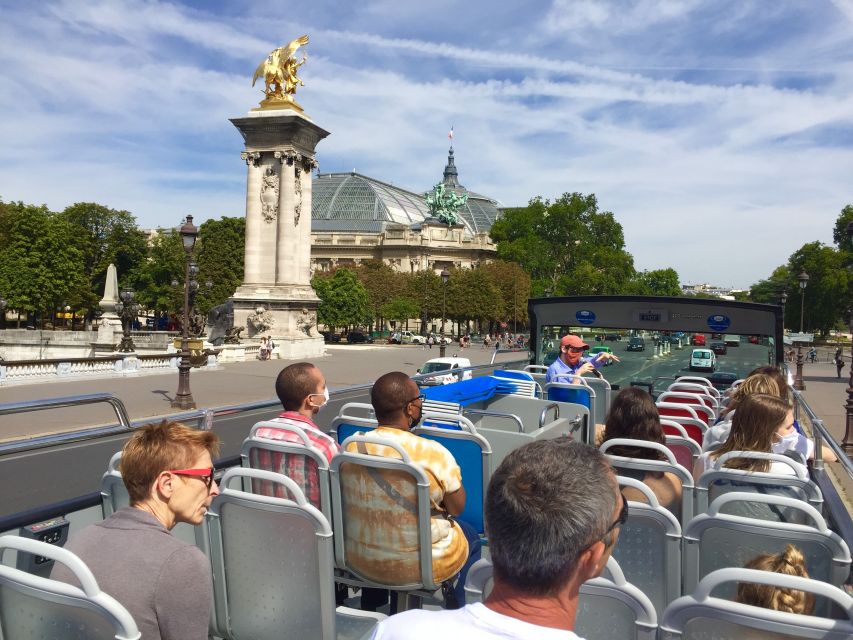
Commentary is available in 10 languages: Spanish, Chinese, English, French, German, Italian, Japanese, Arabic, Portuguese, and Russian. Individual earphones are included, and children have separate commentary in English and French.
The guide works best as light orientation. It helps you identify landmarks and gives short facts while you ride. The children’s option is a practical touch for families who do not want a long stream of adult narration.
The tone is not for everyone. Some commentary uses jokes and personal-style monologues instead of giving clear historical explanation. One especially important weakness is that the same material may be heard during both the day and night rides, which can make the second listen feel repetitive.
If you want dates, architectural detail, and a serious account of Parisian history, bring your own guidebook or use museum commentary as well. I would treat the audio as background information, not the main reason to buy the ticket.
Five walking tours add value between bus rides
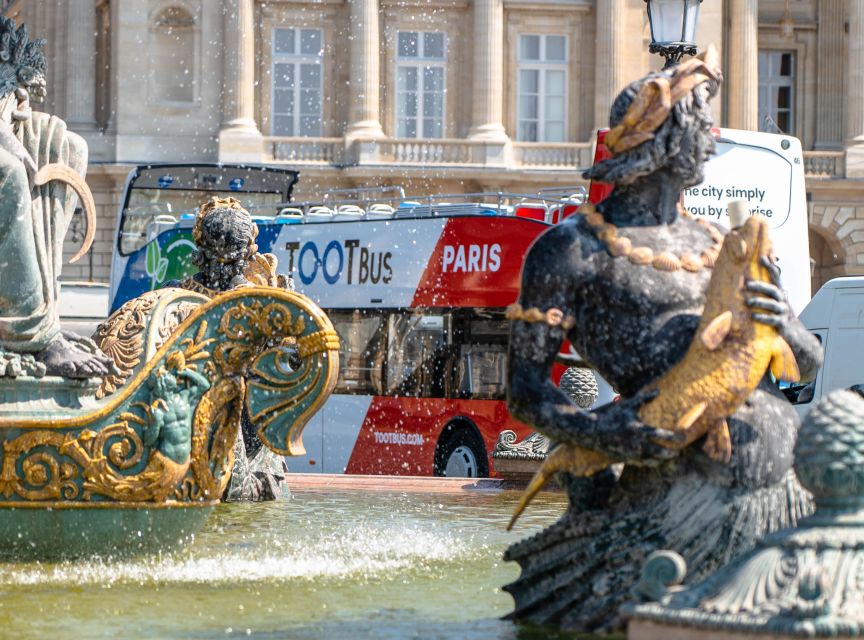
The package includes five walking tours, with themes such as Around the Eiffel Tower, Emily, Fashion, and Montmartre. These help address the biggest limitation of a bus tour: Paris is best understood on foot.
The themed walks can give structure to neighborhoods that otherwise feel scattered. Montmartre, for example, rewards wandering, while a Fashion walk may help you read the shopping districts around Opéra and the grand boulevards.
The supplied information does not specify the exact departure times or meeting details for each walk, so check the current Tootbus app or website before planning your day. Do not build a tightly packed schedule around them without confirming when and where they operate.
The app also includes a where is my bus feature. That is one of the most practical inclusions in the package. Use it before leaving a café, museum, or park. If the next bus is close, wait. If not, walk toward another stop or continue on foot.
How to get good value from the $65 price
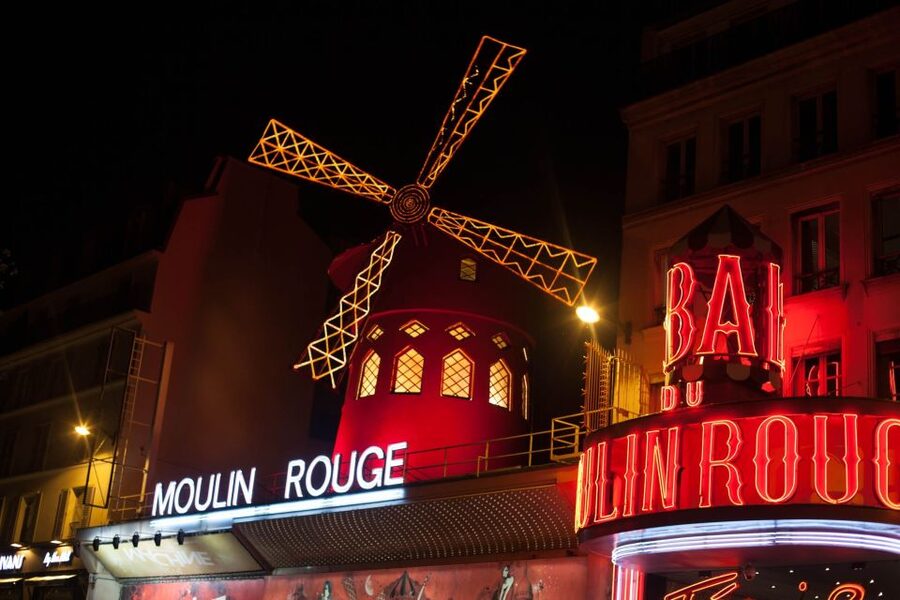
At $65 per person, the price makes the most sense when you use both parts of the package. A single short ride is not enough to justify it, especially in heavy traffic. The value improves if you use the daytime route for transport between several areas and then take the full night circuit.
For a one-day plan, I would start early at Opéra or a nearby stop, ride toward the Louvre or Notre-Dame, hop off for a major visit, and then use the bus again for the Eiffel Tower and Champs-Élysées. Save the night tour for that evening if the schedule works.
A two or three day pass gives you more breathing room. You can use the bus as a backup on rainy or tiring days, then walk in the neighborhoods that interest you most. Check the selected validity carefully because the ticket is valid only on the date or dates booked.
Approximate daytime service begins at 9:30 a.m. The last departure from stop 1 is about 5 p.m. from October 27, 2025, through March 29, 2026. From March 30 through June 28, 2026, the last departure is about 6:30 p.m. From June 29 through September 27, 2026, it is about 7 p.m.
Schedules can change, so check the latest Tootbus information and the app before setting out. The night departure time is separate and is printed on your e-ticket.
Who should book this experience
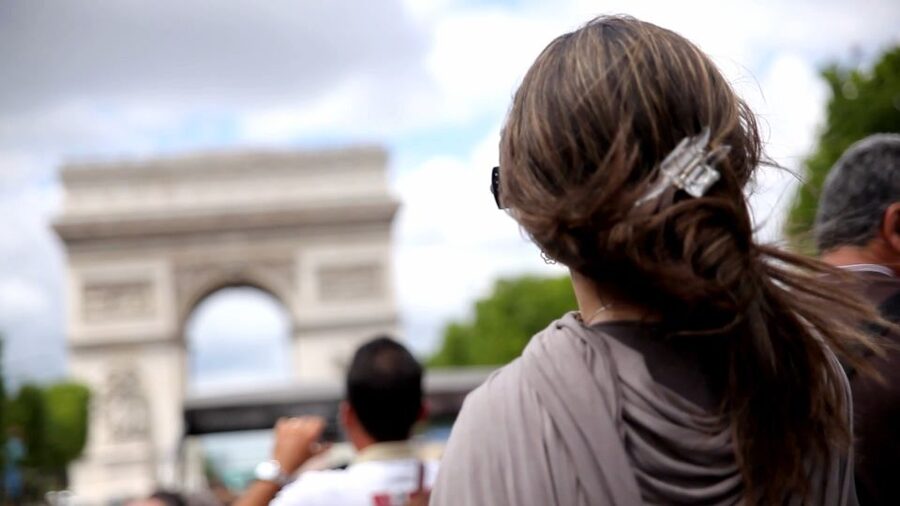
I would recommend it for a first Paris visit, families, and anyone who wants a broad view of the city before choosing where to spend more time. It is also useful if walking long distances is difficult, since all buses are wheelchair accessible and the route connects major areas.
The night tour suits almost everyone who enjoys city views. It is especially helpful if you arrive late in the day and want a simple introduction without arranging several separate visits.
I would be more cautious if you are a serious history enthusiast, a strict schedule planner, or someone who dislikes sitting in traffic. You may prefer the metro for transport and guided museum visits for substance. The bus gives you scale and convenience, but not always speed or detailed interpretation.
Children up to age three ride free when seated on a parent’s lap. Child rates apply from ages four through 12. Families should use the children’s audio option in English or French, which makes the longer rides easier.
Should you book the Paris Discovery and Night Tour?
Book it if you want a flexible overview, easy access to major sights, and a pleasant two-hour evening ride through illuminated Paris. The night circuit is the strongest reason to choose this package, while the daytime pass works well when you use several stops rather than treating it as a fast shuttle.
Skip it if your Paris plans already center on timed museum entries and efficient metro rides. Traffic can stretch the day, the audio can feel jokey or repetitive, and the bus cannot replace time on foot.
For most first-time visitors, I would choose the one-day option, use the app closely, and make the night tour the fixed centerpiece. If you have a slower schedule, the two or three day validity gives the daytime pass more value and lets you enjoy Paris at a less frantic pace.
FAQ
Where does the daytime hop-on hop-off route start?
The main stop is Opera and Grands Magasins at 23 Boulevard des Capucines, 75002 Paris. You can also redeem the ticket at any designated stop on the route.
Where is the Louvre stop?
The Louvre stop is temporarily relocated to Comédie-Française at 3 Avenue de l’Opéra, 75001 Paris. It was previously listed at Place du Carrousel.
Where does the night tour depart?
The night tour departs from Place du Carrousel du Louvre, 75001 Paris, at stop 2. Arrive 20 minutes before departure.
How long is the night tour?
The night tour lasts about two hours.
Which languages are available for the audio guide?
The adult audio guide is available in Spanish, Chinese, English, French, German, Italian, Japanese, Arabic, Portuguese, and Russian.
Is there an audio guide for children?
Yes. Children’s commentary is available in English and French.
How long is the daytime ticket valid?
The pass is valid for the one to three day period selected when booking. The ticket is valid only on the date or dates booked.
Are the buses wheelchair accessible?
Yes. All buses are wheelchair accessible.
What are the approximate daytime operating hours?
Daytime service generally begins at 9:30 a.m. The final departure from the first stop is approximately 5 p.m. in the winter period, 6:30 p.m. in spring and early summer, and 7 p.m. during the stated summer period. Check current Tootbus updates because hours can change.
Recently added around Paris
- Private Half-Day Guided Tour of Paris★ 4.5 · 48 reviews
- 2 hour outdoor group activity in Paris: SAINT GERMAIN★ 5.0 · 48 reviews
- Paris Dinner Show Opera Bel Canto★ 4.5 · 48 reviews
- Paris Vintage Tour by Night on a Sidecar with Champagne★ 5.0 · 48 reviews
- Paris Photoshoot: Eiffel Tower Exclusive Private Experience★ 5.0 · 48 reviews
- Secrets & Scandals of the Louvre – Limited to 6 Guests★ 5.0 · 48 reviews
- From Paris: Versailles Full-Day Guided Tour with Lunch★ 4.9 · 48 reviews
- Paris: Louvre Mona Lisa Discovery Guided Tour with Ticket★ 4.9 · 48 reviews
Evening Experiences, compared.


Paris: Day or Sunset Cruise with Drink, Ice Cream or Dessert
Read our review →
Paris: Big Bus Panoramic Night Tour by Open-Top Bus
Read our review →
Paris: Illuminated Evening River Cruise & Waffle Tasting
Read our review →
Paris: Evening Sightseeing Tour and Moulin Rouge Show
Read our review →
Paris: Discover Paris by Night in a Vintage Car with a Local
Read our review →
Magic Sanguinaires Sunset from Ajaccio/Porticcio – Aperitif
Read our review →
Paris by Night Walking Tour: Ghosts, Mysteries and Legends
Read our review →Browse the lists this tour appears in