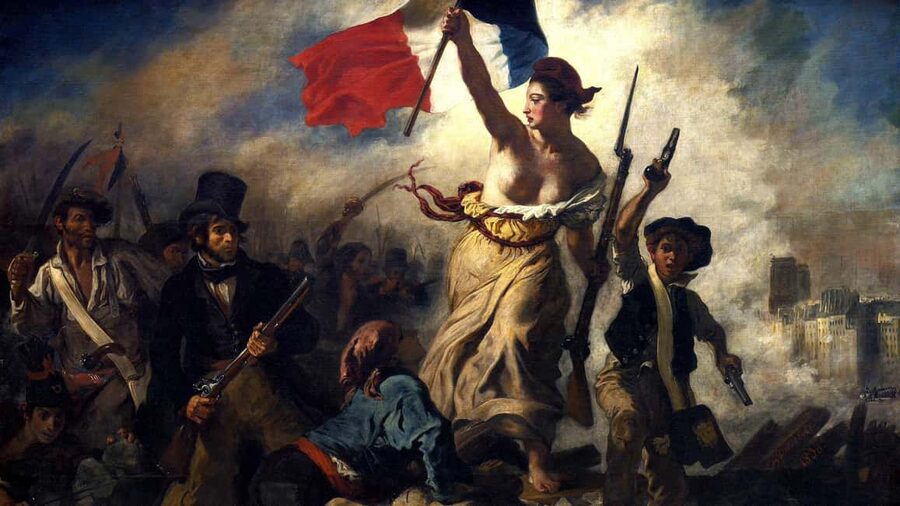
Reviewed · PARIS TOURS
Paris: French Revolution Tour Relive the 14th July 1789
History feels different when it happens under your feet. This 90-minute ParisVu walk follows the working-class streets tied to July 14, 1789, linking Faubourg Saint Antoine and Bastille with the social pressures that pushed Paris toward revolt. I like the route’s local focus, and I like the way guide Robin turns small architectural details into clues from the 18th century. The main consideration is scope: despite references to the Republic and Napoleon, the walk appears to focus mainly on the origins of the Revolution and events leading up to the fall of the Bastille.
This is not a grand monument checklist. You begin near the artisan quarter of Saint Antoine and finish at Place de la Bastille, passing through La Folie Titon, Passage de Lhomme, a traditional village area, lesser-known stops, and a viewpoint. Robin’s teaching background as a history professor is a major strength, although anyone hoping for a full account of the Reign of Terror or Napoleon will find the 90 minutes too short.
In This Review
- Key points to know before booking
- Why the Saint Antoine neighborhood matters
- Starting near Place du Dr Antoine Béclère
- La Folie Titon and the pressure before July 14
- Passage de Lhomme and details you might miss
- The traditional village and lesser-known stops
- Ending at Place de la Bastille
- Robin’s teaching style makes the difference
- Group size, timing, and walking comfort
- Is $37 a fair price?
- Who should take this tour?
- Practical verdict: book it for the local story
- FAQ
- How long does the French Revolution tour last?
- Where does the tour start?
- Where does the tour finish?
- What places are included on the route?
- What languages are available?
- How large is the group?
- How much does the tour cost?
- Can I cancel or pay later?
Key points to know before booking
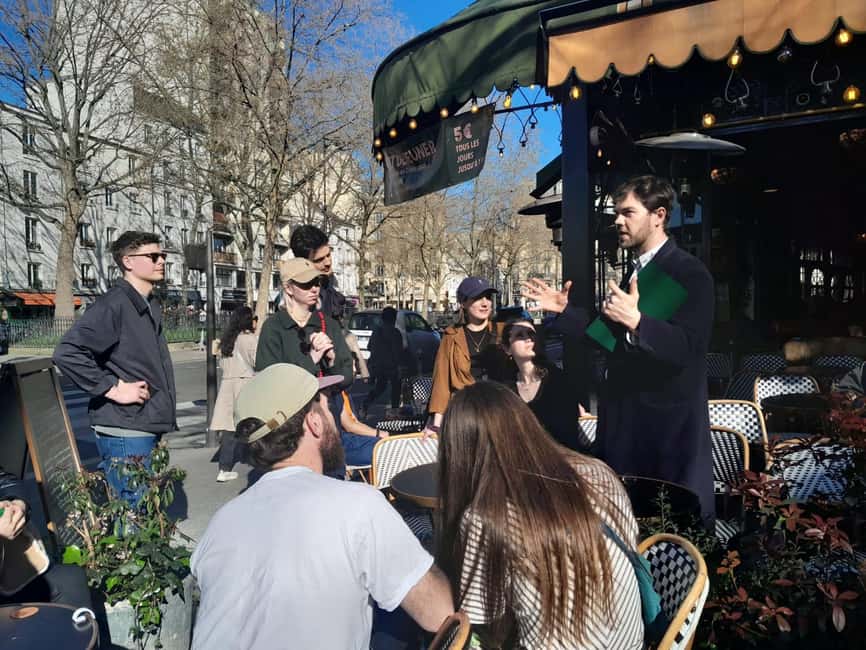
- The route begins away from central Paris: You meet at 1 Place du Dr Antoine Béclère, between Café les Blouses Blanches and Mon Café, then walk toward Bastille.
- The story is rooted in ordinary working people: Faubourg Saint Antoine helps explain the living and working conditions behind the uprising, not just the famous prison.
- Robin is the key asset: His teaching experience, clear delivery, humor, pictures, and ability to answer questions receive especially strong praise.
- You see a less familiar side of Paris: Passage de Lhomme, La Folie Titon, and the surrounding 11th arrondissement offer details many people would pass without noticing.
- The group is meant to stay small: The information gives varying limits of 10, 12, and 12 to 15 participants, so check the exact booking details for your date.
- The price is $37 per person: For a focused history walk with no extra fees and a full 90 minutes, I consider that fair, especially if you enjoy learning while you walk.
Why the Saint Antoine neighborhood matters
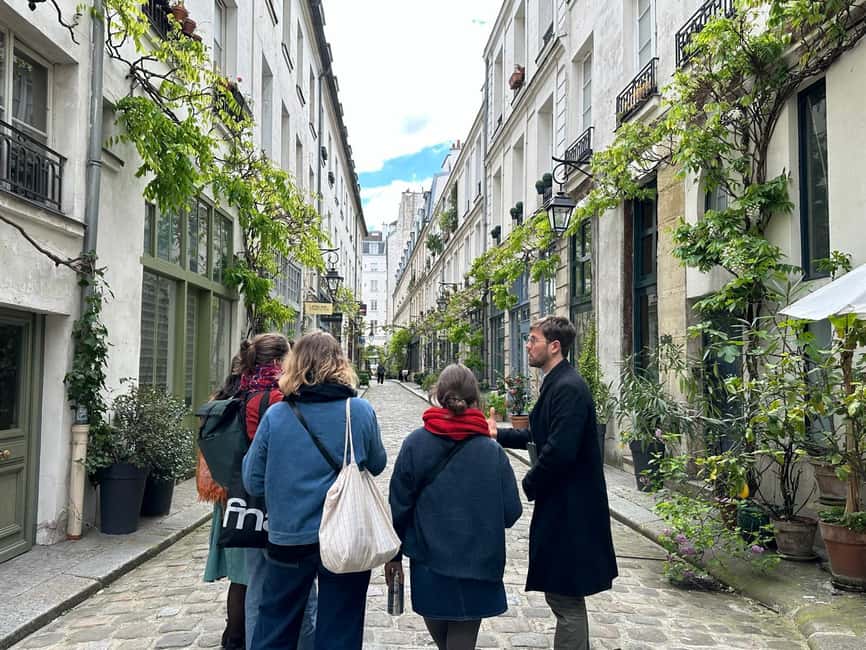
Most first-time Paris itineraries pull you toward the Louvre, Notre-Dame, the Eiffel Tower, and Montmartre. This tour points you east, into the area around Faubourg Saint Antoine and the 11th arrondissement, where the story feels more social than ceremonial.
That choice matters. The French Revolution did not begin only in royal palaces or parliamentary halls. It grew from shortages, anger, unequal treatment, political frustration, and the daily lives of artisans and workers. On this walk, you get a clearer sense of how a neighborhood could become a force in national politics.
I especially like the way the tour connects the streets to the people who lived there. Instead of treating 1789 as a list of dates, Robin explains why people revolted and how local conditions helped fuel the crisis. Several comments about the tour point to this social background as one of its strongest features.
The setting also gives you a break from Paris’s main sightseeing circuit. You will not spend the walk staring at a famous facade while a guide recites well-worn facts. You might notice a doorway, a passage, or a building detail that looks ordinary until its connection to the 18th century is explained.
A few more Paris trips worth weighing up
- Paris: Louvre Museum Timed-Entrance Ticket
★ 4.6 · 71,977 reviews - Disneyland® Paris 1-Day Ticket
★ 4.6 · 49,412 reviews - Paris: Versailles Palace and Gardens Full Access Ticket
★ 4.6 · 41,579 reviews
Starting near Place du Dr Antoine Béclère
The stated starting point is 1 Place du Dr Antoine Béclère, with the meeting point described as between Café les Blouses Blanches and Mon Café. Allow enough time to find the exact spot, particularly if you are unfamiliar with this part of Paris.
The opening portion sets the scene rather than rushing straight to the Bastille. You begin in the neighborhood linked to artisan life and the pressure building before July 14. That pacing is useful because the storming of the Bastille makes more sense once you understand the people and conditions behind it.
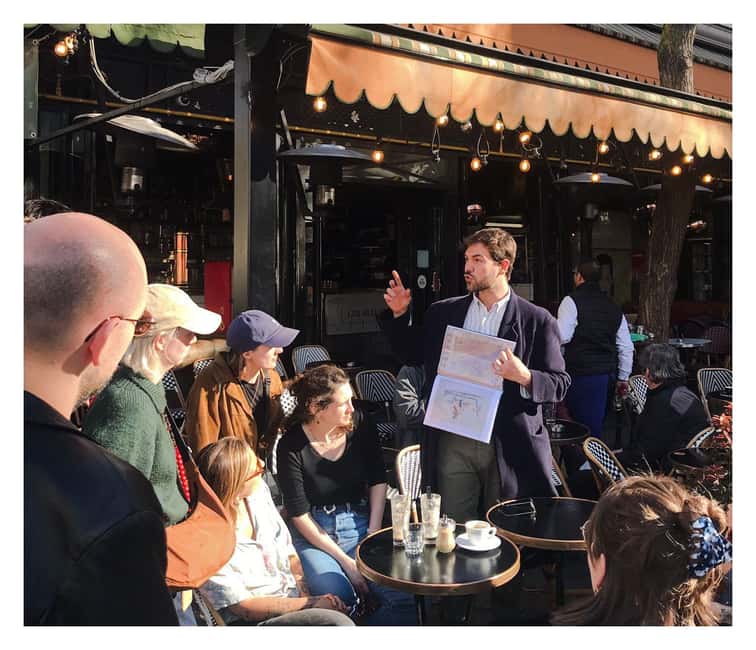
Robin often uses pictures to show what the area looked like in the past. That is a practical aid on a walking tour, since modern Paris can hide the older story. You are not simply asked to imagine a vanished street. You get visual help, then compare it with what remains.
The walk is guided in English, French, or German. English-language praise is especially strong, with repeated comments about Robin speaking clearly, inviting questions, and making complicated events easy to follow.
La Folie Titon and the pressure before July 14
La Folie Titon is one of the named stops, and it helps move the story from broad political tension to a particular place. The tour presents the events leading up to July 14 hour by hour, giving the day a sense of movement rather than treating it as a single dramatic episode.
That structure is one of the better reasons to choose this experience. You can follow how fear, rumor, anger, and action built on one another. The story becomes less about a single prison and more about the chain of events that brought people into the streets.
The stop also fits the tour’s wider aim: showing that the Revolution was shaped in neighborhoods that are easy to overlook. I would pay close attention here, since the value is likely to come from the explanation rather than from a spectacular sight.
This is a walking history lesson, not a theatrical reenactment. You will not find costumes or staged scenes in the information provided. The energy comes from the guide’s storytelling and from standing in places connected with the period.
Passage de Lhomme and details you might miss
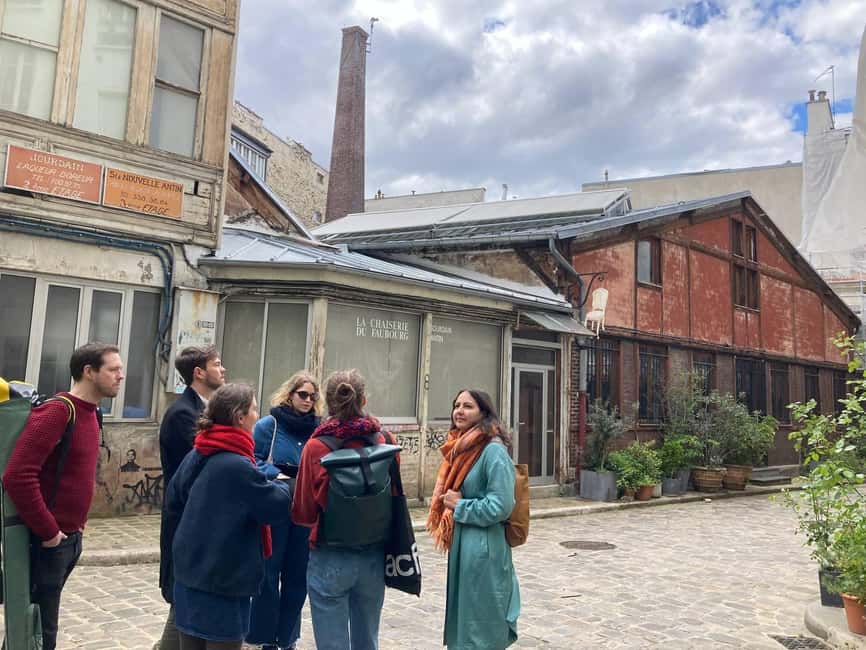
Passage de Lhomme is another named highlight. It represents the kind of intimate Paris setting that can disappear into the background if you are walking alone. The guide’s role is to point out features you would probably pass without stopping.
That approach received repeated praise. One particularly useful theme is that the neighborhood still carries clues if you know where to look. Another person who had lived and worked near Faubourg Saint Antoine and Bastille for almost two years said the tour still revealed explanations and details they had never properly understood.
That is a good sign for both first-time visitors and repeat visitors. You do not need to be a specialist to benefit, but you should enjoy looking closely at streets, buildings, and urban spaces. If your idea of a good tour requires one famous object after another, this route may feel understated.
The walk also gives you a chance to discover a different arrondissement. Several people appreciated seeing an area they had never visited, or had never considered part of their sightseeing plans. That local change of pace is part of the value.
A completely different sort of day in Paris:
- Paris: Evening River Cruise with Music
★ 4.4 · 22,721 reviews - Paris: Eiffel Tower Entry Ticket with Optional Summit Access
★ 4.4 · 20,035 reviews - Paris: Eiffel Tower Summit or Second Floor Access
★ 4.3 · 17,248 reviews - Paris: Louvre Guided Tour with Reserved Access & Boat Cruise
★ 4.3 · 16,353 reviews
The traditional village and lesser-known stops
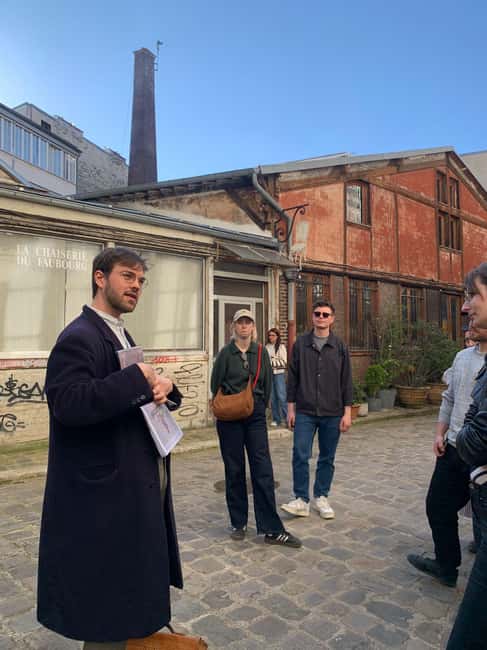
The itinerary includes a traditional village area, two stops described as lesser-known places, and a viewpoint before the final approach to Bastille. The supplied route does not identify each site by name, so you should not expect a precise monument-by-monument schedule before the walk.
What you can expect is a sequence of short visits and explanations connected by walking. The guide uses the route to show how the district developed and how its physical details relate to the events of 1789. The focus is on connections: people, work, streets, and political change.
The traditional village stop adds useful contrast. Paris is often presented through grand avenues and monumental buildings, but older neighborhoods can show a more personal side of the city. Here, the point is not simply to admire a picturesque corner. It is to understand the kind of community that helped make the Revolution possible.
The unnamed stops may frustrate travelers who prefer a fixed checklist. I see them differently. A flexible route can leave room for conversation and for the guide to respond to the group. Since the experience is limited to a small number of people, questions are meant to be part of the visit rather than an interruption.
Ending at Place de la Bastille
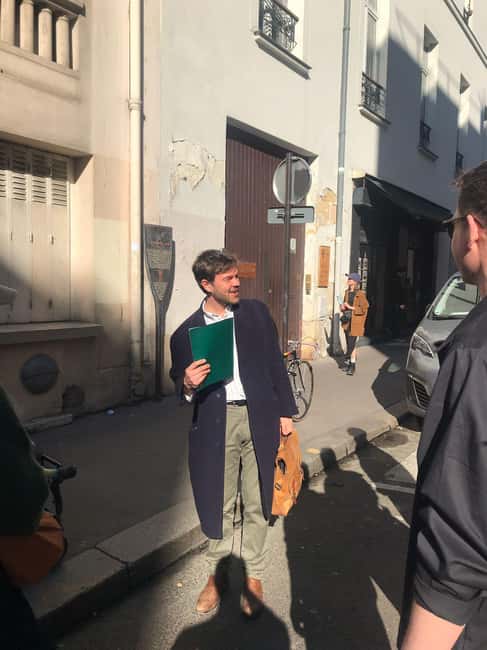
The tour finishes at 28 Place de la Bastille, one of Paris’s most famous revolutionary addresses. Arriving here after walking through Saint Antoine gives the square more meaning than it usually has on a quick photo stop.
The Bastille is the obvious climax, but the tour’s strength is that it does not begin there. By the time you arrive, you have heard about the neighborhood, the social pressures, and the sequence of events that led people to act. The famous square becomes the final chapter of a local story.
You also get a viewpoint and photo stop along the way. The information does not specify the exact outlook, so I would treat it as a pleasant pause rather than book the tour for a particular panorama.
One limitation is worth keeping clear. A detailed account of the entire French Revolution cannot fit comfortably into 90 minutes. The experience gives strong attention to the road toward July 14, 1789. If you want the Reign of Terror, later revolutionary politics, the French Republic, and Napoleon covered at the same level, you will need more historical sightseeing beyond this walk.
Robin’s teaching style makes the difference
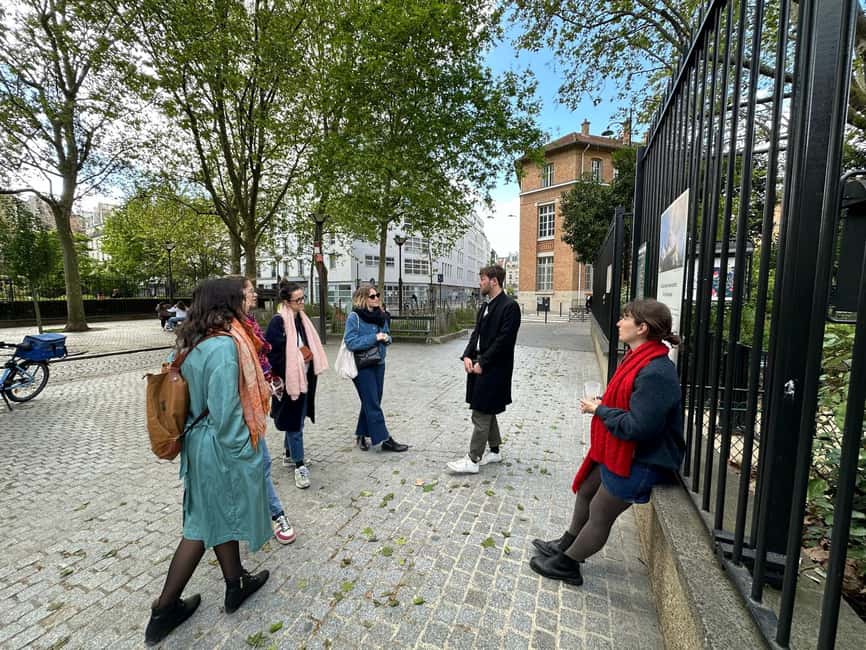
The guide is listed as Robin in the supplied material, and the praise is unusually consistent. People describe him as funny, friendly, engaging, and very strong at explaining difficult history in plain language. His background as a history professor or teaching academic also comes through in the way he builds the story.
I like that the walk does not seem to rely only on prepared speech. Robin invites participation, answers questions, and uses images to help you picture the past. That matters in a neighborhood where the historical evidence can be subtle.
The best guides do more than deliver facts. They help you understand why the facts matter. Robin appears to connect political events with social conditions, local geography, and everyday life. That makes the walk useful even if you already know the basic story of the Bastille.
His approach also suits mixed groups. You can ask a detailed question if you have studied the Revolution, while someone new to the subject can still follow the main thread. The repeated praise for clear delivery is especially important for a walking tour, where street noise and outdoor distractions can make a weak presentation hard to follow.
Group size, timing, and walking comfort
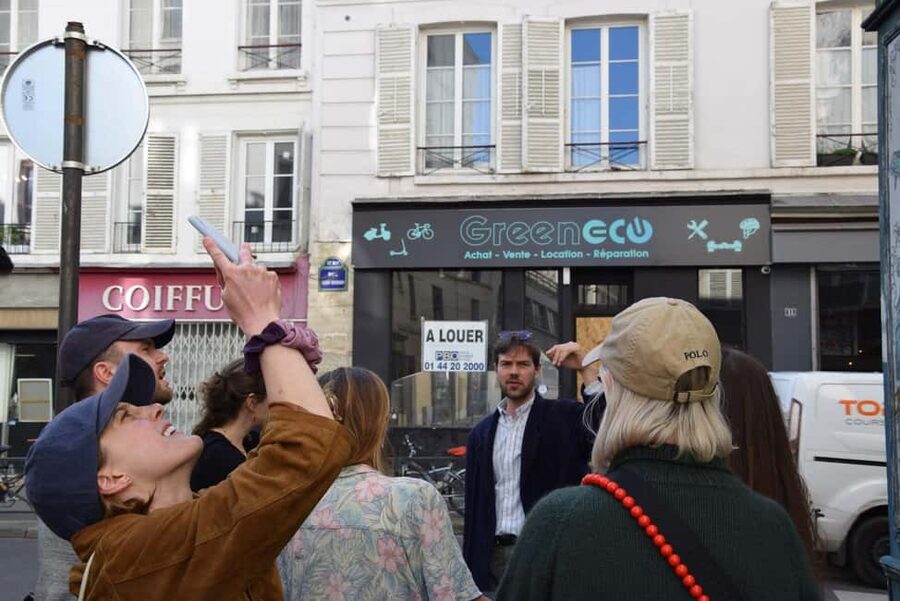
The tour lasts about 90 minutes. That is long enough to create a clear narrative but short enough to fit around museum visits, meals, or an afternoon in another part of Paris.
The group is described in several ways: limited to 10 participants in one place, and a maximum of 12 to 15 in another. I would check the booking details for your chosen departure, but the experience is clearly designed as a small-group walk rather than a large guided procession.
That format suits this subject. A smaller group can gather around a street detail, hear the guide more easily, and ask questions without losing half the group. It also supports the conversational style that people particularly value.
You will be walking between multiple stops. The exact distance is not stated, so wear comfortable shoes and expect an active 90 minutes rather than a stationary lecture. The route begins at the stated cafe meeting point and ends at Bastille, so plan your next activity from there rather than assuming you will return to the starting area.
Is $37 a fair price?
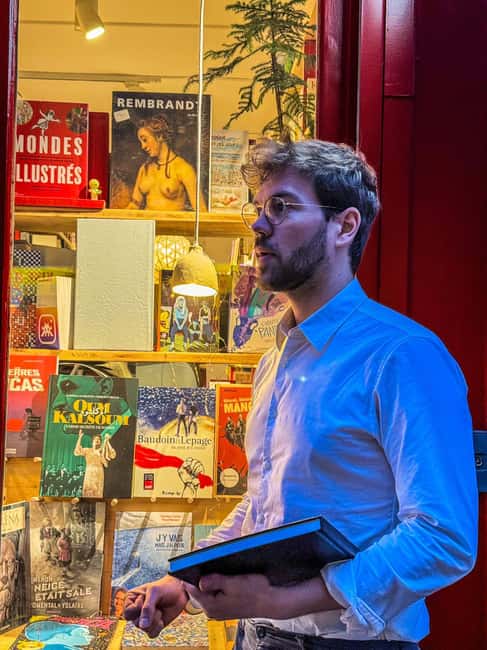
At $37 per person, I consider this a good value for a focused Paris history walk. The price includes approximately 90 minutes with a live guide, a small group, and no additional fees listed.
The value is strongest if you want context rather than transport or entry tickets. You are paying for the guide’s preparation, storytelling, route design, and ability to connect ordinary streets with major historical events. Robin’s academic background adds weight to that cost.
It is less compelling if you only want a quick look at Bastille or a broad overview of every stage of the Revolution. You can visit Place de la Bastille on your own. What you cannot easily reproduce is the hour-by-hour narrative, the neighborhood context, and the explanations of details you might otherwise miss.
Flexible booking also helps. You can reserve and pay later, and cancellation is available up to 24 hours in advance for a full refund. Those terms are useful when Paris plans are still shifting.
Who should take this tour?
I would recommend it most strongly to history enthusiasts, repeat visitors, and anyone who wants to see Paris beyond its headline sights. It is also a good choice if you are visiting the Bastille area and want to understand what you are looking at instead of simply taking a photograph.
Families and older children may enjoy it if they can manage 90 minutes of walking and discussion. The guide’s humor and questions should help keep the material lively, but the subject still involves politics, hardship, and revolt. It is not a purely light sightseeing stroll.
You do not need prior knowledge of the French Revolution. In fact, the tour may be especially useful early in your Paris stay, since one person wished they had taken it sooner to provide context for the rest of the trip.
I would hesitate only if your schedule is very tight, you want a fully chronological tour through 1790s France, or you prefer major monuments over neighborhood history. The route rewards attention, curiosity, and a willingness to pause over details.
Practical verdict: book it for the local story
Book this ParisVu tour if you want the French Revolution explained at street level. The route from Saint Antoine to Bastille, the small-group format, and Robin’s clear teaching style give the experience a strong sense of purpose.
I would schedule it early in your visit if possible. It can help you read Paris differently afterward, especially in the eastern neighborhoods. Just keep your expectations focused: this is chiefly a compelling account of the conditions and events leading to July 14, 1789, not a complete course on everything that followed.
At $37, it offers solid value for a lively, thoughtful 90-minute walk. If you want a less familiar Paris, careful historical detail, and a guide who welcomes questions, I would book it.
FAQ
How long does the French Revolution tour last?
The tour lasts approximately 90 minutes.
Where does the tour start?
The stated starting location is 1 Place du Dr Antoine Béclère. The meeting point is between Café les Blouses Blanches and Mon Café.
Where does the tour finish?
The walk finishes at 28 Place de la Bastille.
What places are included on the route?
Named highlights include Le Faubourg Saint Antoine, La Folie Titon, Passage de Lhomme, and Place de la Bastille. The route also includes a traditional village area, lesser-known stops, and a viewpoint.
What languages are available?
The live tour guide is available in English, French, and German.
How large is the group?
The experience is described as a small-group tour. The supplied details give limits of 10 participants in one place and a maximum of 12 to 15 in another, so check the exact limit for your selected booking.
How much does the tour cost?
The listed price is $37 per person, with no additional fees stated.
Can I cancel or pay later?
You can cancel up to 24 hours in advance for a full refund. The reserve-now, pay-later option lets you book without paying on the day of reservation.
Recently added around Paris
- Private Half-Day Guided Tour of Paris★ 4.5 · 48 reviews
- 2 hour outdoor group activity in Paris: SAINT GERMAIN★ 5.0 · 48 reviews
- Paris Dinner Show Opera Bel Canto★ 4.5 · 48 reviews
- Paris Vintage Tour by Night on a Sidecar with Champagne★ 5.0 · 48 reviews
- Secrets & Scandals of the Louvre – Limited to 6 Guests★ 5.0 · 48 reviews
- Paris Photoshoot: Eiffel Tower Exclusive Private Experience★ 5.0 · 48 reviews
- Paris: Louvre Mona Lisa Discovery Guided Tour with Ticket★ 4.9 · 48 reviews
- From Paris: Versailles Full-Day Guided Tour with Lunch★ 4.9 · 48 reviews
Paris Tours, compared.

Paris: Versailles Palace and Gardens Full Access Ticket
Read our review →

Paris: Eiffel Tower Entry Ticket with Optional Summit Access
Read our review →
Paris: Eiffel Tower Summit or Second Floor Access
Read our review →
Paris: Louvre Guided Tour with Reserved Access & Boat Cruise
Read our review →