Reviewed · GUIDED
Paris: Roland-Garros Stadium Guided Backstage Tour
Tennis history lives behind these gates. This 90-minute Roland-Garros Stadium tour gives you a rare look at the French Open venue, from the players’ corridor to the grand Philippe Chatrier Court. I like the feeling of walking the same route used by champions such as Rafael Nadal and Steffi Graf, and I also like how much tennis history the guides fit into a short visit. The main drawback is that stadium activities can close some areas, and large groups may make commentary hard to hear.
You meet inside the Grande Boutique on Avenue Gordon-Bennett, at Gate 36, then enter the Stade Roland Garros with a live guide in English, French, or Spanish. I would allow extra time to find the entrance and arrive early, since one booking had trouble with inaccurate map directions. The tour costs $24 per person, a fair price for access to a major sporting venue, though it is most rewarding if tennis means something to you.
In This Review
- Key points to know before you go
- Why Roland-Garros feels different from other tennis venues
- Meeting at Avenue Gordon-Bennett and entering the grounds
- The first hour: stadium history and areas normally off limits
- Walking the corridor to Philippe Chatrier Court
- Philippe Chatrier Court and its retractable roof
- What the guides add to the visit
- How much value do you get for $24?
- Timing, group size, and practical comfort
- Who will enjoy this Roland-Garros tour most?
- Should you book the Roland-Garros Stadium tour?
- FAQ
- How long is the Roland-Garros Stadium tour?
- Where is the meeting point?
- What languages are available?
- Is the tour wheelchair accessible?
- Will I definitely visit the locker rooms and media room?
- Can I visit the stadium shop?
Key points to know before you go
- Walk the players’ corridor: Follow the passage leading toward the clay court and imagine the nerves before a French Open match.
- See Philippe Chatrier Court: Look across the main court and learn how its retractable roof changed the stadium.
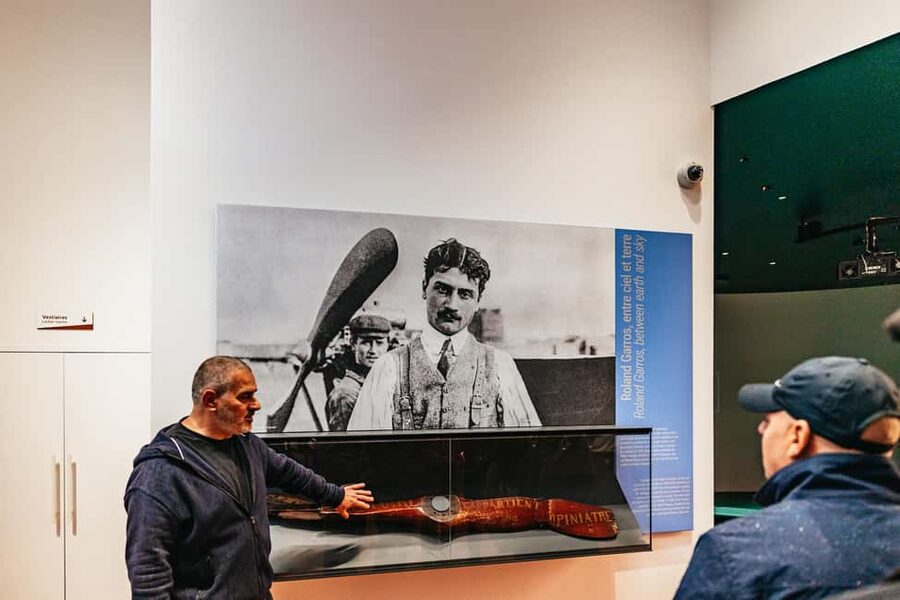
- Visit restricted stadium areas: The route can include the presidential tribune, media room, trophy displays, and locker areas, depending on the day.
- Hear French tennis stories: Guides cover the Four Musketeers, Nadal, Graf, Borg, Chris Evert, and other champions.
- Plan for changing access: Renovations, matches, and stadium operations can remove certain stops from the route.
- Use the shop discount: The stadium shop is open from 9:30 AM to 6:30 PM, and one booking included a 10 percent souvenir discount.
Why Roland-Garros feels different from other tennis venues
Roland-Garros is not simply a place where tennis matches happen. It is the home of the French Open, the only Grand Slam tournament played on clay. That surface gives the venue its particular character, and the tour keeps returning to the court, the players who mastered it, and the rituals built around it.
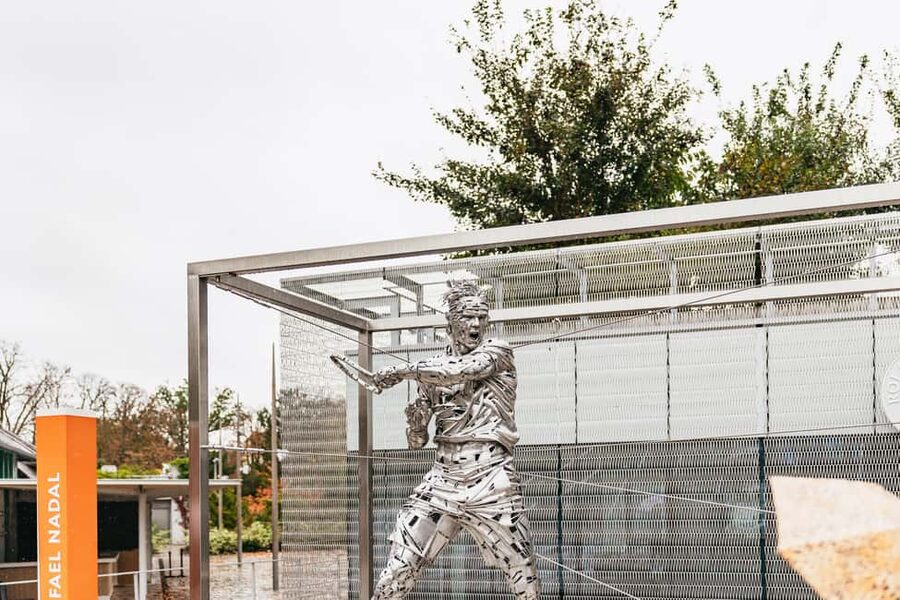
You will hear about champions who shaped the tournament, including Rafael Nadal, Steffi Graf, Björn Borg, and Chris Evert. Nadal is especially important here. His 14 French Open titles are part of the site’s identity, and the tour includes references to his court plaque and exhibition honoring him.
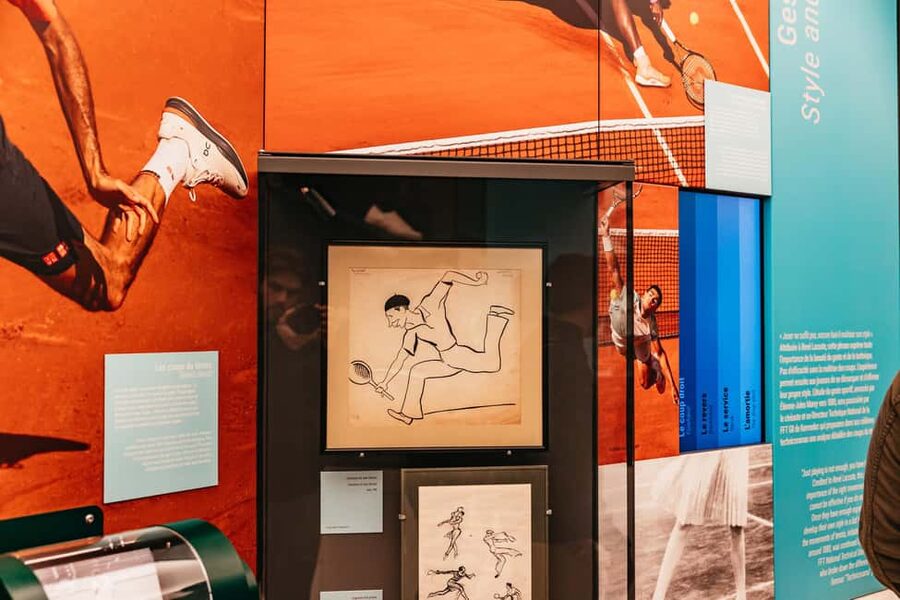
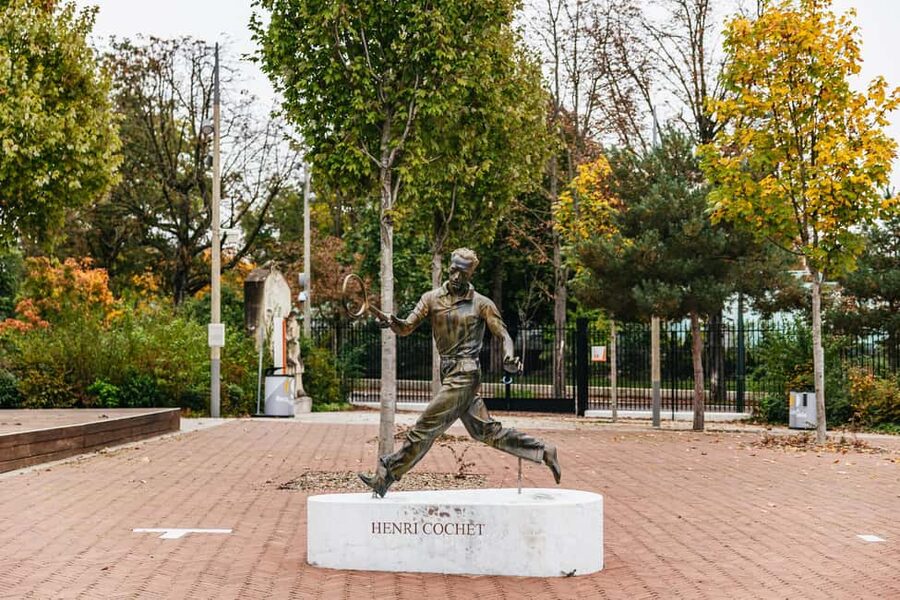
The tour also reaches further back, to the Four Musketeers of French tennis: Jean Borotra, Jacques Brugnon, Henri Cochet, and René Lacoste. Their story gives the stadium a French sporting frame instead of making the visit only about modern stars.
I like that balance. If you follow tennis closely, you will catch more names and small details. If you only watch the French Open now and then, the guide’s stories help explain why this venue matters.
A few more Paris trips worth weighing up
- Paris: Louvre Museum Timed-Entrance Ticket
★ 4.6 · 71,977 reviews - Disneyland® Paris 1-Day Ticket
★ 4.6 · 49,412 reviews - Paris: Versailles Palace and Gardens Full Access Ticket
★ 4.6 · 41,579 reviews
Meeting at Avenue Gordon-Bennett and entering the grounds
The official meeting point is inside the Grande Boutique on Avenue Gordon-Bennett, Gate 36. This is a useful detail to pin down before leaving central Paris, since a missed entrance can turn a relaxed outing into a hurried one.
The stadium sits in the western part of Paris, in the Ile-de-France region. The tour returns to Avenue Gordon-Bennett after the visit, so the experience has a simple out-and-back shape. You do not need to plan a separate exit point.
At the boutique, you can also look around before or after the tour. The shop operates from 9:30 AM to 6:30 PM. If you want tennis clothing, racquets, caps, or Roland-Garros souvenirs, save time for it rather than assuming you can browse during the guided route.
Directions deserve care. One booking reported that the location shown in the booking app was not accurate, while older instructions referred to another gate. Use Gate 36 and the Grande Boutique as your main reference, and check the current meeting instructions before setting out.
The first hour: stadium history and areas normally off limits

The route through Stade Roland Garros is the heart of the experience. You are not just looking at the outside of a stadium. You may enter working areas connected with the tournament, and the guide explains how the venue functions when the French Open is underway.
The exact access can change. Stadium activity, renovations, or other operations may close certain rooms. Past visits have included locker areas, the media room, trophy displays, and sections of the presidential tribune, but you should treat these as possible stops rather than guaranteed ones.
That flexibility is part of the trade-off. A tour built inside an active sports complex cannot promise that every door will open every day. Still, the available areas offer much more than a basic stadium photo stop.
The locker rooms are particularly meaningful for tennis fans. Standing near the spaces associated with major players gives the statistics a human scale. One past visit included a look at Nadal’s and Roger Federer’s lockers, while another could not enter the locker rooms because of renovation work. If a particular room matters most to you, keep your expectations flexible.
The media room can be playful as well as informative. One guide invited the group to conduct mock interviews, which turned a normally formal press space into a memorable part of the tour. You might get a similar chance to sit, pose, and imagine the questions after a five-set final.
Trophy displays behind glass add another visual stop. They help connect the rooms and corridors with the tournament’s public spectacle. You are seeing the machinery around the matches, not merely a court with empty seats.
Walking the corridor to Philippe Chatrier Court
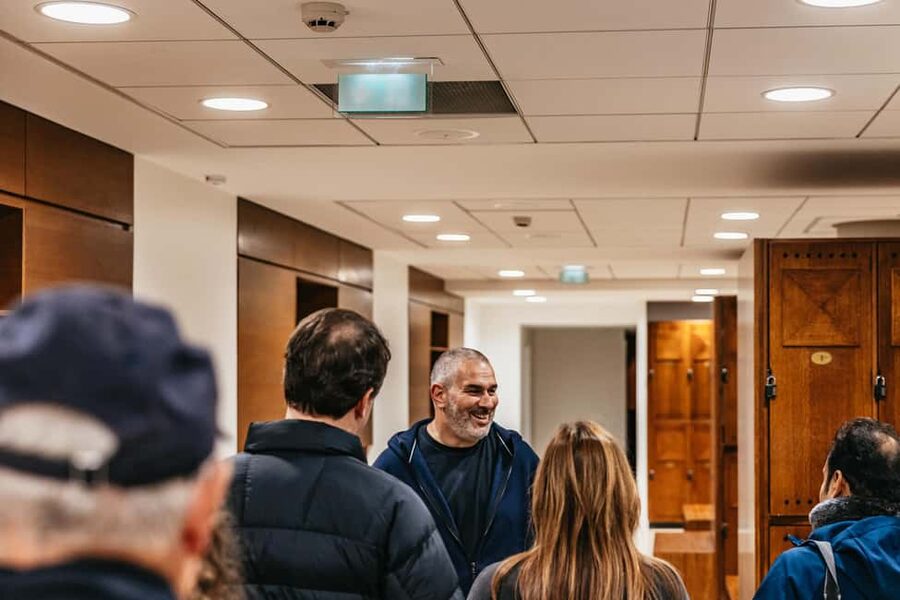
The players’ corridor is one of the strongest moments on the route. You walk toward the clay court through the same kind of passage used by competitors before stepping into the stadium’s main arena.
I like this part because it does not require much explanation. A photograph of a champion lifting a trophy is impressive, but walking toward the court gives you a better sense of the buildup before a match. You can picture the noise waiting beyond the doorway and the change from private concentration to public pressure.
The guide adds stories as you go. These can include details about players, tournament traditions, and the history of French tennis. Good guides make this stretch feel like more than a hallway, and names such as Amir, Mathieu, Lionel, Aida, and Fatah have all been praised for bringing energy and care to the experience.
The quality of the visit depends partly on your guide and partly on the group. Several guides have been described as warm, patient, and well prepared. English tours have generally worked well, though one English-speaking visitor found a French guide difficult to understand at times. Another group booked in French and was split when it became clear that many participants needed English.
If your group is large, stay close to the guide. Two separate visits noted that it could be difficult to hear when people moved ahead or when the next explanation began before everyone had gathered. This is not a reason to skip the tour, but it is a good reason to stand near the guide and speak up if you miss a detail.
A completely different sort of day in Paris:
- Paris: Evening River Cruise with Music
★ 4.4 · 22,721 reviews - Paris: Eiffel Tower Entry Ticket with Optional Summit Access
★ 4.4 · 20,035 reviews - Paris: Eiffel Tower Summit or Second Floor Access
★ 4.3 · 17,248 reviews - Paris: Louvre Guided Tour with Reserved Access & Boat Cruise
★ 4.3 · 16,353 reviews
Philippe Chatrier Court and its retractable roof
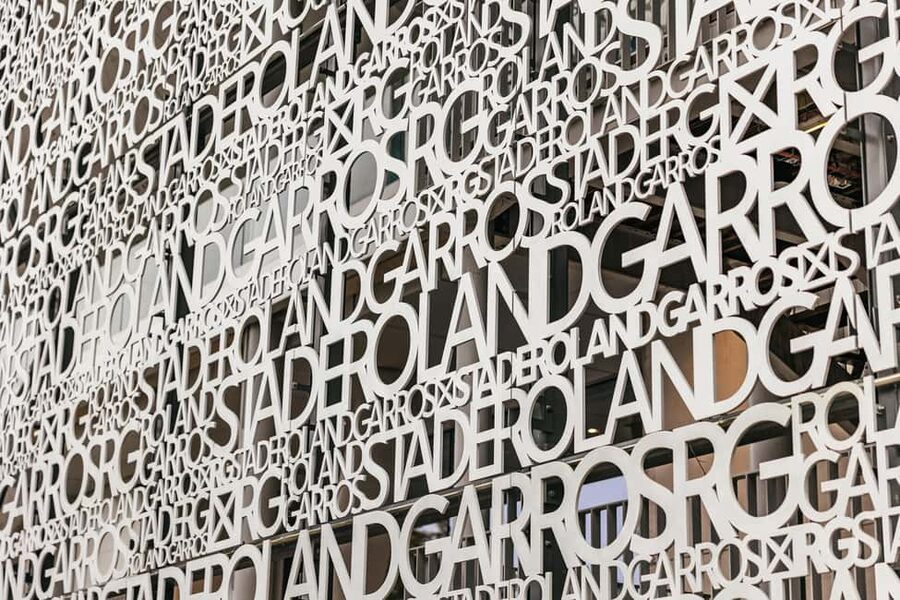
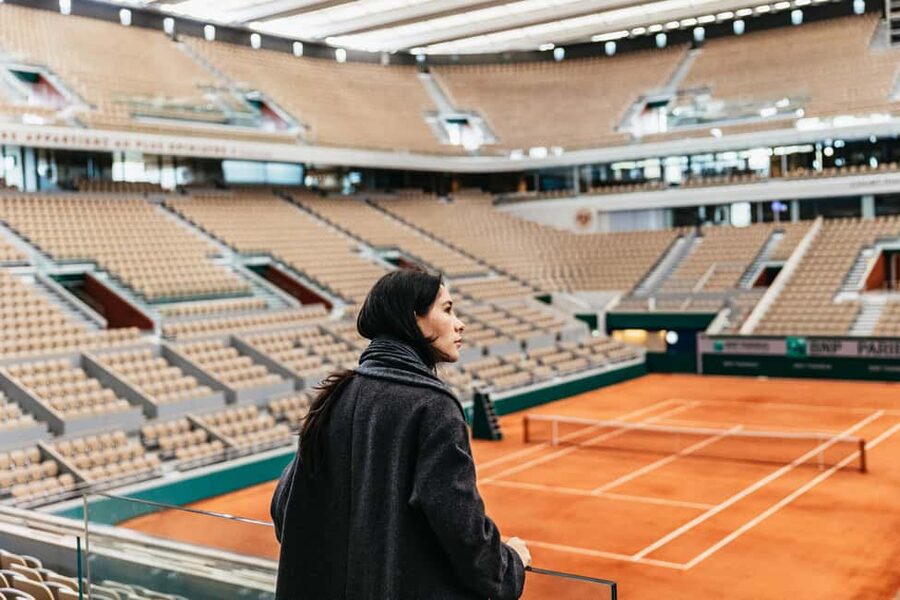
Court Philippe Chatrier is the visual payoff. You get an unobstructed view across the main clay court and up toward the surrounding cityscape. For many people, simply seeing center court from inside the stadium will be the best part of the outing.
The court also shows how Roland-Garros has adapted to modern sport. The guide explains the design and technology of the retractable roof, which allows play to continue during poor weather and changes the way a traditional open-air clay venue operates.
You will hear the court described as an architectural and technological achievement, but the useful point is simpler: this is the stadium’s central stage, rebuilt to meet modern tournament demands while keeping clay tennis at its core.
Court conditions can vary. One past visit found no clay on the main court, so you may not always see it prepared exactly as it is during the French Open. The court itself remains impressive, but if you are hoping for a perfect tournament-day scene, choose your expectations carefully.
Look for the plaque dedicated to Nadal. It is a small feature, but for many tennis fans it carries more weight than a general view of the stadium. You can stand in the place where he made so much of his French Open record.
The views beyond the court are also worth a moment. The design gives you a broad look over the stadium and toward Paris. This is a good point for photographs, though the guide’s talk and the group’s movement may limit how long you can linger.
What the guides add to the visit
The guide is not just there to lead you from one room to another. The best part of the experience is the storytelling: anecdotes about champions, details about the stadium, and explanations of what happens behind the scenes during the tournament.
Guides named Amir, Mathieu, Lionel, Aida, and others have received especially warm praise for their enthusiasm and patience. Lionel, in particular, was remembered for his passion for Nadal and for discussing what might happen to a champion’s locker in the future. That sort of conversation gives the tour a friendly, human tone.
I would not expect every guide to deliver the same performance. The tour is available in English, French, and Spanish, and accents or group noise can affect how easy it is to follow. Still, the repeated emphasis on friendly, engaging guides suggests that the human element is one of the experience’s strongest features.
You should feel free to ask questions. Several visits became more enjoyable because the guide allowed time for discussion rather than delivering a fixed speech. If you have followed the French Open for years, bring a question about a player, court, or tournament tradition. If you are less familiar with tennis, ask the guide to explain why clay changes the style of play.
How much value do you get for $24?
At $24, this is one of the more accessible ways to visit a famous Paris sports venue. You are paying for a 90-minute guided experience with admission included, not just the right to walk through a public foyer.
The value is strongest for three groups:
- Tennis fans: You get court access, player routes, champion stories, and possible locker and media-room visits.
- French Open followers who cannot attend the tournament: The tour helps you picture the venue during competition without paying final-match ticket prices.
- Curious Paris visitors: You get a different side of the city, away from the usual art museums and monuments.
The price feels less compelling if you want a long museum visit or guaranteed access to every backstage room. The tour moves at a set pace, and some areas can be unavailable. One person also wished for more time in the Nadal exhibition, while another found the full visit closer to an hour than 90 minutes.
Even with those limits, the access is substantial for the cost. You can see the main court, hear the venue’s story, and possibly enter areas normally closed during tournament crowds. I consider that good value, especially for anyone who has watched the French Open from home for years.
Timing, group size, and practical comfort
The advertised duration is 90 minutes. Allow extra time before and after for finding Gate 36, visiting the shop, taking photos, and getting to your next Paris stop.
The tour is wheelchair accessible, and one guide was praised for accommodating a visitor who needed elevators. That is useful to know, though the exact route may depend on which areas are open that day.
Group size can affect the experience. A crowded group may make it harder to hear, especially in rooms with several conversations going on. Stay near the guide, and do not hesitate to ask for a repeat. Guides have been described as patient when people need clarification.
You may also want to bring a drink. One visit noted there was no obvious place to buy a cold drink during the tour. The stadium shop is available, but it should not be treated as a guaranteed refreshment stop.
The grounds themselves are attractive, and one person specifically recommended visiting the park opposite the stadium, where the Simonne Mathieu Court is located. That court is not part of the stated guided route, so think of it as a possible extra stop before or after, not as a promised element of this ticket.
Who will enjoy this Roland-Garros tour most?
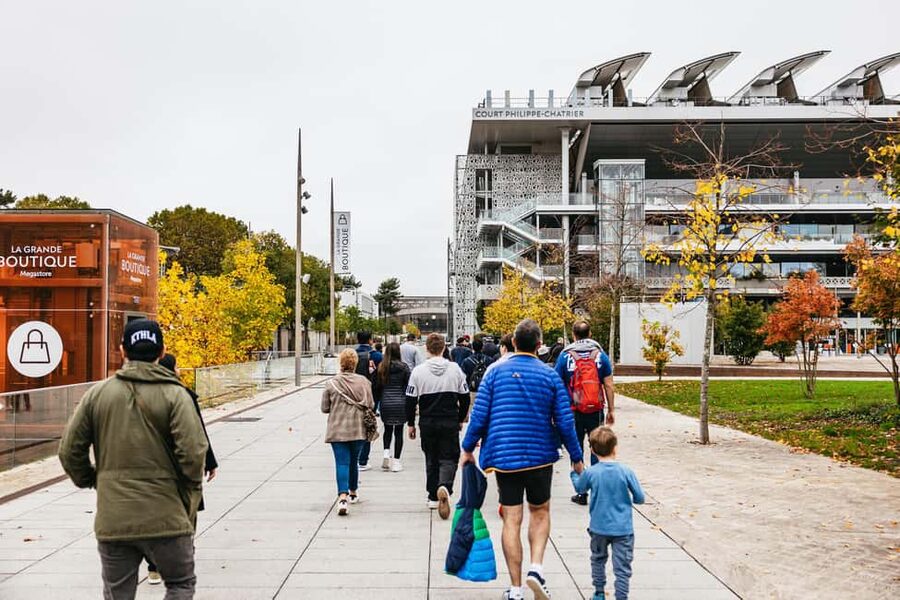
You do not need to know every French Open champion to enjoy the visit. The stadium design, court views, and backstage route give casual sports fans plenty to see.
Still, the experience is made for people who already feel something when they hear names such as Nadal, Borg, Graf, Evert, or Federer. The emotional reward comes from recognizing the court and understanding what happened there.
Families with children who play tennis may find the corridor and media room especially fun. The mock interviews reported on one visit could help younger visitors connect with the venue. People interested in architecture will also appreciate the Philippe Chatrier roof and the way the court is arranged within the city.
You may want to skip it if you prefer self-guided visits, dislike group tours, or need guaranteed access to a specific locker room. The schedule and available rooms are controlled by stadium operations.
Should you book the Roland-Garros Stadium tour?
I would book this tour if you are in Paris and have even a moderate interest in tennis. For $24, the chance to stand inside Court Philippe Chatrier, walk the players’ corridor, and hear stories about the Four Musketeers and Nadal’s record is hard to match.
Book it with two cautions. First, confirm the Gate 36 meeting point and arrive early. Second, accept that the route can change, and that commentary may be harder to hear in a large group.
The strongest reason to go is not a single room. It is the combination of the court, the backstage access, and the feeling of moving through a place built around tennis history. If that sounds like your kind of Paris afternoon, this tour earns its place on your schedule.
FAQ
How long is the Roland-Garros Stadium tour?
The advertised duration is 90 minutes. Some past visits have taken closer to an hour, so allow additional time for arrival, photos, and the stadium shop.
Where is the meeting point?
Meet inside the Grande Boutique on Avenue Gordon-Bennett at Gate 36.
What languages are available?
The live guided tour is available in English, French, and Spanish.
Is the tour wheelchair accessible?
Yes, the activity is listed as wheelchair accessible. The exact route can depend on which stadium areas are open that day.
Will I definitely visit the locker rooms and media room?
Not necessarily. The route can change because of stadium activities, renovations, or other restrictions. Locker rooms, the media room, trophy displays, and other backstage areas have been included on past visits, but access is not guaranteed.
Can I visit the stadium shop?
Yes. The shop can be visited before or after the tour and is open from 9:30 AM to 6:30 PM. One past booking also received a 10 percent discount on souvenirs.
Recently added around Paris
- Private Half-Day Guided Tour of Paris★ 4.5 · 48 reviews
- 2 hour outdoor group activity in Paris: SAINT GERMAIN★ 5.0 · 48 reviews
- Paris Dinner Show Opera Bel Canto★ 4.5 · 48 reviews
- Paris Vintage Tour by Night on a Sidecar with Champagne★ 5.0 · 48 reviews
- Secrets & Scandals of the Louvre – Limited to 6 Guests★ 5.0 · 48 reviews
- Paris Photoshoot: Eiffel Tower Exclusive Private Experience★ 5.0 · 48 reviews
- Paris: Louvre Mona Lisa Discovery Guided Tour with Ticket★ 4.9 · 48 reviews
- From Paris: Versailles Full-Day Guided Tour with Lunch★ 4.9 · 48 reviews
Guided, compared.

Paris: Louvre Guided Tour with Reserved Access & Boat Cruise
Read our review →
Louvre Museum Masterpieces Guided Tour with Access
Read our review →
Louvre Museum – Exclusive Guided Tour (Entry Included)
Read our review →
Versailles: Skip-the-Line Guided Palace Tour and Full Access
Read our review →
Louvre Priority Access with Mona Lisa Escort or Guided Option
Read our review →
Louvre Museum: Skip-the-Line Small Group Guided Tour
Read our review →
Paris: Haunted Père Lachaise Cemetery Guided Tour
Read our review →