
Reviewed · SEINE RIVER CRUISES
Paris Seine River Hop-On Hop-Off Sightseeing Cruise by Batobus
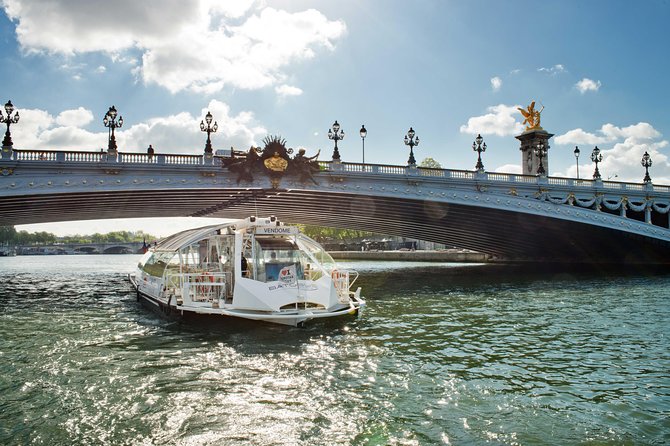
Paris looks different from the water. The Batobus combines a relaxing Seine cruise with useful transport between major sights, including the Eiffel Tower, Musée d’Orsay, Notre Dame, and the Louvre. I especially like the freedom to hop on and off during a 24 or 48 hour pass, and the open rear terrace gives you a fine place for photos.
The main drawback is simple: this is a river shuttle, not a guided sightseeing tour. You will need the webapp for commentary, service hours can change, and the boats may take longer than the metro when you have a timed museum entry or dinner reservation.
In This Review
- Key points to know before you board
- What the Batobus really is
- Why the Seine route works so well
- Stop 1: Port de la Bourdonnais and the Eiffel Tower
- Stop 2: Port des Invalides
- Stop 3: Quai de Montebello and Musée d’Orsay
- Stop 4: Quai Malaquais and Saint-Germain
- Stop 5: Quai de Montebello and Notre Dame
- Stop 6: Quai Saint-Bernard
- Stop 7: Quai de l’Hôtel de Ville
- Stop 8: Quai du Louvre
- Stop 9: Port des Champs-Élysées
- Commentary, seating, and the onboard feel
- Is $27.56 a good value?
- Timing, weather, and practical limits
- Who should choose the Batobus?
- Should you book the Paris Batobus?
- FAQ
- How long does a complete Batobus loop take?
- Does the ticket allow unlimited rides?
- Which Paris sights are near the stops?
- Is audio commentary included?
- Are there toilets on the boat?
- Can I bring large luggage?
- What happens if bad weather cancels the cruise?
Key points to know before you board
- Nine central Seine stops: The route links the Eiffel Tower, Musée d’Orsay, Saint-Germain, Notre Dame, the Louvre, and the Champs-Élysées area.
- A full loop takes about two hours: You can stay aboard for a calm city overview or use the boat as scenic transport.
- The 48-hour pass offers the best flexibility: It costs only a few euros more than the shorter option, according to the booking information, and gives you another day to use the route.
- Commentary comes through a webapp: French, English, Spanish, German, and Italian are available, but there is no full guide speaking continuously from the boat.
- Pack light: Bags larger than 16 liters are not allowed, though small backpacks, handbags, and computer cases are accepted.
- Expect steps and no toilet: Riverbank boarding points can require stairs, and there is no restroom on the boat.
What the Batobus really is
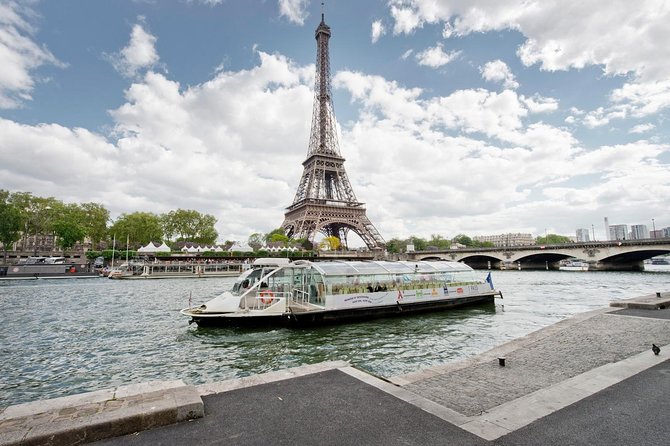
Think of Batobus as a city bus on the Seine. The boats run between nine stops, allowing you to replace some metro rides or long walks with a pleasant trip along the river.
The full circuit takes roughly two hours. That makes it useful for two different purposes. You can remain aboard and enjoy Paris from the water, or you can get off near a monument, explore on foot, then continue later.
I would not book this expecting a traditional boat tour with a live guide, a meal, or a polished show. The value comes from flexible transport and river views, not from detailed historical storytelling.
The boat has an open rear terrace, deckhand staff, and a vending machine with drinks and snacks. There is bicycle storage, but bulky luggage is not permitted. A systematic bag check is in place, and jackets or coats must be opened at the entrance.
More Boat Tours in Paris
- Paris: Evening River Cruise with Music
★ 4.4 · 22,721 reviews - Paris: Louvre Guided Tour with Reserved Access & Boat Cruise
★ 4.3 · 16,353 reviews - Paris: Big Bus Hop-On Hop-Off Tour with Optional Cruise
★ 4.4 · 13,279 reviews
Why the Seine route works so well
Paris packs many major sights close to the river. The Seine passes the Eiffel Tower, Invalides, Musée d’Orsay, Notre Dame, the Louvre, and the elegant bridges linking the Left and Right Banks.
That makes the Batobus a good first-day tool. After an overnight flight, you can sit down, get your bearings, and see how the central districts fit together. The river gives you a break from city traffic and pavement.
I also like it after a museum visit. Musée d’Orsay can leave you tired after hours indoors, and a slow ride toward Notre Dame or the Eiffel Tower provides an easy pause before the next stop.
The boat is not always the fastest way across Paris. If you need to reach a specific stop for a reservation, check departure times before boarding. A complete loop can take more than the time you might expect for a short metro ride.
Stop 1: Port de la Bourdonnais and the Eiffel Tower
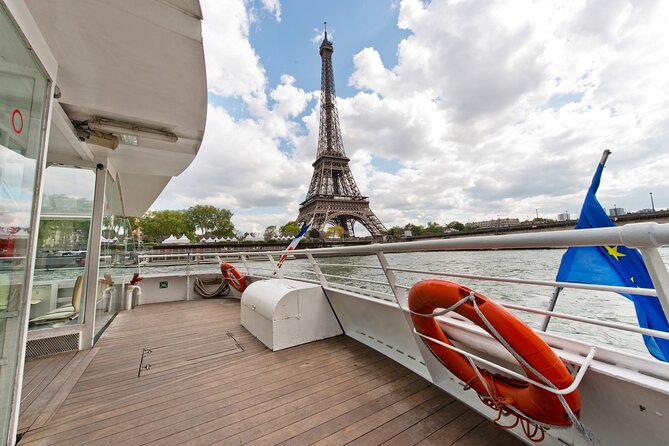
This is the natural starting point for many people. Port de la Bourdonnais sits beside the Eiffel Tower, with Bir-Hakeim and Trocadéro metro stations nearby, plus the Champ de Mars-Tour Eiffel RER C station.
From the boat, the Eiffel Tower is one of the clearest photo subjects on the route. Get off here if you have a tower visit planned, or stay aboard for a strong opening view of the monument and the bridges around it.
This stop can be busy and confusing at first because the riverbank is below street level. Allow time to find the dock, especially if you are meeting a timed entry at the tower.
Stop 2: Port des Invalides
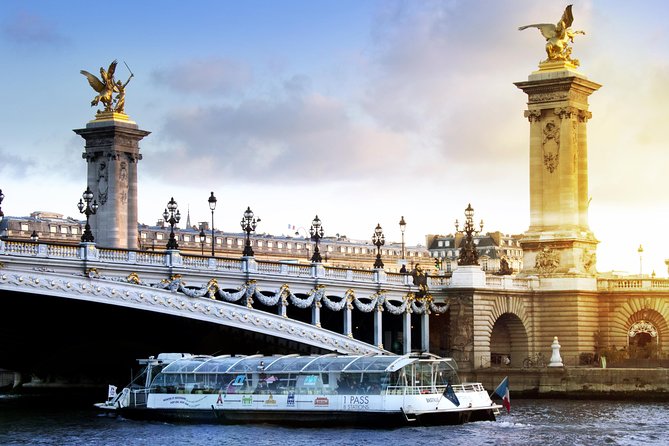
Port des Invalides serves the Invalides area and connects with Invalides metro and RER stations. The stop is practical for reaching the grand complex associated with the Hôtel des Invalides.
You can use it as a sightseeing stop or as a change of pace after the Eiffel Tower. The river view here helps you appreciate the broad scale of Paris, with formal buildings and bridges opening up around the boat.
The stop is not directly beside every attraction in the district. You will still walk after getting off, so keep your day plan realistic.
More Seine river cruises:
- Paris: Seine Cruise & Crepe Tasting near the Eiffel Tower
★ 4.4 · 11,231 reviews - Paris: Seine River Panoramic Views Dinner Cruise
★ 4.3 · 10,611 reviews - Paris: Eiffel Tower Access by Elevator & Seine River Cruise
★ 4.6 · 7,329 reviews - Paris: 3-Course-Dinner Cruise on the Seine with live music
★ 4.7 · 7,248 reviews
Stop 3: Quai de Montebello and Musée d’Orsay
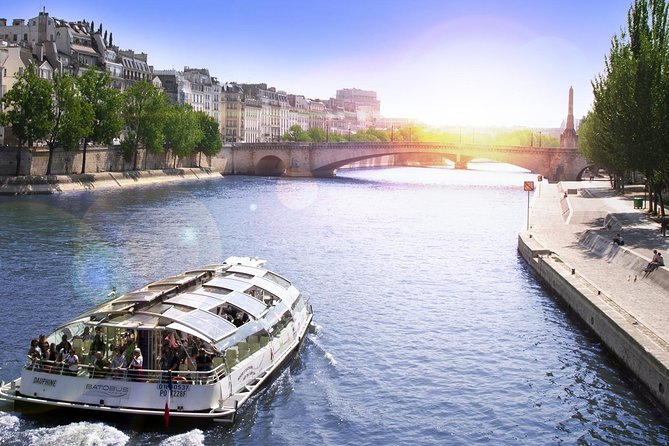
The Musée d’Orsay area is one of the strongest reasons to use the Batobus. The museum occupies a former railway station and is famous for its Impressionist collection, though the boat itself only gets you near the entrance.
An RER C connection makes this stop useful for wider city access. You can spend the morning at the museum, then use the river as a restful way to continue toward Saint-Germain or Notre Dame.
Be careful with the stop names shown in route information. Quai de Montebello appears more than once in the supplied directions, while the route also identifies Quai Malaquais separately. Use the live map and current dock signs rather than relying only on a printed list.
Stop 4: Quai Malaquais and Saint-Germain
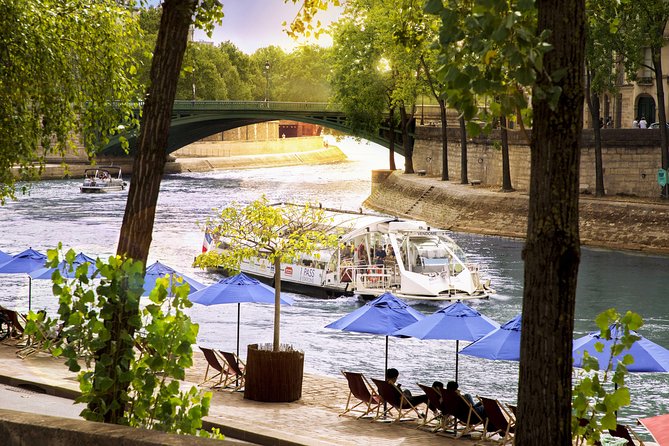
Quai Malaquais puts you near the Left Bank and Saint-Germain-des-Prés, served by the Saint-Germain-des-Prés metro station. This is a good place to leave the river for a sidewalk café, a bookshop, or a slow walk through one of central Paris’s most atmospheric districts.
I like this stop for an unhurried lunch break. The Batobus lets you set your own pace, so you do not need to squeeze Saint-Germain into a rushed walking loop.
The boat does not provide hotel pickup, and the dock is not a door-to-door service. Plan for a walk between the landing and your chosen café or attraction.
Stop 5: Quai de Montebello and Notre Dame
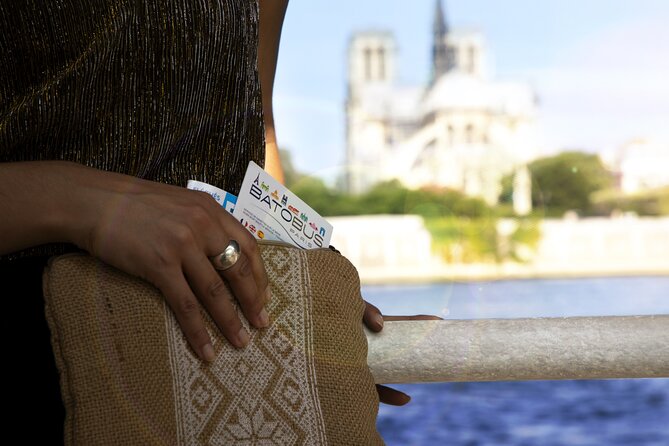
The Notre Dame area is one of the most useful stops on the route. Saint-Michel, Maubert-Mutualité, and the Saint-Michel Notre-Dame RER station provide several public transport connections.
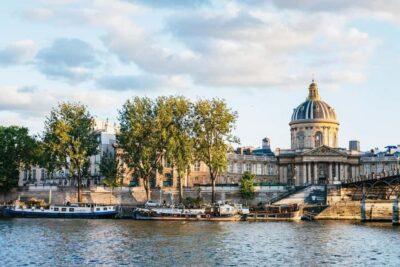
You can walk from here toward Notre Dame and explore the Île de la Cité area. The cathedral’s Gothic exterior is especially striking from nearby streets, while the river offers a different view of the island and its stone embankments.
Finding the dock around Notre Dame can be harder than expected. Signs may not be obvious from street level, so check the interactive map before you head down to the river. You may need stairs to reach the boat, then more stairs when you return to street level.
Stop 6: Quai Saint-Bernard
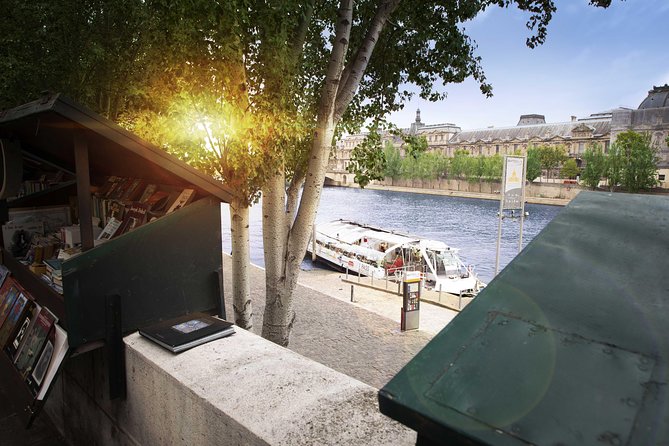
Quai Saint-Bernard connects with Jussieu and Cardinal-Lemoine metro stations, as well as the Gare d’Austerlitz RER C station. It brings you toward the eastern part of the central route and the Left Bank near the Jardin des Plantes area.
This stop is helpful if you want to break up the main sightseeing circuit. It is less immediately recognizable than the Eiffel Tower or Louvre stops, but that can make it a useful breathing space between headline attractions.
As with other landings, the boat only gets you to the river edge. Check walking distances before you make it the center of your day.
Stop 7: Quai de l’Hôtel de Ville
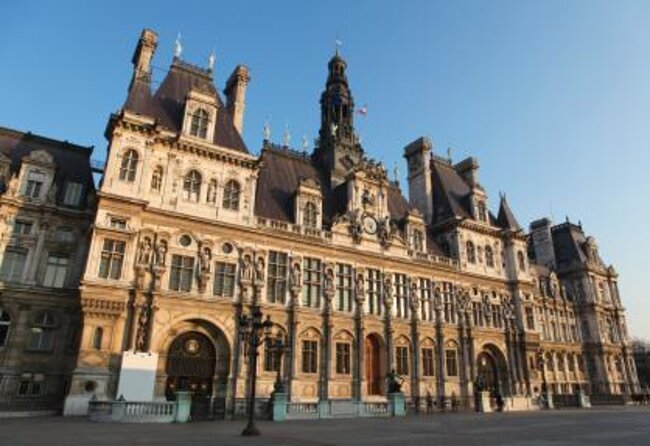
This landing serves the Hôtel de Ville area and connects with metro lines 1 and 11. It is a convenient base for exploring the Marais, the Right Bank, and the streets around Paris City Hall.
If you are staying in or near the Marais, this can become a practical home base. The route gives you a scenic alternative to a metro ride when you are heading toward the Louvre or Eiffel Tower.
There are no onboard toilets, so plan bathroom stops while you are ashore. A short café break can solve the problem and give you time to explore the neighborhood.
Stop 8: Quai du Louvre
Quai du Louvre connects with Palais Royal-Musee du Louvre metro station and lines 1 and 7. This is the obvious stop for the Louvre, though you should remember that the museum complex is large and the river landing is not the same as an entrance reservation point.
Use the boat to reach the Louvre area, then allow plenty of time for security, the galleries, and the walk back to the dock. If you have a fixed entry time, the metro may be safer for the final approach.
The ride past the Louvre is also worthwhile if you do not get off. From the Seine, you see the museum as part of Paris’s grand riverfront rather than as a single crowded entrance.
Stop 9: Port des Champs-Élysées
This stop serves the Champs-Élysées area and connects with Champs-Élysées-Clemenceau and Concorde metro stations. It is near the broad ceremonial axis that runs through Place de la Concorde toward the avenue.
The stop works well for combining the river with a walk through the central western districts. It can also be a pleasant place to board for an evening ride back toward the Eiffel Tower, provided boats are still running.
Do not assume late service. One useful tip from the supplied experience information is to catch the last departure from the Eiffel Tower at about 7 PM when operating hours allow. On July 14, French National Day, the final departure is listed as 5 PM.
Commentary, seating, and the onboard feel
The Batobus is designed for simple sightseeing. Deckhand staff are onboard, and the boats have an open rear terrace where you can take photos and feel the air along the river.
The webapp provides multilingual audio commentary in French, English, Spanish, German, and Italian. It also includes an interactive map and suggestions for nearby activities.
Download or open the webapp before you board. Some passengers have expected announcements or a live guide and only discovered onboard that the commentary required an app. The narration can also be hard to understand at times, so I would treat it as an optional aid rather than the main reason to book.
Seats are functional rather than luxurious. One useful way to think about the experience is as a clean, calm water bus with good views. You get a relaxing ride, but not a plush cruise with food service, table seating, or a narrated performance.
Is $27.56 a good value?
At $27.56 per person, the value depends on how often you use the boat. A single loop gives you a pleasant two-hour view of Paris, but it may feel expensive if you never get off and use the service only once.
The pass becomes stronger when you combine transport with sightseeing. Use it to reach the Eiffel Tower, Musée d’Orsay, Notre Dame, and the Louvre, then board again when your feet need a rest.
The 48-hour option is the better choice for a relaxed visit if the price difference is small. You can spread major sights over two days instead of forcing everything into one circuit. One person may use it constantly, while another may ride only once and still feel the cruise was worthwhile because the river views were the main goal.
The boat also saves you from some city traffic and can replace selected taxi, bus, or metro trips. It will not eliminate walking, though. Every stop requires getting from the riverbank to the surrounding streets.
Timing, weather, and practical limits
Real-time departure times are available on the Batobus website through the link supplied with your voucher. Check these times before leaving your hotel and again before you commit to a long stop.
Service hours have caused frustration when they did not match what people expected. This is especially important if you board late in the afternoon. A short ride at 3:30 PM can leave little time if the service ends earlier than advertised.
The experience requires good weather. If poor weather causes cancellation, you are offered another date or a full refund. Even when boats run, rain and wind can make the open terrace less appealing, so bring a coat that is easy to open for the bag check.
Small bags are fine, including small backpacks, handbags, and computer cases. Bags larger than 16 liters are not accepted. Leave large luggage at your accommodation rather than arriving at the dock with a suitcase.
Mobile tickets are supplied, but ticket recognition and app access have not always been smooth. Save your confirmation, open the ticket before reaching the dock, and keep the voucher available. If you buy through a third party, check exactly how the ticket must be activated.
Free cancellation is available up to 24 hours before the experience start time. Cancellations or changes made less than 24 hours ahead are not accepted for a refund.
Who should choose the Batobus?
I would choose Batobus for a first or second visit when you want a gentle overview of central Paris. It suits people who enjoy making their own schedule and families or couples who prefer to pause between major sights.
It is also useful after long museum visits, during a leisurely weekend, or when you are staying near one of the river stops. The ability to sit, take photos, and listen to music while moving between districts is a real advantage.
I would be cautious if you have mobility concerns. Boarding points can involve stairs down to the Seine and back up to street level, and the boat has no toilet. I would also avoid relying on it for tightly timed reservations.
Should you book the Paris Batobus?
Book it if you want scenic transport with freedom to explore, especially for 48 hours. The route reaches enough major sights to make the pass useful, and the Seine views are far more pleasant than another ride through traffic.
Skip it if you want a full historical tour, onboard meals, luxury seating, or perfectly predictable travel times. For the best experience, use the Batobus as a flexible part of your Paris plan, not as your only transportation.
Check current hours, prepare the mobile ticket, travel with a small bag, and keep the 7 PM final departure tip in mind. Used that way, the Batobus offers a calm and good-value way to see Paris from its most famous waterway.
FAQ
How long does a complete Batobus loop take?
A full circuit takes approximately two hours. You can remain aboard for the entire ride or get off at any of the nine stops.
Does the ticket allow unlimited rides?
Yes. The pass allows unlimited hop-on and hop-off Seine cruises for 24 or 48 consecutive hours, depending on the option selected.
Which Paris sights are near the stops?
The route serves the Eiffel Tower, Musée d’Orsay, Saint-Germain, Notre Dame, the Louvre, the Hôtel de Ville area, Invalides, Saint-Bernard, and the Champs-Élysées area.
Is audio commentary included?
Multilingual audio commentary is available through the Batobus webapp in French, English, Spanish, German, and Italian. The webapp also includes an interactive map and suggestions for nearby activities.
Are there toilets on the boat?
No. The boat does not have toilets, so plan bathroom stops while you are visiting attractions near the docks.
Can I bring large luggage?
No. Bulky luggage larger than 16 liters is not allowed. Small backpacks, handbags, and computer cases are included among the permitted smaller items.
What happens if bad weather cancels the cruise?
If the experience is canceled because of poor weather, you will be offered another date or a full refund. You can also cancel for a full refund up to 24 hours before the scheduled start time.
Recently added around Paris
- Private Half-Day Guided Tour of Paris★ 4.5 · 48 reviews
- 2 hour outdoor group activity in Paris: SAINT GERMAIN★ 5.0 · 48 reviews
- Paris Dinner Show Opera Bel Canto★ 4.5 · 48 reviews
- Paris Vintage Tour by Night on a Sidecar with Champagne★ 5.0 · 48 reviews
- Secrets & Scandals of the Louvre – Limited to 6 Guests★ 5.0 · 48 reviews
- Paris Photoshoot: Eiffel Tower Exclusive Private Experience★ 5.0 · 48 reviews
- From Paris: Versailles Full-Day Guided Tour with Lunch★ 4.9 · 48 reviews
- Paris: Louvre Mona Lisa Discovery Guided Tour with Ticket★ 4.9 · 48 reviews
Seine River Cruises, compared.

Paris: Seine Cruise & Crepe Tasting near the Eiffel Tower
Read our review →
Paris: Seine River Panoramic Views Dinner Cruise
Read our review →
Paris: Eiffel Tower Access by Elevator & Seine River Cruise
Read our review →
Paris: 3-Course-Dinner Cruise on the Seine with live music
Read our review →
Bateaux Parisiens Seine River Gourmet Dinner & Sightseeing Cruise
Read our review →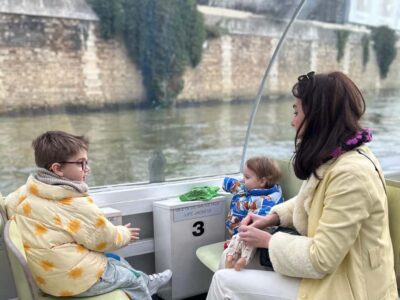
Paris: Hop-On Hop-Off Seine Cruise Pass with 9 Stops
Read our review →
Paris : 3-Course Gourmet Dinner Cruise on Seine River
Read our review →Browse the lists this tour appears in