
Reviewed · DAY TRIPS IN PARIS
Somme Battlefields Small-Group Day Trip with John Monash Centre from Paris
War history feels different on its actual ground. This full-day Somme tour connects cemeteries, trenches, memorials, and museums in one carefully packed journey from Paris. I especially like the Sir John Monash Centre and the chance to visit both Australian and British sites. I also like the small-group format, which gives you a better chance to ask questions than a large coach tour.
The main drawback is the length. With an early 6:50 am start, about 11 hours on the road, and many stops, this is a serious history day rather than a relaxed excursion. The listed group size also needs checking: some tour details say a maximum of eight, while the booking information says up to 16.
In This Review
- Key points to know before booking
- Why the Somme is worth a day from Paris
- Leaving Paris before the city wakes
- Villers-Bretonneux and the Sir John Monash Centre
- Pozières and the Australian battlefield story
- Delville Wood and the cost of the fighting
- Lochnagar Crater, a startling scar from 1916
- Thiepval, Ulster Tower, and Beaumont-Hamel
- Peronne and the Historial of the Great War
- What the guide adds to the day
- Price, group size, and the real value
- Who should book this Somme tour
- Final verdict: a worthwhile but demanding history day
- FAQ
- How long is the Somme Battlefields tour from Paris?
- Where does the tour begin?
- What is included in the price?
- Is food included?
- How large is the tour group?
- What should I wear?
- Can I cancel for a refund?
Key points to know before booking
- The Somme is a full-day commitment: You leave central Paris at 6:50 am and return in the early evening.
- The Sir John Monash Centre is a major highlight: Interactive displays explain Australia’s experience on the Western Front.
- You visit genuine battlefield remains: Lochnagar Crater, preserved trenches, Pozières, Mouquet Farm, and Beaumont-Hamel give the story a physical sense of place.
- The itinerary honors several nations: Australian, British, New Zealand, Canadian, French, and Newfoundland connections appear across the sites.
- Guides make a major difference: Regis, Honoré, Heniere, and Julian have been praised for clear explanations, care, and strong local knowledge.
- Plan for practical limits: Food is not included, the day runs in all weather, and late arrivals are not refunded.
Why the Somme is worth a day from Paris
The Somme battlefields are far enough from Paris that visiting independently takes planning, a car, and a willingness to connect scattered sites. This tour solves that problem in one long day. You travel north by air-conditioned minibus, with a driver-guide handling the route between cemeteries, memorials, villages, and museums.
The Battle of the Somme began in 1916 and became one of the First World War’s bloodiest campaigns. Its importance is not limited to one army. French, British, Australian, New Zealand, Canadian, Newfoundland, and other forces fought and died across this area.
That mix gives the tour useful range. You are not shown only one national story. You can follow Australia’s role at Villers-Bretonneux and Pozières, British losses at Thiepval, and the broader human cost in cemeteries where soldiers from different countries are buried.
I would choose this experience if you want historical context as well as memorial visits. A guide can explain why a site mattered, how the battle moved, and what happened afterward. Without that background, a cemetery can look like rows of identical stones and a crater can seem like a large hole in a field.
More Day Trips in Paris
- Disneyland® Paris 1-Day Ticket
★ 4.6 · 49,412 reviews - Normandy D-Day Sites & Cemetery Day Trip from Paris with Lunch
★ 5.0 · 6,877 reviews - Day Trip to Mont-Saint-Michel from Paris
★ 4.5 · 4,876 reviews
Leaving Paris before the city wakes
The meeting point is Le Duplex, 2 bis Avenue Foch, near the Arc de Triomphe area. The stated departure time is 6:50 am, so punctuality matters. The group does not wait for late arrivals, and a missed departure caused by a delay does not qualify for a refund.
The early start is not glamorous, but it helps fit a remarkable number of sites into one day. You should expect a long ride north and then a busy sequence of visits. The minibus is air-conditioned, and several people have found the transport comfortable, but this is still a lot of sitting followed by repeated walks and standing.
Bring water and food for the road. Meals and drinks are not included, and the schedule is full enough that you should not count on a long, leisurely lunch. One person particularly enjoyed lunch in a town, but the tour information does not promise a specific restaurant or meal stop.
Villers-Bretonneux and the Sir John Monash Centre
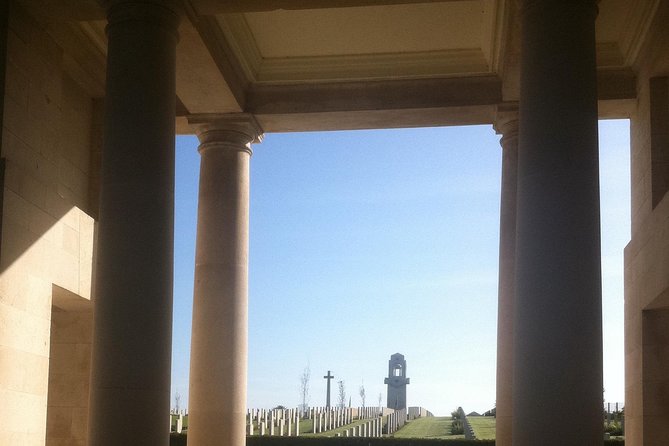
The Sir John Monash Centre is located beside the Australian National Memorial and the Villers-Bretonneux Military Cemetery. The visit uses interactive media and film-style presentations to explain the Australian experience on the Western Front.
This is likely to be the most polished museum-style stop of the day. The technology gives the campaign a clear human and military setting, which can help if you know little about the First World War. It also gives Australian visitors a direct connection to the people commemorated at the surrounding cemetery.
The planned visit lasts about an hour. That may sound generous, but one of the clearest pieces of practical feedback is that some people wanted more time here. If the centre is your main reason for booking, ask at the start how the guide plans to divide the day.
The Australian National Memorial follows naturally. It commemorates 10,729 Australian servicemen who died in France and Belgium during the war. The site also hosts the Dawn Service on April 25 for Anzac Day.
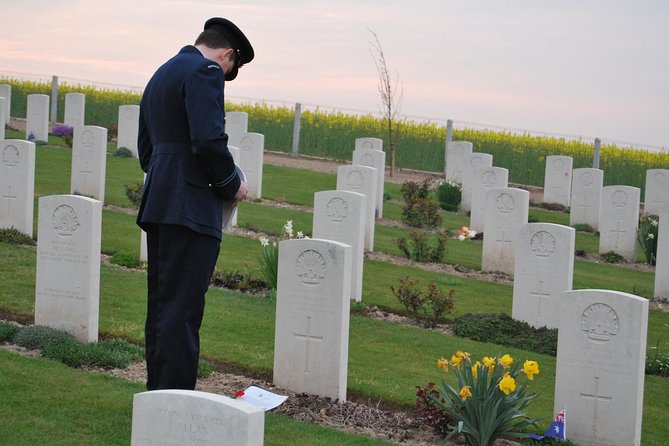
Give yourself room for quiet here. The memorial is not simply another photo stop. Its scale, setting, and list of names can make the Australian cost of the campaign feel personal, even if you arrive without a family connection.
Pozières and the Australian battlefield story
At Pozières, you visit the First Australian Division Memorial near the former Gibraltar blockhouse. The Australian 1st Division captured and held the village between July 23 and 26, 1916.
The visit lasts around 15 minutes, so do not expect an extended walk or a long independent study period. The value comes from the guide’s explanation of what the position meant and how the attack fitted into the wider battle.
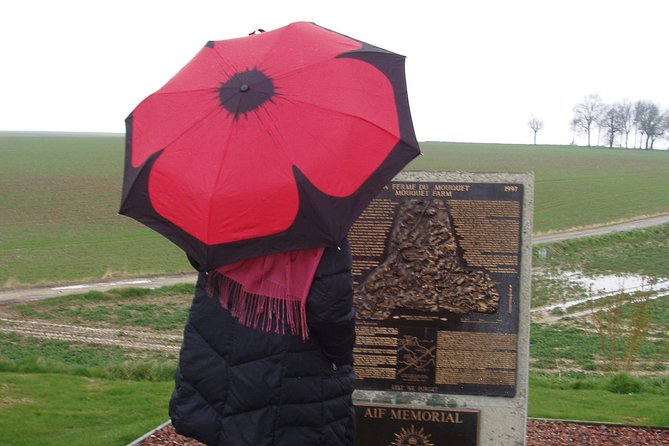
The Australian flag still flies over Pozières, an especially meaningful detail for visitors tracing Anzac involvement. The tour also includes Australian battlefield sites at Pozières and Mouquet Farm, allowing you to connect the memorials with the ground where the fighting took place.
This part of the tour works best when you listen closely. The physical remains are not always dramatic, and many wartime positions have returned to ordinary rural use. A good explanation helps you picture the trenches, artillery, movement, and confusion that are no longer visible at first glance.
A completely different sort of day in Paris:
- Paris: Louvre Museum Timed-Entrance Ticket
★ 4.6 · 71,977 reviews - Paris: Versailles Palace and Gardens Full Access Ticket
★ 4.6 · 41,579 reviews - Paris: Evening River Cruise with Music
★ 4.4 · 22,721 reviews - Paris: Eiffel Tower Entry Ticket with Optional Summit Access
★ 4.4 · 20,035 reviews
Delville Wood and the cost of the fighting
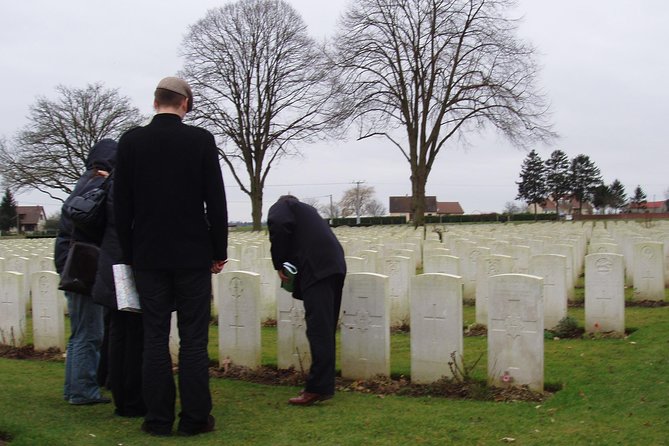
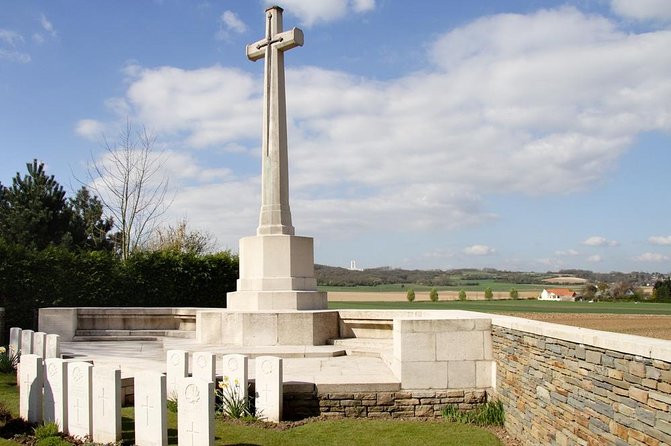
Delville Wood Cemetery at Longueval is one of the day’s most solemn stops. More than 5,500 soldiers from the First World War are buried there.
Cemeteries across the Somme are carefully maintained and visually calm. That calm can be deceptive. The number of graves tells you that this was not a short clash between small units. It was industrial warfare, fought over ground that often changed hands at enormous cost.
You may want time for silence here. The tone of the guide matters greatly at memorial sites, and one published account raised concerns about too much talking and insufficient respect at a cemetery. That appears to be an exception among otherwise very positive comments, but it is a fair reminder to tell your guide if you need a quiet moment.
The tour format can help with this. A limited group is easier to manage than a full coach, and the guide can often answer personal questions without losing the whole party. Still, the schedule means you may not have unlimited time at every cemetery.
Lochnagar Crater, a startling scar from 1916
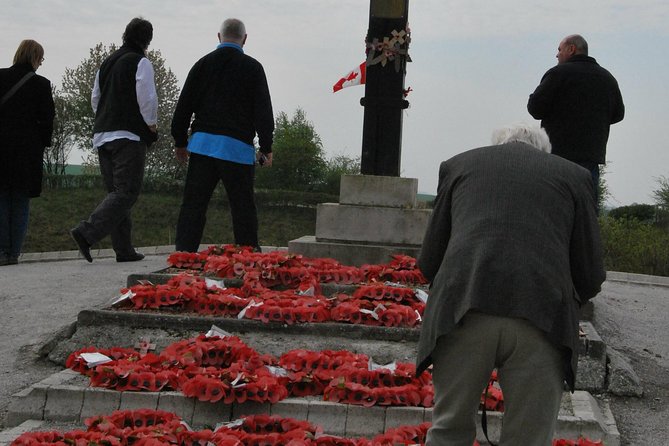
At La Boisselle, Lochnagar Crater gives you one of the clearest physical reminders of the battle. The crater measures about 330 feet, or 100 meters, across, created by a massive mine explosion.
Its size is difficult to absorb from a photograph. Seeing the hollow in person makes the scale of underground warfare and explosives easier to understand. The site has been preserved as a memorial, rather than treated as an ordinary field feature.
This is a short but powerful stop. You do not need a long museum visit to understand what happened here. The crater itself supplies the visual impact, while the guide explains its place in the opening of the Somme offensive.
Wear shoes suitable for grass and uneven ground. The tour requires moderate physical fitness, and the day includes walking around cemeteries, memorial grounds, and preserved military sites.
Thiepval, Ulster Tower, and Beaumont-Hamel
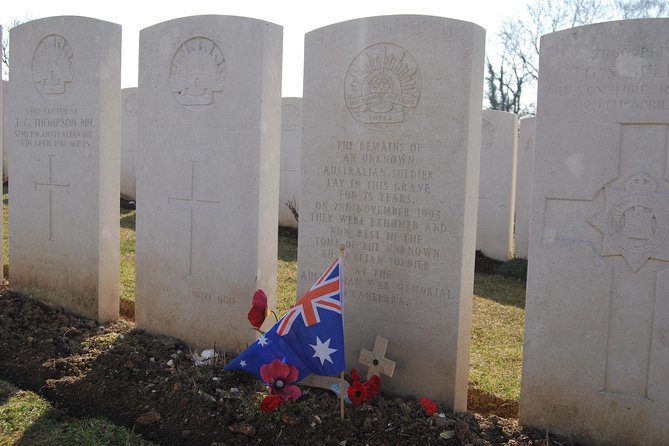
The Thiepval Memorial honors British soldiers missing from the Somme who have no known grave. Its large memorial structure carries a different emotional weight from a cemetery. Instead of rows of identified graves, it confronts you with the names of men whose final resting places were never found.
The tour also visits the Ulster Tower, a memorial connected with the 36th Ulster Division. Together, these sites show how remembrance took different forms after the war. Some soldiers lie in marked graves, while others are remembered only through engraved names.
At the Beaumont-Hamel Newfoundland Memorial, you can see well-preserved trenches and battlefield ground. This is one of the day’s most useful stops for understanding how soldiers lived and fought. A trench is not just a ditch. Its shape, distance from other positions, and relation to the surrounding ground help you picture the harsh conditions more clearly.
The balance of memorials and surviving features is one of the tour’s strengths. You move from names and architecture to earthworks and open ground. That keeps the day from becoming a series of similar cemetery visits.
Peronne and the Historial of the Great War
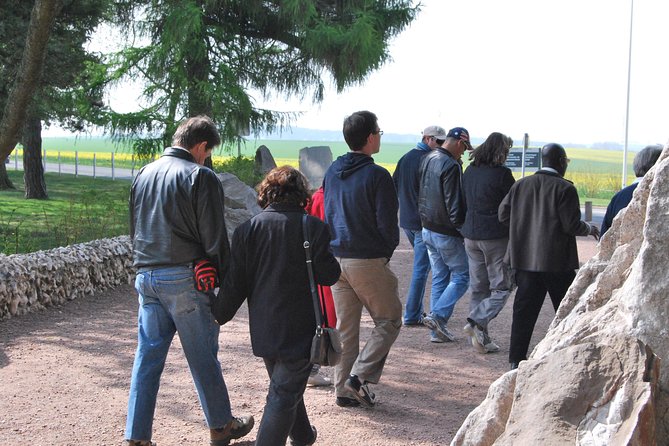
The Historial in Peronne brings the day indoors with a broad museum about the First World War. It covers the conflict’s origins, its effects, and both military and civilian life.
More than 50,000 historic objects are associated with the museum’s collection. That range matters because the war was not only a story of generals, weapons, and battle plans. It affected families, towns, workers, prisoners, refugees, and civilians living close to the front.
The museum is a useful final stop because it gives you space to connect the individual sites. After seeing graves, trenches, memorials, and the mine crater, you can place them within the wider story of wartime France.
The tradeoff is time. This is an ambitious route, and the museum visit may feel shorter than you want if you prefer to read every display. If your main interest is museum collections, a separate visit would allow a slower pace. If you want a single day that joins the major Somme locations together, the museum adds real value.
What the guide adds to the day
The guide is central to this experience. The strongest feedback names Regis, Honoré, Heniere, and Julian, with praise for their explanations, punctuality, friendliness, and ability to answer questions.
Regis receives especially warm praise for giving a thorough day, explaining the sites clearly, and helping an older passenger at each stop. Another account describes him as a French guide with strong enthusiasm for the area, even from a guest who already had a university-level background in military history.
That does not mean every guide will have the same style. One person found the information about Australian service and remembrance practices lacking and reported factual errors. Another felt the guide’s manner was too loud and intrusive during quiet moments.
That criticism is worth taking seriously. The Somme calls for both accuracy and restraint. If you have a family connection, a particular regiment to trace, or a need for quiet at cemeteries, tell the guide early. The small format gives you a better chance of making that request heard.
Price, group size, and the real value
The listed price is $294.36 per person. That is not a cheap day trip, but the comparison should be with the cost and effort of arranging the same route yourself.
The price includes transport by air-conditioned minibus, an English-speaking driver-guide, taxes, fees, and admission charges listed for the tour. It also saves you from finding remote cemeteries, locating memorials, and navigating between villages.
The value is strongest if you care about the history and want many sites in one day. It is weaker if you dislike early starts, long drives, or a fixed schedule. You are paying for access, route planning, commentary, and the ability to see widely scattered locations without renting a car.
There is an important inconsistency about capacity. The tour is described in some places as a maximum of eight people, while the inclusion and additional information sections state a maximum of 16. Since the atmosphere changes greatly between eight people and 16, confirm the current group limit before paying.
The tour is booked an average of 136 days ahead, which suggests that advance planning is sensible, especially during popular travel periods. Free cancellation is available up to 24 hours before the start time, but changes or cancellations inside that window are not refunded.
Who should book this Somme tour
I would recommend it most strongly to people with a serious interest in the First World War, Australian military history, family service records, or European remembrance.
It also suits anyone who wants an introduction to the Somme without driving. You do not need to be a military historian. The museums, memorials, and guide’s commentary provide a useful starting point, and several people with limited prior knowledge found the day prompted them to learn more.
Families should think about the pace and subject matter. The day is suitable for different ages in an educational sense, but the material is sad and at times heartbreaking. Children who need frequent breaks may find the schedule difficult.
It is less suitable if you want a slow rural outing, long meals, or lots of time at one memorial. The itinerary covers many places, and that means some stops are necessarily brief.
Final verdict: a worthwhile but demanding history day
Book this tour if you want to understand the Somme through real places, not just museum panels in Paris. The combination of Villers-Bretonneux, Pozières, Delville Wood, Thiepval, Lochnagar Crater, Beaumont-Hamel, and Peronne gives you a broad view of the campaign and its human cost.
Go with realistic expectations. You will leave early, spend much of the day traveling, buy your own food, and move on before every site has fully settled in your mind. Confirm the group size, arrive well before 6:50 am, dress for changing weather, and tell the guide if a cemetery visit has personal meaning for you.
For many people, the long day is justified. The Sir John Monash Centre, preserved trenches, huge mine crater, and carefully maintained cemeteries turn distant history into something concrete. At $294.36, it is best viewed as a specialist day trip with transport and expert guidance, not a casual sightseeing outing.
FAQ
How long is the Somme Battlefields tour from Paris?
The experience lasts approximately 11 hours. It begins at 6:50 am and returns to Paris in the early evening.
Where does the tour begin?
The meeting point is Le Duplex, 2 bis Avenue Foch, 75116 Paris, France. The listed end point is the Arc de Triomphe at Place Charles de Gaulle.
What is included in the price?
The price includes transport by air-conditioned minibus, an English-speaking driver-guide, taxes, fees, handling charges, and the listed admission charges.
Is food included?
No. Food and drinks are not included, so you should plan accordingly for this full-day outing.
How large is the tour group?
The information gives two different limits. The tour is described in some places as having a maximum of eight people, while other details state a maximum of 16. Confirm the current capacity when booking.
What should I wear?
The tour operates in all weather conditions, so dress appropriately for changing conditions. Comfortable footwear is useful because you will walk around cemeteries, memorials, and battlefield sites.
Can I cancel for a refund?
You can cancel at least 24 hours before the scheduled start time for a full refund. Cancellations or changes made less than 24 hours before the start are not refunded or accepted.
Recently added around Paris
- Private Half-Day Guided Tour of Paris★ 4.5 · 48 reviews
- 2 hour outdoor group activity in Paris: SAINT GERMAIN★ 5.0 · 48 reviews
- Paris Dinner Show Opera Bel Canto★ 4.5 · 48 reviews
- Paris Vintage Tour by Night on a Sidecar with Champagne★ 5.0 · 48 reviews
- Secrets & Scandals of the Louvre – Limited to 6 Guests★ 5.0 · 48 reviews
- Paris Photoshoot: Eiffel Tower Exclusive Private Experience★ 5.0 · 48 reviews
- From Paris: Versailles Full-Day Guided Tour with Lunch★ 4.9 · 48 reviews
- Paris: Louvre Mona Lisa Discovery Guided Tour with Ticket★ 4.9 · 48 reviews
Day Trips in Paris, compared.

Normandy D-Day Sites & Cemetery Day Trip from Paris with Lunch
Read our review →

Disneyland® Paris 1-Day Flexible Date Ticket
Read our review →
Loire Valley Castles Day Trip from Paris with Complementary Wine
Read our review →
Normandy D-Day Small-Group Day Trip with Omaha Beach, Cemetery & Cider Tasting
Read our review →
Mont Saint Michel Day Trip from Paris with English Speaking Guide
Read our review →
Normandy D-Day Beaches and American Cemetery Day Trip from Paris
Read our review →Browse the lists this tour appears in