
Reviewed · AVIGNON TOURS
Visit Avignon and Villeneuve lez Avignon aboard a Double-Decker Bus
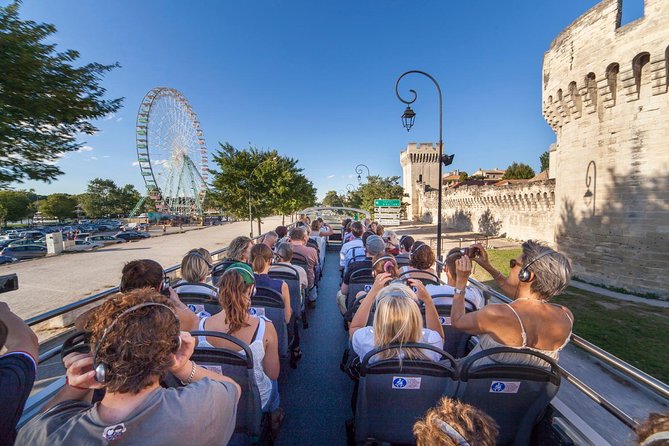
See two banks of the Rhône in one ride. This double-decker bus tour gives you a useful first look at Avignon and Villeneuve lez Avignon, including the Pont d’Avignon, Fort Saint-André, the Chartreuse, and leafy Île de la Barthelasse. I like the broad route and the chance to see places beyond Avignon’s central walls, and I also like the clear audio commentary when the equipment works properly. The main drawback is that this is not a classic hop-on hop-off service, and the ride can feel rushed.
The advertised price is about $16.30 per person, which can be fair if you use the bus to get your bearings and then return to selected sights on foot. It is less convincing if you expect frequent stops, a flexible all-day pass, or a guided tour with someone speaking live on the bus.
In This Review
- Key points to know before you book
- A city orientation with a wider reach
- Starting at 40 Cours Jean Jaurès
- Pont Saint-Bénézet, the bridge of Avignon
- Crossing toward Philippe le Bel Tower
- Fort Saint-André and the Abbey gardens
- Chartreuse de Villeneuve lez Avignon
- Île de la Barthelasse and the best city view
- The Lambert Collection and modern Avignon
- How the audio and pace affect the experience
- Is $16.30 a fair price?
- Who should choose this bus ride?
- Should you book the Avignon double-decker bus?
- FAQ
- Where does the bus tour start?
- Where does the tour end?
- How much does the experience cost?
- How long does the tour last?
- Is the Pont Saint-Bénézet admission included?
- Is admission to the Chartreuse de Villeneuve lez Avignon included?
- Is Fort Saint-André free to enter?
- Is commentary available in English?
- Does the bus run every day?
- Can I cancel for a refund?
Key points to know before you book
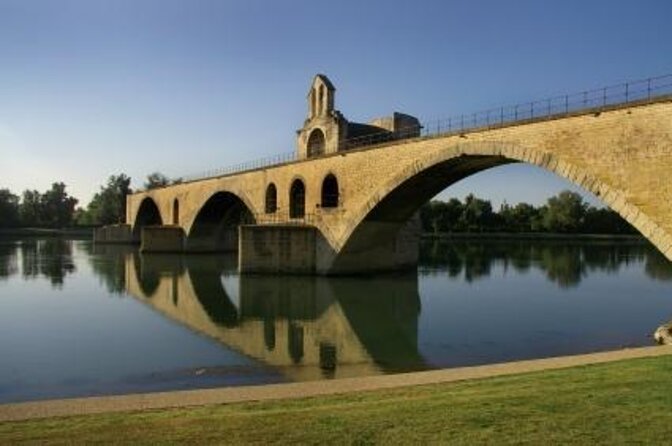
- Pont d’Avignon is included on the route, but admission costs extra.
- The bus crosses the Rhône and reaches Villeneuve lez Avignon, something you might not manage easily during a short stay.
- Audio commentary is provided in English, though several audio connections have reportedly failed.
- Île de la Barthelasse offers a 10 to 15 minute stop and a fine view back toward Avignon.
- This is not a dependable traditional hop-on hop-off loop, so check the exact operating day, stop map, and return arrangements.
- The maximum group size is 73 people, and the experience returns to the starting point at 40 Cours Jean Jaurès.
A city orientation with a wider reach
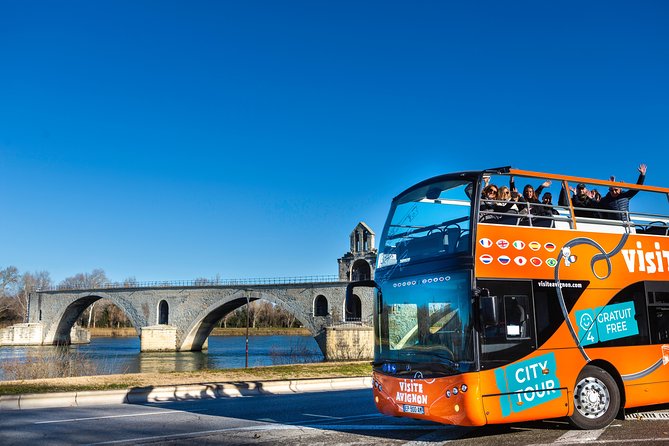
Avignon is easy to picture from its famous monuments: a walled old town, the Palais des Papes, and the broken bridge over the Rhône. This bus ride adds another layer by taking you around the city edges and across to Villeneuve lez Avignon.
I see the tour as an orientation ride rather than a full sightseeing day. It can show you how the Rhône separates the two towns, where the major monuments sit, and why Villeneuve became an important counterpoint to papal Avignon. That wider view is the best reason to book it.
The route is especially useful if you have only a short time in Avignon, have limited energy for walking, or want to decide which sights deserve a closer visit. The standard double-decker format also gives you a raised view, although the open upper deck can make taking photographs difficult when the bus is moving quickly.
The experience is offered in English, with recorded commentary rather than a guaranteed live guide. The audio adds useful context, but you should check your connection early. A few passengers have found that some upper-deck audio points did not work.
A few more Avignon trips worth weighing up
- Provence Highlights Full-Day Tour from Avignon
★ 5.0 · 499 reviews - Chateauneuf du Pape wine tour
★ 5.0 · 484 reviews - From Avignon: Châteauneuf du Pape Half-Day Wine Tour
★ 4.7 · 365 reviews
Starting at 40 Cours Jean Jaurès
The published meeting point is 40 Cours Jean Jaurès in Avignon, and the bus returns there at the end. That sounds simple, but the stop information deserves careful attention before you set out.
A recurring problem has been confusion between the marked location and the actual boarding place. One person waited at a map point that turned out to be wrong, then had difficulty finding a bus that would return to the original starting point. I would arrive early and confirm the stop directly with the local operator or ticket office rather than relying only on a map pin.
The tour uses a paper ticket, and confirmation is provided at booking. The group can reach 73 people, so an early arrival may help if you want a particular seat, especially upstairs.
The operating schedule also needs checking. A booking has been accepted for a Sunday even though the service was not running that day. Another complaint concerned a daily lunch break from 1 p.m. to 2 p.m. The practical lesson is plain: verify the day and departure time shortly before your visit.
Pont Saint-Bénézet, the bridge of Avignon
The Pont Saint-Bénézet is the route’s star attraction, even if you do not enter the monument itself. Its fame comes partly from the old song about dancing on the bridge, but the real story is more striking than the tune.
Construction began in 1177. The original bridge was about 920 meters long, four meters wide, and designed with 22 arches. It was completed in only eight years, an impressive feat for its era. After the siege of 1226, the first Romanesque bridge was destroyed as far as the fourth arch, and a replacement was built along roughly the same route.
Only a section survives today. That broken end reaching into the Rhône is one of Avignon’s most recognizable sights, and the bus gives you a useful view of it in relation to the city walls and the river.
In the Middle Ages, the bridge formed part of a major pilgrimage route between Italy and Spain. It later became vital to the papal court in Avignon. The cardinals built residences in Villeneuve, partly to escape the crowded and unhealthy conditions of Avignon, and the bridge linked those homes with the Palais des Papes.
Popes reportedly paused at the Bénezet chapel during crossings, prayed, and left an alms of a florin. The bridge was paved in 1377 after repeated slips caused accidents and drownings. Louis XIV was among the last French kings to cross it before its later collapse, but even royal interest did not bring enough money for a full restoration.
Admission to the bridge is not included, so plan to pay separately if you want to walk on the surviving section. The bus provides context and a view, but it cannot replace standing on the stonework and looking down the Rhône.
Crossing toward Philippe le Bel Tower
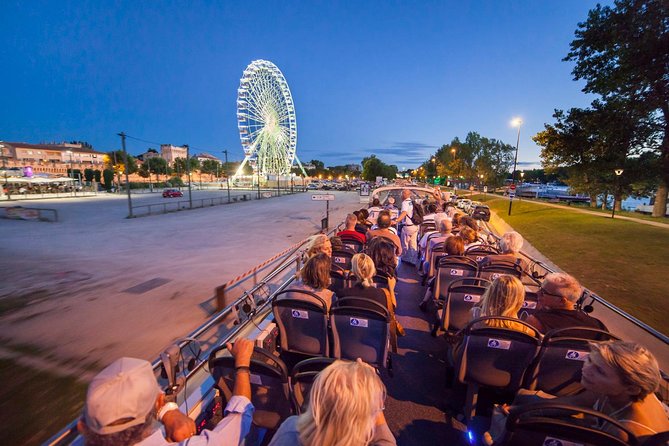
The route continues across the river toward Villeneuve lez Avignon, where the Philippe le Bel Tower marks the old approach to the bridge.
The tower was built in the 13th century by King Philippe le Bel to control access to the Pont d’Avignon. It represents the power of the French crown on one side of the river, set against the authority of the papacy in Avignon.
That political story gives the crossing real purpose. You are not simply riding from one town to another. You are following an old boundary between royal and papal influence, with the river acting as a natural dividing line.
The tower is a good example of medieval military architecture. The bus stop itself may not feel like a major visit, especially if your aim is to explore interiors, but seeing the tower as part of the old bridge approach helps explain why Villeneuve mattered.
A completely different sort of day in Avignon:
- From Avignon: Full-Day Best of Provence Tour
★ 4.7 · 338 reviews - From Avignon: Half-Day Great Vineyards Tour
★ 4.7 · 321 reviews - Provence Cru Wine Small-Group Half-Day Tour from Avignon
★ 4.5 · 290 reviews - Châteauneuf du Pape Wine Day Tasting Tour including Lunch from Avignon
★ 5.0 · 287 reviews
Fort Saint-André and the Abbey gardens
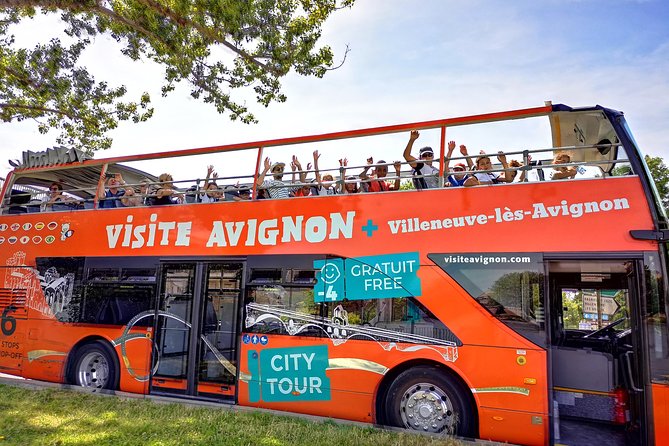
Fort Saint-André rises above Villeneuve and was begun at the end of the 12th century. In the 14th century, it defended the Benedictine abbey of the same name.
The fort is included as one of the main route stops, but entrance arrangements differ from the bus ride. The stated stop includes free admission, while the nearby abbey and some other monuments may have their own rules. You should confirm what your ticket covers before planning a full visit.
The fort’s setting is one of the strongest parts of the Villeneuve section. From this side of the Rhône, you can look back toward Avignon and understand the two towns as a connected pair rather than separate points on a map.
The Abbey of Saint-André adds a gentler contrast to the heavy walls of the fort. Its vaulted rooms were decorated in the 17th century, and its gardens carry the official Remarkable Gardens label. Inside and outside, the site combines Romanesque remains, Renaissance Tuscan-style details, rose beds, and Mediterranean plants.
I would allow more time here if the schedule permits, since the gardens are the sort of place that rewards a quiet walk. The difficulty is that a bus loop does not always give you enough freedom to linger. If Fort Saint-André or the abbey is a priority, treat the bus ride as reconnaissance and return independently if possible.
Chartreuse de Villeneuve lez Avignon
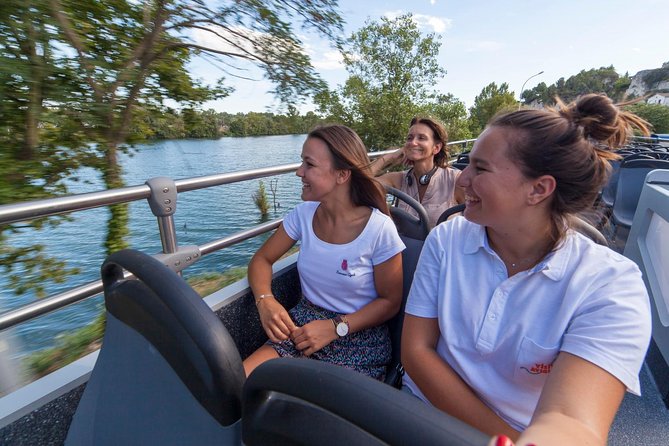
The Chartreuse de Villeneuve lez Avignon, also called the Chartreuse of the Val de Bénédiction, was built from 1353 under the direction of Pope Innocent VI. It served as a cardinal’s residence and remains one of the most important religious sites on the Villeneuve side of the river.
The complex is housed partly in a 14th-century mansion where several cardinals lived. That detail helps explain Villeneuve’s unusual character. It was not simply a suburb across the water, but a place where powerful church officials created their own residences, religious institutions, and gardens.
Admission to the Chartreuse is not included. This is worth noting because the tour presents several major monuments, but the low ticket price does not buy entry to all of them. I would choose your paid visits in advance rather than assuming the bus ticket covers the complete sightseeing program.
The bus stop gives you an introduction, not a full exploration. You may find the site most useful as a pointer to a place you want to visit later, particularly if you care about medieval religious architecture and the papal period.
Île de la Barthelasse and the best city view
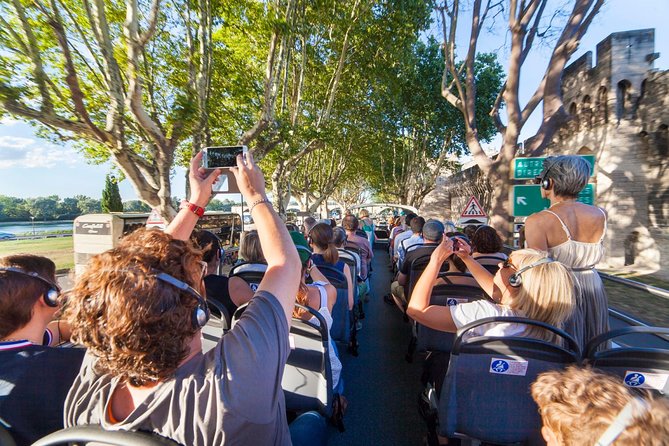
The stop on Île de la Barthelasse is one of the more appealing pauses on the route. The island covers about 700 hectares in the Rhône and provides a broad view toward Avignon, the city of the Popes.
You normally get 10 to 15 minutes here. That is enough to stretch your legs, take in the panorama, and photograph the walled city from across the water. It is not enough for a long walk or a leisurely visit, so think of it as a scenic pause rather than a destination in itself.
The island also connects with other ways of getting around. A free river shuttle can take you toward the historic center, and you may also choose to continue by bicycle. Those options make this stop more useful for independent explorers, though the bus itself ends back at the original meeting point.
I particularly like the change of viewpoint. From inside Avignon, the walls and monuments can feel packed together. From Barthelasse, you can see the city as a whole, with the Rhône in front and the major historic core gathered behind its defenses.
The Lambert Collection and modern Avignon
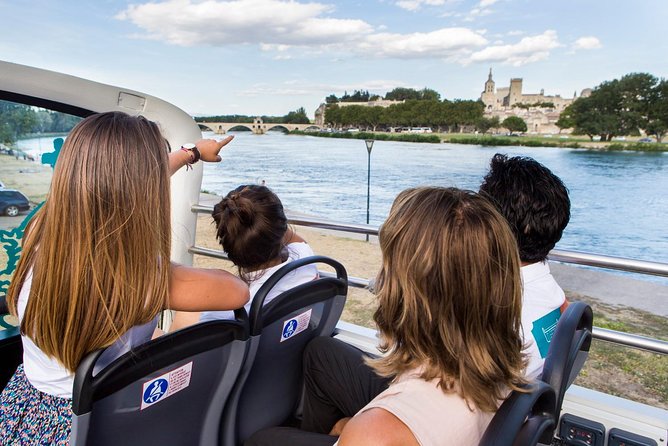
The Lambert Collection offers a different side of the city. It opened in June 2000 during Avignon’s year as European Capital of Culture, after gallerist and collector Yvon Lambert placed his personal collection in an 18th-century mansion.
The collection began with about 350 works from the 1960s to the present and later grew to more than 1,200 references. The museum occupies about 2,000 square meters and includes exhibition areas, conservation work, programs for younger visitors, a bookstore, artists’ editions, and a restaurant in the mansion courtyard.
This stop helps prevent the ride from becoming only a procession of medieval walls and churches. Avignon has an active modern-art side, and the Lambert Collection places contemporary work inside an older architectural setting.
The museum is not the main reason to purchase the bus ticket, and the available information does not indicate that admission is included. Still, if you enjoy modern art, it is a useful stop to mark for a separate visit.
How the audio and pace affect the experience
The audio commentary is one of the tour’s strongest features when it functions. It provides descriptions along the route and helps connect the monuments to the story of papal Avignon, royal Villeneuve, and the Rhône crossing.
Several people found the audio good and informative. Others had broken connections on the upper deck, which meant long stretches with no explanation. I would test the audio as soon as you sit down and tell the driver if it fails. Replacement equipment may be available.
Speed is another concern. The bus can move quickly, and at least one account described spending about half of a one-hour ride in traffic. Fast driving makes it hard to take photographs and can turn a promising route into a quick glance through a window.
For that reason, I would sit upstairs for the view if the weather is good, but I would not count on getting perfect photos from a moving bus. Keep the ride’s purpose in mind: it is for orientation and broad views, not slow photography.
Is $16.30 a fair price?
At about $16.30, the tour is reasonably priced if you use it as a one-time circuit around both sides of the Rhône. The route reaches the outskirts, crosses two bridges, shows Villeneuve, and offers a view from Barthelasse. Those are useful experiences for someone who does not want to organize every connection alone.
The value drops if you expect a full all-day pass. The listed duration ranges from one hour to one day, but the actual experience can function more like a roughly one-hour city circuit, depending on the schedule and how you use the stops.
You also need to budget separately for paid sights such as the Pont Saint-Bénézet and Chartreuse de Villeneuve lez Avignon. Fort Saint-André is listed with free admission, while the abbey gardens and other attractions may have separate arrangements.
The price is best for first-time visitors who want a quick overview. It is not the best deal for someone who already knows Avignon and only wants door-to-door transport between monuments.
Who should choose this bus ride?
I would recommend it to you if you want a broad introduction before choosing where to spend the rest of your day. It can also suit families, older visitors, and anyone who finds a long walk around Avignon and across the Rhône tiring.
It is a good match for history-minded visitors who want to see the relationship between Avignon and Villeneuve. The bridge, Philippe le Bel Tower, Fort Saint-André, the abbey, and the Chartreuse make more sense when viewed as parts of one medieval power center.
I would be cautious if you need exact, frequent departures or a reliable hop-on hop-off system. The stop map and Sunday schedule have caused real problems, and the lunch break can interrupt an otherwise short day.
The service allows service animals, is near public transportation, and most people can participate. It requires good weather and a minimum number of participants. If poor weather or low enrollment cancels the ride, a different date or a full refund is offered. You can also cancel for a full refund up to 24 hours before the start time.
Should you book the Avignon double-decker bus?
Book it if you want a quick, inexpensive orientation that reaches beyond Avignon’s central streets. The crossing to Villeneuve, the view from Île de la Barthelasse, and the chance to see Fort Saint-André and the Chartreuse make this more interesting than a simple loop around the old town.
Skip it if you want a carefully timed hop-on hop-off service or a slow, live-guided tour. Before paying, confirm that the bus runs on your chosen day, verify the exact boarding point, and ask about the lunch break. Used with those precautions, it can give you a useful first map of Avignon and its two-riverbank story.
FAQ
Where does the bus tour start?
The published starting point is 40 Cours Jean Jaurès, 84000 Avignon, France.
Where does the tour end?
The experience ends back at the meeting point in Avignon.
How much does the experience cost?
The listed price is approximately $16.30 per person.
How long does the tour last?
The advertised duration ranges from one hour to one day, depending on how the service and stops are used.
Is the Pont Saint-Bénézet admission included?
No. Admission to the Pont Saint-Bénézet is not included.
Is admission to the Chartreuse de Villeneuve lez Avignon included?
No. Admission to the Chartreuse is not included.
Is Fort Saint-André free to enter?
The stop information lists admission to Fort Saint-André as free.
Is commentary available in English?
Yes. The experience is offered in English with audio commentary.
Does the bus run every day?
The supplied information does not guarantee daily operation. Sunday and Monday service problems have been reported, so confirm the operating schedule for your date.
Can I cancel for a refund?
Yes. You can cancel at least 24 hours before the start time for a full refund. Changes or cancellations made less than 24 hours before the start time are not accepted for a refund.
Recently added around Avignon
- Arles and Camargue Full-Day Tour including Aigues Mortes★ 4.5 · 55 reviews
- Truffle Hunting in Provence★ 5.0 · 55 reviews
- Half Day Great Vineyard Tour from Avignon★ 4.5 · 57 reviews
- Morning Wine Tour to Chateauneuf du Pape from Avignon★ 4.5 · 70 reviews
- Camargue Small-Group Day Trip from Avignon★ 5.0 · 71 reviews
- From Avignon: Luberon Villages Day Tour★ 5.0 · 79 reviews
- Avignon: Full-Day Wine Tour around Châteauneuf-du-Pape★ 4.9 · 83 reviews
- From Avignon: Half Day Lavender Tour to Sault★ 4.6 · 83 reviews
Avignon Tours, compared.
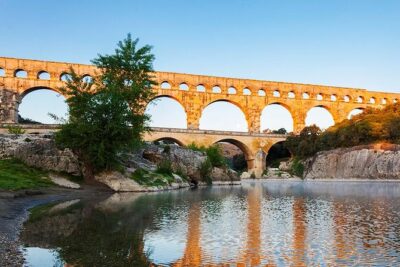
Provence Highlights Full-Day Tour from Avignon
Read our review →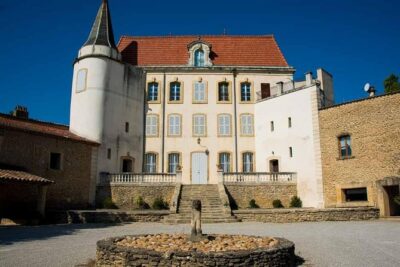

From Avignon: Châteauneuf du Pape Half-Day Wine Tour
Read our review →


Provence Cru Wine Small-Group Half-Day Tour from Avignon
Read our review →
Châteauneuf du Pape Wine Day Tasting Tour including Lunch from Avignon
Read our review →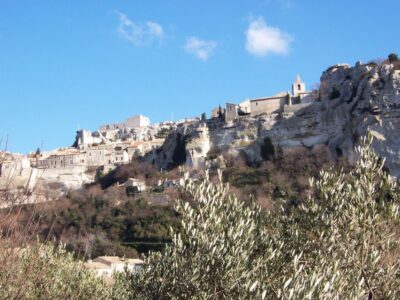
Avignon: Pont du Gard, Saint Remy and Les Baux Half-Day Tour
Read our review →Browse the lists this tour appears in