
Reviewed · LOUVRE MUSEUM TOURS
Exclusive Semi-Private Louvre Tour with Mona Lisa, Max 6 People
The Louvre rewards a plan. This two-and-a-half-hour tour takes you through major works without asking you to wander blindly through one of the world’s largest museums. I like the guaranteed small-group format and the chance to stay inside the museum after the guided visit. The main caution is that the quality of the experience depends heavily on your guide and on whether your group receives working audio equipment.
The route covers the Louvre’s palace history, the Mona Lisa, Venus de Milo, Winged Victory, and major paintings by Veronese, David, and Géricault. At $204.38 per person, it is not a bargain museum ticket, but the price can make sense if you have limited time, want context, and prefer a clear route through a famously confusing building.
In This Review
- Key Points Before You Book
- Why a Short Louvre Tour Makes Sense
- Meeting Louis XIV Under the Pyramid
- Inside the Louvre: A Fast Route Through Major Works
- Ancient Egypt and the Great Sphinx of Tanis
- Ancient Greece: Venus de Milo and Winged Victory
- The Paintings You Should Not Miss
- The Mona Lisa: Famous, Crowded, and Still Worth Seeing
- Guide Quality Makes the Difference
- Headsets, Crowds, and Hearing the Commentary
- Is $204.38 Good Value?
- Who Will Like This Tour Most?
- Should You Book the Semi-Private Louvre Tour?
- FAQ
- Where does the Louvre tour begin?
- Where does the tour end?
- How long does the experience last?
- Is the Mona Lisa included?
- Can I stay in the Louvre after the guided tour?
- What is included in the price?
- What is the cancellation policy?
Key Points Before You Book
- A compact route through two Louvre wings: You see major works from Ancient Egypt, Greece, the Renaissance, Neoclassicism, and Romanticism in about 2 hours and 10 minutes inside the museum.
- A small group is promised: The tour is described as semi-private with a maximum of six people, although the additional booking information lists a maximum of 15, so confirm this detail before paying.
- The Mona Lisa is included: You will be brought to Leonardo da Vinci’s famous portrait, along with several other works that are easier to appreciate with explanation.
- You can continue alone afterward: Your museum ticket lets you remain inside until closing, giving you time to revisit favorite rooms or explore beyond the guided route.
- Audio equipment may vary: Several people praised the earpieces, while others reported having no microphone and struggling to hear in crowded galleries.
- Punctuality matters: Arriving late can mean missing the guided portion, even if the operator provides an entry ticket or offers another tour time.
Why a Short Louvre Tour Makes Sense
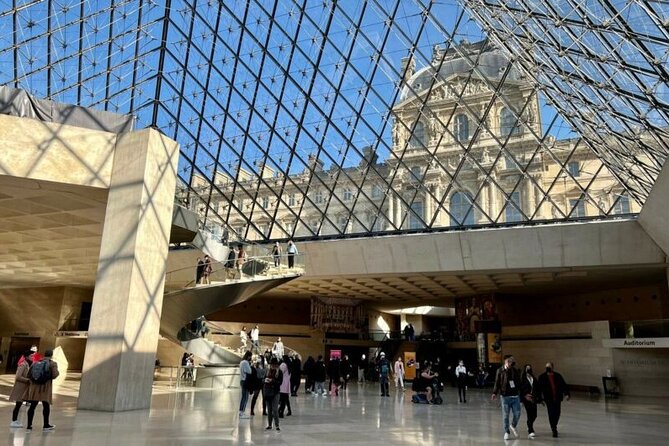
The Louvre is not simply a large museum. It is a former royal palace with several vast wings, many floors, and more than 35,000 works on display. Even a full day here requires choices. In two and a half hours, you cannot see everything, but you can get a useful first map of the place.
I like this format for a first visit because the guide chooses the route and keeps the tour moving. You are not spending your best museum time studying a floor plan, hunting for the Mona Lisa, or wondering if you have missed Venus de Milo. Instead, you get a focused introduction to the museum’s art and architecture.
The small-group promise matters. With six people, you can ask questions without holding up a large crowd, and the guide can usually keep everyone together in busy rooms. Several guides received especially warm praise for making art approachable, including Anais, Julie, Claire, Sarah, Raphael, Avi, Diane, Anna, Toni, and Daniel.
The experience is not a private tour, though. The supplied information also says the activity can have up to 15 participants. That conflicts with the clear promise of a maximum of six. I would confirm the actual group limit at booking, particularly if the intimate format is the main reason you are willing to pay this price.
More Louvre visits and skip-the-line options:
- Paris: Louvre Museum Timed-Entrance Ticket
★ 4.6 · 71,977 reviews - Paris: Louvre Guided Tour with Reserved Access & Boat Cruise
★ 4.3 · 16,353 reviews - Louvre Museum Masterpieces Guided Tour with Access
★ 4.5 · 12,023 reviews
Meeting Louis XIV Under the Pyramid
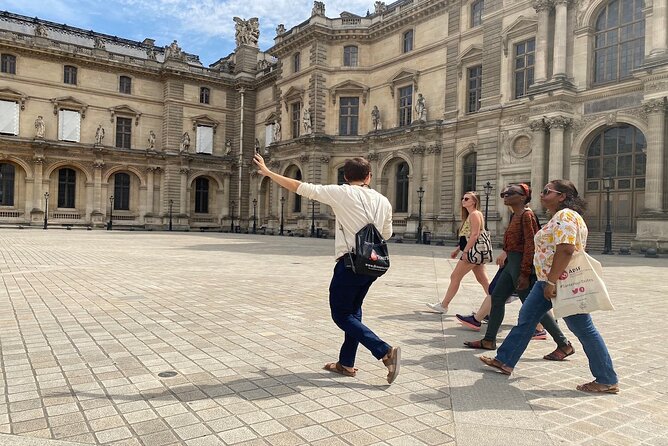
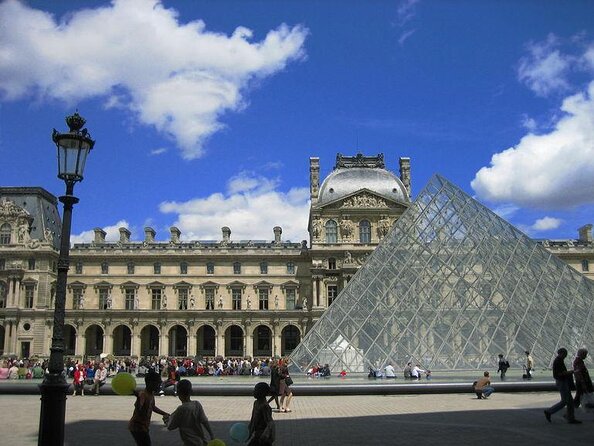
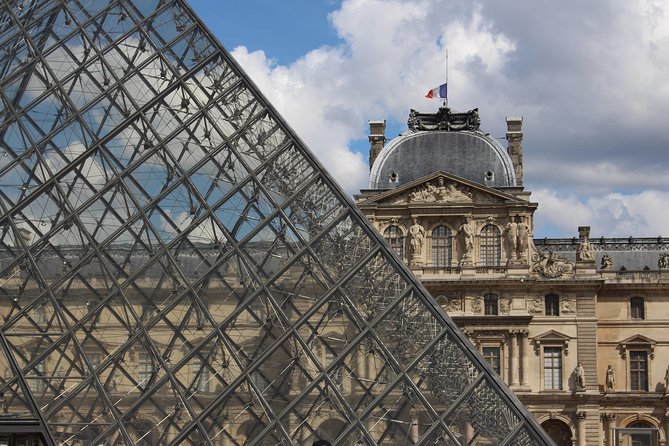
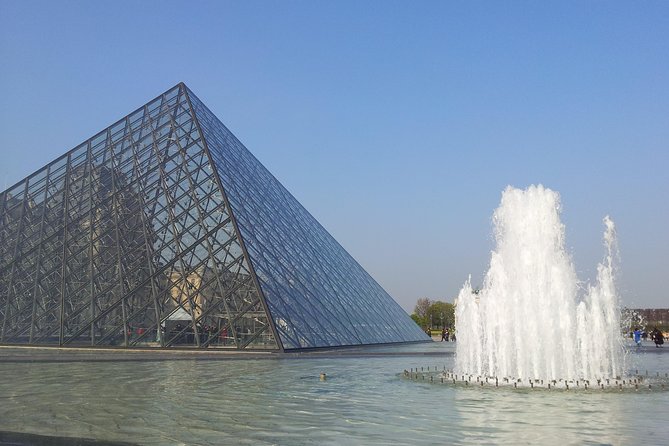
The meeting point is in the Cour Napoléon, near the glass pyramid, under the statue of Louis XIV as Marcus Curtius. This is a sensible place to begin. The pyramid is easy to recognize, and the opening explanation gives you a better sense of what you are about to enter.
The guide first discusses the building before it became a museum. That context is useful because the Louvre feels more like a palace complex than a modern gallery. You will spend about 20 minutes around the pyramid and statue before going into the museum.
Pay close attention to the exact statue named in the meeting instructions. The Louvre courtyard can be crowded, and a vague plan to meet near the pyramid is not enough. The listed spot is the statue of Louis XIV, not simply the broad area in front of the glass entrance.
The practical lesson is simple: arrive early. One unhappy booking involved a group arriving roughly 40 minutes after the scheduled meeting time. The operator said its greeter still provided entry tickets and offered a later tour, but the group missed the original guided experience. With timed museum admission and a small group waiting, lateness creates problems quickly.
Inside the Louvre: A Fast Route Through Major Works
The museum portion lasts about 2 hours and 10 minutes. The route visits two of the Louvre’s three main wings, so you should expect a selection rather than a complete survey.
That is a good thing for most first-time visitors. A guide who tried to cover the whole museum would give you little more than a list of names. Here, the emphasis is on major works from several periods, with explanations of why each one matters.
Ancient Egypt and the Great Sphinx of Tanis
The Ancient Egypt section brings you to the Great Sphinx of Tanis, a sleek granite sculpture considered one of the largest and best-preserved examples in a Western museum. It gives the tour a strong start because it is visually powerful even if you do not have much background in Egyptian art.
A good guide can help you look beyond the scale of the sculpture. You may learn how its form, materials, and royal associations fit into the wider collection. The supplied details do not promise a specialized Egyptology tour, so expect a concise explanation within a broad highlights route.
A few more Paris trips worth weighing up
- Disneyland® Paris 1-Day Ticket
★ 4.6 · 49,412 reviews - Paris: Versailles Palace and Gardens Full Access Ticket
★ 4.6 · 41,579 reviews - Paris: Evening River Cruise with Music
★ 4.4 · 22,721 reviews - Paris: Eiffel Tower Entry Ticket with Optional Summit Access
★ 4.4 · 20,035 reviews
Ancient Greece: Venus de Milo and Winged Victory
The Venus de Milo is one of the Louvre’s essential stops. Her missing arms are part of the fascination, but a useful guide should give you more than the familiar fact that the statue is armless. The work belongs to the Hellenistic tradition, and its pose and treatment of the body help explain its lasting appeal.
Winged Victory of Samothrace offers a sharp contrast. This dramatic sculpture is headless, yet its forward movement and windblown clothing make it feel active. Its position on the Daru staircase also gives the visit a strong visual moment as you approach it.
These two sculptures are popular for good reason, but they can be surrounded by crowds. A small group and a guide who uses an earpiece make a real difference here. Claire received specific praise for using headsets that allowed everyone to hear over the noise while still looking at the art.
The Paintings You Should Not Miss

The painting route includes several large, demanding works. This is where an art-history guide can add the most value, especially if you do not normally spend much time in museums.
Paolo Veronese’s Wedding Feast of Cana fills an enormous wall opposite the Mona Lisa. Its scale alone can be hard to grasp when you are surrounded by other people, but the guide can point out the crowded banquet, the architectural setting, and the many details competing for your attention.
Jacques-Louis David’s Coronation of Napoleon gives you a different kind of spectacle. It is grand, formal, and carefully designed to shape the viewer’s opinion of power. A guide can explain the political purpose of the scene and help you notice details that a quick glance would miss.
Théodore Géricault’s Raft of Medusa brings a darker mood. The painting’s distressed figures and dramatic composition make it one of the Louvre’s most emotionally forceful works. Several people praised guides who explained not only dates and names but also the human story and artistic choices behind the paintings.
That style of explanation is one of the tour’s strongest possible advantages. Anna was praised for using her art background to make paintings come alive, including for people who did not think they were interested in art. Berta was also praised for explaining why works were made in particular ways, rather than simply reciting titles and dates.
The Mona Lisa: Famous, Crowded, and Still Worth Seeing
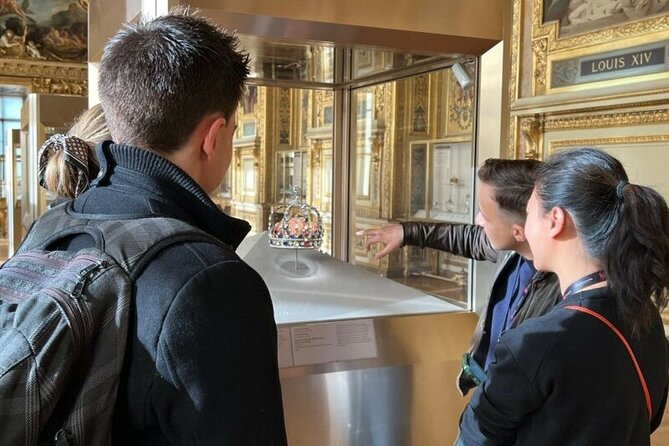
Of course, the route includes Leonardo da Vinci’s Mona Lisa. This is the room where expectations need a little adjustment. You will see the painting, but you should not expect a quiet personal encounter with it.
The portrait is among thousands of works in the Louvre, yet it draws the greatest crowd. The guide helps you reach it as part of an organized visit, then gives you useful context about why the painting became so famous and what makes it more than a widely reproduced image.
The actual viewing may be brief. Crowds, barriers, and the number of people taking photographs can limit how long you stand in front of the painting. I would treat the Mona Lisa as one stop in a much larger museum visit, not the entire reason to buy a guided tour.
Afterward, your ticket allows you to stay in the museum until closing. This is a major benefit. You can return to a favorite sculpture, explore rooms not covered by the guide, or simply slow down after the fast pace needed to see the main works.
Guide Quality Makes the Difference
The strongest praise goes to the guides’ art knowledge, energy, pacing, and ability to navigate the building. Anais was praised for choosing important and interesting exhibits while making good use of limited time. Sarah was described as punctual, personable, and enthusiastic, even winning over someone who normally dislikes museums and guided tours.
Avi received praise for combining art history with humor. Raphael was appreciated for a strong art background and obvious passion. Sebastian was praised for explaining the history and small details of paintings in a way that made familiar works feel new.
That range tells you what a good guide should do here. You want someone who keeps the route moving but pauses when a work deserves attention. You want answers to questions without losing the main plan. You also want clear explanations that do not assume you already know French history or art terms.
The experience is not guaranteed to be perfect. One poor account described a guide as unfriendly, hard to find, reluctant to move around the galleries, and defensive when asked questions. Another person found the guide too soft-spoken and said the route stayed mostly within one section of the museum.
Those complaints are important because the Louvre is too large for a weak route. If the guide does not use the time well, you may leave feeling that you saw only a small part of one wing without gaining a sense of the museum as a whole.
Headsets, Crowds, and Hearing the Commentary
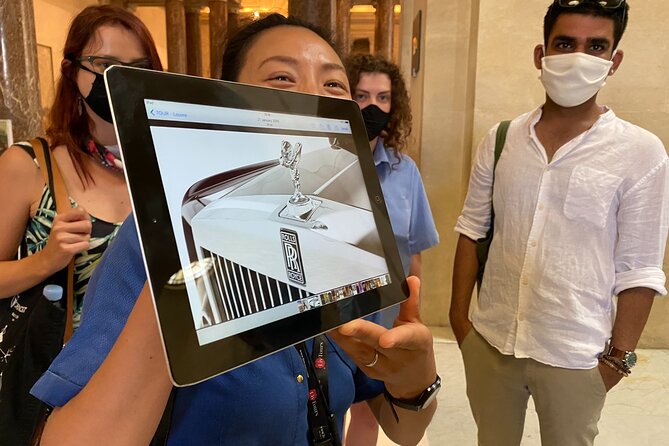
Audio equipment appears to vary. Several people specifically praised the earpieces, saying they could hear the guide over gallery noise and avoid constantly watching for stragglers. That is exactly what you want in a packed museum.
Other accounts said no microphone system was provided, even for a group of two. In a crowded room, a soft-spoken guide can be difficult to follow. This is more than a minor comfort issue. If you cannot hear the explanation, much of the tour’s value disappears.
I would ask about the audio setup before the tour begins. Stay close enough to hear, but do not let the need to follow commentary stop you from looking at the artwork. The best guides keep the group positioned where everyone can see and listen without blocking other people.
Is $204.38 Good Value?
At $204.38 per person, this tour costs far more than a basic museum admission. The adult ticket included in the experience is listed as €22, so most of what you are paying covers the guide, the planned route, the small-group service, and the convenience of having someone lead you through the museum.
That price can be fair for a short Paris visit. If you have only one chance to see the Louvre, an expert route can save time and help you understand what you are seeing. The ability to remain inside afterward also improves the value because you are not forced to leave when the guided portion ends.
It is less attractive if you have plenty of time, enjoy finding your own route, or mainly want a quick look at the Mona Lisa. In that case, the premium may be hard to justify.
Group discounts are listed, but no discount amount is provided. Free admission applies to people under 18 and residents of the European Economic Area under 26 with valid identification and proof of residency. Ask how the booking price changes for eligible participants before purchasing.
Who Will Like This Tour Most?
I would recommend it most strongly to first-time Louvre visitors, families, couples, and anyone with limited time in Paris. It also suits people who want art explained in plain language rather than reading every wall label alone.
The format works well if one person in your group is enthusiastic about museums and another is not. A clear route, short explanations, and memorable stories can make the building less tiring. The 2.5-hour length also keeps the visit manageable before lunch, dinner, or another Paris plan.
I would be more cautious if you want a specialist tour devoted to one period or one type of art. The route is broad, covering Egypt, Greece, Renaissance painting, Neoclassicism, and Romanticism. It gives you range, not extended study.
I would also hesitate if you dislike fixed meeting times or cannot guarantee punctual arrival. The operator’s response to the late group makes clear that the tour cannot simply wait. Free cancellation is available up to 24 hours before the start time, but changes or cancellations made inside that window are not refunded.
Should You Book the Semi-Private Louvre Tour?
Book it if you want a guided first look at the Louvre, value a small group, and have only a few hours. The strongest parts are the smart selection of famous works, the chance to ask questions, and the ability to keep exploring after the guide leaves.
Before booking, confirm two things: the true maximum group size and whether your tour includes working headsets. Those details affect the experience more than the glossy promise of a fast route. Also arrive early at the Louis XIV statue, since late arrivals can lose the guided portion.
For a first Louvre visit, this is a sensible time-saving choice at a premium price. I would choose it for structure and context, not because it lets you conquer the entire museum. No short tour can do that, but a good guide can help you begin well.
FAQ
Where does the Louvre tour begin?
It begins at the statue of Louis XIV under the name Louis XIV sous les traits de Marcus Curtius, in the Cour Napoléon near the Louvre pyramid at 75001 Paris.
Where does the tour end?
The tour ends at the Louvre Museum in the 75001 area of Paris.
How long does the experience last?
The full experience lasts approximately 2 hours and 30 minutes. About 20 minutes are allocated to the opening portion near the pyramid, followed by about 2 hours and 10 minutes inside the museum.
Is the Mona Lisa included?
Yes. The tour includes a visit to Leonardo da Vinci’s Mona Lisa.
Can I stay in the Louvre after the guided tour?
Yes. Your museum ticket allows you to continue visiting the Louvre on your own after the guided portion, until closing.
What is included in the price?
The price includes the guided semi-private tour, a professional local guide, the €22 adult museum entrance ticket, and access to see the Mona Lisa. Gratuities are optional and not included.
What is the cancellation policy?
You can cancel for a full refund up to 24 hours before the experience start time. Cancellations or changes made less than 24 hours before the start time are not accepted for a refund.
Recently added around Paris
- Private Half-Day Guided Tour of Paris★ 4.5 · 48 reviews
- 2 hour outdoor group activity in Paris: SAINT GERMAIN★ 5.0 · 48 reviews
- Paris Dinner Show Opera Bel Canto★ 4.5 · 48 reviews
- Paris Vintage Tour by Night on a Sidecar with Champagne★ 5.0 · 48 reviews
- Secrets & Scandals of the Louvre – Limited to 6 Guests★ 5.0 · 48 reviews
- Paris Photoshoot: Eiffel Tower Exclusive Private Experience★ 5.0 · 48 reviews
- From Paris: Versailles Full-Day Guided Tour with Lunch★ 4.9 · 48 reviews
- Paris: Louvre Mona Lisa Discovery Guided Tour with Ticket★ 4.9 · 48 reviews
Louvre Museum Tours, compared.


Paris: Louvre Guided Tour with Reserved Access & Boat Cruise
Read our review →
Louvre Museum Masterpieces Guided Tour with Access
Read our review →
Paris: Louvre Museum Entry Ticket With Host and River Cruise
Read our review →
Paris: Priority Access Louvre with Host -Direct to Mona Lisa
Read our review →
Mona Lisa & Louvre Masterpieces Tour with Reserved Access
Read our review →
Louvre Museum – Exclusive Guided Tour (Entry Included)
Read our review →
Paris: Louvre Reserved Ticket and River Cruise Combo
Read our review →Browse the lists this tour appears in