
Reviewed · AVIGNON TOURS
From Avignon: Luberon and Chateauneuf-du-Pape Full-Day Tour
Wine and village views make a fine Provençal day. This small-group tour links the ochre cliffs of Roussillon, hilltop Gordes, Fontaine de Vaucluse, and the vineyards of Châteauneuf-du-Pape without a rental car. I especially like the eight-person minivan, which keeps the day personal, and the chance to taste at two contrasting wineries rather than stopping at one polished sales room. The main thing to check is timing: the activity is listed as 570 minutes, yet many departures described by participants ran as a compact morning of about four hours.
I also like the mix of scenery and local stories. Guides such as Rémi, Florian, Oliver, Arnaud, Jeremy, and Joce have been praised for clear commentary, humor, and good driving. Just remember that food is not included, and this outing is not a good fit for children under four or anyone with limited mobility.
In This Review
- Key points to know before booking
- Why this tour works from Avignon
- Roussillon and the red cliffs of Provence
- Gordes from the panoramic viewpoint
- Fontaine de Vaucluse and the Sorgue River source
- Driving through the Châteauneuf-du-Pape vineyards
- Two wineries, two ways to understand wine
- The Pope’s summer residence and Rhône Valley views
- What the minivan and group size are really like
- Timing, language, and what to bring
- Who should book this Châteauneuf-du-Pape tour?
- Should you book it?
- FAQ
- Where does the tour meet in Avignon?
- How long does the tour last?
- What languages are available?
- How many people are in the group?
- Are wine tastings included?
- How many wines might I taste?
- Is food included?
- What should I bring?
- Can children under four join the tour?
Key points to know before booking
- Roussillon brings the color: Its red and yellow ochre cliffs give this Provençal village a look unlike the pale-stone towns nearby.
- Gordes is best seen from outside the village: The panoramic viewpoint gives you the classic view of the stone-built hilltop town.
- Fontaine de Vaucluse adds a natural curiosity: You can see where the Sorgue River rises from the ground, with time for a snack.
- Two wineries give the wine portion variety: One stop may focus more on the estate and production, while another gives more detailed tasting guidance.
- Châteauneuf-du-Pape is more than a label: Vineyard drives, the Pope’s summer residence, and the Rhône Valley view put the wine in its physical and historical setting.
- The small van matters: With no more than eight participants, you get easier conversation and less waiting than on a large coach.
Why this tour works from Avignon
Avignon is an excellent base for Provence, but many of the region’s best villages and wine estates are awkward without a car. This tour solves that problem in one sweep. You are picked up at the tourist information center at 41 cours Jean Jaurès, then driven in an air-conditioned minivan through the countryside.
At $199 per person, this is not a bargain-priced sightseeing bus. But the price includes transport, an English or French-speaking driver-guide, and tastings at two wineries. You are also paying for access to places that are much easier to reach by car, plus someone else handling the roads after your wine samples.
The group limit of eight is a real part of the value. It allows the guide to learn names, answer questions, and adjust the conversation. Manfred specifically appreciated a guide who remembered everyone’s name, while Christine enjoyed the friendly, funny atmosphere. That personal touch can make a long drive feel like part of the experience instead of dead time.
One caution: the timing needs clarification before you commit your day. The stated duration is 570 minutes, or nine and a half hours, but many accounts describe a morning tour leaving around 8:50 and returning near 12:30. The village-and-wine combination may operate on different schedules, or the listed length may cover a broader version of the outing. Check the available departure time and expected return when booking, especially if you have a train, dinner reservation, or another tour planned.
More full-day trips from Avignon:
- Provence Highlights Full-Day Tour from Avignon
★ 5.0 · 499 reviews - From Avignon: Full-Day Best of Provence Tour
★ 4.7 · 338 reviews - Nimes, Uzes & Pont du Gard Small Group FULL DAY Tour from Avignon
★ 4.5 · 187 reviews
Roussillon and the red cliffs of Provence
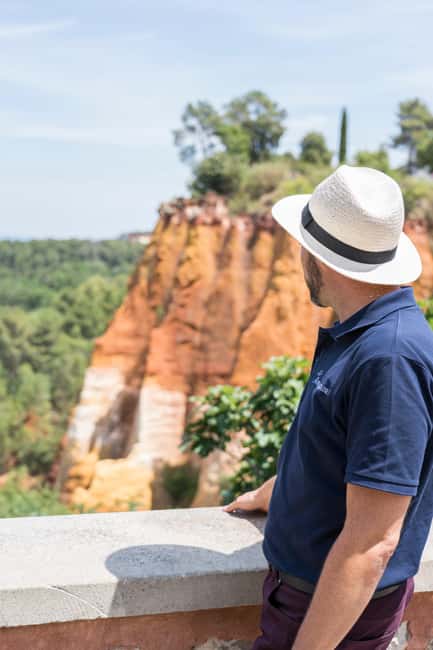
Roussillon is the first village stop, and it gives you an immediate change of color. The town is famous for ochre, a natural mineral pigment that shades the cliffs and buildings in reds, oranges, yellows, and warm earth tones.
This is not the usual pale limestone Provence. The ochre cliffs create a distinct natural setting, and the village feels strongly tied to the material beneath it. You will have time to explore the charming streets and take in the unusual colors before moving on.
Roussillon is best for people who enjoy visual details and short village walks. Bring comfortable shoes because the surfaces in old Provençal villages can be uneven, and wear sunglasses and a hat in strong sun. The stop is scenic rather than highly structured, so you will get more from it if you are happy to wander, take photographs, and notice how the local stone and pigment shape the town’s appearance.
The tradeoff is that three villages plus two wineries require a carefully managed day. You should not expect hours at every stop. This is a sampler of the Luberon, not a slow village stay.
Gordes from the panoramic viewpoint
Gordes is one of the most famous villages in the Luberon, built high on a hill and known for its dry-stone construction. The town appears to rise from the slope in layers, with pale stone houses stacked around the hillside.
The tour’s clever move is taking you to a panoramic viewpoint rather than simply dropping you inside the village. From there, you get the broad view that makes Gordes famous. It is an excellent photo stop and a practical way to appreciate the town’s position without spending a large part of the morning climbing its lanes.
Your guide should add useful context about the village and the local building style. Several guides have been praised for giving commentary during the drive, which matters here because the view itself lasts only so long. A good explanation helps you understand why the village looks so unified instead of seeing it as just another pretty Provence photo.
Do not expect a full tour of Gordes itself unless your specific departure says so. The supplied description emphasizes the panoramic viewpoint, so plan for a scenic stop rather than an extended visit inside the village. If you want time for shops, cafés, or a longer walk, ask about the schedule in advance.
Fontaine de Vaucluse and the Sorgue River source
The last village stop is Fontaine de Vaucluse, a different kind of attraction. Its focus is the source of the Sorgue River, where water emerges from the ground. The source has a mysterious quality because the river appears from below the rock rather than beginning as a visible mountain stream.
This stop breaks up the stone-village pattern with a natural feature. You can look around the source area and take time for a snack. Since no food is provided, this is the point where carrying water and a small bite becomes useful.
The stop is especially good for you if you like a little mystery in your sightseeing. It is not simply another hilltop village with a view. You get a chance to see how water shapes the area and to pause before the afternoon wine focus.
Again, time is the issue. The experience includes several major stops, and Fontaine de Vaucluse is not presented as a long independent visit. Bring sensible footwear, sunscreen, and water so you can enjoy the stop without fuss.
A few more Avignon trips worth weighing up
- Chateauneuf du Pape wine tour
★ 5.0 · 484 reviews - From Avignon: Châteauneuf du Pape Half-Day Wine Tour
★ 4.7 · 365 reviews - From Avignon: Half-Day Great Vineyards Tour
★ 4.7 · 321 reviews - Provence Cru Wine Small-Group Half-Day Tour from Avignon
★ 4.5 · 290 reviews
Driving through the Châteauneuf-du-Pape vineyards
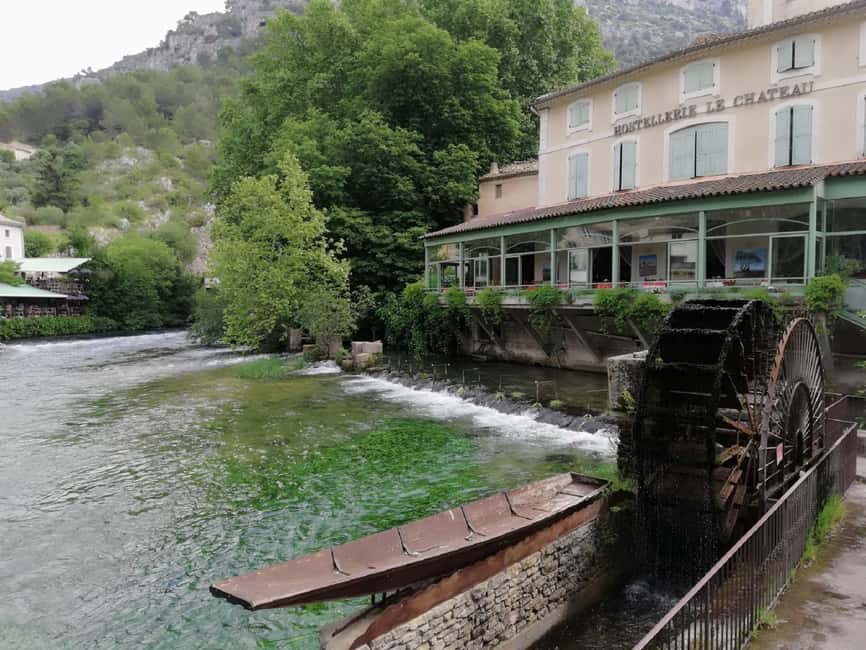
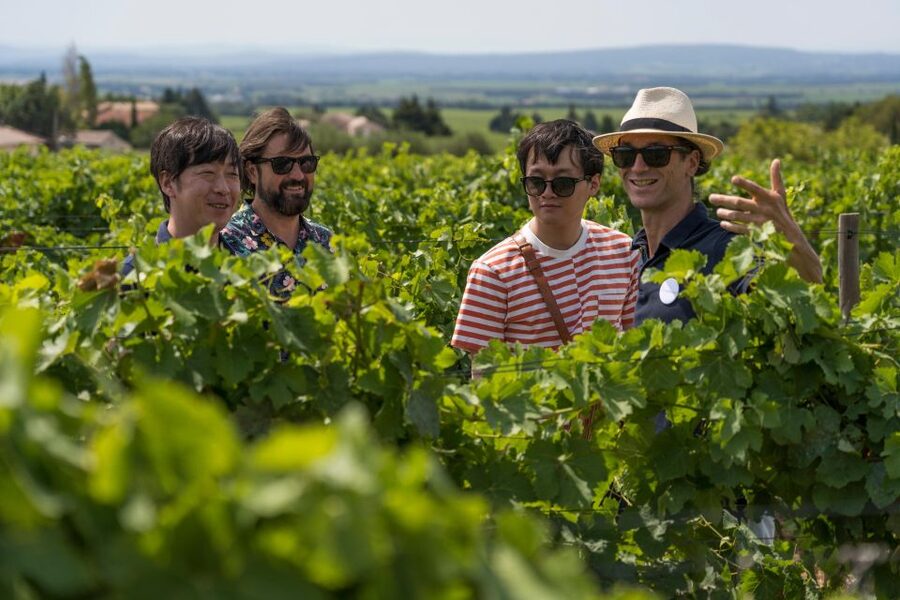
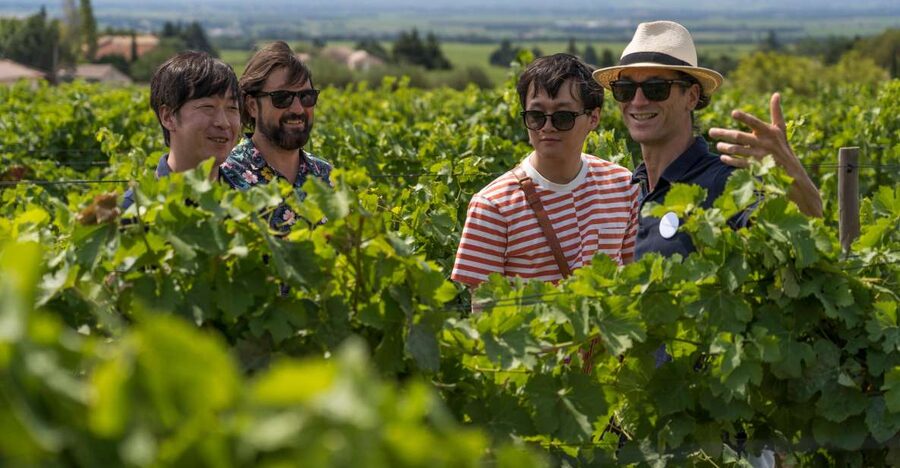
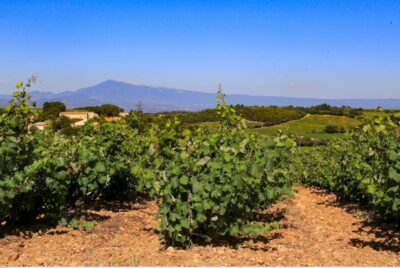
The wine portion shifts the day from village scenery to working countryside. You drive through the Rhône Valley vineyards toward Châteauneuf-du-Pape, with the guide explaining the region’s winemaking traditions and connection to Provence.
This drive is valuable because it places the wine in its setting. Instead of tasting anonymous bottles in a city shop, you see the vines and the area that gives the appellation its name. Josef enjoyed learning about the land and the wines, while Yasmin appreciated the explanation of how Châteauneuf-du-Pape became a famous wine-producing region.
A stop among the vines may be included, giving you a chance to get out and see the plants close up. That small pause adds something real to the day. It turns the vineyard from background scenery into a working place you can examine.
Your guide is central here. Florian, Rémi, Jeremy, Arnaud, Joce, Oliver, and others have been praised for different strengths, including humor, clear history, good driving, and an easy manner. The quality can vary somewhat by guide, but the strongest accounts describe drivers who talk during the road sections without overwhelming the group.
Two wineries, two ways to understand wine
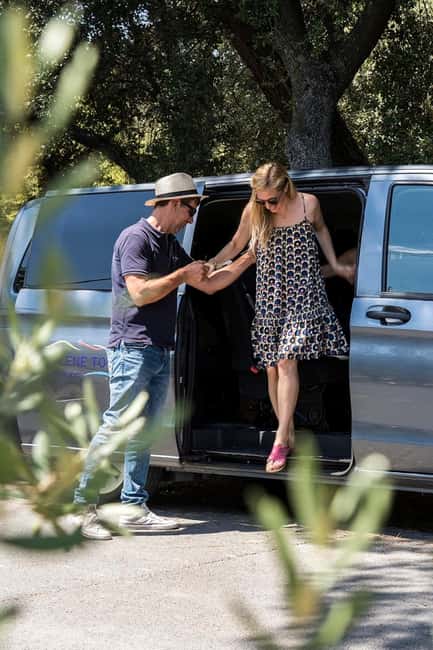
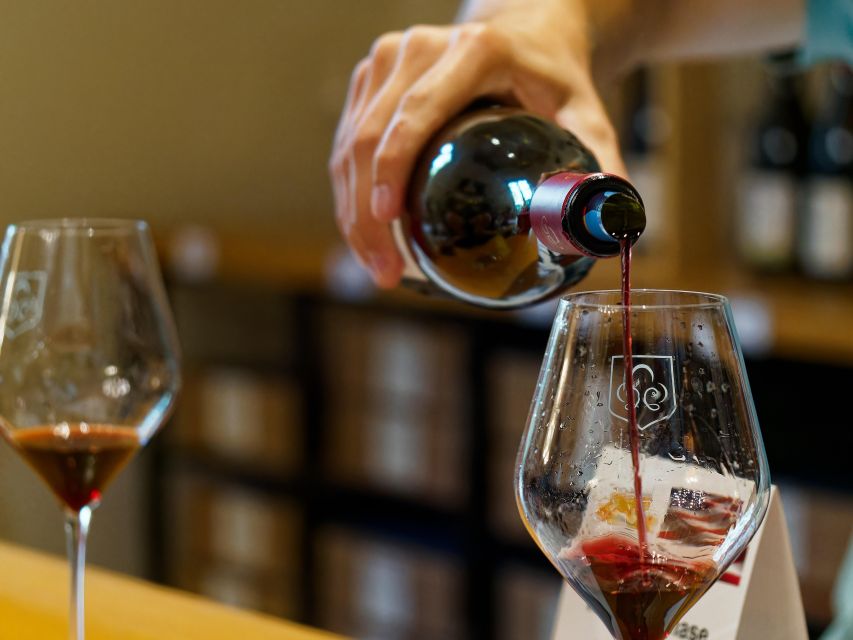
The tour includes tastings at two wineries, and this contrast is one of its strongest features. At one estate, you might spend more time learning about the property, the winemaking process, and the building itself. One stop has been described as a museum, while another family-run winery offered a look at the working interior and production spaces.
The second visit may be more focused on tasting technique. At one winery, a sommelier explained how to use your senses to assess the wine. This is useful even if you already drink wine because it gives you a method instead of just a succession of pours.
Several accounts describe three wines tasted at each winery, though the exact selection can vary. The two stops may feel quite different. One tasting was described as somewhat rushed, while the second gave more time and clearer instruction. That contrast is worth knowing: do not assume both winery visits will have the same format.
The cellar can also be part of the appeal. One visit included a cool underground space, while another had a strong family feel. These details help you see that Châteauneuf-du-Pape is not one single wine experience. Estates have different personalities, presentation styles, and ways of discussing their bottles.
You should pace yourself. Morning tastings can sound early, but Bonnie liked the fact that tasting earlier meant starting fresh and being less tempted to drink too much. This is a tasting tour, not a drinking contest. Eat beforehand, use the spittoons if offered, and remember that the minivan still has to carry everyone home.
There is no meal included. Mike’s practical point about a snack with the early wine is worth taking seriously. Have breakfast before meeting the group and bring water or a small snack if permitted.
The Pope’s summer residence and Rhône Valley views
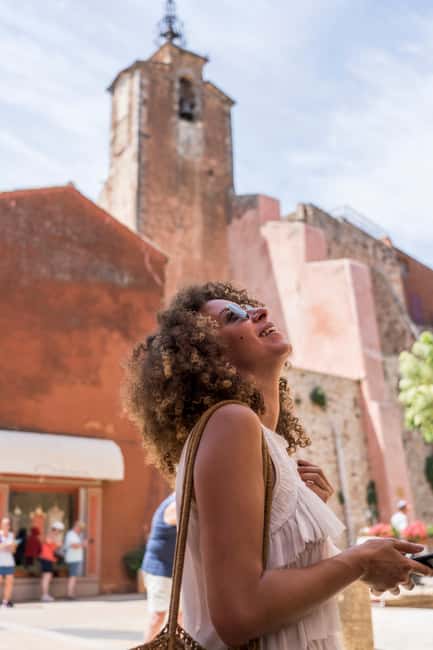
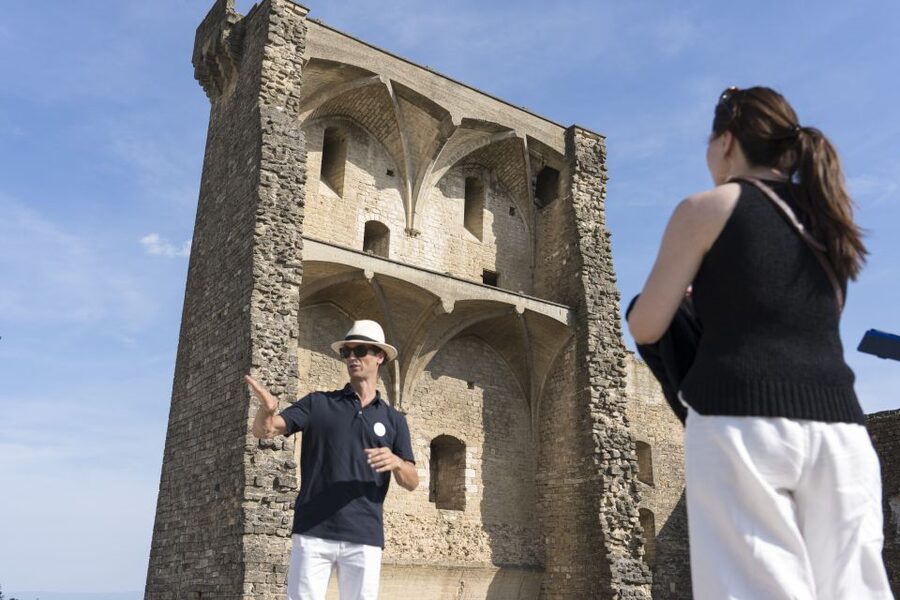
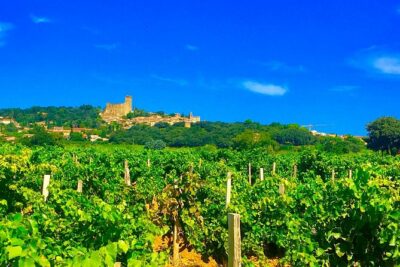
Châteauneuf-du-Pape is not only about cellars. The village has ruins connected with the Pope’s summer residence, and the elevated site gives you a wide view over the Rhône River valley and the surrounding hill ranges.
This stop adds historical depth without turning the outing into a formal lecture. You can walk among the ruins, look over the valley, and connect the old settlement with the vineyards below. Jeremy was praised for making this viewpoint especially rewarding with clear commentary.
The view also helps explain the region’s appeal. Vineyards spread through the Rhône Valley, while the village and ruins sit above them. You see the relationship between the terrain, the settlements, and the wine country instead of treating each as a separate attraction.
The ruins are uneven, so this is one reason the tour is not suitable for people with mobility impairments. Comfortable shoes are essential. The guide can explain the site, but you should not expect extensive archaeological touring or a long independent visit.
What the minivan and group size are really like
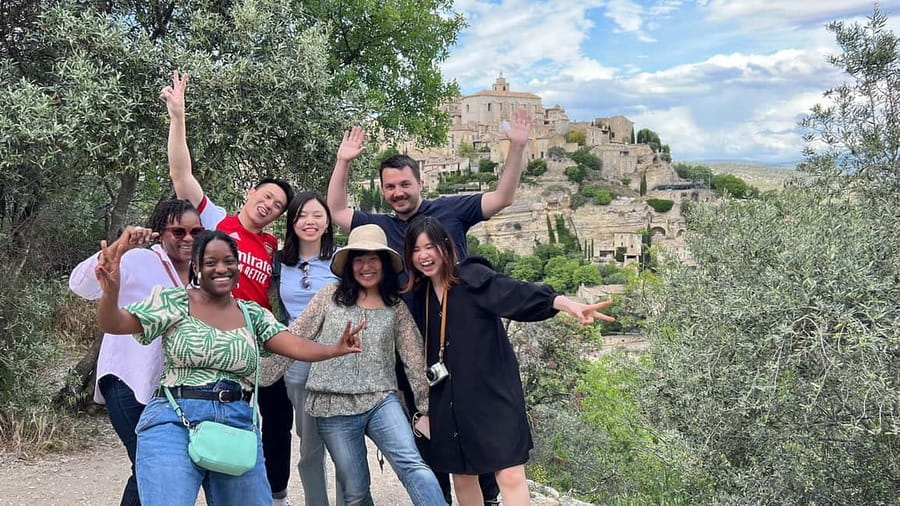
The air-conditioned vehicle is a practical advantage in Provence, especially in summer. Stanley described a spacious van, and that matters when you spend several hours moving between villages and wineries.
With a maximum of eight participants, the group is small enough for conversation. You can ask about wine, villages, restaurants, or other places to visit in the region. Guides have also been praised for being approachable and for offering suggestions for future wine activities.
The small group can become a mixed experience if you prefer privacy. You will be sharing a compact vehicle with strangers, and the mood depends partly on the group that day. Steve ended up with only two people and enjoyed the extra attention, though he would have preferred more companions to share the experience with.
The vehicle handles the driving, which is particularly useful after tasting. If you rent a car, someone must remain cautious about every sample. Here, you can focus on the wine and scenery without planning a sober route home.
Timing, language, and what to bring
The tour is offered with an English or French-speaking guide. English commentary has been praised for being clear, and the strongest guides combine regional information with humor and an easy conversational style.
Wear comfortable shoes, sunglasses, a sun hat, sunscreen, and bring water. You should also bring a snack because food is not included. Large bags, oversize luggage, smoking, and pets are not allowed, so treat this as a sightseeing outing rather than a transfer service.
Children under four cannot join, and the tour is not suitable for people with mobility impairments. The combination of village surfaces, viewpoints, ruins, and winery visits requires a reasonable level of walking and standing.
Free cancellation is available up to 24 hours before departure for a full refund, and you can reserve now while paying later. Those terms help if your Provence plans are still shifting, but the more important practical question remains the schedule. Confirm the exact route and return time for your date.
Who should book this Châteauneuf-du-Pape tour?
I would choose this tour if you are staying in Avignon, do not have a car, and want both Luberon scenery and Rhône Valley wine in one outing. It is also a good fit for solo visitors, couples, and small groups who prefer a guide and a relaxed van over public transport connections.
Wine lovers get the clearest value from the two tastings and the chance to compare different winery styles. But you do not need to be a serious wine student. The villages, ochre cliffs, river source, ruins, and views give the day plenty to enjoy if wine is only part of your interest.
I would hesitate if you want long, unhurried visits in each village. You may also prefer another plan if you need a guaranteed full-day schedule, want lunch included, or have trouble walking on uneven ground. The activity description and actual reported timings do not line up perfectly, so ask before booking.
Should you book it?
Yes, if you want an efficient introduction to Provence from Avignon and especially if Châteauneuf-du-Pape is difficult for you to reach independently. The strongest reasons are the small group, capable guides, air-conditioned transport, two winery visits, and the mix of tasting instruction with real vineyard scenery.
Book it with realistic expectations. You are getting a carefully packed regional sampler, not a leisurely week in the Luberon. Eat first, bring water, wear good shoes, and confirm whether your departure is the longer 570-minute version or the shorter morning format. For the right schedule, $199 buys convenience, access, and a lot of Provence in one manageable outing.
FAQ
Where does the tour meet in Avignon?
The meeting point is in front of the Avignon tourist information center at 41 cours Jean Jaurès.
How long does the tour last?
The listed duration is 570 minutes. Some departures described by participants ran as a morning tour of about four hours, so check the available schedule and expected return time for your date.
What languages are available?
The live guide is available in English or French.
How many people are in the group?
The tour is limited to eight participants.
Are wine tastings included?
Yes. Wine tasting at two wineries is included in the price.
How many wines might I taste?
Some reported departures tasted three wines at each winery, but the exact wines and number may vary.
Is food included?
No. Food is not provided. A snack stop is included at Fontaine de Vaucluse, so bringing water and a small snack is practical.
What should I bring?
Bring comfortable shoes, sunglasses, a sun hat, sunscreen, and water.
Can children under four join the tour?
No. The activity is not suitable for children under four, people with mobility impairments, pets, smokers, or anyone bringing oversize luggage or large bags.
Recently added around Avignon
- Visit Avignon and Villeneuve lez Avignon aboard a Double-Decker Bus★ 4.0 · 48 reviews
- Arles and Camargue Full-Day Tour including Aigues Mortes★ 4.5 · 55 reviews
- Truffle Hunting in Provence★ 5.0 · 55 reviews
- Half Day Great Vineyard Tour from Avignon★ 4.5 · 57 reviews
- Morning Wine Tour to Chateauneuf du Pape from Avignon★ 4.5 · 70 reviews
- Camargue Small-Group Day Trip from Avignon★ 5.0 · 71 reviews
- From Avignon: Luberon Villages Day Tour★ 5.0 · 79 reviews
- Avignon: Full-Day Wine Tour around Châteauneuf-du-Pape★ 4.9 · 83 reviews
Avignon Tours, compared.
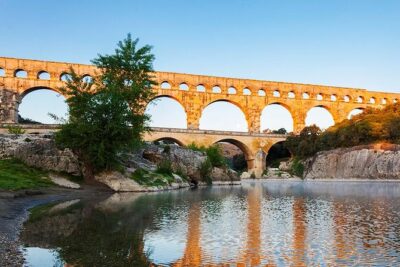
Provence Highlights Full-Day Tour from Avignon
Read our review →
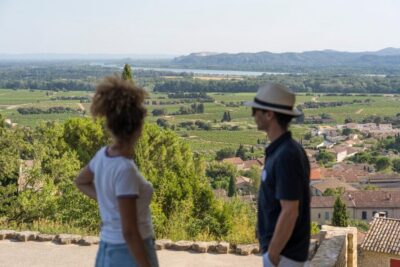
From Avignon: Châteauneuf du Pape Half-Day Wine Tour
Read our review →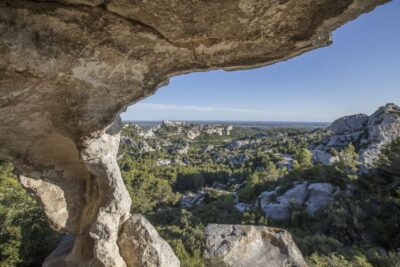
Provence Cru Wine Small-Group Half-Day Tour from Avignon
Read our review →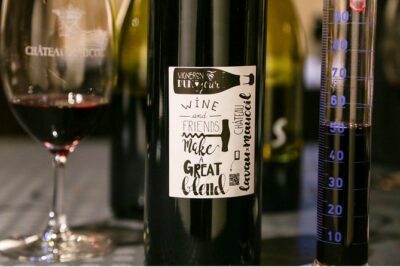
Châteauneuf du Pape Wine Day Tasting Tour including Lunch from Avignon
Read our review →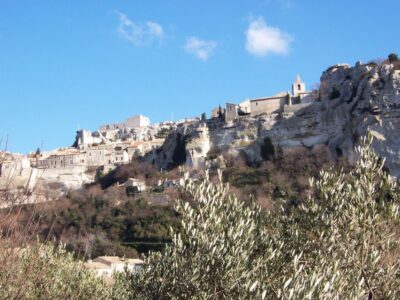
Avignon: Pont du Gard, Saint Remy and Les Baux Half-Day Tour
Read our review →Browse the lists this tour appears in