Reviewed · FULL-DAY
Full day Australian Battlefields Tour
The Somme rewards a full day. This private tour links Australian memorials, cemeteries, villages, and battle sites with Brigitte De Cuyper, a local guide who brings strong personal knowledge and careful research. I especially like the hour at the Sir John Monash Centre and the chance to visit several sites tied directly to Australian service and sacrifice.
I also like the way the tour moves between the big picture and individual lives, including family research when details are provided before the day. The main drawback is its packed eight-hour schedule: some stops are brief, lunch is not included, and rain or poor weather could make open memorial sites less comfortable.
In This Review
- Six details that shape the day
- Why a private Somme tour works so well
- Amiens Cathedral puts the battlefields in context
- Villers-Bretonneux delivers the Australian heart of the tour
- Allow a full hour at the Sir John Monash Centre
- Chipilly and the Somme Valley show the cost beyond men
- Albert combines local faith, damage, and rebuilding
- Lochnagar Crater makes artillery warfare visible
- Pozières brings the Australian losses into sharp focus
- Thiepval explains what missing means
- Beaumont-Hamel closes the day with Newfoundland sacrifice
- Is $253.97 good value for eight hours?
- What to know before you go
- Who should book this Australian battlefields tour?
- Should you book it?
- FAQ
- Where does the Australian Battlefields Tour begin?
- How long does the tour last?
- Is the tour private?
- Is the Sir John Monash Centre included?
- Is lunch included?
- What language is the tour offered in?
- Can I cancel for a full refund?
Six details that shape the day
- The tour begins with Amiens Cathedral, a striking Gothic landmark with 800 years of history, before heading into the Somme countryside.
- Villers-Bretonneux receives the strongest Australian focus, with the cemetery, Australian National Memorial, and Sir John Monash Centre.
- The Sir John Monash Centre uses letters, diaries, recordings, and life-size images to tell the Western Front story through the voices of those who served.
- The Somme route includes major sites from 1916, including Lochnagar Crater, Pozières, Thiepval, and Beaumont-Hamel.
- This is a private tour, so the day can be adjusted for family connections or particular interests when arranged in advance.
- The price is $253.97 per person, with pickup, an English-speaking guide, and entrance fees included, but lunch costs extra.
Why a private Somme tour works so well
The Somme battlefields are spread across quiet farming country. Many sites have no grand entrance, busy visitor center, or obvious clue about what happened there. A good guide helps you read the ground, understand distances, and connect a small monument with the enormous events around it.
That is the main strength of this tour. Brigitte grew up in the area and guides in fluent English. Her explanations cover the military decisions, but they also return to the men who fought, the families who waited, and the French communities that lived beside the front.
You travel with only your own group. That matters here. You can ask why a particular regiment was in one village, pause longer at a grave, or raise a question about a relative without trying to keep up with a large party.
The private format also allows some personal attention before the tour begins. Several people supplied names of relatives who served, and Brigitte researched those connections in advance. In some cases, she added a cemetery or site connected with a family member. That is not something you should assume is guaranteed, but it is worth sending those details before the tour if genealogy is part of your reason for going.
The tour is offered in English, lasts about eight hours, and begins at 9:00 am. Pickup is offered, and the meeting information says the guide will wear a guide badge. Confirm your exact hotel or pickup point carefully, since one guest experienced a delay after a hotel change was not passed to the guide.
More full-day trips from France:
- Normandy American D-Day Beaches Full Day Tour from Bayeux
★ 5.0 · 2,103 reviews - Paris: Parc Astérix Full-Day Entrance Ticket
★ 4.4 · 1,697 reviews - From Paris: Full-Day Loire Valley Chateaux Tour
★ 4.4 · 1,269 reviews
Amiens Cathedral puts the battlefields in context
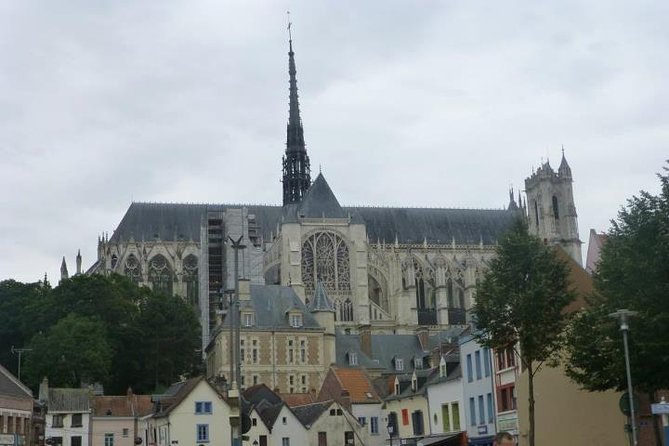
The day starts with Amiens Cathedral, one of the great Gothic buildings of France. The cathedral is celebrating its 800th birthday this year, and the tour uses the visit as more than a quick photo stop.
As you travel toward Villers-Bretonneux, Brigitte explains Amiens from the Middle Ages to the present. She also points out how the city and surrounding region developed, bringing in local economy and French culture before the conversation turns fully to the First World War.
That opening is useful because it gives you a sense of place. The Somme is not just a collection of memorials scattered across a map. It is a lived-in part of France, with villages, churches, fields, and roads that have continued long after the armies left.
The cathedral itself is not listed with a separate timed admission, so do not expect a long formal interior tour from the schedule. Its value here is as an introduction to Amiens and a reminder that the region’s story began centuries before 1914.
Villers-Bretonneux delivers the Australian heart of the tour
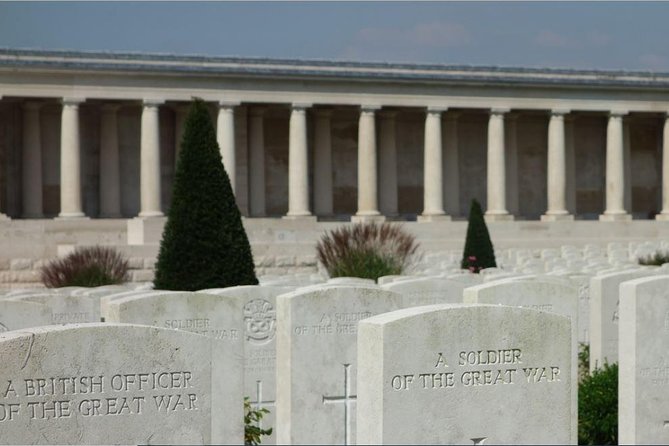
Villers-Bretonneux Military Cemetery is the first major battlefield stop. Here, you learn about Australia’s role on the Western Front and the Allied counter-attack of April 1918.
The tour allows about 20 minutes at the cemetery and Australian memorial grounds. That is enough for a guided explanation and time to pay your respects, but it is not a leisurely cemetery study. If you have a particular grave to find, tell Brigitte before the tour so she can help plan the time.
The Australian troops fought with great courage at Villers-Bretonneux, but the cost was terrible. Brigitte’s role is important because the site can otherwise feel orderly and quiet, while the events being discussed were confused, violent, and devastating.
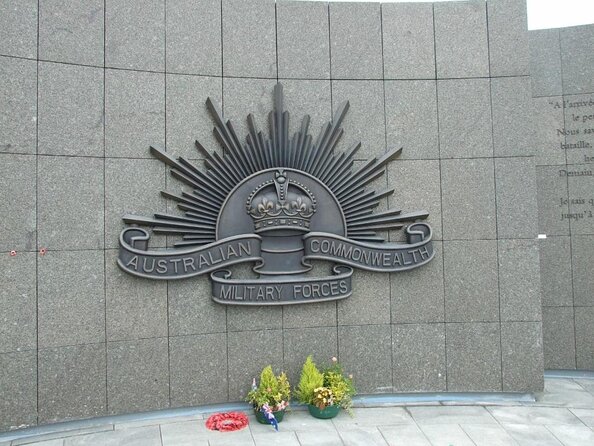
The Australian National Memorial is at the heart of the Villers-Bretonneux Commonwealth War Graves cemetery. It was inaugurated on July 22, 1922, by King George VI, and its walls carry the names of 10,729 Australian servicemen.
The memorial also has a continuing place in Australian public life. Each April 25, thousands gather there at dawn for ANZAC Day. Even if you visit at another time, that knowledge adds weight to the hillside and the names carved into it.
Allow a full hour at the Sir John Monash Centre
A short walk from the cemetery is the Sir John Monash Centre, with about an hour allocated for the visit. Entrance is included in the tour price.
This is one of the most valuable parts of the day. The center tells the Australian Western Front story through interactive media, letters, diaries, recordings, and life-size images. Instead of presenting only troop movements and dates, it gives you access to the words and experiences of ordinary Australians who served.
The hour should help you understand the human scale of the campaign. You can connect the people described inside the center with the cemetery and memorial just visited, then see the ground where many of these events unfolded.
If military museums usually leave you cold, this stop may still work because it relies on personal voices and visual presentation rather than only rows of objects. If you have a strong interest in the subject, you may want more than an hour. The timetable is full, though, so the visit is designed as a focused introduction rather than an entire morning.
One practical point: the center has been closed on at least one tour in the past, with the guide replacing that part of the day with other relevant stops. You should confirm current opening arrangements when booking or shortly before departure.
A completely different sort of day in France:
- Paris: Louvre Museum Timed-Entrance Ticket
★ 4.6 · 71,977 reviews - Disneyland® Paris 1-Day Ticket
★ 4.6 · 49,412 reviews - Paris: Versailles Palace and Gardens Full Access Ticket
★ 4.6 · 41,579 reviews - Paris: Evening River Cruise with Music
★ 4.4 · 22,721 reviews
Chipilly and the Somme Valley show the cost beyond men
The route then heads through the Somme Valley to Chipilly. There is a brief stop at the 58th British Division Memorial, a stone sculpture of a soldier comforting a wounded horse.
The memorial honors the men of the 58th Division, but it also recognizes the thousands of horses that died during the Great War. That makes it different from many military monuments. It draws attention to the animals that carried supplies, guns, and men through a war built around mud, artillery, and broken roads.
At the Camp Cesar viewpoint, you get a broad view over the Somme Valley. The stop lasts about ten minutes, so treat it as a short orientation point rather than a long walk.
From here, Brigitte explains the opening of the 1916 Battle of the Somme, why the attack was planned, and the different nations involved. The view helps you understand the terrain that shaped movement and visibility, even though the fields today are peaceful.
Albert combines local faith, damage, and rebuilding
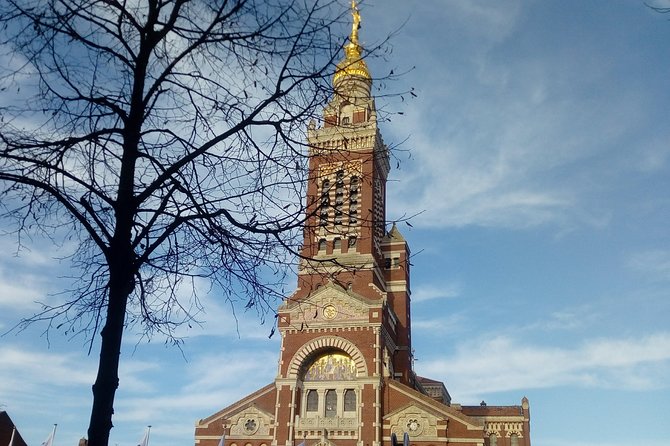
The route continues to Albert, where you see the Basilica Notre Dame de Brebières. Its Neo-Byzantine design makes it one of Picardy’s most unusual major buildings.
The basilica was built in the late 19th century and destroyed during the war. It was rebuilt in the same design by Edmond Duthoit, son of the original architect. The dome is covered in gold sheets and carries a statue of the Virgin Mary holding the infant Jesus.
Brigitte also explains the wartime story linked to that statue. This is a useful local detail because it connects a place of worship with the soldiers’ world and the damage suffered by the town.
Lunch follows at Le Hygge Restaurant Brasserie, with about an hour set aside. Lunch is not included, so budget separately for the meal. The schedule gives you a proper break, which is welcome on an emotionally demanding day, though a full hour at a restaurant means less time available for extra battlefield stops.
Lochnagar Crater makes artillery warfare visible
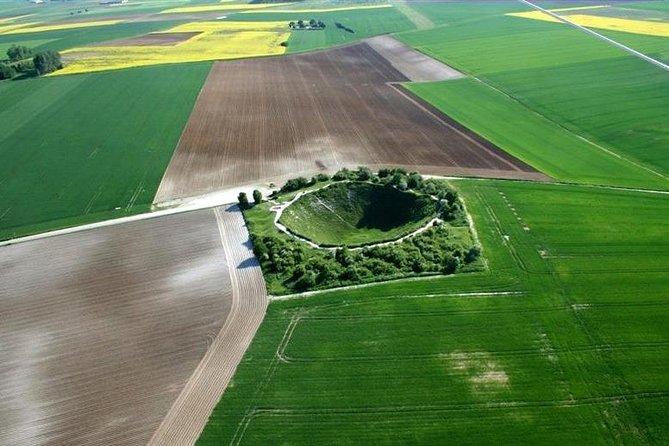
At Lochnagar Crater, you enter one of the clearest physical reminders of the 1916 offensive. The crater was made by a large mine under the German front lines on the first day of the Battle of the Somme.
It measures about 70 feet deep and 330 feet wide, making it the largest crater in the Somme. The British placed 19 mines beneath the German lines in this part of the front to help the infantry advance.
You receive about 20 minutes here. The stop is short, but the scale of the crater does much of the explaining. It helps you grasp the force involved in underground mining and artillery preparation better than a map alone can.
The site is open and exposed. Wear shoes suitable for uneven ground and bring protection from rain or wind. The tour requires a moderate level of physical fitness, so you should be comfortable getting in and out of the vehicle and walking around outdoor memorial sites.
Pozières brings the Australian losses into sharp focus
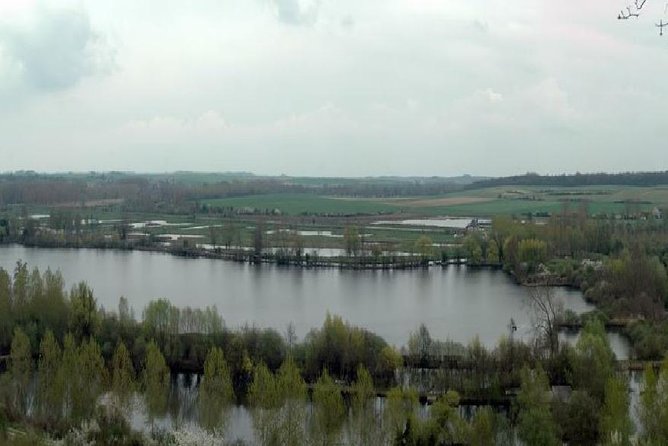
The 1st Australian Division Memorial at Pozières is one of the most important Australian stops of the day. The battle took place between July 23 and September 3, 1916, and nearly 7,000 Australian men died there.
Australian official historian Charles Bean described Pozières as the place most densely marked by Australian sacrifice. You do not need to know the full campaign in advance to feel the force of that statement once Brigitte explains what happened here.
The Windmill site nearby was established as an Australian memorial in the 1930s at Bean’s suggestion. It commemorates 23,000 Australian casualties, including men who died in the surrounding countryside.
Across from the Windmill site is the Tank Memorial. This gives Brigitte a chance to explain the arrival of tanks on the Western Front and how new technology changed modern warfare. The subject fits naturally here because Pozières allows you to compare the old battlefield with the changing tools of war.
You also pass the site of Mouquet Farm. The schedule does not assign a long separate stop, so expect this to be covered as part of the route and commentary rather than as an extended visit.
Thiepval explains what missing means
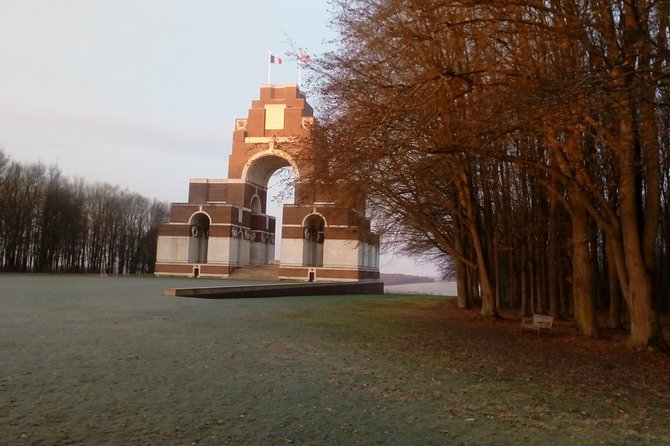
The Thiepval Memorial to the Missing is among the most powerful structures on the route. It is the largest British war memorial in the world, overlooking the rolling countryside of the Somme.
More than 72,000 names are engraved on its walls. These are men listed as missing or men whose bodies were recovered but could not be identified.
The tour allows about 45 minutes here, giving you more time than at several earlier stops. Brigitte discusses military tactics, but the key subject is the word missing. For families in Britain, Australia, Newfoundland, and elsewhere, that word often meant years of uncertainty and no known grave.
The monument’s size can feel overwhelming. Yet the names make the loss personal. You can walk along the walls and consider how each name represented a home, a family, and a life that ended far from home.
Nearby, the Ulster Tower honors the men of the 36th Division and others from Ulster who served in the First World War. It was opened in 1921 and was one of the first memorials built on the Western Front.
From the hill, you can still see traces of the Somme front lines in the opposite field, along with the remains of a German machine-gun post. This is exactly the kind of detail that benefits from a guide. Without explanation, the earthworks can be easy to miss.
Beaumont-Hamel closes the day with Newfoundland sacrifice
The final listed stop is the Newfoundland Memorial Park at Beaumont-Hamel. It is the largest battlefield site in the Somme and is dedicated to Newfoundlanders who served in the First World War.
The Battle of the Somme was the regiment’s first major engagement. On July 1, 1916, it suffered staggering losses. The ground was purchased in 1921 by the women of Newfoundland and its government, and it became a symbol of sacrifice and a source of identity for the island.
About 30 minutes is allocated here. After so many Australian sites, this stop broadens the day’s view of the Commonwealth war effort. You see how the Somme affected different communities, not only Australia and Britain.
This is also a fitting final stop because the route has moved from the Australian focus at Villers-Bretonneux through the wider 1916 battlefields. You finish with a clearer sense that the Somme was a shared catastrophe, experienced differently by each nation and regiment.
Is $253.97 good value for eight hours?
At $253.97 per person, this is not a cheap day trip. The price makes more sense if you value a private vehicle, a full day with an English-speaking guide, pickup, route planning, and entrance fees such as the Sir John Monash Centre.
You are paying for interpretation as much as transport. The battlefield sites are spread across the region, and a self-guided visit would require careful research, driving, navigation, and a strong understanding of what you are seeing. Here, Brigitte handles the route while you concentrate on the places and stories.
The value is especially strong for Australians, people with family connections to the Western Front, and anyone who wants a personal rather than generic account. It is less attractive if you only want a quick overview or prefer to spend long periods at one or two sites.
Lunch is extra, and the day’s schedule is full. Still, the number of important locations covered in eight hours is impressive. You get Amiens, Villers-Bretonneux, the Monash Centre, Chipilly, Albert, Lochnagar Crater, Pozières, Thiepval, Ulster Tower, and Beaumont-Hamel in one carefully linked route.
What to know before you go
Send Brigitte the names and details of any relatives who served before the day. Several people received extra family information because she researched those names ahead of time, and some were taken to an additional cemetery connected with their family.
Keep expectations realistic about timing. The 20-minute stops are enough for an explanation and respectful pause, but not for slow photography, extensive grave searches, or long walks. The 45 minutes at Thiepval and one hour at the Monash Centre provide more breathing room.
Dress for outdoor conditions. Rain can affect the day, especially at exposed memorials and crater sites. Comfortable walking shoes are sensible, and a moderate level of fitness is expected.
The tour is offered in English, mobile tickets are available, and service animals are allowed. Free cancellation is available if you cancel at least 24 hours before the local start time. Changes or cancellations later than that are not accepted for a refund.
Who should book this Australian battlefields tour?
I would recommend it most strongly to Australians, New Zealanders, military history enthusiasts, and anyone tracing a family member who served in France. The Australian focus is strongest at Villers-Bretonneux and Pozières, while the later stops add British, Ulster, and Newfoundland perspectives.
You should also book if you want a guide who can adjust the day to your interests. Brigitte’s local connection, preparation, storytelling, and willingness to answer questions are central to the experience.
I would hesitate only if you dislike full-day schedules, outdoor memorials, or emotionally heavy subjects. This is not a light sightseeing excursion. It asks you to spend most of a day thinking about battlefield losses, unidentified bodies, damaged towns, and families left waiting.
Should you book it?
If the Somme is an important part of your trip, yes. The tour covers a great deal of ground, but it does not treat the battlefields as a checklist. Brigitte helps you understand why each place matters, from the gold dome of Amiens to the names at Thiepval and the Australian sacrifice at Pozières.
Book this tour if you want context, personal attention, and a strong Australian connection. Before confirming, check the pickup details, send any family research, and allow extra money for lunch. For a private eight-hour day across the major Somme sites, the price is reasonable when you consider the transport, planning, guiding, and included admission.
FAQ
Where does the Australian Battlefields Tour begin?
The tour starts at 9:00 am in Amiens. Pickup is offered, and the guide will wear a guide badge.
How long does the tour last?
The tour lasts approximately eight hours.
Is the tour private?
Yes. Only your group participates in the activity.
Is the Sir John Monash Centre included?
Yes. Admission to the Sir John Monash Centre is included, with about one hour allocated for the visit.
Is lunch included?
No. The tour allows one hour for lunch at Le Hygge Restaurant Brasserie, but lunch is not included in the price.
What language is the tour offered in?
The tour is offered in English.
Can I cancel for a full refund?
Yes, if you cancel at least 24 hours before the experience start time. Cancellations or changes made less than 24 hours before the start time are not accepted for a refund.
Recently added around France
- The essential in Bordeaux, private tour with a local★ 4.9 · 48 reviews
- Avignon, Les Baux, St Remy and Arles from MARSEILLE★ 4.5 · 48 reviews
- Visit Avignon and Villeneuve lez Avignon aboard a Double-Decker Bus★ 4.0 · 48 reviews
- 2 hour outdoor group activity in Paris: SAINT GERMAIN★ 5.0 · 48 reviews
- Private Half-Day Guided Tour of Paris★ 4.5 · 48 reviews
- Blind Test Room & karaoke Montpellier★ 5.0 · 48 reviews
- Paris Dinner Show Opera Bel Canto★ 4.5 · 48 reviews
- Paris Vintage Tour by Night on a Sidecar with Champagne★ 5.0 · 48 reviews
Full-Day, compared.
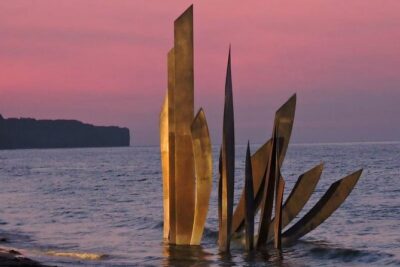
Normandy American D-Day Beaches Full Day Tour from Bayeux
Read our review →
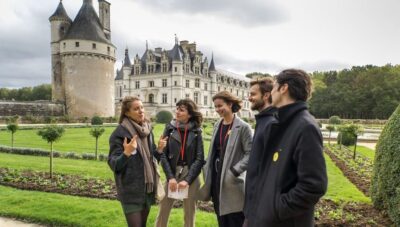
From Paris: Full-Day Loire Valley Chateaux Tour
Read our review →
From Nice: The Best of the French Riviera Full Day Tour
Read our review →
From Paris: Normandy D-Day Landing Beaches Full-Day Tour
Read our review →
From Paris: Reims and Champagne Tasting Full-Day Tour
Read our review →