
Reviewed · HISTORICAL TOURS
Guided tour of Nancy, Great History and Little Anecdotes
Nancy reveals itself best on foot. This 90-minute tour connects Place Stanislas, the medieval Old Town, and the Pépinière gardens with a clear account of how the city took shape. Guide Léopold Fousnaquer, who holds a master’s degree in history and also works with Nancy’s Tourist Office, brings both formal knowledge and local enthusiasm.
I like the tour’s balance. You get the grand story of Stanislas Leszczynski, the dukes of Lorraine, and Nancy’s changing architecture, but you also get the small details that help the streets feel human. I also like the price: at about $17.42 per person, it is a sensible way to get your bearings before exploring on your own.
The main consideration is language. The discovery is conducted in French, so you will get the most from it if you can follow spoken French comfortably. The tour also stays outdoors and does not include admission to museums or monuments, making weather and your interest in interiors worth considering.
In This Review
- Key Points to Know Before You Go
- Why This Nancy Walk Works as a First Introduction
- Place Stanislas: Nancy’s Grand Opening Scene
- Place de la Carrière: A Former Riding Ground
- Grande Rue: The Old Town’s Main Thread
- The Pépinière: A Green Change of Pace
- Léopold’s Teaching Style and the Group Experience
- What the Price Includes, and What It Does Not
- Who Will Get the Most From This Walk
- Booking, Timing, and Cancellation Details
- Should You Book Guided Tour of Nancy?
- FAQ
- Where does the Nancy walking tour begin?
- Where does the tour end?
- How long does the tour last?
- What language is the tour conducted in?
- What places are included on the route?
- Are admission tickets to museums or monuments included?
- How many people can join the tour?
- Can I cancel for a full refund?
Key Points to Know Before You Go
- A 90-minute introduction in French: The route gives you a compact overview of Nancy’s major historic areas without taking up half a day.
- Guide Léopold Fousnaquer: His background in history and work with the Tourist Office support a structured, well-researched presentation.
- Four contrasting stops: You move from an ornate royal square to a former riding ground, the Old Town, and a large city park.
- Small stories alongside major events: Anecdotes, architectural details, curiosities, and famous figures keep the walk from becoming a string of dates.
- Good value for a first look: The fee covers the guide and travel costs to the meeting point, while monument and museum entries cost extra if you choose to visit later.
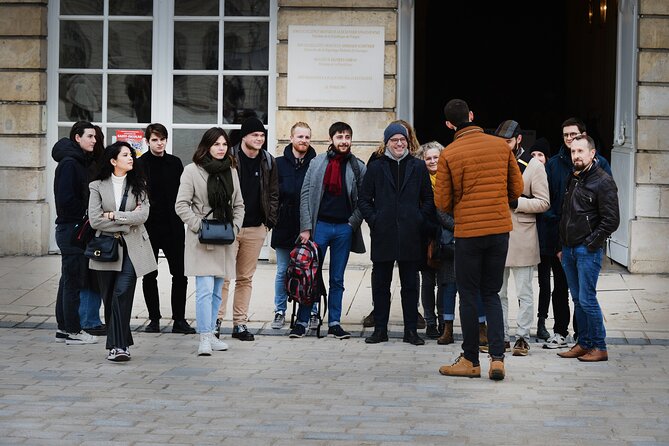
- A group of up to 30 people: This is not a private walk, though the guide’s style is designed to adapt to beginners, families, and more experienced history fans.
Why This Nancy Walk Works as a First Introduction
Nancy has more than one historical personality. Place Stanislas presents the city as an 18th-century royal showcase, while the Grande Rue leads you into the older world of Lorraine’s dukes and medieval defenses. The Pépinière then changes the mood completely, giving you open space and greenery near the historic center.
I appreciate that the route does not treat Nancy as a collection of isolated sights. The guide’s job is to connect them. You can begin with Stanislas Leszczynski, a Polish king who became Duke of Lorraine and father-in-law to Louis XV, then see how his building projects changed the city’s public face.
The walk is also short enough to fit around a larger day in Nancy. At roughly an hour and a half, it works well near the start of a visit, when you want context before returning to places that catch your eye. It can also suit a family group, since the guide aims to adjust his explanations for different ages and levels of background knowledge.
The format is a walking tour, so you should expect to remain outside for most of the experience. You will not be touring furnished rooms or museum collections with the guide. Instead, the streets, façades, railings, gates, statues, trees, and public spaces become the material for the lesson.
More Historical Tours in France:
- Paris: Louvre Museum Entry with History of Mona Lisa
★ 3.9 · 2,823 reviews - Paris: Dark History and Ghostly Guided Walking Tour
★ 4.7 · 1,000 reviews - Vieux Lyon Cultural & Historical Walking Guided Tour (English)
★ 5.0 · 942 reviews
Place Stanislas: Nancy’s Grand Opening Scene
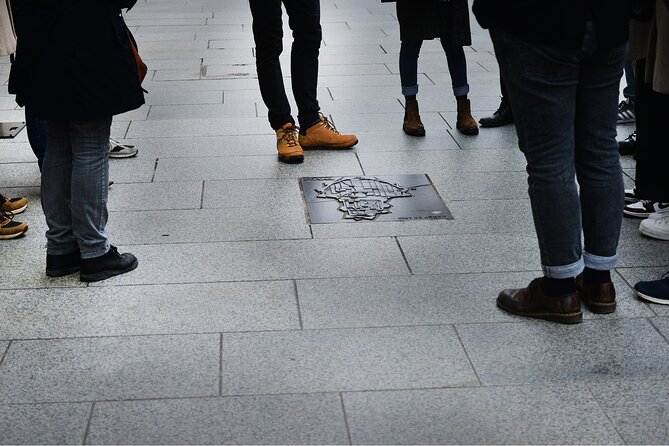
The tour begins at Place Stanislas, the city’s most famous public square. Its central statue honors Stanislas Leszczynski, whose career crossed borders and royal families. He was King of Poland, Duke of Lorraine, and the father-in-law of Louis XV, an unusual path that gives the square more political weight than its elegant appearance first suggests.
Stanislas commissioned the square as a Baroque-style Place Royale in the middle of the 18th century. This was not simply a convenient open area. It was a deliberate statement of power, taste, and civic ambition, and its design helped link different parts of Nancy.
The square’s famous golden railings were made by Jean Lamour. Their rococo forms provide a decorative frame around the space, and they are one reason Place Stanislas rewards a slow look rather than a quick photograph. Léopold’s approach, according to the experience description, is to explain the architecture while adding details and stories that put the people behind the building program back into view.
You spend about 30 minutes here, the longest single stop. That makes sense. Place Stanislas contains the basic themes of the tour: politics, architecture, royal ambition, and Nancy’s place within a wider European story.
For you, the practical benefit is immediate orientation. Once you understand why the square was built and who Stanislas was, the rest of the walk has a clearer frame. The drawback is that the square is also the most obvious part of the route, so independent visitors can see its main features without a guide. The value comes from interpretation, not access to something hidden.
Place de la Carrière: A Former Riding Ground
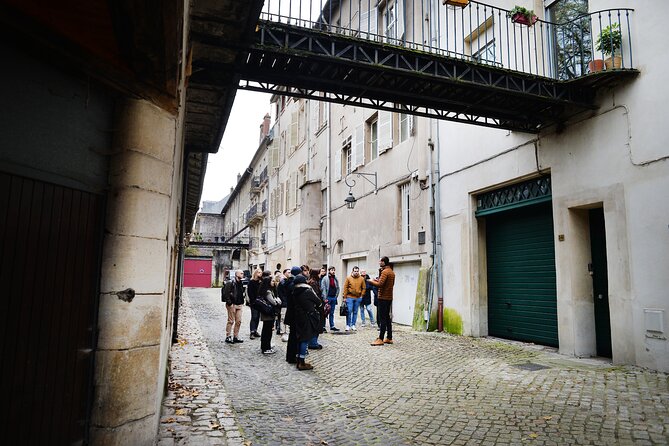
From the grand square, the route continues to Place de la Carrière. This space was built at the end of the 16th century inside the city walls and served as a training ground for the dukes’ riders. The ducal stables were close by, in an adjoining lane that has retained its old-world character.
That earlier use changes how you read the square. It was not designed only for strolling and display. Horses, riders, court life, and military practice were part of its original purpose. Later, Duke Leopold and Stanislas improved the area, creating the orderly architectural group you see today.
You spend about 15 minutes here. That is enough for a focused explanation, but not so long that the tour gets bogged down in architectural vocabulary. I like this stop because it shows how Nancy’s spaces were reused and reshaped over time. The same place could serve practical ducal needs and later become part of a more polished civic setting.
Look for the relationship between the square’s length, its surrounding buildings, and its connection to the rest of the historic center. The guide can help you see the plan as a piece of city design rather than as a single monument.
The limitation is similar to Place Stanislas. You are viewing the setting from outside, and the tour does not include admission to monuments or museums. If you want detailed interior history, you will need to make separate plans after the walk.
Grande Rue: The Old Town’s Main Thread
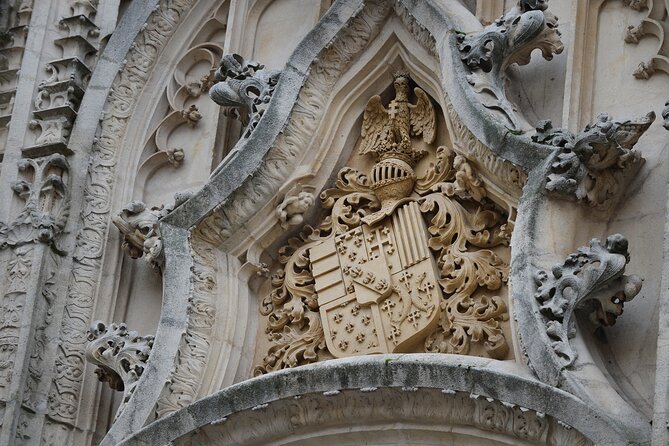
Grande Rue carries you into Nancy’s older center. Historically, it was the liveliest street in the Old Town, and it has kept the same name since medieval times. That continuity gives the street a useful role in the tour: it is a route through time as well as a route from one sight to the next.
Several major landmarks appear along this section. You can admire the Basilica of Saint-Epvre, the Palace of the Dukes of Lorraine, the Church of the Cordeliers, and the Porte de la Craffe. Each points to a different part of Nancy’s past, from religious life and ducal authority to the city’s defenses.
This is where the title Great History and Little Anecdotes makes the most sense. A guide can explain the major institutions, then pause over an architectural detail or a local curiosity that you might otherwise walk past. The route description emphasizes those smaller observations, and the feedback repeatedly praises the mix of broad context with personal stories.
You spend about 20 minutes on Grande Rue. That is a brisk visit, so do not expect a full tour of every building. Instead, think of this part as a guided reading of the street. You will learn what to notice, why the buildings matter, and which places deserve a longer return visit.
I would pay close attention here even if you plan to wander the Old Town later. A little explanation can make a familiar-looking church façade or city gate much more interesting. You may also prefer to return at your own pace, since the timed group walk cannot linger everywhere.
A few more France trips worth weighing up
- Paris: Louvre Guided Tour with Reserved Access & Boat Cruise
★ 4.3 · 16,353 reviews - Louvre Museum Masterpieces Guided Tour with Access
★ 4.5 · 12,023 reviews - Louvre Museum – Exclusive Guided Tour (Entry Included)
★ 5.0 · 6,296 reviews - Versailles: Skip-the-Line Guided Palace Tour and Full Access
★ 4.6 · 5,214 reviews
The Pépinière: A Green Change of Pace
The final stop is Parc de la Pépinière, a 22-hectare park described as Nancy’s green lung. After three built-up historic settings, the park gives the tour a welcome change of pace. It also shows that Nancy’s character is not limited to palaces, churches, and old defenses.
The park contains several different kinds of sights. Some are living features, including centuries-old trees. Others are made of stone or metal, such as a statue of Claude Lorrain by Rodin. The Mozart kiosk adds another note, inviting a pause for quiet observation rather than another lesson in political history.
You spend about 10 minutes here. That is enough to introduce the park and point out selected features, but it is not enough to explore 22 hectares in any real sense. If you enjoy gardens, sculpture, or simply a break from paved streets, you may want to return later with more time.
This stop also highlights a strength of the route: variety. The tour does not finish with one more formal square. It ends in a public park where Nancy’s history meets everyday city life. The short timing is the tradeoff. Consider the guided visit a preview, not a complete park tour.
Léopold’s Teaching Style and the Group Experience
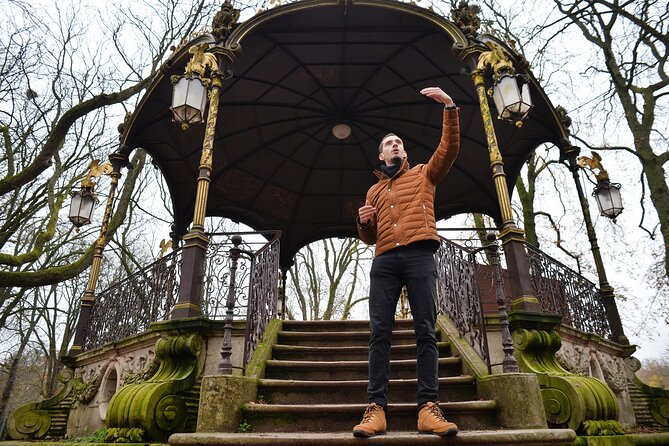
The guide is Léopold Fousnaquer. He has a master’s degree in history, works for Nancy’s Tourist Office, and also runs an independent guiding activity. That combination matters because the tour is presented as both serious and accessible.
The strongest praise focuses on his delivery. He is described as clear, well structured, friendly, attentive, and easy to follow. One particularly useful detail is that he speaks at a measured pace. That can make a major difference on a history walk, especially when you are standing outdoors, looking at a building, and trying to remember several names at once.
His style also includes humor. The aim is not to turn the tour into a comedy routine, but to keep the material within reach of the whole group. Families with ages ranging from 7 to 74 have found the format suitable, and the guide is said to adapt his presentation for beginners and people with more advanced interest.
The maximum group size is 30. That is large enough to create a group atmosphere and keep the price low, but it is not the same as a private walk. If you want every question answered at length or a completely custom route, this may feel structured. If you like having a clear path and an expert voice without paying private-tour prices, the size is reasonable.
The tour is offered in French. The guide’s clear pace helps, but you should still choose it only if French is workable for you. The experience depends on spoken explanation, anecdotes, and architectural descriptions, not just on looking at landmarks.
What the Price Includes, and What It Does Not
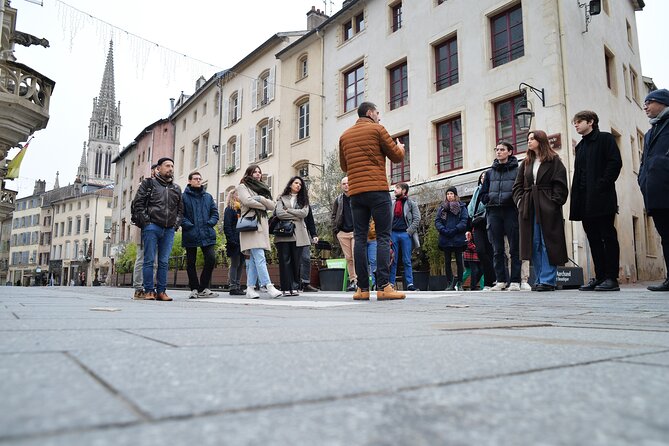
At about $17.42 per person, the tour offers good value for a guided introduction to central Nancy. You are paying for a qualified guide, the preparation behind the historical commentary, and the guide’s travel costs to the meeting place.
The value is strongest if you are visiting Nancy for the first time. In 90 minutes, you cover four distinct areas and learn how they connect. That can save you from walking through the center with no idea why one square looks so different from the next.
The price does not include entry to monuments or museums. That is not a flaw, but it needs to be clear. You should budget separately if you want to go inside the Palace of the Dukes of Lorraine, a church, or any museum connected with the city’s story. The guided walk gives you context and exterior interpretation, then leaves those indoor visits to your own schedule.
The tour is also booked, on average, 14 days ahead. That suggests planning early is sensible, especially if your Nancy visit falls on a fixed date. Confirmation arrives when you book, and the ticket is mobile, so you do not need a printed voucher.
Who Will Get the Most From This Walk
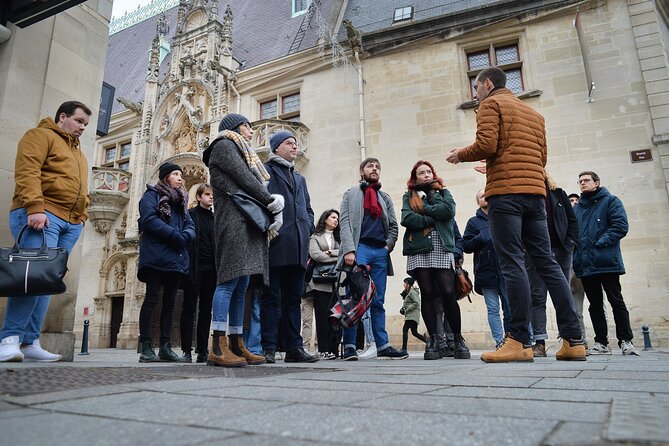
I would choose this tour if you want a well-organized first look at Nancy rather than a long specialist lecture. It fits especially well for:
- First-time visitors who want the city’s basic story before sightseeing alone
- Families who need history explained clearly and with some humor
- People interested in architecture, urban design, and royal connections
- French-speaking visitors who enjoy local anecdotes
- Short-stay visitors who have only a few hours in Nancy
- Groups that want a shared activity at a modest price
You may want another format if you prefer museum interiors, a private itinerary, or a tour in another language. The route is also less appealing on a day when outdoor walking is uncomfortable, since all four stops are part of a street-level visit.
The tour is near public transportation, and service animals are allowed. Most people can participate, but the information provided does not give a detailed accessibility assessment, so you should ask the provider if you have specific mobility needs.
Booking, Timing, and Cancellation Details
The starting point is Place Stanislas, Pl. Stanislas, 54000 Nancy, France. The activity ends back at the same meeting point, which makes it easy to continue sightseeing from the center afterward.
Plan for approximately one hour and 30 minutes. The stop lengths are about 30 minutes at Place Stanislas, 15 minutes at Place de la Carrière, 20 minutes along Grande Rue, and 10 minutes in Parc de la Pépinière. The remaining time accounts for walking between locations and transitions.
Free cancellation is available if you cancel at least 24 hours before the local start time. If you cancel later than that, the amount paid is not refunded, and changes made within that 24-hour window are not accepted.
Should You Book Guided Tour of Nancy?
I would book it if you want clear historical context, a friendly guide, and a compact route through Nancy’s most important central areas. The high 4.9 rating from 89 reviews and 99 percent recommendation fit the most consistent strengths: Léopold’s command of the subject, his calm delivery, his humor, and his ability to connect large events with small details.
The best time to take it is early in your stay. You can then return to the Palace of the Dukes, the Cordeliers, or the Pépinière if one place catches your interest. At this price, the walk is a practical introduction rather than an expensive all-day commitment.
Skip it if you need an English-language tour, extensive interior access, or a private experience. Otherwise, it offers an efficient and personable way to see Nancy with more meaning than a solo stroll usually provides.
FAQ
Where does the Nancy walking tour begin?
The tour begins at Place Stanislas, Pl. Stanislas, 54000 Nancy, France.
Where does the tour end?
The experience ends back at the meeting point at Place Stanislas.
How long does the tour last?
The tour lasts approximately one hour and 30 minutes.
What language is the tour conducted in?
The discovery of Nancy is conducted in French.
What places are included on the route?
The route includes Place Stanislas, Place de la Carrière, Grande Rue, and Parc de la Pépinière.
Are admission tickets to museums or monuments included?
No. Entrance fees to monuments and museums are not included.
How many people can join the tour?
The maximum group size is 30 people.
Can I cancel for a full refund?
Yes. You can cancel for a full refund up to 24 hours before the experience start time. Cancellations or changes made less than 24 hours before the start are not accepted for a refund.
Recently added around France
- The essential in Bordeaux, private tour with a local★ 4.9 · 48 reviews
- Avignon, Les Baux, St Remy and Arles from MARSEILLE★ 4.5 · 48 reviews
- Visit Avignon and Villeneuve lez Avignon aboard a Double-Decker Bus★ 4.0 · 48 reviews
- 2 hour outdoor group activity in Paris: SAINT GERMAIN★ 5.0 · 48 reviews
- Private Half-Day Guided Tour of Paris★ 4.5 · 48 reviews
- Blind Test Room & karaoke Montpellier★ 5.0 · 48 reviews
- Paris Dinner Show Opera Bel Canto★ 4.5 · 48 reviews
- Cannes: Lérins Islands Private Boat Tour★ 4.9 · 48 reviews
Historical Tours, compared.

Paris: Louvre Museum Entry with History of Mona Lisa
Read our review →
Paris: Dark History and Ghostly Guided Walking Tour
Read our review →
Vieux Lyon Cultural & Historical Walking Guided Tour (English)
Read our review →
Bordeaux: Historic Center & Chartrons District Bike Tour
Read our review →
From Strasbourg: Best Of Alsace Historical Day Trip
Read our review →
Toulouse Food & History Tour with a Chef (in English)
Read our review →
Small-Group Full-Day Tour of Côte de Nuits, Côte de Beaune Vineyards and Beaune Historical District
Read our review →
Browse the lists this tour appears in