
Reviewed · HISTORICAL TOURS
Lyon’s History and Must-Sees with a Local! (English Walking Tour)
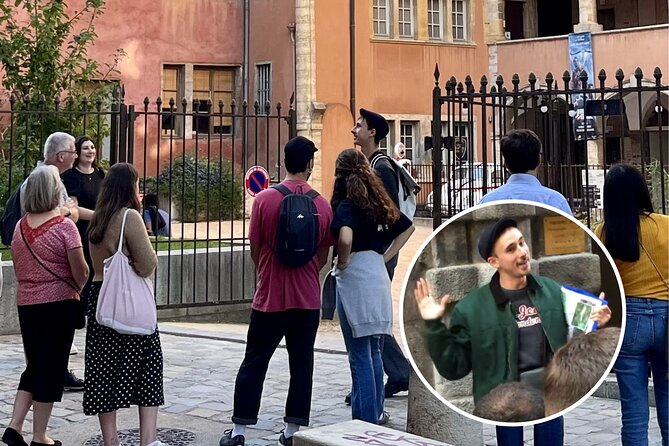
Lyon reveals itself one passage at a time. This 1-hour-45-minute walk with local guide Quentin Dubourg links the city’s Roman beginnings, Renaissance lanes, food traditions, World War II stories, and modern center in one compact route. It begins at Place Saint-Jean and ends at Place Bellecour, giving you a useful first look at Lyon’s central sights.
I like the mix of secret traboules and major landmarks. You get the handsome old town, the cathedral, the Saône, Place des Jacobins, Hôtel-Dieu, and Bellecour without spending a full day on a formal sightseeing program. I also like Quentin’s lively style. His energy, jokes, and ability to connect buildings with people and events have earned especially strong praise.
The main consideration is the pace. You cover a lot in less than two hours, and the tour is mostly an introduction rather than a detailed visit inside each place. The low price of $4.64 per person also comes with a tip-based model, so you should be prepared to add what you feel the walk was worth.
In This Review
- Key points at a glance
- Why this short Lyon walk works well
- Starting at Saint-Jean and reaching Roman Lugdunum
- The traboules of Vieux Lyon
- Rue du Bœuf and Lyon’s famous food culture
- The Saône and Lyon’s Resistance story
- Place des Jacobins and the newer city
- Hôtel-Dieu, from hospital to shopping center
- Finishing at Place Bellecour with Saint-Exupéry
- Price, pace, and what you receive
- Who should book this walk?
- Practical details before you go
- Should you book Quentin’s Lyon walking tour?
- FAQ
- Where does the tour begin?
- Where does the tour end?
- What time does the tour start?
- How long does the walking tour last?
- How many people can join the tour?
- Can I cancel for a full refund?
Key points at a glance
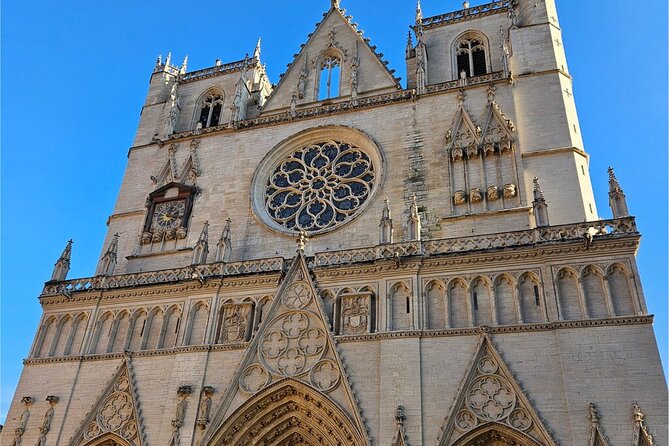
- Start at Saint-Jean Cathedral: Begin among Lyon’s oldest sights, with Roman Lugdunum and the Basilica of Fourvière setting the stage.
- Walk through Renaissance Vieux Lyon: See several traboules, the passageways that make the old town feel unlike any other part of the city.
- Taste Lyon through its food traditions: Learn how bouchons, Paul Bocuse, and Mère Brazier shaped the city’s reputation as France’s gastronomic capital.
- Connect the Saône to WWII history: Hear about Jean Moulin, the Resistance, and Klaus Barbie at the historic courthouse.
- End with Saint-Exupéry: Finish at Place Bellecour with the lesser-known statue honoring Lyon-born author Antoine de Saint-Exupéry.
- Good value for a short orientation: The walk costs $4.64, accepts a maximum of 20 people, and is designed to help you get your bearings quickly.
Why this short Lyon walk works well
Lyon can feel spread across several distinct areas. There is the old town west of the Saône, the Presqu’île between the Saône and Rhône, and the hill crowned by Fourvière. This route does not attempt to cover every corner, but it connects several important pieces in a logical walk from Saint-Jean to Bellecour.
That route matters. You begin in Vieux Lyon, one of the city’s most atmospheric areas, then move toward the central squares and grand buildings of the Presqu’île. By the finish, you are in a convenient part of central Lyon with restaurants nearby and good access to other parts of town.
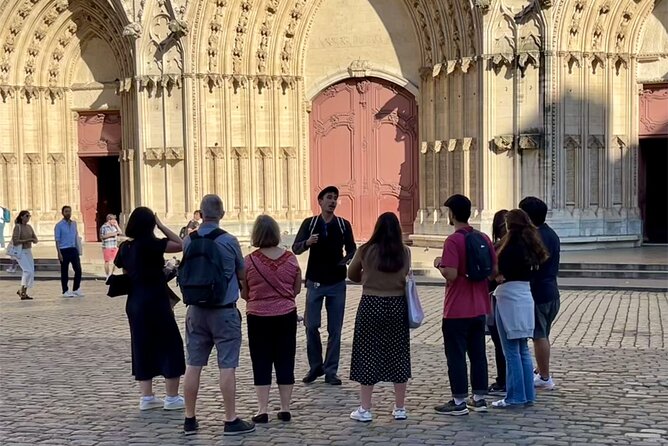
Quentin’s approach also gives the tour a social feel. The walk is limited to 20 people, so it is not designed as a huge crowd. His humor and group-focused style are a major part of the appeal. The strongest praise centers on his energy, charm, clear explanations, and talent for tying a place to the people who shaped it.
You should think of this as a lively orientation walk, not a museum tour. It is best for building a mental map, picking up useful stories, and deciding where you want to return later.
More Walking Tours in Lyon
- Vieux Lyon Cultural & Historical Walking Guided Tour (English)
★ 5.0 · 942 reviews - Lyon: Private Walking Tour of “Traboules” in the Old Town
★ 5.0 · 866 reviews - Lyon: City Highlights Walking Tour
★ 4.9 · 847 reviews
Starting at Saint-Jean and reaching Roman Lugdunum
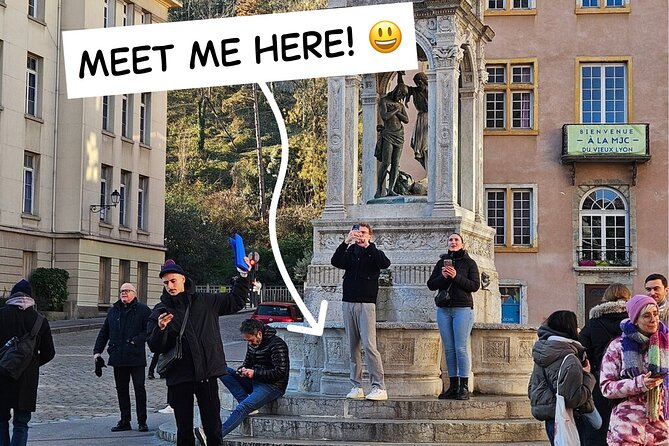
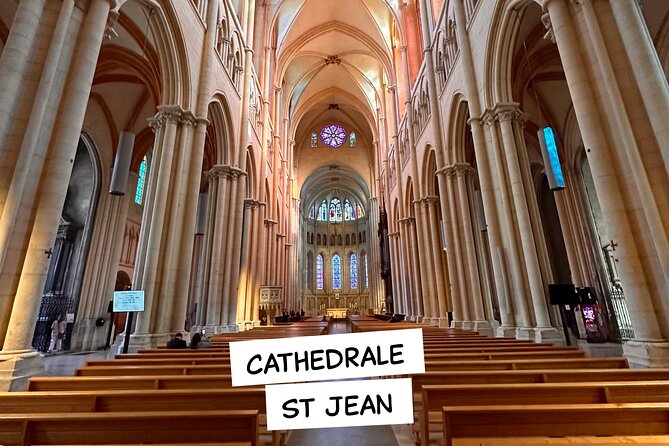
The meeting point is Place Saint-Jean in front of Cathédrale Saint-Jean-Baptiste de Lyon. The tour begins at 2:00 pm, a practical afternoon time if you have spent the morning arriving in Lyon or visiting another part of the city.
The first section introduces Lyon as Lugdunum, the Roman capital of the Gauls. That ancient name gives you an important starting point: Lyon was not simply a pretty medieval city that later became important. Its position and political role mattered long before the Renaissance buildings you see today.
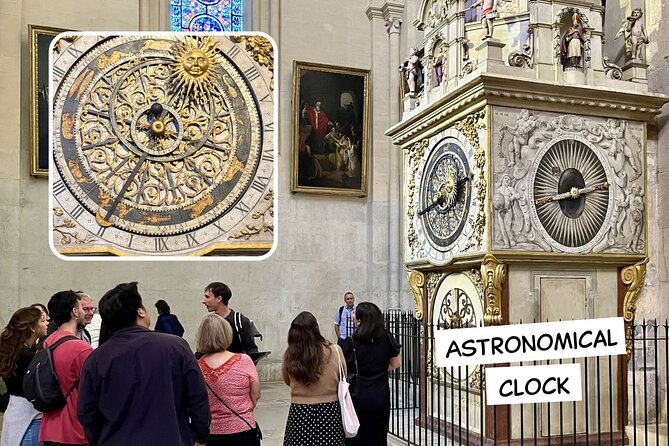
Quentin also discusses the Basilica of Fourvière before taking you inside the cathedral. The cathedral visit is listed as free, and the stop lasts about 10 minutes. That is enough time for a focused introduction and a look inside, but not enough for a slow architectural study.
You will get more from this opening if you arrive ready to listen rather than expecting a long church visit. The value lies in the connection between the Roman city, Fourvière above the old town, and the cathedral at street level.
The traboules of Vieux Lyon
The walk then spends about 30 minutes in Vieux Lyon, the longest stop on the route. Much of this district dates from the Renaissance, and its narrow streets and passageways provide the tour’s most distinctive sightseeing.
The traboules are Lyon’s famous internal passageways. They link streets through courtyards and buildings, letting you move through the old town in ways that are easy to miss if you simply follow the main road. Quentin plans to take you through several of them and explain some of the city’s less obvious stories along the way.
This is where a local guide adds real value. A map can show you Vieux Lyon, but it cannot reliably point out every passageway or explain why these routes matter. The walk turns a pleasant old quarter into a place with layers, shortcuts, and small surprises.
Keep your expectations sensible. The tour does not promise access to every traboule, and the available passageways can vary. Still, this section gives you a strong reason to explore the area on foot after the tour.
The old town is also where Quentin’s storytelling style seems most useful. The feedback consistently highlights his ability to draw people into their surroundings and connect events to specific buildings. His humor helps keep the history from feeling like a list of dates.
Rue du Bœuf and Lyon’s famous food culture
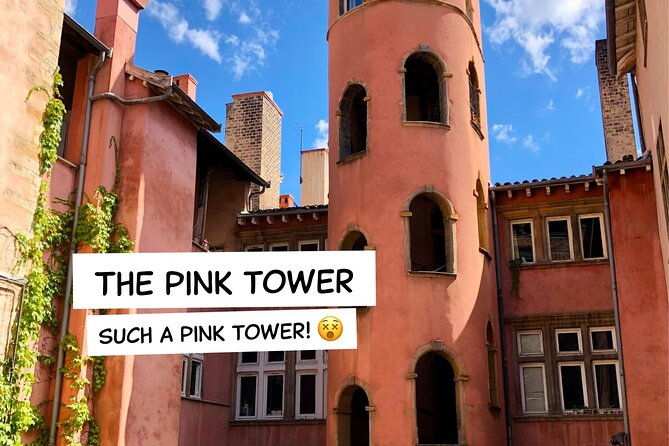
Rue du Bœuf is the setting for a 10-minute introduction to Lyon’s culinary traditions. This is a short stop, but it covers a subject central to the city’s identity.
You will hear about bouchons, the traditional Lyon restaurants known for local dishes and a hearty style of cooking. Quentin also explains how Paul Bocuse and Mère Brazier helped bring Lyon’s food to a wider audience.
This food discussion is useful even if you are not planning to eat during the tour. Lyon’s restaurant culture can be confusing at first, especially if you are trying to separate a traditional bouchon from a restaurant using the label mainly for atmosphere. A brief explanation gives you context before you choose where to dine.
The timing is the limitation. Ten minutes will not teach you every dish or settle every debate about what counts as a classic bouchon. But it does give you a starting point and a reason to pay closer attention to menus during the rest of your stay.
More Historical Tours in Lyon:
- Historical and naughty tour of Lyon in french
★ 4.5 · 49 reviews - Paris: Louvre Museum Entry with History of Mona Lisa
★ 3.9 · 2,823 reviews - Paris: Dark History and Ghostly Guided Walking Tour
★ 4.7 · 1,000 reviews - Bordeaux: Historic Center & Chartrons District Bike Tour
★ 4.8 · 709 reviews
The Saône and Lyon’s Resistance story
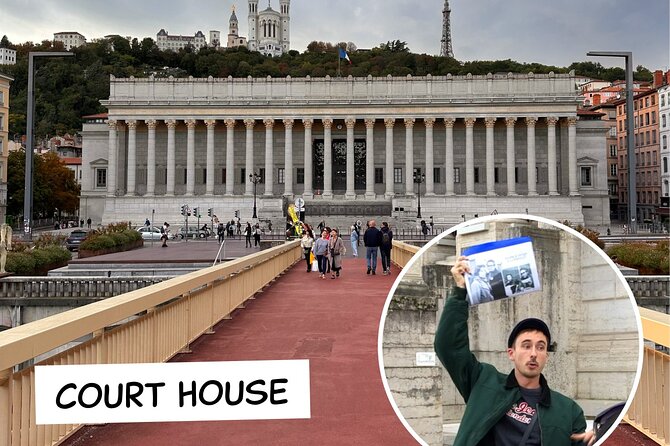
At the historic Palais de Justice, the tour shifts from food and architecture to the difficult years of World War II. The stop lasts about 10 minutes and includes views of the River Saône.
Lyon played an important role in the French Resistance, and Quentin focuses on Jean Moulin, one of its key figures. He also discusses Klaus Barbie, the Gestapo chief who was later judged in this courthouse more than 30 years after the war.
This is one of the most meaningful parts of the route because the subject is tied to a real place. You are not hearing a general wartime lecture detached from the city. You are standing near the courthouse associated with a later legal reckoning and hearing how Lyon became a major center of Resistance activity.
The subject matter is serious, so the quick format may leave you wanting more. If WWII history is a main reason for your visit, treat this as an introduction and plan a separate visit to learn more. If you want a broad city tour that does not ignore the darker chapters, this stop adds welcome weight.
Place des Jacobins and the newer city
The walk continues to Place des Jacobins and the surrounding squares for about 15 minutes. Here, Quentin turns to the Lyon that developed in the 19th century for wealthy residents.
This change in setting helps you see that Lyon is not one single historic district. The old town’s Renaissance character gives way to a more formal central area, shaped by grand squares and later urban growth. Quentin also talks about what it is like to live in Lyon today, which keeps the tour from becoming a parade of old facts.
I especially like this part for first-time visitors who want more than monuments. A city becomes easier to understand when you hear how its neighborhoods changed and how people use them now.
The stop is fairly brief, so you should not expect a full treatment of 19th-century Lyon or modern urban life. Instead, it works as a bridge between the old town and the city center, showing how the city expanded and changed its social character.
Hôtel-Dieu, from hospital to shopping center
The next stop is Grand Hôtel-Dieu, with about 10 minutes devoted to the former hospital. Hôtel-Dieu served as a major hospital for centuries and has since been transformed into a mall.
That change gives you a useful example of how historic buildings are reused. You can see an important institution from Lyon’s past while also considering how the building functions today. The point is not simply that the structure is impressive. It is that its role has changed while its presence remains part of the city’s identity.
Because the stop is short, Quentin’s explanation is likely to be more of a concise orientation than a full architectural tour. You may want to return later if the building interests you, especially since the tour places it on your route through the Presqu’île rather than requiring a separate trip.
Finishing at Place Bellecour with Saint-Exupéry
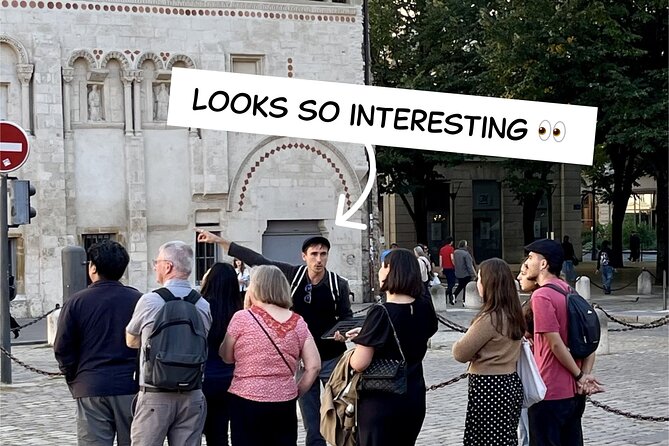
The tour ends at Place Bellecour, one of Lyon’s main central squares. This is a practical finish because the Presqu’île makes it easy to reach other parts of the city, and several restaurants are only a short walk away.
Quentin uses the final 10 minutes to share some lesser-known details about the square. The last stop also includes a statue honoring Antoine de Saint-Exupéry, the Lyon-born author of The Little Prince.
That ending gives the walk a pleasant personal touch. Saint-Exupéry is one of Lyon’s best-known cultural figures, yet the statue is not necessarily the first thing you would seek out on your own. Connecting him with the city makes a familiar literary name feel local and specific.
Place Bellecour is also a good place to continue exploring after the tour. You can stop for food, use the central location to reach other districts, or simply review the places you have just seen. The tour does not strand you at an isolated finish.
Price, pace, and what you receive
At $4.64 per person, this is unusually inexpensive for a guided city walk. The price makes sense as an accessible introduction, especially if you want local context without committing to a long or costly program.
There is an important detail: the tour asks you to tip what you think it was worth. That means the listed price is not necessarily the whole cost you should plan for. If Quentin gives you the lively, detailed experience described by the tour, a tip is part of treating the guide fairly.
The 1-hour-45-minute duration is another strength. You get a substantial orientation without giving up most of your afternoon. At the same time, the route covers seven stops, so each subject receives limited attention. You will hear about Roman Lyon, the cathedral, Fourvière, the Renaissance old town, food, WWII, 19th-century development, Hôtel-Dieu, Bellecour, and Saint-Exupéry in one sitting.
That breadth suits you if you want a city overview. It may frustrate you if you prefer a slow examination of one neighborhood or a long visit inside a historic building.
The maximum group size is 20. That is large enough for a social atmosphere but smaller than a mass-market group. Since Quentin is praised for bringing people together, the group setting appears to be part of the fun rather than a minor detail.
Who should book this walk?
I would point this tour toward first-time visitors who want to understand Lyon quickly. It is also a good fit if you have only a short stay and want to see the old town, central squares, and several major themes without arranging separate visits.
Food lovers will appreciate the bouchon discussion, while history-minded visitors will value the Lugdunum and Resistance sections. Fans of The Little Prince get a small literary connection at the end.
Families and mixed-age groups may like the humor and changing subjects. The tour is not built around one specialized topic, so you can move from Roman history to food, wartime events, and modern life without spending too long in one area.
It can also work well if this is not your first visit to Lyon. The traboules and smaller stories may show you parts of Vieux Lyon that you missed before. Quentin’s local perspective is useful for turning familiar streets into a more connected picture.
You should look elsewhere if you need a highly academic lecture, extensive time inside the cathedral, a dedicated food tasting, or a full WWII tour. None of those is the main purpose here.
Practical details before you go
The walk starts at Place Saint-Jean, 69005 Lyon, and ends at Place Bellecour, 69002 Lyon. Both locations are near public transportation, and the finish is in the Presqu’île, a convenient central area for continuing your day.
A mobile ticket is provided, and confirmation arrives when you book. Service animals are allowed, and most people can participate. The stated maximum is 20 people.
The tour begins at 2:00 pm. Arrive with enough time to find Place Saint-Jean and meet Quentin without rushing. Since this is a walking route through historic areas, comfortable shoes are a sensible choice, although the supplied details do not specify the exact walking distance or surface conditions.
Free cancellation is available if you cancel at least 24 hours before the start time. Changes or cancellations made less than 24 hours before the 2:00 pm start are not accepted for a refund.
Should you book Quentin’s Lyon walking tour?
Book it if you want a friendly, low-cost introduction with plenty of variety. Quentin’s strongest qualities are his humor, energy, local knowledge, and skill at linking Lyon’s buildings to its people and past.
The tour gives you a useful first map of the city: Saint-Jean and Vieux Lyon, the traboules, Rue du Bœuf, the Saône, the courthouse, Place des Jacobins, Hôtel-Dieu, and Bellecour. Just remember that this is a brisk overview. You will leave with more places to explore, not with every question answered.
For $4.64 plus a fair tip, it offers strong value. I would choose it early in a Lyon stay, then use Quentin’s suggestions to decide where to return for a longer look or a meal.
FAQ
Where does the tour begin?
The tour begins at Place Saint-Jean, at Pl. Saint-Jean, 69005 Lyon, France.
Where does the tour end?
The tour ends at Place Bellecour, Pl. Bellecour, 69002 Lyon, France, in Lyon’s Presqu’île area.
What time does the tour start?
The tour starts at 2:00 pm.
How long does the walking tour last?
The tour lasts approximately 1 hour and 45 minutes.
How many people can join the tour?
The maximum group size is 20 people.
Can I cancel for a full refund?
Yes. You can cancel for a full refund up to 24 hours before the experience starts. Cancellations or changes made less than 24 hours before the start time are not accepted for a refund.
Recently added around Lyon
- The Grand Bike Tour of Lyon – 3h★ 4.5 · 48 reviews
- Historical and naughty tour of Lyon in french★ 4.5 · 49 reviews
- Gourmet Vegan Private Tour of Lyon 3 hours★ 5.0 · 52 reviews
- Beaujolais & Perouges Medieval Town (9:00 am to 5:15 pm – Small Group Tour Lyon★ 5.0 · 53 reviews
- Lyon Old Town Food & Wine Tasting Tour including a Bouchon Lyonnais★ 4.0 · 59 reviews
- Storytelling tour of the Vieux-Lyon for children in French★ 4.8 · 60 reviews
- Lyon UNESCO: Private walking tour★ 5.0 · 61 reviews
- 4h Complete Lyon Experience – E-Bike, Tasting & Walk★ 4.8 · 62 reviews
Historical Tours, compared.
Paris: Louvre Museum Entry with History of Mona Lisa
Read our review →
Paris: Dark History and Ghostly Guided Walking Tour
Read our review →
Vieux Lyon Cultural & Historical Walking Guided Tour (English)
Read our review →
Bordeaux: Historic Center & Chartrons District Bike Tour
Read our review →
From Strasbourg: Best Of Alsace Historical Day Trip
Read our review →
Toulouse Food & History Tour with a Chef (in English)
Read our review →
Small-Group Full-Day Tour of Côte de Nuits, Côte de Beaune Vineyards and Beaune Historical District
Read our review →
Browse the lists this tour appears in