
Reviewed · MONTMARTRE & SACRé-CœUR TOURS
Montmartre Hidden Gems and Scenic Highlights Walking Tour
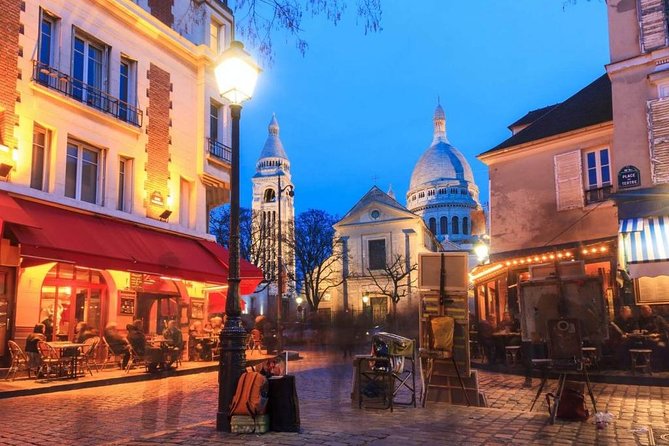
Montmartre rewards curious walkers. This 90-minute tour gives you a compact introduction to Paris’s hilltop art quarter, mixing famous sights with small corners you could easily miss on your own. I like the strong focus on artists and local stories, and I like that the walk ends near Sacré-Coeur, where you can continue exploring independently.
The guides are the real strength. Laura, Sylvia, Denise, David, Linda, and others are praised for clear storytelling, humor, art knowledge, and useful restaurant suggestions. The main caution is pace and expectation: this is a neighborhood overview, not a full tour of every major attraction. It passes the basilica and Moulin de la Galette from outside, and it does not include the Moulin Rouge, funicular, or an interior visit to Sacré-Coeur.
In This Review
- Key things to know before booking
- Why this short Montmartre walk works
- Starting at Rue des Abbesses
- The I Love You Wall and Rue des Abbesses
- Bateau-Lavoir and Montmartre’s artist story
- Moulin de la Galette and the man through the wall
- Dalida, La Maison Rose, and the vineyard
- Sacré-Coeur and the Paris view
- Place du Tertre and the final stop
- Guides, pace, and group feel
- Price, timing, and practical value
- Who should book this walk?
- FAQ
- How long is the Montmartre walking tour?
- What language is the tour offered in?
- Where does the tour begin?
- Where does the tour end?
- Is entry to Sacré-Coeur included?
- Does the route include stairs?
- How fit should I be for this walk?
- What happens if it rains?
- Can I cancel for a full refund?
Key things to know before booking
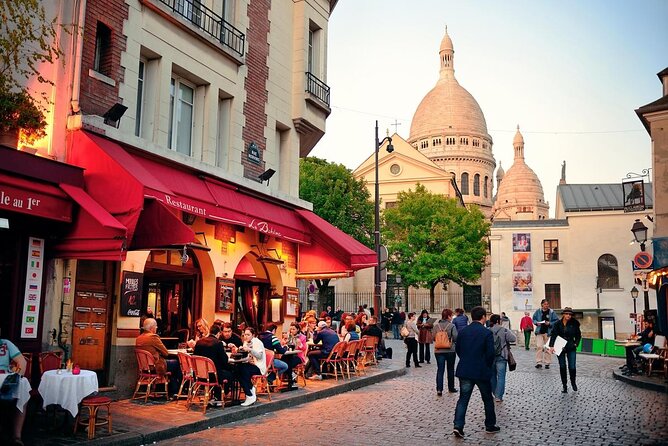
- A compact introduction to Montmartre: The route covers artists, cafés, sculptures, a vineyard, old streets, and major viewpoints in about 90 minutes.
- Strong guide-led storytelling: Guides such as Laura, Denise, Sylvia, David, and Linda are praised for humor, local knowledge, and helpful suggestions.
- A good early-day choice: Montmartre becomes crowded quickly, so an early departure can make the narrow streets easier to enjoy.
- Mostly gentle walking, with hills: The route avoids stairs but includes slopes, cobbles, narrow streets, and busy areas.
- Sacré-Coeur is viewed from outside: Entry is free when open, but you visit the basilica on your own after the tour.
- Good value for a short orientation: At $38.70 per person, the tour makes sense if you want context before exploring Montmartre independently.
Why this short Montmartre walk works

Montmartre can feel confusing at first. Streets climb in different directions, famous sights hide behind ordinary-looking corners, and the neighborhood changes quickly from busy souvenir areas to quiet lanes. A guide helps you connect those pieces.
This tour is especially useful at the beginning of a Paris stay. In 90 minutes, you get a sense of where the artists lived, where the old village atmosphere survives, and where to return for lunch, photos, or a longer wander.
The rating is a very strong 4.9 out of 5 from 2,684 ratings, with 97 percent of customers recommending it. That fits the experience as described: the walk is short, friendly, and story-driven. It is not designed for travelers who want long visits inside monuments or a detailed art lecture at every stop.
I would think of it as a first look at Montmartre. It gives you enough background to make the rest of your day more meaningful, without taking up half your afternoon.
More Walking Tours in Paris
- Paris Top Sights Half Day Walking Tour with a Fun Guide
★ 5.0 · 2,893 reviews - Montmartre Hill French Gourmet Food and Wine Tasting Walking Tour
★ 5.0 · 2,588 reviews - Paris Île de la Cité and Notre-Dame Walking Tour With Crypt
★ 5.0 · 2,272 reviews
Starting at Rue des Abbesses
The meeting point is 19 Rue des Abbesses, in the heart of Montmartre. Arrive 15 minutes early because the group leaves on time, and someone arriving late may not be able to catch up.
Rue des Abbesses is a useful starting point because it quickly places you in the neighborhood’s everyday setting. You are not beginning at a grand monument with little sense of local life. Instead, you start among cafés, shops, and apartment buildings, then work your way through streets connected to Montmartre’s bohemian past.
The group can include up to 25 people. That is not enormous, but it is large enough that you should stay close and listen carefully when the guide stops. One customer specifically found that a large group made it harder to hear, so standing near the guide is sensible.
The I Love You Wall and Rue des Abbesses
One of the first stops is the I Love You Wall, a small-square installation displaying the words I love you in more than 300 languages. It is a quick, photogenic stop with a gentle message, and it offers an easy way to begin the walk.
The installation is not a grand monument, so do not expect a long visit. Its value comes from the contrast between the simple idea and the many languages gathered on one wall. Your guide can also explain why this small corner matters within Montmartre’s modern artistic identity.
From there, the tour explores one of the neighborhood’s oldest streets. The street’s cafés, small shops, and older buildings help explain why Montmartre still feels different from much of central Paris.
This is also where the guide’s local knowledge matters. The walk is not only about pointing at façades. You hear how the area changed from a cheaper artists’ quarter into one of Paris’s most expensive neighborhoods. That shift gives the tour a useful social angle, rather than treating Montmartre as a frozen film set.
Bateau-Lavoir and Montmartre’s artist story
The Bateau-Lavoir is one of the most important art-related stops. Once an artists’ residence, it was associated with Picasso, Modigliani, and Braque, among others.
You will see the site from the outside, but the short stop carries plenty of weight. Montmartre was not simply a pretty place where painters came to pose with easels. It was a working district where artists lived close together, argued about new ideas, and helped change modern art.
I particularly like this part of the route because it connects the neighborhood to people and choices, not just dates. Guides such as Linda have been praised for making artist stories funny and memorable. That approach suits Montmartre, where colorful personalities are part of the place.
Do keep your expectations realistic. A 90-minute walk cannot explain every artist or movement in detail. You get a well-chosen introduction, then you can return later if one particular story catches your attention.
More Montmartre and Sacré-Cœur walks:
- Paris: Montmartre Cheese, Wine & Pastry Guided Walking Tour
★ 4.8 · 2,255 reviews - Paris: Montmartre Highlights Walking Tour with a Local Guide
★ 4.9 · 1,668 reviews - Paris: Sacré-Coeur and Montmartre Tour with Expert Guide
★ 4.1 · 1,027 reviews - Private Montmartre Food Tour with Wine, Cheese & Pastries
★ 5.0 · 1,027 reviews
Moulin de la Galette and the man through the wall
The Moulin de la Galette is a historic windmill and one of Montmartre’s best-known symbols. Renoir and Van Gogh included it in their paintings, and it once served as a dance hall.
The stop helps you picture Montmartre before it became such a polished destination. A windmill in this setting hints at the village that once occupied the hill, while the former dance hall points to the neighborhood’s social side. This is not just an object for a quick photograph. It is part of the story of how rural Montmartre became an artists’ quarter and then a major Paris attraction.
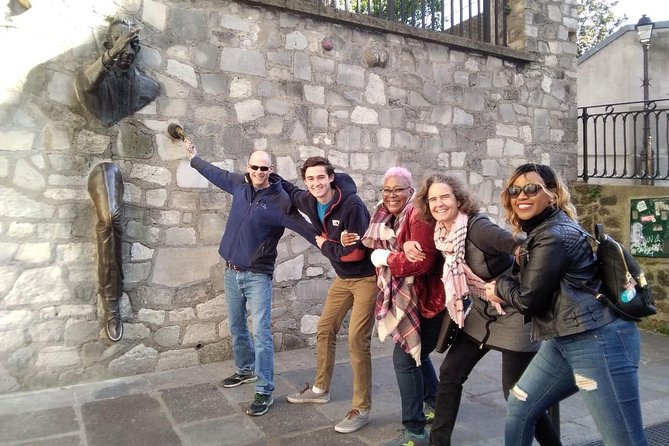
Later, the tour reaches the sculpture inspired by Marcel Aymé’s short story about a man walking through a wall. The figure appears to pass through the stone, a wonderfully odd piece of public art near the author’s former home.
This is exactly the kind of stop that can disappear if you walk alone while checking a map. It is small, playful, and easy to overlook. The guide supplies the connection between the sculpture, the writer, and Montmartre’s taste for strange, theatrical ideas.
Dalida, La Maison Rose, and the vineyard
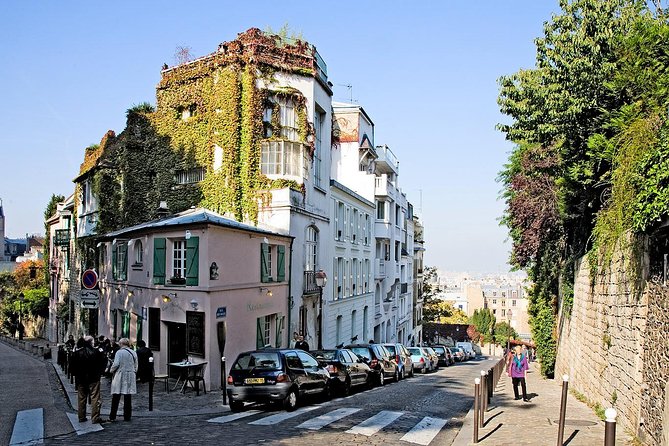
A bronze bust honors Dalida, the French singer who lived in Montmartre for many years. It sits in a quieter square and has become a place where admirers leave tributes.
The stop adds a modern cultural layer to a route otherwise centered heavily on painters and writers. Dalida’s connection to the area reminds you that Montmartre has continued to attract performers and public figures long after its best-known art colonies faded.
La Maison Rose provides another shift in mood. The pink café has long been a favorite subject for artists and photographers and was once associated with Picasso and Utrillo. Today, it remains a café serving French food and makes an obvious photo stop.
This is a good place to listen for practical advice. Several guides are praised for pointing out places to eat after the walk, and La Maison Rose may tempt you to stop immediately. You do not need to make it your meal destination, but knowing where it is helps you plan the rest of your afternoon.
The Clos Montmartre vineyard is one of the route’s more unexpected sights. Established in 1933 to protect the neighborhood’s winemaking tradition, it produces a small amount of wine within the city.
You will not get a winery visit or tasting as part of this walking tour. The vineyard is valuable as a reminder that Montmartre was once associated with gardens, fields, and local wine production. It also breaks up the more familiar sequence of artists, cafés, and monuments.
Sacré-Coeur and the Paris view
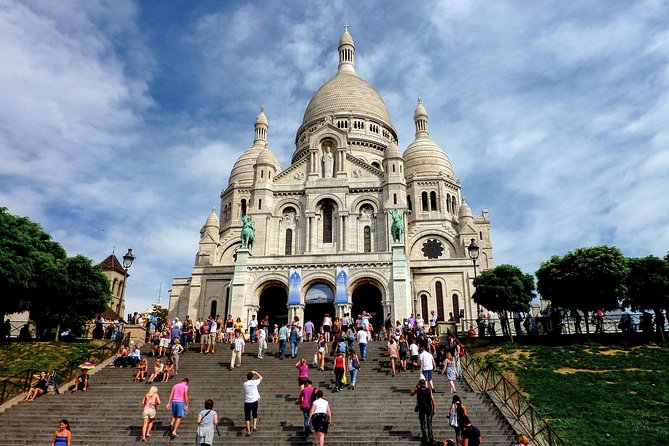
The walk continues to the Sacré-Coeur Basilica, located at the highest point in Paris. Its white domes and mosaics make it one of the city’s most recognizable buildings, and the open views are a major reward for climbing the hill.
The basilica is viewed from outside on this tour. Entry is free when it is open, and your guide will explain what to see if you decide to go inside afterward. That arrangement keeps the group moving and avoids turning a short neighborhood walk into a monument visit.
I consider this a sensible design for a first visit. You get the guide’s explanation and the outside setting, then choose your own timing for the interior. If entering Sacré-Coeur is important to you, plan extra time after the tour rather than assuming the 90 minutes includes it.
The approach can be physically more demanding than the duration suggests. The route does not include stairs, but it does involve hills, narrow streets, and sometimes busy passages. Montmartre is also known for cobbled surfaces and steep areas beyond the stated route, so wheelchair users and anyone with serious mobility concerns should ask detailed questions before booking.
The view is one of the strongest reasons to take the walk. You get a better sense of the city’s scale from this high position, and the guide can help you understand what you are seeing. Just remember that the basilica area can be crowded, especially later in the day.
Place du Tertre and the final stop
The tour finishes around Place du Tertre, the square most closely associated with Montmartre’s current art scene. Painters, caricaturists, and street performers work around the cafés and restaurants.
This is an atmospheric ending, though it is also one of the busiest parts of the neighborhood. You may find it charming, crowded, commercial, or all three at once. The guide can help you separate the genuine artistic tradition from the simple souvenir trade.
The official end point is La Bonne Franquette, at 18 Rue Saint-Rustique. That is useful because you are not left beside the basilica with no sense of where to go next. You can continue toward the square, find lunch, return to Sacré-Coeur, or explore nearby streets at your own pace.
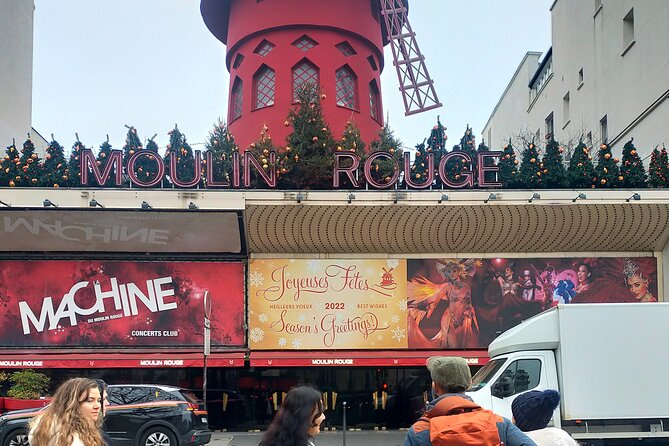
Some people expect the route to include the Moulin Rouge or the funicular. It does not. If those are priorities, plan them separately. The tour focuses on the hilltop neighborhood, its artists, small public artworks, cafés, and historic corners.
Guides, pace, and group feel
The strongest praise goes to the guides’ delivery. Laura is repeatedly described as funny, charming, and well informed about the neighborhood. Sylvia is praised for clear explanations and good advice. Denise receives high marks for being friendly, attentive, and easy to understand.
David is noted for keeping people together and encouraging questions. Linda is praised for making artist stories entertaining, while Sophie is described as a strong storyteller who pointed out details that would otherwise be missed.
That pattern matters more than any single guide name. The route itself is fixed, but the quality of a neighborhood walk depends heavily on who tells the story. The available feedback suggests a consistently warm and engaging guiding style, though no walking tour is identical from one departure to the next.
The pace is generally relaxed. Several people appreciated that the guide did not rush, while still keeping the group moving. That makes the tour suitable for families with adults and for anyone who wants an introduction rather than an intense march through landmarks.
There is one clear tradeoff. A group of up to 25 can make conversation and hearing less easy. If you want the most direct access to the guide, arrive early and stay near the front.
Price, timing, and practical value
At $38.70 per person, this is reasonably priced for a guided 90-minute walk in Paris. You are paying mainly for interpretation and orientation, not admission tickets. Since the route includes outdoor sights and the basilica entrance is not included, the value depends on how much you want stories and local context.
I would book it if you are new to Montmartre, short on time, or uncomfortable finding the neighborhood’s less obvious stops alone. The tour can save you from wandering past the Bateau-Lavoir, the man-through-the-wall sculpture, or the vineyard without understanding why they matter.
An early departure is a smart choice. One person specifically recommended going early because Montmartre fills quickly. Morning light can also make the streets and viewpoints more pleasant, although the tour operates in all weather.
Wear shoes suited to hills and uneven surfaces. Bring a rain layer if the forecast is uncertain because the walk runs regardless of weather. You do not need to prepare for stairs on the stated route, but you should feel comfortable walking uphill and through narrow streets.
Free cancellation is available up to 24 hours before the start time. Inside that window, the payment is not refunded and changes are not accepted.
Who should book this walk?
You should book this tour if you want a lively introduction to Montmartre with a strong focus on artists, neighborhood stories, and overlooked details. It works well as a first activity in the district, especially if you plan to stay for lunch or continue to Sacré-Coeur afterward.
It is also a good fit for families with adults, couples, and solo visitors who want someone else to handle the route while they listen and look around.
I would skip it if you mainly want to visit the interior of Sacré-Coeur, ride the funicular, see the Moulin Rouge, or spend a long time at each monument. I would also choose another plan if hills and uneven streets are difficult for you.
For most visitors, though, the short length is a strength. You get the neighborhood’s main character, a few wonderfully odd stops, excellent city views, and practical ideas for what to do next. At $38.70, that is a fair way to get your bearings before exploring Montmartre on your own.
FAQ
How long is the Montmartre walking tour?
The tour lasts approximately 1 hour and 30 minutes.
What language is the tour offered in?
The guided tour is offered in English.
Where does the tour begin?
The meeting point is 19 Rue des Abbesses, 75018 Paris, France.
Where does the tour end?
The tour ends at La Bonne Franquette, 18 Rue Saint-Rustique, 75018 Paris.
Is entry to Sacré-Coeur included?
No. The tour passes the exterior of the basilica. Entry is free when the basilica is open, and the guide provides advice for visiting independently afterward.
Does the route include stairs?
The stated route does not include stairs, but it does include hills, narrow streets, and sometimes busy passages.
How fit should I be for this walk?
You should have a moderate level of physical fitness and feel comfortable walking up hills.
What happens if it rains?
The tour operates in all weather conditions, so you should dress appropriately for the forecast.
Can I cancel for a full refund?
Yes. You can cancel at least 24 hours before the start time for a full refund. Cancellations within 24 hours are not refunded.
Recently added around Paris
- Private Half-Day Guided Tour of Paris★ 4.5 · 48 reviews
- 2 hour outdoor group activity in Paris: SAINT GERMAIN★ 5.0 · 48 reviews
- Paris Dinner Show Opera Bel Canto★ 4.5 · 48 reviews
- Paris Vintage Tour by Night on a Sidecar with Champagne★ 5.0 · 48 reviews
- Secrets & Scandals of the Louvre – Limited to 6 Guests★ 5.0 · 48 reviews
- Paris Photoshoot: Eiffel Tower Exclusive Private Experience★ 5.0 · 48 reviews
- Paris: Louvre Mona Lisa Discovery Guided Tour with Ticket★ 4.9 · 48 reviews
- From Paris: Versailles Full-Day Guided Tour with Lunch★ 4.9 · 48 reviews
Montmartre & Sacré-Cœur Tours, compared.
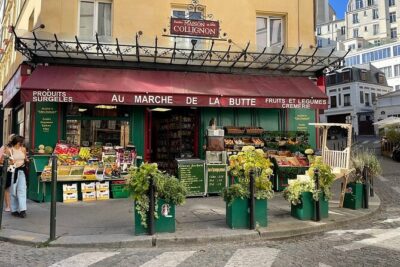
Montmartre Hill French Gourmet Food and Wine Tasting Walking Tour
Read our review →
Paris: Montmartre Cheese, Wine & Pastry Guided Walking Tour
Read our review →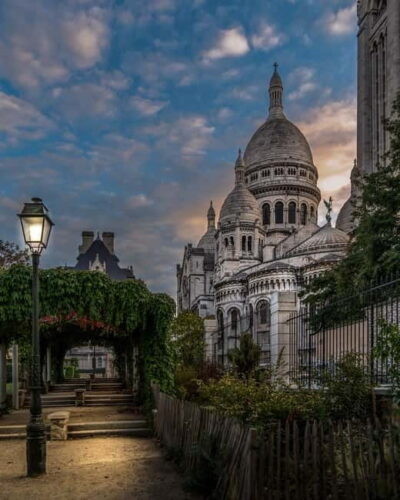
Paris: Montmartre Highlights Walking Tour with a Local Guide
Read our review →
Paris: Sacré-Coeur and Montmartre Tour with Expert Guide
Read our review →
Private Montmartre Food Tour with Wine, Cheese & Pastries
Read our review →
Paris Montmartre Food Tour – A Full French Meal by Do Eat Better
Read our review →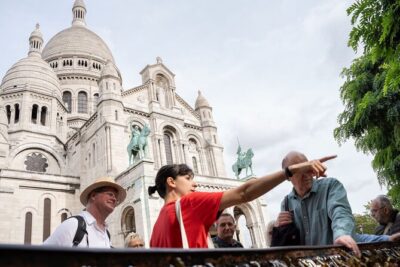
Hidden Montmartre: Paris’ Secret Streets Walking Tour
Read our review →
Paris Montmartre Food & Wine Tour with Eating Europe
Read our review →Browse the lists this tour appears in