
Reviewed · MONTMARTRE & SACRé-CœUR TOURS
Paris: Montmartre Highlights Walking Tour with a Local Guide
Paris reveals itself in layers here. This Montmartre walk mixes famous sights with tucked-away lanes, artists’ stories, old cabarets, and views from beneath Sacré-Cœur. I like the route’s strong art focus, and I like that guides such as Yazid and Sylvia bring music, humor, and local color rather than simply reciting dates. The main consideration is the terrain: cobbles, slopes, and a 140-minute walk make it unsuitable for wheelchair users and people with mobility impairments.
You’ll visit the Wall of Love, Bateau-Lavoir, Moulin de la Galette, Maison Rose, and Place du Tertre in a small group capped at 16 people. The tour costs $34 per person, which is fair for a lively introduction to Montmartre, especially if you want context before exploring Sacré-Cœur and the hill on your own.
In This Review
- Key points to know before you go
- Why Montmartre works best on foot
- Starting beneath Sacré-Cœur at Place Saint-Pierre
- The Wall of Love and Montmartre’s softer side
- Bateau-Lavoir, where modern art took shape
- Moulin de la Galette and the view through painters’ eyes
- Maison Rose and the quieter lanes
- Place du Tertre, among the open-air artists
- The guides make or break this experience
- What the $34 price gets you
- Who will enjoy this walk most
- Practical advice for a smoother morning or afternoon
- Should you book this Montmartre tour?
- FAQ
- How long does the Montmartre walking tour last?
- What language is the tour offered in?
- Where does the tour start?
- Where does the tour visit?
- Is Sacré-Cœur included inside the tour?
- Is the tour suitable for children?
- Is the tour suitable for wheelchair users?
Key points to know before you go
- Artists are the main story: Picasso, Modigliani, Van Gogh, Dalí, Toulouse-Lautrec, Dalida, and Charles Aznavour all enter the conversation.
- The route begins under Sacré-Cœur: You get an immediate view over Paris before setting off through Montmartre.
- The Wall of Love gets a proper stop: The guide explains the artwork and gives you time to look for its 311 expressions of love.
- Small groups make a difference: With no more than 16 people, it is easier to hear stories and ask questions.
- The finish is well timed: You end at Place du Tertre, close to Sacré-Cœur for an independent visit.
- Bring sensible shoes and cash: The route includes cobbles and slopes, and cash may be useful during free time.
Why Montmartre works best on foot
Montmartre is easy to recognize and easy to misunderstand. You see Sacré-Cœur on postcards, spot Maison Rose in photographs, and perhaps picture painters working around Place du Tertre. But the district becomes more interesting when you connect those sights to the artists, singers, rebels, and ordinary residents who gave the hill its character.
This tour gives you that connection on foot. Instead of treating Montmartre as a checklist of photo stops, it uses the streets as a stage for stories about modern art, music, political upheaval, resistance, eccentric personalities, and village life inside Paris.
I especially like the scale of the outing. A small group of up to 16 people is large enough to feel social but not so large that you are constantly trying to find the guide. It also gives a good guide room to respond to questions and adjust the pace.
The experience lasts 140 minutes, or a little over two hours. That is enough time to cover the main landmarks without turning the walk into an all-day commitment. You should still treat it as active sightseeing. Comfortable clothes and shoes are essential, and the cobblestones may be tiring if you are not used to walking on uneven surfaces.
More Walking Tours in Paris
- Paris Top Sights Half Day Walking Tour with a Fun Guide
★ 5.0 · 2,893 reviews - Montmartre Hidden Gems and Scenic Highlights Walking Tour
★ 5.0 · 2,684 reviews - Montmartre Hill French Gourmet Food and Wine Tasting Walking Tour
★ 5.0 · 2,588 reviews
Starting beneath Sacré-Cœur at Place Saint-Pierre
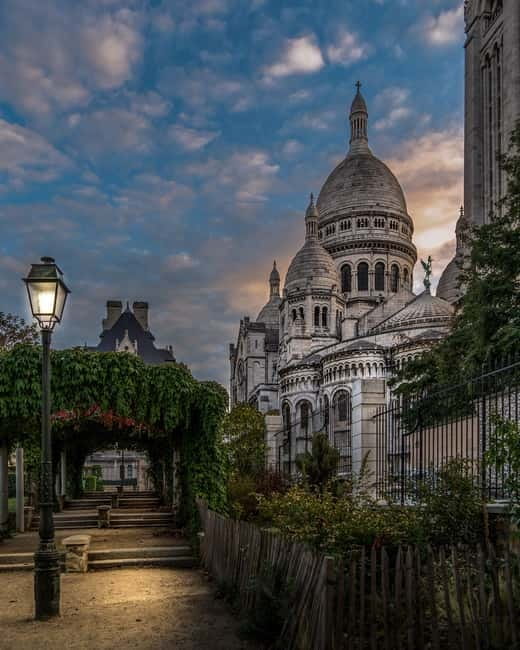
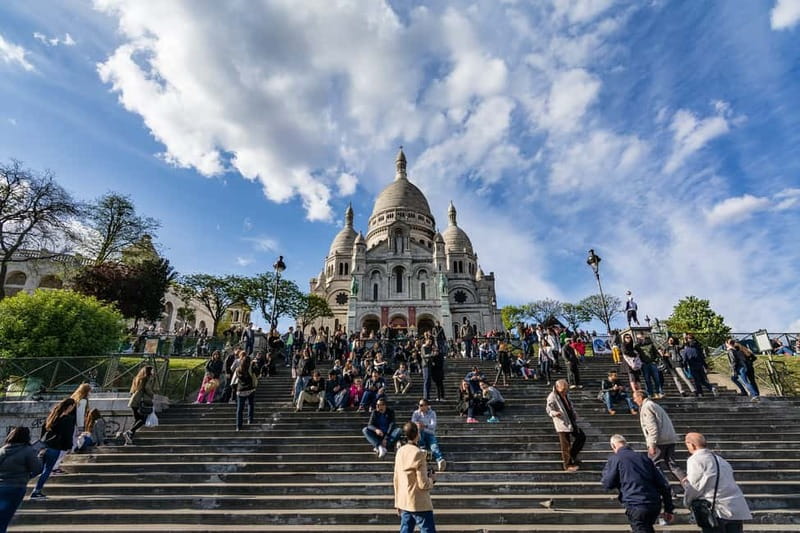
The meeting point is Place Saint-Pierre, near the carrousel beneath the Sacré-Cœur basilica. Look for Paris Tours Experiences and the guide near the carrousel. Starting here is smart because you immediately understand Montmartre’s physical setting: the basilica sits high above Paris, and the neighborhood spreads around it in lanes and steps.
The first view across Paris gives the guide a natural way to explain Montmartre’s place in the city. You begin with the grand panorama, then move into the smaller streets where the district’s personality is easier to feel.
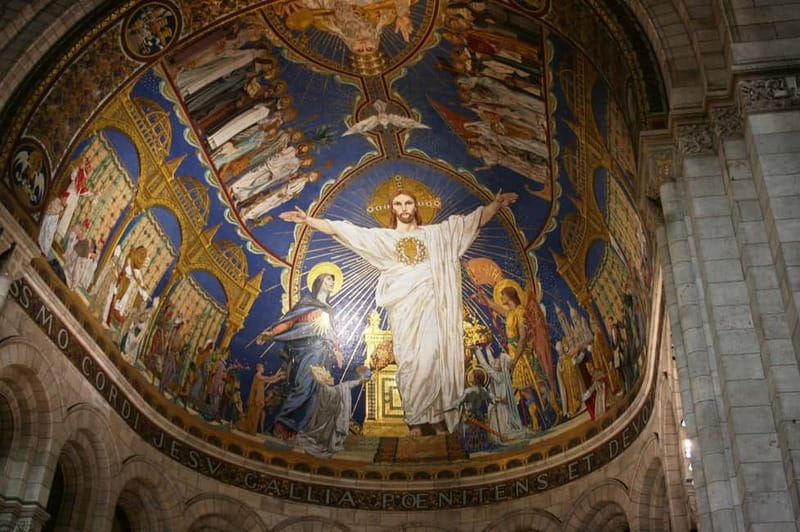
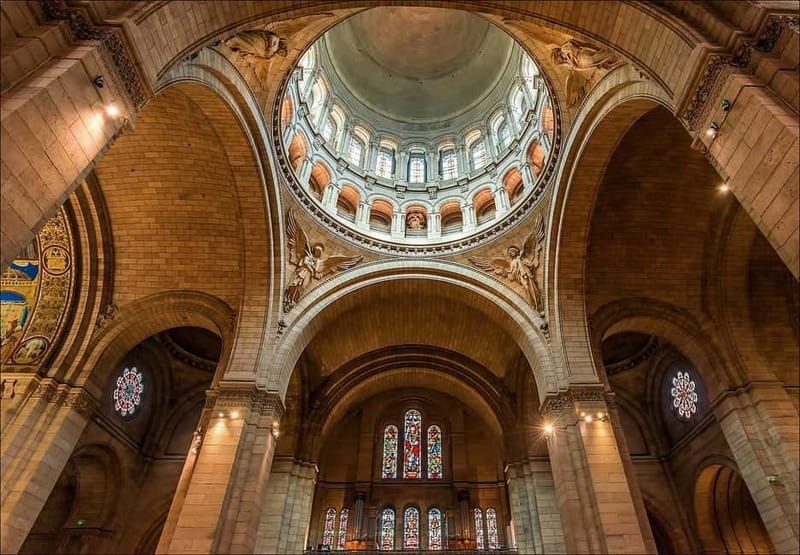
The basilica itself is not listed as an interior visit during the guided walk. Instead, the tour ends close enough for you to visit Sacré-Cœur independently. That arrangement works well if you want the guide’s historical and cultural context first, then prefer to enter the church at your own pace.
The Wall of Love and Montmartre’s softer side

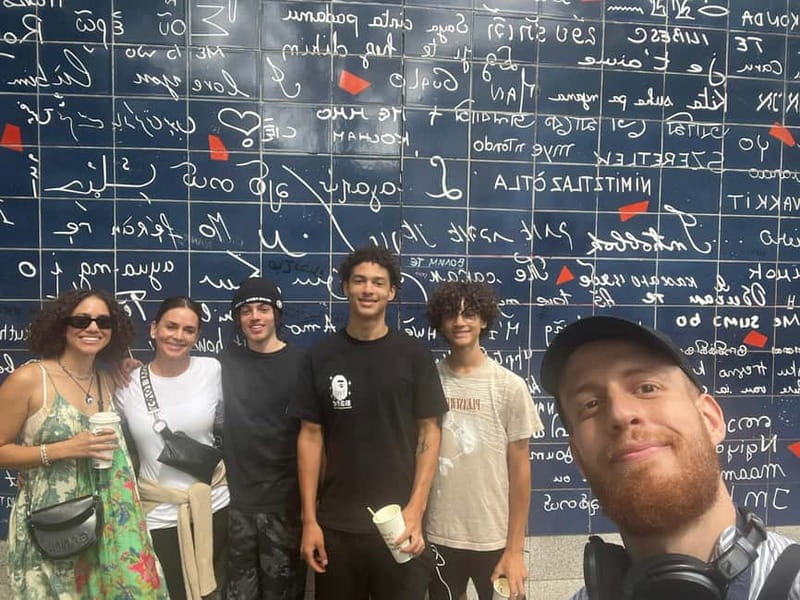
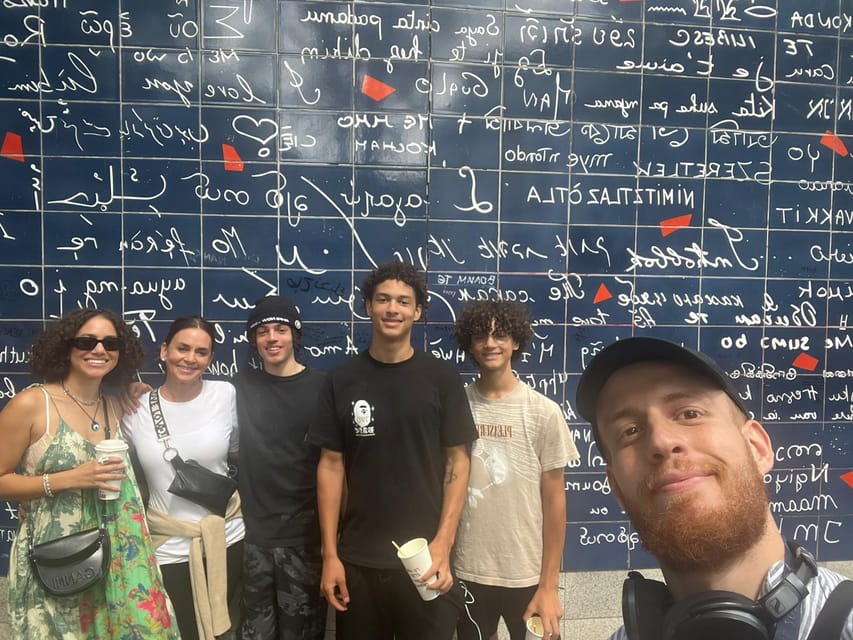
The Wall of Love is a useful early stop because it changes the mood. Set in a small square, the artwork presents the phrase I love you in 311 forms across dozens of languages. Your guide spends about 30 minutes here, including the explanation and time for photographs.
This is more than a quick picture stop. It gives the group a calm place to settle into the tour and introduces the romantic side of Montmartre before the route moves into its art and cabaret stories.
The stop also suits families. The tour is described as adapted for children, and the Wall of Love offers a visual feature that younger visitors can appreciate without needing a long historical explanation. Still, the overall walk is story-heavy, so children who need constant activity may find some sections less lively than others.
Bateau-Lavoir, where modern art took shape
Bateau-Lavoir is one of the most important stops for anyone interested in art. The building is linked to Picasso, Modigliani, and other artists who lived and worked there. Your guide uses the place to explain how Montmartre helped shape modern art, and how the artists themselves changed the identity of the district.
The value here is the connection between a physical address and a major shift in art. You are not simply hearing that Picasso lived in Montmartre. You are being shown the setting in which artists worked, struggled, experimented, and influenced one another.
Expect this section to be one of the most talk-focused parts of the walk. Guides such as Yazid have been praised for bringing in details about Dalí and Picasso while also linking art to music and local culture. If you enjoy art history, this is likely to be the strongest part of the route.
One useful caution: the tour may feel closer to an art and cultural history walk than a light stroll with occasional facts. A few people have found the guide’s explanations so extensive that the tour ran beyond the expected time. That is good news if you like detail, but less useful if you have a strict appointment afterward.
More Montmartre and Sacré-Cœur walks:
- Paris: Montmartre Cheese, Wine & Pastry Guided Walking Tour
★ 4.8 · 2,255 reviews - Paris: Sacré-Coeur and Montmartre Tour with Expert Guide
★ 4.1 · 1,027 reviews - Private Montmartre Food Tour with Wine, Cheese & Pastries
★ 5.0 · 1,027 reviews - Paris Montmartre Food Tour – A Full French Meal by Do Eat Better
★ 5.0 · 877 reviews
Moulin de la Galette and the view through painters’ eyes
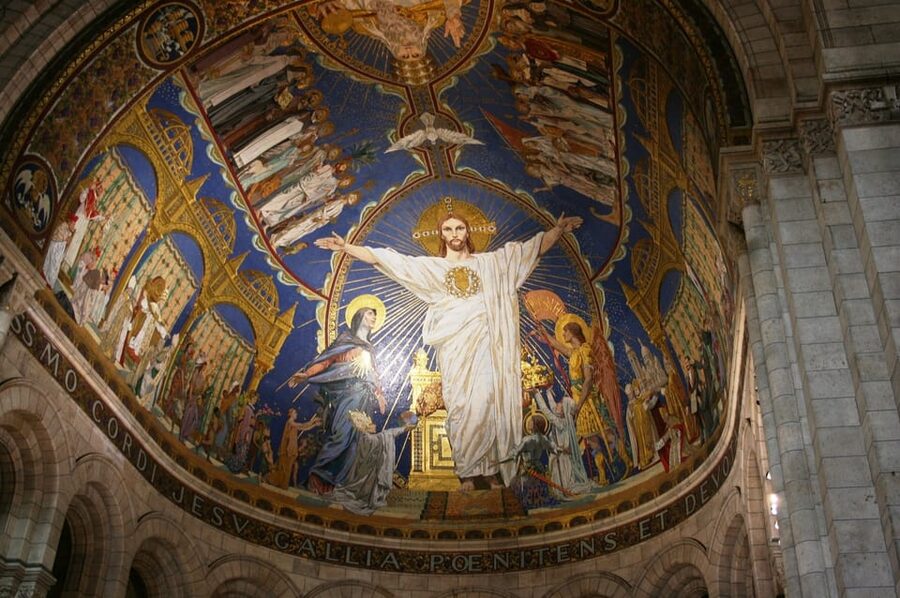
The next major stop is Moulin de la Galette, a former windmill that became an icon in Impressionist painting. Here, the guide helps you connect the present-day street with the Montmartre represented in famous works.
This stop is marked as a photo stop as well as a guided visit. You get about 30 minutes for the explanation and pictures, so it is not a rushed glance before moving on. The windmill is a reminder that Montmartre was once more rural in character, with open spaces and working mills, before becoming one of Paris’s best-known districts.
I find this kind of context useful because it keeps the neighborhood from becoming a collection of pretty facades. The guide explains why artists came here and what they saw in the area. The result is a clearer sense of the old village atmosphere behind the tourist traffic.
Maison Rose and the quieter lanes
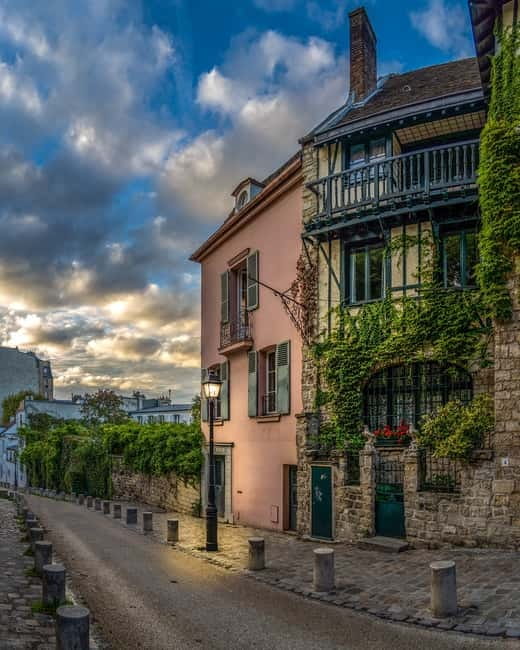
Maison Rose is one of Montmartre’s most photographed buildings, and the tour gives you time for both a picture and a break. Its pink exterior is instantly recognizable, but the stop becomes more worthwhile when it is placed within the wider story of the neighborhood.
After Maison Rose, the route turns toward less familiar corners. You may pass vineyards, quiet courtyards, old cabarets, and narrow passageways that are easy to miss if you follow only the main streets. The exact experience depends on the guide and the group’s pace, but this is where the walk moves beyond the standard postcard circuit.
This part also gives you breathing room. Montmartre can be crowded around its main attractions, yet nearby lanes may feel far more residential and personal. I would not expect total solitude, but you should see a side of the hill that is harder to find on a first visit without local direction.
The guide’s stories cover revolution, resistance, artists, singers, and eccentric characters. Names that may come up include Van Gogh, Dalí, Dalida, and Charles Aznavour. That range is one of the tour’s strengths. Montmartre is not presented as an art museum without walls. Music, nightlife, politics, and everyday Parisian life all form part of the story.
Place du Tertre, among the open-air artists
The walk ends at Place du Tertre, just steps from Sacré-Cœur. Artists still work outdoors here, and the square remains one of the most recognizable places in Montmartre.
You get around 15 minutes for photographs at this final stop. The square can feel busy and commercial, so it helps to know what you are seeing. It is not a preserved artist’s village untouched by tourism. It is a working public space shaped by visitors, portrait artists, restaurants, and long-running Montmartre traditions.
The guide’s final tips for visiting Sacré-Cœur on your own are practical. Since you are already near the basilica, you can continue there without arranging another transfer. You may also prefer to pause for food or a drink before visiting the church, though food is not included in the tour.
The listed meeting information says the activity ends back at the meeting point, while the route description places the final stop at Place du Tertre. Plan around the clearly stated end area near Sacré-Cœur, and confirm the exact finish with your guide if you have a timed reservation afterward.
The guides make or break this experience
The strongest praise is aimed at the guides, especially Yazid and Sylvia. Yazid is described as energetic, warm, and highly engaged, with stories ranging from Picasso and Van Gogh to Dalida and Aznavour. He has also used music, photographs, and small playful details to keep the group involved.
One memorable touch connected a Chupa Chups lollipop to its logo, designed by Dalí. That sort of detail tells you what the best version of this tour feels like: less like a formal lecture and more like a local enthusiast showing you why the neighborhood matters.
Sylvia is praised for her clear English, friendly manner, entertaining facts, and steady pace. Jean Baptiste is also described as well educated, easy to talk to, and skilled at encouraging the group to see Montmartre from a Parisian point of view.
Guide assignments can change, so you should not book solely because you hope for one named guide. Still, the repeated emphasis on passion, humor, and personal storytelling is a good sign. The local guide is the central value of the experience, not skip-the-line access or a special attraction ticket.
Family pictures are included, with the guide taking photographs at different points. That is useful for couples and families who want more than group selfies, though the quality and timing will naturally depend on the guide and the group.
What the $34 price gets you

At $34 per person, this is reasonably priced for a 140-minute guided walk in one of Paris’s most visited districts. You are paying for a live English-speaking guide, a planned route, local context, and the convenience of finding places that you might otherwise pass without understanding.
The price does not include food, drinks, entry to Sacré-Cœur, or other paid attractions. That keeps the base cost simple, but you should budget separately if you want lunch, a café stop, or anything from the artists’ square.
I would consider this good value if Montmartre is new to you, or if you have visited before but only followed the main route to the basilica. It is less compelling for someone who wants a private tour, a museum visit, or a short photo walk with very little explanation.
The reserve-now-and-pay-later option also helps if your Paris schedule is still taking shape. Free cancellation is available up to 24 hours before the start for a full refund. Check the exact start time when booking, since several departure times may be offered.
Who will enjoy this walk most
This tour suits you best if you:
- Want Montmartre explained through art, music, and local stories
- Prefer walking to a bus or large coach tour
- Enjoy guides who talk with energy and personality
- Are visiting the district for the first time
- Want a family-friendly activity with photographs included
- Plan to visit Sacré-Cœur after the guided route
Photographers should find plenty to work with, from the basilica panorama to Maison Rose, the Wall of Love, Moulin de la Galette, and Place du Tertre. Culture lovers will appreciate the links between artists, singers, cabarets, and political events.
This is not the right choice if you use a wheelchair or have a mobility impairment. The route includes cobbled streets and hill walking, and the activity is specifically marked as unsuitable for those needs. Anyone with limited stamina should also think carefully before booking, even though one guide was praised for keeping the pace manageable with rest periods.
Practical advice for a smoother morning or afternoon
Wear shoes with good grip and enough support for uneven streets. Comfortable clothing matters too, since the tour lasts more than two hours and includes outdoor stops.
Bring cash. Food is not included, and cash may be useful for small purchases during or after the walk. Oversize luggage is not allowed, so leave large bags at your accommodation or make another storage plan.
Arrive with your phone charged if you want to take pictures. The guide also takes family photographs, but you will want your own camera ready at the Wall of Love, Moulin de la Galette, Maison Rose, and Place du Tertre.
Do not schedule the tour too close to a museum entry, meal reservation, or train departure. The stated duration is 140 minutes, but a particularly enthusiastic guide may spend longer answering questions or telling stories. Give yourself a comfortable buffer.
Should you book this Montmartre tour?
I would book it if you want Montmartre to feel like a real neighborhood rather than a set of famous photo spots. The combination of Bateau-Lavoir, Moulin de la Galette, Maison Rose, Place du Tertre, and the quieter lanes gives you a well-shaped introduction to the hill.
The biggest reason to choose it is the guide-led storytelling. Guides such as Yazid, Sylvia, and Jean Baptiste have been praised for energy, humor, clear English, and strong knowledge of art, music, and local history. That personal touch is what turns a familiar route into a worthwhile one.
Skip it if you need step-free access, dislike extended walking, or prefer to explore silently at your own speed. Otherwise, $34 is a sensible price for a small-group orientation, and the finish near Sacré-Cœur makes it easy to continue your own Paris afternoon.
FAQ
How long does the Montmartre walking tour last?
The tour lasts 140 minutes, or about two hours and 20 minutes. Check availability for the exact starting time.
What language is the tour offered in?
The live guided tour is offered in English.
Where does the tour start?
It starts at Place Saint-Pierre. Look for Paris Tours Experiences near the carrousel, where the guide will be waiting.
Where does the tour visit?
The route includes the Wall of Love, Bateau-Lavoir, Moulin de la Galette, Maison Rose, and Place du Tertre. It also passes vineyards, courtyards, old cabarets, and passageways in Montmartre.
Is Sacré-Cœur included inside the tour?
The guided walk starts beneath Sacré-Cœur and ends near the basilica, but an interior visit is not included. The guide provides tips so you can visit it independently afterward.
Is the tour suitable for children?
Yes. The walk is described as adapted for kids. Keep in mind that it lasts 140 minutes and includes walking on cobbled streets.
Is the tour suitable for wheelchair users?
No. The activity is listed as unsuitable for wheelchair users and people with mobility impairments. Comfortable shoes and clothes are recommended for everyone taking part.
Recently added around Paris
- Private Half-Day Guided Tour of Paris★ 4.5 · 48 reviews
- 2 hour outdoor group activity in Paris: SAINT GERMAIN★ 5.0 · 48 reviews
- Paris Dinner Show Opera Bel Canto★ 4.5 · 48 reviews
- Paris Vintage Tour by Night on a Sidecar with Champagne★ 5.0 · 48 reviews
- Secrets & Scandals of the Louvre – Limited to 6 Guests★ 5.0 · 48 reviews
- Paris Photoshoot: Eiffel Tower Exclusive Private Experience★ 5.0 · 48 reviews
- From Paris: Versailles Full-Day Guided Tour with Lunch★ 4.9 · 48 reviews
- Paris: Louvre Mona Lisa Discovery Guided Tour with Ticket★ 4.9 · 48 reviews
Montmartre & Sacré-Cœur Tours, compared.

Montmartre Hidden Gems and Scenic Highlights Walking Tour
Read our review →
Montmartre Hill French Gourmet Food and Wine Tasting Walking Tour
Read our review →
Paris: Montmartre Cheese, Wine & Pastry Guided Walking Tour
Read our review →
Paris: Sacré-Coeur and Montmartre Tour with Expert Guide
Read our review →
Private Montmartre Food Tour with Wine, Cheese & Pastries
Read our review →
Paris Montmartre Food Tour – A Full French Meal by Do Eat Better
Read our review →
Hidden Montmartre: Paris’ Secret Streets Walking Tour
Read our review →
Paris Montmartre Food & Wine Tour with Eating Europe
Read our review →Browse the lists this tour appears in