
Reviewed · EIFFEL TOWER TICKETS & TOURS
Paris Baking Insider Experience near Eiffel Tower
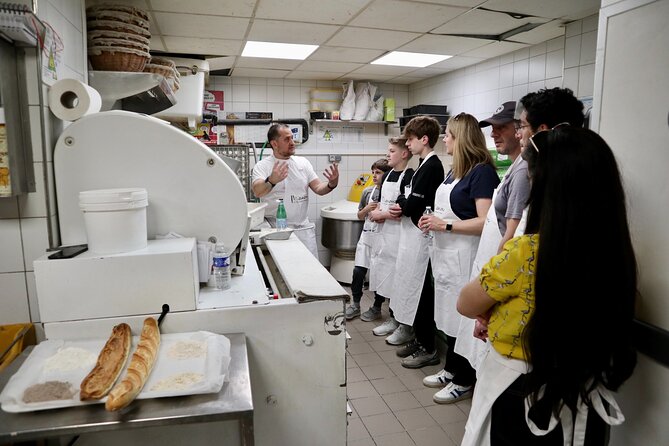
Fresh bread makes a fine Paris souvenir. This two-hour baking class puts you inside a working boulangerie, where you learn baguette shaping, pastry techniques, and the basics of French baking from an expert instructor. I like the small maximum of eight people and the generous tastings, plus the chance to take home bread and sweets. The main caution is that the workspace can feel tight, and some croissant preparation may already be done for you.
I also like the cultural side of the lesson. You learn why French bakers use different flours, how yeast compares with sourdough, and how to tell one baguette from another. Instructors such as Nisha, Jess, Candice, Rachel, Priya, and Pierre have been praised for making the class friendly and easy to follow, though the experience can be less satisfying if you expect to make every pastry completely from raw ingredients.
In This Review
- Quick takeaways from the Paris bakery class
- Entering a working bakery near the Eiffel Tower
- Starting with pastries, coffee, and French baking basics
- Shaping baguettes by hand
- Rolling croissants and learning lamination
- Making financiers and taking treats home
- The instructors make a major difference
- Why eight people may feel like too many
- Is $108.84 a fair price?
- Families, children, and practical comfort
- Who should book this baking experience?
- Should you book the Paris Baking Insider Experience?
- FAQ
- How long does the Paris Baking Insider Experience last?
- How much does the experience cost?
- Where does the experience start?
- Where does the activity end?
- How many people can join the class?
- Is the experience offered in English?
- What will I learn to make?
- Are children allowed to join?
- Is the bakery accessible by elevator?
- Can I cancel for a full refund?
Quick takeaways from the Paris bakery class

- A real working boulangerie: You learn in the back of an operating bakery, with the daily work of professional bakers happening around you.
- Baguette skills are the highlight: Shaping, scoring, and understanding the difference between classic and traditional baguettes give the lesson its strongest practical value.
- Croissants are partly hands-on: You learn lamination and roll prepared dough, but you may not make the full croissant process from start to finish.
- Small groups help: The class accepts no more than eight people, although eight can still feel crowded around the work counter.
- Plenty to taste and carry home: Plan for bread, croissants, financiers, and other treats, so bring an appetite and leave room in your bag.
- Plan for stairs and standing: The bakery is up 15 steps on the second floor, with no elevator, and much of the two-hour lesson takes place on your feet.
Entering a working bakery near the Eiffel Tower
The meeting point is at 31 Rue de l’Annonciation in Paris. The bakery is near public transportation, and the activity returns to this same location, so you do not need to arrange a separate pickup or find your way to another neighborhood afterward.
What makes the setting useful is that this is not simply a polished demonstration in a hotel kitchen. You see the back of a working bakery, with staff preparing bread and pastries as part of their normal routine. That gives the class a practical feel. You are not just hearing about French baking traditions. You are seeing the pace, tools, and small details that help explain why bakery work takes so much time.
I would arrive with enough time to locate the bakery and settle in. The class lasts about two hours, but the time passes quickly once you start handling dough. Some sessions have been nearly private when only one person booked, while others have reached the eight-person limit. That difference matters: a tiny group allows more direct help, while a full group may require patience at the counter.
More Eiffel Tower tickets and tours:
- Paris: Eiffel Tower Entry Ticket with Optional Summit Access
★ 4.4 · 20,035 reviews - Paris: Eiffel Tower Summit or Second Floor Access
★ 4.3 · 17,248 reviews - Paris: Eiffel Tower Summit or Second Floor Access
★ 4.4 · 16,088 reviews
Starting with pastries, coffee, and French baking basics
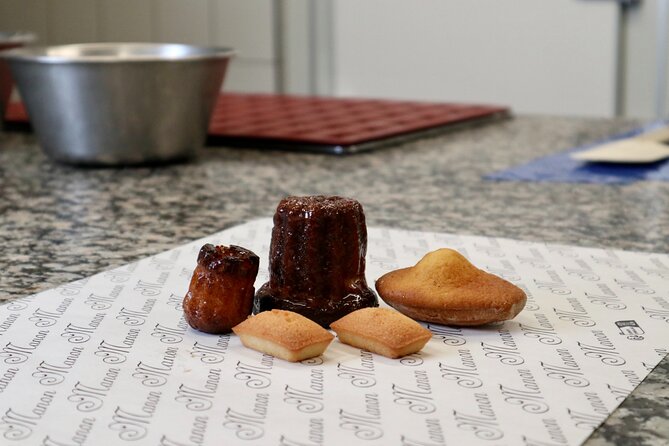
The lesson may begin with a drink and a sampling of pastries. This is a smart way to start. You taste the finished products before working with the ingredients, which helps you notice texture, flavor, crust, and the buttery layers that you will later try to reproduce.
The instructor then explains the building blocks of French baking. You learn about bread flours, yeast, sourdough, and the role each ingredient plays. These details are not filler. Flour choice changes how dough feels and how bread develops, while yeast and sourdough affect flavor, rise, and timing.
The class also explains French bakery language and traditions. You may hear about the difference between a classic baguette and a traditional baguette, along with the standards and shaping choices that separate one loaf from another. This is especially helpful if you spend time in Paris bakeries and want to look beyond the simple label of baguette.
I appreciate that the teaching connects technique with culture. The instructors have shared stories about French bread, pastry, and bakery customs, and several have also explained the history behind the food. That gives the class more purpose than a short cooking demonstration. You leave with a better idea of why bread matters so much in everyday French life.
Shaping baguettes by hand
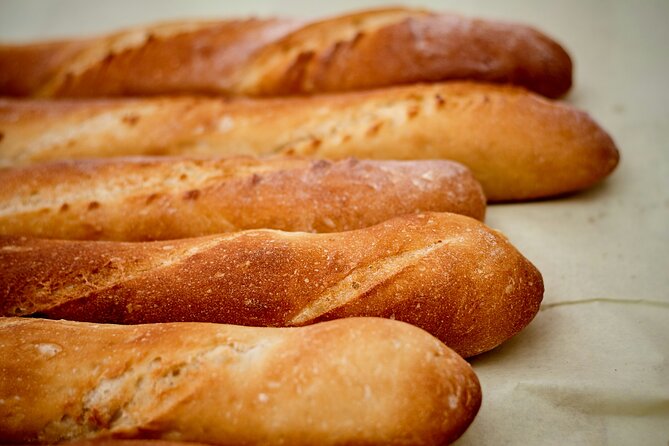
The baguette portion is the strongest part of the experience for many people. You learn how to handle and shape the dough, rather than simply watching a baker produce a perfect loaf. One of the useful lessons is that a baguette requires more care than its simple appearance suggests.
You may work through rolling, shaping, and preparing the loaves for baking. The guide can correct your technique and explain how pressure changes the final shape. You also learn about scoring, the cuts made across the top of the dough before it enters the oven. These cuts are practical, not just decorative, since they help control how the loaf expands.
The results will not necessarily look as neat as the bakery’s own baguettes. That is part of the fun. Professional bakers repeat these movements every day, while you are learning them in a single session. The useful takeaway is not perfection. It is understanding how dough should feel and how a few small choices affect the finished loaf.
The tasting makes the lesson worthwhile. You can compare your bread with the bakery’s work and notice the differences in shape, crust, and presentation. Several participants have said the baguettes they made tasted excellent, even when the professional loaves looked more polished.
Rolling croissants and learning lamination
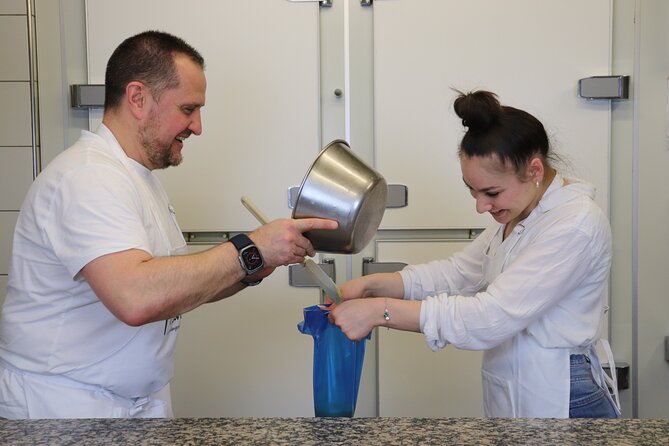
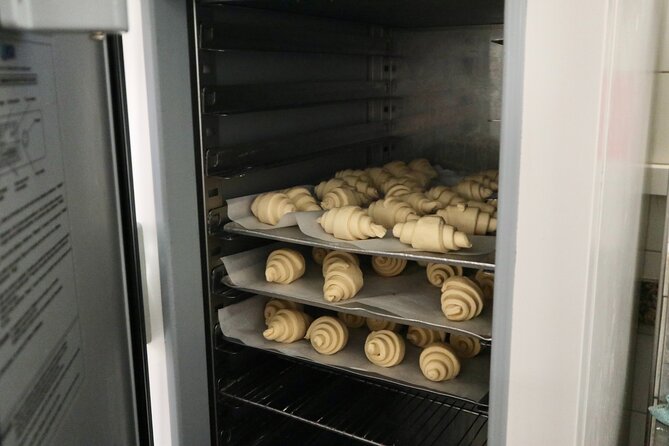
Croissant work is included, but you should set realistic expectations. The class explains lamination, the process of folding butter into dough to create thin layers. You also learn how croissant dough puffs and why careful rolling matters.
However, the full process may not be completed from raw ingredients during the two-hour session. Some dough is prepared ahead of time, and your hands-on role can focus on rolling and shaping it. One instructor compared this part to working with ready-made crescent dough, while other participants found the explanation of the complex process useful and enjoyed shaping the croissants.
This is the biggest point to consider before booking. If your goal is to make croissants entirely from flour, butter, yeast, and water, this may not be a full pastry-school course. If your goal is to understand the method, practice rolling, and see how a working bakery handles production, it offers a useful introduction.
I see the advance preparation as a practical compromise. Proper laminated dough needs resting and chilling time, which cannot be compressed neatly into a short class. Preparing part of the dough leaves time for baguettes, cakes, tasting, and questions. Still, the experience should describe this clearly so you are not expecting an all-day pastry workshop.
More Cooking Classes in Paris:
- Paris: Montmartre Cheese, Wine & Pastry Guided Walking Tour
★ 4.8 · 2,255 reviews - Paris Cooking Class and Lunch with Wine plus Market Visit Option
★ 5.0 · 1,024 reviews - Paris Croissant Small-Group Baking Class with a Chef
★ 5.0 · 910 reviews - Paris: Macaron Class at Galeries Lafayette
★ 4.3 · 905 reviews
Making financiers and taking treats home
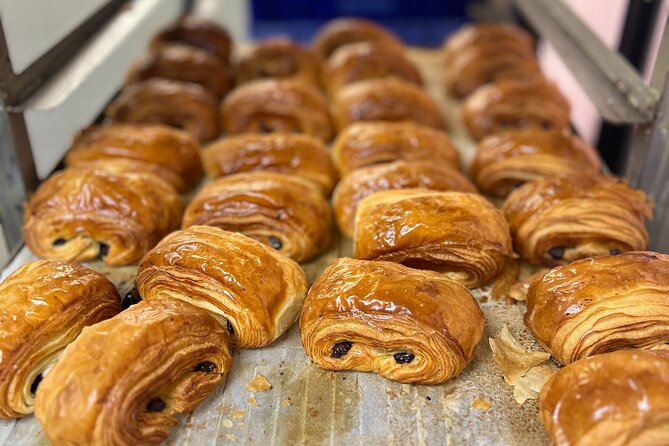
The class also includes financiers, small French cakes often made with ground almonds and browned butter. The activity gives you a chance to try a pastry that many visitors may recognize from a bakery counter but have never made themselves.
The financiers add variety to the lesson. Bread and croissants require handling dough, while these small cakes show a different side of French baking. They are also easy to share after the class, although you may receive more than two people can comfortably eat before the cakes lose their freshness.
You should plan your day around the food. Participants have left with baguettes, croissants, financiers, cookies, cakes, and other baked treats. That is a generous part of the experience, but it can become a storage problem if you have a full day of sightseeing ahead or limited room in your luggage.
I would schedule this class when you can return to your lodging afterward, or at least when you have a sensible way to carry the food. The treats are part of the value, not just a small sample at the end.
The instructors make a major difference
The class is led by an expert guide, and the instructor has a large effect on how useful the session feels. Nisha has been praised for being warm, entertaining, and clear, while Jess has been described as patient and especially good at explaining flour, baguette styles, croissants, and financiers.
Candice has received strong praise for working well with children and translating explanations between participants and the pastry chef. Rachel has been appreciated for balancing practical help with stories about baking. Priya has been noted for keeping a larger group organized, and Pierre for being personable and welcoming.
These names matter because the class depends on communication. The bakery space is active, and the instructor must explain techniques while managing several people around one counter. A good teacher keeps beginners involved without slowing the whole group.
The range of comments suggests a class suited to first-time bakers. You do not need professional skills, and the teaching style appears friendly rather than formal. If you already bake at an advanced level, you may find the basic explanations familiar, but the working-bakery setting can still offer useful context.
Why eight people may feel like too many
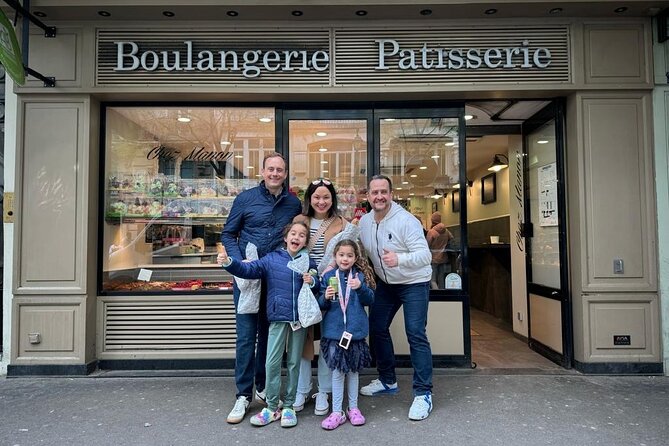
The maximum group size is eight. That is small compared with a large city tour, and it gives you a better chance to ask questions and receive direct guidance. Solo bookings may even feel like a private lesson.
Still, small does not always mean spacious. The work area is described as cozy, and one participant found eight people crowded around a counter that was not large enough for everyone to work comfortably. Another person felt the bakery became an obstacle course when moving around.
I would treat six people as the comfortable ideal, with eight still workable if everyone shares the counter and follows instructions. Families should be aware that children may need extra supervision in a compact working area. The maximum group size is not a reason to reject the class, but it is a reason to avoid expecting a roomy cooking studio.
Is $108.84 a fair price?
At $108.84 per person, this is not a cheap bakery visit. You can buy an excellent baguette and pastry in Paris for far less. The price needs to be judged against the access and instruction, not the food alone.
You are paying for about two hours with an expert guide, hands-on work, tastings, cultural explanation, and a substantial amount of baked food to take home. You also get to see a working bakery from the inside, which is harder to arrange on your own. For a family or couple that wants a shared activity, that can make the cost reasonable.
The value is strongest if you care about how French bread is made. I would consider it a good use of money for curious beginners, families, and people who enjoy food experiences more than standard sightseeing. It is weaker value if you mainly want to eat pastries, or if you expect a complete professional baking course with every dough made from scratch.
The 97 percent recommendation rate and 4.9 rating from 111 ratings point to a very reliable experience overall. The small number of negative comments are useful because they identify the real risks: a tight space, prepared croissant dough, and more baked goods than you may be able to eat quickly.
Families, children, and practical comfort
Children are allowed when accompanied by an adult. Children under five can attend free, but they cannot take part in the hands-on baking because of safety concerns. That makes the activity possible for families with young children, though the youngest children will mainly watch and taste.
Families with older children and teenagers seem especially well matched to the class. A 15-year-old interested in becoming a professional baker found value in seeing the inner workings of a bakery and speaking with the pastry chef. Parents also appreciated instructors such as Candice and Nisha for involving children and explaining the work patiently.
You need to stand for an extended period. The bakery is on the second floor, reached by 15 steps, and there is no elevator. Service animals are allowed, but the compact work area may still be a practical consideration for anyone who needs more room to move.
Bring an appetite, comfortable footwear, and a plan for carrying food. The experience is offered in English, and you receive confirmation when you book. Free cancellation is available until 24 hours before the start time. Changes or cancellations inside that window are not accepted for a refund.
Who should book this baking experience?
I would choose this class if you want an active food experience rather than a passive tasting. You will handle dough, ask questions, learn bakery vocabulary, and see how a French boulangerie operates behind the counter.
It suits:
- Families with school-age children or teenagers
- Couples looking for a shared Paris activity
- Beginner bakers who want clear instruction
- People interested in French food traditions
- Solo visitors who enjoy small-group classes
- Anyone with room in a suitcase for bread and pastries
I would hesitate if you need a spacious, accessible kitchen, dislike standing, or want to make every item entirely from raw ingredients. The croissant work is more of a guided shaping and lamination lesson than a complete pastry production course.
Should you book the Paris Baking Insider Experience?
Book it if you want to understand French baking through your hands, not just your taste buds. The baguette lesson, working bakery setting, helpful instructors, and take-home treats give the experience real substance.
Go in knowing that the bakery is compact and that some pastry dough is prepared before you arrive. For me, those limits are acceptable because they allow the class to cover bread, croissants, financiers, tasting, and French baking culture in only two hours. If you want a relaxed, friendly introduction to the daily craft of a Parisian boulangerie, this is a strong pick near the Eiffel Tower area.
FAQ
How long does the Paris Baking Insider Experience last?
The experience lasts approximately two hours.
How much does the experience cost?
The listed price is $108.84 per person.
Where does the experience start?
It starts at 31 Rue de l’Annonciation, 75016 Paris, France.
Where does the activity end?
The activity ends back at the meeting point.
How many people can join the class?
The maximum group size is eight participants.
Is the experience offered in English?
Yes. The experience is offered in English.
What will I learn to make?
You learn techniques related to baguettes, croissants, puff pastry, and financiers. The class includes dough handling, baguette shaping, and lamination instruction.
Are children allowed to join?
Yes. Children may join when accompanied by an adult. Children under five can attend free, but they cannot take part in the hands-on baking for safety reasons.
Is the bakery accessible by elevator?
No. The bakery is on the second floor, reached by 15 steps, and there is no elevator.
Can I cancel for a full refund?
Yes. You can cancel at least 24 hours before the local start time for a full refund. Cancellations or changes made less than 24 hours before the start time are not refunded or accepted.
Recently added around Paris
- Private Half-Day Guided Tour of Paris★ 4.5 · 48 reviews
- 2 hour outdoor group activity in Paris: SAINT GERMAIN★ 5.0 · 48 reviews
- Paris Dinner Show Opera Bel Canto★ 4.5 · 48 reviews
- Paris Vintage Tour by Night on a Sidecar with Champagne★ 5.0 · 48 reviews
- Paris Photoshoot: Eiffel Tower Exclusive Private Experience★ 5.0 · 48 reviews
- Secrets & Scandals of the Louvre – Limited to 6 Guests★ 5.0 · 48 reviews
- Paris: Louvre Mona Lisa Discovery Guided Tour with Ticket★ 4.9 · 48 reviews
- From Paris: Versailles Full-Day Guided Tour with Lunch★ 4.9 · 48 reviews
Eiffel Tower Tickets & Tours, compared.

Paris: Eiffel Tower Entry Ticket with Optional Summit Access
Read our review →
Paris: Eiffel Tower Summit or Second Floor Access
Read our review →Paris: Eiffel Tower Summit or Second Floor Access
Read our review →
Paris: Seine Cruise & Crepe Tasting near the Eiffel Tower
Read our review →
Paris: Eiffel Tower Stairs Climb to Level 2 & Summit Option
Read our review →
Paris: Eiffel Tower Access by Elevator & Seine River Cruise
Read our review →
Paris: Eiffel Tower 2nd Floor or Summit Access
Read our review →
Eiffel Tower Dedicated Reserved Access Top or 2nd floor by lift
Read our review →Browse the lists this tour appears in