
Reviewed · MUSEUMS
Paris Museum Pass: 2, 4, or 6 Days
Paris rewards the curious museum hopper. The Paris Museum Pass gives you entry to more than 60 museums and monuments, from the Louvre and Orsay to Versailles and Saint-Denis. I like the freedom to visit on a whim and the chance to pop into smaller museums you might otherwise skip. I also like the time saved at places such as the Arc de Triomphe and Musée d’Orsay. The catch is that several major sights still require reservations, and a pass does not guarantee entry to an overcrowded Louvre.
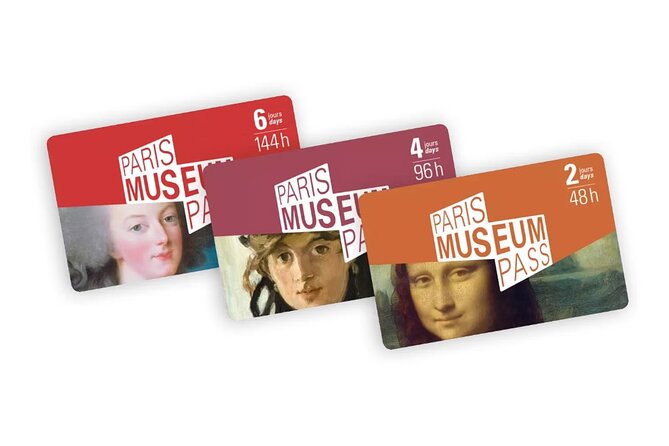
The pass costs $129 per person and comes in 2, 4, or 6 consecutive calendar-day versions. You collect the physical pass at an office about a 10-minute walk from the Louvre, open daily from 9:00 to 16:00. That pickup is easy enough, but a digital pass would be handier, especially when every Paris hour feels valuable.
In This Review
- Key points to know before you buy
- What the Paris Museum Pass actually gives you
- Picking the right two, four, or six days
- The Louvre requires planning, not optimism
- Orsay, Orangerie, and the best art pairing
- Sainte-Chapelle and the Île de la Cité
- Monuments that make the pass feel worthwhile
- Versailles and the out-of-town choices
- Where the value comes from
- The optional Seine cruise
- Pickup, reservations, and practical snags
- Who should buy it
- Final verdict: a useful pass for organized sightseers
- FAQ
- How many days is the Paris Museum Pass valid?
- Does the pass include the Louvre?
- Do I need reservations for other museums?
- Where do I collect the pass?
- Is the Seine river cruise included?
- Is the pass needed for children?
Key points to know before you buy
- More than 60 included sites: The list covers major museums, monuments, palaces, cathedrals, and several less-famous collections in Paris and beyond.
- Best for a full sightseeing schedule: You are most likely to make the pass pay off if you visit at least five paid museums or monuments.
- Reservations still matter: The Louvre, Orangerie, Sainte-Chapelle, Versailles, and other sites may require a free time slot before you arrive.
- The clock uses calendar days: Starting at 2:00 p.m. counts as your first day, so plan the first activation carefully.
- Priority entry has limits: It can shorten waits, but it is not a magic wand during the busiest summer periods.
- The Seine cruise is optional: It is included only with the option that specifically lists the river cruise.
What the Paris Museum Pass actually gives you
This is not a guided tour with a fixed route. It is a sightseeing pass that lets you build your own Paris program over two, four, or six days.
The pass covers permanent exhibitions at the participating museums and monuments. You show it at the relevant entrance, follow the site’s pass-holder instructions, and avoid buying a separate admission ticket each time. That simple routine is the main pleasure. You can spend an hour with Napoleon’s tomb, then change plans and visit the Rodin Museum without stopping to calculate another ticket.
The attraction list is unusually broad. It includes the obvious icons, such as the Louvre, Musée d’Orsay, Arc de Triomphe, Sainte-Chapelle, Panthéon, and Versailles. It also covers places you might not put on a first draft of your itinerary, including the Musée des Arts et Métiers, Musée Gustave Moreau, Musée de la Poste, the Paris sewer museum, and the archaeological crypt beneath Notre-Dame.
That range matters. Paris is not only a city of blockbuster paintings. It is also a city of science, engineering, decorative arts, medieval sculpture, fashion, architecture, military history, and urban life. The pass gives you permission to try something smaller without feeling that you have wasted another admission fee.
More Museum Tours in Paris:
- Paris: Louvre Museum Timed-Entrance Ticket
★ 4.6 · 71,977 reviews - Louvre Museum Masterpieces Guided Tour with Access
★ 4.5 · 12,023 reviews - Paris: Louvre Museum Entry Ticket With Host and River Cruise
★ 4.6 · 9,926 reviews
Picking the right two, four, or six days
The two-day pass suits a short visit with a clear plan. You could use it for the Louvre, Orsay, the Arc de Triomphe, Sainte-Chapelle, and one or two additional sites. This requires firm scheduling, especially if you want to include Versailles or another trip outside central Paris.
The four-day pass is the sensible middle choice for many visitors. It allows a little breathing room between large museums and gives you time for monuments such as the Panthéon, Saint-Denis, or the Conciergerie. Still, do not assume four days means four leisurely mornings. A popular Paris day can disappear quickly after one major museum, lunch, and a long walk.
The six-day pass is the best fit for a serious museum visit or a longer stay. You can group nearby sights, revisit an area at a slower pace, and make room for an out-of-town château. It also reduces the pressure to pack the Louvre, Orsay, Versailles, and several smaller museums into one exhausting sprint.
The days are consecutive calendar days. If you first use the pass at 2:00 p.m., that afternoon counts as day one. I would collect it before the first morning you plan to sightsee, then activate it when your schedule is ready. The office near the Louvre is open seven days a week from 9:00 to 16:00, so an early pickup can help you start promptly the next day.
The Louvre requires planning, not optimism

The Louvre is the pass’s biggest draw and its biggest warning sign.
You must reserve a Louvre time slot in advance. The reservation link is provided on your voucher. The pass covers admission, but it does not replace the reservation, and renovation work plus heavy crowds mean entry cannot be guaranteed.
That changes how you should think about the Louvre. Do not simply walk over after collecting the pass and expect to stroll inside. Reserve first, preferably before your Paris visit if slots are available. Once inside, the museum is so large that a short visit needs a narrow goal. The pass makes it easier to leave after seeing the rooms or works you most wanted, rather than forcing yourself to stay all day to justify a ticket.
The pass can save money here, but the time benefit depends on the reservation system and the crowd level. A timed individual ticket may sometimes move faster than a pass-holder queue. The pass remains useful, but you should treat it as an admission and access tool, not a guaranteed front-door shortcut.
Orsay, Orangerie, and the best art pairing
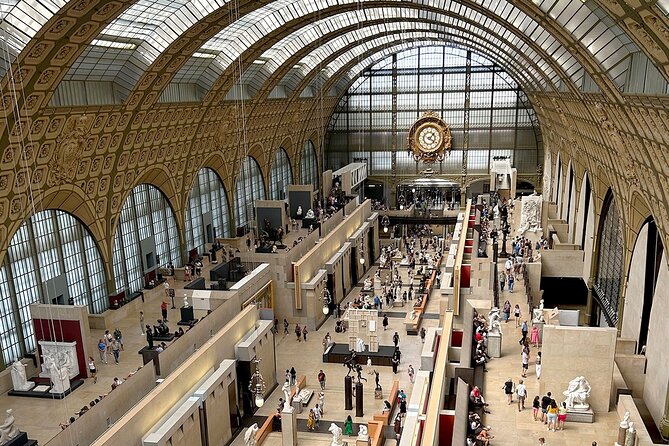
The Musée d’Orsay is one of the strongest reasons to consider the pass. Its converted railway-station setting and famous nineteenth-century collection make it a natural partner for the Louvre, and several people using the pass found the entry line much shorter than the ticket-buying queue.
In quiet periods, the priority arrangement can be a real time saver. In summer, conditions can change. A pass-holder line may still take around half an hour, sometimes outside in the sun, while visitors with timed tickets move more quickly. If Orsay is a top priority, check its current entry instructions and consider a timed ticket if that is offered.
The Musée de l’Orangerie is another excellent stop, especially for Monet’s large water-lily panels. Reservation is mandatory, even though admission is covered. This is the sort of detail that can trip up an otherwise well-planned visit. Reserve the time slot early, or you might have the pass in hand and no available visit during its valid dates.
Together, Orsay and Orangerie make a strong art-focused day, but they should not be treated as casual drop-ins during peak season. Put the reservation times into your schedule first, then fit smaller museums around them.
A few more Paris trips worth weighing up
- Disneyland® Paris 1-Day Ticket
★ 4.6 · 49,412 reviews - Paris: Versailles Palace and Gardens Full Access Ticket
★ 4.6 · 41,579 reviews - Paris: Evening River Cruise with Music
★ 4.4 · 22,721 reviews - Paris: Eiffel Tower Entry Ticket with Optional Summit Access
★ 4.4 · 20,035 reviews
Sainte-Chapelle and the Île de la Cité
Sainte-Chapelle is one of the most memorable included monuments, with its tall stained-glass windows and compact royal chapel interior. The pass covers admission, but it does not always provide a special short queue. One recent summer visit still involved a long wait.
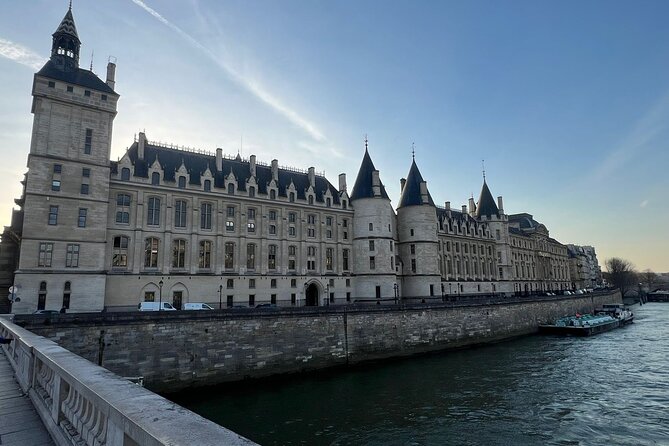
The nearby Conciergerie gives the Île de la Cité visit more historical weight. The former royal palace and prison is a very different experience from Sainte-Chapelle, and the two sites work well together geographically. The archaeological crypt beneath Notre-Dame and the Tours of Notre-Dame are also included in the Paris list, subject to their own operating rules and reservations where required.
Notre-Dame itself has drawn heavy demand, and even a pass may not remove every entry difficulty. I would schedule this area with extra time and avoid building a tight chain of appointments around it.
Monuments that make the pass feel worthwhile
The Arc de Triomphe is a particularly good pass stop. It is included, and the pass can let you bypass the ordinary ticket queue. The climb is part of the appeal, but the reward is the view down the radiating avenues of Paris. If you want a strong city panorama without paying another admission fee, this is one of the easiest wins.
The Panthéon offers a grand interior and a different kind of Paris story, focused on national figures and memory. The Musée de l’Armée and Napoleon’s tomb make a useful pairing for anyone interested in military history. The Musée Rodin offers sculpture and a more measured pace, while Musée Gustave Moreau gives you a smaller, more personal museum setting.
Other central options include the Musée Picasso Paris, Musée du quai Branly, Musée national d’Art moderne, Musée de la Monnaie, the Musée des Plans-reliefs, and the Musée national du Moyen Âge at Cluny. You will not see all of these in a short visit, nor should you try. The pass works best when you choose two or three anchor sights each day and use nearby smaller collections as flexible additions.
The Cité des Sciences et de l’Industrie, the Cinémathèque française, the Musée du Cinéma, and the Musée des Arts et Métiers give families and science-minded visitors more variety than a standard fine-art itinerary. The Paris sewer museum is an unusual choice, but it offers a look at the city from below street level, far from the usual postcard route.
Versailles and the out-of-town choices
The pass extends well beyond central Paris. Versailles is the headline excursion, and the Château de Versailles and Trianon estate are included. Plan this carefully. A time slot may be required, and the palace can assign later entry times when demand is high. Arriving without a reservation can turn a morning visit into a wait until mid-afternoon, or worse, a missed visit.
The gardens are a separate concern. The pass does not automatically cover every garden admission or special garden event, so check the current conditions before you count Versailles as a fully included day. One useful strategy is to reserve the palace first, then treat the gardens as an extra part of the day rather than assuming every area costs nothing.
Other out-of-town sites include Fontainebleau, Château de Vincennes, Château de Rambouillet, Château de Maisons-Laffitte, Château de Pierrefonds, Château d’Écouen, and the Basilica Cathedral of Saint-Denis. Villa Savoye, designed by Le Corbusier, gives the list a modern architectural stop.
You can also visit the Château de Chantilly and Musée Condé, the Château de Compiègne, Malmaison, the Musée national de la Céramique at Sèvres, and the Musée de l’Air et de l’Espace. These places make the six-day pass more appealing, but transportation and opening times become important. The pass covers admission, not the time or transport needed to reach every site.
Where the value comes from
At $129 per person, the pass is not automatically a bargain. Its value depends on how many included paid sites you visit and how much you value avoiding ticket queues.
A visitor focused only on the Louvre, one free church, and a walk along the Seine may spend less by buying individual tickets. A visitor who sees five or more museums and monuments can often reach a better balance, especially when the pass replaces several admissions and reduces time spent at ticket counters.
The strongest financial case comes from a planned run of major sites: the Louvre, Orsay, Arc de Triomphe, Sainte-Chapelle, Rodin, Panthéon, and perhaps Versailles. You do not need to race through every room, but you do need enough paid entries during the valid period.
There is also a less measurable benefit. The pass encourages you to visit a smaller museum for an hour because you have already paid for access. That flexibility can improve your trip even if the final calculation only breaks even. One visitor who did not recover the full ticket value still considered the pass worthwhile because of the queues avoided at Orsay and the Arc de Triomphe.
The two-day option demands the most efficiency. Four days gives you a better chance to recover the cost without treating Paris like an indoor obstacle course. Six days is strongest for a culture-heavy visit, but only if you have enough stamina and genuine interest in museums.
The optional Seine cruise
Some versions include a river cruise. It is a pleasant way to see Paris from the water, and an evening departure can give you good views of illuminated monuments.
The cruise is not part of every pass option, so confirm that it is selected before booking. The departure point can also be confusing because several boat companies operate along the Seine. Check the company name and exact meeting point on your voucher or app information rather than walking to the first pier you see.
You do not necessarily need to reserve the cruise ahead of time, though the available schedule can vary. It works well as a lower-effort activity after a museum-heavy day, and it gives your feet a break without abandoning sightseeing.
Pickup, reservations, and practical snags
The pass must be collected at the tour office near the Louvre. The location is convenient if the Louvre is your first major stop, and the office is open every day from 9:00 to 16:00. Still, going there takes time, so I would not leave pickup until a crowded sightseeing morning.
Keep the voucher accessible. It contains the Louvre reservation link and information for other sites that require time slots. The Orangerie, Museum of the Art and History of Judaism, Hôtel de la Marine, and Cité de l’architecture et du patrimoine require reservations. Versailles and Sainte-Chapelle have also required advance planning for many visits.
Reservation systems are not uniform. Some use different websites and forms, and country or phone-code fields can create problems for international visitors. Give yourself time to complete each booking, and do not assume that a pass alone is enough.
Children under 18 enter public museums free, and EU citizens under 26 also qualify for free public museum admission. They may still need a timed ticket. In those cases, buying a pass may not make financial sense, but you still need to arrange entry correctly.
Who should buy it
I would recommend the Paris Museum Pass to you if you enjoy art, architecture, military history, royal palaces, or simply visiting several paid sights in one trip. It is especially useful for four or six days, for first visits with a long must-see list, and for people who dislike standing at ticket windows.
I would be cautious if your Paris plan centers on only one or two museums, if you prefer long relaxed days with plenty of café time, or if your must-see list consists mainly of attractions not included in the pass. The Catacombs, for example, are not covered, so check your personal list before assuming every famous Paris sight is included.
Final verdict: a useful pass for organized sightseers
The Paris Museum Pass earns its keep through a mix of admission savings, queue savings, and freedom. Its best features are the broad choice of sites and the ability to move from one museum to another without buying another ticket each time.
It is not a cure for Paris crowds. Reserve the Louvre, Orangerie, Sainte-Chapelle, Versailles, and any other required time slots before you go. If you plan five or more included visits and can fit them into consecutive days, the $129 cost can be a sound purchase. If you want a slow Paris break, buy individual tickets instead.
FAQ
How many days is the Paris Museum Pass valid?
You can choose a pass valid for 2, 4, or 6 days. The days are consecutive calendar days, so using it for the first time at 2:00 p.m. counts as day one.
Does the pass include the Louvre?
Yes, admission to the Louvre is included. You must reserve a time slot in advance using the link provided on your voucher, and entry cannot be guaranteed during renovation work and periods of very high demand.
Do I need reservations for other museums?
Yes. Reservations are mandatory for the Orangerie Museum, Museum of the Art and History of Judaism, Hôtel de la Marine, and Cité de l’architecture et du patrimoine. Advance reservations may also be needed for sites such as Versailles and Sainte-Chapelle.
Where do I collect the pass?
You collect the physical pass at a tour office near the Louvre, about a 10-minute walk away. The office offers pickup and information services seven days a week from 9:00 to 16:00.
Is the Seine river cruise included?
The cruise is included only if you select the pass option that includes it. Check the boat company and departure point carefully because several companies operate on the Seine.
Is the pass needed for children?
Public museum admission is free for children under 18, and for EU citizens under 26. They may still need a ticket with a reserved time slot, even when no admission fee applies.
Recently added around Paris
- Private Half-Day Guided Tour of Paris★ 4.5 · 48 reviews
- 2 hour outdoor group activity in Paris: SAINT GERMAIN★ 5.0 · 48 reviews
- Paris Dinner Show Opera Bel Canto★ 4.5 · 48 reviews
- Paris Vintage Tour by Night on a Sidecar with Champagne★ 5.0 · 48 reviews
- Secrets & Scandals of the Louvre – Limited to 6 Guests★ 5.0 · 48 reviews
- Paris Photoshoot: Eiffel Tower Exclusive Private Experience★ 5.0 · 48 reviews
- From Paris: Versailles Full-Day Guided Tour with Lunch★ 4.9 · 48 reviews
- Paris: Louvre Mona Lisa Discovery Guided Tour with Ticket★ 4.9 · 48 reviews
Museums, compared.


Louvre Museum Masterpieces Guided Tour with Access
Read our review →
Paris: Louvre Museum Entry Ticket With Host and River Cruise
Read our review →
Les Invalides: Napoleon’s Tomb & Army Museum Entry
Read our review →
Louvre Museum – Exclusive Guided Tour (Entry Included)
Read our review →
Paris: Louvre Museum Hosted Entry and Mona Lisa Audioguide
Read our review →
Paris: Louvre Museum Tour Mona Lisa & Iconic Masterpieces
Read our review →
Louvre Museum: Skip-the-Line Small Group Guided Tour
Read our review →Browse the lists this tour appears in