Reviewed · PRIVATE
Paris WW2 The German Occupation Small group or Private tour
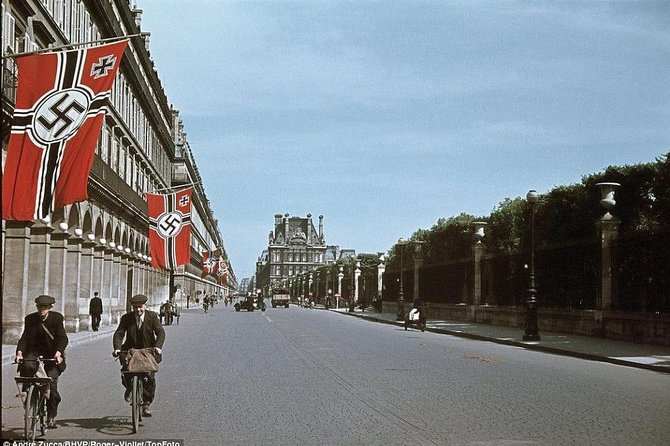
Paris still carries wartime scars. This three to four-hour walking tour with Chris Pollard uses the grand streets around the Louvre, Rue de Rivoli, Place Vendôme, and Place de la Concorde as a stage for stories of occupation, resistance, collaboration, and liberation. I especially like the guide’s use of photographs and books to put faces to the period, and I like that the route can slow down when your questions deserve a proper answer.
The small size, with no more than 10 people, gives the tour a personal feel. Chris is passionate, warm, and willing to adapt the discussion to your interests. The main drawback is that this is an intense outdoor history lesson, not a quick highlights walk. You may stand for long stretches, walk about two miles, and spend more than three hours on the subject, especially when the group is engaged.
In This Review
- Key points to know before booking
- Why this tour feels different from a standard Paris walk
- Starting at Palais Royal and the Louvre
- Rue de Rivoli and the machinery of occupation
- Place Vendôme, the Ritz, and Coco Chanel
- Secret networks on Rue Rouget de Lisle
- Jeu de Paume and the theft of art
- Place de la Concorde and the Liberation of Paris
- How the Holocaust is handled
- Small-group size and private options
- Price, timing, and physical demands
- Who will enjoy this tour most
- Should you book the Paris WWII Occupation tour?
- FAQ
- Where does the tour begin?
- Where does the general tour end?
- How long does the tour last?
- How many people can join?
- Is the Holocaust Memorial included?
- What happens if the tour is canceled?
Key points to know before booking
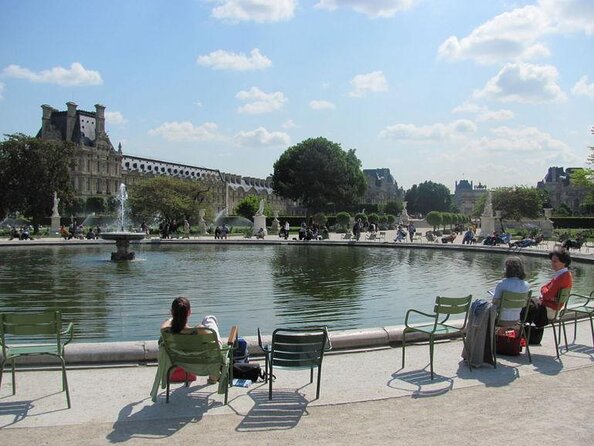
- Meet at Palais Royal, not Tuileries: The meeting point is Metro Palais Royal, Exit 5, on Place Colette, opposite the Comédie-Française.
- Follow the story through central Paris: The route generally runs from the Louvre and Palais-Royal area toward Place de la Concorde.
- Expect a flexible route: Sites may change depending on questions, weather, group interests, and how long the guide spends explaining a subject.
- See occupation sites hiding in plain sight: The route can include the Meurice, Ritz, Continental Hotel, Jeu de Paume, Rue Rouget de Lisle, and old Gestapo and collaborationist headquarters.
- The Holocaust is covered, but not as the main subject: A separate private Shoah tour is recommended if you want sustained attention to Jewish persecution and deportation.
- Minimum numbers matter: Small-group departures need at least four people, and the guide may cancel up to 24 hours before departure if that minimum is not reached.
Why this tour feels different from a standard Paris walk
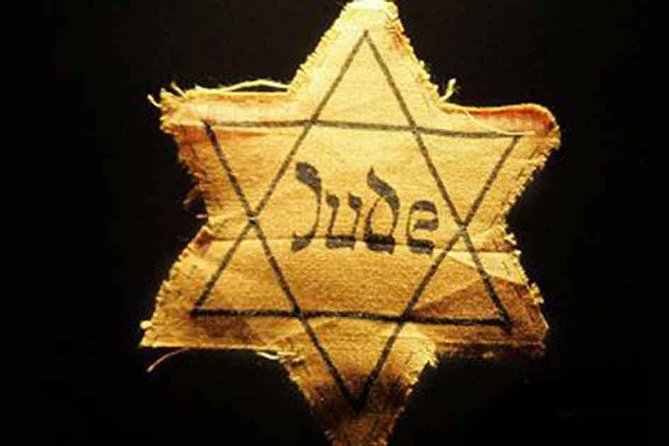
Many city walks move briskly from one famous building to the next. This one works differently. The buildings are evidence, but the people and their choices are the real subject.
You might pause at an ordinary doorway that once served as a secret headquarters, then move to a grand hotel where German officers worked, French officials negotiated, or resistance figures were interrogated. The guide connects those places to the political, military, economic, and social forces shaping life in France between 1940 and 1944.
That approach has a clear benefit: you get more than dates and labels. You begin to understand why collaboration took different forms, why resistance grew slowly, and why French memory of the occupation remained difficult for decades.
It also requires patience. The tour is not arranged as a perfectly tidy chronological presentation. A question about the French Resistance may lead into the Vichy government, which may lead into German policy, which may lead back to a particular person or building. If you like a guide who answers questions fully, this is a strength. If you prefer a tightly timed script, it may feel loose.
Chris uses visual material, including photographs and books, to support his explanations. That is especially useful when the modern street gives little clue about what happened there. The method is more like an outdoor seminar than a conventional sightseeing circuit.
A few more Paris trips worth weighing up
- Paris: Louvre Museum Timed-Entrance Ticket
★ 4.6 · 71,977 reviews - Disneyland® Paris 1-Day Ticket
★ 4.6 · 49,412 reviews - Paris: Versailles Palace and Gardens Full Access Ticket
★ 4.6 · 41,579 reviews
Starting at Palais Royal and the Louvre
Your meeting point is Place Colette, at Exit 5 of Palais Royal Metro, opposite the Comédie-Française. This correction matters because the Tuileries Metro station is sometimes given as the starting point, but that is not where this tour meets.
The opening section around Palais-Royal and the Louvre sets up the wider story. You learn about the political and military circumstances leading into the war, then about the German occupation of Paris and the divided loyalties that followed.
The Louvre is viewed from outside. Do not book this expecting museum admission or a gallery visit. Its importance here comes from the role of the surrounding district as a center of government, military administration, luxury hotels, commerce, and communication.
The guide may spend more or less time in this opening area depending on the group. That flexibility is intentional. A group already familiar with the basic war timeline may move faster and spend longer on lesser-known personalities or organizations. A group needing more background may receive a broader explanation before moving on.
Rue de Rivoli and the machinery of occupation
Rue de Rivoli and its neighboring streets contain some of the most useful stops for understanding how occupation worked in daily life. This is not only a story of soldiers and battles. It is also a story of offices, hotels, newspapers, police, business owners, and ordinary people trying to survive an authoritarian system.
The route can include the first secret Gestapo headquarters in Paris and the headquarters of the PPF, one of France’s largest collaborationist groups. These stops help show that German control depended not only on German personnel. French political factions and institutions also played important roles.
The Hôtel Meurice served as the German Army headquarters for Paris. The Continental Hotel was another important German-controlled hotel. At places like these, the guide explains how the occupation was organized and how elite Parisian spaces became part of the German command structure.
The subject can be uncomfortable, and that is one of the tour’s useful qualities. You are not given a simple story in which every French person resisted and every German was identical. The discussion examines divisions within French society, competing resistance organizations, and the different motives behind collaboration, accommodation, and opposition.
Place Vendôme, the Ritz, and Coco Chanel
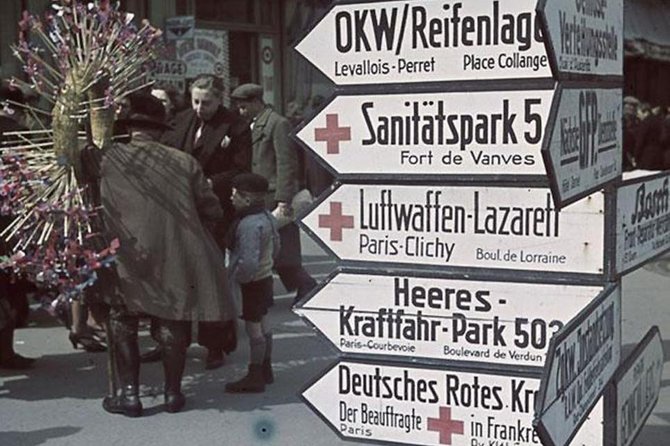
Place Vendôme brings together luxury, politics, espionage, and occupation. The Ritz hotel became associated with Coco Chanel, who stayed there during the war. It was also a meeting place connected with anti-Nazi figures within the German forces, while the guide discusses the arrival of the Final Solution in France.
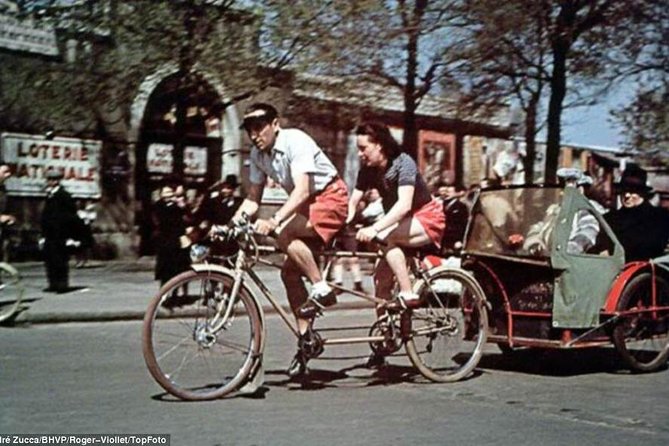
This stop illustrates why the tour focuses on people as much as buildings. The same hotel could be a fashionable address, a residence, a place of military contact, and a setting for political maneuvering. Parisian glamour did not disappear during the occupation, but it existed beside fear, rationing, surveillance, and persecution.
The Chanel story is not treated simply as celebrity trivia. It fits into the broader question of how prominent individuals behaved under occupation and how reputations were shaped after liberation. If you have a particular interest in Chanel or wartime Parisian society, tell Chris before the tour or ask about it during the walk.
A completely different sort of day in Paris:
- Paris: Evening River Cruise with Music
★ 4.4 · 22,721 reviews - Paris: Eiffel Tower Entry Ticket with Optional Summit Access
★ 4.4 · 20,035 reviews - Paris: Eiffel Tower Summit or Second Floor Access
★ 4.3 · 17,248 reviews - Paris: Louvre Guided Tour with Reserved Access & Boat Cruise
★ 4.3 · 16,353 reviews
Secret networks on Rue Rouget de Lisle
Rue Rouget de Lisle is linked with the beginnings of the organized French Resistance in October 1940. The route also includes the Société Maurice Duclos, described as a secret site connected with the first Allied spy network in France and its radio work.
These stops are valuable because they move the resistance story away from the familiar heroic snapshot. Resistance did not appear everywhere at once, and it was not one unified organization. It developed through small networks, secret communication, intelligence work, political disagreements, and considerable personal risk.
You will likely hear about the gap between public memory and what happened at the time. Early resistance activity was limited, fragmented, and dangerous. The conditions changed as German intentions became clearer and the occupation continued. That gradual development makes the history easier to understand than a simple list of famous names.
Jeu de Paume and the theft of art
The Jeu de Paume is one of the tour’s most distinctive stops. During the occupation, the Nazis used the building to store, process, and organize looted artworks before sending them to Germany.
This is a powerful reminder that occupation involved cultural theft as well as military control and human persecution. Artworks taken from Jewish families and collections were cataloged and moved through an administrative system. The building’s role gives you a concrete place to discuss how organized the plunder became.
You should note that the stop is normally an exterior explanation rather than a museum visit included in the tour price. The value comes from the guide’s account of what happened there and from the surrounding context.
Place de la Concorde and the Liberation of Paris
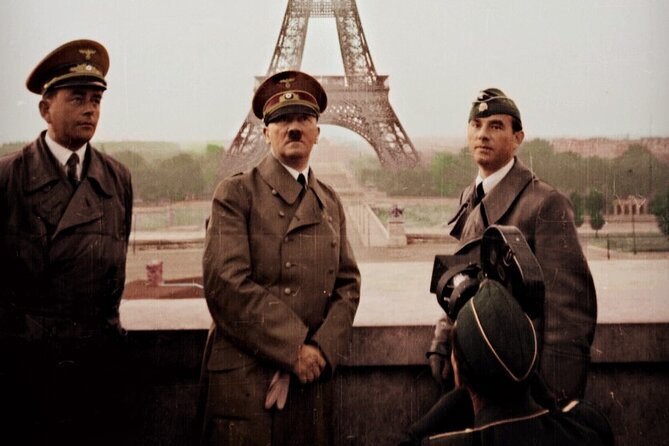
The walk generally ends around Place de la Concorde after roughly three to three and a half hours, though the exact timing can vary. The square is much more than a grand viewpoint for the Egyptian obelisk.
Originally called Place Louis XV, it was completed shortly before the French Revolution. Louis XVI and Marie Antoinette were later guillotined here. During the occupation and Liberation, the square and its surrounding buildings again became important.
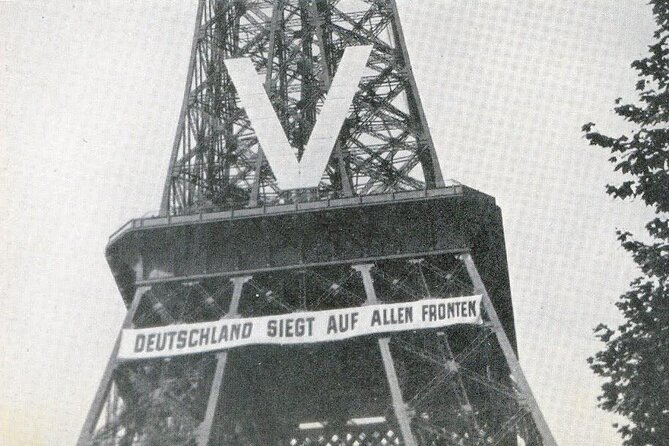
The Naval Ministry and Hôtel de Crillon were used as German headquarters. The Grand Palais, one of Paris’s largest free-standing buildings, was the only building in the city destroyed during the occupation and Liberation, according to the tour’s historical account. Bullet holes and less obvious scars from the fighting can still be discussed in the area.
This is a fitting endpoint because the story shifts from control to collapse. You see how a monumental Parisian setting was tied to both German authority and the struggle to liberate the city.
The tour ends in this area for the general group experience. It does not normally continue to the Shoah Memorial in the Marais. That is an important distinction from some broad descriptions of the tour.
How the Holocaust is handled
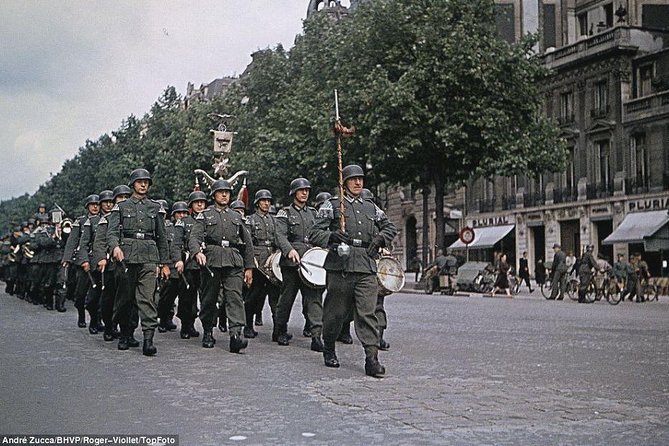
The general tour does cover anti-Semitism, the treatment of Jewish people in occupied Paris and France, the political climate that enabled persecution, and the process that led to implementation of the Final Solution in France in 1942. It also addresses Jewish participation in resistance activities.
But this is not a dedicated Holocaust tour. The guide is clear that the subject deserves more time than a general occupation walk can provide. If your main purpose is to study deportation, persecution, Jewish life, and the Shoah in France, ask about a private tour focused specifically on that subject.
A private Shoah tour can include the Marais and the Shoah Memorial when requested. Do not assume those stops are part of the standard small-group route.
Small-group size and private options
The general experience has a maximum of 10 people. Small groups make a real difference here because the guide encourages questions and adjusts the pace instead of delivering a fixed speech to a crowd.
The tour requires at least four participants to operate. This is the tradeoff for booking with an individual guide who keeps groups small. If a booking is made less than two weeks ahead, it will usually be accepted only when the minimum has already been reached or enough people are already booked.
The guide may cancel up to 24 hours before departure if late cancellations reduce the group below four. If that happens, you are offered another date, another experience, or a full refund. It is wise to keep some flexibility in your Paris schedule, especially when booking close to the date.
Private tours offer a more personalized route, flexible start times, and different meeting points. They are the better choice if you want to focus on the Shoah, the Resistance, the Liberation, Chanel, French colonial and foreign troops, or a particular family interest.
Price, timing, and physical demands
At $108.84 per person, this is not a bargain-priced orientation walk. I think the cost makes sense if you want several hours of serious, personal instruction from a specialist rather than a quick introduction to wartime Paris.
The price is easier to justify for people who already know the broad outline of World War II and want to understand France’s complicated position. You receive context, stories, visual material, and time for questions. A private version can offer more value for a family or small group with specific interests, since the content can be shaped around you.
Plan on about three to four hours. Some private tours have lasted around four hours, and the guide may continue longer when the group wants more detail. One useful tip is to tell Chris in advance how much time you have. He can adjust the depth and aim to finish closer to three hours if needed.
The physical side deserves honest attention. You may walk about two miles and stand for extended periods. Dress in layers, bring water, and wear comfortable shoes. Seating and café stops can be discussed, but they may reduce the time available for the historical route. This is an outdoor walking tour, and cold, wind, or rain can make it harder.
Most people can participate, and service animals are allowed. The experience is near public transportation, with the easy-to-find Palais Royal starting point and a different ending location near Place de la Concorde.
Who will enjoy this tour most
I would choose this tour if you:
- Want a serious look at occupation-era Paris rather than a general city introduction
- Enjoy asking questions and following complicated historical connections
- Are interested in the Resistance, collaboration, German administration, or the Liberation
- Prefer people-centered stories to a checklist of monuments
- Have teenagers or adults with a real interest in history
- Are willing to walk and stand outdoors for several hours
I would choose another experience if you want museum interiors, a short two-hour route, or a tightly scripted presentation with regular scheduled breaks. Families should also decide how much sustained historical discussion younger children can handle.
The subject includes anti-Semitism, persecution, collaboration, and war. It is presented as a serious study of choices and consequences, not as light sightseeing.
Should you book the Paris WWII Occupation tour?
Book it if you want to understand how occupation shaped Paris and France, and if you appreciate a guide who knows the subject well enough to follow your questions beyond the prepared route. Chris Pollard’s strongest quality is his ability to connect a hotel, a doorway, a secret network, and a political decision into one larger explanation.
Before booking, confirm the Palais Royal meeting point, allow at least three hours, prepare for outdoor walking, and check that four people are likely to be booked. If your priority is the Holocaust or the Marais, request a private Shoah-focused tour instead.
For history-minded visitors, this can be one of the more worthwhile uses of a half-day in Paris. You leave Place de la Concorde with fewer romantic illusions about the occupation and a much clearer sense of the people who lived through it.
FAQ
Where does the tour begin?
It begins at Palais Royal Metro, Exit 5, on Place Colette, opposite the Comédie-Française Theatre.
Where does the general tour end?
The general tour usually ends around Place de la Concorde. It does not normally finish at the Shoah Memorial or continue into the Marais.
How long does the tour last?
The tour generally takes about three to three and a half hours, with an approximate duration of three to four hours. Timing can vary according to questions, group interests, and the chosen route.
How many people can join?
The maximum is 10 participants. Small-group tours require a minimum of four people to operate.
Is the Holocaust Memorial included?
It is not normally included on the general group tour. A private Holocaust or Shoah-focused tour can be arranged with a personalized route that may include the Marais and the Shoah Memorial.
What happens if the tour is canceled?
If the guide cancels because the minimum number is not reached or because of poor weather, you are offered another date or a full refund. You can also cancel for a full refund if you do so at least 24 hours before the start time.
Recently added around Paris
- Private Half-Day Guided Tour of Paris★ 4.5 · 48 reviews
- 2 hour outdoor group activity in Paris: SAINT GERMAIN★ 5.0 · 48 reviews
- Paris Dinner Show Opera Bel Canto★ 4.5 · 48 reviews
- Paris Vintage Tour by Night on a Sidecar with Champagne★ 5.0 · 48 reviews
- Paris Photoshoot: Eiffel Tower Exclusive Private Experience★ 5.0 · 48 reviews
- Secrets & Scandals of the Louvre – Limited to 6 Guests★ 5.0 · 48 reviews
- From Paris: Versailles Full-Day Guided Tour with Lunch★ 4.9 · 48 reviews
- Paris: Louvre Mona Lisa Discovery Guided Tour with Ticket★ 4.9 · 48 reviews
Private, compared.

Top Private Cruises in Paris with French Champagne and surprises
Read our review →
Private Paris Airport Arrival Transfer – CDG & ORLY Airports
Read our review →
Paris Private Arrival Transfer from Charles de Gaulle (CDG) or Orly (ORY)
Read our review →
Private Montmartre Food Tour with Wine, Cheese & Pastries
Read our review →
Louvre Museum Timed Entry Ticket – Optional Private Guide
Read our review →