
Reviewed · MUSéE D'ORSAY TICKETS
The Musée d’Orsay Guided Tour Orsay Museum Semi-Private 6ppl Max
Paris rewards a good museum plan. This Musée d’Orsay tour makes sense if you want the former railway station’s great paintings explained in a clear sequence, rather than wandering through a large collection on your own. I especially like the small group of up to six and the chance to ask questions without shouting across a crowd. I also like the choice of morning, afternoon, or evening departures, which makes it easier to fit the museum around a busy Paris schedule.
The main consideration is price: at about $144.21 per person, this is not a bargain admission ticket. You are paying for a professional English-speaking guide, reserved entry, and a carefully planned two to two-and-a-half-hour route. The tour is also not suitable for wheelchair users or people with walking disabilities, and one booking note lists a maximum of eight people even though the experience is promoted as a maximum of six, so I would confirm the group size before paying.
In This Review
- Key points to know before booking
- Why the Musée d’Orsay works so well with a guide
- Entering the old railway station
- Manet and the shock of modern painting
- Millet, Renoir, and the changing view of everyday life
- Monet’s poppies and the Impressionist eye
- Degas, movement, and the performers behind the scene
- Van Gogh’s Bedroom in Arles and the later artists
- What the small group changes
- Is $144.21 good value?
- Timing, crowds, and practical limits
- Who should book this Orsay tour?
- Should you book the Musée d’Orsay guided tour?
- FAQ
- How long does the Musée d’Orsay guided tour last?
- What is the maximum group size?
- Is museum admission included?
- Is the tour offered in English?
- Does the tour include temporary exhibitions?
- Where does the tour begin and end?
- Can I bring a large suitcase into the museum?
- Can I cancel for a full refund?
Key points to know before booking
- Manet, Monet, Renoir, and Van Gogh in one focused visit: The route centers on major Impressionist and post-Impressionist works, while also showing the movements that came before and after.
- A genuinely small format: The advertised group limit is six people, allowing more questions and easier communication with the guide.
- Reserved museum entry is included: You may still face security checks or short lines, but you are not starting with the museum’s ordinary admission process.
- Guides shape the experience: Guides including Eduardo, Liliya, Christophe, Ivana, Daniel, and Beatrice have been praised for storytelling, pacing, and making art understandable to children and adults.
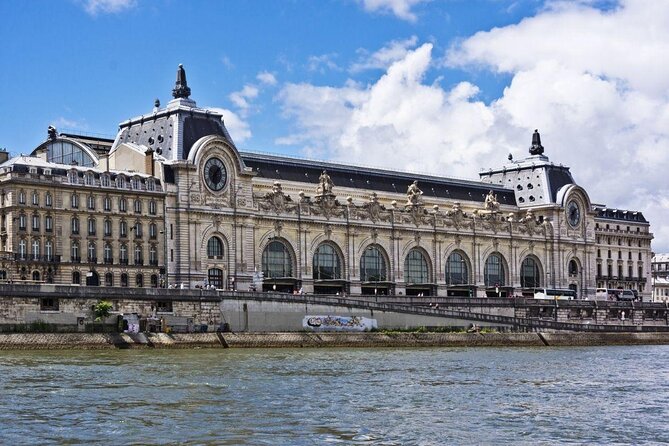
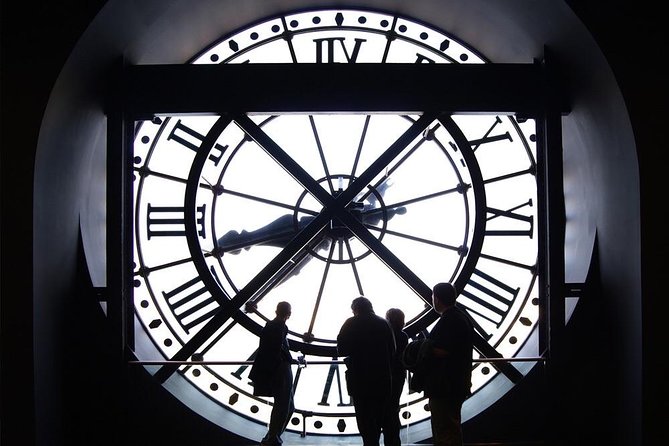
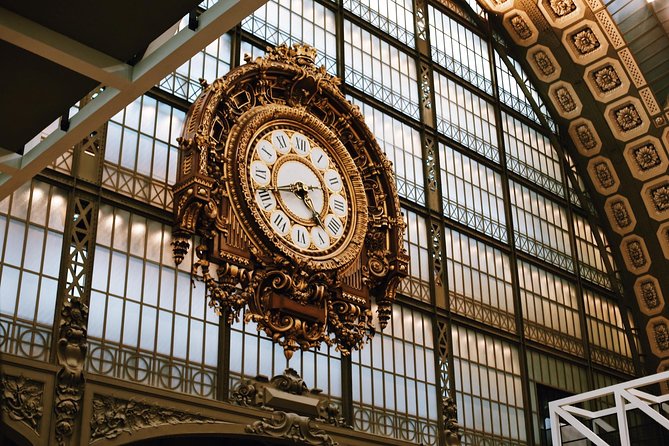
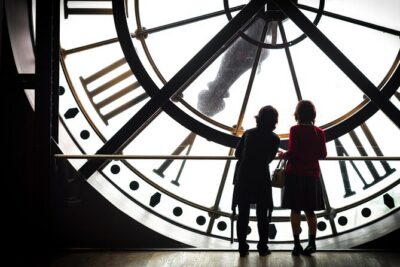
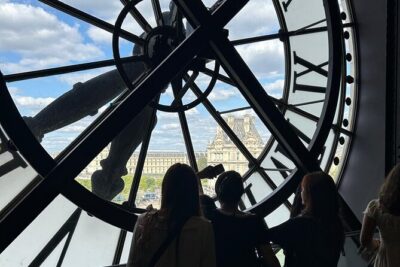
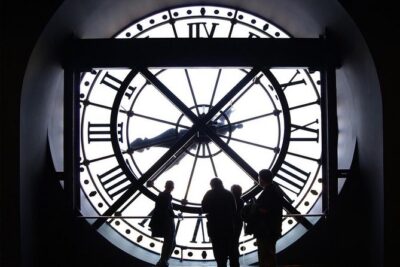
- The former train station is part of the visit: The Beaux-Arts building, its great clock, and its unusual proportions add character before you even reach the paintings.
- Allow two and a half hours, then stay if you wish: The guided portion is scheduled for 2.5 hours, and one guide left time at the end for independent viewing.
Why the Musée d’Orsay works so well with a guide
The Musée d’Orsay is one of Paris’s most satisfying museums, but it can also be confusing. The collection is spread through a grand former railway station, and the art makes more sense when you understand how one movement pushed against another.
This tour uses that development as its backbone. You begin with artists such as Jean-François Millet and his rural realism, then move toward Édouard Manet and the early Impressionists. From there, the route reaches Monet, Renoir, Degas, and their experiments with modern life, light, and quick brushwork. Van Gogh and other later artists show where those ideas could lead.
I like this structure because it prevents the usual museum problem: seeing famous paintings as isolated stars. You learn why a work caused a stir, what older rules it challenged, and how later painters changed the conversation again.
The tour is especially useful if art history is not your strong point. Several guides are praised for making difficult ideas plain, using stories about artists, rivalries, scandals, and technique rather than reciting dates. Liliya, Ivana, Hugo, Beatrice, and Florent are singled out for bringing the art to life through storytelling and a clear timeline.
You should not expect a full survey of every room. Two and a half hours is enough for a purposeful route, not every corner of the museum. That is a fair trade in Paris, where trying to see everything can leave you tired and unable to remember much.
More Musée d'Orsay tickets:
- Paris in a Day: Louvre or Orsay, Eiffel Tower, City Walk & Cruise
★ 5.0 · 1,956 reviews - Paris: Musée d’Orsay Skip-the-Line Tour with Expert Guide
★ 4.5 · 1,145 reviews - Musée d’Orsay Skip-the-Line Tour with Expert Guide
★ 4.8 · 1,088 reviews
Entering the old railway station
The Musée d’Orsay occupies a century-old train station, and the building gives the visit an immediate sense of place. Its Beaux-Arts design is broad, elegant, and far removed from the quiet white-box galleries found in many modern museums.
The former station setting also helps explain the museum’s appeal. You are not simply walking from room to room. You are moving through an architectural space built for public life, now filled with paintings and sculpture from the nineteenth and early twentieth centuries.
Your meeting point is outside or near the Musée d’Orsay at 75007 Paris. The activity ends back at the museum. Since hotel pickup and drop-off are not included, plan to reach the meeting point by taxi, Uber, or public transportation. The museum is near public transport, but the exact stop and route depend on where you are staying.
Give yourself extra time to arrive. The tour begins at a fixed meeting point, and you will need your mobile phone available because the provider requires a phone number with the country code. That may sound like a small administrative detail, but it matters if the guide needs to locate your party.
Reserved entry is included. This is helpful at a popular Paris museum, though it does not mean you will walk straight through every barrier. Security checks can still create a line, and the museum may occasionally close or delay opening without warning.
Large bags and suitcases are not allowed inside. Bring only a handbag or a small, thin backpack. This is one of the easiest ways to avoid a needless problem at the door.
Manet and the shock of modern painting
Édouard Manet’s Luncheon on the Grass is usually one of the early high points of the route. The painting is famous not only because of its composition, but because it challenged the polished conventions expected of respectable academic art.
A guide can help you see why the painting was so unsettling in its own time. The subject, the direct gaze, the sharp contrasts, and the way the figures occupy the scene all invite questions about what counted as a proper subject for serious painting.
This is where the tour’s historical sequence earns its fee. Instead of merely pointing out a famous canvas, the guide connects Manet to earlier traditions and explains how his approach opened a door for the Impressionists.
The order may vary depending on museum access, gallery conditions, or loans. The listed works are generally included when they are on display and not being restored, but no museum tour can guarantee that every named painting will be available on a particular day.
Millet, Renoir, and the changing view of everyday life
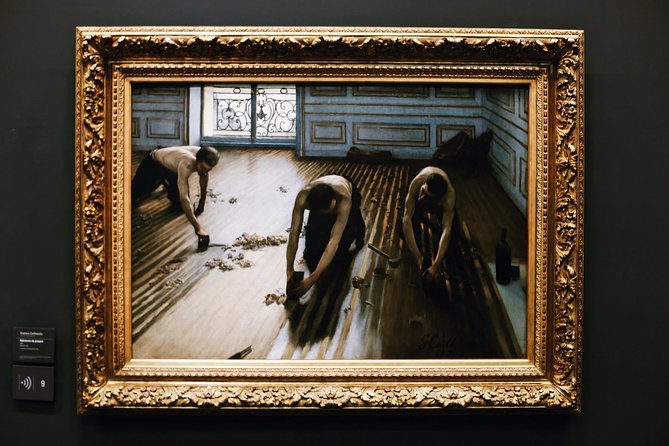
Millet’s The Gleaners gives you a different entry point into nineteenth-century art. Its rural workers and earthy setting focus attention on ordinary labor, a subject that carried social and political weight at the time.
The painting is useful in a guided visit because it helps you compare academic ideals with a growing interest in real people and daily life. You can begin to see how artists moved away from grand historical scenes and toward subjects found in fields, streets, cafés, theaters, and dance halls.
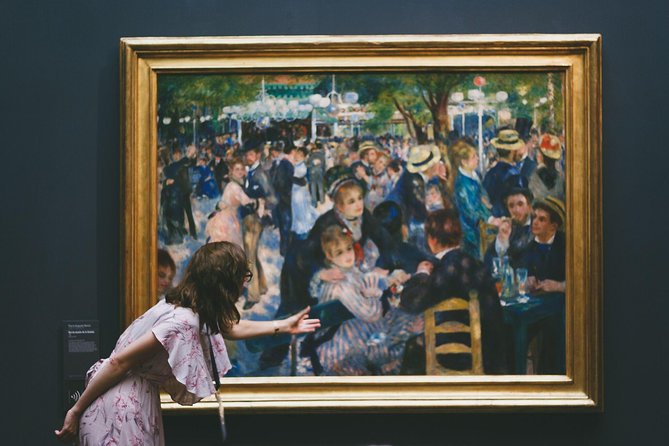
Renoir’s Dance at Le Moulin de la Galette then brings a very different energy. Rather than presenting a single isolated figure, Renoir shows a lively social gathering, with shifting light and a crowded arrangement of bodies.
Your guide may draw attention to the painting’s brushwork, movement, and sense of a particular Paris afternoon. The work does not look like a carefully staged historical scene. It feels immediate, and that immediacy was part of the Impressionist challenge.
This is also a good point to ask questions. In a group of six, you can ask why the paint looks loose, how the artist suggested light, or why a scene that appears casual required such careful planning.
More Museum Tours in Paris:
- Paris: Louvre Museum Timed-Entrance Ticket
★ 4.6 · 71,977 reviews - Louvre Museum Masterpieces Guided Tour with Access
★ 4.5 · 12,023 reviews - Paris: Louvre Museum Entry Ticket With Host and River Cruise
★ 4.6 · 9,926 reviews - Les Invalides: Napoleon’s Tomb & Army Museum Entry
★ 4.6 · 9,185 reviews
Monet’s poppies and the Impressionist eye
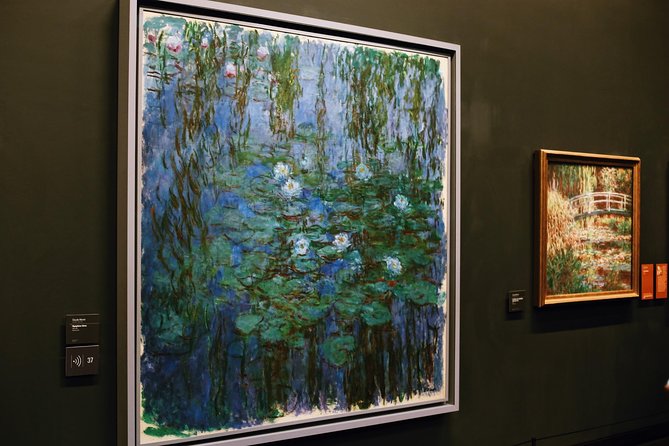
Monet’s Poppy Field is one of the most approachable paintings on the route. Its subject is simple, but the effect depends on color, repeated shapes, and the sensation of light across an open field.
The guide’s job here is not to tell you that the painting is pretty. It is to help you notice how Monet built the scene. You may look at the relationship between the red flowers and the softer tones behind them, the placement of the figures, and the way the work suggests a passing moment rather than a fixed view.
Monet’s water-lily paintings may also be included, depending on what is on display. These works are useful for understanding how his interest in changing light developed over time. They reward close looking, and a guide can help you avoid rushing past them because the subject seems familiar.
The museum’s Impressionist rooms can become crowded. One booking note specifically points out that the museum may be extra busy on Tuesdays because the Louvre is closed that day. If you have flexibility, keep that in mind when selecting a departure.
Degas, movement, and the performers behind the scene
Degas’s ballerinas bring another subject into focus: movement. His dancers are not always posed in the graceful, finished manner you might expect. Cropped bodies, unusual angles, and informal moments make the viewer feel like an observer catching a scene in progress.
This is an excellent place for a guide to explain composition. Degas was not simply painting pretty dancers. He was testing how modern life could be framed, almost as if the scene had been caught by a camera.
The tour can be a good choice for families because guides have had success keeping children and teenagers involved. Liliya is praised for explaining difficult art in a way that worked for children of different ages, while Christophe is noted for keeping a steady pace and answering questions from younger members of the group.
That said, the museum still requires walking and standing. The experience calls for a moderate level of physical fitness, and it is not available for people using wheelchairs or with walking disabilities. Families should also remember that the 2.5-hour format may be long for a child who has little interest in art.
Van Gogh’s Bedroom in Arles and the later artists
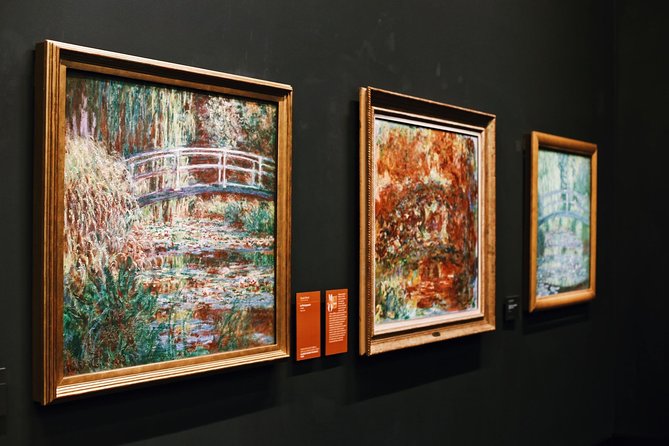
Vincent van Gogh’s Bedroom in Arles is often a memorable stop because it feels so personal. A guide can direct your attention to the compressed space, strong colors, simplified forms, and unusual perspective.
The painting offers a useful contrast with the earlier Impressionist works. Van Gogh shared the movement’s interest in color and perception, but his brushwork and emotional intensity pushed painting in another direction.
The tour may also include other post-Impressionist works and lesser-known pieces. The exact collection changes during the year, and some rooms may be closed or restricted. You might also encounter galleries where speaking must be kept very quiet. Guides provide instructions before entering those rooms.
I like having a guide at this stage because the art can be easy to reduce to a familiar name and a famous image. The better guides explain what you are actually looking at, including small details in a painting and the artistic choices behind them.
Several guides have been praised for this kind of close attention. One guide was described as an artist as well as an instructor, while another was valued for explaining both the broad period and minute details in individual works. That range matters: you get the big story without losing the painting itself.
What the small group changes
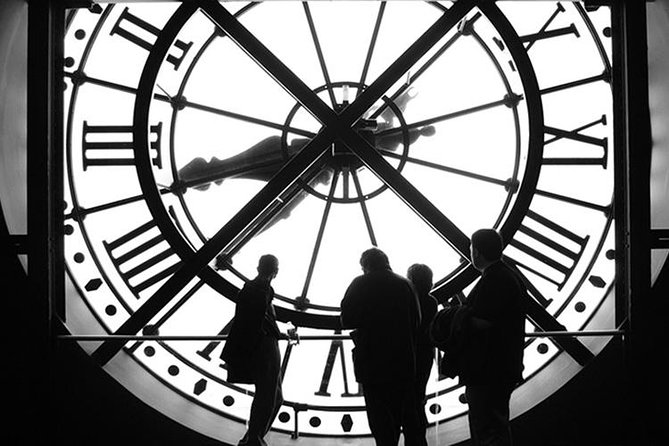
The phrase semi-private can be vague, but here it is defined as a group of no more than six people. That is the strongest feature of the experience.
In a large group, you may spend much of your time trying to hear the guide or waiting for everyone to gather. With six people, you can stand closer to the artwork, ask follow-up questions, and tell the guide when a particular painting interests you.
The small format also helps families. A guide can adjust the explanation when children are present, and can respond to different levels of interest without holding up a large crowd. Alexandra, Nancy, and Christophe are all praised for keeping people included and helping the group move at a comfortable pace.
The published information contains one inconsistency: the tour description repeatedly says six people maximum, while an additional note says eight. The final activity note again says six. I would treat six as the intended limit and confirm this before booking, especially if the difference affects your decision.
There is also a minimum of two participants. If that minimum is not met, the tour may be canceled and you will be offered another option or a full refund. One useful exception appears in the experience record: a guide still conducted a private-style visit for a person who was the only booking in that time slot. You should not assume that will always happen, but it is a positive sign about flexibility.
Is $144.21 good value?
At $144.21 per person, this tour costs far more than entering a museum alone. The value depends on what you need.
If you already know the Musée d’Orsay well and enjoy reading labels at your own pace, the price may feel high. You are paying for a timed, guided route through selected works rather than unlimited freedom from the start.
If this is your first visit, the cost is easier to justify. You receive reserved entry, a professional English-speaking guide, and a chronological explanation of the art. You also avoid spending your first hour figuring out the building and deciding which rooms matter most.
The small group is important to the calculation. A cheaper large-group tour may provide similar facts, but less opportunity to ask questions or adjust the pace. One three-star assessment found the smaller group appealing but felt the guiding quality did not fully justify the premium. That is the fair warning here: the format is excellent, but the final value depends heavily on your individual guide.
The strongest feedback centers on guides such as Eduardo, Liliya, Ivana, Daniel, Beatrice, Valerie, Achille, Ana, and Zdravko. Their praised qualities include clear explanations, humor, passion for art, good pacing, and the ability to make the paintings relatable. Guide assignment is not guaranteed, so book this for the format and structure, not for one particular name.
Timing, crowds, and practical limits
You can choose morning, afternoon, or evening departures. That flexibility is useful, but the best time depends on your day and tolerance for crowds.
An evening visit may suit you if you want to place the museum after other sightseeing. A morning tour can help you start with a focused activity before the city gets tiring. An afternoon departure may fit well between other central Paris plans, but leave enough time to cross the city and reach the meeting point.
The tour lasts about two to two-and-a-half hours, with the stated duration being 2.5 hours. The route ends at the meeting point, and you may have some time afterward to continue looking on your own.
No hotel transportation is included. You also pay gratuities separately if you choose to tip. Temporary exhibitions are not included, so you should not book this expecting access to every special show in the building.
The museum can occasionally close or delay opening without advance warning. If the opening is delayed by more than an hour, an alternative is offered, but the conditions state that refunds or discounts are not available in those circumstances. This is uncommon, but it is worth knowing before you build a tightly timed day around the visit.
Free cancellation is available up to 24 hours before the start time. Changes or cancellations inside that window are not refunded, and all cut-off times use Paris local time.
Who should book this Orsay tour?
I would recommend it to a first-time Paris visitor who wants to understand the Impressionists without taking a full art course. It is also a good match for couples, small families, and anyone who prefers conversation to a recorded audio guide.
You will get the most from it if you are curious about how art changes. The route is not just a parade of famous names. It moves from Millet and realism through Manet, Monet, Renoir, and Degas, then toward Van Gogh and later developments.
Families should consider the special kid-friendly option if it is available for their date. The standard tour can work well with children, but the walking time and quiet museum rooms may test younger attention spans.
I would hesitate if you need step-free access, use a wheelchair, dislike fixed schedules, or want to focus on temporary exhibitions. I would also think twice if you are comfortable navigating museums alone and are mainly looking for the lowest possible admission cost.
Should you book the Musée d’Orsay guided tour?
Book it if you want a focused, human explanation of the museum’s best-known works. The small group, reserved entry, and chronological route offer real help in a museum that can otherwise feel large and scattered.
The strongest reason to choose it is the guide. Names such as Liliya, Eduardo, Ivana, Christophe, Daniel, Ana, and Beatrice appear repeatedly in the experience details because their storytelling and personal attention made the art easier to understand. Since you may receive a different guide, keep your expectations centered on the format rather than a guaranteed personality.
At $144.21, this is a premium museum visit, not a cheap add-on. For a first visit to Paris, I think the structure and time saved can make it worthwhile. Just confirm the advertised six-person limit, pack light, arrive at the Musée d’Orsay meeting point on time, and leave room in your day to return to any painting that catches you after the guide moves on.
FAQ
How long does the Musée d’Orsay guided tour last?
The tour lasts approximately two to two and a half hours, with the stated duration listed as 2.5 hours.
What is the maximum group size?
The experience is advertised as semi-private, with no more than six people. One additional booking note says eight people, so confirm the group limit before booking if this is important to you.
Is museum admission included?
Yes. All entrance fees and reserved entry to the Musée d’Orsay are included.
Is the tour offered in English?
Yes. The tour is offered in English.
Does the tour include temporary exhibitions?
No. Temporary exhibitions are not included.
Where does the tour begin and end?
It begins at the Musée d’Orsay, 75007 Paris, France, and ends back at the meeting point.
Can I bring a large suitcase into the museum?
No. Large bags and suitcases are not allowed. Only handbags or small, thin backpacks can pass through security.
Can I cancel for a full refund?
Yes, if you cancel at least 24 hours before the experience start time. Cancellations or changes made less than 24 hours before the start are not refunded.
Recently added around Paris
- Private Half-Day Guided Tour of Paris★ 4.5 · 48 reviews
- 2 hour outdoor group activity in Paris: SAINT GERMAIN★ 5.0 · 48 reviews
- Paris Dinner Show Opera Bel Canto★ 4.5 · 48 reviews
- Paris Vintage Tour by Night on a Sidecar with Champagne★ 5.0 · 48 reviews
- Secrets & Scandals of the Louvre – Limited to 6 Guests★ 5.0 · 48 reviews
- Paris Photoshoot: Eiffel Tower Exclusive Private Experience★ 5.0 · 48 reviews
- From Paris: Versailles Full-Day Guided Tour with Lunch★ 4.9 · 48 reviews
- Paris: Louvre Mona Lisa Discovery Guided Tour with Ticket★ 4.9 · 48 reviews
Musée d'Orsay Tickets, compared.
Paris in a Day: Louvre or Orsay, Eiffel Tower, City Walk & Cruise
Read our review →
Paris: Musée d’Orsay Entry Ticket and Seine River Cruise
Read our review →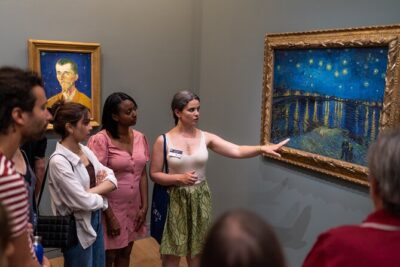
Paris: Musée d’Orsay Skip-the-Line Tour with Expert Guide
Read our review →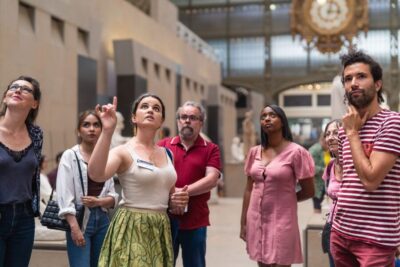
Musée d’Orsay Skip-the-Line Tour with Expert Guide
Read our review →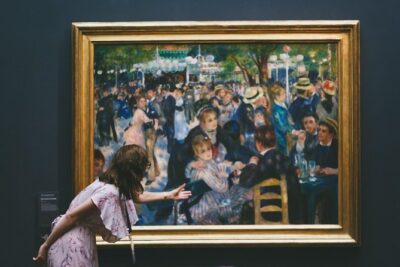
Louvre & Musée d’Orsay Guided Museum Tour Semi-Private 6ppl Max
Read our review →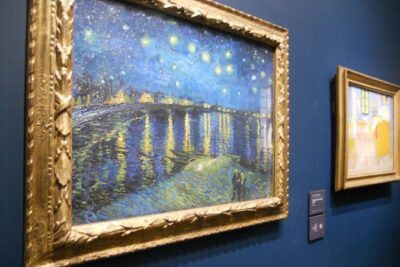
Orsay Museum – Exclusive Guided Tour (Reserved Entry Included)
Read our review →Browse the lists this tour appears in