
Reviewed · TICKETS
Skip the Line: Abbaye de Fontenay Admission Ticket
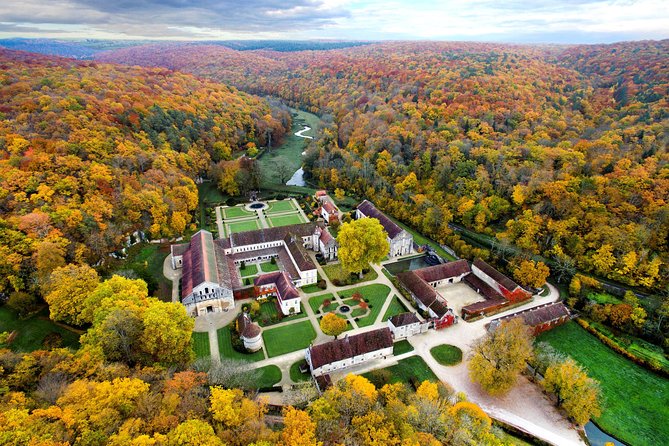
Silence is part of Fontenay Abbey’s appeal. This pre-booked ticket gives you access to one of Burgundy’s most carefully preserved religious sites, including its Romanesque church, cloister, dormitory, chapter room, forge, gardens, and lapidary museum. I especially like the chance to explore at your own pace and the fact that the same family has cared for the abbey since 1820.
I also like the unusually peaceful setting. You may find yourself nearly alone in the church or dormitory, as one visitor did, which lets the old stonework speak without a tour group competing for attention. The main drawback is simple: transportation, food, and drinks are not included, so you must arrange your own way there and plan around the seasonal opening hours.
In This Review
- Key points to know before booking
- Why Fontenay Abbey feels different from a standard monument
- The Abbey Church, where the visit begins emotionally
- The dormitory and cloister reward a slower pace
- Chapter room, common room, and forge add human detail
- The gardens turn the abbey into a full-day setting
- The lapidary museum makes the ticket more worthwhile
- What the $13.91 ticket really buys you
- Who will enjoy Fontenay Abbey most
- Timing your visit for more quiet
- The preservation story is part of the attraction
- Is the paper admission ticket worth booking?
- FAQ
- What is included with the Abbaye de Fontenay admission ticket?
- How much does the ticket cost?
- How long should I plan for the visit?
- What buildings can I see at Fontenay Abbey?
- Is Fontenay Abbey a UNESCO World Heritage site?
- When was Fontenay Abbey founded?
- What are the opening hours from November 12, 2025, through March 31, 2026?
- What are the opening hours from April 1 through November 11, 2026?
- Is transportation included?
- Can I cancel for a full refund?
Key points to know before booking
- Founded in 1118 by Saint Bernard of Clairvaux: This is the oldest preserved Cistercian abbey in the world.
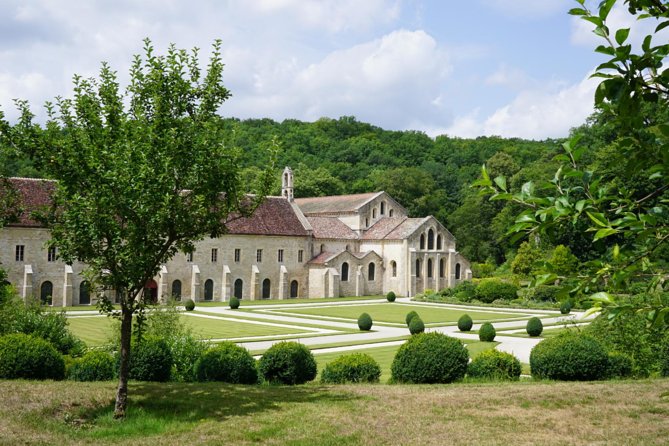
- Original Romanesque buildings remain: The church, dormitory, cloister, chapter room, common room, and forge survived later industrial use.
- A UNESCO World Heritage site since 1981: Fontenay was among the first French monuments placed on the list.
- A privately preserved estate: The same family has owned and maintained the abbey since 1820.
- Gardens and a lapidary museum are included: Your ticket covers more than the main church and cloister.
- A short, flexible visit: Plan on roughly one to two hours, with free cancellation up to 24 hours before the start time.
Why Fontenay Abbey feels different from a standard monument
Many famous French religious buildings are grand, crowded, and visually loud. Fontenay works in the opposite direction. Its appeal comes from restraint: pale stone, clean Romanesque forms, quiet rooms, and a setting that still feels removed from modern life.
The abbey was founded in 1118 by Saint Bernard of Clairvaux, one of medieval France’s leading religious figures. Cistercian communities followed a strict way of life, and that discipline shows in the architecture. You will not find the heavy decoration associated with some later churches. Instead, you see proportion, repetition, stone surfaces, and carefully controlled light.
I find that this simplicity gives the visit its force. The buildings do not need a dramatic display to make an impression. Walk slowly, and details become easier to notice: the scale of the dormitory, the orderly shape of the cloister, and the practical connection between religious rooms and working spaces.
The abbey’s history is also unusually layered. After the French Revolution, the monks left and the property was put to industrial use. That change might sound destructive, but in Fontenay’s case it helped preserve the Romanesque buildings. The church, dormitory, cloister, chapter room, common room, and forge all survived.
The result is a place where religious and working life remain visible together. You are not simply touring a church. You are seeing a complete monastic complex, with spaces for prayer, sleep, meetings, labor, and daily administration.
More skip-the-line tickets in Beaune:
- Versailles: Skip-the-Line Tour of Palace with Gardens Access
★ 4.7 · 9,778 reviews - Versailles: Skip-the-Line Guided Palace Tour and Full Access
★ 4.6 · 5,214 reviews - Louvre Museum: Skip-the-Line Small Group Guided Tour
★ 4.6 · 3,960 reviews
The Abbey Church, where the visit begins emotionally
The Abbey Church is the clearest introduction to Fontenay’s character. Its Romanesque design is direct and uncluttered, giving the interior a calm sense of order.
I would take a few quiet minutes here before rushing on. The church rewards stillness more than speed. If the room is quiet, you can pay attention to the relationship between the stone, the ceiling, and the light instead of trying to record every detail with your phone.
The church also helps explain why Fontenay has such a strong reputation among people interested in medieval architecture. It has survived for roughly nine centuries with its basic character intact. That does not mean every stone is untouched, but the overall purity of the architecture has been carefully protected.
The site became a French historic monument in 1862. In 1981, UNESCO recognized the abbey and its setting as a World Heritage site. Those designations matter because they confirm that Fontenay is not merely an attractive old building. It is an important example of Cistercian architecture and monastic planning.
The dormitory and cloister reward a slower pace
The dormitory is one of the most memorable spaces because it makes the abbey’s daily life easier to picture. This was not just a ceremonial complex. Monks needed somewhere to sleep, move, gather, and follow a demanding routine.
The large, spare room can feel especially powerful when it is nearly empty. One account describes having the church and dormitory almost to itself, with a welcome silence filling both spaces. That is the kind of moment you should allow for here. Fontenay is less satisfying if you treat it as a checklist of rooms.
The cloister offers a different rhythm. Its covered walkways connect the main parts of the abbey and create a protected space for movement and reflection. The design is practical, but its repeated arches and enclosed shape also give it a strong visual calm.
I like the way the cloister links the spiritual and practical sides of the site. From here, you can understand how a Cistercian abbey functioned as one connected world rather than a collection of unrelated monuments.
Chapter room, common room, and forge add human detail
The chapter room and common room bring you closer to the abbey’s working organization. These spaces help explain how the community made decisions, met together, and handled everyday obligations.
They may not have the instant visual impact of the church, but they are essential to understanding the whole complex. Without them, Fontenay would risk feeling like a beautiful shell. With them, you see a functioning religious institution.
The forge is particularly useful because it widens the story beyond prayer and architecture. Monastic communities depended on practical work, tools, repairs, and skilled labor. The survival of the forge alongside the church and cloister shows how broad the abbey’s original life was.
Later industrial use also gives this building a second chapter. The monks departed after the Revolution, yet the property’s industrial period helped preserve the medieval structures. That is a worthwhile reminder that historic buildings sometimes survive through complicated, imperfect turns of fortune.
A few more Beaune trips worth weighing up
- Burgundy Bike Tour with Wine Tasting from Beaune
★ 5.0 · 674 reviews - Beaune: Wine Tasting at Château de Pommard
★ 4.4 · 277 reviews - From Beaune: Burgundy Day Trip with 14 Wine Tastings
★ 4.8 · 248 reviews - Burgundy Grand Crus Route Day Tour – 14 Wines Tastings in Domains
★ 5.0 · 223 reviews
The gardens turn the abbey into a full-day setting
Your admission also includes the gardens, which were named a Remarkable Garden in 2004 by France’s National Council of Parks and Gardens. They are not an optional extra added around the edges. The grounds are part of Fontenay’s identity.
The abbey lies in a fully preserved valley extending over 1,200 hectares. You should allow time to look beyond the buildings and notice how the site’s natural setting supports its quiet mood. The combination of stone architecture, open grounds, and protected valley makes the visit feel more complete than a quick indoor monument stop.
I would visit the interior first, then spend time outside afterward. Once you have seen the church, cloister, dormitory, and forge, the gardens give you space to reflect on how the abbey fits into its surroundings.
Do keep the seasonal hours in mind. From November 12, 2025, through March 31, 2026, the abbey opens daily from 10 a.m. to noon and from 2 to 5 p.m. From April 1 through November 11, 2026, it opens daily from 10 a.m. to 6 p.m. The midday closure in the colder season can affect a short itinerary, so check your arrival time carefully.
The lapidary museum makes the ticket more worthwhile
The lapidary museum is included with admission, along with the gardens. Since many admission tickets cover only the headline monument, this extra access improves the value of the $13.91 price.
A museum devoted to stone and architectural fragments fits Fontenay especially well. The abbey’s story is written in masonry, and the lapidary collection gives you another way to understand how historic structures are built, repaired, and preserved.
You should not expect a large museum visit to fill half a day. The overall admission is best suited to a one to two-hour stop. Still, the museum adds substance, particularly if you have an interest in medieval construction or the long process of caring for an old site.
What the $13.91 ticket really buys you
At $13.91 per person, this is a reasonably priced cultural stop, particularly because admission includes the abbey buildings, gardens, and lapidary museum. You are paying for access to a UNESCO World Heritage site with an unusually complete group of original Romanesque structures.
The value is strongest if you appreciate architecture, religious history, gardens, or quiet places. If you only want a fast photograph of a famous facade, the ticket may feel less rewarding. Fontenay asks you to spend time with spaces that reveal themselves gradually.
The paper ticket format is straightforward. Confirmation arrives when you book, and a pre-booked ticket is intended to make entry quicker. A review of the process described payment as trouble-free and admission as rapid, which is useful if you are planning several stops in Burgundy.
The experience does not include transportation, food, or drinks. That matters because the abbey is a destination in its own right rather than a casual stop you can assume will be fully supplied. Plan your route and meal arrangements separately.
The booking generally allows a small maximum group of 15 participants, although this is an admission experience rather than a guided group tour. That smaller limit can help keep the setting calm, but you should not assume a personal guide is included. A passionate guide has led some visits, but the ticket itself covers admission only.
Who will enjoy Fontenay Abbey most
I would recommend this visit to you if you enjoy places where architecture and atmosphere matter as much as famous objects. It suits people interested in Cistercian history, Romanesque buildings, French heritage, gardens, and well-preserved historic estates.
It is also a good choice for anyone who prefers a calm stop over a packed attraction. The abbey receives visitors throughout the year, but its large grounds and quiet rooms can make the experience feel personal, especially outside the busiest periods.
Families with older children may find the forge, dormitory, and working spaces easier to connect with than an abstract church history lesson. The site is also suitable for most people according to the supplied practical information, and it is near public transportation.
You may want to reconsider if you need a guided explanation at every stage. The ticket is not described as a full guided tour, and the written information does not promise an audio guide or organized commentary in several languages. English is offered for the booking, while the ticket itself is a paper admission ticket.
Timing your visit for more quiet
The stated visit length is one to two hours, but I would not force yourself to finish in the shorter time if you care about atmosphere. The church and dormitory deserve an unhurried look, while the cloister, gardens, and lapidary museum add several useful layers.
The best practical approach is to choose a time that gives you breathing room. During the November to March schedule, the two-hour midday closure makes a poorly timed arrival inconvenient. Arriving near opening or after the afternoon reopening should give you a cleaner visit than turning up just before the break.
In the April to November period, the longer 10 a.m. to 6 p.m. schedule gives you more flexibility. You can fit Fontenay into a wider Burgundy day, but do not reduce it to a rushed 20-minute photograph stop. The peaceful mood is one of the main reasons to come.
Free cancellation is available up to 24 hours before the experience start time. If you cancel later, the amount paid is not refunded, and changes made within that 24-hour period are not accepted. Cutoff times follow local time.
The preservation story is part of the attraction
Fontenay has been privately owned by the same family since 1820. That continuity is unusual, and it helps explain the care given to the buildings and gardens.
The restoration has taken several generations, and the result is easy to appreciate even without specialist architectural knowledge. The work has preserved the character of the site rather than turning it into a glossy modern attraction. One French-language comment praised the owners’ restoration and the decision to protect this heritage.
Private ownership can raise questions about access, but here the abbey remains open to public visits throughout the year. Your ticket supports a site that has to balance preservation with regular public access.
The UNESCO designation and the French historic monument status provide an official framework for that protection. Yet the most convincing evidence is what you see: a Romanesque complex that still reads as a complete place, not a few isolated walls surrounded by reconstruction.
Is the paper admission ticket worth booking?
Book it if you want a quiet, substantial heritage visit in Burgundy, especially if you value old architecture, gardens, and a sense of place. The price is fair for access to the church, dormitory, cloister, chapter room, common room, forge, gardens, and lapidary museum.
I would be most likely to book ahead if my schedule were tight or if I wanted quicker entry. The paper ticket is simple, confirmation arrives at booking, and free cancellation gives you some flexibility until 24 hours before the visit.
Skip it if you are looking for a guided excursion with transportation, meals, and extensive commentary included. This is a self-directed admission visit. Its reward is not a packed program, but the rare chance to spend time in a remarkably preserved Cistercian abbey where silence remains part of the architecture.
FAQ
What is included with the Abbaye de Fontenay admission ticket?
Admission to the Abbey of Fontenay is included, along with access to the gardens and the lapidary museum.
How much does the ticket cost?
The listed price is $13.91 per person.
How long should I plan for the visit?
The approximate duration is one to two hours.
What buildings can I see at Fontenay Abbey?
The preserved complex includes the Abbey Church, dormitory, cloister, chapter room, common room, and forge.
Is Fontenay Abbey a UNESCO World Heritage site?
Yes. The abbey was declared a UNESCO World Heritage site in 1981.
When was Fontenay Abbey founded?
Fontenay Abbey was founded in 1118 by Saint Bernard of Clairvaux.
What are the opening hours from November 12, 2025, through March 31, 2026?
The abbey is open daily from 10 a.m. to noon and from 2 to 5 p.m.
What are the opening hours from April 1 through November 11, 2026?
The abbey is open daily from 10 a.m. to 6 p.m.
Is transportation included?
No. Transportation to and from the attraction is not included.
Can I cancel for a full refund?
Yes, if you cancel at least 24 hours before the experience start time. Cancellations made less than 24 hours in advance are not refunded.
Recently added around Beaune
- Full-Day Private Tour, 6 Premiers & Grands Crus, The Best of Burgundy★ 5.0 · 50 reviews
- Visit of our 15th century cellars★ 5.0 · 57 reviews
- Private Tasting in Beaune : The Best of Burgundy Wines★ 4.9 · 66 reviews
- Discovery of the world of Truffles and tasting★ 4.5 · 66 reviews
- Private Tasting in Beaune : The Best of Burgundy Wines★ 5.0 · 66 reviews
- Luxury Luxury Wine Tour Experience★ 5.0 · 69 reviews
- Private Wine Tasting Tour – Burgundy Uncorked!!★ 5.0 · 74 reviews
- From Beaune: Full-Day Bicycle and Wine Tour in Burgundy★ 4.9 · 95 reviews
Tickets, compared.
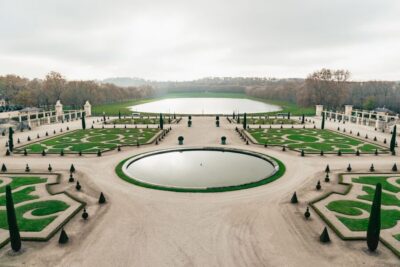
Paris: Versailles Palace and Gardens Full Access Ticket
Read our review →
Paris: Eiffel Tower Entry Ticket with Optional Summit Access
Read our review →
Paris: Moulin Rouge Cabaret Show Ticket with Champagne
Read our review →
Paris: Montparnasse Tower Observation Deck Entry Ticket
Read our review →
Paris: Louvre Museum Entry Ticket With Host and River Cruise
Read our review →
Paris: Sainte-Chapelle and Conciergerie Combined Tickets
Read our review →Browse the lists this tour appears in