
Reviewed · WINE TOURS
Alsatian Guided Wine Tasting and Immersive wine cellar tour
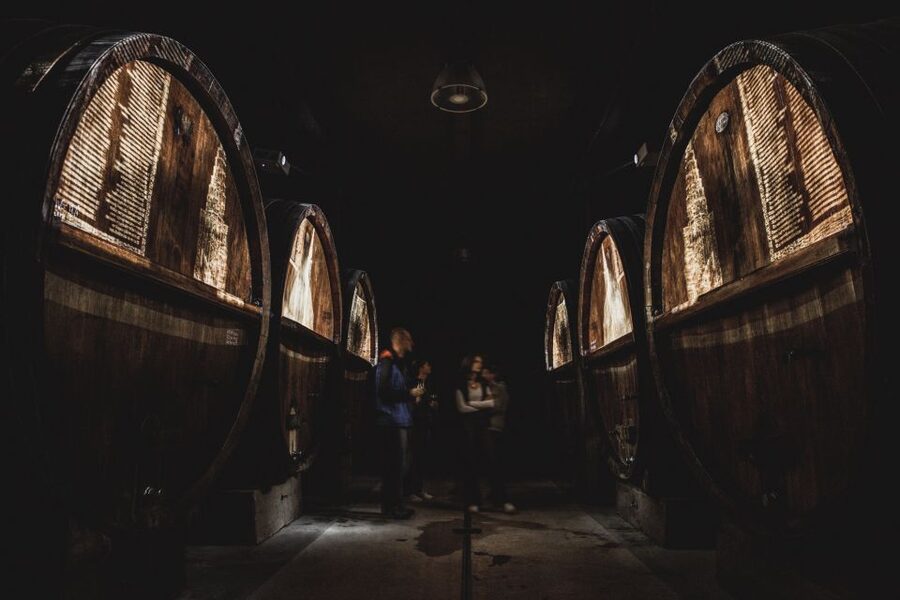
Old barrels make this tasting memorable. In Gertwiller, you get a friendly introduction to Alsace wine inside a renovated family winery, with an experienced sommelier explaining the region’s grapes, styles, and food pairings. I especially like the chance to taste five organic wines, from sparkling and rosé to dry and sweet whites and red wine. I also like the cellar’s rare oak barrels, including one made for the 1900 Universal Exhibition.
The unusual 180-degree film projected onto century-old barrels gives the visit a theatrical finish. It tells the winemaker’s personal story and work philosophy rather than simply showing another slideshow. The main consideration is pacing: the full visit lasts about 90 minutes, and one published schedule also allows an hour for shopping, so you may want to leave extra time if you plan to buy bottles.
In This Review
- What makes this Gertwiller wine visit special
- Starting at the family winery in Gertwiller
- Five Alsace wines, from sparkling to sweet
- Reading the old oak barrels
- The 180-degree film across the barrels
- Shopping after the tasting
- Is $22 good value?
- Who will enjoy this most?
- Practical details before you reserve
- Should you book this Alsace wine tour?
- FAQ
- Where does the wine tasting take place?
- How long does the activity last?
- How much does the experience cost?
- How many wines are included?
- What kinds of wine may be tasted?
- Is the cellar tour included?
- Are the old barrels still used?
- What is projected onto the barrels?
- What languages are available?
- Are children allowed?
- Can I cancel for a refund?
- Do I have to pay when I reserve?
What makes this Gertwiller wine visit special
- Five wine styles in one tasting: Try a broad sample of Alsace production, including sparkling, red, rosé, dry white, and sweet white wines.
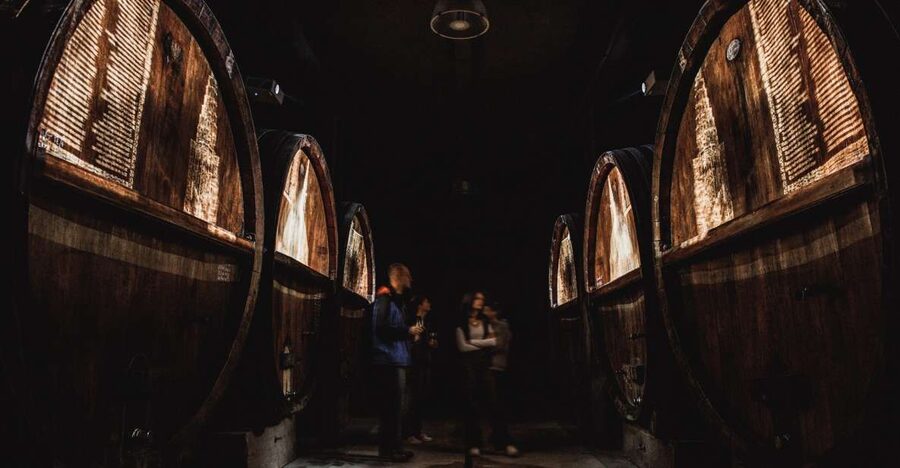
- Barrels from 1850: See oak casks that remain in use, not just old objects placed behind a rope.
- A barrel made for the 1900 Universal Exhibition: This unusual piece connects local winemaking with a major moment in French industrial and cultural history.
- 180-degree cellar projection: A film plays across the barrels with sound and mapped images, creating a distinctive ending to the tour.
- A sommelier-led explanation: You learn how the wines taste, how they are made, and what foods suit them.
- A practical price: At $22 per person, the visit combines a cellar tour, five commented tastings, and the special film presentation.
Starting at the family winery in Gertwiller
The visit begins at 156 Route de Strasbourg in Gertwiller, in France’s Grand Est region. There are two listed starting options at the same address, so check the exact option you select when booking. The meeting point can vary depending on that choice.
Gertwiller is a sensible setting for this kind of introduction. You are not tasting anonymous bottles in a city shop. You are visiting a working family winery where the cellar, barrels, production methods, and finished wines belong to the same story.
The building has been renovated, but the focus remains firmly on wine. That balance matters. The setting should feel comfortable rather than rough, while the old oak and family background keep the visit tied to traditional winemaking.
The guide speaks English or French. Be careful to choose the right language when booking. That small detail can make a big difference during a tasting, when the explanation of aromas, sweetness, and pairings is as important as the wine itself.
More Wine Tours in France:
- Authentic Parisian Gourmet Food Tour with 10 Local Dishes & Wines
★ 5.0 · 4,754 reviews - Loire Valley Castles Day Trip from Paris with Complementary Wine
★ 4.5 · 3,907 reviews - Bordeaux: Cité du Vin Entry Ticket and Wine Tasting
★ 4.6 · 3,885 reviews
Five Alsace wines, from sparkling to sweet
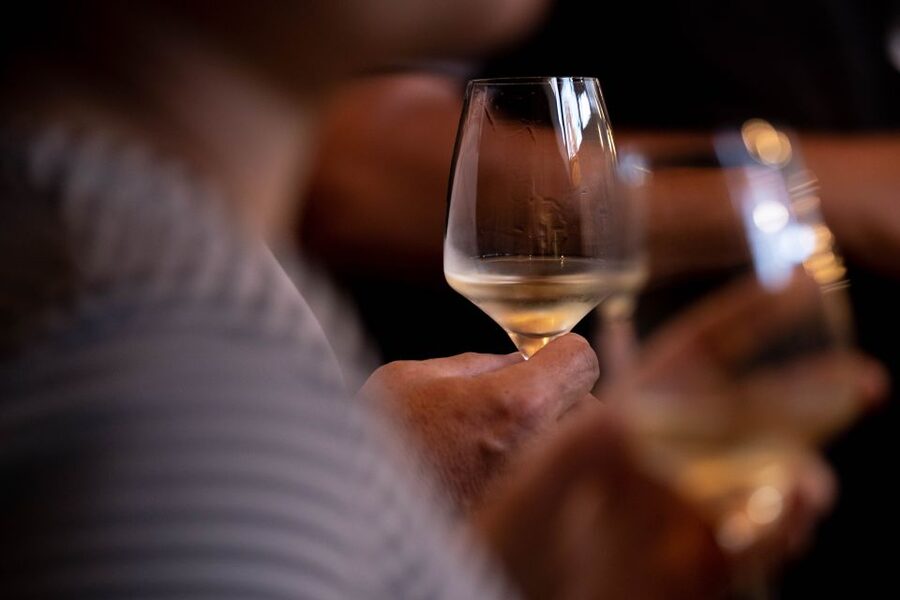
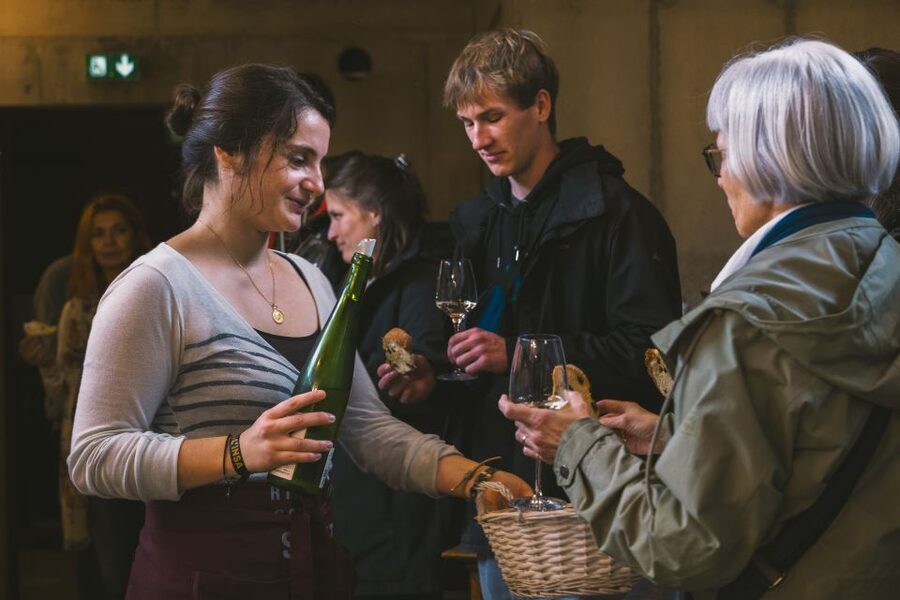
The tasting is the heart of the visit. You sample five locally produced organic wines with commentary from a sommelier. This is useful because Alsace can seem confusing at first: the region makes many white wines, but they do not all taste alike, and the balance between dry, sweet, floral, fruity, and crisp styles can vary widely.
The selection can include:
- Sparkling wine
- Dry white wine
- Sweet white wine
- Rosé
- Red wine
That range is a real strength. A short tasting focused only on one familiar white grape would give you a narrow picture of the region. Here, you can compare several directions at once and see how broad the local wine tradition can be.
I like tastings that explain the why behind each glass. The guide discusses the background of the wines, the winemaking process, and food pairings. You are encouraged to ask questions, so this is a good chance to clear up anything that has puzzled you in French wine shops or restaurant menus.
The organic production is another useful point for shoppers. It does not automatically tell you which bottle you will prefer, but it gives you a clear starting point if organic wine matters to your buying decisions.
The tasting is described as commented rather than rushed. That means you should expect instruction between pours, not five glasses placed in front of you with little guidance. One guide, Dorian, received particular praise for making the visit both educational and playful. The staff are also described as attentive and professional, which is reassuring if you are new to wine tasting.
Reading the old oak barrels
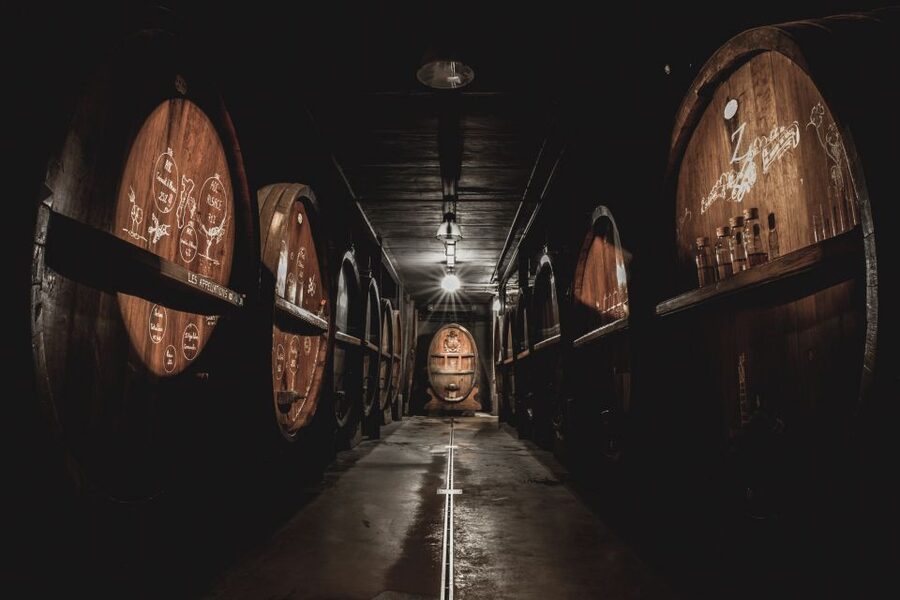
After or alongside the tasting, you visit the cellar and see oak barrels dating from 1850. Some are still used to make wine. That is more interesting than looking at a collection of antique equipment because the barrels remain part of the working process.
You learn how old oak can affect the wine held inside it. The wood lends a particular flavor that newer containers cannot fully copy. The point is not simply age for age’s sake. These barrels help explain why traditional cellar methods can leave a mark on the finished wine.
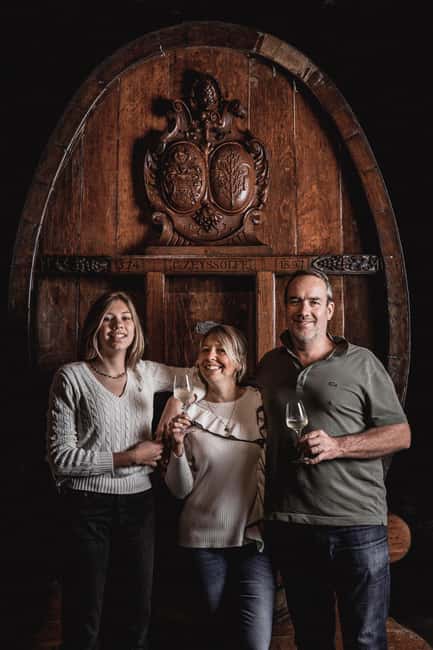
The most unusual object is the barrel made for the Universal Exhibition of 1900. It gives the cellar a strong sense of place and provides a memorable detail to carry away from the tour. Plenty of wine tastings blur together after a few days. A 19th-century barrel with a connection to a major exhibition is easier to remember.
The cellar also helps put modern wine language into physical form. You hear about oak, aging, and production methods, then see the vessels that make those ideas real. If you enjoy craft traditions and working tools, this part may appeal to you as much as the tasting itself.
There is one practical point to keep in mind. An old cellar is a place for listening and looking, not a stage built for constant entertainment. The visit has a strong educational side. If you want only a quick pour and a photo, the explanations may feel longer than necessary. One guest felt the whole visit could have been shortened by about half an hour. If you are eager to move on, this is worth considering.
The 180-degree film across the barrels
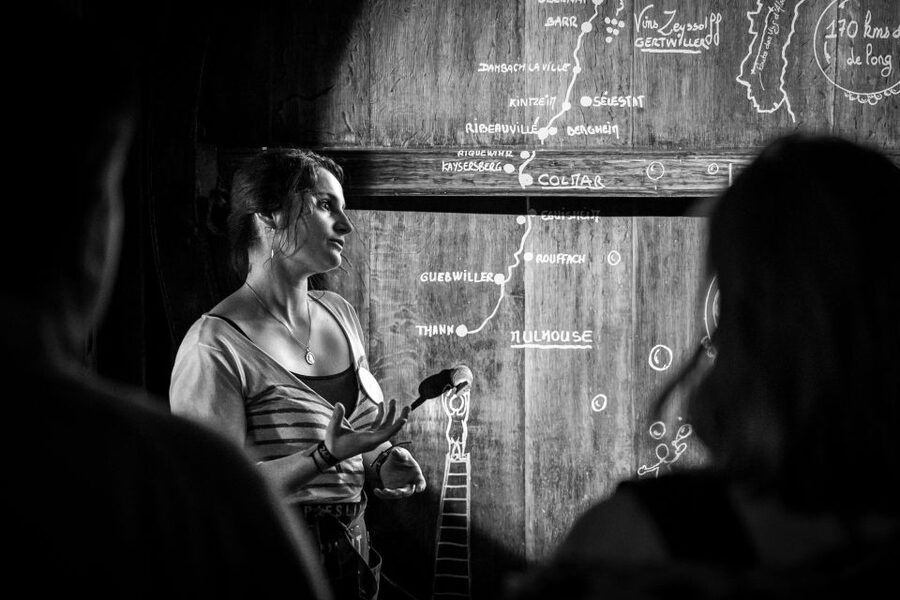
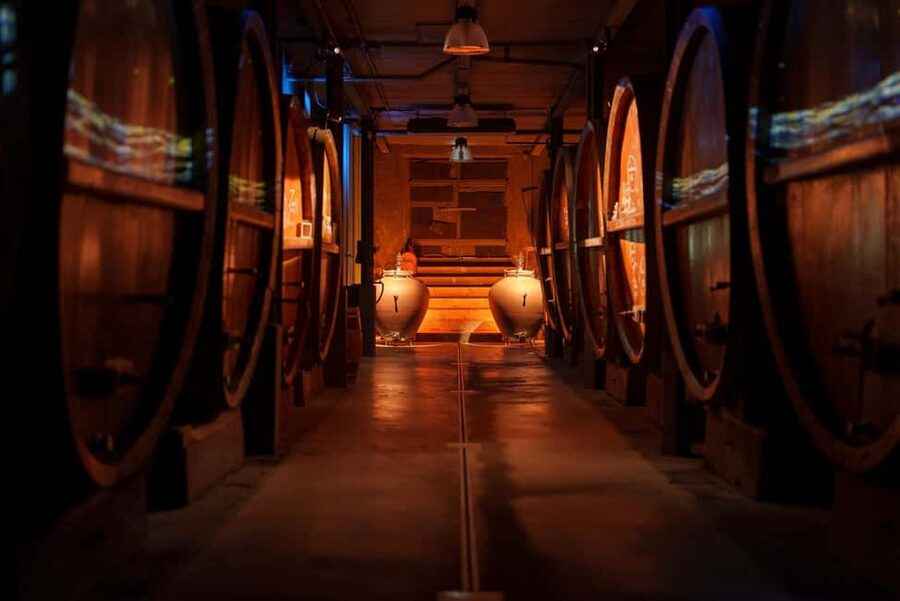
Since 2020, the winery has offered a 180-degree film projected onto the cellar’s century-old oak barrels. The presentation uses sound, projection, and mapping on selected sequences. It tells the winemaker’s personal story and explains the philosophy behind the work.
This is the element that separates the visit from a standard cellar tour. Instead of watching a film on a flat screen, you see it spread across the barrels around you. The cellar itself becomes part of the presentation.
I would not treat this as a replacement for the wine education. It works best as a conclusion to the visit, after you have learned what the barrels do and why they matter. Once you know their role, seeing images projected across them carries more meaning.
The presentation is also a good choice for mixed groups. Wine enthusiasts can appreciate the production story, while people who know little about wine still get a visual way into the subject. It gives the visit a change of pace after the technical explanations and tasting.
The projection has been singled out as unexpectedly beautiful and unusual. That praise makes sense: it is a carefully designed feature, not a routine add-on. Still, your enjoyment will depend on your taste. Some people want a quiet cellar and a traditional explanation. Others will appreciate a modern show in an old setting.
More Food Tours in France:
- Paris: Seine Cruise & Crepe Tasting near the Eiffel Tower
★ 4.4 · 11,231 reviews - Normandy D-Day Small-Group Day Trip with Omaha Beach, Cemetery & Cider Tasting
★ 5.0 · 2,786 reviews - Paris: Illuminated Evening River Cruise & Waffle Tasting
★ 4.1 · 2,697 reviews - Montmartre Hill French Gourmet Food and Wine Tasting Walking Tour
★ 5.0 · 2,588 reviews
Shopping after the tasting
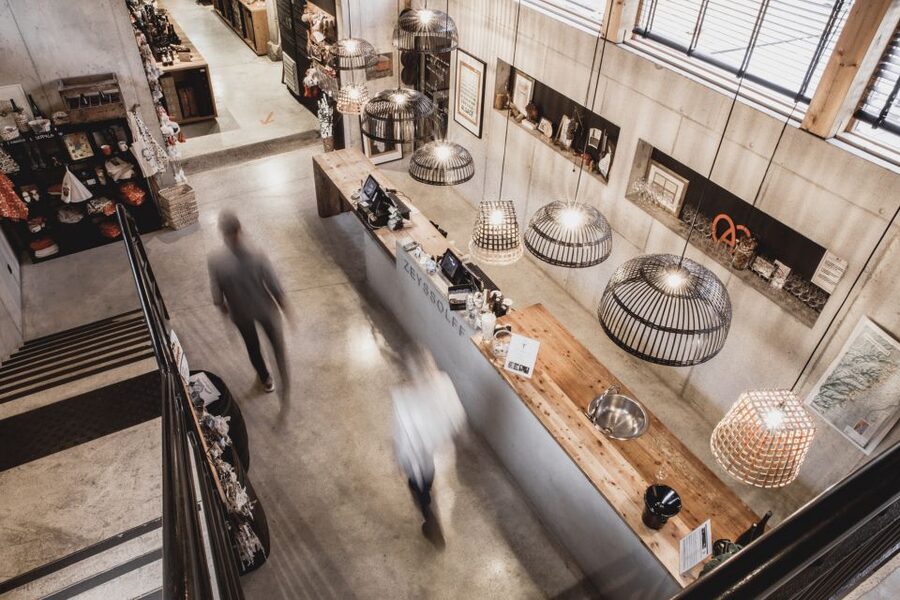
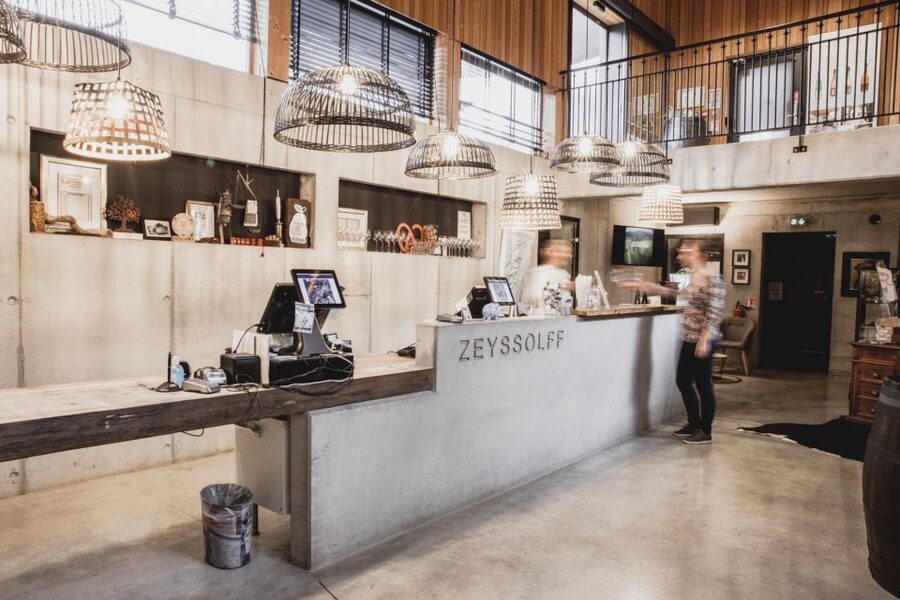
The schedule includes shopping after the guided visit. The listed shopping time is one hour, although the overall activity duration is given as 90 minutes. Because those timings do not match perfectly, I would treat the guided tour as the fixed portion and allow extra time if you want to browse and buy wine afterward.
That extra time can be useful. You will have tasted several styles and heard how they pair with food, so you can make a more informed choice than you could before the tasting. If a particular dry white, sparkling wine, rosé, or red catches your attention, you can ask for more advice while the flavors are still fresh.
I would not feel pressured to buy. The value of the visit comes from the tasting, explanations, cellar, and film, not from making a purchase. Shopping is best seen as an optional chance to take home a bottle connected to the place you have just visited.
Is $22 good value?
At $22 per person, this is a strong value for a 90-minute wine activity. The price includes a guided cellar tour, a commented tasting of five wines, and the 180-degree film. The organic wines and the historical barrels add substance beyond a simple tasting flight.
You are also getting variety. Five wines let you compare several Alsace styles, and the sommelier’s explanations give the tasting an educational purpose. If you are already comfortable with French wine, you may value the cellar and barrel story most. If you are a beginner, the guided comparisons and food-pairing advice may be the better reason to book.
The value is less clear if you dislike structured explanations or want a very short stop. The tour can feel long to someone who prefers a quick tasting. That is not a flaw for everyone, but it is an important match-your-style question.
The price also makes this a reasonable family or group activity. Children are welcome, though the wine tasting itself is clearly aimed at adults. Younger visitors may find the projected film more engaging than a technical discussion of production.
Who will enjoy this most?
I would recommend this visit to anyone who wants a first look at Alsace wine without committing to a full day of vineyard touring. It suits curious beginners, couples, small groups, and people who want a tasting with more content than a row of glasses.
It is especially useful if you want to understand the difference between dry and sweet white wines, or if you normally overlook Alsace red and rosé wines. The broad tasting range gives you a better sense of the region’s variety.
Families can also consider it because children are welcome and the cellar projection adds a visual feature. Do keep your expectations realistic: this is still a wine-focused visit, so children may not enjoy every explanation.
You might choose something else if your priority is a long vineyard walk, a meal with wine, or a large-scale estate tour. Those features are not part of the information provided for this activity. Here, the emphasis is the family winery, the cellar, the five wines, and the barrel projection.
Practical details before you reserve
The activity lasts 90 minutes, with starting times dependent on availability. English and French tours are offered, and you should select the correct language when booking.
The meeting point can vary by option, although 156 Route de Strasbourg is the listed address and the visit takes place in Gertwiller. Check the precise meeting instructions before setting out.
You can cancel up to 24 hours in advance for a full refund. A reserve-now, pay-later option is also available, which helps if your schedule is still changing.
The experience has an overall rating of 4.7 from 110 ratings. The strongest praise centers on the enthusiasm of the guides, the quality and variety of the wines, the warm welcome, and the unusual projection across the barrels. The only clear caution is that the visit may feel slightly longer than necessary for someone who wants a fast tasting.
Should you book this Alsace wine tour?
Book it if you want good-value wine education with a memorable cellar setting. The combination of five organic wines, an experienced sommelier, barrels dating from 1850, and a film projected across those barrels gives you more than a routine tasting.
I would be most likely to recommend it to first-time Alsace wine drinkers and visitors who enjoy craft, family stories, and practical food-pairing advice. If you prefer a brief, informal drink with minimal explanation, choose carefully, since the educational section takes time.
For $22, the special barrel presentation tips the balance in its favor. Just select the right language, allow enough time for the visit and possible shopping, and arrive ready to ask questions.
FAQ
Where does the wine tasting take place?
The experience takes place in Gertwiller, Grand Est, France, at the family winery listed at 156 Route de Strasbourg.
How long does the activity last?
The stated duration is 90 minutes. The schedule also lists a separate shopping period of one hour, so allow extra time if you plan to browse or buy wine.
How much does the experience cost?
The price is $22 per person.
How many wines are included?
The tasting includes five wines with commentary from the guide or sommelier.
What kinds of wine may be tasted?
The experience includes locally produced organic wines, with styles ranging from sparkling wine to red, rosé, dry white, and sweet white wines.
Is the cellar tour included?
Yes. A guided cellar tour is included in the experience.
Are the old barrels still used?
Yes. The cellar includes oak barrels made in 1850 that are still in use, along with century-old barrels and one made for the Universal Exhibition of 1900.
What is projected onto the barrels?
A 180-degree film is projected onto the cellar barrels. It presents the winemaker’s personal story and work philosophy, using sound and mapped projection in some sequences.
What languages are available?
The live guide speaks English or French. Check the selected tour language carefully when booking.
Are children allowed?
Yes. Children are welcome at the experience.
Can I cancel for a refund?
You can cancel up to 24 hours in advance for a full refund.
Do I have to pay when I reserve?
A reserve-now, pay-later option is available, so you can book without paying immediately.
Recently added around France
- The essential in Bordeaux, private tour with a local★ 4.9 · 48 reviews
- Avignon, Les Baux, St Remy and Arles from MARSEILLE★ 4.5 · 48 reviews
- Visit Avignon and Villeneuve lez Avignon aboard a Double-Decker Bus★ 4.0 · 48 reviews
- 2 hour outdoor group activity in Paris: SAINT GERMAIN★ 5.0 · 48 reviews
- Private Half-Day Guided Tour of Paris★ 4.5 · 48 reviews
- Blind Test Room & karaoke Montpellier★ 5.0 · 48 reviews
- Paris Dinner Show Opera Bel Canto★ 4.5 · 48 reviews
- Cannes: Lérins Islands Private Boat Tour★ 4.9 · 48 reviews
Wine Tours, compared.
Authentic Parisian Gourmet Food Tour with 10 Local Dishes & Wines
Read our review →
Loire Valley Castles Day Trip from Paris with Complementary Wine
Read our review →
Bordeaux: Cité du Vin Entry Ticket and Wine Tasting
Read our review →
Bordeaux: River Garonne Cruise with Glass of Wine and Canelé
Read our review →
Montmartre Hill French Gourmet Food and Wine Tasting Walking Tour
Read our review →
Paris: Montmartre Cheese, Wine & Pastry Guided Walking Tour
Read our review →
From Paris: Loire Valley Castles Day Trip With Wine Tasting
Read our review →
From Bordeaux: Afternoon Saint-Emilion Wine Tasting & snack
Read our review →Browse the lists this tour appears in