
Reviewed · WALKING TOURS
Antibes: 2 hour walking tour in the old town
Antibes rewards slow looking. This two-hour walking tour brings the port, ramparts, market, old lanes, art, and local stories together without turning the town into a blur. I like the small group size, limited to 10 people, and I like the way the route mixes famous sights with tiny public artworks and working craft shops. The main drawback is that the tour is not suitable for wheelchair users, and the old town’s medieval streets can be uneven and tight.
Guide Emilie receives especially warm praise for her friendly manner, clear storytelling, flexible pace, and useful restaurant advice. I would book this early in your Antibes stay, since her suggestions about beaches, food, and things to do can help shape the rest of your visit. At $29 per person, the price is fair for a personal introduction, though you will still need extra time afterward if you want to visit the cathedral or Picasso Museum interiors.
In This Review
- Key points at a glance
- Why this Antibes walk works well
- Starting beside Port Vauban
- From Gravette beach to Le Nomade
- Entering through the ramparts
- Cathedral and Picasso Museum from the outside
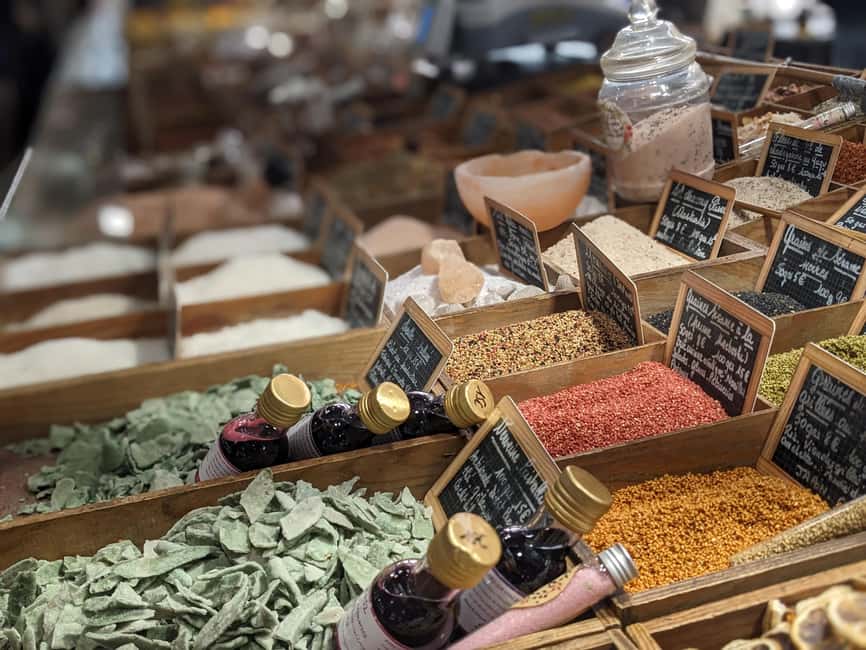
- The colors and scents of Marché Provençal
- Safranier and Place Nationale
- Urban art and Antibes craft workshops
- What the guide adds for $29
- Timing, comfort, and who should book
- Should you book the Antibes old town tour?
- FAQ
- How long is the Antibes walking tour?
- Where does the tour start?
- Where does the tour finish?
- Which languages are available?
- How large is the group?
- Does the tour visit the cathedral and Picasso Museum interiors?
- Is the tour suitable for wheelchair users?
Key points at a glance
- Port Vauban begins and ends the walk: You see heritage boats, luxury yachts, and the old harbor setting before entering the historic center.
- The route mixes landmarks with everyday Antibes: Gravette beach, Le Nomade, the cathedral, the Provençal market, Safranier, and Place Nationale all fit into two hours.
- Emilie is the guide to look for: Her warm approach, art knowledge, local experience, and willingness to answer questions are repeatedly praised.
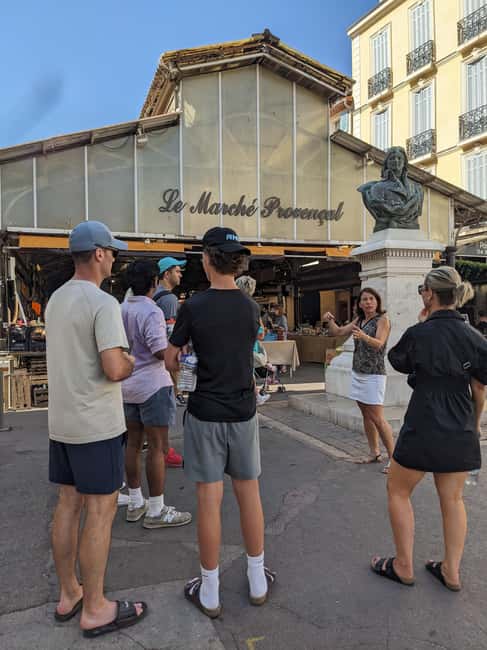
- The market adds color and scent: The walk passes through Marché Provençal, one of the best places to get a feel for local food culture.
- Art is not limited to museums: You see the famous Nomade sculpture, small urban artworks, artist connections, and craft workshops.
- The group stays small: A maximum of 10 participants makes it easier to ask questions and hear the guide in narrow streets.
Why this Antibes walk works well
Antibes is easy to underestimate. Many visitors come for the harbor, the beaches, or the Picasso connection, then discover that the old town has its own rhythm. The best part of this tour is that it does not treat Antibes as one grand monument. Instead, it links the waterfront to the daily life of the old center.
I like the balance between broad views and small details. You begin among boats and open sea views, then pass through medieval streets, a traditional market, a neighborhood with a strong local identity, and lanes filled with art and workshops. That variety helps you understand Antibes as a living town rather than a museum set.
The tour is also practical. Emilie explains local traditions and points you toward restaurants, beaches, and other activities. Several people specifically valued her dining suggestions, including one recommendation for a reasonably priced dinner on the beach. That kind of advice can be worth as much as the history lesson.
The tone appears relaxed rather than academic. The history includes Roman roots and the town’s artistic connections, but the focus stays light enough for a holiday morning. You get stories, landmarks, and orientation without being buried under dates.
More Walking Tours in Nice
- ★ Walking Tour of Old Nice and Castle Hill
★ 5.0 · 1,318 reviews - Nice Small-Group Walking Food Tour with Local Specialties & Wine Tasting
★ 4.5 · 558 reviews - Nice: Food and Wine Old Town Guided Walking Tour
★ 4.9 · 411 reviews
Starting beside Port Vauban
The meeting point is at 14 Quai de la 1ère Division Française libre, between the Blind sculpture by David David and the fishermen’s booth. The guide is described as a small brunette carrying a small white bag with black flowers. That detail matters because the harbor is an open, busy area where a precise meeting marker helps.
The tour starts at Port Vauban, one of the defining sights of modern Antibes. You look across a harbor filled with heritage boats and luxury yachts, an immediate lesson in the town’s mix of old maritime life and high-end boating. The contrast is useful: Antibes is not only an old walled town, and it is not only a playground for yacht owners.
Starting at the port also gives you a clear sense of direction. The tour returns here at the end, so you do not need to arrange transport between the start and finish. If you are arriving by train, bus, or another part of town, allow time to locate the quay and the two meeting-point markers.
This first section is mainly sightseeing and orientation. You are not spending two hours inside a single attraction. You are walking, listening, and getting a visual map of the town.
From Gravette beach to Le Nomade
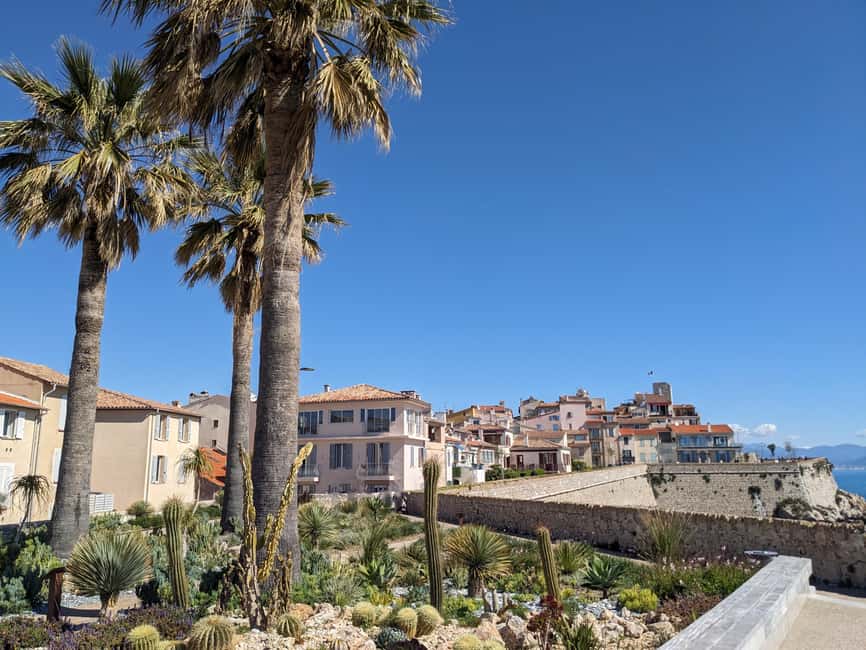
The route continues toward popular Gravette beach. This gives the walk a short change of pace, moving from boats and harbor infrastructure to a small seaside setting. You get a reminder that Antibes is also a place for swimming and coastal breaks, not just streets and monuments.
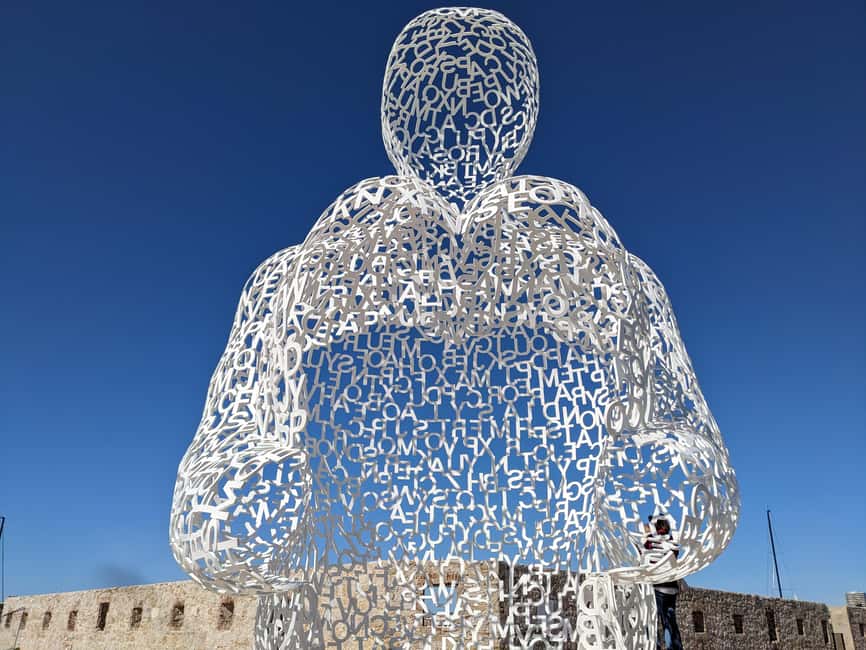
Next comes Le Nomade, the large sculpture overlooking the sea. It is one of the tour’s strongest visual moments. The sculpture provides a striking meeting point between public art and the coastline, while views toward Fort Carré add another layer to the scene.
The guide uses this part of the route to discuss art in Antibes. That is a real strength if you are curious about the town’s creative side but do not want a museum-only experience. Emilie is praised for her understanding of art and culture, and the tour later returns to smaller examples of urban art.
Fort Carré is viewed from the outside rather than visited as an interior stop. That keeps the schedule moving, but it also means you should not expect a full fort tour during these two hours. If Fort Carré is a major priority, plan a separate visit.
Entering through the ramparts
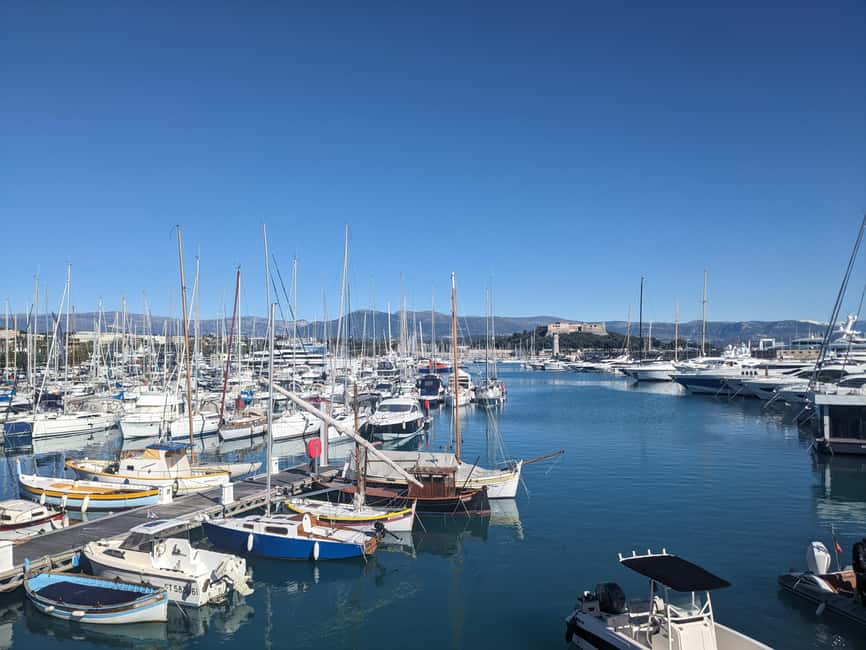
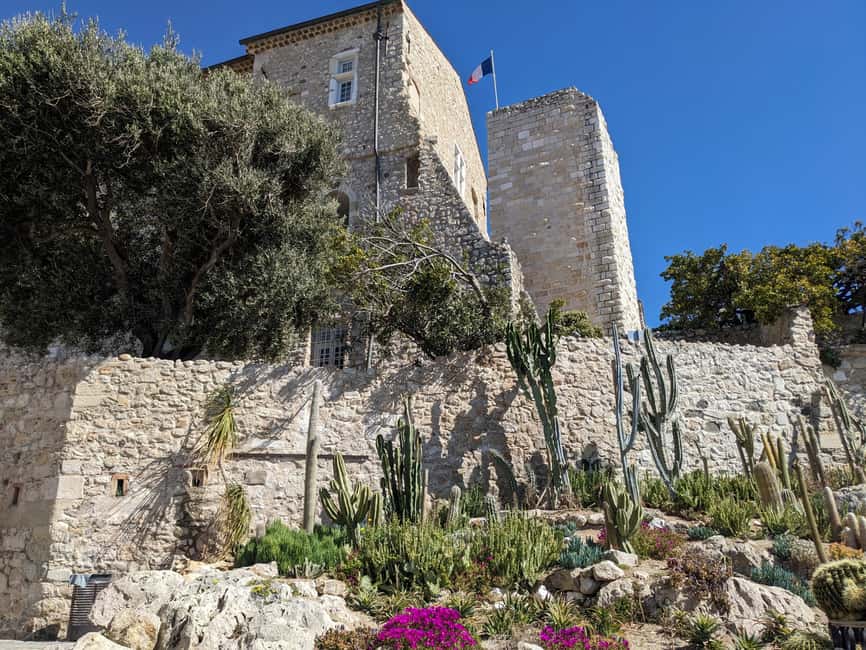
The transition through the ramparts is one of the most satisfying parts of the walk. You leave the broad waterfront behind and enter the old town through its defensive walls. The change is immediate: streets narrow, buildings press closer together, and the town begins to reveal itself at walking speed.
Here, a local guide earns the $29 fee. You can walk through these lanes alone, but it is easy to miss the meaning of what you are seeing. Emilie explains Antibes’ past, including its Roman beginnings, and helps connect the stonework to the town’s later development.
The old town section is not presented as a parade of photo stops. The appeal comes from the smaller details: the shape of a lane, a piece of architecture, a tucked-away artwork, or a view opening toward the water. One person specifically praised the guide for finding unusually beautiful streets that would have been easy to overlook.
Wear comfortable shoes. The route is on foot, and the medieval streets are not designed for modern ease. The supplied information does not promise a step-free path, and wheelchair users are specifically advised not to book.
A completely different sort of day in Nice:
- From Nice: French Riviera in One Day
★ 4.5 · 5,215 reviews - Nice: 1-Hour Sightseeing Cruise to Villefranche Bay
★ 4.6 · 2,747 reviews - Nice: 1 or 2-Day Hop-On Hop-Off Bus Tour
★ 4.3 · 2,663 reviews - Nice: Gorges of Verdon and Fields of Lavender Tour
★ 4.4 · 1,975 reviews
Cathedral and Picasso Museum from the outside
Antibes Cathedral and the Picasso Museum are included as exterior sights. This is important when setting expectations. You will learn where they are and hear about their place in Antibes, but the two-hour walk does not include an interior museum visit or a cathedral tour.
The outside stops still have value. The cathedral helps anchor the old town’s religious and architectural story. The Picasso Museum connects Antibes with its artistic past and gives you a useful reason to return later if you want a longer cultural visit.
I like this approach for a first visit because it leaves choices open. You see the main setting, receive context, and can decide afterward how much time to give each site. The tradeoff is that art lovers seeking a detailed Picasso-focused tour may find this section too brief.
The walk’s art discussion appears broader than one famous painter. It includes artists who lived in Antibes and some who still work there, along with public art placed in less obvious corners. That wider view helps explain why art feels woven into the town rather than confined to one building.
The colors and scents of Marché Provençal
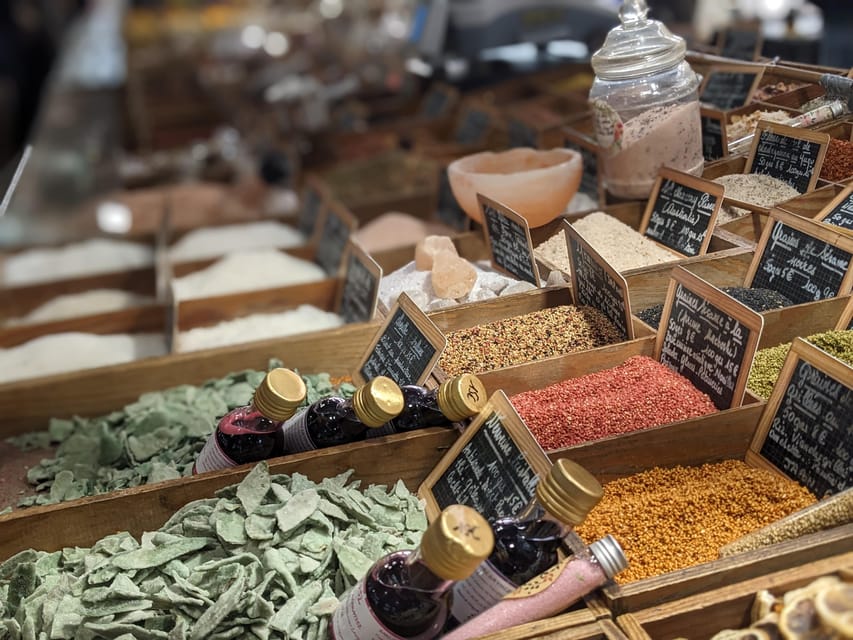
Marché Provençal brings the tour into the town’s daily routine. The market is a sensory stop, with the colors and scents associated with a typical Provençal food market. It is the kind of place where a guide can help you notice more than the prettiest stall.
The market also gives you a break from stone walls and historical explanation. You see a social and commercial side of Antibes, one that makes the old town feel lived in. The exact market experience can vary by time and day, so I would treat this as an important passing stop rather than assume you will have time for a full meal or extended shopping.
If you want to buy anything, ask Emilie when the schedule allows it. Two hours is a compact window, and the tour continues through Safranier and Place Nationale before returning to the harbor. You may prefer to come back later when you can browse at your own pace.
This is one place where the guide’s local knowledge matters. She can help explain what is typical, point out nearby places to eat, and keep the market from becoming just a quick photo stop.
Safranier and Place Nationale
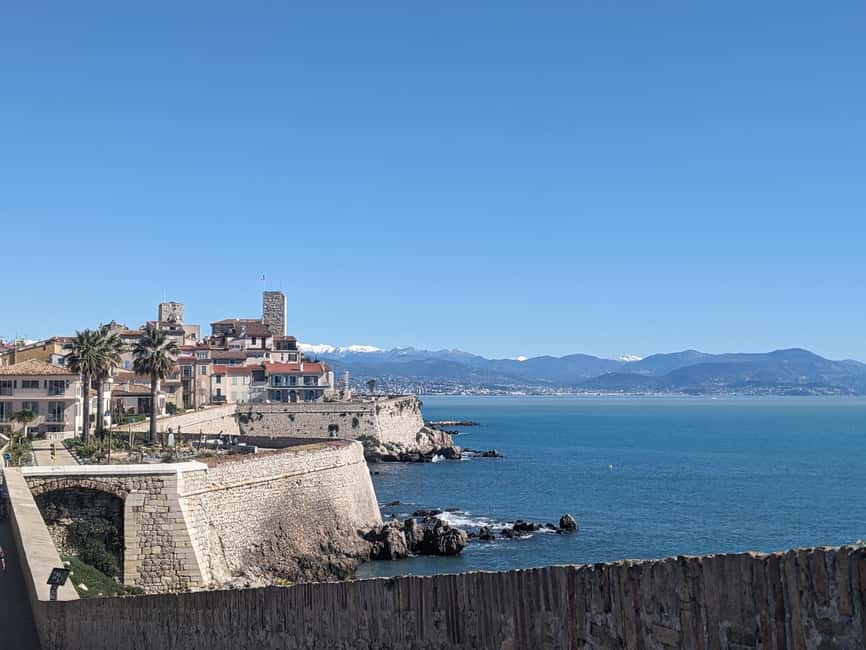
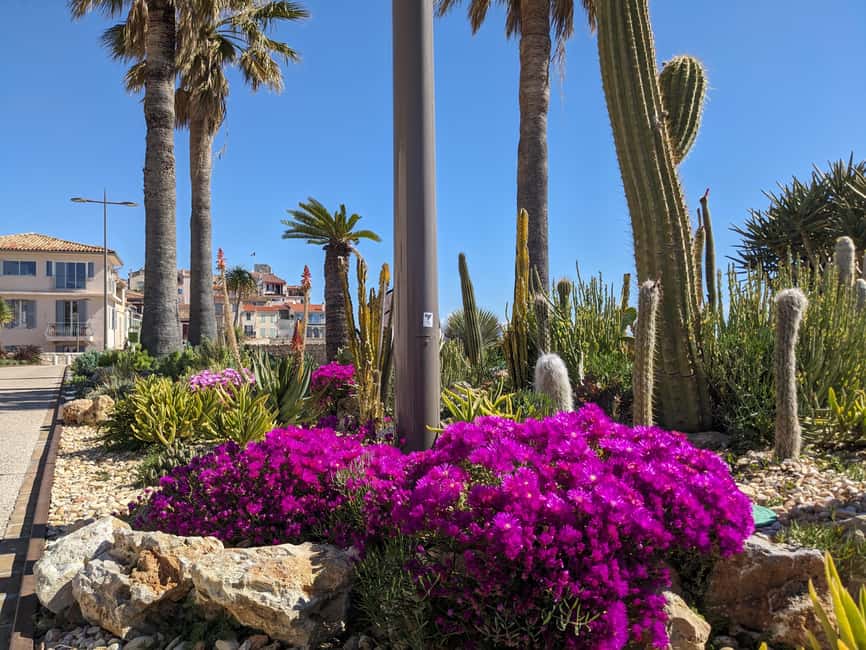
The walk then reaches the Commune libre du Safranier, a distinctive neighborhood within the old town. It is known here for its local character and its attractive lanes. The neighborhood offers a more intimate look at Antibes than the large harbor views do.
This is also where the tour’s pace seems especially well judged. Several comments praise Emilie for keeping the walk relaxed but efficient, while allowing time for questions and photographs. That balance is useful in a place where rushing would mean missing the small details.
Place Nationale follows, with its typically Mediterranean style. The square gives you a more open urban space after the narrow streets of Safranier. It is a good point for understanding how Antibes shifts between defensive medieval lanes, neighborhood life, and more formal public spaces.
The guide can also help you decide what deserves a return visit. If a particular street, café, beach, or shop catches your attention, note it as you go. The tour is designed as an introduction, not a complete replacement for exploring on your own.
Urban art and Antibes craft workshops
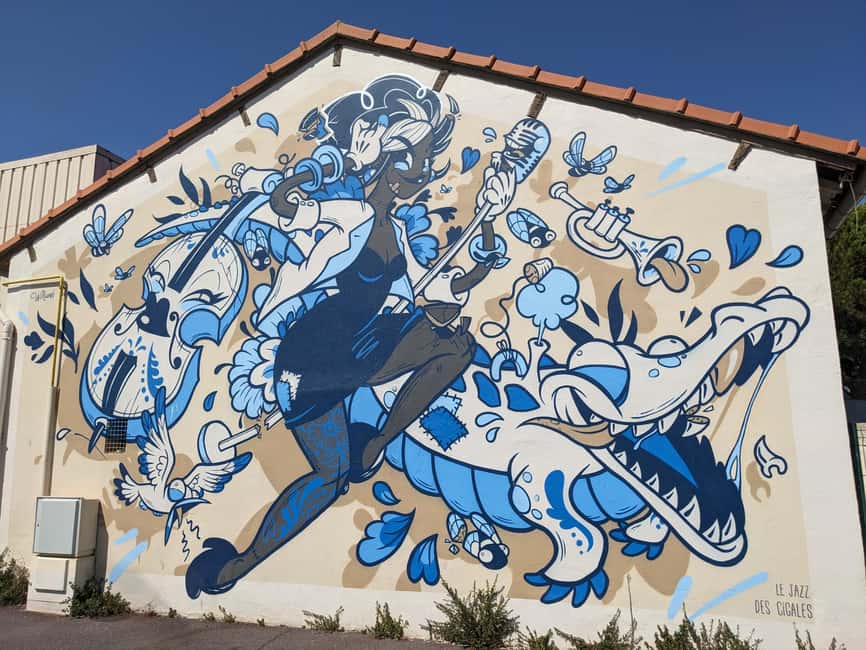
The last part of the route returns to art, but on a smaller and more local scale. You may see subtle urban artworks tucked into ordinary parts of the town. One reason this works well is that the art is presented as part of the street, not separated from daily life behind a ticket desk.
The tour also passes workshops belonging to craftsmen working with jewelry, paintings, glass, and other creative forms. The information does not promise demonstrations or purchases, so think of these as places you will see during the walk rather than scheduled workshop visits.
Still, this section gives the tour a useful ending. You have already seen Le Nomade and heard about major artists. Now you get a sense of the smaller creative businesses that continue that tradition in practical form.
Art fans seem particularly well served here. If you mainly want military history or a long architectural lecture, this art and craft focus may be less central to your interests. For most visitors, though, it adds variety and makes the route feel specific to Antibes.
What the guide adds for $29
At $29 per person, this is not the cheapest way to walk around town, since Antibes’ streets and waterfront are free. The value comes from having the route shaped for you and from the explanation attached to places that might otherwise pass without meaning.
A small group of no more than 10 is a major part of that value. You can ask about food, art, local customs, or the best beach without trying to catch a guide’s attention in a large crowd. The guide can also respond to individual questions and, according to one particularly useful comment, help take photographs at several points.
Emilie is the clear strength of the experience. She is described as friendly, kind, engaging, and full of stories. People also praise her local connection to the old town, her art and culture background, her good pacing, and her ability to tailor the walk to the group.
The overall rating is 5 out of 5 from 69 reviews, with praise repeated across different countries and seasons. That does not guarantee every tour will feel identical, but it suggests a consistent guide-led experience rather than a route that depends only on the weather or the scenery.
The tour is offered in French and English. You should choose the language that lets you ask questions comfortably, since conversation is one of the main reasons to choose a small guided walk.
Timing, comfort, and who should book
The tour lasts two hours and returns to its starting point. That makes it easy to fit into a morning or afternoon, and it works well on a first day when you want orientation before exploring alone.
You should expect continuous walking through the port, along the waterfront, over or beside the ramparts, and through old town streets. The route is not suitable for wheelchair users. Anyone with limited mobility should ask the provider for current route details before booking, since the supplied information gives no alternate accessible version.
This tour suits first-time visitors who want a friendly introduction to Antibes without committing half a day. It also works for couples, families with older children, solo visitors, and locals who want a fresh look at the town. A small private-feeling group can be especially pleasant, and two people once received the walk alone after a larger group canceled.
It is less suitable if you want long interior visits, extensive free time at the market, or a specialized tour devoted only to Picasso, Fort Carré, or military architecture. Those interests can still fit into your Antibes plans, but you will need separate time.
Free cancellation up to 24 hours before the start and the option to reserve now and pay later make the booking less risky. Starting times can vary, so check availability for the day you want.
Should you book the Antibes old town tour?
I would book this tour if you want to understand Antibes quickly and still have the rest of the day free. The route covers the port, coast, ramparts, old streets, market, Safranier, Place Nationale, public art, and craft workshops, while Emilie adds the local detail that turns a pleasant walk into a useful introduction.
The best reason to choose it is the combination of good pacing and personal guidance. You get major sights, lesser-known corners, restaurant suggestions, and a clear sense of what to do next. At $29, that is solid value for a small group.
Skip it if you strongly prefer exploring alone, need step-free access, or want to spend most of your time inside museums and monuments. Otherwise, book it near the start of your stay, bring comfortable shoes, and keep the afternoon open for the places you will want to revisit.
FAQ
How long is the Antibes walking tour?
The tour lasts two hours.
Where does the tour start?
It starts at 14 Quai de la 1ère Division Française libre, between the Blind sculpture by David David and the fishermen’s booth.
Where does the tour finish?
The walk returns to 14 Quai de la 1ère Division Française libre, the same place where it begins.
Which languages are available?
The live tour guide is available in French and English.
How large is the group?
The tour is limited to 10 participants.
Does the tour visit the cathedral and Picasso Museum interiors?
No. The route includes views of Antibes Cathedral and the Picasso Museum from outside.
Is the tour suitable for wheelchair users?
No. The activity is listed as not suitable for wheelchair users.
More short trips in Nice
- The Père Lachaise Cemetery: Guided 2-Hour Small-Group Tour
★ 4.7 · 1,065 reviews - Paris: 2-Hour Perfume Creation Workshop
★ 4.8 · 731 reviews - La Rochelle: 2-Hour Sunset Sailing Cruise
★ 4.8 · 652 reviews - 2-Hour Strasbourg Euro Tour by Segway
★ 5.0 · 642 reviews
Recently added around Nice
- Drive a convertible along the coast and visit Eze and Fragonard★ 5.0 · 49 reviews
- Half-Day Walking Food Tour in Nice with Lunch★ 5.0 · 49 reviews
- From Nice: Cannes and Antibes Half-day Tour★ 4.6 · 49 reviews
- French Riviera Private Boat Trip★ 4.9 · 50 reviews
- Nice: Cannes, Antibes & St Paul de Vence Half-Day Tour★ 4.3 · 51 reviews
- Nice: Perfume Creation Workshop★ 4.9 · 52 reviews
- Private ride with sea bath in Solar Catamaran★ 5.0 · 52 reviews
- Private Monaco and Eze Half-Day Tour from Nice★ 4.5 · 52 reviews
Walking Tours, compared.

Paris Top Sights Half Day Walking Tour with a Fun Guide
Read our review →
Montmartre Hidden Gems and Scenic Highlights Walking Tour
Read our review →
Montmartre Hill French Gourmet Food and Wine Tasting Walking Tour
Read our review →
Paris Île de la Cité and Notre-Dame Walking Tour With Crypt
Read our review →
Paris: Montmartre Cheese, Wine & Pastry Guided Walking Tour
Read our review →
Paris in a Day: Louvre or Orsay, Eiffel Tower, City Walk & Cruise
Read our review →
Paris: Montmartre Highlights Walking Tour with a Local Guide
Read our review →
Browse the lists this tour appears in