Reviewed · PRIVATE
Australian private Somme tour including Sir John Monash Centre
The Somme still speaks through its ground. This private tour connects the Australian National Memorial at Villers-Bretonneux with Pozières, Lochnagar Crater, Beaumont-Hamel, and the excellent Sir John Monash Centre. I like the comfortable, air-conditioned car, and I like having a guide who can explain maps, battle movements, and local geography as you travel between sites. The private format also lets you spend more time on the places that matter most to you.
The main drawback is the limited seven-hour schedule. You see a remarkable amount, but several stops are brief, and the tour does not begin in Paris. Pickup is flexible in Amiens, Arras, and Saint-Quentin, so you need to base yourself in one of those areas or arrange your own connection.
In This Review
- Key points at a glance
- Why this Somme tour works so well
- Starting from Amiens, Arras, or Saint-Quentin
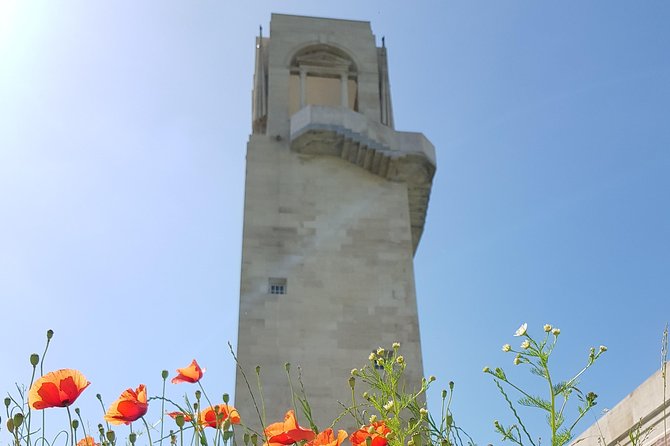
- Villers-Bretonneux and the Australian National Memorial
- The Sir John Monash Centre
- Lochnagar Crater and the first day of the Somme
- Lunch near La Boisselle or Pozières
- Pozières and the First Australian Division Memorial
- Beaumont-Hamel and the preserved trenches
- What the $372.45 price really covers
- Who should book this experience?
- Should you book the Australian Somme tour?
- FAQ
- Where does the Australian Somme tour begin?
- Can the tour start in Paris?
- How long does the tour last?
- Is the tour private?
- What transportation is provided?
- Is lunch included?
- Is the Sir John Monash Centre always open?
- Are admission tickets included?
- What happens if I need to cancel?
Key points at a glance
- Australian focus: Villers-Bretonneux, the Sir John Monash Centre, and Pozières give the day a clear Australian thread.
- Olivier’s personal guidance: The guide uses maps, photographs, battle details, and local knowledge to make the ground easier to understand.
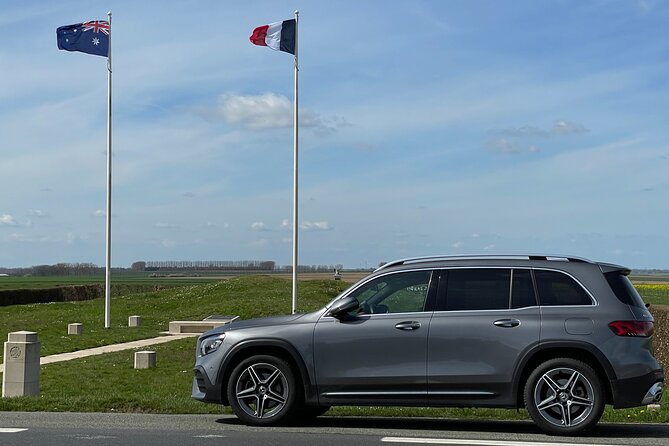
- Private transport: A spacious, air-conditioned car keeps the long transfers comfortable and gives your group a quieter day.
- Seven important sites: You visit memorials, a huge mine crater, wartime positions, a tank memorial, and preserved trenches.
- Flexible pickup: Collection can be arranged from a hotel, B&B, or train station in Amiens, Arras, or Saint-Quentin.
- Lunch is separate: You stop at a local restaurant or café in La Boisselle or Pozières, but the meal is not included.
Why this Somme tour works so well
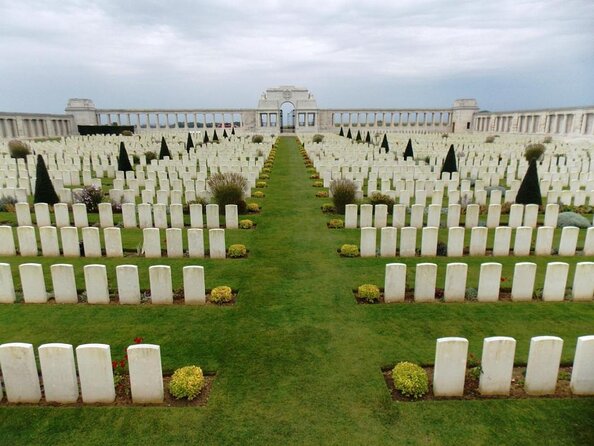
The Somme battlefield is spread across small villages and open farmland. On foot alone, you can visit one cemetery or memorial, but it is difficult to connect that place with the next one. This tour solves that problem by putting you in a private car with a guide for the full day.
I like the way the route moves from the Australian story to the wider Battle of the Somme. Villers-Bretonneux gives you a strong opening, Pozières shows the scale of the Australian struggle, and Beaumont-Hamel broadens the picture by showing trench warfare from a different national viewpoint.
The guide named in the tour details is Olivier. His role is more than driving. He explains what happened at each location and uses maps and photographs to help you picture the wartime positions. That matters here because much of the original battlefield has returned to ordinary rural life. Without context, a quiet field can look like just a quiet field.
The private format is another major advantage. Only your group takes part, so you can ask questions without worrying about a busload of strangers. You can also tell Olivier if you want more time at the Australian memorials, the trenches, or the Sir John Monash Centre.
A few more France trips worth weighing up
- Paris: Private Photoshoot at the Eiffel Tower
★ 4.7 · 2,636 reviews - Top Private Cruises in Paris with French Champagne and surprises
★ 5.0 · 1,553 reviews - Private Paris Airport Arrival Transfer – CDG & ORLY Airports
★ 4.5 · 1,119 reviews
Starting from Amiens, Arras, or Saint-Quentin
The tour begins at about 9:30 in the morning and lasts roughly seven hours. Pickup can be arranged from a hotel, B&B, or train station in Amiens, Arras, and Saint-Quentin. It may also start from Arras or Saint-Quentin, which gives you useful flexibility when planning a battlefield visit.
You cannot start this tour in Paris. That restriction is important. The Somme is a considerable distance from the capital, and a same-day Paris departure would make the schedule much longer and leave less time at the sites. If you are staying in Paris, you should first reach Amiens, Arras, or Saint-Quentin and use one of those places as your base.
The air-conditioned vehicle is a practical benefit, not just a comfort detail. The route includes several transfers, and the weather can change quickly in northern France. You will appreciate having a spacious car between stops, particularly if you are carrying coats, cameras, or a small day bag.
Bring sensible shoes and clothing for all conditions. The tour operates in every kind of weather, and the outdoor sites include grassy ground, memorial paths, and preserved trench areas. Children can participate, but they must be accompanied by an adult.
Villers-Bretonneux and the Australian National Memorial
The first major stop is the Australian National Memorial of Villers-Bretonneux and the adjoining Villers-Bretonneux Military Cemetery. About 11,000 Australians with no known grave who fell in the Somme are commemorated here. That figure gives the memorial a heavy emotional weight before you even begin to look closely at the names.
You have around 30 minutes at this stop. That is enough for a focused visit, though it is not a long, unhurried cemetery tour. I would use the time to take in the memorial, look at the cemetery, and ask Olivier about the Australian involvement in the village and surrounding area.
This opening stop works well because it gives the day a human focus. The Somme can otherwise become a long sequence of military names and dates. Here, the memorial makes clear that each operation involved thousands of individual lives, many of which ended without a marked grave.
The stop is free, as are the other listed admissions. That keeps the tour price easier to assess, since you are paying mainly for private transport, guiding, and the time needed to link the sites together.
The Sir John Monash Centre
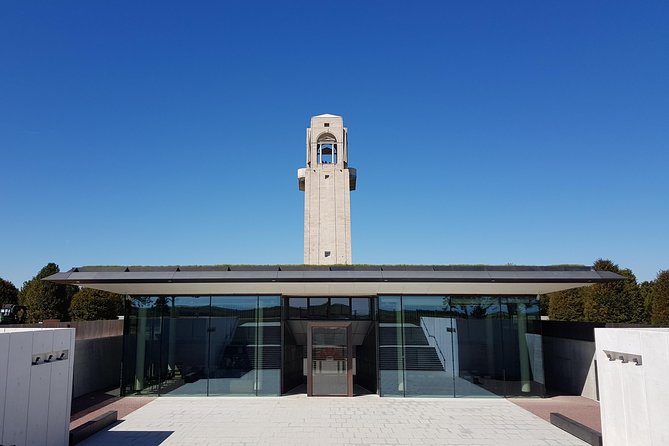
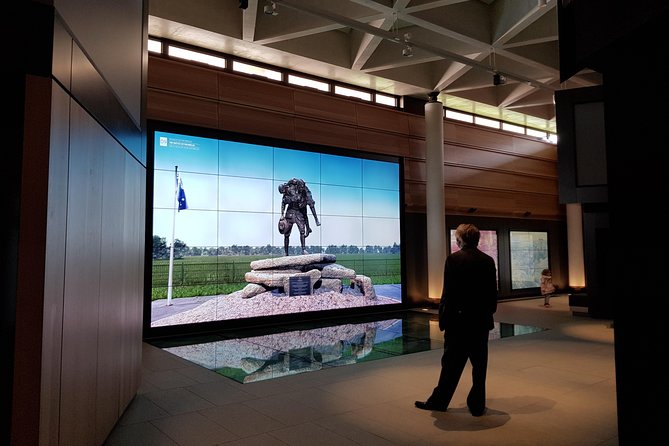
The Sir John Monash Centre is the heart of the Australian side of the tour. You have about 90 minutes here, giving you enough time to take in the presentation at a useful pace rather than making a rushed visit.
The centre tells Australia’s story on the Western Front. Its value is that it gives structure to the outdoor stops. After seeing the memorial at Villers-Bretonneux, you can place Australian units, commanders, and operations into a broader sequence.
I especially like having Olivier’s explanation alongside the centre. The displays can provide the main story, while a private guide can answer questions and relate the material to the villages and positions you visit afterward. Previous feedback places strong emphasis on Olivier’s use of maps and photographs, which is useful for anyone who wants more than a general museum visit.
The centre has seasonal closures, and the supplied operating information gives two sets of dates. One note lists December 25 through January 1 and February 10 through March 1. Another gives December 24, 2025 through January 2, 2026 and February 2 through March 1, 2026. These dates do not fully match, so confirm the opening dates for your travel year before booking. It would be disappointing to build the day around the centre and find it closed.
A completely different sort of day in France:
- Paris: Louvre Museum Timed-Entrance Ticket
★ 4.6 · 71,977 reviews - Disneyland® Paris 1-Day Ticket
★ 4.6 · 49,412 reviews - Paris: Versailles Palace and Gardens Full Access Ticket
★ 4.6 · 41,579 reviews - Paris: Evening River Cruise with Music
★ 4.4 · 22,721 reviews
Lochnagar Crater and the first day of the Somme
The next stop is Lochnagar Crater, the remnant of the largest mine used by the British Army on the first day of the Battle of the Somme. You have about 15 minutes here.
That is a short stop, but the crater is a powerful way to understand the force used to break through the German line. Its size makes the opening bombardment less abstract. You see a physical scar rather than only hearing about artillery and mines.
The brief visit also shows one of the compromises built into this route. Seven hours is enough to cover a wide section of the Somme, but it means you need to make a quick impression at some places. If you are a serious battlefield researcher, you may want to ask in advance if the timing can be adjusted around your priorities.
For most people, 15 minutes should be enough to look into the crater, hear the explanation, and understand its role in the opening of the battle. The private setup helps because you do not have to wait for a large group to gather before moving on.
Lunch near La Boisselle or Pozières
Lunch is planned at a local restaurant or café in La Boisselle or Pozières, with about 45 minutes allowed. Your meal is not included, so budget separately for it.
I like this arrangement because it keeps the middle of the day simple and local. You are not eating from a fixed tour menu, and the break gives you a chance to talk with Olivier about what you have seen so far. The time is practical rather than leisurely, so keep an eye on the schedule if you want a full meal.
The lunch stop also divides the day neatly. Before lunch, the focus is on Villers-Bretonneux, the Australian memorial story, the Sir John Monash Centre, and Lochnagar. After lunch, the route turns to Pozières and Beaumont-Hamel, where the human cost and physical remains of the fighting take on a different shape.
Pozières and the First Australian Division Memorial
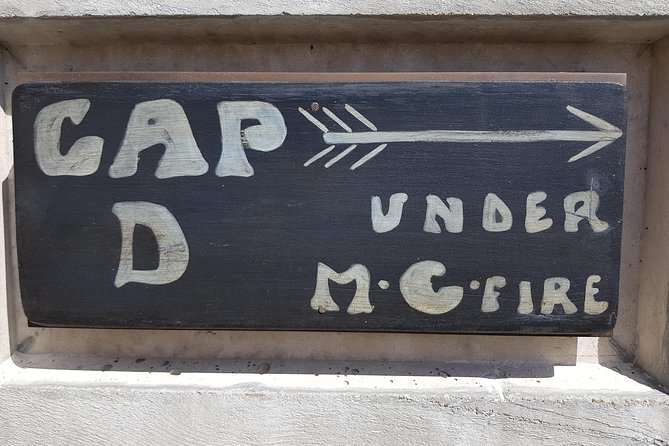
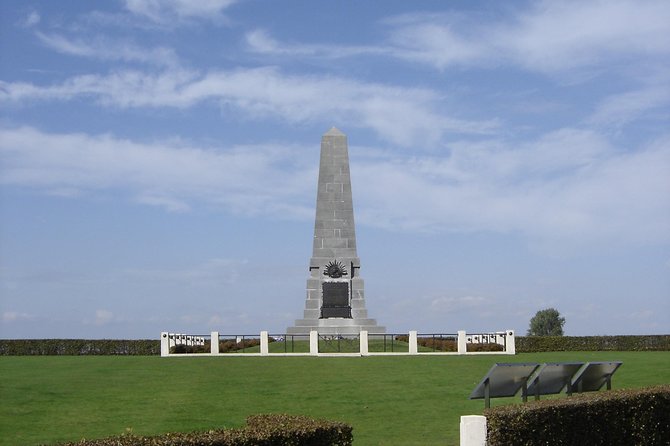
Pozières was the site of the bloodiest Australian struggle on the Western Front. The tour continues through the village and visits remains of the Gibraltar bunker, along with the First Australian Division Memorial, the Windmill Memorial, and the Tanks Corps Memorial.
The listed time for the First Australian Division Memorial is 15 minutes, followed by 20 minutes at the Windmill Memorial area. Taken together, these stops provide a concentrated look at why Pozières matters so much in Australian military memory.
The Gibraltar bunker is particularly useful because it points to the defensive system beneath the fighting. The memorials then connect that military setting to the Australian divisions that fought there. I would ask Olivier to explain how the different positions related to one another, since the physical distance between sites can be misleading without a map.
The Windmill Memorial marks a German position captured by Australian troops during the Battle of Pozières. Across the road, the Tanks Corps Memorial marks the first use of tanks in history. That pairing makes the stop unusually effective: one side of the road recalls the struggle for a German position, while the other points to a new type of weapon entering warfare.
You should expect this section to feel sobering rather than scenic. The villages and fields are peaceful now, but the memorials and remnants make it difficult to forget how much fighting took place in a small area.
Beaumont-Hamel and the preserved trenches
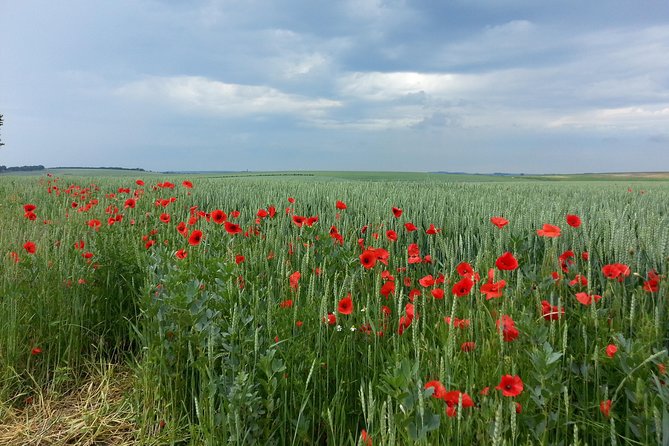
The final stop is the Newfoundland Park at Beaumont-Hamel, particularly its well-preserved trench system. You have approximately 30 minutes here.
This is where the tour helps you understand trench warfare in physical terms. A trench system is easier to grasp when you can see its shape and position rather than relying on a diagram. The preserved lines give you a direct sense of how soldiers lived and fought within narrow, defensive corridors.
Beaumont-Hamel also broadens the day beyond the Australian story. The tour is designed around Australian sites, but the Somme was an international battlefield. Adding this Newfoundland memorial site gives you a fuller sense of the different forces involved in the campaign.
Thirty minutes is enough for a clear introduction, though not enough for a slow exploration of every feature. If Beaumont-Hamel is your main interest, tell Olivier early in the day. The private format may make it easier to balance your time, although the overall route still has to fit within the approximate seven-hour duration.
What the $372.45 price really covers
At $372.45 per person, this is not a budget battlefield outing. The value depends heavily on the size of your group. A solo visitor or couple pays more per person, while a larger private group may find the cost easier to justify.
The price includes a driver and professional guide, private transportation, bottled water, and an air-conditioned vehicle. Admission to the listed sites is free, so the main purchase is the guide’s time and the convenience of moving efficiently between scattered locations.
That is where this tour earns its keep. You are not simply paying for a ride to Villers-Bretonneux. You are paying for a full route, explanations at each site, pickup flexibility, and a private setting where the day can respond to your interests.
I would consider it good value for a family group, a small party with a strong Australian connection, or anyone who wants battlefield interpretation without driving. It is less compelling if you only want to see one memorial or prefer to explore museums independently.
The 100 percent recommendation rate and five-star rating across 51 published ratings suggest very strong satisfaction, especially with the guide. The praise repeatedly focuses on Olivier’s organization, care, comfort, and ability to explain both geography and military detail. That consistency is more useful than a simple claim that the tour is enjoyable.
Who should book this experience?
I would choose this tour if you want a private, guided introduction to the Somme with a strong Australian focus. It suits people who want the main sites explained in one day rather than piecing together a route by car, taxi, and local transport.
Australian visitors will find the Villers-Bretonneux and Pozières sections especially meaningful, but you do not need an Australian connection to enjoy the day. The route also works for anyone interested in the Battle of the Somme, trench warfare, military memorials, or the way modern villages still contain traces of the First World War.
It is a good fit for families with older children, couples, and small groups. The private setting gives you room to ask questions and adjust the conversation. Children must remain with an adult, and the outdoor nature of the tour means everyone should be ready for changing weather.
I would not choose it if you want a slow, specialist study of every cemetery and bunker. The schedule covers a lot of ground. Some stops last only 15 minutes, so the day favors breadth, clear explanation, and efficient travel over long periods of solitary reflection.
Free cancellation is available up to 24 hours before the start time. Changes or cancellations made inside that period are not accepted for a refund, so keep the local start time in mind when making plans.
Should you book the Australian Somme tour?
Book it if you want the Somme explained by a guide who can connect memorials, villages, maps, and battlefield positions into one readable story. The Sir John Monash Centre, Villers-Bretonneux, Pozières, and Beaumont-Hamel form a strong sequence, and the private car makes the spread-out route manageable.
Before booking, confirm three things: your pickup point, the current Sir John Monash Centre closure dates, and whether the seven-hour schedule matches your interests. If you can stay in Amiens, Arras, or Saint-Quentin and want a focused Australian battlefield day, this is a practical and highly personal choice. If you are based only in Paris, choose a different plan or arrange your own transfer first.
FAQ
Where does the Australian Somme tour begin?
The tour starts at approximately 9:30 am. Pickup can be arranged from a preferred hotel, B&B, or train station in Amiens, Arras, or Saint-Quentin.
Can the tour start in Paris?
No. The tour cannot originate in Paris because of the travel distance and time required. It may start from Amiens, Arras, or Saint-Quentin.
How long does the tour last?
The experience lasts approximately seven hours.
Is the tour private?
Yes. Only your group takes part in this private tour or activity.
What transportation is provided?
The tour includes private transportation in a spacious, air-conditioned vehicle. Bottled water is also provided.
Is lunch included?
No. Lunch is not included in the price. A 45-minute lunch break is planned at a local restaurant or café in La Boisselle or Pozières.
Is the Sir John Monash Centre always open?
No. The centre has seasonal closure periods. The supplied booking information lists different dates for different operating years, so you should confirm the exact dates for your visit before booking.
Are admission tickets included?
The listed admission tickets are free. The tour price includes the guide, driver, private transport, vehicle, and bottled water.
What happens if I need to cancel?
You can cancel up to 24 hours before the experience start time for a full refund. Cancellations or changes made less than 24 hours before the start time are not accepted for a refund.
Recently added around France
- The essential in Bordeaux, private tour with a local★ 4.9 · 48 reviews
- Avignon, Les Baux, St Remy and Arles from MARSEILLE★ 4.5 · 48 reviews
- Visit Avignon and Villeneuve lez Avignon aboard a Double-Decker Bus★ 4.0 · 48 reviews
- 2 hour outdoor group activity in Paris: SAINT GERMAIN★ 5.0 · 48 reviews
- Private Half-Day Guided Tour of Paris★ 4.5 · 48 reviews
- Blind Test Room & karaoke Montpellier★ 5.0 · 48 reviews
- Paris Dinner Show Opera Bel Canto★ 4.5 · 48 reviews
- Cannes: Lérins Islands Private Boat Tour★ 4.9 · 48 reviews
Private, compared.

Top Private Cruises in Paris with French Champagne and surprises
Read our review →
Private Paris Airport Arrival Transfer – CDG & ORLY Airports
Read our review →
Paris Private Arrival Transfer from Charles de Gaulle (CDG) or Orly (ORY)
Read our review →
Private Montmartre Food Tour with Wine, Cheese & Pastries
Read our review →
Louvre Museum Timed Entry Ticket – Optional Private Guide
Read our review →