
Reviewed · WINE TOURS
Bordeaux: Explore an Organic Family Vineyard with Tasting
Wine country gets personal here. At Pestoury Vineyard, a family member leads a small-group visit through the vines, cellar, and tasting room, giving you a close look at how a Bordeaux wine moves from grape to bottle. I like the five-generation family story, and I like that the tasting can include up to 10 wines across several styles. The main drawback is practical: you must arrange your own transport, and part of the visit takes place outdoors when weather allows.
For $21, this is unusually generous for Bordeaux. You get a 90-minute guided visit, organic farming insight, a clear introduction to the region’s 65 appellations, and a broad tasting that may include red, white, rosé, sparkling, sweet wine, and grape juice. Marie, Isabelle, or Bertrand may lead the tour, with Marie most often taking the guide’s role.
In This Review
- Key points to know before booking
- Why Pestoury feels different from a grand Bordeaux estate
- Start with Bordeaux’s 65 appellations
- Walk among the vines and see where flavor begins
- Follow the grapes into the winemaking cellar
- The tasting is the main event
- Marie’s personal style is a major strength
- Is $21 a good value?
- Transport and timing deserve a little planning
- Who should book this vineyard visit?
- Should you book Pestoury Vineyard?
- FAQ
- How long does the Pestoury Vineyard experience last?
- How much does the vineyard tour cost?
- How many wines can I taste?
- What types of wine are included?
- Who leads the tour?
- Is the tour suitable for beginners?
- Is transportation included?
- Is the experience wheelchair accessible?
- Can I cancel my booking?
Key points to know before booking
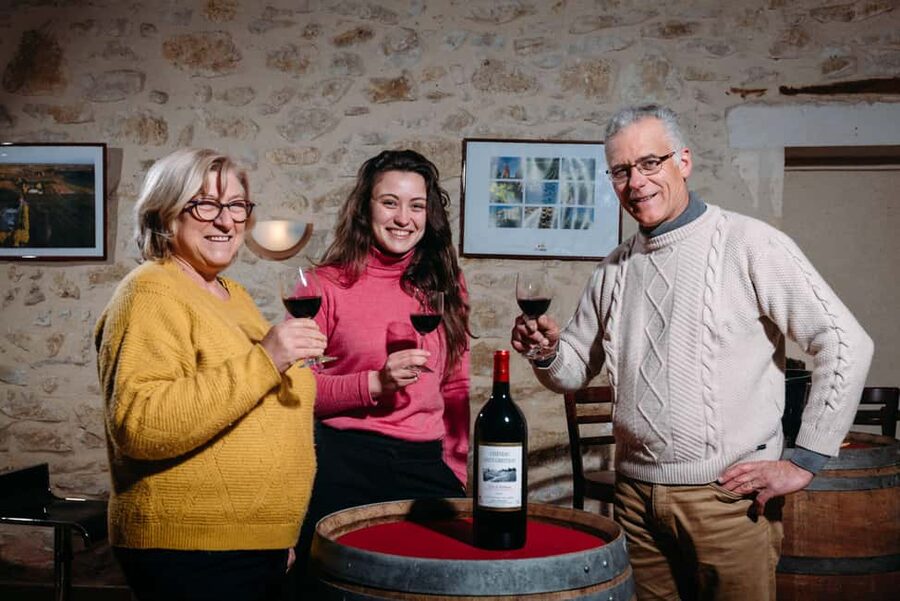
- Five generations at Pestoury: The family history is part of the visit, not a quick footnote.
- Up to 10 wines: You may taste dry white, sweet white, rosé, several red wines, sparkling wines, and grape juice.
- Small groups of 10 or fewer: The format leaves room for questions and personal guidance.
- Organic farming since 2020: You’ll learn how the vineyard is working toward organic methods and why biodiversity matters.
- A useful Bordeaux map: The opening talk explains the region’s 65 appellations before you taste the wines.
- Good value at $21: The price covers the vineyard, cellar, wine education, and a wide tasting flight.
Why Pestoury feels different from a grand Bordeaux estate
Bordeaux is famous for prestigious châteaux, formal tasting rooms, and names that can make a wine list look like a history exam. Pestoury offers something more direct: a working family vineyard where the people guiding you are closely tied to the vines and the bottles.
That family link shapes the whole experience. Marie grew up at the vineyard and speaks about the work as something lived, not memorized. Isabelle and Bertrand may also lead the visit, so the exact tone can vary slightly, but the family connection remains central.
I particularly like this approach for anyone who wants to understand wine without feeling tested. You do not need to know the difference between every Bordeaux appellation before arriving. The tour is designed for experienced wine drinkers and beginners alike, and the guide adjusts the discussion to your questions.
The group limit of 10 is important. This is not a coach-load stop where you are moved from one station to another. A small group gives you more time to ask why a wine tastes dry, how harvest timing affects the final bottle, or what organic farming changes in daily vineyard work.
More Wine Tours in France:
- Authentic Parisian Gourmet Food Tour with 10 Local Dishes & Wines
★ 5.0 · 4,754 reviews - Loire Valley Castles Day Trip from Paris with Complementary Wine
★ 4.5 · 3,907 reviews - Bordeaux: Cité du Vin Entry Ticket and Wine Tasting
★ 4.6 · 3,885 reviews
Start with Bordeaux’s 65 appellations
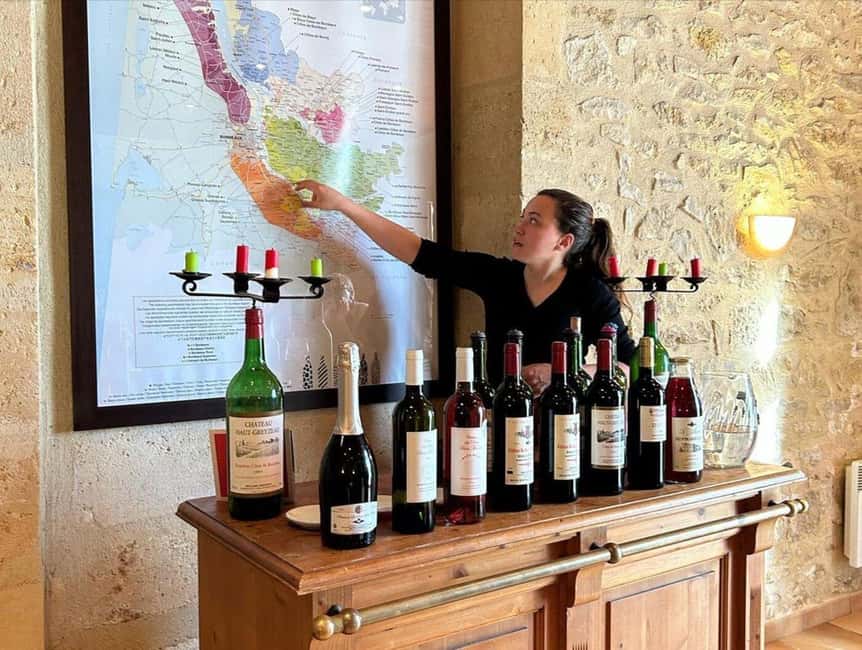
The visit begins around a detailed map of Bordeaux. This is a smart first step because Bordeaux wine labels can be confusing if you only know the city and a few famous names.
The region contains 65 appellations, each linked to particular places and wine traditions. The map helps you see that Bordeaux is not one single style. Its wines include bold reds, crisp dry whites, sweet whites, rosé, and sparkling wine.
This introduction gives the tasting some needed context. Instead of sampling a series of unrelated glasses, you can begin to connect each wine with the grapes, soil, climate, and local traditions behind it.
I would pay attention here, even if you are mainly excited about the tasting. A little regional geography makes the bottles easier to understand later. It also helps you make sense of Bordeaux wine lists during the rest of your trip.
The opening talk is not presented as a formal lecture. The family aims to create a friendly setting, and the small group makes it easier to pause when something catches your interest.
Walk among the vines and see where flavor begins
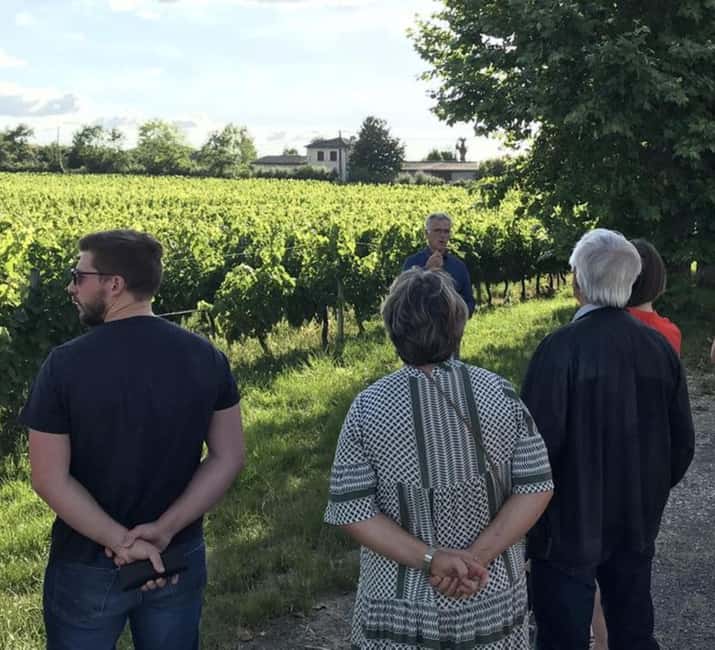
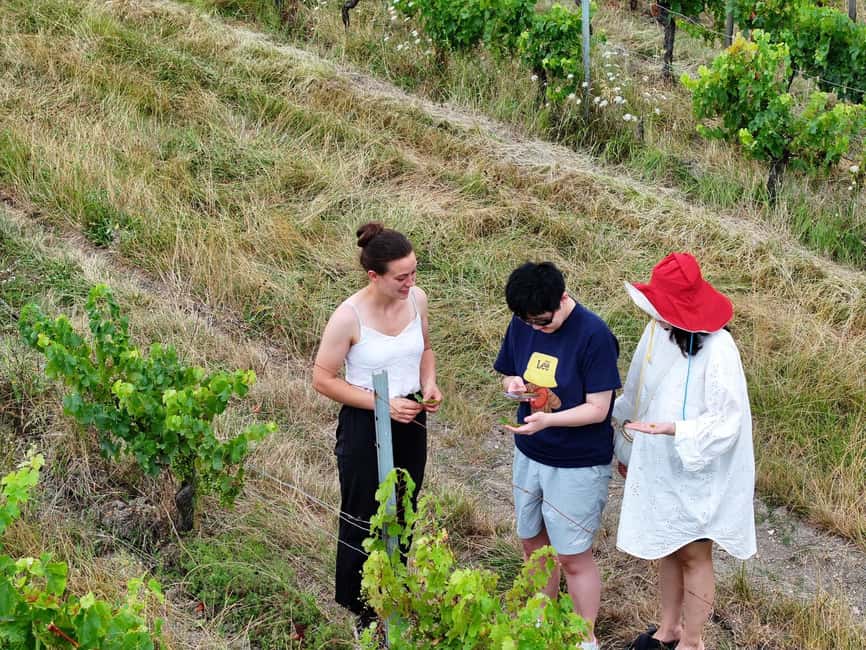
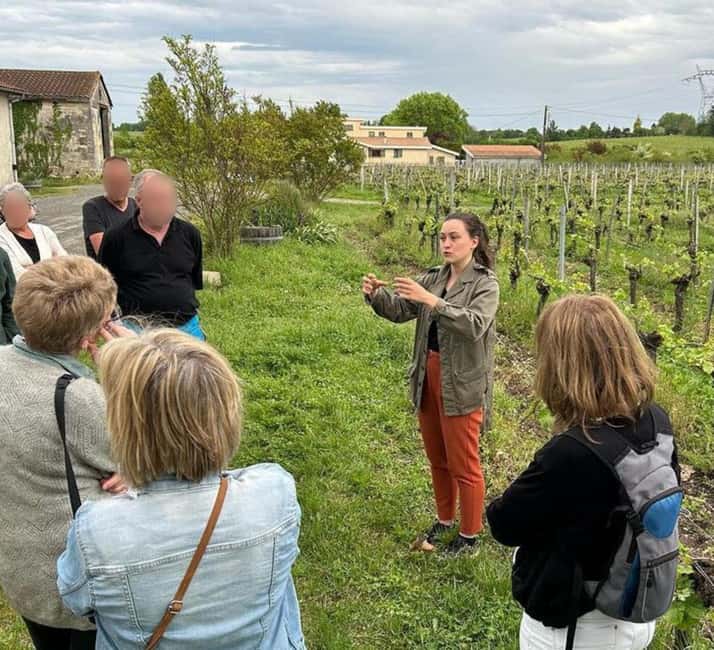
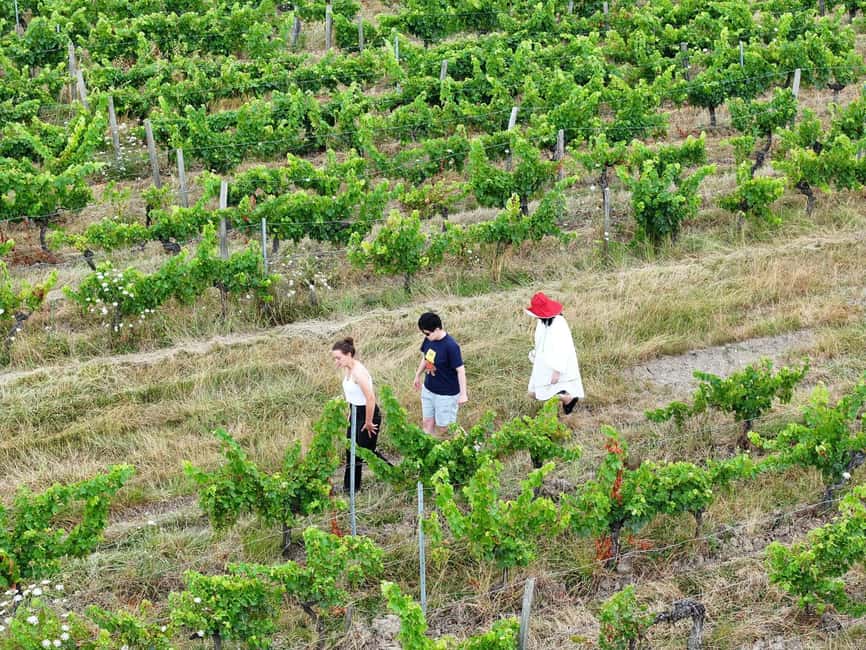
If the weather is suitable, the tour moves outside to the vineyard. This is where the experience becomes more than a cellar presentation.
You’ll look at the vines and learn about the grape varieties, soils, and terroir at Pestoury. The guide explains how the sensations you notice in wine begin in the vineyard, shaped by the plant, the ground, and the climate.
That may sound simple, but it is one of the most useful ideas for a first wine visit. Wine does not begin with a barrel or a label. It starts with decisions made across the seasons, from pruning and growth to harvest.
The family also explains how the vineyard changes throughout the year. You’ll hear about the seasonal work and the timing involved in growing healthy grapes. Later, when the cellar discussion turns to harvest dates and fermentation, this outdoor section gives those details a practical foundation.
Pestoury has been working toward organic farming practices since 2020. The guide explains the effect this work can have on biodiversity and the wider environment. That is a worthwhile part of the tour because it connects farming choices with the health of the vineyard, rather than treating organic production as a marketing label.
You should understand the wording here. The experience says the vineyard has been working toward organic practices since 2020. It does not state that the wine is certified organic, so do not assume certification from the tour description alone.
Comfortable shoes are sensible. Vineyard ground can be uneven, and weather-appropriate clothing matters because the outdoor portion depends on the day. A rainy visit can still work well, but you should arrive ready for conditions rather than expecting a polished indoor-only tour.
Follow the grapes into the winemaking cellar
After the vines, you enter the cellar and follow the production process from fermentation through aging and bottling.
The guide introduces the tanks and barrels used for the different wines. You’ll learn how equipment and technique affect flavor and texture in dry white, rosé, and red wines. This is where abstract wine language becomes easier to grasp because you can connect the explanation with the actual tools used at the vineyard.
Timing receives special attention. The family discusses when to harvest and when to bottle, along with the care needed to help each wine reach its intended character. These decisions are easy to overlook when you only encounter the finished bottle on a restaurant table.
I like that the cellar portion covers the whole chain rather than focusing only on aging. You get a picture of the process from fermentation onward, including how grapes are transformed into different styles of wine.
The tour is not designed to turn you into a winemaker in 90 minutes. It does give you a useful working vocabulary. Afterward, terms such as fermentation, aging, tanks, barrels, harvest, and bottling should feel less like label jargon.
There is also a good balance between technical information and family story. The guide can explain the production process while keeping the focus on how this particular vineyard works.
More Food Tours in France:
- Paris: Seine Cruise & Crepe Tasting near the Eiffel Tower
★ 4.4 · 11,231 reviews - Normandy D-Day Small-Group Day Trip with Omaha Beach, Cemetery & Cider Tasting
★ 5.0 · 2,786 reviews - Paris: Illuminated Evening River Cruise & Waffle Tasting
★ 4.1 · 2,697 reviews - Montmartre Hill French Gourmet Food and Wine Tasting Walking Tour
★ 5.0 · 2,588 reviews
The tasting is the main event
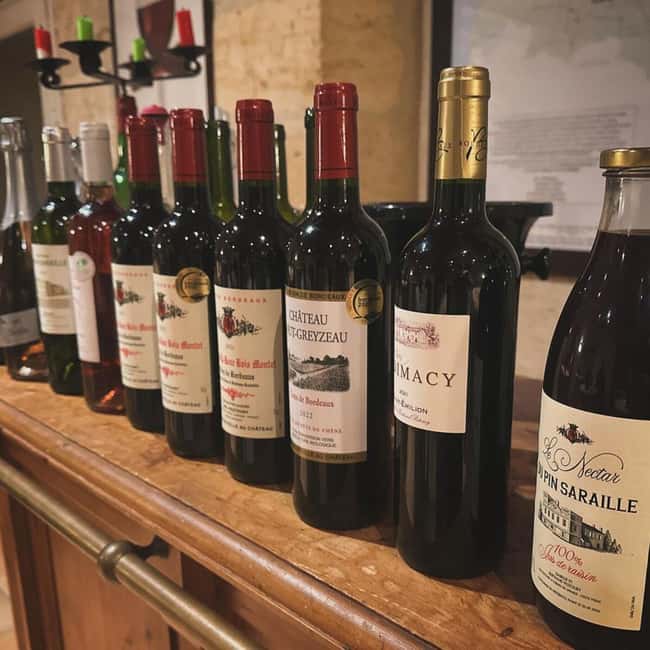
The tasting is the most generous part of the visit. Depending on availability, you may sample the full range from Pestoury, with up to 10 wines and sometimes house-made grape juice.
The selection can include:
- Bordeaux Blanc Sec, a dry white
- Sweet white wine
- Bordeaux Rosé
- Several Côtes de Bordeaux red wines
- Sparkling wines
- House-made grape juice, subject to availability
This range is useful because it shows the breadth of the property’s production. You are not limited to one red Bordeaux style, which is often the assumption made by people who are new to the region.
The number of samples can vary. One tasting included seven very different wines, while another included 10 wines and grape juice. The description says up to 10, so treat that as the upper limit rather than a guarantee for every departure.
Marie guides you through the basic mechanics of tasting. You’ll look at the wine, smell it, and then taste it, learning what to notice at each stage. This is helpful for beginners, but experienced wine drinkers can still use the time to ask more specific questions about production and style.
The inclusion of sparkling wine is a pleasant bonus. Bordeaux is often associated most strongly with red wine, so a broader tasting helps correct that narrow picture. The sweet white is another useful comparison, especially when tasted alongside the dry white.
If you do not drink wine, the grape juice can make the visit more worthwhile, subject to availability. One mixed group included a person who did not drink wine and still found the experience engaging. The map, vineyard, cellar, and production explanations do not depend entirely on alcohol.
You may also find yourself wanting to buy a bottle afterward. Extra bottles are not included, but they are available for purchase. Since the tasting covers several styles, you have a better chance of finding something that suits your taste or makes a practical souvenir.
Marie’s personal style is a major strength
The strongest praise for this experience centers on the guides, especially Marie. She is described as warm, clear, passionate, and willing to answer questions without making the visit feel stiff.
That matters in wine country. A guide can know the facts and still give a flat tour. Here, the family connection gives Marie a natural reason to explain the work in detail, from grape growing to bottling.
Her presentation seems particularly suited to people who feel unsure around wine. She can explain how to taste without turning the session into a performance. If you already know your Bordeaux, the small group gives you a chance to ask about the family’s wines, organic practices, or cellar methods.
Isabelle also receives praise for detailed explanations and a welcoming manner. If she leads your visit, you can expect the same family-centered format, though each guide will have a slightly different way of telling the story.
The experience can also feel personal in small ways. One early arrival was offered coffee, which gives you an idea of the informal welcome. That is not a promised part of the program, but it fits the tone described by the family and the people who have spent time there.
Is $21 a good value?
Yes, particularly if you value explanation as much as tasting.
For $21, you receive 90 minutes with a family member, a regional introduction, vineyard access, cellar instruction, and a tasting of several wines. In a major wine destination, that combination is a strong deal.
The value is even clearer if you are new to Bordeaux. You are not paying only for samples. You are paying for the guide’s help in understanding what you are tasting and why the wines differ.
It also works well for couples or families with mixed interests. The vineyard and cellar offer plenty to follow even if one person drinks little or no wine. The grape juice may be available, but you should not count on it as a guaranteed substitute.
The price does not include transportation or additional bottles. That means your final cost depends partly on how you reach the vineyard and whether you shop afterward. Still, the core visit offers a lot for a modest fee.
Transport and timing deserve a little planning
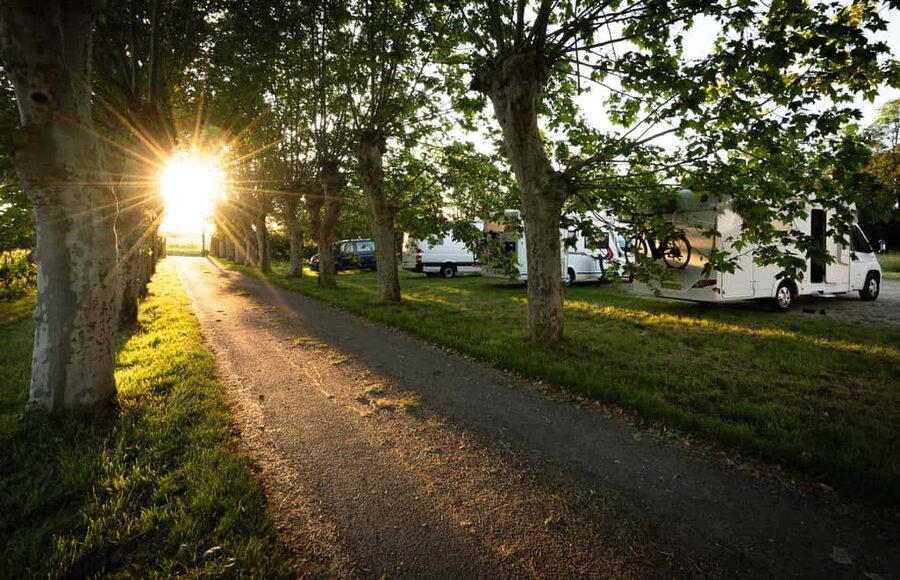
Transportation is the main practical issue. You must arrange your own way to and from the vineyard, although the family can provide guidance about available transport options if you contact them.
Do not treat this as a quick city-center stop unless your own route confirms that it is convenient. Build in enough time for the journey, the 90-minute visit, and your return. The supplied information does not give a precise address or travel time from central Bordeaux, so check the meeting details before booking.
Starting times vary. You need to check availability for the date you want, rather than assuming the tour runs continuously throughout the day.
The visit is wheelchair accessible. You should still bring comfortable shoes and clothing suited to the weather, since the program may include time outdoors among the vines.
Free cancellation is available up to 24 hours before the start time, and you can reserve now while paying later. Those options are useful when your Bordeaux plans are still shifting, but they do not remove the need to sort out transport.
Who should book this vineyard visit?
I would recommend Pestoury to several kinds of people.
First, it suits beginners who want a friendly introduction to Bordeaux wine. The map, outdoor explanation, cellar visit, and guided tasting create a logical path from region to glass.
Second, it fits wine drinkers who prefer small producers and family stories over grand estates. The five-generation history and direct access to the people behind the vineyard give the visit a more personal feel.
Third, it works for anyone who wants variety. With dry and sweet white, rosé, red, sparkling wine, and possibly grape juice, the tasting moves beyond the usual red-only Bordeaux script.
It is also a good choice for visitors who want to support a family-run producer. The experience shows how a smaller vineyard makes wine and how it is changing its farming methods.
I would be more cautious if you want a grand château setting, a long formal tasting, or a full-day wine route with several estates. Pestoury offers one family vineyard and a focused 90-minute visit. Its appeal is personal contact and clear explanation, not spectacle.
Should you book Pestoury Vineyard?
Book it if you want a warm, practical introduction to Bordeaux wine at a low price. The family setting, small group, organic farming discussion, and unusually broad tasting make it a strong choice for both beginners and experienced drinkers.
The best reason to go is the balance. You see the vines, understand the cellar, learn the basics of tasting, and hear the family story without spending a full day or a large sum.
Before you reserve, confirm your transport and prepare for outdoor weather. If you do that, Pestoury offers one of the better-value ways to meet Bordeaux wine at its source, with Marie or another family member guiding you from map to bottle.
FAQ
How long does the Pestoury Vineyard experience last?
The visit lasts 90 minutes.
How much does the vineyard tour cost?
The price is $21 per person.
How many wines can I taste?
You can taste up to 10 wines, depending on availability and the selection offered during your visit.
What types of wine are included?
The tasting can include Bordeaux Blanc Sec, sweet white wine, Bordeaux Rosé, several Côtes de Bordeaux red wines, and sparkling wines. House-made grape juice may also be available.
Who leads the tour?
A family member leads the visit. The guides are Isabelle, Bertrand, or Marie, who most often conducts the tour.
Is the tour suitable for beginners?
Yes. The family welcomes both experienced wine drinkers and complete beginners, and the tasting includes guidance on looking at, smelling, and tasting wine.
Is transportation included?
No. You must arrange your own transportation to and from the vineyard. The family can offer guidance about transport options if you need it.
Is the experience wheelchair accessible?
Yes, the activity is wheelchair accessible.
Can I cancel my booking?
Yes. You can cancel up to 24 hours in advance for a full refund. You can also reserve now and pay later.
Recently added around France
- The essential in Bordeaux, private tour with a local★ 4.9 · 48 reviews
- Avignon, Les Baux, St Remy and Arles from MARSEILLE★ 4.5 · 48 reviews
- Visit Avignon and Villeneuve lez Avignon aboard a Double-Decker Bus★ 4.0 · 48 reviews
- 2 hour outdoor group activity in Paris: SAINT GERMAIN★ 5.0 · 48 reviews
- Private Half-Day Guided Tour of Paris★ 4.5 · 48 reviews
- Blind Test Room & karaoke Montpellier★ 5.0 · 48 reviews
- Paris Dinner Show Opera Bel Canto★ 4.5 · 48 reviews
- The Grand Bike Tour of Lyon – 3h★ 4.5 · 48 reviews
Wine Tours, compared.
Authentic Parisian Gourmet Food Tour with 10 Local Dishes & Wines
Read our review →
Loire Valley Castles Day Trip from Paris with Complementary Wine
Read our review →
Bordeaux: Cité du Vin Entry Ticket and Wine Tasting
Read our review →
Bordeaux: River Garonne Cruise with Glass of Wine and Canelé
Read our review →
Montmartre Hill French Gourmet Food and Wine Tasting Walking Tour
Read our review →
Paris: Montmartre Cheese, Wine & Pastry Guided Walking Tour
Read our review →
From Paris: Loire Valley Castles Day Trip With Wine Tasting
Read our review →
From Bordeaux: Afternoon Saint-Emilion Wine Tasting & snack
Read our review →Browse the lists this tour appears in