
Reviewed · CARCASSONNE TOURS
Carcassonne During World War 2
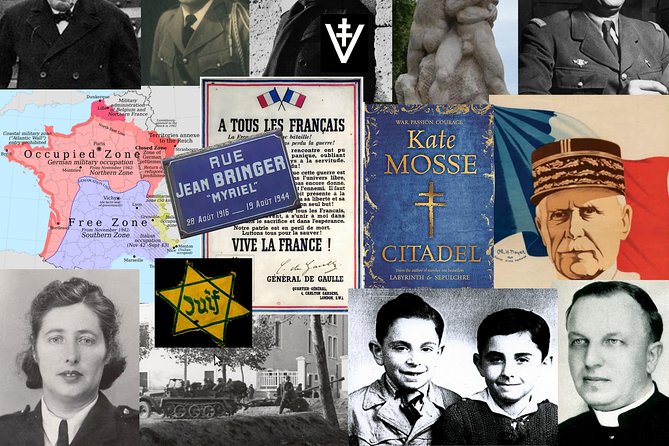
Carcassonne has wartime stories behind its stones. This private walking tour takes you beyond the usual medieval postcard view and into the town’s years of occupation, resistance, rationing, and liberation. Led by Paul, a passionate WWII guide, it uses period photographs and local stories to show how Carcassonne’s people lived between 1939 and 1945.
I especially like the personal stories of local heroes and collaborators, and I like the way old black-and-white photographs are matched with the streets and buildings around you. The main thing to consider is the group size. A private booking can feel personal, but one reported group reached 23 people, which made narrow streets and hearing the guide more difficult.
The tour costs $24.19 per person and lasts about two hours to two hours and fifteen minutes. That is a fair price for a focused history walk, particularly if you already know Carcassonne’s medieval sights and want a more serious look at the town.
In This Review
- Key Points Before You Book
- Why This Carcassonne Walk Is Different
- Starting at Brasserie a 4 Temps
- From the Fall of France to Vichy Rule
- Rationing, the Milice, and the S.T.O.
- Resistance, Collaboration, and Personal Choices
- Exploring la Bastide Instead of Only la Cité
- Using Photographs to Bring the Streets Back to 1939
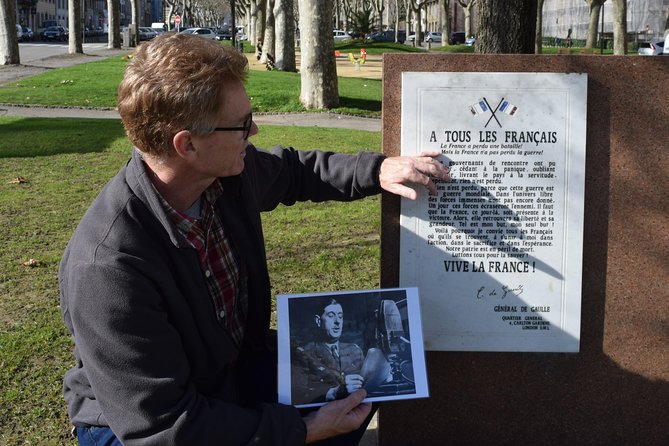
- The Liberation and the Memorial at Square Gambetta
- Guide Quality and Group Size
- Is $24.19 a Good Price?
- Who Should Book This Experience?
- Should You Book Carcassonne During World War 2?
- FAQ
- How long does the Carcassonne WWII tour last?
- What time does the tour start?
- Where does the tour begin?
- Where does the tour end?
- Is the tour offered in English?
- Is this a private tour?
- How much does the tour cost?
- Can I cancel for a full refund?
Key Points Before You Book
- See Carcassonne beyond the medieval citadel: The route brings attention to the lower town, or la Bastide, an area many sightseeing plans pass over.
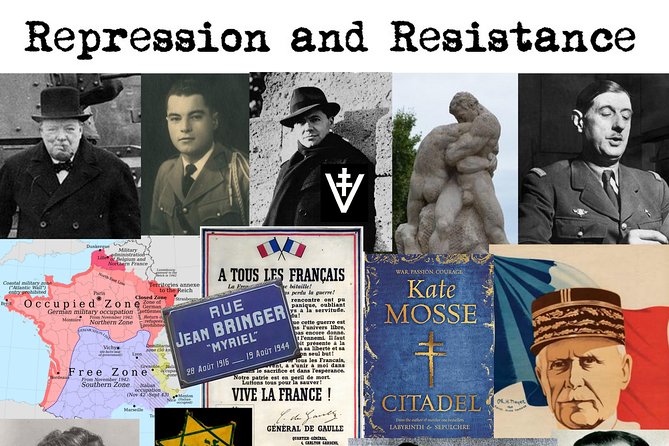
- Follow a local WWII story: The tour covers the fall of France, Vichy rule, the Resistance, collaboration, and liberation through events tied to Carcassonne.
- Learn from period photographs: Paul uses black-and-white images to connect wartime scenes with present-day streets and landmarks.
- Expect a thoughtful, sometimes sombre walk: The subject includes repression, the Milice, forced labor, collaboration, and post-war purges.
- Enjoy a private English-language experience: Only your group is meant to participate, though you should confirm the expected group limit when booking.
- Finish at a Resistance memorial: The walk ends at Square Gambetta, giving the tour a clear and meaningful closing point.
Why This Carcassonne Walk Is Different
Most first visits to Carcassonne focus on the fortified medieval city, with its towers, walls, and storybook views. This experience asks you to look at another Carcassonne, one shaped by decisions made during the Second World War.
The route is not simply a general history lecture. It is a walking lesson in how national events reached an ordinary French town. You hear about the fall of France, the division between occupied and non-occupied zones, the invasion of the Free Zone, and the liberation, but the emphasis remains local.
That local focus is the tour’s great strength. Big wartime events can feel remote when they are presented only as dates and military movements. Here, the guide connects them with residents, officials, resistance workers, and people who chose collaboration. The result is more human and less tidy.
Paul’s style is a major part of the experience. He is described as warm, well prepared, and highly engaged with the subject. He mixes serious material with occasional humor, which helps the walk remain approachable without making light of painful events.
You do not need to be a dedicated WWII student to follow the tour. The material is structured for different levels of interest, and the guide leaves room for questions. If you already know the broader story of France during the war, you will get more from the local names and incidents. If your knowledge is limited, the national background gives you enough footing.
More Carcassonne trips from France:
- Toulouse: Carcassonne Day Trip by Coach with Audioguide
★ 4.4 · 580 reviews - Toulouse : Carcassonne Day Trip by Coach with audio guides
★ 4.0 · 73 reviews - Languedoc: Tour and Tasting at Domaine de Baronarques
★ 4.8 · 64 reviews
Starting at Brasserie a 4 Temps
The meeting point is Brasserie a 4 Temps at 2 Boulevard Barbès. The tour starts at 9:30 a.m., a useful time for anyone who wants to continue sightseeing later in the day.
Starting in the lower town helps set the tone. You are not beginning with a grand medieval monument and then trying to force a modern history lesson into it. Instead, the walk begins in the part of Carcassonne where daily life, administration, commerce, and public memory form the backdrop.
You should arrive ready for a continuous outdoor walk. The route lasts roughly two hours, and some of the streets are narrow. Comfortable shoes will make sense, although the supplied information does not specify a required fitness level.
The tour is offered in English and comes with a mobile ticket. Carcassonne has public transportation nearby, so the starting point is practical for people staying in town or arriving without a car.
From the Fall of France to Vichy Rule
The opening historical section deals with the collapse of France and the new division between occupied and non-occupied territory. This is essential context because Carcassonne’s wartime experience changed as French authority, German power, and local administration shifted around it.
The guide places the town within the wider story of Vichy France. You are not given a simple good-versus-bad version of events. Instead, the tour looks at the spectrum of collaboration and the hard choices faced by people living under pressure.
That balance matters. A local WWII tour can easily turn into a parade of heroic tales, but this one also addresses compromise, fear, repression, and betrayal. You learn that resistance did not look the same for everyone, and collaboration had different forms.
The invasion of the Free Zone receives attention as well. This part helps explain why the situation changed again, rather than treating the entire occupation as one fixed period. For anyone who has read about Vichy France only in general terms, the stop-and-walk format makes these changes easier to track.
Rationing, the Milice, and the S.T.O.
The tour also examines the practical side of wartime life. Rationing is an important inclusion because it shifts the focus from governments and resistance networks to ordinary households.
Food shortages, restrictions, and uncertainty affected daily choices. Even if you are most interested in military history, this section gives you a clearer sense of what occupation meant away from the battlefield.
The Milice introduces the machinery of French collaboration and repression. The tour also covers the S.T.O., the compulsory labor program that sent French workers to Germany. These subjects can be difficult, but they are necessary if you want a full picture of the pressures placed on the population.
Paul’s use of photographs helps here. The images provide a visual reference for the period and give you something concrete to compare with the present street scene. The guide also encourages you to look for details around you, so you are not just listening while walking from one point to another.
This is one reason the pace receives such strong praise. The walk does not rush through a long list of dates. It allows time for explanation, questions, and observation. One account even notes that there was time for a coffee stop, though you should not assume that every departure will include one.
A completely different sort of day in France:
- Paris: Louvre Museum Timed-Entrance Ticket
★ 4.6 · 71,977 reviews - Disneyland® Paris 1-Day Ticket
★ 4.6 · 49,412 reviews - Paris: Versailles Palace and Gardens Full Access Ticket
★ 4.6 · 41,579 reviews - Paris: Evening River Cruise with Music
★ 4.4 · 22,721 reviews
Resistance, Collaboration, and Personal Choices
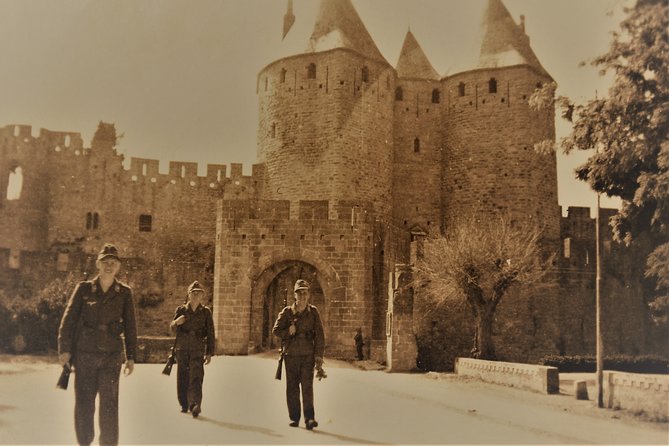
The heart of the experience is its treatment of the Resistance. The tour presents a spectrum of resistance activity rather than suggesting that every opponent of Germany worked in the same way.
You hear about national heroes, local heroes, and forgotten heroes. That last category is especially valuable. Famous names already have monuments, books, and films. A good local guide can show you how less celebrated people also carried risk, passed information, helped others, or made choices that were never widely remembered.
At the same time, the tour looks at collaboration. This gives the walk moral weight. You are asked to consider not only who resisted, but who supported repression, why they did so, and how the town dealt with those actions afterward.
The stories are personal enough to make the period feel close, but they are set against the national and international picture. That combination is the reason this tour works for both history specialists and people with only a passing interest.
Expect a sober mood at times. This is not a light sightseeing stroll dressed up with wartime vocabulary. The subjects include repression, forced labor, the Milice, and post-war punishment. The guide’s humor and friendly manner keep the presentation human, but the material itself deserves attention.
Exploring la Bastide Instead of Only la Cité
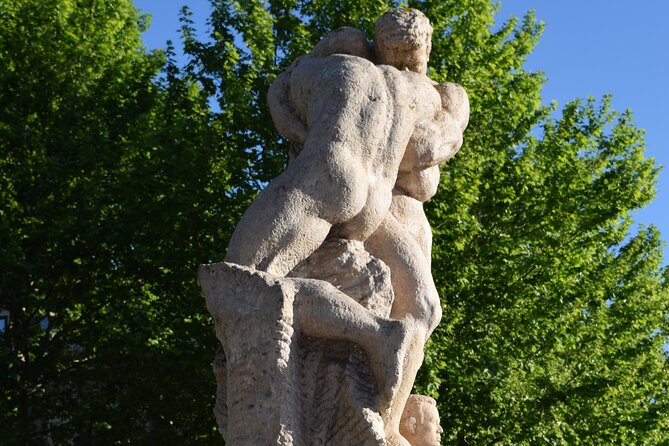
One of the most useful features is the attention given to la Bastide, Carcassonne’s lower town. Many visitors head straight for la Cité and spend little time considering the rest of the city. This tour turns that usual pattern around.
The wartime story gains force because it unfolds in working streets rather than only beside famous fortifications. You see how plaques, monuments, and ordinary corners can carry meaning that is easy to miss when you are sightseeing quickly.
One especially useful point comes from someone who had owned a house in Carcassonne for 20 years but had walked past local memorials without considering them closely. That is a good warning for all of us. Familiar streets can hide a great deal, and a guide can change what you notice.
Do not expect a standard medieval architecture tour. The focus is World War II, not a full survey of Carcassonne’s Roman or medieval past. The fortifications may provide the broader setting, but the tour’s strongest material is connected with the lower town and its wartime memory.
Using Photographs to Bring the Streets Back to 1939
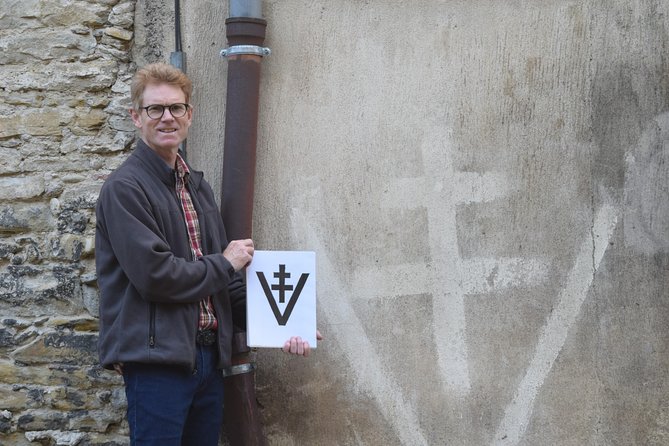
The black-and-white photographs are more than decoration. They give the guide a way to show how places looked during the war and help you picture people who are otherwise just names in a story.
This visual method received repeated praise because it makes the talk easier to follow. A photograph can turn an abstract explanation into a direct comparison: then and now, public space and private fear, familiar street and wartime setting.
The guide also uses landmarks and asks you to look for things connected with the story. That makes the walk interactive without turning it into a game. You remain part of the scene rather than standing in one place for a long speech.
The presentation is reported to be clear and professionally organized. The pace suits a two-hour walk, and the material is pitched for different ages and levels of prior knowledge. If you prefer a guide who simply lists dates, this may feel more conversational than expected. That is a benefit for most people, though anyone seeking an academic lecture may want a more specialized format.
The Liberation and the Memorial at Square Gambetta
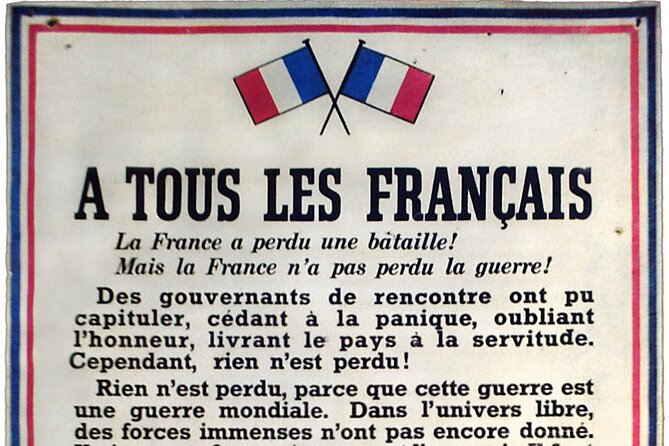
The walk closes with the liberation and the post-war purges. This ending matters because the story does not stop when German control ends.
Liberation brought relief, but it also raised difficult questions about punishment, justice, and public memory. The inclusion of post-war purges gives the tour a more complete shape and avoids presenting liberation as a clean final chapter.
The route ends at the memorial to the Resistance at Square Gambetta, at 16 Avenue Arthur Mullot. Finishing at a memorial gives the walk a natural pause and lets the subject settle before you move on to lunch or another sight.
The endpoint also gives you practical flexibility. You are not returned to the starting brasserie, so think of the tour as a point-to-point walk. That is easy enough to manage in central Carcassonne, but you should note the end location before booking other plans.
Guide Quality and Group Size
Paul is the key reason this experience earns such strong approval. He brings careful research, clear delivery, local anecdotes, photographs, and obvious personal interest in the subject.
You can expect a guide who welcomes questions and adjusts to the group. He is described as pleasant and accommodating, with a good sense of humor and an ability to keep the subject engaging for the full two hours.
The private format is appealing because it should allow your group to ask questions and spend more time on the subjects that interest you. It also makes the experience more personal than a large, fixed walking tour.
There is one practical warning. A group of 23 was considered too large for the narrow streets, with problems hearing the guide and finding safe places to stand. Paul acknowledged the issue and indicated that a limit of 12 might be considered.
That response is encouraging, but it does not guarantee that every booking will have 12 or fewer people. Ask about the current maximum group size if clear audio, easy movement, or a quieter experience matters to you.
Is $24.19 a Good Price?
At $24.19 per person, the tour offers good value if you want more than a quick introduction to Carcassonne. You receive about two hours of guided interpretation, a focused WWII subject, an English-speaking private guide, and visual material that would be difficult to find while walking alone.
The value is strongest for people who have already seen the main medieval sights. Once you have admired the walls and towers, this tour adds another layer to the city without requiring an expensive museum ticket or a full-day excursion.
It is less useful if you want a broad overview of all Carcassonne history. The route is tightly centered on 1939 to 1945, including resistance, collaboration, rationing, and liberation. That focus is a strength, but it also means you should not book it expecting a general city tour.
The tour includes free admission for the walk itself. Since the experience takes place outdoors, poor weather can lead to a change of date or a full refund. A minimum number of participants is also required, and if that is not met, you are offered another date or experience, or a full refund.
Free cancellation is available up to 24 hours before the start time. After that point, the payment is not refunded and changes are not accepted.
Who Should Book This Experience?
I would choose this tour if you have a real interest in World War II, the French Resistance, or the complicated story of Vichy France. It is also a strong choice if you have read historical fiction set in the region and want to separate local fact from imagined drama.
You do not need advanced knowledge. The guide provides the larger context, then narrows the focus to Carcassonne and the people connected with it.
The experience suits couples, families with older children, and small private groups who prefer conversation over a large scripted walk. Most people can participate, and the route is near public transportation.
You should think twice if you dislike serious subject matter or want a relaxed architectural stroll. The tour includes repression, collaboration, forced labor, and purges, and some stories are likely to stay with you after the walk.
Should You Book Carcassonne During World War 2?
Book it if you want to understand the city through its people, not just its walls. Paul’s preparation, period photographs, and attention to overlooked local figures give the walk a purpose that a standard sightseeing route cannot match.
The best reason to go is the combination of local detail and national context. You learn what happened in France, then see how those events affected Carcassonne’s streets and residents.
Before paying, confirm the group size and remember that the tour finishes at Square Gambetta rather than at the starting point. If those details suit your plans, this is a thoughtful, fairly priced, and unusually memorable way to spend a morning in Carcassonne.
FAQ
How long does the Carcassonne WWII tour last?
The experience lasts approximately two hours and fifteen minutes. The walking itinerary describes the guided portion as about two hours.
What time does the tour start?
The scheduled start time is 9:30 a.m.
Where does the tour begin?
The tour begins at Brasserie a 4 Temps, 2 Boulevard Barbès, 11000 Carcassonne, France.
Where does the tour end?
The walk ends at the Resistance memorial at Square Gambetta, listed at 16 Avenue Arthur Mullot, 11000 Carcassonne, France.
Is the tour offered in English?
Yes. The tour is offered with an English-speaking guide.
Is this a private tour?
Yes. It is described as a private tour or activity, with only your group participating. You may want to confirm the current maximum group size before booking.
How much does the tour cost?
The listed price is $24.19 per person.
Can I cancel for a full refund?
Yes. You can cancel at least 24 hours before the scheduled start time for a full refund. Cancellations or changes made less than 24 hours in advance are not accepted for a refund.
Recently added around France
- The essential in Bordeaux, private tour with a local★ 4.9 · 48 reviews
- Avignon, Les Baux, St Remy and Arles from MARSEILLE★ 4.5 · 48 reviews
- Private Half-Day Guided Tour of Paris★ 4.5 · 48 reviews
- Visit Avignon and Villeneuve lez Avignon aboard a Double-Decker Bus★ 4.0 · 48 reviews
- 2 hour outdoor group activity in Paris: SAINT GERMAIN★ 5.0 · 48 reviews
- Blind Test Room & karaoke Montpellier★ 5.0 · 48 reviews
- Paris Dinner Show Opera Bel Canto★ 4.5 · 48 reviews
- Cannes: Lérins Islands Private Boat Tour★ 4.9 · 48 reviews
Carcassonne Tours, compared.
Toulouse: Carcassonne Day Trip by Coach with Audioguide
Read our review →
Toulouse : Carcassonne Day Trip by Coach with audio guides
Read our review →
Carcassonne: Private Guided Tour of the Medieval Fortress
Read our review →
Languedoc: Tour and Tasting at Domaine de Baronarques
Read our review →

Browse the lists this tour appears in