
Reviewed · COOKING CLASSES
Croissants and pains au chocolat with a pastry chef in Paris
Fresh pastry is a fine Paris souvenir. This small-group baking class takes you inside a Parisian home to make croissants and pains au chocolat with Chef Joannie, from dough to oven. I like the hands-on format, and I like that you leave with a recipe and practical tips for trying the process at home.
The two-and-a-half-hour session also gives you a relaxed break from museums and monuments. The main cautions are the $126.98 price, the use of gluten and dairy, and the resident cat, which may be a problem if you have allergies or simply do not like cats.
In This Review
- Key points at a glance
- A Paris baking class with a personal feel
- What you learn from dough to golden pastry
- Croissants and pains au chocolat, made by you
- Chef Joannie’s teaching style
- A welcome pause from sightseeing
- Is $126.98 a fair price?
- Who should book this experience?
- Timing, transport, and booking advice
- Should you book Chef Joannie’s pastry class?
- FAQ
- Where does the croissant class begin?
- Where does the experience end?
- How long does the class last?
- How many people can join the class?
- Is the class offered in English?
- What pastries will I make?
- What parts of the baking process will I learn?
- Is the class suitable for children?
- Can I cancel for a full refund?
Key points at a glance
- Bake in a Parisian home: The class takes place at 115 Boulevard Voltaire in an old Parisian building, not in a large commercial school.
- Work through every major stage: You learn about dough, butter, lamination, shaping, fermentation, and baking.
- Small groups matter: With a maximum of six people, you get room to handle the pastry rather than just watch.
- Chef Joannie is the main attraction: Her warm teaching style, patience, and city advice add a personal touch.
- You eat and take pastry home: You sample the finished goods, enjoy a hot drink and a French pastry, and leave with more baking to enjoy later.
- Plan around a few restrictions: The class is not suitable for gluten-free or lactose-free diets, children under 10, or people allergic to cats.
A Paris baking class with a personal feel
This experience begins at 115 Boulevard Voltaire in Paris’s 11th arrondissement. You meet at the listed address and finish there, so the class is simple to fit into your day without a second drop-off point.
The setting is part of the appeal. Instead of entering a polished cooking studio filled with rows of strangers, you enter Chef Joannie’s home in an old Parisian building. The kitchen is described as clean, comfortable, and welcoming, with the sort of intimate atmosphere that helps a group relax quickly.
The maximum group size is six. That number is important for pastry. Croissant dough needs real handling, and you do not want to spend the class peering over someone else’s shoulder. A group of five or six still gives you company, but it also leaves room for questions and individual help.
A cat lives in the home. Some people will see this as a charming part of the visit. If you are allergic to cats or uneasy around them, take the warning seriously before booking.
More Cooking Classes in Paris:
- Paris: Montmartre Cheese, Wine & Pastry Guided Walking Tour
★ 4.8 · 2,255 reviews - Paris Cooking Class and Lunch with Wine plus Market Visit Option
★ 5.0 · 1,024 reviews - Paris Croissant Small-Group Baking Class with a Chef
★ 5.0 · 910 reviews
What you learn from dough to golden pastry
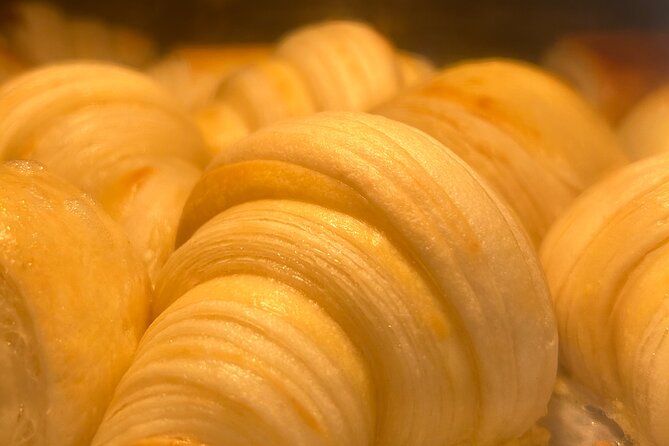
Croissants look simple in a bakery case. The dough, butter, and chocolate are familiar. The method is not. This class focuses on the stages that make laminated pastry light, flaky, and properly layered.
Chef Joannie walks you through the process step by step. You learn about:
- Mixing and preparing the dough
- Working butter into the dough
- Lamination, the folding and rolling process that creates layers
- Fermentation and the need to give the dough time
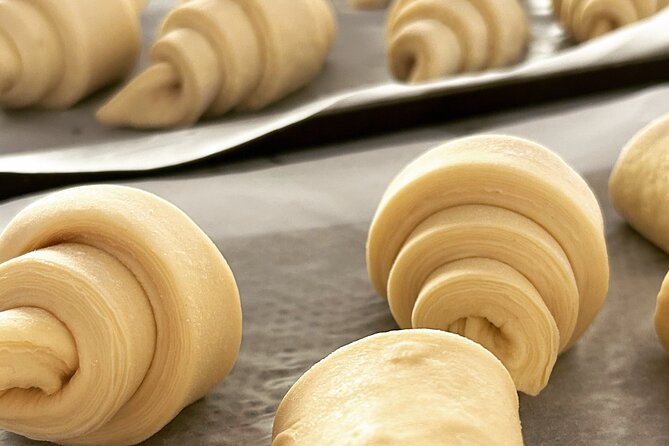
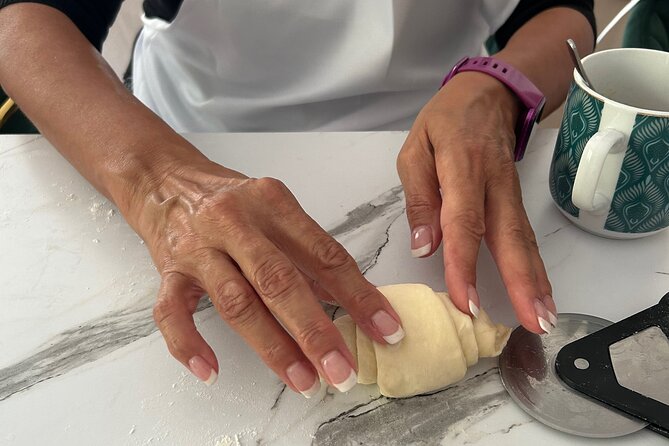
- Cutting and shaping croissants
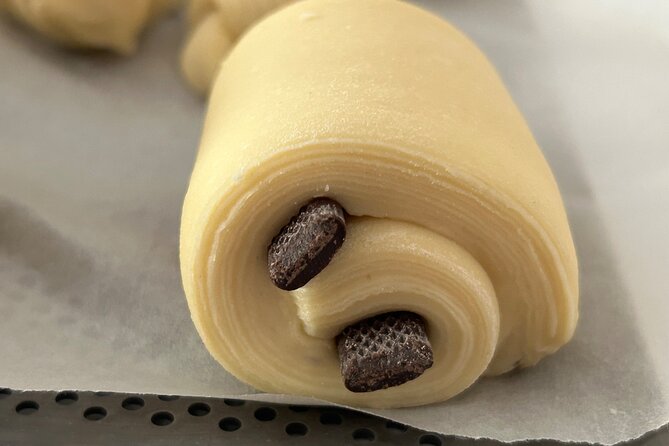
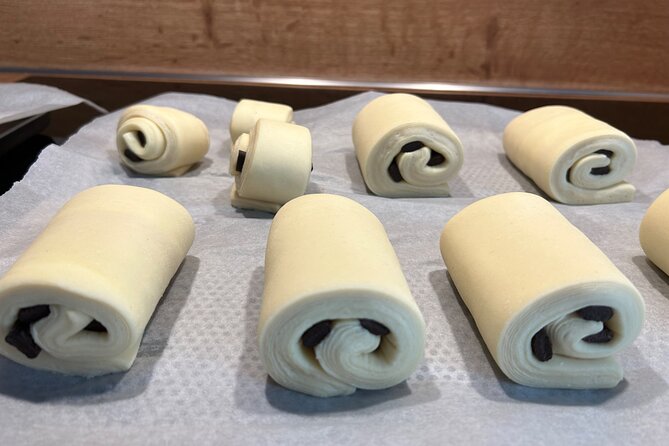
- Forming pains au chocolat
- Baking the finished pastry
The biggest advantage is that the class compresses a process that normally takes two or three days into roughly three hours. That does not mean the method becomes effortless. It means Joannie prepares dough at different stages so you can understand the full sequence during one visit.
That is a smart teaching choice. You can see how the dough changes instead of waiting through long periods when nothing happens. You also learn why timing matters, which is the part most likely to help when you try the recipe in your own kitchen.
You should expect to work with your hands. This is not a demonstration where you sit back and watch a professional do everything. The small group format lets you roll, shape, and handle the pastry yourself, with Joannie correcting technique and explaining what to look for.
The class suits beginners, and it also has enough detail for home bakers who already understand basic dough. You will not become a professional pastry chef in one morning, but you can leave with a clearer sense of how croissants are made and what usually goes wrong.
Croissants and pains au chocolat, made by you
The two main pastries are well chosen. Croissants teach you how to shape and roll the dough into the familiar crescent. Pains au chocolat offer a different shape and a chocolate center, while using the same basic laminated dough.
That gives you variety without turning the class into a long list of unrelated recipes. You learn one demanding base method and use it in two classic French forms.
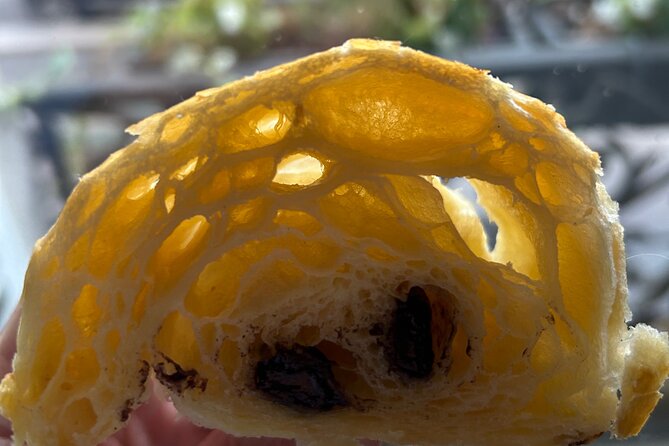
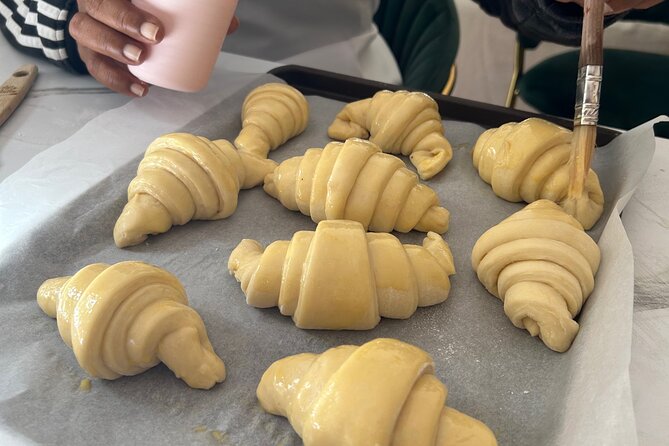
The baking stage provides the payoff. You see the pastries go from shaped dough to finished treats, then taste what you helped make. The pastry is described as rich and delicious, and the class includes croissants and pains au chocolat with a hot beverage. A surprise French pastry made by Joannie is also part of the session.
One practical detail matters here: the finished pastry is not only for eating on the spot. You take some home with you. Several people found that they had enough baked goods to snack on for the rest of the day, or even to use as breakfast during the remainder of their stay.
Because of that, I would schedule this class early in your Paris visit if possible. Fresh pastry makes a much better souvenir before you have filled your suitcase with purchases. Just remember that the pastries are perishable, so enjoy them soon rather than expecting to transport them home.
One piece of feedback raises a fair concern. At least one group felt that the take-home portions could have been divided more generously, and one person did not receive the hot drink expected. These comments do not change the overall appeal, but they show why you should confirm how the finished pastries will be shared if your group is large.
Chef Joannie’s teaching style
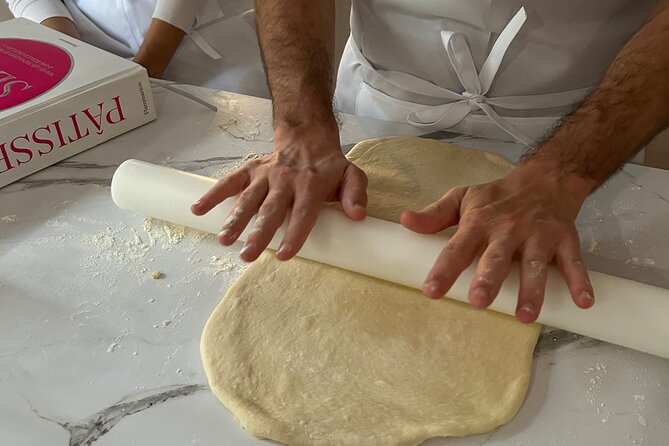
The instructor is a major part of this experience. Joannie is described as warm, organized, patient, and personable. She explains the process carefully and answers questions without making beginners feel out of place.
That matters with croissants because the technique can seem fussy. You need to handle the butter and dough correctly, and small mistakes can affect the final layers. A calm teacher makes it easier to learn instead of rushing through the steps.
Joannie also prepares dough at several points in the process. This lets you see stages that could not fit into a single sitting. She can explain the effect of fermentation, show how the dough should feel, and keep the class moving while still covering the important details.
Her flexibility is another useful quality. One class was affected by train station closures during the Olympics, yet she adjusted the session so the group could still learn all the main steps. That suggests a teacher who cares more about the lesson than about rigidly following the clock.
You also get informal Paris advice during the class. Joannie discusses the city and recommends local patisseries and restaurants. This is not a dedicated food tour, and you should not expect a long neighborhood walk. Still, advice from a pastry chef can help you choose where to eat after class, especially if you want to compare your own results with professional French pastry.
A few more Paris trips worth weighing up
- Paris: Louvre Museum Timed-Entrance Ticket
★ 4.6 · 71,977 reviews - Disneyland® Paris 1-Day Ticket
★ 4.6 · 49,412 reviews - Paris: Versailles Palace and Gardens Full Access Ticket
★ 4.6 · 41,579 reviews - Paris: Evening River Cruise with Music
★ 4.4 · 22,721 reviews
A welcome pause from sightseeing
Paris sightseeing can become a string of timed entries, crowded rooms, and long walks. This class offers a different rhythm. You spend two and a half hours concentrating on a practical skill, eating pastry, and talking with a local host.
I think it works especially well in the middle of a busy trip. You get a break without giving up the sense that you are doing something distinctly Parisian. Baking croissants is not just a generic cooking activity transplanted into France. It connects directly to one of the country’s most familiar food traditions.
The home setting also creates a more social experience. You may share the class with another family, a couple, or a small group of friends. Several groups found the size of six ideal because everyone could participate and the atmosphere stayed relaxed.
There is a mild risk here: the quality of the social experience depends partly on the other people in your group. That is true of any shared class. The small size helps, since you are not lost in a crowd, but it cannot guarantee that every group will have the same chemistry.
Is $126.98 a fair price?
At $126.98 per person, this is not a cheap breakfast. You can buy a good croissant in Paris for only a few euros. If your goal is simply to eat French pastry, visit a neighborhood bakery and spend the rest of your money elsewhere.
The price makes more sense if you value the lesson, the personal setting, and the memory. You are paying for direct instruction, ingredients, kitchen access, hands-on work, finished pastry, a drink, another French treat, and a recipe to use later. You also get local food recommendations and the chance to meet a pastry chef in her home.
The take-home baking is part of the value. Several groups left with enough croissants and pains au chocolat to continue enjoying the results after the class. The recipe and tips are sent after the session, which gives the experience a life beyond your Paris visit.
Still, expectations should be realistic. The class does not provide a professional kitchen certificate, a full multi-day pastry course, or an unlimited supply of pastry. If the take-home portions are divided among a group, the amount each person receives may vary.
I would call it fair value for someone who wants an activity rather than just a meal. For a family of four, the total cost becomes substantial, so decide if the class is likely to be one of the main memories of your trip. For a couple or a serious home baker, the personal instruction may feel easier to justify.
Who should book this experience?
This class is a strong match for:
- First-time bakers who want patient instruction
- Couples looking for a food-focused Paris activity
- Families with children aged 10 and older
- Teenagers who enjoy practical activities
- Home bakers who want to improve laminated pastry
- People who prefer small groups to large cooking schools
- Anyone wanting a break from standard sightseeing
Families received especially positive results from the format. Teenagers participated, and even younger participants could handle parts of the work with help. The official age rule says the class is not available to children under 10, so do not treat the family-friendly atmosphere as permission to bring younger children.
The class is also available in French, English, and Italian. The experience is offered in English, and the multilingual option may help mixed-language groups feel more comfortable.
You should skip it if you need gluten-free or lactose-free food. The central products are croissants and pains au chocolat, so there is no practical way to avoid the ingredients that define the class. You should also skip it if you have a cat allergy or are afraid of cats.
Timing, transport, and booking advice
The experience lasts approximately two hours and 30 minutes. Give yourself enough time to reach 115 Boulevard Voltaire without arriving breathless. The address is near public transportation, but the provided information does not identify a specific station, so check your route on the day of the class.
The class is often reserved well ahead, with an average booking time of 54 days in advance. If your Paris dates are fixed, reserve early, especially if you want a particular morning or afternoon.
You receive confirmation when booking, and a mobile ticket is available. Free cancellation applies if you cancel at least 24 hours before the start time. Cancellations or changes made less than 24 hours before the class do not qualify for a refund, and the cut-off follows Paris local time.
Bring an appetite and wear clothes you can work in. The available information does not specify a dress code or equipment list, so you should not assume that special tools are required. The key point is to arrive ready to participate, not just observe.
Should you book Chef Joannie’s pastry class?
Yes, if you want to learn a real Paris food skill in a small, friendly setting. The best reasons to book are the hands-on work, the compact group, Joannie’s patient instruction, and the chance to take your own pastry and recipe home.
I would think twice if you are mainly seeking the cheapest way to eat breakfast, or if the price is a concern for a larger family. Confirm how the pastries will be shared, and do not book if gluten, dairy, or cats are an issue.
For the right person, this is more than a pastry tasting. It is a useful souvenir, a quiet break from sightseeing, and a chance to bring a little Parisian bakery know-how back to your own kitchen.
FAQ
Where does the croissant class begin?
The class begins at 115 Boulevard Voltaire, 75011 Paris, France.
Where does the experience end?
The activity ends back at the meeting point.
How long does the class last?
The class lasts approximately two hours and 30 minutes.
How many people can join the class?
The maximum group size is six people.
Is the class offered in English?
Yes. The activities are available in French, English, and Italian, and the experience is offered in English.
What pastries will I make?
You will learn to make croissants and pains au chocolat.
What parts of the baking process will I learn?
The class covers the dough, lamination, fermentation, shaping, and baking.
Is the class suitable for children?
The activity is not available to children under 10 years old.
Can I cancel for a full refund?
Yes, if you cancel at least 24 hours before the experience start time. Cancellations made less than 24 hours before the start time are not refunded.
Recently added around Paris
- Private Half-Day Guided Tour of Paris★ 4.5 · 48 reviews
- 2 hour outdoor group activity in Paris: SAINT GERMAIN★ 5.0 · 48 reviews
- Paris Dinner Show Opera Bel Canto★ 4.5 · 48 reviews
- Paris Vintage Tour by Night on a Sidecar with Champagne★ 5.0 · 48 reviews
- Secrets & Scandals of the Louvre – Limited to 6 Guests★ 5.0 · 48 reviews
- Paris Photoshoot: Eiffel Tower Exclusive Private Experience★ 5.0 · 48 reviews
- Paris: Louvre Mona Lisa Discovery Guided Tour with Ticket★ 4.9 · 48 reviews
- From Paris: Versailles Full-Day Guided Tour with Lunch★ 4.9 · 48 reviews
Cooking Classes, compared.

Paris: Montmartre Cheese, Wine & Pastry Guided Walking Tour
Read our review →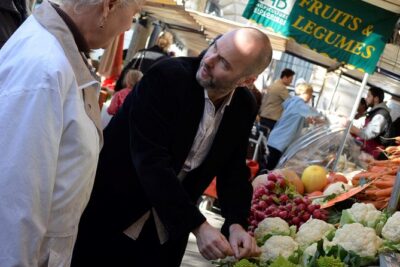
Paris Cooking Class and Lunch with Wine plus Market Visit Option
Read our review →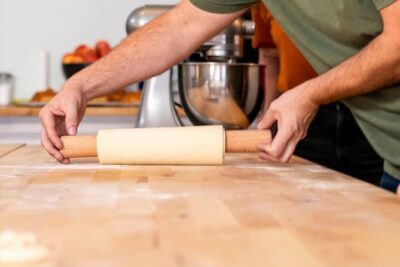
Paris Croissant Small-Group Baking Class with a Chef
Read our review →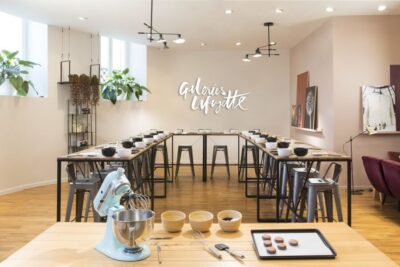
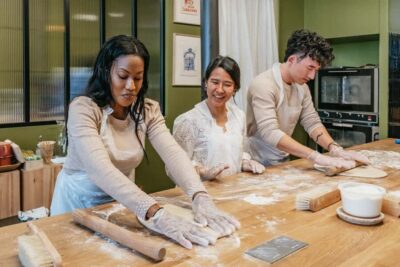
Paris: French Croissant Baking Class with a Chef
Read our review →
Paris Cooking Class: Learn How to Make Macarons
Read our review →
A Morning in Paris Food Tour: Croissants, Baguettes & Chocolate
Read our review →Browse the lists this tour appears in