
Reviewed · WALKING TOURS
Early Access Paris Notre Dame Cathedral Walking Tour
Paris begins on an island. This two-hour walk links Notre Dame’s restored interior with the older stories of Île de la Cité, the Seine, and the streets around them. I like the strong historical setting before you enter the cathedral, and I like the chance to see Notre Dame after its long restoration. The main catch is important: on this version, the guide does not accompany you inside Notre Dame, and admission to the cathedral itself is free.
The walk costs $71.20 per person and is offered in English, with groups capped at 25. I also like the optional Sainte-Chapelle upgrade, especially if you want to see two of Paris’s finest Gothic buildings in one outing. Still, you should read the booking details carefully, since early access does not always mean walking straight in, and long waits have occurred.
In This Review
- Key points to know before booking
- Why this walk gives Notre Dame more meaning
- Starting at Square Jean XXIII
- Walking beside the Seine
- Île de la Cité, Paris’s historic core
- Inside the restored Notre Dame
- The cathedral plaza and Paris’s measuring point
- The police prefecture and wartime scars
- The flower market and Palais de Justice
- Sainte-Chapelle and the old prison
- The medieval clock and Pont Neuf finish
- What $71.20 really buys you
- Walking conditions, clothing, and group size
- Who should book this Notre Dame walk
- Should you book it?
- FAQ
- Is Notre Dame admission included?
- Does the guide enter Notre Dame with the group?
- How long is the tour?
- Is this a skip-the-line tour?
- Is Sainte-Chapelle included?
- Where does the tour start?
- Where does the tour end?
- Is the tour offered in English?
- What should I bring?
- Can people with limited mobility join?
Key points to know before booking
- Notre Dame entry is self-guided: Your guide explains the cathedral outside, then you enter independently for about 45 to 60 minutes.
- The history begins before the cathedral: Square Jean XXIII, the Seine, and Île de la Cité provide useful context for understanding Paris.
- Early access can help, but it is not a guaranteed skip-the-line ticket: Notre Dame is extremely popular after reopening, and queues can change.
- The guide quality is a major strength: Guides including Maja, Nina, Abi, Ife, Saeed, Carol, and Abbie have been praised for warmth, clear storytelling, and strong local knowledge.
- Sainte-Chapelle is optional: An upgrade adds a later interior visit of about 60 minutes, and the tour ends there for those who choose it.
- Expect cobblestones and a steady walk: Comfortable shoes matter, and this is not a good fit if stairs, inclines, or uneven ground are difficult.
Why this walk gives Notre Dame more meaning
Notre Dame can be reduced to a quick photograph from the riverbank. That would be a shame. The cathedral is not an isolated monument. It sits on Île de la Cité, the small island where Paris developed around government, religion, trade, punishment, and royal power.
This tour makes that setting the main story. You walk through the island’s key sites before and after entering Notre Dame, so you get more than a church visit. You get a short lesson in how Paris grew.
The strongest part of the experience is the local guide’s storytelling. Several guides have earned especially warm praise for making complicated subjects easy to follow. Nina is noted for including children, Abi for turning facts into stories, and Ife for keeping the group moving while answering questions. Maja, Saeed, Carol, and Abbie have also been praised for their enthusiasm and personal approach.
That human element matters here. The route includes Roman remains, medieval royal buildings, French Revolution sites, and traces of the Liberation of Paris. Without explanation, much of it can look like old stone and government offices. With a good guide, the island becomes a sequence of connected events.
More Walking Tours in Paris
- Paris Top Sights Half Day Walking Tour with a Fun Guide
★ 5.0 · 2,893 reviews - Montmartre Hidden Gems and Scenic Highlights Walking Tour
★ 5.0 · 2,684 reviews - Montmartre Hill French Gourmet Food and Wine Tasting Walking Tour
★ 5.0 · 2,588 reviews
Starting at Square Jean XXIII
The meeting point is at Place Louis Aragon, near the cathedral area, but do not assume it is directly beside Notre Dame. One person missed the tour after going to the wrong place, so check the exact meeting point and allow time to find it.
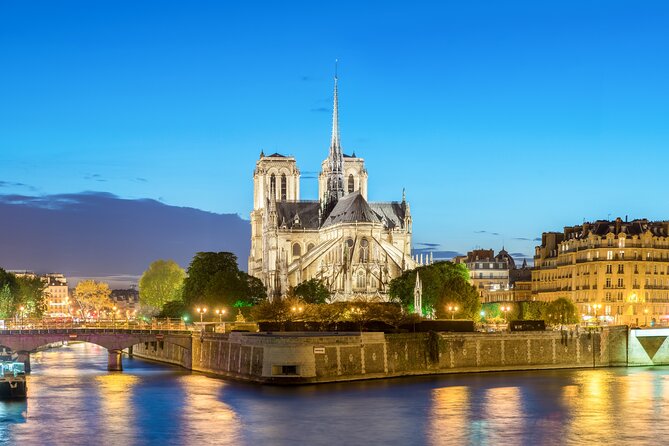
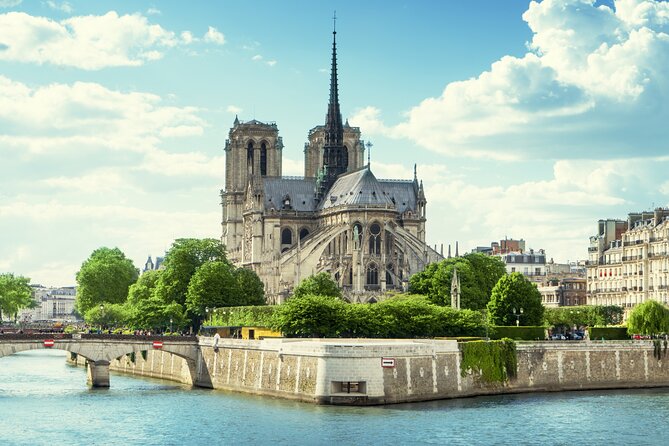
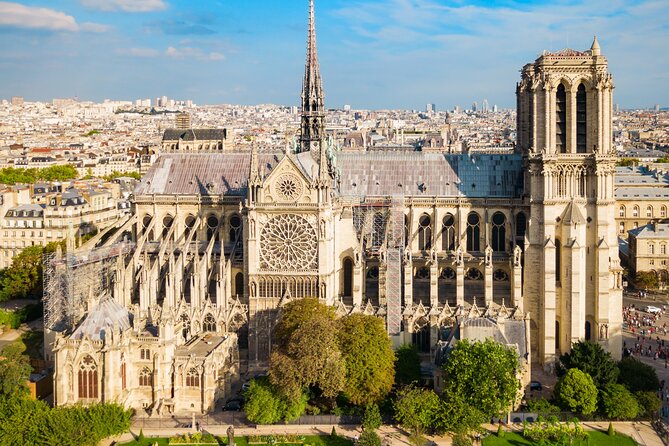
The first stop is Square Jean XXIII, behind Notre Dame. It gives you one of the best angles for the cathedral’s flying buttresses. These stone supports are not just decorative. They helped carry the weight of the Gothic walls and allowed builders to create taller interiors with larger windows.
The square also introduces a much older Paris. Archaeological excavations revealed a pillar associated with the Nautes, a powerful corporation of traders in ancient Paris. The monument reflects an attempt to connect Celtic and Greco-Roman religious traditions. The Romans understood the economic and political power of local traders, and the pillar helped link different belief systems.
You get about five minutes here, so this is a quick introduction rather than an archaeological visit. I would keep your camera ready and listen closely. The story is more interesting than the amount of time suggests.
Walking beside the Seine
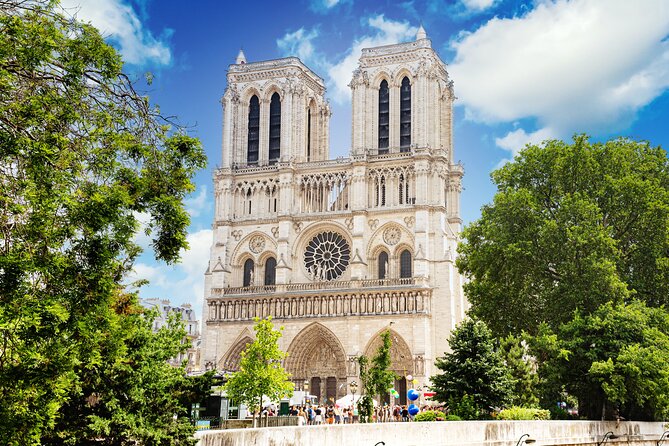
The group then reaches the Seine. The river and its central banks are part of the UNESCO World Heritage area, and this stretch gives you a useful view of Paris as a city shaped by water.
The walk is short, around five minutes, but it helps you place Île de la Cité within the wider city. From the banks, Notre Dame looks less like a building you simply enter and more like a landmark designed to dominate the island.
This is also a good moment for photographs. The river offers a wider view than the tight streets around the cathedral. Depending on the weather and crowd levels, you may get a clear look at the Gothic structure, its buttresses, and the surrounding bridges.
Île de la Cité, Paris’s historic core
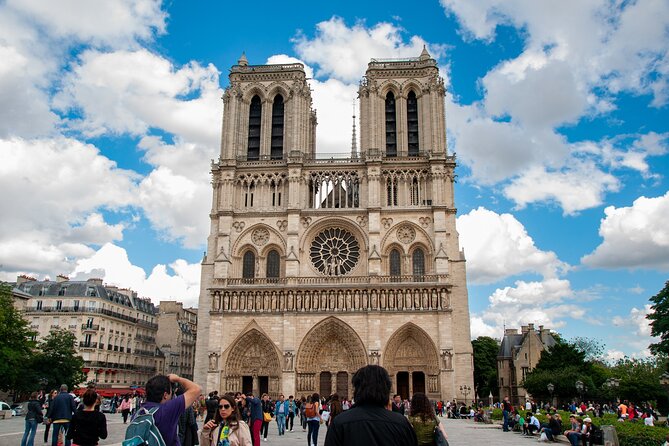
Île de la Cité is the heart of the route. The island contains Notre Dame, Sainte-Chapelle, the Palais de Justice, the Conciergerie, the police prefecture, the flower market, and Pont Neuf. That is a remarkable concentration of French history in a very small area.
Your guide gives an overview of the island’s role from Roman times through the Merovingian and Capetian dynasties. This context is useful because the buildings here served different purposes over the centuries. The island was a religious center, a royal residence, a seat of law, and a place of imprisonment and execution.
You spend roughly ten minutes exploring the island before entering the cathedral. It is not enough to study every building, but it creates a clear framework for the rest of the walk.
More Notre Dame visits:
- Paris Île de la Cité and Notre-Dame Walking Tour With Crypt
★ 5.0 · 2,272 reviews - Paris: Eternal Notre-Dame VR Experience Ticket
★ 4.4 · 1,150 reviews - Paris: Notre-Dame Cathedral Exterior Tour & Free Entrance
★ 3.7 · 1,010 reviews - Paris Highlights Bike Tour: Eiffel Tower, Louvre and Notre-Dame
★ 5.0 · 853 reviews
Inside the restored Notre Dame
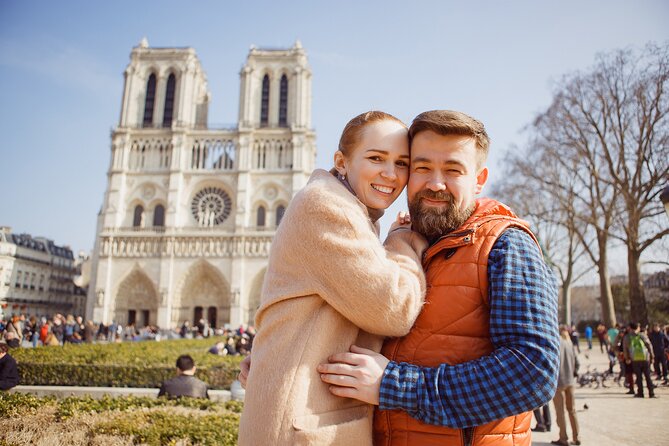
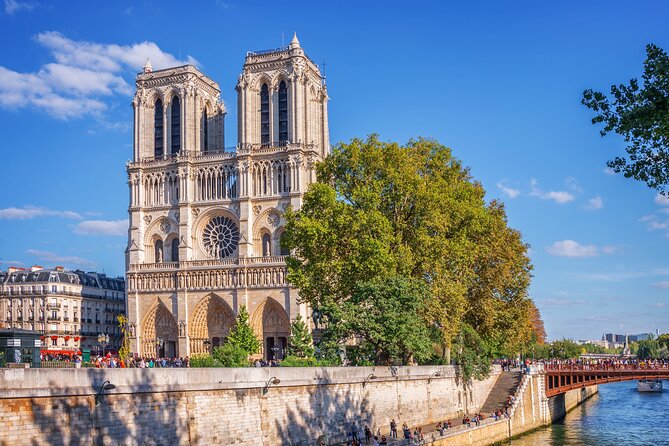
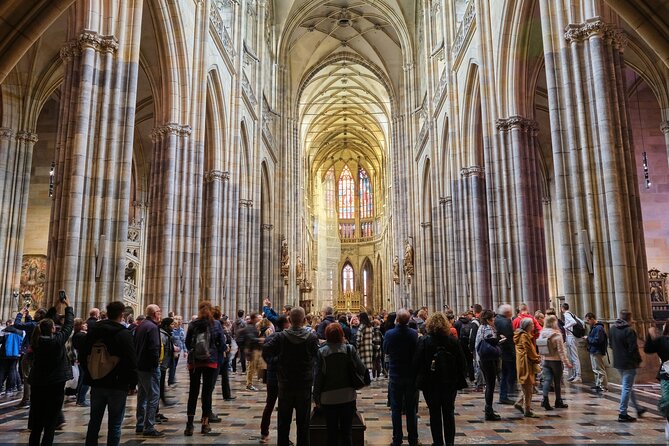
The cathedral visit is the emotional center of the experience. Notre Dame is a 12th and 13th-century Gothic monument, and the restored interior is strikingly bright after the removal of ash, lead dust, and centuries of grime. More than 450,000 square feet of cream-colored limestone were cleaned during the restoration.
The scale becomes clear once you look up. The nave rises above thick columns and tall walls, while the vaults draw your attention toward the center of the building. The restoration involved more than 2,000 workers and craftspeople from around France, so the visit also reveals the scale of a national rebuilding effort.
Inside, look for the new liturgical furniture, including the altar. You can also study delicate sculpted scenes from the life of Christ. In one painted side chapel, gold-leaf stars spread across a deep blue ceiling. At the transept crossing, the oculus contains cherubs carved into the stone ring at the center of the four vaults.
The cathedral visit lasts around 45 minutes on the stated schedule, although some descriptions allow up to an hour. That is enough time to see the main features, but not enough for a slow, complete study of every chapel and artwork.
Here is the point you must understand before paying. The guide gives the main Notre Dame explanation outside, then you enter on your own. The guide is not inside with you on this version. Some people value the freedom to walk independently, while others feel the $71.20 price should include live commentary inside.
The cathedral’s silence rules also help explain the format. A guide cannot simply deliver a long talk inside every part of the building. Still, if an interior guide is essential to you, choose a clearly identified fully guided option instead of this self-guided format.
The cathedral plaza and Paris’s measuring point
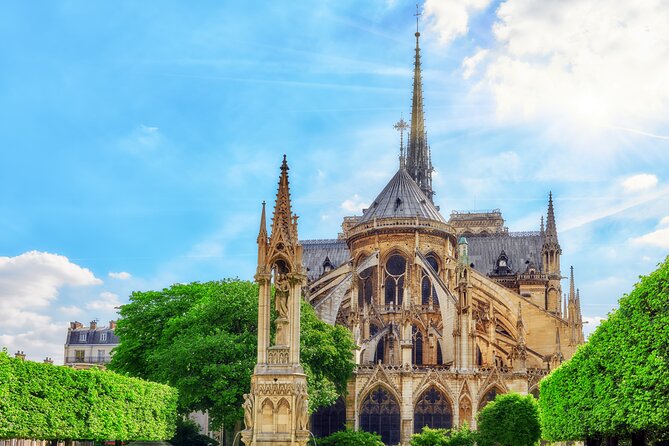
After Notre Dame, the route returns to Parvis Notre Dame, also called Place Jean-Paul II. The plaza is being redesigned to open the area toward the Seine and make movement easier for the millions of people who come here.
Your guide explains the square’s history, including its Roman connections. You also see the bronze statue of Charlemagne and his guards. It is an easy place to pause and take photographs, though the open plaza can offer little shade.
Nearby is the point from which distances from Paris are measured. Stepping on it is a small local ritual. The same area was once associated with public repentance before executions. It is a good example of how the island can shift from sacred ground to civic space to a place of harsh punishment within a few steps.
The police prefecture and wartime scars
The Préfecture de Police is a brief stop, but it adds modern political history to the route. The building houses Paris police administration and related emergency and civic services.
Look for bullet impacts connected to the Liberation of Paris during World War II. The marks are easy to miss without someone pointing them out. This is one of the most useful kinds of detail on a walking tour: a small physical clue that connects an ordinary-looking building with a major event.
The stop lasts about five minutes, and admission is not included. In practice, you view the exterior rather than tour the offices.
The flower market and Palais de Justice
The Marché aux fleurs sits on Place Louis Lépine between Notre Dame and Sainte-Chapelle. It has attracted gardeners and passersby since 1830, with covered and open-air sections housed mainly in early 20th-century pavilions.
The market is not always open, so think of this as a pleasant atmospheric stop rather than a guaranteed shopping opportunity. Even when the stalls are closed, the group still passes through the area.
The nearby Palais de Justice occupies one of Paris’s oldest sites of government. Roman, Merovingian, and Capetian rulers all used this part of the island. The building remains one of the city’s most important legal centers, and the exterior makes a strong photo stop.
This part of the walk is where the tour earns much of its value. You are not just walking toward Notre Dame. You are seeing the institutions that helped shape Paris around it.
Sainte-Chapelle and the old prison
Sainte-Chapelle is viewed from outside unless you purchase the optional upgrade. Your guide gives a brief introduction to this 13th-century royal chapel, built for King Louis IX and consecrated in 1248.
The exterior is impressive, but the interior is the real reason to add it. The upgrade provides a separate visit of about 60 minutes. It is a good choice if you want more Gothic architecture and prefer not to arrange another visit on your own.
The route also passes the old prison where Marie Antoinette spent nine months. This was part of the Palais de la Cité complex, and during the French Revolution the Revolutionary Tribunal sentenced 2,639 people to execution by guillotine in Paris during the Reign of Terror.
You only stop for photographs and an introduction. There is no full prison visit included in this walking tour.
The medieval clock and Pont Neuf finish
The Tour de l’Horloge is a compact but memorable stop. The clock tower is about 650 years old and was first built as a watchtower for the royal palace. It is 47 meters high, with walls nearly a meter thick.
The tower went through several restoration campaigns, including work in the 1840s, 1860s, and later efforts to recover its medieval appearance. The details about its construction and repair are worth hearing because they reveal how much of Paris has been altered, repaired, and reinterpreted over time.
The route then passes an old square built by Henri IV for his first son. It is also associated with pétanque, the French game played with metal balls. This is a lighter ending after the heavier stories of imprisonment and execution.
The final stop is Pont Neuf, Paris’s oldest bridge. The views include the Louvre, the Seine, the Eiffel Tower, the French Academy, and the Monnaie de Paris. If you do not add Sainte-Chapelle, the tour ends here.
What $71.20 really buys you
Notre Dame itself is free to enter, so the price requires careful thought. You are paying for an English-speaking guide, the historical route, assistance with the visit, and the structure of seeing several major sites in a short period.
I would not buy this simply to gain cathedral admission. You can enter Notre Dame without paying for a tour, subject to the cathedral’s access procedures and current queues. The tour makes more sense if you want the surrounding island explained and prefer to have the route organized.
The value depends heavily on your guide. The strongest guides make the island’s details memorable and connect the cathedral to the city around it. The experience is less convincing if you expect a private-style lecture inside Notre Dame or guaranteed queue-free entry.
The average booking lead time is about 57 days, which suggests that planning ahead is sensible. Access conditions can change, especially after the cathedral’s reopening. Even an early start can involve waiting, and the operator warns that delays are outside its control.
Walking conditions, clothing, and group size
This is a real walking tour, not a short transfer between monuments. You cross cobblestones and uneven surfaces, and the route includes hills, inclines, declines, and stairs. Wear comfortable shoes and bring water.
The tour operates in all weather. You may wait in the sun, so dress for the forecast. Inside the cathedral, shoulders need to be covered with a scarf or jumper. Bring photo identification, especially if you add Sainte-Chapelle.
Groups can contain up to 25 people. That is manageable, but it is not an intimate private tour. Stay close to the guide during transitions, particularly around busy public areas.
The tour is not recommended if you have limited mobility, and anyone under 18 must be accompanied by someone aged 18 or older.
Who should book this Notre Dame walk
I would recommend it to a first-time Paris visitor who wants a guided introduction to Île de la Cité and does not want to build the route alone. It suits anyone who enjoys architecture, old city stories, and short stops that connect many periods of French history.
Families may also like it when the guide is as engaging as Nina, who made a point of involving children. The route gives younger visitors several concrete subjects: Roman remains, a medieval clock, a royal chapel, a prison, a bridge, and bullet marks from World War II.
I would be cautious if your top priority is a guide inside Notre Dame. This experience gives you a self-guided cathedral visit. I would also think twice if you dislike queues, outdoor waiting, or a brisk route over old paving.
Free cancellation is available up to 24 hours before the start time. That is useful if your Paris plans are still shifting, but changes or cancellations inside that window are not accepted.
Should you book it?
Book this tour if you want the cathedral visit placed inside a larger story about Paris. The best part is not only the bright restored nave. It is the walk through the island, where Roman trade, royal power, religion, law, revolution, war, and everyday French life sit close together.
Do not book it expecting a private guide inside Notre Dame or a guaranteed skip-the-line experience. For that, choose a different format. At $71.20, this is a reasonable purchase for guided context and a well-planned route, but a poor one if you only want admission to a free cathedral.
If you book, confirm the meeting point, arrive early, wear sturdy shoes, and decide in advance if Sainte-Chapelle is worth the extra time and cost. With those expectations in place, this is a useful and often memorable way to meet the oldest part of Paris.
FAQ
Is Notre Dame admission included?
The tour includes entry for an interior visit, but Notre Dame itself is free and open to all. The paid service covers the guided walking experience and its arrangements, not a standard admission charge.
Does the guide enter Notre Dame with the group?
No. On this version, the guide explains Notre Dame before entry, then you explore the cathedral independently. The guide does not provide the interior commentary.
How long is the tour?
The main walking tour lasts approximately two hours. The Notre Dame visit takes about 45 minutes in the stated schedule, while some tour details allow up to one hour.
Is this a skip-the-line tour?
No guaranteed skip-the-line access is stated. Notre Dame can have long waits, and reopening-related crowds may increase delays.
Is Sainte-Chapelle included?
Sainte-Chapelle entry is not included in the standard tour. You can choose an upgrade that adds an interior visit of about 60 minutes.
Where does the tour start?
The meeting point is Place Louis Aragon, 75004 Paris. Check the exact location carefully because it is not directly beside the cathedral.
Where does the tour end?
The standard tour ends at Pont Neuf, 75001 Paris. If you upgrade to Sainte-Chapelle entry, the experience ends at Sainte-Chapelle instead.
Is the tour offered in English?
Yes. The experience is offered in English.
What should I bring?
Bring photo identification, comfortable shoes, and water. You should also bring a scarf or jumper to cover your shoulders inside the church.
Can people with limited mobility join?
The tour is not recommended for people with limited mobility. The route includes cobblestones, uneven ground, inclines, declines, stairs, and a fair amount of walking.
Recently added around Paris
- Private Half-Day Guided Tour of Paris★ 4.5 · 48 reviews
- 2 hour outdoor group activity in Paris: SAINT GERMAIN★ 5.0 · 48 reviews
- Paris Dinner Show Opera Bel Canto★ 4.5 · 48 reviews
- Paris Vintage Tour by Night on a Sidecar with Champagne★ 5.0 · 48 reviews
- Secrets & Scandals of the Louvre – Limited to 6 Guests★ 5.0 · 48 reviews
- Paris Photoshoot: Eiffel Tower Exclusive Private Experience★ 5.0 · 48 reviews
- From Paris: Versailles Full-Day Guided Tour with Lunch★ 4.9 · 48 reviews
- Paris: Louvre Mona Lisa Discovery Guided Tour with Ticket★ 4.9 · 48 reviews
Walking Tours, compared.
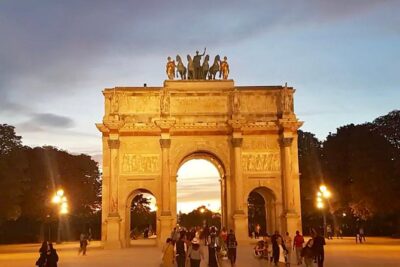
Paris Top Sights Half Day Walking Tour with a Fun Guide
Read our review →
Montmartre Hidden Gems and Scenic Highlights Walking Tour
Read our review →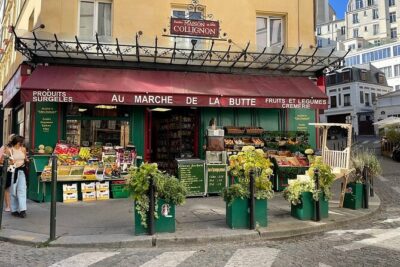
Montmartre Hill French Gourmet Food and Wine Tasting Walking Tour
Read our review →
Paris Île de la Cité and Notre-Dame Walking Tour With Crypt
Read our review →
Paris: Montmartre Cheese, Wine & Pastry Guided Walking Tour
Read our review →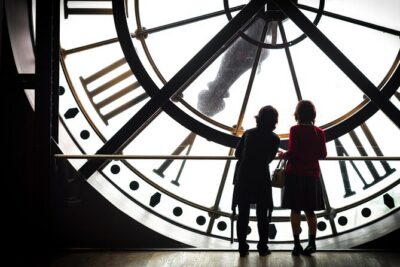
Paris in a Day: Louvre or Orsay, Eiffel Tower, City Walk & Cruise
Read our review →
Paris: Montmartre Highlights Walking Tour with a Local Guide
Read our review →
Browse the lists this tour appears in