
Reviewed · MONTMARTRE & SACRé-CœUR TOURS
Guided tour of Montmartre in songs with a professional
Montmartre sings when you least expect it. This two-hour walking tour links famous streets, cabarets, film sites, and songs, giving you a playful way to see the hill beyond the usual Sacré-Cœur photo stop. I like the route’s focus on local music and its small details, especially the Dalida stops and old cabaret addresses. One point to check before booking: the tour is offered in English, but one booking note says the guide spoke French with English information provided in a pamphlet.
I also like the sensible route from Place des Abbesses to Sacré-Cœur, with plenty of time to pause for photos and views. Ann-Sophie is praised as a charming singer, which matters here because the music is not decoration. It is the main way the guide brings Montmartre’s artistic past to life. The main consideration is the hill itself: you need moderate fitness, and the walk is not recommended if you have serious mobility problems.
In This Review
- Key points at a glance
- Why music changes the way you see Montmartre
- Starting at Place des Abbesses and Saint-Jean
- The Wall of I Love You and Rue des Abbesses
- Rue Lepic, Moulin de la Galette, and Dalida’s address
- Theatre Lepic and Montmartre on film
- La Maison Rose, the vineyards, and Au Lapin Agile
- Rue Norvins and the artists of Place du Tertre
- Rue de Mont Cenis and Saint-Pierre
- Finishing at Sacré-Cœur with Paris below
- Is $33.79 a fair price?
- Who should book this singing tour?
- Should you book it?
- FAQ
- Where does the Montmartre singing tour begin?
- What time does the tour start?
- Where does the tour finish?
- How long does the experience last?
- Is the tour offered in English?
- How large can the group be?
- Can I cancel for a full refund?
Key points at a glance
- Songs lead the tour: You sing short pieces connected with Dalida, Montmartre, films, streets, and cabarets.
- A clear uphill route: Begin at Place des Abbesses and finish at Sacré-Cœur, near Place du Tertre and the souvenir shops.
- Dalida gets special attention: See her former home and statue, with songs linked to both locations.
- Classic Montmartre stops: The walk includes the Wall of I Love You, Moulin de la Galette, La Maison Rose, the vineyards, and Au Lapin Agile.
- A practical afternoon outing: The tour starts at 2:15 pm, lasts about two hours, and accepts up to 28 people.
- Good value for a guided walk: At $33.79 per person, the price covers a themed experience with no separate admission charges at the listed stops.
Why music changes the way you see Montmartre
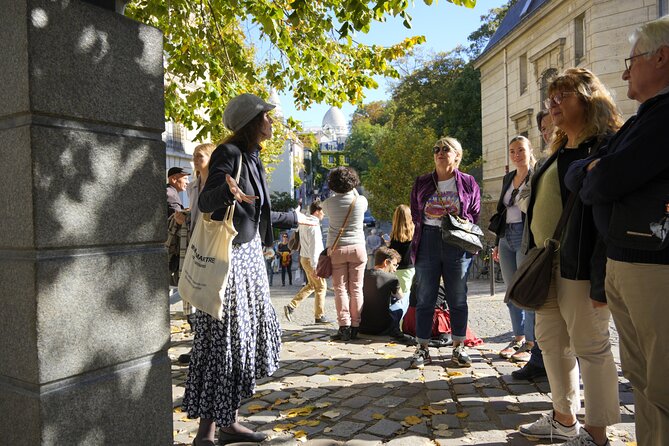
Montmartre is easy to reduce to a few postcard views: the white domes of Sacré-Cœur, artists around Place du Tertre, and the pink facade of La Maison Rose. This tour tries to give those places a soundtrack.
That approach makes sense. Songs connect the streets to the performers, painters, actors, and cabaret culture associated with the hill. You are not simply moving from one photo stop to the next. At several points, the guide sings a song tied to the location, then explains why that song belongs there.
I like this format for visitors who want something lighter and more social than a traditional history walk. It also gives you a reason to pay attention to small places that might otherwise receive only a quick photograph. The trade-off is that this is not designed as a detailed architecture or art-history lecture. The music is the star.
The tour has an average group limit of 28 people. That is not a tiny private walk, but it is still manageable for a guide leading a singing activity through busy streets. The atmosphere will depend partly on how willing the group is to join in. You can expect a more participatory outing than a quiet, lecture-style tour.
More Montmartre and Sacré-Cœur walks:
- Montmartre Hidden Gems and Scenic Highlights Walking Tour
★ 5.0 · 2,684 reviews - Montmartre Hill French Gourmet Food and Wine Tasting Walking Tour
★ 5.0 · 2,588 reviews - Paris: Montmartre Cheese, Wine & Pastry Guided Walking Tour
★ 4.8 · 2,255 reviews
Starting at Place des Abbesses and Saint-Jean
The meeting point is Place des Abbesses at 2:15 pm. This is a useful starting place because the square already feels like a proper Montmartre introduction, with musicians often playing nearby and the distinctive Saint Jean de Montmartre church close at hand.
You have an opportunity to admire Saint Jean from the square and visit it before the route begins. That flexibility is helpful if you arrive early. The opening stop itself lasts about 10 minutes, so this is a brief orientation rather than a long church visit.
Place des Abbesses also sets the tone for the walk. It is a typical neighborhood square, but one with enough street activity to make the music theme feel natural from the start. I would arrive with a few minutes to spare, especially since the tour begins at a specific time and the group then moves uphill.
The Wall of I Love You and Rue des Abbesses
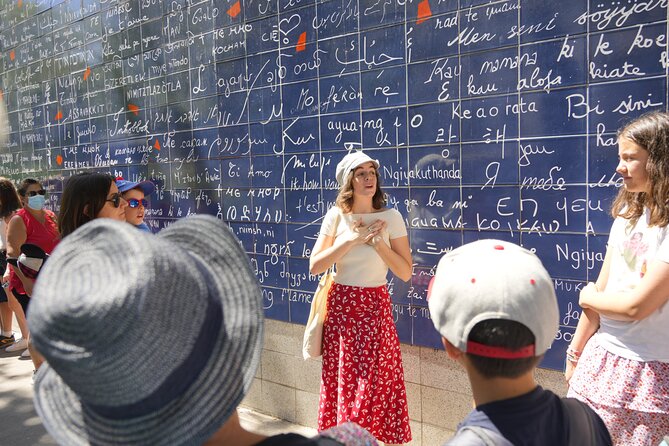
The next stop is the Wall of I Love You, or Le Mur des Je t’aime. The wall displays the phrase in many languages, and the guide invites you to recognize the languages you know before singing a song connected with the site.
This is a short stop of about five minutes, but it is well suited to the tour’s friendly style. You are given something to look for, then something to listen to. It is a small activity, not a long explanation, so do not expect to spend much time studying every inscription.
From there, the route continues along Rue des Abbesses, described as the Champs-Élysées of Montmartre. You pass shops and local businesses on this lively street for roughly 10 minutes. The value here is less about a single monument and more about seeing Montmartre as a lived-in neighborhood rather than only a monument zone.
For me, this part helps balance the famous sights ahead. You get a sense of the district’s everyday commercial side before the route turns toward painters, performers, and cabarets.
Rue Lepic, Moulin de la Galette, and Dalida’s address
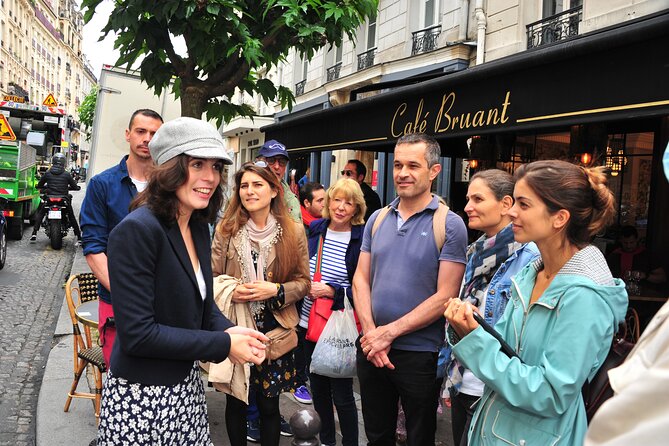
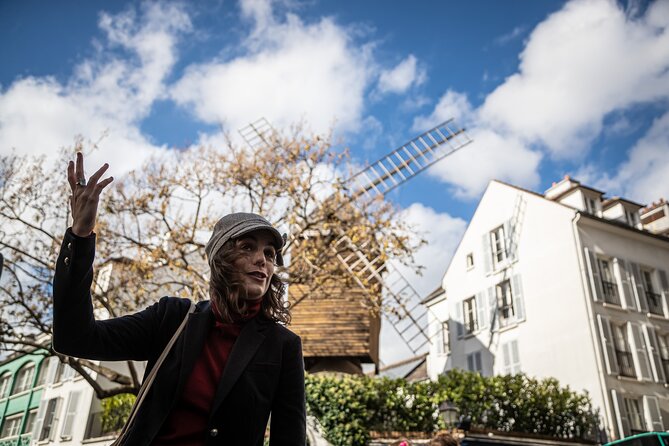
The walk then reaches the upper part of Rue Lepic. The group pauses near Le Moulin de la Galette, a former open-air ballroom made famous in a painting by Renoir.
The stop lasts only about five minutes, so the emphasis is on recognition and atmosphere. You are seeing the exterior and hearing about its place in Montmartre’s artistic story, not entering for a meal or a long visit. That distinction matters if you were hoping for an interior tour.
Next comes La Maison de Dalida, the former home of the singer. Here, the guide sings one of Dalida’s songs with the group. The musical connection is direct, and this is one of the tour’s more distinctive features. Many Montmartre walks pass famous facades, but few build their route around a singer’s life and music.
A second Dalida stop follows at the Dalida Statue. You can admire the bust and sing another song by the performer. The two stops work well together: the house provides a personal address, while the statue represents her lasting place in the neighborhood.
Ann-Sophie is the guide named in the positive booking note, and her singing is specifically praised. That is worth keeping in mind when choosing this outing. A guide who can sing with warmth and confidence will make the experience much more enjoyable than a guide who treats the musical parts as an afterthought.
A few more Paris trips worth weighing up
- Paris: Louvre Museum Timed-Entrance Ticket
★ 4.6 · 71,977 reviews - Disneyland® Paris 1-Day Ticket
★ 4.6 · 49,412 reviews - Paris: Versailles Palace and Gardens Full Access Ticket
★ 4.6 · 41,579 reviews - Paris: Evening River Cruise with Music
★ 4.4 · 22,721 reviews
Theatre Lepic and Montmartre on film
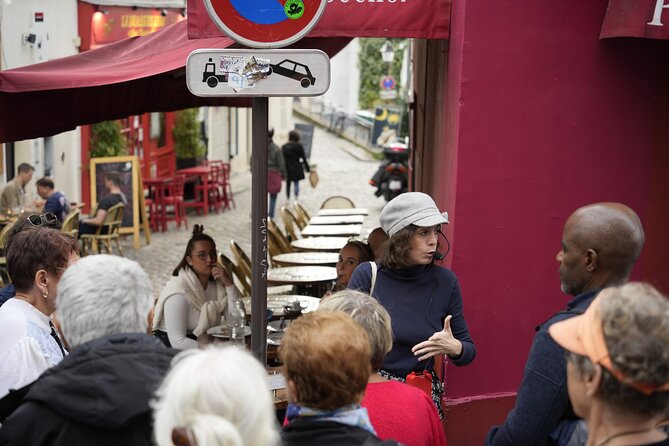
The Theatre Lepic stop adds a film connection. You see the facade of Claude Lelouch’s former cinema and sing a song associated with the film Édith and Marcel, which has a scene filmed inside.
Again, this is a five-minute exterior stop. The appeal is the link between location and cinema, not access to the theater. If you like French film, this adds another layer to the walk. If film references are not your interest, it remains a quick pause before the route continues.
The mix of songs, cinema, cabaret, and neighborhood streets keeps the afternoon from feeling repetitive. You are not spending the entire walk on one performer or one period. Instead, the guide uses different cultural references to show how Montmartre has been represented through music and film.
La Maison Rose, the vineyards, and Au Lapin Agile
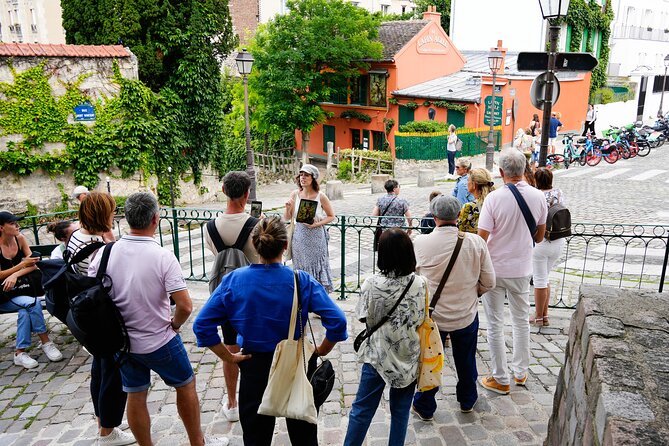
The route continues through one of Montmartre’s most photographed streets toward La Petite Maison Rose de Montmartre, known simply as the pink house. You have about five minutes to admire it and take a photograph. The guide also introduces a song that evokes the building.
This is a classic photo stop, so expect other people to be interested in the same view. The benefit of arriving with a guide is that the stop has a cultural link, rather than being only a quick picture for your phone.
The Vigne du Clos Montmartre comes next. You learn about the vineyard and its history in another five-minute stop. It is a surprising sight in a major capital, and it gives the route a quieter change of pace after the pink house.
Then you reach Au Lapin Agile, described as the oldest cabaret in Montmartre. The guide sings a song about Montmartre and the famous Rue Saint-Vincent. This is exactly the kind of location where the tour’s format makes sense. A cabaret is not only a building. It is also a place associated with performance, memory, and songs.
These stops are short, but the sequence is well planned. La Maison Rose gives you the postcard image, the vineyard adds an unexpected local detail, and Au Lapin Agile brings the route back to the cabaret tradition that shaped Montmartre’s identity.
Rue Norvins and the artists of Place du Tertre
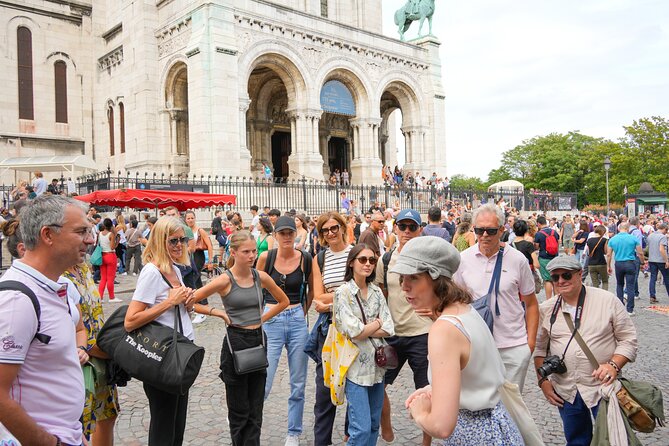
Rue Norvins is one of the more tourist-oriented sections of the walk. You pass musicians, souvenir shops, cafes, and former cabaret locations. The guide points out the older entertainment history of the street while you move through its present-day commercial side.
I appreciate that the route does not pretend Montmartre is untouched by tourism. Rue Norvins is part of the visitor circuit, and the souvenir shops are very much part of the scene. The useful question is not whether the street feels touristy. It does. The useful question is whether your guide gives you a reason to look beyond the merchandise and notice the old cabaret addresses.
You also pass through Place du Tertre, where artists work and offer portraits. The route returns here after the visit, giving you time to have your portrait taken if you wish. That is a practical touch. You are not forced to stop for a drawing during the main walk, and you can decide later if it fits your budget and interest.
Place du Tertre can be crowded, so keep your expectations realistic. It is famous for its artists, but it is also one of the busiest points on the hill. The tour helps by placing it within a larger route rather than making it the whole Montmartre experience.
Rue de Mont Cenis and Saint-Pierre
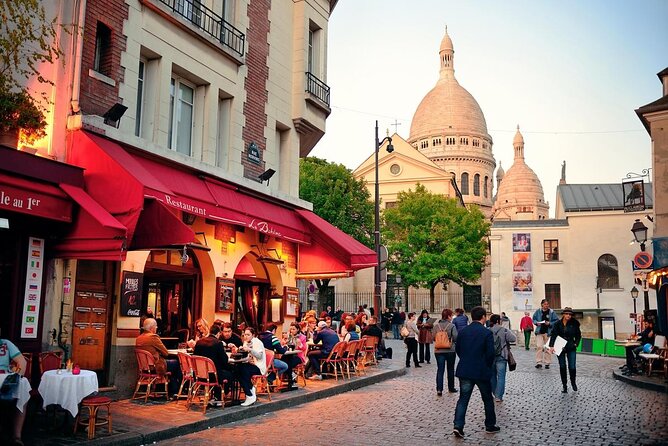
Rue de Mont Cenis brings another look at Montmartre’s tourist streets, with musicians, cafes, souvenir shops, and former cabaret locations. The guide refers to the famous Patachou cabaret, adding another performance connection to the walk.
This section lasts about five minutes. It is not a long exploration, but it reinforces one of the tour’s main ideas: the hill’s streets carry layers of music and entertainment history, even when today’s scene looks more commercial.
On the way toward the end, you can admire Saint-Pierre de Montmartre. The church can be visited at the end of the tour, near the finishing point. Since the provided timing gives this stop only a few minutes, treat it as a brief look rather than a full guided church visit.
That is a useful distinction throughout this experience. Many stops are compact, usually five minutes, so the tour gives you a broad range of places rather than a long stay at any one site. You get variety and momentum, but you will need to return on your own if a particular church, street, or cabaret deserves more time.
Finishing at Sacré-Cœur with Paris below
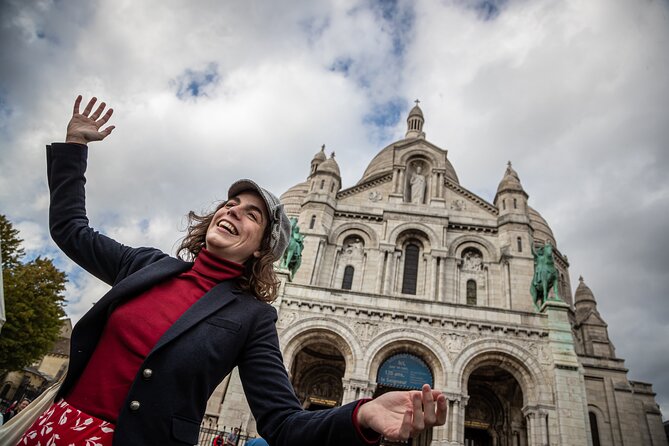
The tour ends at the Parvis du Sacré-Cœur, the square in front of the basilica. From here, you can admire Sacré-Cœur and look across Paris. The finishing point is near Place du Tertre and the souvenir shops, so you are well placed to continue sightseeing after the guide leaves.
The basilica itself can be visited at the end of the tour. As with Saint-Pierre, the listed time is short, so do not expect a detailed interior visit led by the guide. The main payoff is the final view and the chance to see the building after following the hill’s cultural trail.
Ending here is practical. You finish at one of Montmartre’s major landmarks rather than being returned to the starting square. You can stay for the view, visit the basilica, browse around Place du Tertre, or make your own way onward.
Remember that this is an uphill walking route. The exact effort will vary, but the fitness guidance is clear: you should be comfortable walking through Montmartre, and the experience is not recommended for people with serious mobility problems. Service animals are allowed, and the meeting point is near public transportation.
Is $33.79 a fair price?
At $33.79 per person, this is a reasonable price for a two-hour guided walk if you value the singing and themed storytelling. The listed stops do not require separate admission tickets, so you are paying mainly for the guide, route planning, and live performance.
The value is strongest if you enjoy French music, cabaret culture, cinema, or unusual walking tours. You are getting more than a basic route to Sacré-Cœur, but less than a long museum-style explanation of Montmartre’s art and architecture.
The maximum group size is 28. That keeps the cost lower than a private guide, though it may mean the musical moments feel less personal. A smaller group could offer more conversation, but this experience is priced as a shared outing.
The tour is booked an average of 41 days ahead, which suggests planning early is sensible. Free cancellation is available if you cancel at least 24 hours before the start time. The activity depends on good weather and a minimum number of participants. If poor weather or insufficient numbers cancel it, you are offered another date or experience, or a full refund.
Who should book this singing tour?
I would choose this tour if you want to see Montmartre through songs rather than only monuments. It suits first-time visitors who want an organized introduction, as well as returning visitors looking for a different angle on familiar streets.
It is especially suitable for people who enjoy joining in. You do not need to be a professional singer, but the format includes singing several times. If you prefer quiet observation, a standard walking tour may suit you better.
Families and friends may also like the relaxed structure, though the group’s energy will shape the experience. Music lovers should get the most from the stops devoted to Dalida, Au Lapin Agile, Patachou, and Montmartre songs.
Before paying, confirm the language arrangement if fluent spoken English is essential. The experience is advertised in English, but the booking note describes French speech with English translation in a pamphlet. That may work perfectly for some people and feel limiting for others.
Should you book it?
Book this experience if you want a lively, unusual two-hour introduction to Montmartre, and you are happy to sing along. Ann-Sophie’s warm singing, the strong Dalida focus, and the route from Place des Abbesses to Sacré-Cœur give it a clear personality.
Skip it if you need a detailed art lecture, a private guide, or a slow visit inside every church and historic building. For $33.79, it offers good value as a musical walking experience, especially for visitors who want the hill to feel like more than a series of famous photographs.
FAQ
Where does the Montmartre singing tour begin?
The tour begins at Place des Abbesses, Pl. des Abbesses, 75018 Paris, France.
What time does the tour start?
The start time is 2:15 pm.
Where does the tour finish?
The tour ends at the Parvis du Sacré-Cœur, near Place du Tertre and the souvenir shops.
How long does the experience last?
The walking tour lasts approximately two hours.
Is the tour offered in English?
The experience is offered in English. One booking note says the guide spoke French with English translation provided in a pamphlet, so you may want to confirm the spoken-language arrangement before booking.
How large can the group be?
The maximum group size is 28 people.
Can I cancel for a full refund?
Yes. You can cancel at least 24 hours before the start time for a full refund. Cancellations or changes made less than 24 hours before the start time are not refunded or accepted.
Recently added around Paris
- Private Half-Day Guided Tour of Paris★ 4.5 · 48 reviews
- 2 hour outdoor group activity in Paris: SAINT GERMAIN★ 5.0 · 48 reviews
- Paris Dinner Show Opera Bel Canto★ 4.5 · 48 reviews
- Paris Vintage Tour by Night on a Sidecar with Champagne★ 5.0 · 48 reviews
- Secrets & Scandals of the Louvre – Limited to 6 Guests★ 5.0 · 48 reviews
- Paris Photoshoot: Eiffel Tower Exclusive Private Experience★ 5.0 · 48 reviews
- From Paris: Versailles Full-Day Guided Tour with Lunch★ 4.9 · 48 reviews
- Paris: Louvre Mona Lisa Discovery Guided Tour with Ticket★ 4.9 · 48 reviews
Montmartre & Sacré-Cœur Tours, compared.

Montmartre Hidden Gems and Scenic Highlights Walking Tour
Read our review →
Montmartre Hill French Gourmet Food and Wine Tasting Walking Tour
Read our review →
Paris: Montmartre Cheese, Wine & Pastry Guided Walking Tour
Read our review →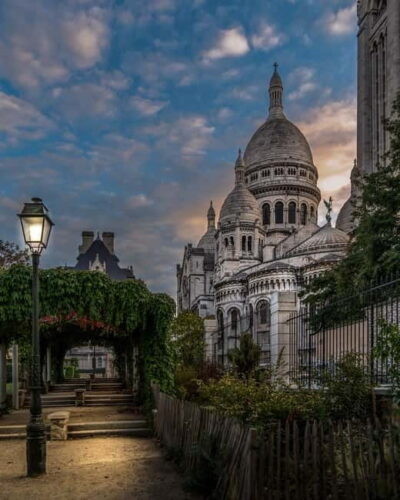
Paris: Montmartre Highlights Walking Tour with a Local Guide
Read our review →
Paris: Sacré-Coeur and Montmartre Tour with Expert Guide
Read our review →
Private Montmartre Food Tour with Wine, Cheese & Pastries
Read our review →
Paris Montmartre Food Tour – A Full French Meal by Do Eat Better
Read our review →
Hidden Montmartre: Paris’ Secret Streets Walking Tour
Read our review →Browse the lists this tour appears in