
Reviewed · HISTORICAL TOURS
Guided Walking Tour in Strasbourg between History and Curiosities
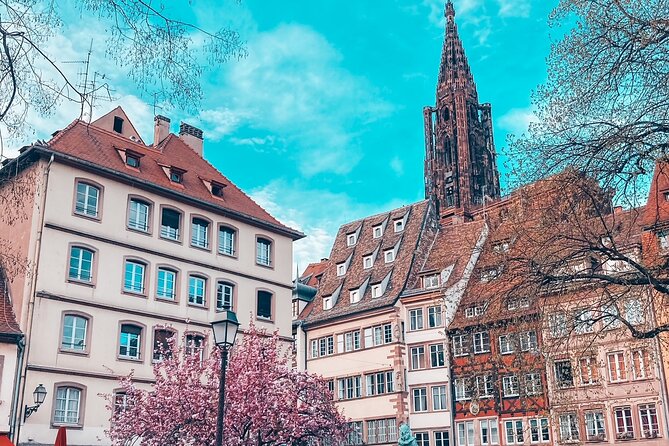
Strasbourg rewards curious walkers. This 2.5-hour tour links grand squares, Petite France, and the cathedral while Davide Diana adds the stories and odd details that are easy to miss alone. I like the clear route and the small maximum of 10 people, which should make questions and conversation easier. The main limitation is important: the cathedral is viewed from outside only.
I also like that the tour ends with practical ideas about museums, food, and nearby sights. Davide’s lively humor, strong grasp of Strasbourg’s French and German connections, and restaurant advice are recurring strengths. You should be ready to walk at a steady pace, and coffee is not included, though a cafe pause may be possible during the outing.
In This Review
- Key points to know before you book
- Why this Strasbourg walk works best early in your stay
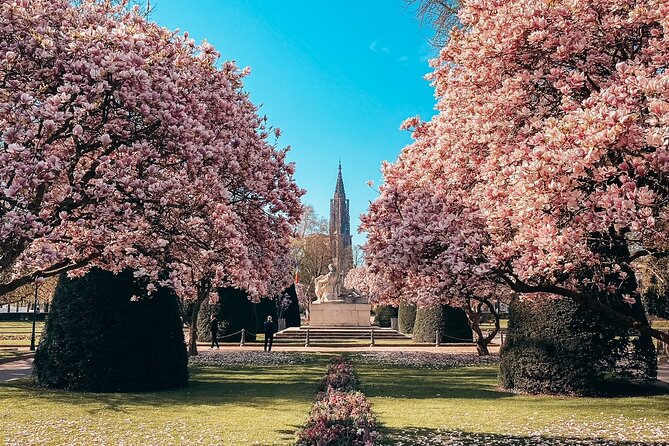
- Place de la République: Strasbourg’s grand opening
- Place Kléber and Strasbourg’s Christmas identity
- Petite France: canals, old houses, and a changing neighborhood
- Place Gutenberg and the old center around Bottai
- Notre Dame de Strasbourg: a strong finish outside the doors
- Davide Diana’s guiding style
- What $38.71 buys you
- Timing, meeting point, and practical planning
- Who should take this tour?
- Should you book the Strasbourg walking tour?
- FAQ
- How long is the guided walking tour?
- Where does the tour begin?
- Where does the tour end?
- Does the tour enter Strasbourg Cathedral?
- Is the tour offered in English?
- How many people can join the tour?
- Are coffee and tea included?
- Can I cancel for a full refund?
Key points to know before you book
- A useful first-day orientation: The route introduces the main central districts before you decide where to spend more time.
- A maximum of 10 people: The small format suits visitors who want to hear the guide clearly and ask questions.
- Davide Diana leads in English: His Italian accent is noticeable to some, but the available feedback describes him as easy to understand, animated, and funny.
- Petite France gets a generous 40 minutes: This is the longest scheduled stop and gives the old quarter proper attention.
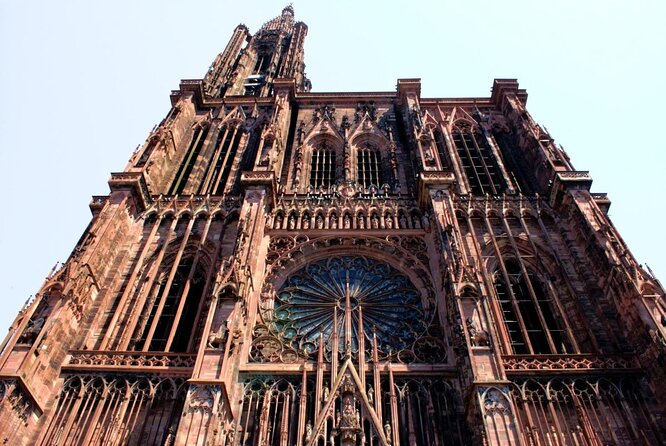
- The cathedral is an exterior visit: You finish at Notre Dame de Strasbourg, with advice on the building and nearby sights, but do not go inside.
- A good value at $38.71: For a short introduction with local food and museum suggestions, the cost is reasonable if you use the advice afterward.
Why this Strasbourg walk works best early in your stay
I would place this tour near the beginning of a Strasbourg visit. Its greatest value is not simply seeing five famous locations. It helps you understand how the city fits together, then gives you a better sense of where to return on your own.
The route begins at Place de la République and finishes at Place de la Cathédrale. Along the way, you cross several of the city’s most important areas, including Petite France and the old center around Place Gutenberg. That makes the tour useful for getting your bearings fast, especially if Strasbourg is a stop on a longer trip.
The guide also points out places to eat and offers suggestions for museums and sights near the cathedral. I would take notes on those recommendations. Several participants used the restaurant advice during their stay and found it worthwhile, which gives the tour value beyond its two and a half hours.
This is not a silent photo walk. You are paying for explanation, context, and a human sense of place. Davide is repeatedly described as animated, humorous, and easy to listen to. He brings dates and political changes into the walk without making the experience feel like a classroom lecture.
More Walking Tours in Strasbourg
- Strasbourg: Walking Tour with a Local Guide
★ 4.3 · 607 reviews - Strasbourg: Walking Tour with Local Guide
★ 5.0 · 598 reviews - Strasbourg: Guided Historical Neighborhoods Walking Tour
★ 4.9 · 275 reviews
Place de la République: Strasbourg’s grand opening
The first 20 minutes take place at Place de la République. This spacious square offers a strong starting point because its scale and design help introduce Strasbourg as a city shaped by more than one national identity.
Here, Davide explains the square’s role and the story behind its buildings and layout. The stop is less about checking off a monument and more about learning how to read the city. You begin to see Strasbourg as a place where public spaces carry political and cultural meaning.
The square also gives the group room to gather before moving into narrower streets. That matters in a walking tour, since the opening explanation sets the pace for everything that follows. If you arrive early, use the time to locate the meeting point and settle in. The stated meeting address is Place de la République, Strasbourg, 67000.
The drawback is that this first stop may feel more abstract than the later parts of the walk. If you want immediate medieval lanes and postcard views, you will need a little patience. The payoff comes as the guide connects this broad civic space to the city’s complicated past.
Place Kléber and Strasbourg’s Christmas identity
After Place de la République, the walk reaches Place Kléber, described as Strasbourg’s most important square. It is also the setting for the city’s famous Christmas tree and market, so the stop has a strong seasonal connection.
The tour explains why this square matters to Strasbourg’s public life. During the Christmas season, the square can be a major focus of activity, but its role is not limited to winter. Your guide uses it to show how a central city space can carry both everyday importance and a powerful holiday identity.
I would not expect a long shopping break here. The scheduled time is about 20 minutes, so the emphasis is on explanation and orientation. That is useful if you are planning a December visit and want to understand where the Christmas crowds and displays center, but it is also worthwhile outside the holiday season.
Because Place Kléber is a major open square, it may feel less intimate than Petite France. Still, it gives the tour a helpful change of scale before you enter the old quarter. The walk is not only a parade of pretty lanes. It shows you how different parts of Strasbourg serve different purposes.
Petite France: canals, old houses, and a changing neighborhood
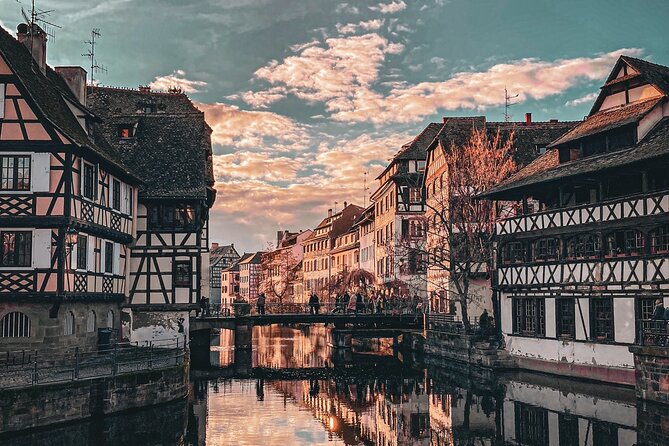
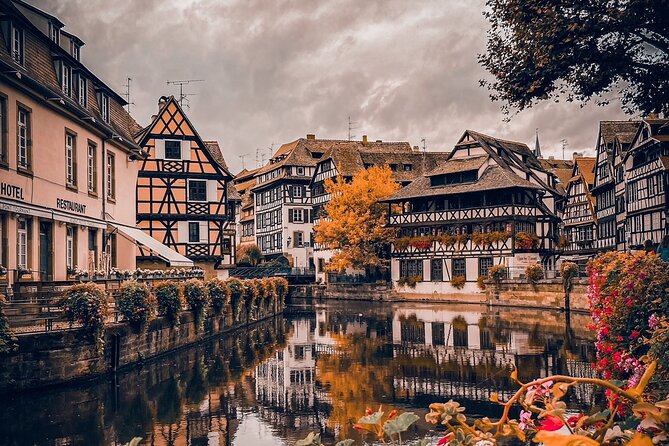
Petite France receives the longest scheduled stop, about 40 minutes, and that seems right. This is the part many people picture when they think of Strasbourg: attractive old streets, waterways, and a district with a name that invites a story.
Davide explains where the name Petite France comes from and how the neighborhood changed over the centuries. That second point is especially useful. Pretty buildings can make an old district seem frozen in time, but the guide’s explanation helps you understand that Petite France has had different roles and different residents.
This stop is also where a small group matters most. Narrow streets and popular viewpoints can make a large tour awkward. With a maximum of 10 people, you have a better chance of staying close to the guide and hearing the explanation without fighting for space.
Allow yourself time for photographs, but listen before reaching for your phone. The guide’s stories are meant to explain what you are looking at, not simply identify it. You will get more from the half-hour-plus visit if you notice how the water, buildings, bridges, and streets work together.
There is a practical issue here: the route involves walking through old-town areas, and the full outing keeps moving between stops. Most people can participate, but this is not a seated sightseeing experience. Wear comfortable shoes and expect a steady urban walk.
Petite France is also an excellent place to decide where you might return later. The tour gives you a first look, but you may want extra time afterward for a slower stroll, photographs, or a meal. The guide’s food suggestions can be especially useful at this point, since you are already close to several central dining areas.
More Historical Tours in Strasbourg:
- From Strasbourg: Best Of Alsace Historical Day Trip
★ 4.7 · 633 reviews - Strasbourg: Private Walking Tour of the Historical Center
★ 4.2 · 107 reviews - Strasbourg: Historic Center Walking Tour
★ 4.7 · 88 reviews - Paris: Louvre Museum Entry with History of Mona Lisa
★ 3.9 · 2,823 reviews
Place Gutenberg and the old center around Bottai
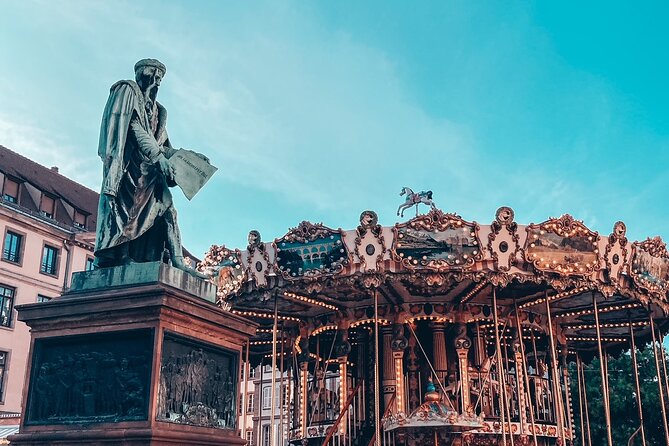
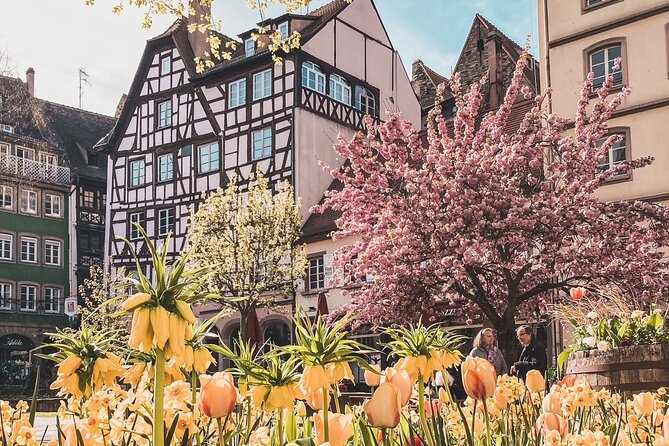
The next stop is Place Gutenberg, with about 20 minutes devoted to the historic Bottai area and its many ethnic restaurants. This part of the route broadens the picture of Strasbourg. You are not seeing only grand civic spaces or medieval-looking streets. You are also getting a sense of the city’s current food culture.
The restaurant advice is one of the tour’s practical strengths. Davide points out places to eat and explains where different food choices can be found. If you are unsure how to choose a restaurant in the center, this kind of local guidance can save you from settling for the first menu you see.
I appreciate that food is included as part of the city story rather than treated as an unrelated extra. Strasbourg’s identity is shaped by its location and cultural connections, and the walk repeatedly returns to that theme. The discussion of French and German influence helps explain why the city feels distinctive.
The scheduled stop itself is fairly short. You should see it as an introduction, not a detailed food tour. The guide may point you toward restaurants, but your meal is not included in the $38.71 price. Coffee and tea are also listed as not included.
Some participants describe taking a cafe break during the tour, with time for coffee, pastries, and a bathroom stop. Treat that as a possible courtesy or group decision, not as a guaranteed inclusion. Bring a payment method if you hope to stop, and do not assume the pause will replace the main walking pace.
Notre Dame de Strasbourg: a strong finish outside the doors
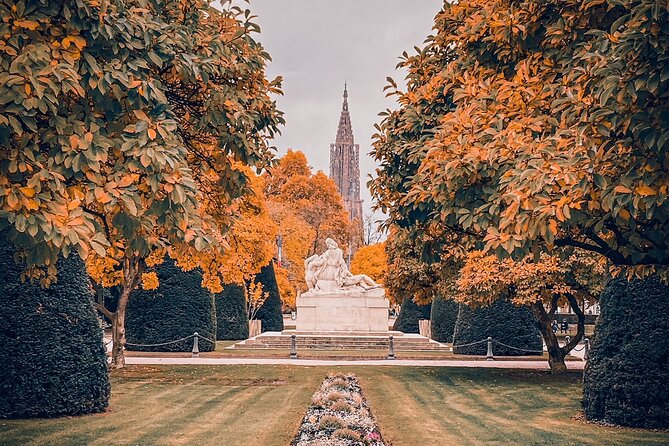
The tour ends at Place de la Cathédrale, in front of Strasbourg Cathedral. About 20 minutes are set aside for stories about the building and its place as a symbol of the city.
This is a smart ending. The cathedral is one of Strasbourg’s defining sights, and reaching it after the squares and old districts gives the building more context. You have already heard about the city’s changes, so the final explanation can tie together architecture, politics, religion, and local identity.
Be clear about the format: you will not enter the cathedral. That is the largest practical consideration in the itinerary. If the interior is a priority, plan a separate visit and allow time for it after the tour or on another day.
The end point is useful for independent sightseeing. Davide provides information about what to see nearby, which museums are worth visiting, and where to eat. Since you finish in one of the city’s main sightseeing areas, you can continue exploring rather than spending time finding your way back to the start.
The actual listed stop times total about two hours. The remaining half hour covers walking between locations and explanations along the route. That is a sensible breakdown for a city walk, but do not expect five long, private talks at each stop. The experience depends on the movement between places as much as the formal stops themselves.
Davide Diana’s guiding style
The guide is central to the experience. Davide Diana is described as friendly, humorous, patient, and full of energy. He uses jokes and unusual anecdotes to keep the complicated story of Strasbourg moving, while still giving dates and useful detail.
Several people specifically praise his ability to explain the city’s relationship with Germany and the importance of particular areas. That matters in Strasbourg, where a simple list of monuments cannot explain the city very well. You need a guide who can connect the places you see to the changes that shaped them.
His accent may require a little adjustment. One detailed assessment notes a strong Italian accent but also says he was easy to understand and highly animated. If you prefer a very formal, slow, lecture-style presentation, his personality may feel energetic. If you like a guide who tells stories and keeps the group laughing, that style should suit you.
The small group limit of 10 improves the experience. It lets Davide respond to questions, keep people together, and give restaurant advice that feels more personal. A group this size also works better in Petite France, where a large crowd could block the lanes or scatter.
What $38.71 buys you
At $38.71 per person, this is not the cheapest way to walk through Strasbourg. You can visit all the public squares and streets on your own without paying an admission charge. The price is justified only if you want the interpretation, route planning, and personal suggestions.
I think the value is good for a first visit. In two and a half hours, you cover five central areas and learn where to return for more time. The guide also reduces the chance that you will walk past an important place without understanding why it matters.
The price becomes less attractive if you already know Strasbourg well or prefer exploring at your own pace. You may find the scheduled stops too brief, especially at places where you want to photograph or browse. The cathedral exclusion also means you will need to budget time separately if you want an interior visit.
The tour includes a personalized experience, but not food or drinks. There are no admission fees for the listed stops, which keeps the cost straightforward. You are mainly paying for Davide’s time and guidance rather than tickets.
Timing, meeting point, and practical planning
The tour starts at Place de la République and ends at Place de la Cathédrale. Both locations are in central Strasbourg and near public transportation, according to the supplied details. That makes the route easy to pair with other plans, especially if you schedule it early in your stay.
The experience is offered in English and uses a mobile ticket. Confirmation arrives at booking, and the activity normally requires at least a minimum number of participants. If the provider cancels because that minimum is not reached, you are offered another date or experience, or a full refund.
Demand appears steady, with bookings made an average of 51 days ahead. I would reserve in advance if your dates are fixed, particularly for a small group and a preferred time. The maximum is 10 people, so availability may be tighter than with large city tours.
Free cancellation is available up to 24 hours before the start time. Changes or cancellations inside that window are not accepted for a refund. Keep the local start time in mind when making changes.
Service animals are allowed, and most people can take part. The supplied information does not give a detailed route accessibility assessment, so contact the provider if you need specific help with pavement, steps, walking distance, or seating.
Who should take this tour?
I would recommend it to a first-time visitor who wants the city explained without spending an entire day on a formal sightseeing program. It also suits couples, families with older children, and solo visitors who enjoy a small social group.
Food-focused visitors should pay attention to the restaurant guidance. So should anyone staying several days, since the tour helps you decide which neighborhoods deserve a return visit. The practical suggestions at the cathedral can also help you plan the rest of your day.
This is less suitable if your main goal is entering the cathedral, spending long periods at each monument, or avoiding walking. It may also not be the right choice for someone who wants a very quiet guide. Davide’s humor and animated delivery are a major part of the appeal.
Should you book the Strasbourg walking tour?
Book it if you want a lively introduction to Strasbourg, especially on your first day. The route covers the essential central areas, while Davide adds the political stories, local connections, unusual details, and food advice that make the walk more useful than a self-guided circuit.
Skip it if you already have a strong understanding of Strasbourg or want a cathedral interior visit included. For most first-time visitors, though, the small group, English delivery, practical ending, and $38.71 price make this a sound way to begin exploring the city.
FAQ
How long is the guided walking tour?
The tour lasts approximately 2 hours and 30 minutes. About two hours are assigned to the five listed stops, with the remaining time used for walking and explanations between attractions.
Where does the tour begin?
The meeting point is Place de la République, 67000 Strasbourg, France.
Where does the tour end?
The tour ends at Place de la Cathédrale, in front of Notre Dame de Strasbourg. The guide provides information about nearby sights, museums, and places to eat.
Does the tour enter Strasbourg Cathedral?
No. The cathedral is viewed from outside, and the guide explains stories about the building at the end of the tour.
Is the tour offered in English?
Yes. The experience is offered in English and uses a mobile ticket.
How many people can join the tour?
The maximum group size is 10 travelers.
Are coffee and tea included?
No. Coffee and tea are not included in the price. A cafe stop may be possible during the walk, but any drinks or food would be at your own cost.
Can I cancel for a full refund?
Yes, if you cancel at least 24 hours before the experience start time. Cancellations or changes made less than 24 hours before the start time are not accepted for a refund.
Recently added around Strasbourg
- From Strasbourg: Half-Day Tour of Alsace Villages★ 4.7 · 50 reviews
- Medieval Villages and Wine Tasting from Strasbourg★ 5.0 · 55 reviews
- Strasbourg City Center Guided Bike Tour w/ Local Guide★ 5.0 · 57 reviews
- Strasbourg Food Tour : Gourmet private Tour with tastings★ 4.7 · 58 reviews
- Private Tour: From Strasbourg to Colmar, Eguisheim, Riquewhir★ 4.5 · 58 reviews
- Capture the Magic of Strasbourg with an Exclusive Photoshoot★ 4.9 · 61 reviews
- FULL DAY ALSACE PRIVATE TOUR : Tailored by your Friendly Driver★ 5.0 · 76 reviews
- Explore Strasbourg in 60 minutes with a Local★ 5.0 · 82 reviews
Historical Tours, compared.
Paris: Louvre Museum Entry with History of Mona Lisa
Read our review →
Paris: Dark History and Ghostly Guided Walking Tour
Read our review →
Vieux Lyon Cultural & Historical Walking Guided Tour (English)
Read our review →
Bordeaux: Historic Center & Chartrons District Bike Tour
Read our review →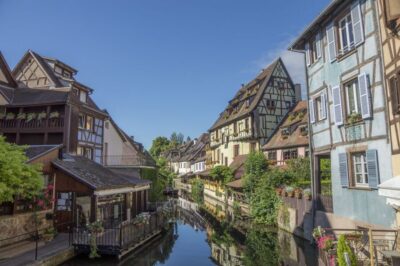
From Strasbourg: Best Of Alsace Historical Day Trip
Read our review →
Toulouse Food & History Tour with a Chef (in English)
Read our review →
Small-Group Full-Day Tour of Côte de Nuits, Côte de Beaune Vineyards and Beaune Historical District
Read our review →
Browse the lists this tour appears in