
Reviewed · HISTORICAL TOURS
Historic Paris Walking Tour in English
Paris rewards walkers. This tour gives you the city’s grandest opening chapter, from the Louvre and Pont des Arts to Notre-Dame and the Tuileries Gardens. I especially like the clear historical storyline and the way the walk connects palaces, churches, revolutions, art, and daily Parisian life. At $31 per person, it is also a sensible way to get your bearings before paying for major museum entries.
The main consideration is the pace. Two and a half hours on city streets is not punishing, but you will be standing and walking throughout, with no hotel pickup. The tour also passes major sights rather than promising entry into every building, so you should treat it as an orientation walk, not a museum visit.
In This Review
- Key points at a glance
- Starting at Hôtel de Ville
- Notre-Dame and the medieval heart
- Sainte-Chapelle and the power of royal Paris
- The Louvre, from fortress to art museum
- Pont des Arts and the Seine views
- Tuileries Gardens and the royal axis
- From revolution to Napoleon
- Why the boulevards look so broad
- The guides are the heart of the experience
- Price, group feel, and physical effort
- Who should book this Paris walk
- Practical verdict: book it for your Paris orientation
- FAQ
- How long does the Historic Paris Walking Tour last?
- What language is the tour conducted in?
- Where is the meeting point?
- How early should I arrive?
- What sights are covered?
- Is hotel pickup included?
- Does the price include museum entry?
- Can I cancel the booking?
Key points at a glance
- The Louvre gets the full historical treatment: You learn how it grew from a royal palace into one of the world’s great museums.
- Notre-Dame anchors the medieval story: The cathedral helps explain Paris as a religious, political, and cultural center.
- The route links famous views: Pont des Arts, Sainte-Chapelle, elegant boulevards, bridges, the Eiffel Tower, and the Tuileries Gardens all fit into the larger city story.
- The guide makes the difference: Tom, Harry, Thomas, Yazid, Francesca, Victoria, and others have been praised for warmth, humor, storytelling, and strong command of Parisian history and art.
- The price covers more than a stroll: You get a live English guide, a prepared narrative, and the reservation and guide payment connected with the pay-as-you-wish format.
- It works especially well on your first day: You leave with a mental map and a useful introduction to Parisian art, architecture, food, politics, and revolutions.
Starting at Hôtel de Ville
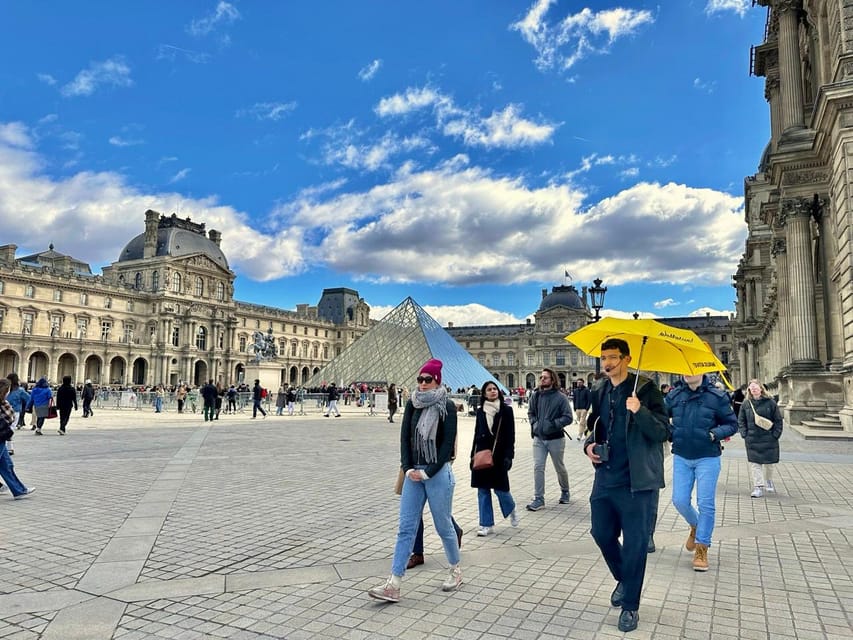
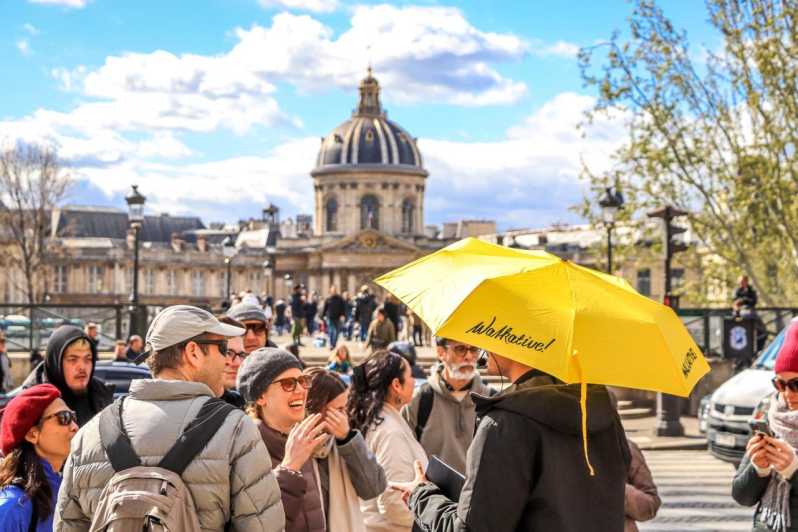
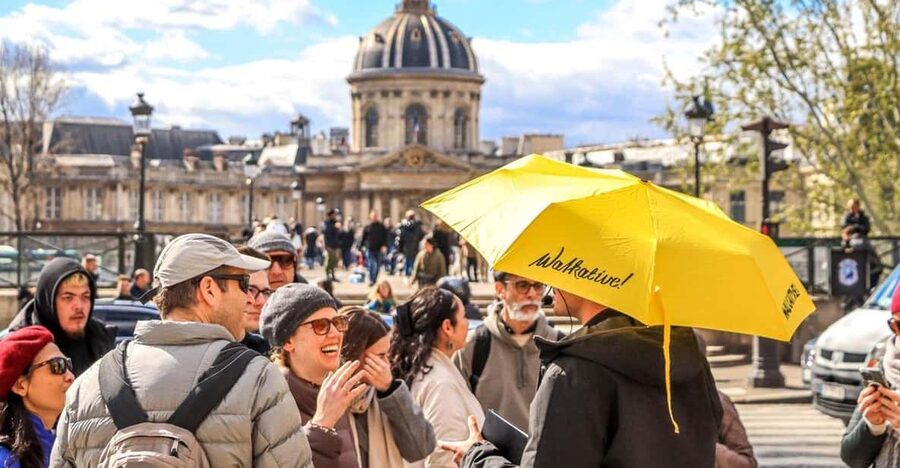
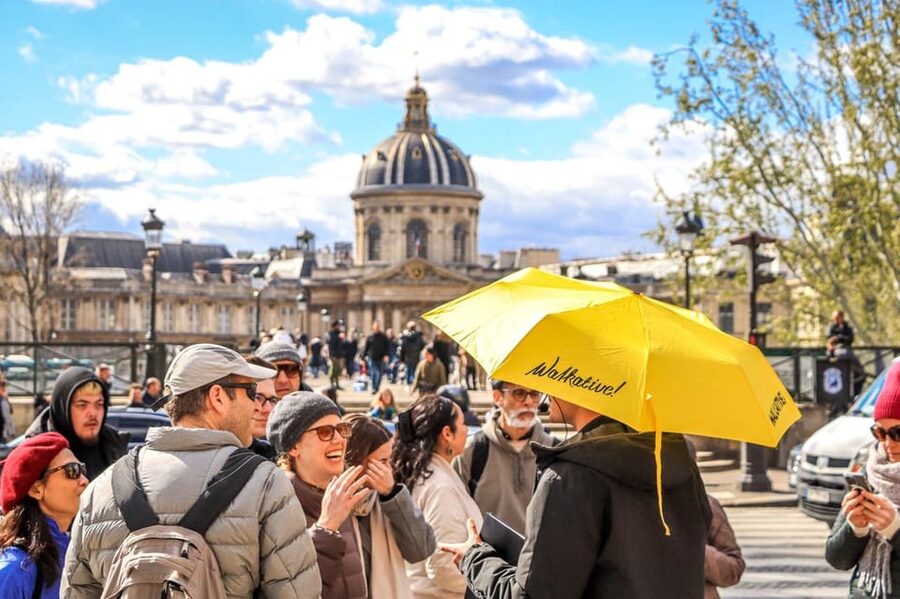
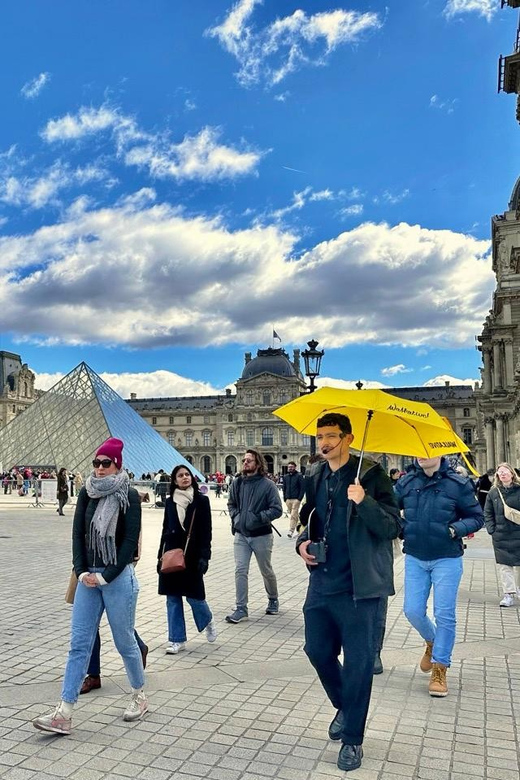
Your meeting point is outside the Métro at Hôtel de Ville, exit 5. Look for a yellow umbrella, and arrive about 10 minutes early. This is a practical starting place because you are already near the Seine and within easy reach of the medieval and royal heart of Paris.
The location also sets the tone. Paris is not one neatly packaged historical period. Roman foundations, medieval churches, royal power, revolutionary anger, Napoleon’s ambition, and 19th-century rebuilding all overlap here. A good guide helps you see those layers instead of treating each monument as an isolated photo stop.
I like that this tour begins with a broad explanation of Paris. The city grew around the Seine after the Gallic Parisii settled in the area. Rome later took control, and Paris became the capital of the Franks in the 6th century. From there, the city developed into France’s political, economic, religious, and cultural center.
You will hear how medieval Paris became Europe’s most populous city, with about 200,000 people. You will also hear about the Sorbonne and the city’s role in science, philosophy, and the Enlightenment. This context matters because the grand buildings you see are not just decorative. They reflect centuries of money, faith, conflict, learning, and royal ambition.
More Historical Tours in Paris
- Paris: Dark History and Ghostly Guided Walking Tour
★ 4.7 · 1,000 reviews - Le Marais/Paris – The Historic, Trendy, Jewish, LGBT district
★ 5.0 · 341 reviews - Paris City of Fashion History Private Guided Walking Tour
★ 5.0 · 221 reviews
Notre-Dame and the medieval heart
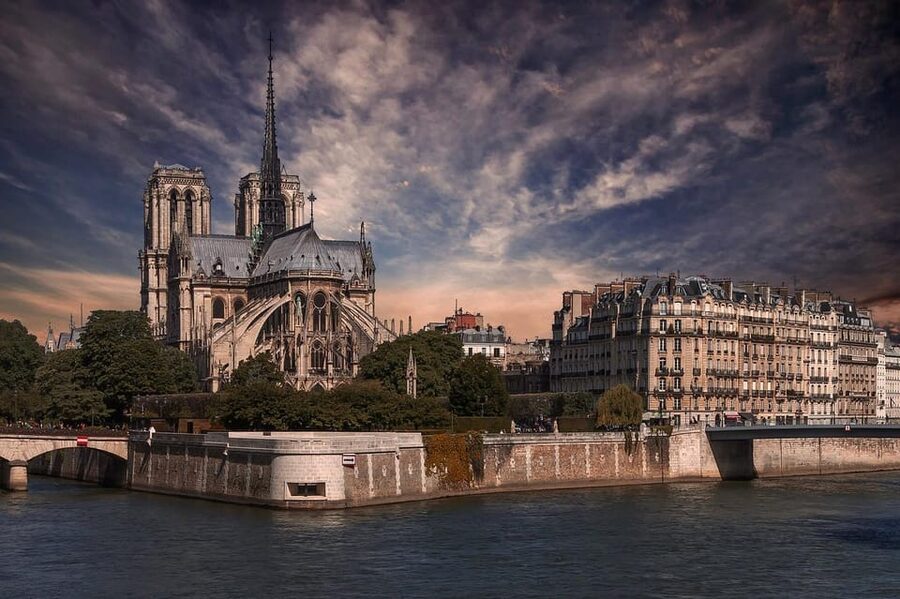
Notre-Dame Cathedral gives the walk one of its strongest historical stops. Even from outside, it helps you understand the importance of the Seine islands and the medieval city. The cathedral is tied to Parisian religion, royal ceremony, art, and public memory.
The guide also brings in the story of Quasimodo, linking the cathedral to Victor Hugo’s famous tale. That adds a useful human touch. You are not only looking at stonework and architectural forms. You are hearing how literature helped shape the way the world imagines Paris.
This is also where the tour can move from architecture into politics. Paris endured wars, religious massacres, extreme inequality, and repeated unrest. The city’s past is not all powdered wigs and romantic bridges. It includes fear, poverty, rebellion, and hard choices.
You should expect commentary rather than a cathedral admission. The supplied details identify Notre-Dame as a stop, but they do not include an interior visit or entrance ticket. If seeing the inside is important to you, plan that separately.
Sainte-Chapelle and the power of royal Paris
Sainte-Chapelle is included among the sights you may see along the route. Its presence adds another layer to the medieval story, especially the connection between religion and monarchy. Parisian kings did not merely govern from the city. They used churches, palaces, ceremony, and sacred objects to express power.
The tour’s prepared narrative is designed to connect these ideas. Instead of giving you a loose collection of dates, it moves from the medieval capital to the royal city and then toward revolution. That approach suits you if you enjoy history but do not want a lecture packed with names and years.
The walk also includes stories of love, desire, and revenge. Those subjects keep the historical material from becoming dry. Paris has always been a city of grand ideals and very personal drama, and the guide uses both sides of that character.
The Louvre, from fortress to art museum
The Louvre is one of the major reasons to book this walk. The focus is on the history of the palace and museum, not on trying to see its collection in a rushed few minutes. That distinction is important. The Louvre deserves hours, and sometimes several visits. A walking tour can give you the framework that makes a later museum visit more rewarding.
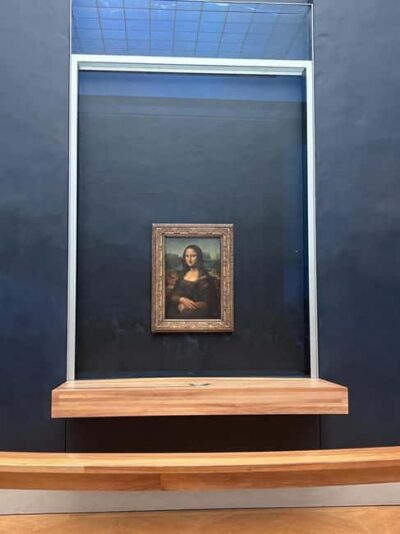
You will learn how the Louvre fits into the growth of royal Paris and how it became linked with the world of art. The tour also covers the daring theft of the Mona Lisa, one of the most famous art thefts in history. This is exactly the sort of story that helps a large institution feel less remote.
I appreciate the decision to discuss the Louvre as a building with a political past, not only as a container for paintings. Royal authority, national identity, art, and public access all meet here. Once you understand that, the museum feels more like a chapter in French history and less like a long list of masterpieces.
Again, no museum entry is included in the tour details. You will need a separate Louvre plan if you want to go inside. Take the guide’s explanation as a preview that can help you decide how to spend your museum time.
More Walking Tours in Paris
- Paris Top Sights Half Day Walking Tour with a Fun Guide
★ 5.0 · 2,893 reviews - Montmartre Hidden Gems and Scenic Highlights Walking Tour
★ 5.0 · 2,684 reviews - Montmartre Hill French Gourmet Food and Wine Tasting Walking Tour
★ 5.0 · 2,588 reviews - Paris Île de la Cité and Notre-Dame Walking Tour With Crypt
★ 5.0 · 2,272 reviews
Pont des Arts and the Seine views
Pont des Arts gives the group a chance to enjoy one of Paris’s classic bridge settings. The bridge connects the architectural story with the river itself. The Seine is not background decoration. It shaped where Paris developed, how people moved, and why the city’s central districts became so valuable.
This is also a good point for the guide to bring the mood back to present-day Paris. You will be surrounded by famous views, elegant buildings, and the city’s particular sense of style. The tour description leans into Paris as a place of fashion, food, art, love, and self-confidence, sometimes with a bit of that famous Parisian superiority.
That tone can work well when handled with humor. Several guides, including Tom, Yazid, Thomas, Harry, and Francesca, have been praised for keeping the group engaged and making serious history easy to follow. Yazid was singled out for his art history background, while Harry was praised as a strong storyteller who made the past feel close at hand.
Tuileries Gardens and the royal axis
The Tuileries Gardens provide one of the calmer sections of the walk. After stories of war, revolution, and palace intrigue, a formal garden gives you room to see how Paris uses open space. The gardens are part of the grand axis that ties the Louvre to the city beyond.
This stop also suits the tour’s emphasis on everyday enjoyment. Paris is not only cathedrals and crowns. It is also a place for sitting outdoors, sharing bread and cheese, and taking time over a glass of wine. The tour encourages you to connect the city’s history with its food and public spaces.
You should not expect a long picnic break or a food tasting. Food and wine are discussed as part of the Paris experience, but they are not listed as inclusions. If you plan to eat in the gardens afterward, you will need to arrange that yourself.
From revolution to Napoleon
The French Revolution is one of the tour’s central themes. Parisian poverty and inequality helped turn new ideas about science, philosophy, and government into direct political action. The royal regime fell, and monarchs were eventually guillotined.
The guide also tells the story of Napoleon, who took power after the Revolution and expanded French influence far beyond Paris. This gives you a useful bridge between revolutionary idealism and imperial ambition. The city’s monuments become easier to read when you know which leaders were trying to inspire, control, or reshape the public.
The stories of Napoleon and Hitler are both part of the tour. Their connection to Paris is handled as part of the city’s military and political past. Danielle described the experience as suitable for serious history fans and people with only a passing interest, partly because the material moves between art history, military history, architecture, and social change.
That range is one of the tour’s best features. You can follow the main story without needing to arrive as a specialist. If you already know French history well, you may appreciate the broader connections more than basic facts.
Why the boulevards look so broad
Paris’s wide 19th-century boulevards are not simply a style choice. The tour explains how repeated uprisings helped drive major urban rebuilding. New streets, aqueducts, sewers, and parks improved city life, but wide roads also made it harder to build barricades.
That is a sharp example of how urban design can serve both public health and political control. You will see elegant avenues, but the guide adds the less polished reason they were created. This kind of detail is where a walking tour earns its price.
The Eiffel Tower forms part of the larger story of modernization and is included among the sights you may see. It was built for the 1889 Universal Exposition and initially faced strong opposition from many Parisians. The city eventually embraced it, turning a disputed temporary-looking structure into its most recognized symbol.
The route cannot give you the full experience of every major monument in 150 minutes. You may see the Eiffel Tower as part of the city’s wider story rather than visit it. If you want to go up the tower, set aside a separate block of time.
The guides are the heart of the experience
The tour is only as good as the person carrying the story. The feedback attached to this experience is unusually strong, with a 4.9 rating from 78 reviews. More important than the number is the repeated pattern: guides are praised for being warm, funny, engaging, and able to explain difficult history without losing the group.
Tom was praised for answering questions and making the walk a strong first activity in Paris, especially for a solo visitor. One useful detail is that his tour finished on time, which matters if you have museum reservations or dinner plans.
Thomas has also received strong praise for combining humor with detailed history. His style was described as accessible to both serious history fans and people less interested in kings, queens, wars, and revolutions. That is a good sign if your group has mixed interests.
Other guides bring different strengths. Yazid is associated with art history and enthusiasm. Harry is praised for storytelling. Francesca is described as helping people find less obvious sights while keeping the group engaged. One guide used illustrations to support the explanation of architecture, revolution, and Parisian character.
The tour is in English, and the exact guide is not guaranteed in the details provided. I would book it for the format and subject, while recognizing that your experience will depend partly on the guide assigned that day.
Price, group feel, and physical effort
At $31 per person, the tour offers fair value if you want a structured introduction rather than a self-guided walk. You receive a live English guide and a prepared narrative covering a large amount of material in 150 minutes. You also avoid spending your first day in Paris wondering which famous building matters and why.
The pay-as-you-wish format needs a little explanation. This is a general pay-as-you-wish tour, but the stated $31 covers the reservation fee and the guide’s payment in this booking arrangement. Read the payment terms carefully when reserving so you understand what your price covers.
The walk is described in practical terms as good exercise but not strenuous. Still, you should expect to remain on your feet for two and a half hours. Wear comfortable shoes, and arrive ready for city walking rather than a seated sightseeing ride.
Group size is not formally specified. One visitor estimated a group of fewer than 20 and found that it never felt like a large, lumbering crowd. That suggests the format can remain manageable, but you should not book expecting a private tour.
Free cancellation is available up to 24 hours before the start time, and you can reserve now and pay later. Those terms are useful if your Paris schedule is still shifting.
Who should book this Paris walk
I would choose this tour for a first visit, especially on the first full day. It gives you a city map in story form. You learn where the Louvre, Notre-Dame, Sainte-Chapelle, the Seine bridges, and the Tuileries Gardens fit together, then you can return later to the places that deserve more time.
It is also a strong choice for solo visitors. The meeting point is clear, the format gives you company, and the guides have been praised for including people in the group. Families and mixed-age groups may also like the varied storytelling, since the material includes famous characters, art theft, architecture, romance, war, and revolution.
History and art fans will find plenty to enjoy, though the tour remains an overview. If you want detailed interior explanations of the Louvre or Sainte-Chapelle, this will not replace a specialist museum visit.
You may want to skip it if you dislike walking, have a tight schedule immediately afterward, or mainly want food tastings and paid admissions. Those are not the focus here.
Practical verdict: book it for your Paris orientation
I recommend booking the Historic Paris Walking Tour in English if you want a lively, useful introduction to central Paris for $31. Its strongest points are the connected story, the range of sights, and the quality of guide feedback, with Tom, Thomas, Yazid, Harry, and Francesca all praised for making the city understandable and fun.
Go in expecting an outdoor overview, not a series of interior visits. Arrive early at Hôtel de Ville, exit 5, find the yellow umbrella, wear good shoes, and keep later museum plans realistic.
For a first day in Paris, this is a smart use of 150 minutes. You will not see everything, but you will understand much more of what you are seeing.
FAQ
How long does the Historic Paris Walking Tour last?
The tour lasts 150 minutes, or two and a half hours.
What language is the tour conducted in?
The tour is conducted in English with a live English-speaking guide.
Where is the meeting point?
Meet outside the Métro at Hôtel de Ville, exit 5. Look for a yellow umbrella.
How early should I arrive?
You should arrive 10 minutes before the activity begins.
What sights are covered?
The experience includes the Louvre, Notre-Dame Cathedral, Pont des Arts, and the Tuileries Gardens. It also includes commentary connected with Sainte-Chapelle, the Eiffel Tower, Parisian boulevards, bridges, and major events in the city’s history.
Is hotel pickup included?
No. Hotel pickup and drop-off are not included.
Does the price include museum entry?
The provided tour details do not list museum or monument admission. The experience is described as a walking tour with an expert local guide and a prepared narrative.
Can I cancel the booking?
Yes. You can cancel up to 24 hours before the activity for a full refund. You can also reserve now and pay later.
Recently added around Paris
- Private Half-Day Guided Tour of Paris★ 4.5 · 48 reviews
- 2 hour outdoor group activity in Paris: SAINT GERMAIN★ 5.0 · 48 reviews
- Paris Dinner Show Opera Bel Canto★ 4.5 · 48 reviews
- Paris Vintage Tour by Night on a Sidecar with Champagne★ 5.0 · 48 reviews
- Secrets & Scandals of the Louvre – Limited to 6 Guests★ 5.0 · 48 reviews
- Paris Photoshoot: Eiffel Tower Exclusive Private Experience★ 5.0 · 48 reviews
- Paris: Louvre Mona Lisa Discovery Guided Tour with Ticket★ 4.9 · 48 reviews
- From Paris: Versailles Full-Day Guided Tour with Lunch★ 4.9 · 48 reviews
Historical Tours, compared.
Paris: Louvre Museum Entry with History of Mona Lisa
Read our review →
Paris: Dark History and Ghostly Guided Walking Tour
Read our review →
Vieux Lyon Cultural & Historical Walking Guided Tour (English)
Read our review →
Bordeaux: Historic Center & Chartrons District Bike Tour
Read our review →
From Strasbourg: Best Of Alsace Historical Day Trip
Read our review →
Toulouse Food & History Tour with a Chef (in English)
Read our review →
Small-Group Full-Day Tour of Côte de Nuits, Côte de Beaune Vineyards and Beaune Historical District
Read our review →
Browse the lists this tour appears in