
Reviewed · WALKING TOURS
Latin Quarter Paris – Exclusive Guided Walking Tour
Paris rewards slow walking. This 2.5-hour Latin Quarter tour links Roman ruins, medieval churches, famous bookshops, universities, and royal gardens in one tidy route. I like the personal pace of a private guide, and I like that the walk moves beyond the obvious sights into stories about writers, scholars, kings, and old Parisian neighborhoods. The main consideration is that several major attractions are viewed from outside, and the route covers a lot of ground.
The tour costs $59.69 per person, with group discounts available, and it is offered in English. I also like the practical help built into the experience: guides such as Alasdair, Hugo, Eden, Georgia, Tamari, Agustina, and François have been praised for lively storytelling, restaurant tips, patience, and the ability to adjust the pace. Still, you should bring comfortable shoes, since this is a real city walk, not a quick stroll between parked vehicles.
In This Review
- Key points to know before you book
- Why the Latin Quarter makes a strong first walk
- Île de la Cité and Notre-Dame: Paris begins here
- Saint-Michel and Shakespeare and Company
- Two old churches on the Left Bank
- Musée de Cluny and the Roman baths
- The Sorbonne and the search for knowledge
- The Panthéon and Saint-Étienne-du-Mont
- The Wall of Philip II Augustus
- Luxembourg Gardens: a graceful finish
- Storytelling is the real feature
- Price, group size, and practical value
- Who should book this Paris walking tour
- Should you book it?
- FAQ
- How long does the Latin Quarter walking tour last?
- Where does the tour begin?
- Where does the tour finish?
- Is this a private tour?
- Is Notre-Dame visited inside?
- Are museum and monument admission fees included?
- Is hotel pickup provided?
- What happens if it rains or a national celebration changes the route?
Key points to know before you book
- Starts on Île de la Cité: You begin at Cité, near the oldest part of Paris, then cross toward the Left Bank.
- Private attention is the main value: The private option includes a guide exclusively for your group, while the small-group option does not.
- Notre-Dame is exterior only: You see the cathedral and hear its story, but admission inside is not included.
- History comes with personality: Guides are praised for acting out stories, answering questions, taking photos, and adapting the route to your interests.
- The finish is at Luxembourg Gardens: The walk ends in one of Paris’s finest open spaces, near the Latin Quarter and Saint-Germain-des-Prés.
- Expect a moderate physical workout: The tour operates in all weather, and large bags or suitcases are not allowed.
Why the Latin Quarter makes a strong first walk
The Latin Quarter is one of the best parts of Paris for learning how the city grew. Its streets connect several layers of French history without requiring long rides between sights. You move from ancient Roman Paris to medieval Christianity, from university life to the French Revolution and modern literary culture.
I especially like this route for a first or second day in Paris. It gives you a mental map of the Left Bank and points out places you might otherwise pass without understanding. The experience is not simply a march from landmark to landmark. Its value comes from hearing why each place matters and how the pieces fit together.
The private format can make a noticeable difference. You can ask about architecture, religion, books, French kings, or local food without worrying about slowing down a large crowd. The guide can also respond to your energy level. One guide, Hugo, was praised for rearranging the walk around a guest’s sore back and checking when a rest was needed. That kind of attention is hard to get on a standard group outing.
More Walking Tours in Paris
- Paris Top Sights Half Day Walking Tour with a Fun Guide
★ 5.0 · 2,893 reviews - Montmartre Hidden Gems and Scenic Highlights Walking Tour
★ 5.0 · 2,684 reviews - Montmartre Hill French Gourmet Food and Wine Tasting Walking Tour
★ 5.0 · 2,588 reviews
Île de la Cité and Notre-Dame: Paris begins here
The walk opens on Île de la Cité, the island at the heart of the Seine. It was once the Roman settlement known as Lutetia, and Paris grew outward from this central point. The first stop is brief, about 15 minutes, but it gives the whole tour a useful starting frame.
Your guide can explain why this small island mattered for government, religion, and trade. You are not just looking at old buildings. You are standing where the early city took shape.
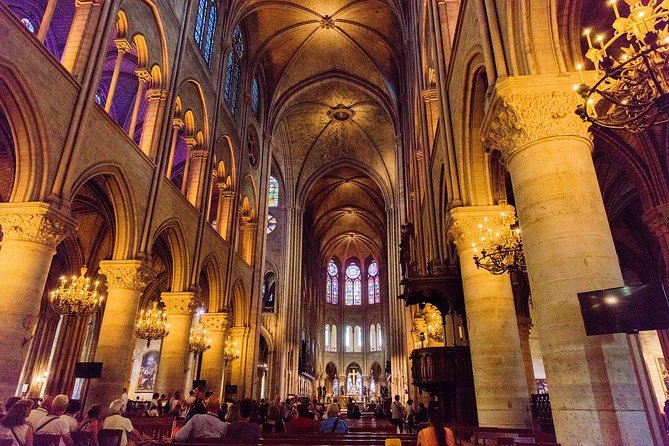
From there, the group spends about 20 minutes outside Notre-Dame. The cathedral needs little introduction, but its Gothic design deserves more than a quick photograph. Its size, age, and architectural detail made it one of the great medieval churches of Europe.
Because this tour offers an exterior visit only, you should not book it expecting an indoor cathedral tour. Admission is not included. The benefit is that you receive context without spending the visit waiting in an entry line, but anyone determined to see the interior will need to make separate plans.
Saint-Michel and Shakespeare and Company
The next stop is the Fontaine Saint-Michel, a monumental fountain commissioned under Napoleon III during Haussmann’s reshaping of Paris. Its central image shows the archangel Michael defeating the Devil, giving the monument a clear theme of good overcoming evil.
The stop lasts about 10 minutes. That is enough for a close look and an explanation, though not enough for a long pause. It works well as a transition from the island into the Left Bank.
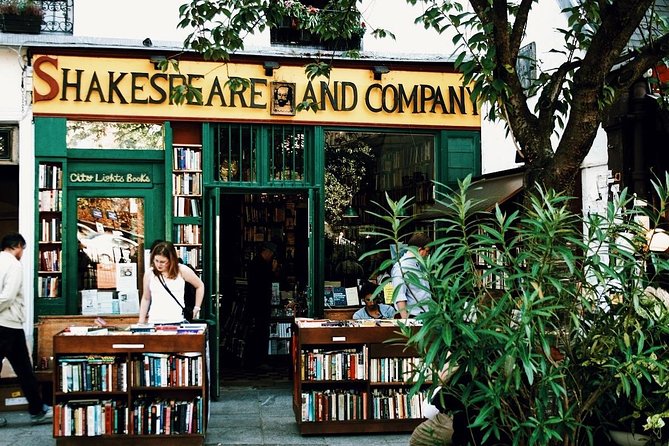
Then comes Shakespeare and Company, one of Paris’s best-known bookshops. The store is closely tied to English-language literary life in the city and to writers of the Beatnik era in the 1950s and 1960s. Even if you are not a serious reader, the stop gives the walk a human scale after the grand cathedral and monumental fountain.
The listed time is about 15 minutes. Admission is free, but this is still a working bookshop, not a museum stop with a large formal tour. Your guide may tell you about its literary role and suggest other places to explore, while you get a quick look at the atmosphere.
Two old churches on the Left Bank
The route continues to Église Saint-Julien-le-Pauvre, a Melkite Greek Catholic parish church and one of Paris’s oldest religious buildings. It is a useful reminder that the Latin Quarter is not only Catholic in the broad French sense. The neighborhood has long held different religious and intellectual traditions close together.
You then see Saint-Séverin, one of the oldest churches still standing on the Left Bank. It remains an active place of worship, which gives the stop a living quality. This is not a church preserved only for sightseeing. It is still part of local religious life.
Each church receives about 10 minutes. That is enough to understand its place in the area, but the schedule may feel quick if you enjoy studying church interiors. Also, access can vary because these are functioning religious sites. The supplied information specifically warns that increased security at attractions may prevent some interior visits, so treat these stops as exterior highlights unless your guide confirms otherwise.
A completely different sort of day in Paris:
- Paris: Louvre Museum Timed-Entrance Ticket
★ 4.6 · 71,977 reviews - Disneyland® Paris 1-Day Ticket
★ 4.6 · 49,412 reviews - Paris: Versailles Palace and Gardens Full Access Ticket
★ 4.6 · 41,579 reviews - Paris: Evening River Cruise with Music
★ 4.4 · 22,721 reviews
Musée de Cluny and the Roman baths

The Musée de Cluny, officially the National Museum of the Middle Ages, is one of the strongest historical stops on the route. Part of the building rests on the remains of third-century Gallo-Roman baths, linking the modern museum to the earliest era of Paris.
Its collections span the first through the fifteenth centuries. That makes the museum a natural bridge between Roman Lutetia and medieval Paris. You get a sense of how long the city has been a center of public life, religion, craft, and study.
The tour allows about 10 minutes here, and admission is not included. That short stop is best understood as an introduction rather than a full museum visit. If medieval art or Roman archaeology is high on your list, I would return on your own with more time. The guide can help you see why the museum belongs on your Paris plan, but the walking tour cannot replace a proper visit.
The Sorbonne and the search for knowledge
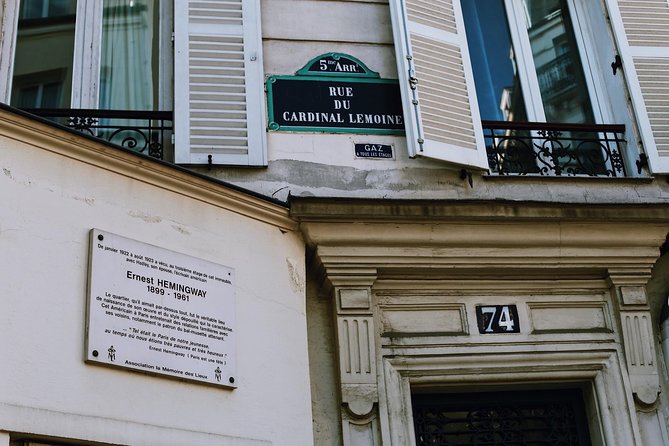
The route then heads to the Sorbonne, one of the most important university names in France. Its story is tied to the creation and growth of the French university system, and the Latin Quarter’s identity is deeply linked to students, teachers, books, debate, and scholarship.
The stop lasts about 10 minutes. You should expect an exterior view and an explanation of the university’s role rather than an academic campus tour. Still, this is one of the places where a good guide adds real value. A building can look impressive from the street, but the story of how it shaped the neighborhood gives it meaning.
Several guides have been praised for connecting past and present here. Eden, for example, was noted for explaining both historical events and modern Paris, while François was praised for answering questions with humor and a strong local point of view. The best part of this stop is not simply the name Sorbonne. It is understanding why so many streets nearby feel tied to student life and ideas.
The Panthéon and Saint-Étienne-du-Mont

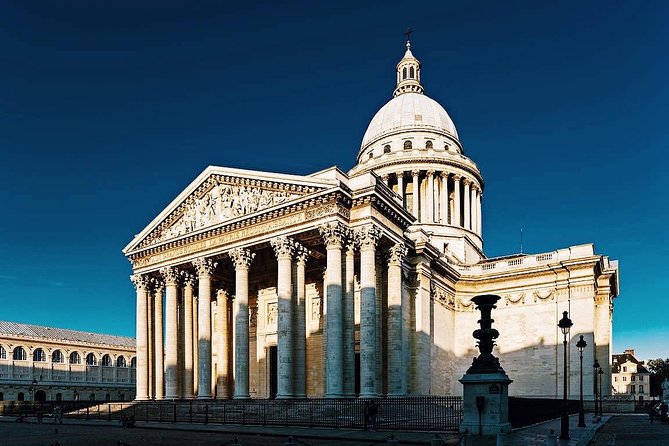
The Panthéon comes next, originally built as a church dedicated to Saint Geneviève and now used as a secular mausoleum. Its purpose changed with France’s political history, and it now contains the remains of notable citizens including Voltaire and Rousseau.
The tour allows about 15 minutes, but the visit is exterior only and admission is not included. That limitation matters. The building is impressive from outside, but the interior is where the mausoleum’s scale, decoration, and famous memorials make the strongest impression. If you want to see those elements, plan a separate visit.
If time permits, the guide may also show you Saint-Étienne-du-Mont. This church contains the shrine of Saint Geneviève and the tomb of the playwright Jean Racine. The stop is listed at about 10 minutes, though the wording makes clear that it depends on the pace of the walk and the time available.
This is one reason I like the private format. If your group is fascinated by religious history, French literature, or architecture, you can spend more attention in that direction. If you are tiring, you can keep moving toward the gardens.
The Wall of Philip II Augustus
The Wall of Philip II Augustus is a small but powerful stop. It is considered the oldest city wall in Paris and was built when King Philip II sought to protect the capital before leaving for the Third Crusade.
You might walk past a surviving section without noticing it. That is exactly why a guide is useful here. The wall does not have the visual force of Notre-Dame or the Panthéon, but it shows how medieval Paris was defended and where the city’s earlier limits lay.
The stop takes about 10 minutes. Think of it as a piece of urban archaeology, not a major monument. Its importance comes from location and context. Once you know what you are seeing, the modern streets around it reveal an older city underneath.
Luxembourg Gardens: a graceful finish
The walk ends at the Luxembourg Gardens, on the border between the Latin Quarter and Saint-Germain-des-Prés. Created in 1612 at the initiative of Queen Marie de Medici, the gardens were inspired by Florence’s Boboli Gardens and cover about 25 hectares.
This is a smart place to finish. After several hours of churches, monuments, university buildings, and dense streets, the open gardens give you room to slow down. The tour ends in the Latin Quarter, so you can continue exploring, stop for food, or simply sit and let the history settle.
The gardens are free to visit, but remember that the full route is not a loop. You start at Cité and finish near Luxembourg Gardens. That is convenient if you want to continue through the Left Bank, but you should not expect to be returned to your starting point.
Storytelling is the real feature
The strongest praise for this experience centers on the guides. Alasdair is repeatedly described as animated, energetic, and especially good at turning history into scenes you can picture. One guide even acted out historical events, which can sound theatrical, but it seems to work for people who prefer stories to dates.
Hugo is praised for intelligence, humor, flexibility, and restaurant advice. Georgia has been appreciated for taking photos and shaping the walk around personal interests. Eden is noted for patience, clear English, and a warm approach with families, including a fidgety seven-year-old.
Those details matter because a walking tour rises or falls on the person leading it. The route itself is strong, but the guide determines if the stops feel connected or like a list of addresses. The feedback is uniformly positive, with a five-star rating from 190 reviews and 100 percent recommendation. That does not guarantee that every guide will suit every personality, but it does show a clear pattern of strong delivery.
Price, group size, and practical value
At $59.69 per person, the price is reasonable if you value private attention and historical explanation. You are paying for about two and a half hours of a guide’s time, a carefully connected route, and the chance to ask questions as you go. You are not paying for museum admission, hotel transport, food, or cathedral entry.
The private option includes a walking guide exclusively for your group. The small-group choice has a different arrangement, so check which option you are selecting before booking. Group discounts may improve the value for families or larger parties.
The tour is offered in English and operates in all weather. Wear shoes that can handle a moderate amount of walking, carry water, and bring an umbrella if rain is possible. A hat helps in summer. Large bags and suitcases are not allowed, and hotel pickup or drop-off is not provided. The meeting point is at Cité, and the walk finishes in the Latin Quarter.
You must provide a mobile phone number with country code. National celebrations can alter the route, and an alternative route may be used without a refund or discount. Free cancellation is available up to 24 hours before the start time, but late cancellations and late changes are not accepted.
Who should book this Paris walking tour
I would choose this tour if you want an organized introduction to the Latin Quarter without committing to a huge group. It suits first-time visitors, history fans, families who benefit from a flexible pace, and repeat Paris visitors who want to see the neighborhood through a stronger historical lens.
It is also a good fit if restaurant advice matters to you. Several guides have offered useful suggestions for places to eat, and one recommendation became a highlight of a guest’s evening. That sort of local orientation can pay off beyond the tour itself.
I would hesitate if your top priority is entering Notre-Dame, the Panthéon, or the Musée de Cluny during the same outing. The schedule gives you brief stops, and some are exterior only. In that case, use the walk as an introduction, then return to the attractions you want to explore in depth.
Should you book it?
Book it if you want the Latin Quarter to make sense, not just appear in a string of photographs. The route combines major sights with quieter historical details, and the private format lets you ask questions and adjust the pace.
Skip it only if you prefer to wander without a schedule or need extensive indoor sightseeing. For most people who want a lively, personal start in central Paris, $59.69 is a fair price for two and a half hours of stories, orientation, and practical local advice.
FAQ
How long does the Latin Quarter walking tour last?
The tour lasts approximately 2 hours and 30 minutes.
Where does the tour begin?
The meeting point is at Cité, 75004 Paris, France, on Île de la Cité.
Where does the tour finish?
The walk ends in the Latin Quarter, near the Luxembourg Gardens area.
Is this a private tour?
The private option is exclusive to your group and includes a guide just for you. These inclusions do not apply if you choose the small-group option.
Is Notre-Dame visited inside?
No. Notre-Dame is an exterior-only stop, and admission is not included.
Are museum and monument admission fees included?
No. Admission is not included for the Musée de Cluny or the Panthéon. Several other stops are free to view.
Is hotel pickup provided?
No. Hotel pickup and drop-off are not included. Uber or a taxi is recommended for transportation to the meeting point.
What happens if it rains or a national celebration changes the route?
The tour operates in all weather, so you should dress appropriately. National celebrations may require an alternative route, with no refund or discount provided for that change.
Recently added around Paris
- Private Half-Day Guided Tour of Paris★ 4.5 · 48 reviews
- 2 hour outdoor group activity in Paris: SAINT GERMAIN★ 5.0 · 48 reviews
- Paris Dinner Show Opera Bel Canto★ 4.5 · 48 reviews
- Paris Vintage Tour by Night on a Sidecar with Champagne★ 5.0 · 48 reviews
- Secrets & Scandals of the Louvre – Limited to 6 Guests★ 5.0 · 48 reviews
- Paris Photoshoot: Eiffel Tower Exclusive Private Experience★ 5.0 · 48 reviews
- From Paris: Versailles Full-Day Guided Tour with Lunch★ 4.9 · 48 reviews
- Paris: Louvre Mona Lisa Discovery Guided Tour with Ticket★ 4.9 · 48 reviews
Walking Tours, compared.
Paris Top Sights Half Day Walking Tour with a Fun Guide
Read our review →
Montmartre Hidden Gems and Scenic Highlights Walking Tour
Read our review →
Montmartre Hill French Gourmet Food and Wine Tasting Walking Tour
Read our review →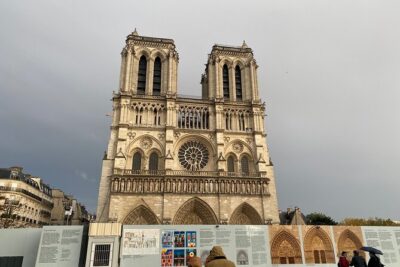
Paris Île de la Cité and Notre-Dame Walking Tour With Crypt
Read our review →
Paris: Montmartre Cheese, Wine & Pastry Guided Walking Tour
Read our review →
Paris in a Day: Louvre or Orsay, Eiffel Tower, City Walk & Cruise
Read our review →
Paris: Montmartre Highlights Walking Tour with a Local Guide
Read our review →
Browse the lists this tour appears in