
Reviewed · LOUVRE MUSEUM TOURS
Louvre Museum Access Private Guided Visit
The Louvre rewards a good plan. This two-hour private visit gives you one, taking you from the Mona Lisa and Nike of Samothrace to Greek, Roman, medieval, and French art with an English-speaking art historian. I like the private format, which lets your guide adjust the route to your interests, and I like how the visit gives shape to a museum that can otherwise feel like a city with paintings.
The strongest guides, including Boris, Tina, Mila, Anya, and others praised for their warmth and clear explanations, do more than point out famous objects. They help you understand why the works matter. The main drawback is the price, $301.71 per person, and two hours is only enough for a fast introduction to a museum that can occupy several days.
In This Review
- The Louvre in six useful points
- Why a private Louvre visit helps
- Starting at the Arc de Triomphe du Carrousel
- The Louvre’s famous first stop: Mona Lisa and beyond
- Fifteen minutes with Roman art
- Greek sculpture and the roots of European art
- Medieval art before the Renaissance
- The Great Gallery and Italian Renaissance painting
- Neoclassicism: order, restraint, and polished style
- Romanticism: paintings with heat and drama
- What the two-hour pace feels like
- The guides who shape the experience
- Is $301.71 per person a fair price?
- Who should book this Louvre experience?
- Should you book it?
- FAQ
- How long does the Louvre private tour last?
- Where does the tour begin?
- Where does the activity end?
- Is museum admission included?
- Is the tour private?
- What language is offered?
- Which Louvre works and galleries are included?
- Are children or young EEA residents eligible for free admission?
- Is food or drink included?
- Can the booking be canceled or changed?
The Louvre in six useful points
- Private guidance keeps the visit focused: Only your group takes part, so the guide can respond to your interests and questions.
- Major works are paired with lesser-known art: You see the Mona Lisa and Nike of Samothrace, but also pieces you might miss alone.
- The route crosses many centuries: Greek, Roman, medieval, Renaissance, Neoclassical, and Romantic works all appear.
- Quick entry can save valuable Paris time: Several accounts describe guides helping groups move through the entrance process swiftly.
- The guide can help after the tour: You receive orientation that makes it easier to continue on your own.
- The price suits time-pressed visitors best: It is costly for one person, but more practical when shared by a private group.
Why a private Louvre visit helps
The Louvre is not difficult because it lacks signs. It is difficult because there is too much to see, and the famous pieces sit among thousands of other works. You can spend half an hour searching for one gallery, then discover that the room you wanted is closed or that the route has changed.
A private art historian gives you a working map. The guide meets you at the Arc de Triomphe du Carrousel, near the museum entrance, then leads you inside and sets a sensible pace. Several detailed accounts describe guides moving groups past long entrance lines or through the admission process quickly. That can matter greatly during a short Paris stay.
You should not read this as a promise of instant entry in every circumstance. Museum procedures and crowd levels can change. Still, having a guide who knows the building and its routes is a major advantage over wandering in without a plan.
The private setup is also more flexible than a large group tour. Boris was praised for asking what his group hoped to see before choosing the route. Tina tailored the visit to her group’s interests, while Boris also worked well with teenagers. If your party cares more about sculpture than painting, or French history than Italian art, say so at the start.
More Louvre visits and skip-the-line options:
- Paris: Louvre Museum Timed-Entrance Ticket
★ 4.6 · 71,977 reviews - Paris: Louvre Guided Tour with Reserved Access & Boat Cruise
★ 4.3 · 16,353 reviews - Louvre Museum Masterpieces Guided Tour with Access
★ 4.5 · 12,023 reviews
Starting at the Arc de Triomphe du Carrousel
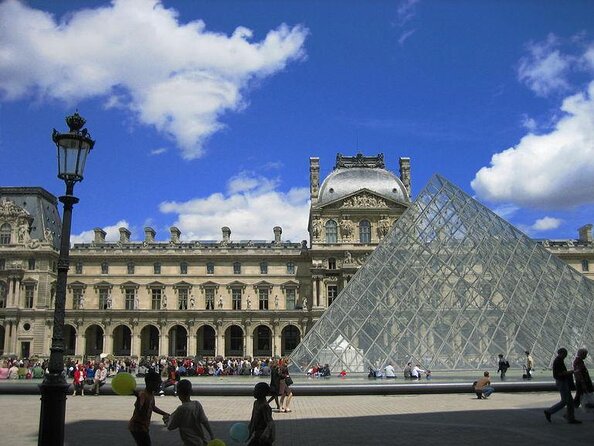
Your meeting point is the Arc de Triomphe du Carrousel, at Place du Carrousel. It is near public transportation and puts you beside the Louvre complex rather than several streets away.
Allow enough time to find the exact meeting spot. The supplied details say confirmation arrives at booking, but they do not specify a detailed arrival procedure or a phone meeting protocol. Your confirmation should be close at hand, especially if you are unfamiliar with the broad open spaces around the museum.
The tour ends back at the meeting point. In practical terms, that gives you a clear finish, but you may also be able to continue inside afterward if museum access and opening conditions permit. One guide specifically helped a group get oriented so they could carry on independently after the formal two-hour visit.
The Louvre’s famous first stop: Mona Lisa and beyond
The first portion centers on the Louvre as a whole and its best-known works. The Mona Lisa will likely be the headline, but the real value is learning not to treat the museum as a one-picture pilgrimage.
Your guide can place Leonardo’s painting within the larger story of European art and direct you toward works that may be less famous but just as rewarding. That is important because the Mona Lisa often attracts intense attention, while nearby rooms contain paintings that offer more visual space and, for some people, more immediate pleasure.
The Nike of Samothrace is another essential stop. Its dramatic placement and sweeping movement make it easy to remember, even if you know little about ancient sculpture. A good explanation helps you look beyond the marble itself and notice how pose, fabric, and setting create a sense of motion.
This opening section is also where you can tell your guide what matters most to you. The tour is designed around highlights, but the private format gives you a better chance of seeing particular works or subjects that fit your group.
Fifteen minutes with Roman art
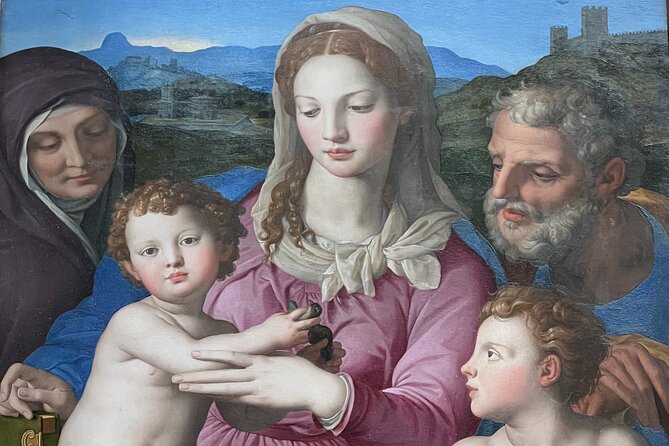
The Roman gallery is given about 15 minutes. That sounds brief, but it works as a compact lesson in how Roman art shaped later European culture.
Expect an emphasis on Roman sculpture and its role in transmitting ideas about rulers, public life, the human body, and classical style. The guide’s job here is not to name every object. It is to explain the visual language that later artists borrowed, adapted, and sometimes challenged.
This is one part of the route where a short explanation can prevent a common mistake. Roman art is often treated as a lesser copy of Greek art. A well-informed guide can help you see the Roman interest in portraiture, authority, and public identity rather than reducing the gallery to a list of marble heads.
The limitation is simple: 15 minutes cannot give you a full Roman art course. You will get a useful framework and selected examples, not a slow study of every room.
More Museum Tours in Paris:
- Paris: Louvre Museum Entry Ticket With Host and River Cruise
★ 4.6 · 9,926 reviews - Les Invalides: Napoleon’s Tomb & Army Museum Entry
★ 4.6 · 9,185 reviews - Louvre Museum – Exclusive Guided Tour (Entry Included)
★ 5.0 · 6,296 reviews - Paris: Louvre Museum Hosted Entry and Mona Lisa Audioguide
★ 4.6 · 5,235 reviews
Greek sculpture and the roots of European art
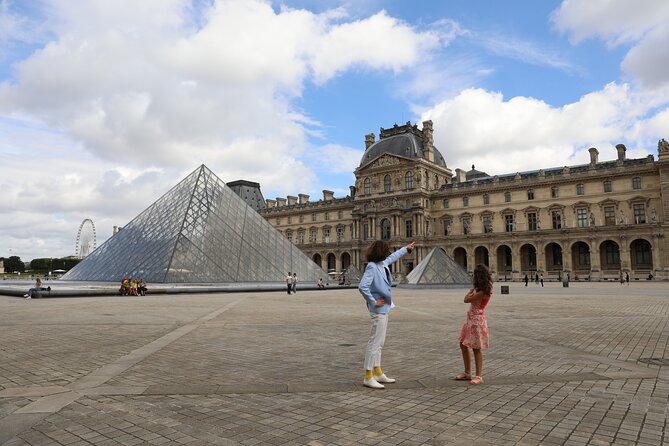
The Greek section follows with another 15-minute stop. Here the focus is on why Greek art became such a powerful reference point for later European artists.
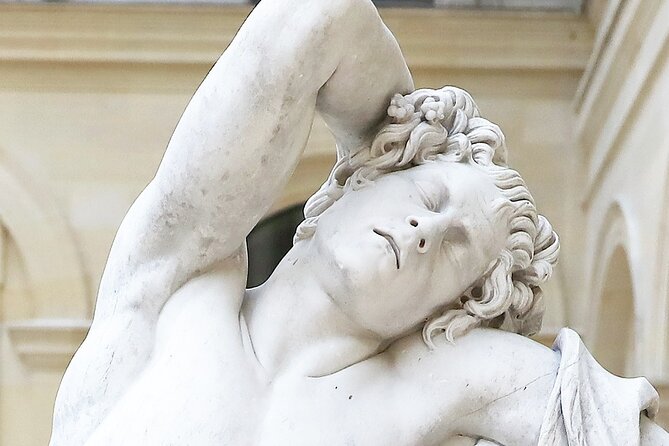
Your guide may draw attention to idealized bodies, balance, proportion, and the changing way artists represented movement and emotion. This is where the Nike of Samothrace makes particular sense, since its pose and flowing drapery show how a sculptor could suggest force in a still material.
The Greek galleries also reward comparison. After seeing Roman works, you can begin to notice what Roman artists adopted from Greek models and what they changed. That connection gives the itinerary a clear thread instead of making each gallery feel like an unrelated stop.
Again, the pace is brisk. If sculpture is your main interest, tell the guide early. The private nature of the tour gives you a better chance of spending more time on the pieces that speak to you, though the total duration remains about two hours.
Medieval art before the Renaissance
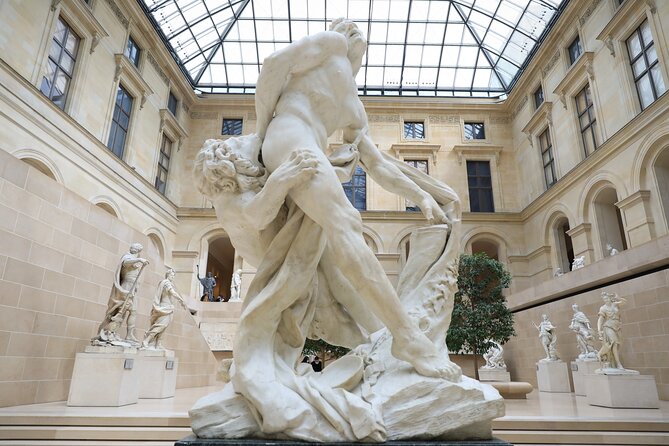
The medieval section receives roughly 15 minutes and provides the bridge between classical antiquity and the Renaissance. This part is easy to rush past, especially if you arrive at the Louvre mainly for Leonardo and the Italian painters.
That would be a mistake. Medieval art helps explain how European images served religious, teaching, and ceremonial purposes before Renaissance artists pursued a stronger sense of natural space and human anatomy. Your guide can show how those earlier traditions shaped the changes that followed.
The transition is one of the most useful ideas in the tour. The Renaissance did not appear from nowhere. It grew from older artistic practices, renewed interest in classical models, and new ways of observing the world.
The drawback is that this stop may feel compressed if medieval art is your priority. The itinerary is built for breadth, so you are getting a clear connection between periods rather than a specialist visit to every medieval room.
The Great Gallery and Italian Renaissance painting
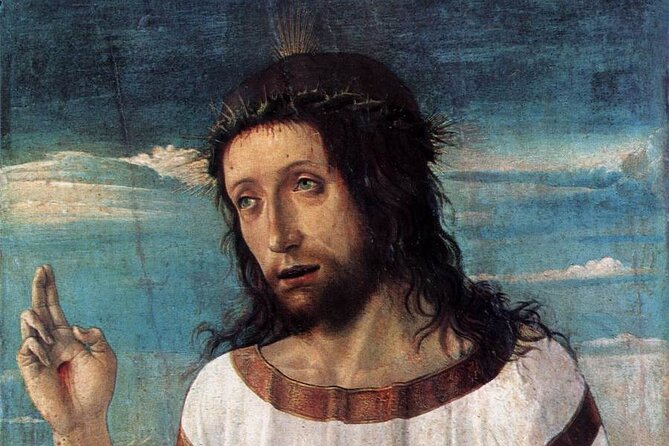
The Great Gallery is the visual center of the route, with about 15 minutes devoted to Italian Renaissance art. This is likely the portion most painting fans anticipate.
The guide can help you read the period through composition, perspective, light, gesture, and the treatment of religious or mythological subjects. Instead of simply identifying famous names, you can learn what makes Renaissance painting feel so controlled and persuasive.
The gallery itself is part of the experience. Its long scale and dense display give you a sense of the Louvre’s ambition. You are not viewing one isolated masterpiece. You are seeing a whole tradition presented through a large run of paintings.
The Mona Lisa belongs to this broader setting. Seeing it as one work within the Renaissance story can make the visit more satisfying than simply joining the crowd, taking a quick look, and moving on.
This portion may feel too short for serious art students. If you already know the Louvre well, you may prefer a narrower private tour devoted to Renaissance painting. For a first visit, though, the broad sweep is useful.
Neoclassicism: order, restraint, and polished style
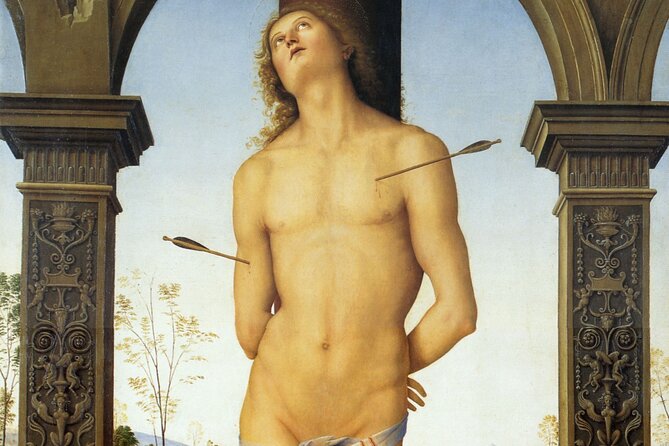
The Neoclassicism gallery offers about 15 minutes of elegant, controlled painting. This period looked back to ancient Greece and Rome, but it did so through the concerns of a much later Europe.
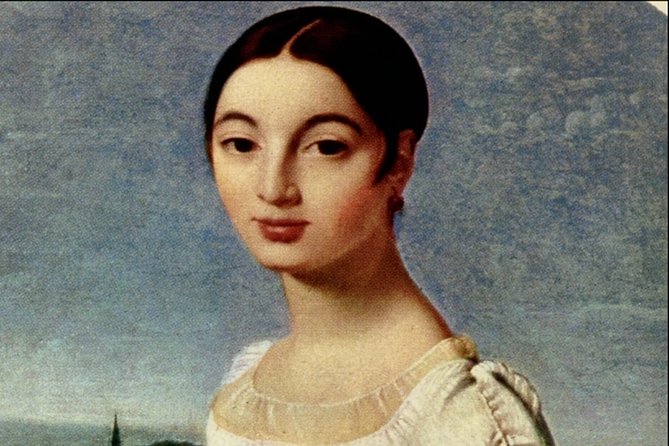
Expect cleaner lines, carefully arranged figures, formal poses, and a strong sense of order. Your guide can explain how Neoclassical artists used antique subjects and styles to express ideas about virtue, citizenship, power, and public life.
This stop works well after the Renaissance because you can compare two different kinds of ideal beauty. Renaissance artists often use perspective and human observation to build their scenes. Neoclassical painters tend toward polished surfaces, balanced compositions, and deliberate restraint.
It is also a good reminder that the Louvre is not only a museum of ancient objects and Renaissance stars. Its French painting collections tell the story of changing taste and politics across later centuries.
Romanticism: paintings with heat and drama
The final listed gallery is devoted to Romanticism, with another 15-minute visit. If Neoclassicism is controlled, Romanticism is emotional, forceful, and often theatrical.
Your guide can point out the role of color, movement, danger, suffering, and spectacle. Romantic painters wanted viewers to feel the event, not just understand its subject. The shift from Neoclassical restraint to Romantic intensity makes a strong closing chapter.
This is one of the route’s smartest choices. You begin with ancient art and move through changing ideas about the human figure, history, religion, power, and emotion. By the end, you have seen not just objects but an evolution in European artistic priorities.
You should expect a selective look, not a full survey. The 15-minute format gives you a vivid sample and a useful way to keep exploring if you remain at the museum.
What the two-hour pace feels like
The seven listed portions add up to about 105 minutes, leaving the rest of the two hours for walking, transitions, questions, entrance procedures, and adjustments to your interests. The route is busy, but that is part of its purpose.
Several guides were praised for moving efficiently through crowded corridors and fitting a great deal into a short visit. One guide even pointed out the original moat of the fortress, showing how the experience can include the Louvre’s building and earlier layers, not only paintings and statues.
You should wear sensible shoes and expect a moderate level of physical activity. The museum is enormous, and even a carefully planned route involves standing and walking. Food and drinks are not included, so plan those separately rather than expecting a pause during the tour.
The experience is offered in English. The strongest accounts describe guides who were warm, funny, and easy to follow. One account did note that the guide’s English could have been stronger, so communication may vary by guide. The overall rating is 4.9 from 52 reviews, with 96 percent recommending the experience, but no private tour is identical from one guide to another.
The guides who shape the experience
Boris receives especially strong praise for his ability to navigate the museum, explain difficult ideas, and work with both adults and teenagers. He was described as giving historical objects a sense of life and making the tour thought provoking, not just informative.
Tina was praised for arriving early, being easy to find, and adjusting the route to her group. Mila was described as friendly and well informed, with an ability to connect Louvre works to the history of the surrounding area. Anya was praised for combining clear subject knowledge with good company.
Other guides, including Amy, Adi, Anne, and Steph, were also singled out for personal attention, useful stories, and engaging explanations. The pattern is clear: the guide makes or breaks this experience.
At booking, it is worth stating your priorities plainly. Mention children or teenagers, favorite periods, accessibility concerns, or particular masterpieces you want to see. The guide cannot turn two hours into two days, but a clear request helps avoid spending your limited time on material that does not interest you.
Is $301.71 per person a fair price?
At $301.71 per person, this is an expensive Louvre visit. The adult museum admission, listed as €22, is included, along with a professional art historian and a private tour for your group.
The value depends on how you use your time. If you are in Paris for several days and enjoy exploring museums slowly, buying regular admission and studying the map may suit you better. You can spend less and return another day.
If you have only one chance at the Louvre, the calculation changes. The private guide can help you enter efficiently, find the major works, explain the artistic connections, and orient you for the rest of your visit. For a family or small group splitting the cost, the price may feel more reasonable than it does for a solo visitor.
Group discounts are available, though the exact terms are not provided. Children under 18 enter free, as do EEA residents under 26 with valid identification and proof of residency. Those exemptions may affect the final value for your party.
The tour is non-refundable and cannot be changed after booking. That makes careful planning important, especially at this price.
Who should book this Louvre experience?
I would recommend it most strongly to first-time Louvre visitors with limited time, families who want help keeping a route moving, solo visitors who prefer personal conversation, and anyone who finds large museums confusing.
It also suits people who want context rather than a simple list of famous names. The guide can explain how Greek and Roman art influenced later Europe, how medieval traditions prepared the way for the Renaissance, and why Neoclassical and Romantic painting feel so different.
You may want another option if you are a serious specialist in one period, want a slow photography session, or prefer to explore without a fixed route. Two hours is a useful introduction, but it cannot satisfy every interest.
Should you book it?
Book this tour if your Louvre visit is a one-shot attempt and you want to spend your time well. The combination of private attention, English guidance, major masterpieces, and a broad art-history route gives you a clear introduction without leaving you to wander through miles of galleries alone.
I would hesitate only if the $301.71 price strains your budget or if you already know the museum well. For everyone else, especially a small group splitting the cost, the guide can turn an overwhelming morning into a focused start, then leave you better prepared to continue on your own.
FAQ
How long does the Louvre private tour last?
The tour lasts approximately two hours.
Where does the tour begin?
It begins at the Arc de Triomphe du Carrousel, Place du Carrousel, 75001 Paris, France.
Where does the activity end?
The activity ends back at the meeting point.
Is museum admission included?
Yes. The experience includes the €22 adult entrance ticket to the museum.
Is the tour private?
Yes. Only your group participates in the activity.
What language is offered?
The tour is offered in English.
Which Louvre works and galleries are included?
The route includes the Mona Lisa, the Nike of Samothrace, Roman art, Greek art, medieval art, Italian Renaissance painting in the Great Gallery, Neoclassicism, and Romanticism.
Are children or young EEA residents eligible for free admission?
Visitors under 18 enter free. EEA residents under 26 also qualify for free admission when they present valid identification and proof of residency.
Is food or drink included?
No. Food and drinks are not included.
Can the booking be canceled or changed?
No. The experience is non-refundable and cannot be changed for any reason.
Recently added around Paris
- Private Half-Day Guided Tour of Paris★ 4.5 · 48 reviews
- 2 hour outdoor group activity in Paris: SAINT GERMAIN★ 5.0 · 48 reviews
- Paris Dinner Show Opera Bel Canto★ 4.5 · 48 reviews
- Paris Vintage Tour by Night on a Sidecar with Champagne★ 5.0 · 48 reviews
- Paris Photoshoot: Eiffel Tower Exclusive Private Experience★ 5.0 · 48 reviews
- Secrets & Scandals of the Louvre – Limited to 6 Guests★ 5.0 · 48 reviews
- From Paris: Versailles Full-Day Guided Tour with Lunch★ 4.9 · 48 reviews
- Paris: Louvre Mona Lisa Discovery Guided Tour with Ticket★ 4.9 · 48 reviews
Louvre Museum Tours, compared.
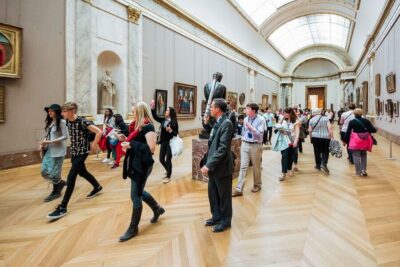

Paris: Louvre Guided Tour with Reserved Access & Boat Cruise
Read our review →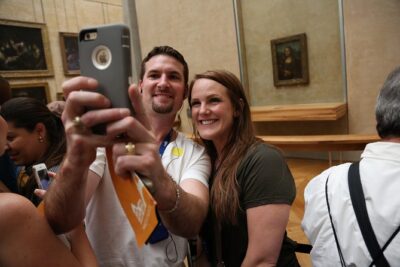
Louvre Museum Masterpieces Guided Tour with Access
Read our review →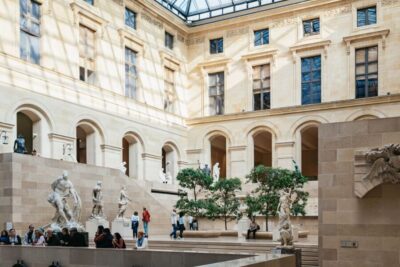
Paris: Louvre Museum Entry Ticket With Host and River Cruise
Read our review →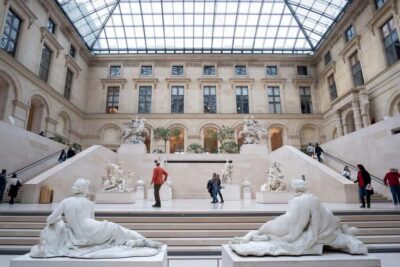
Paris: Priority Access Louvre with Host -Direct to Mona Lisa
Read our review →
Mona Lisa & Louvre Masterpieces Tour with Reserved Access
Read our review →
Louvre Museum – Exclusive Guided Tour (Entry Included)
Read our review →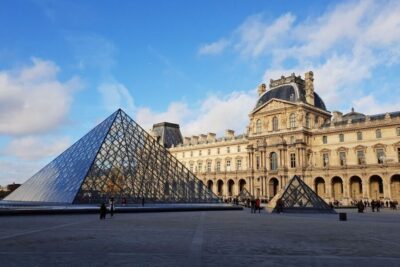
Paris: Louvre Reserved Ticket and River Cruise Combo
Read our review →Browse the lists this tour appears in