
Reviewed · WINE TOURS IN BORDEAUX
Make your own cuvée of Bordeaux wine
Bordeaux becomes more fun when you blend it yourself. At Le Pied à Terre, you do more than taste a few glasses. You learn how Merlot, Cabernet Sauvignon, and Cabernet Franc behave, then use tubes and pipettes to create a blend suited to your own taste. I especially like the hands-on bottling and the friendly English-language teaching. The small group, capped at 12 people, also gives the workshop a personal feel.
There is one important catch: this is not a traditional winery visit, and the title can set the wrong expectation. You are blending selected wines rather than making wine from grapes. A few people also found the session shorter than the advertised two hours and 30 minutes, so I would treat the timing as approximate.
In This Review
- Key points at a glance
- Entering Le Pied à Terre on Rue Judaïque
- Learning what each Bordeaux grape brings
- Tasting before you start mixing
- The pipette exercise: where the class gets practical
- Bottling your own Bordeaux blend
- The guides and the tone of the class
- How long the workshop really feels
- Is $71.20 a fair price?
- Who should book this Bordeaux wine workshop?
- Practical details before you go
- Should you book it?
- FAQ
- Where does the Bordeaux wine blending workshop begin?
- Where does the activity end?
- How long does the experience last?
- What language is the workshop offered in?
- How many people can join the experience?
- Which grape varieties do you use for blending?
- Do you get to take home your own wine?
- Is food included?
- Is the venue near public transportation?
- Can I cancel for a full refund?
Key points at a glance
- You blend three classic Bordeaux varieties: Merlot, Cabernet Sauvignon, and Cabernet Franc.
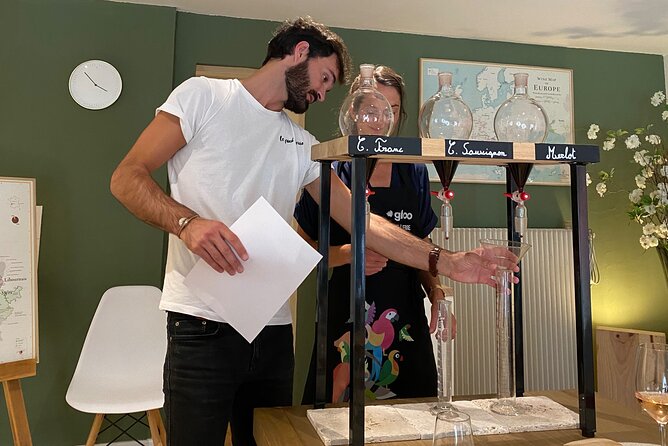
- You use tubes and pipettes: The process feels more like a small wine laboratory than a standard tasting.
- You take home a personal bottle: Your finished cuvée can be bottled and labeled with your name.
- The teaching is in English: James, Pierre, and Geoffroy are named as hosts across the sessions.
- Cheese and Basque charcuterie are included: The food gives you something to taste alongside the wines.
- The group is limited to 12 people: That matters when you are asking questions or adjusting your blend.
Entering Le Pied à Terre on Rue Judaïque
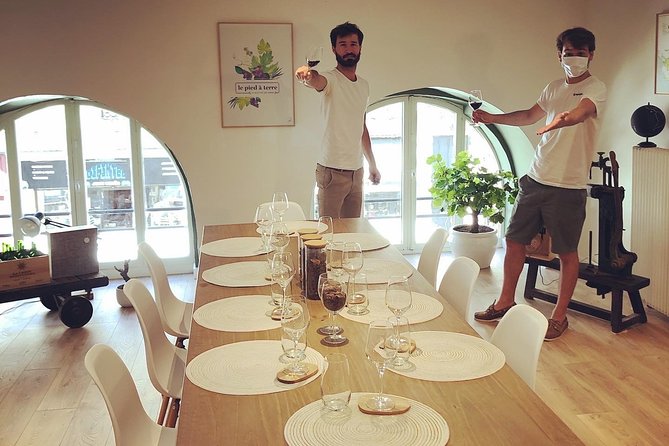
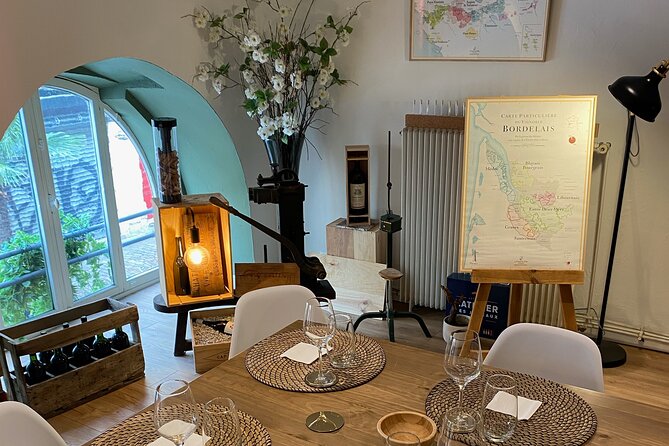
The workshop begins at Le Pied à Terre, a wine shop and tasting cellar at 22 Rue Judaïque in central Bordeaux. You return to the same place when the session ends, so there is no complicated transfer or second meeting point to manage.
I like this setup because the cellar gives the class the right mood without requiring a trip into the surrounding vineyards. You are in Bordeaux itself, close to public transportation, and the experience fits neatly into a city sightseeing day. You can spend the morning exploring the historic center, attend the workshop in the afternoon, and continue with dinner nearby.
The venue is also a working wine shop with a selection of bottles. That gives the experience a useful afterlife. If you discover that you prefer a Cabernet-heavy style, a softer Merlot blend, or something more aromatic, you may be able to continue exploring those choices after the class.
The room is described as warm and informal rather than grand or formal. That suits the subject. Bordeaux wine can seem intimidating when it is presented only through expensive château names and technical labels. A relaxed cellar makes it easier to ask basic questions without feeling that you should already know the answer.
More Wine Tours in Bordeaux
- Bordeaux: Cité du Vin Entry Ticket and Wine Tasting
★ 4.6 · 3,885 reviews - Bordeaux: River Garonne Cruise with Glass of Wine and Canelé
★ 4.5 · 3,630 reviews - From Bordeaux: Afternoon Saint-Emilion Wine Tasting & snack
★ 4.8 · 1,581 reviews
Learning what each Bordeaux grape brings
The session starts with an introduction to Bordeaux’s main grape varieties and their typical aromas and flavors. The focus is on Merlot, Cabernet Sauvignon, and Cabernet Franc, the three wines used for the blending exercise.
This is the part that gives the later activity a purpose. You do not simply pour wines together and hope for the best. You first learn what each component contributes to a final blend.
Merlot is generally presented as the softer, rounder element. It can give a blend fruit, body, and an easier texture. If you prefer a wine that feels generous and approachable, you may want Merlot to play a larger role.
Cabernet Sauvignon brings structure and tannin. It can make a wine feel firmer and more serious, with the shape to develop over time. Too much may make a blend seem austere, especially if you prefer smooth, immediately drinkable reds.
Cabernet Franc adds aroma and freshness. It can bring a lighter touch and extra character to a blend. The lesson is not to find one grape that is best, but to understand how the three can support one another.
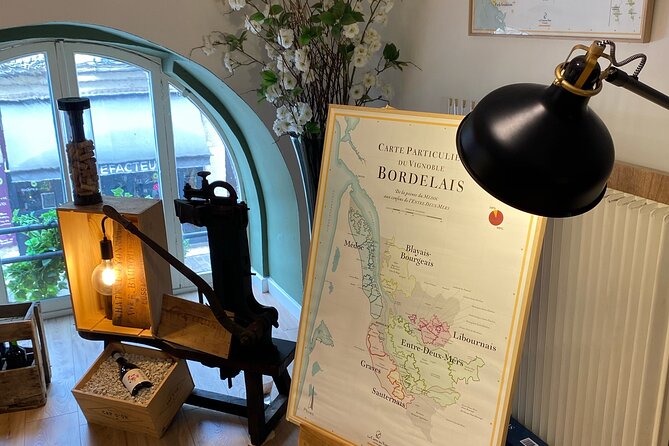
The teaching also places Bordeaux in regional context. You learn about the Left Bank, Right Bank, and Entre-Deux-Mers, along with the broad differences between these parts of the Bordeaux area. Soil samples are used as a visual aid, which is a smart choice for anyone who finds wine geography hard to remember from a map alone.
This regional lesson is particularly useful if you are new to Bordeaux labels. The area is famous for blends, yet many people arrive from countries where single-varietal wines are more common. The workshop explains why a Bordeaux bottle may not announce one grape prominently on the front label, and why the blend itself is central to the style.
Tasting before you start mixing
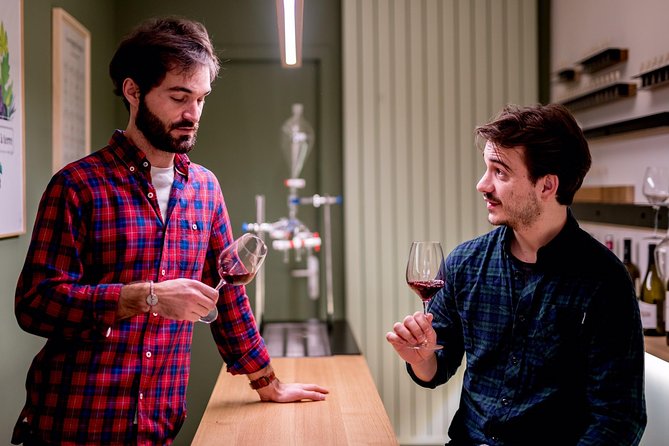
The workshop includes a guided tasting of three wines. The pours are paired with cheese and charcuterie from the Basque Country, giving you a small but welcome food course while you taste.
The tasting is designed as a lesson, not a quick sip-and-move-on stop. You work through the basic elements of wine, including aroma, acidity, tannin, flavor, and texture. The goal is to help you notice why a wine feels soft, firm, fresh, dry, aromatic, or full-bodied.
Some sessions also include a blind tasting. This is a useful test because it asks you to apply what you have just learned without relying on a label or bottle shape. You may find it harder than expected, but that is part of the fun. It shows how much your judgment depends on context and expectation.
I would pay close attention during this section, even if your main goal is to make the bottle. The blend you create later will be better if you can identify what you like in each wine. You may discover that you enjoy the aroma of Cabernet Franc but prefer the softer texture of Merlot, or that you want Cabernet Sauvignon only as a small structural component.
The food matters, too. Cheese and charcuterie make the tasting more social and help show how wine changes with food. Since the menu specifically mentions Basque products, this is also a pleasant regional touch rather than a generic bowl of snacks.
The pipette exercise: where the class gets practical
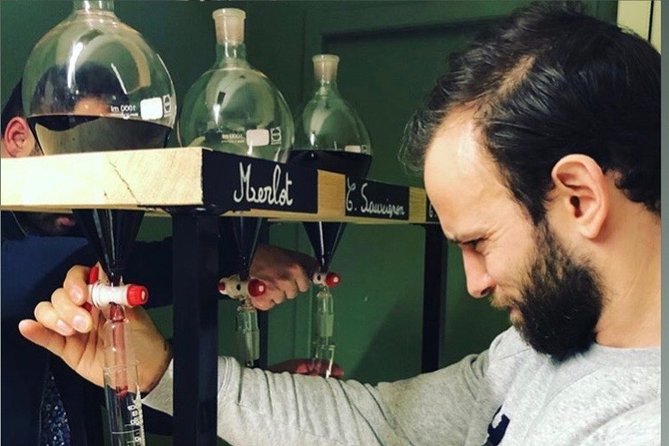
After the introductory tasting, you move to the blending experiment. This is the central feature of the workshop, and it is what separates the experience from an ordinary Bordeaux tasting.
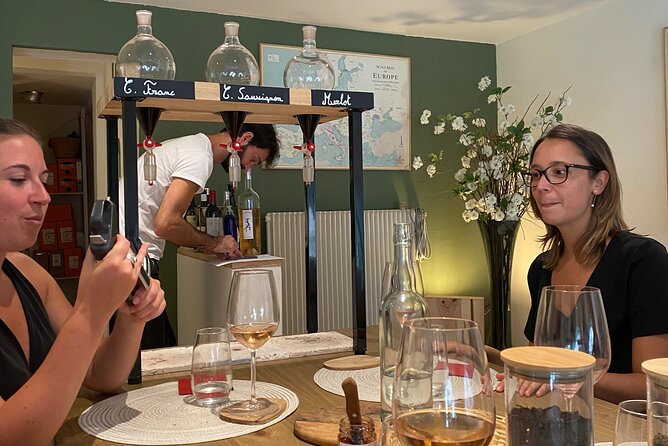
You work with separate single-varietal wines and measure them using tubes and pipettes. You can test different proportions, compare the results, and adjust the mixture according to your taste. The exact formula is up to you, within the wines and tools provided.
This small act of measuring makes the lesson memorable. Bordeaux blending is often discussed in abstract terms, but the pipettes let you feel the effect of changing the balance. A small increase in Cabernet Sauvignon can make the wine seem firmer. More Merlot can make it feel rounder. Cabernet Franc can shift the aroma and freshness.
The process is also playful. You are not being asked to produce a commercial château wine in a cellar full of oak barrels. You are learning by trial and error, which means there is no need to panic if your first mixture is not perfect.
One useful improvement would be the chance to add a small percentage of another grape, such as Petit Verdot, Malbec, Pinot, or Gamay. That is not part of the stated workshop, so you should expect the main exercise to focus on the three Bordeaux varieties listed. For a first introduction, that narrower choice is probably helpful rather than limiting. Three components are enough to show how blending works without turning the activity into a chemistry exam.
A completely different sort of day in Bordeaux:
- Medoc or Saint Emilion Wine Tasting and Chateau from Bordeaux
★ 5.0 · 1,415 reviews - Saint Emilion Day Trip with Sightseeing Tour & Wine Tastings from Bordeaux
★ 5.0 · 1,120 reviews - Saint-Émilion: Grand Cru Classé Winery Visit and Tasting
★ 4.6 · 1,118 reviews - Saint Emilion Half-Day Trip with Wine Tasting & Winery Visit from Bordeaux
★ 4.5 · 1,034 reviews
Bottling your own Bordeaux blend
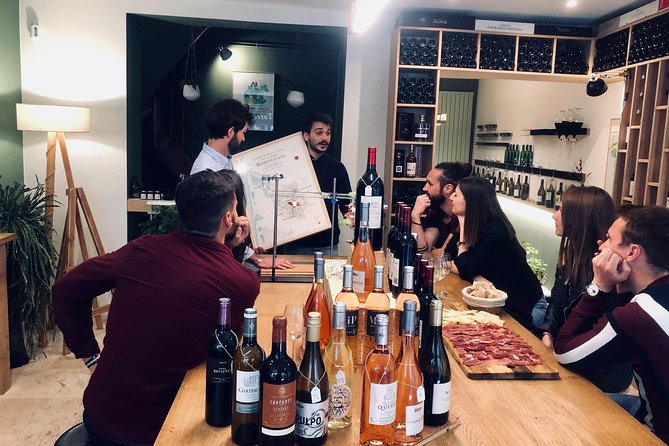
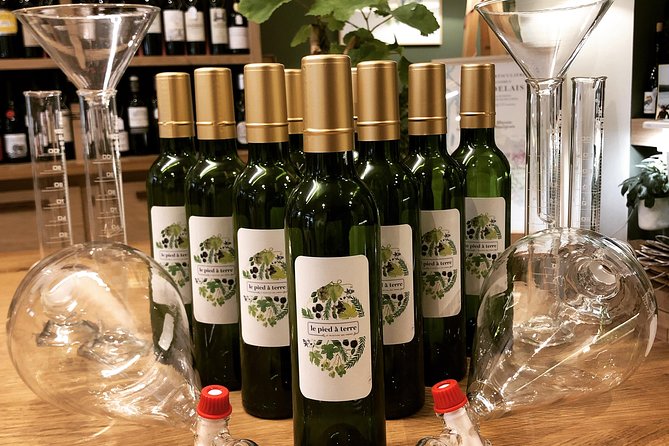
Once you have settled on a recipe, you create your own cuvée and may take home a bottle labeled with your name. This is the detail that gives the experience a strong sense of occasion.
The bottle is more than a souvenir from a wine tasting. It records your personal preference at that moment. You can remember whether you favored Merlot, wanted more Cabernet structure, or aimed for a fragrant Cabernet Franc-led mixture.
I also like the social side of this step. If you attend with friends or family, each person can create a different blend from the same starting wines. You can compare the bottles later or even arrange your own blind tasting. That turns a two-hour workshop into an activity you can revisit once you are home.
Be clear about what you are taking with you. You are not bringing home wine made from grapes you harvested or fermented yourself. You are bottling a blend from prepared single-varietal wines. That distinction explains the criticism from people who expected a full winemaking session, but it does not make the blending exercise less worthwhile.
If you want the most from this part, write down your proportions if they are provided during the class. Your named bottle is a pleasant keepsake, but the formula is the part you would need if you wanted to recreate your preferred style later.
The guides and the tone of the class
The hosts named for this experience include James, Pierre, and Geoffroy. English is offered, and one host is described as a native English speaker. That is a real advantage when the class turns to tannin, acidity, soil, and blending percentages.
The teaching style is warm, funny, and informal. That matters because wine instruction can easily become a lecture packed with French terms. Here, the emphasis is on helping you taste and understand, not on testing your vocabulary.
The brothers Pierre and Geoffroy are described as welcoming and energetic, with a family-style approach that helps people settle in quickly. James is also named as a guide for the workshop. Since the exact host may vary, the important point is that the class is designed to be engaging in English rather than stiff or overly academic.
The group limit of 12 is another advantage. A class this size can still include conversation among participants, while leaving room for individual questions. It is a good format for solo visitors, couples, and small groups of friends.
How long the workshop really feels
The published duration is about two hours and 30 minutes. Some sessions have run closer to three hours, while others have felt shorter than the advertised time. You should leave a little flexibility in your schedule rather than booking a tightly timed dinner reservation or another fixed activity immediately afterward.
The extra time can be a benefit if you enjoy detailed instruction. Several parts compete for attention: Bordeaux geography, grape varieties, tasting technique, blind tasting, blending, and bottling. A rushed version would lose much of the value.
On the other hand, the experience is not equally suitable for everyone. If you want a quick tasting with three small pours and minimal explanation, this may feel too long or too involved. If you expect to spend an entire day among vineyards, barrels, and working winemakers, it may feel too urban and classroom-based.
I see the timing as best suited to an afternoon or early evening plan. The activity ends back at Rue Judaïque, so you can continue into Bordeaux without arranging a ride from the countryside.
Is $71.20 a fair price?
At $71.20 per person, this is not the cheapest tasting in Bordeaux. You are paying for more than the wine in the glass, though. The price includes instruction, several tasting stages, the blending exercise, cheese and Basque charcuterie, and the chance to take home a personalized bottle.
That makes the value strongest for you if you want to learn a skill. A standard tasting may introduce you to several wines, but this workshop asks you to compare them and make decisions. You leave with a clearer idea of what tannin, acidity, aroma, and body do in a blend.
The value is also good for visitors who have already taken other wine tours. The blending lesson covers a part of Bordeaux wine culture that is easy to miss when a tour focuses mainly on château visits, vineyards, or tasting notes. You can use the workshop to bring together what you have learned elsewhere.
It is less compelling if you do not drink red wine. This is specifically a red Bordeaux experience centered on Merlot, Cabernet Sauvignon, and Cabernet Franc. Someone who prefers only white wine may not get much from the tasting or the blending experiment.
Who should book this Bordeaux wine workshop?
I would recommend it most strongly to:
- First-time Bordeaux visitors who want a clear introduction to local wine
- People who enjoy hands-on classes rather than passive tastings
- Couples or families who want a personalized souvenir
- Wine drinkers familiar with single-varietal wines who want to understand Bordeaux blends
- Small groups of friends who can compare their finished bottles
- Experienced wine drinkers who want to test their palate through blind tasting
I would be more cautious if your priority is a vineyard setting, a château tour, or a full explanation of the host family’s own wine history. One participant wished for more personal family background, and that is a fair point. The workshop concentrates on tasting and blending rather than building a detailed family story around the venue.
The experience is also a weaker choice if you need the schedule to end at an exact time. The advertised duration is approximate, and the class may run longer when discussion is lively.
Booking 45 days ahead is the average pattern, so I would not leave it until the last day of your Bordeaux stay. The group is small, and the activity has a high overall rating of 4.9 from 78 ratings, with 97 percent of people recommending it. Those figures suggest strong demand, but your decision should still rest on the format: this is an educational blending workshop, not a traditional vineyard excursion.
Practical details before you go
You receive confirmation when you book, and a mobile ticket is accepted. The meeting point is Le Pied à Terre, 22 Rue Judaïque, 33000 Bordeaux, France. The activity ends at that same address.
The venue is near public transportation, which makes it easy to fit into a day in the city. Service animals are allowed. The group can include no more than 12 people.
Free cancellation is available if you cancel at least 24 hours before the local start time. Changes or cancellations made inside that window are not accepted for a refund. The experience also requires a minimum number of participants and may be canceled for poor weather, despite taking place in a cellar. In either case, you are offered another date or experience, or a full refund.
Should you book it?
Book this workshop if you want to understand Bordeaux through your own palate. The strongest parts are the clear explanation of the three grape varieties, the blind tasting, the pipette blending, and the named bottle you can take home.
Do not book it expecting to harvest grapes, ferment wine, or tour a château. You are making a personal cuvée from prepared wines in a central Bordeaux cellar. For the right visitor, that is precisely the appeal: practical, social, educational, and easy to fit into a city itinerary.
At $71.20, I consider it a good buy for anyone curious about how Bordeaux blends work. It is one of the more memorable ways to move from simply drinking Bordeaux to understanding why it tastes the way it does.
FAQ
Where does the Bordeaux wine blending workshop begin?
It begins at Le Pied à Terre, a wine shop and tasting cellar at 22 Rue Judaïque, 33000 Bordeaux, France.
Where does the activity end?
The activity ends back at the meeting point at Le Pied à Terre.
How long does the experience last?
The advertised duration is approximately two hours and 30 minutes. Some sessions may last closer to three hours, so allow extra time.
What language is the workshop offered in?
The workshop is offered in English.
How many people can join the experience?
The activity has a maximum of 12 participants.
Which grape varieties do you use for blending?
The workshop uses Merlot, Cabernet Sauvignon, and Cabernet Franc.
Do you get to take home your own wine?
You have the possibility of taking home a bottle of your own cuvée labeled with your name.
Is food included?
Yes. The sample menu includes cheese and charcuterie from the Basque Country.
Is the venue near public transportation?
Yes. The meeting point is near public transportation.
Can I cancel for a full refund?
Yes, if you cancel at least 24 hours before the experience start time. Cancellations made less than 24 hours in advance are not refunded.
Recently added around Bordeaux
- The essential in Bordeaux, private tour with a local★ 4.9 · 48 reviews
- Sarlat Gourmet Tour and Market Visit★ 5.0 · 49 reviews
- Full Day Tour Saint Emilion with lunch two Chateaux and Village★ 5.0 · 49 reviews
- Bordeaux: Exclusive Private Guided Walking Tour★ 4.6 · 50 reviews
- Bordeaux:Wine Masterclass & Blending workshop with appetizer★ 4.8 · 54 reviews
- Full-day Saint-Emilion: Village, Undergrounds and Châteaux★ 4.5 · 55 reviews
- From Bordeaux: Essential Morning Tour with Wine Tasting★ 4.8 · 55 reviews
- Bordeaux Old Town & Market Local Food with Wine Tastings Tour★ 4.0 · 56 reviews
Wine Tours in Bordeaux, compared.

Bordeaux: Cité du Vin Entry Ticket and Wine Tasting
Read our review →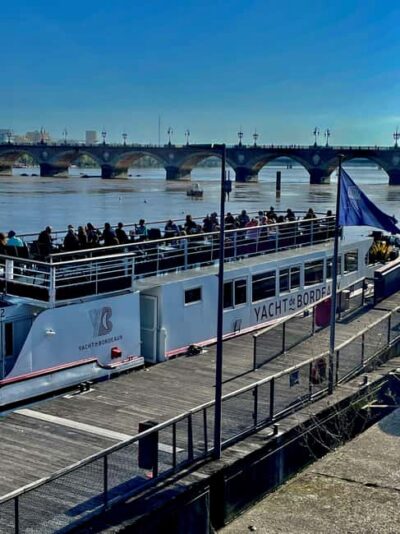
Bordeaux: River Garonne Cruise with Glass of Wine and Canelé
Read our review →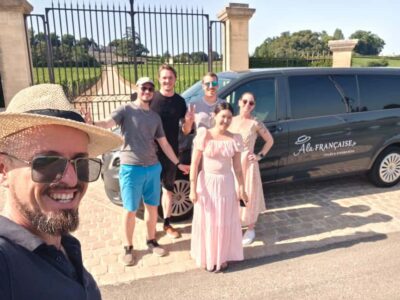
From Bordeaux: Afternoon Saint-Emilion Wine Tasting & snack
Read our review →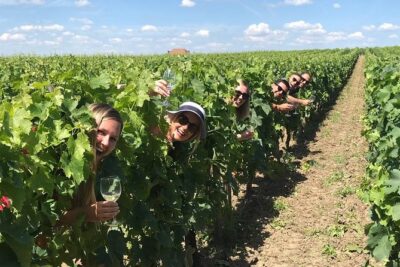
Medoc or Saint Emilion Wine Tasting and Chateau from Bordeaux
Read our review →
Saint Emilion Day Trip with Sightseeing Tour & Wine Tastings from Bordeaux
Read our review →
Saint-Émilion: Grand Cru Classé Winery Visit and Tasting
Read our review →
Saint Emilion Half-Day Trip with Wine Tasting & Winery Visit from Bordeaux
Read our review →
From Bordeaux: St. Emilion Village Half-Day Wine Tour
Read our review →Browse the lists this tour appears in