
Reviewed · WINE TOURS IN BORDEAUX
Bordeaux:Wine Masterclass & Blending workshop with appetizer
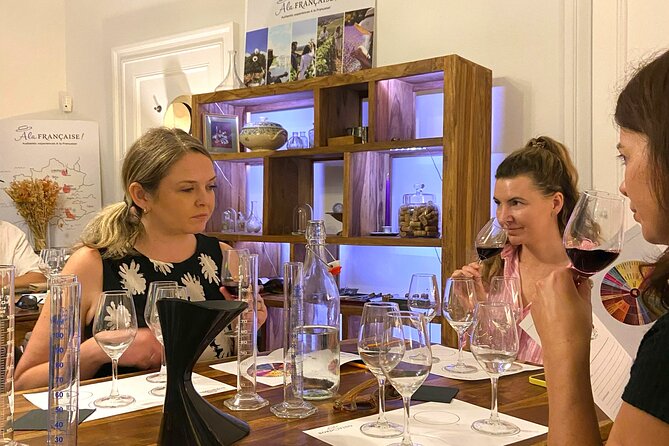
Wine becomes easier when you taste with purpose. This Bordeaux workshop turns a glass of wine into a practical lesson, with six French wines, a hands-on blending session, and a generous French apéritif of bread, cheese, sausage, and dark chocolate. I especially like the chance to make your own cuvée and the small-group format, limited to 12 people.
The main point to consider is that the class can feel very personal in a tiny group. One recent participant felt uncomfortable when answers about aromas and flavors seemed to receive uneven encouragement, so this works best if you enjoy speaking up and trying without worrying about being perfect.
In This Review
- Key points at a glance
- Starting at 3 Rue d’Enghien in central Bordeaux
- Your first white and red wines
- Understanding Bordeaux through Merlot and Cabernet Sauvignon
- The blending workshop and your personal cuvée
- A blind tasting of a famous Bordeaux wine
- French cheese, charcuterie, and dark chocolate
- What makes the small group useful
- Is $53 a fair price?
- Who will enjoy this Bordeaux workshop?
- Timing, cancellation, and a small booking caution
- Should you book the Bordeaux wine blending workshop?
- FAQ
- Where does the Bordeaux wine workshop meet?
- What time should I arrive?
- How long does the workshop last?
- How many wines are included?
- Which Bordeaux grape varieties are discussed?
- Do I get to make my own wine blend?
- Is food included?
- Is the food a full lunch?
- What language is the workshop conducted in?
- Can I cancel the booking?
- Can the workshop be cancelled by the provider?
Key points at a glance
- Six wines in 90 minutes: You taste white and red Bordeaux wines, single-varietal examples, blended wines, and a famous Bordeaux wine in a blind tasting.
- Your own Bordeaux blend: The workshop explains how grape varieties work together, then lets you create a personal cuvée.
- Classic French apéritif: Fresh bread, cheese, charcuterie, sausage, and dark chocolate are served alongside the wines.
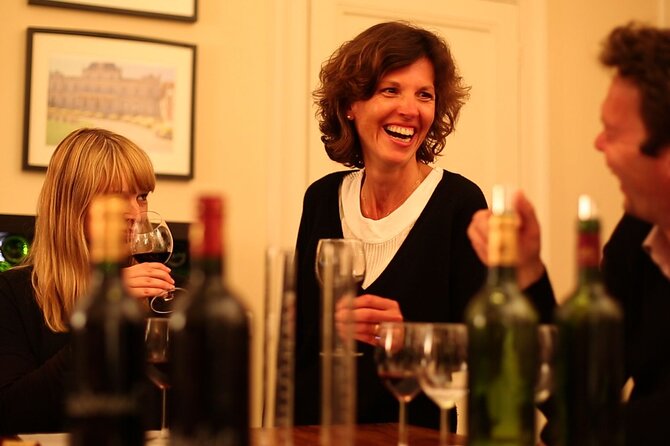
- Small class, more questions: The group is capped at 12, and the intimate setting allows time for individual questions.
- Central Bordeaux meeting point: The class begins at À la Française’s apartment at 3 Rue d’Enghien, with arrival requested at 10:25 a.m.
- Good introduction to Bordeaux: You learn about Merlot, Cabernet Sauvignon, tasting technique, and the difference between single-grape and blended wines.
Starting at 3 Rue d’Enghien in central Bordeaux
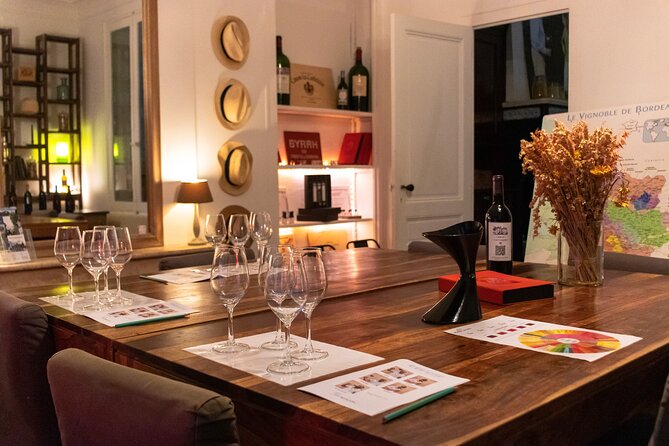
Your morning begins at 10:25 a.m. at À la Française’s apartment, 3 Rue d’Enghien, 33000 Bordeaux. The class starts at 10:30 a.m. and ends around noon, giving you a compact 90-minute introduction to one of France’s most important wine regions.
That timing is useful. You can fit the workshop into a sightseeing morning without giving up the rest of your day. It also means you should arrive ready to begin. This is not a drop-in tasting where you wander in late and catch up at your own pace.
The setting is an apartment rather than a large commercial wine hall. That gives the class a more personal feel, although the exact room layout and atmosphere can vary. With a maximum of 12 people, you are likely to have a better chance to ask questions than at a crowded tasting counter.
The guide teaches in English and is described as a professional wine educator. The teaching style is intended to be relaxed, with the goal of helping you taste confidently rather than testing your credentials. Still, wine tasting involves personal impressions, and you may be asked to describe smells, flavors, or sensations in front of the group.
More Wine Tours in Bordeaux
- Bordeaux: Cité du Vin Entry Ticket and Wine Tasting
★ 4.6 · 3,885 reviews - Bordeaux: River Garonne Cruise with Glass of Wine and Canelé
★ 4.5 · 3,630 reviews - From Bordeaux: Afternoon Saint-Emilion Wine Tasting & snack
★ 4.8 · 1,581 reviews
Your first white and red wines
The session opens with a glass of white wine and a glass of red wine. This is a smart way to begin because it gives you two broad reference points before the more technical parts of the class.
You learn the basic mechanics of tasting: how to look at the wine, smell it, taste it, and compare what you notice. The larger benefit is practical. After this introduction, a restaurant wine list should feel a little less intimidating, even if you do not remember every formal tasting term.
The class is built around comparison rather than isolated sipping. That matters because wine characteristics become clearer when you taste one wine beside another. A red may seem especially fruity until you compare it with one that has more structure. A white may feel sharper or softer depending on what comes next.
You do not need previous wine training. The lesson is designed for people who want to improve their basic skills, including those who enjoy wine but are unsure how to describe it.
Understanding Bordeaux through Merlot and Cabernet Sauvignon
The next stage introduces Bordeaux wine and its main grape varieties, including Merlot and Cabernet Sauvignon. These grapes are central to the region’s famous red blends, and tasting them in a teaching setting helps explain why Bordeaux wines are rarely defined by a single flavor.
You taste two single-varietal wines. This is one of the most useful parts of the class because it gives you a clearer sense of what each grape can bring to a blend.
The purpose is not to memorize a list of tasting notes. Instead, you begin to notice how wines differ in fruit, structure, aroma, and overall feel. The guide helps connect those differences with the role each grape can play in a Bordeaux cuvée.
For beginners, this section gives the rest of the workshop a foundation. You are not simply told that Bordeaux wines are blends. You taste examples that show why blending is useful.
The blending workshop and your personal cuvée
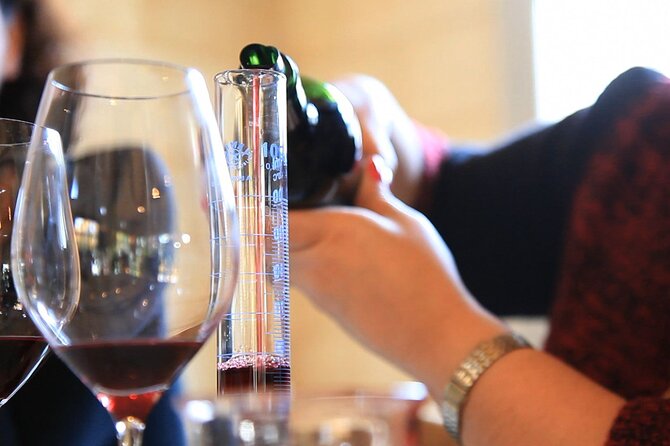
The hands-on blending session is the heart of the class. After learning about individual grape varieties, you work with the idea of combining wines to create a balanced cuvée.
This is where the workshop moves beyond a standard tasting. You are asked to think about proportion and preference rather than simply deciding which glass you like best. A blend can aim for more fruit, more structure, more softness, or a different overall balance.
Two blended wines are prepared in front of you so you can compare how the mixture changes the final result. That demonstration gives you a practical look at the art behind Bordeaux wine. Small changes in the combination can affect how the wine tastes and feels.
I like this part because it makes a complicated subject concrete. You can hear about blending for an hour, but creating or comparing a cuvée gives the idea a place in your memory. It also helps explain why two Bordeaux bottles made from related grapes can taste quite different.
Do not expect to produce a commercial-quality bottle to take home. The value is in understanding the decision-making process. You get to see how personal taste enters the picture, while also learning that a successful blend needs more than simply adding your favorite wine.
More Workshops in Bordeaux
- Bordeaux: Introduction to Bordeaux Wines Tasting Workshop
★ 4.8 · 196 reviews - Bordeaux Super Saver Wine Tasting class and St Emilion region
★ 5.0 · 184 reviews - Bordeaux Wine Masterclass: Blending workshop with appetizer
★ 5.0 · 113 reviews - Bordeaux: Guided Bordeaux Wine Tasting Class with 6 Wines
★ 4.9 · 75 reviews
A blind tasting of a famous Bordeaux wine
The class then includes a blind tasting of a famous Bordeaux wine. You taste without being told its identity and try to work out where it comes from.
This is a playful change of pace after the structured lessons. It asks you to use the skills you have just practiced, including aroma, flavor, texture, and comparison. It also shows the limits of tasting from memory. Even experienced wine drinkers can find blind tasting difficult.
The blind tasting should be treated as an exercise, not a contest. There is no need to feel embarrassed if your guess is wide of the mark. The activity is valuable because it shows how much context influences our perception of wine.
One point deserves attention here. The workshop is meant to be encouraging, but a very small group can make every answer feel exposed. One participant who attended with only one other person found the questioning discouraging and felt that some responses received more praise than others. If you are sensitive to being put on the spot, tell the guide that you prefer a supportive, low-pressure approach at the beginning.
French cheese, charcuterie, and dark chocolate
The wine is served with a traditional French apéritif. Expect fresh bread, cheese, sausage or other charcuterie, and dark chocolate. The food is not a full lunch, but it is more than a token snack and gives you a chance to see how different pairings affect the wine.
This is an important part of the experience because food changes your perception of acidity, fruit, tannin, and texture. Cheese can soften a red wine, while salty charcuterie may make its fruit seem more noticeable. Dark chocolate creates a different kind of pairing altogether.
The food also makes the class feel more like a social French tasting than a classroom lecture. You can pause between wines, compare impressions, and enjoy a light apéritif while the guide explains the region.
Do not book this as your midday meal. Lunch is not included, and the session ends at noon. You will likely want to plan a separate meal afterward.
What makes the small group useful
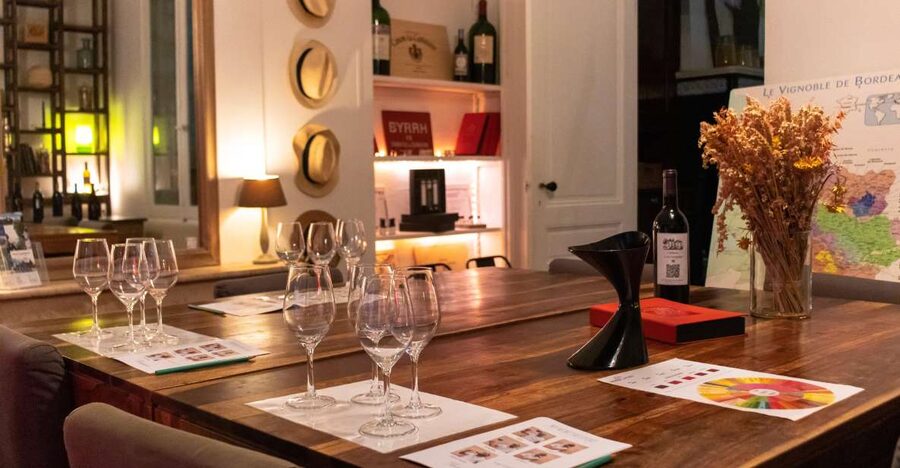
The class allows up to 12 participants. That is a practical limit for an activity built around questions, tasting, and blending. In a full group, you may hear a range of impressions without waiting too long for your turn.
A smaller group also gives the guide more time to explain a point or respond to a question about Bordeaux wines. One participant who had already taken a Left Bank and Right Bank wine tour still found this workshop especially useful because it added more detail about the region and its wines.
That is a good clue about the class’s purpose. It is not only for someone who has never heard of Bordeaux. It can also fill in gaps after a vineyard excursion, especially if your earlier tour focused on scenery, estates, or general regional information.
The tradeoff is that a group of two or three can feel more intense than a group of 10 or 12. You may be invited to answer often, and there is less chance to stay quietly in the background. The guide’s tone matters a great deal, so the class will suit you best if you enjoy conversation and active participation.
Is $53 a fair price?
At $53 per person, the workshop offers six wine samples, instruction from a wine educator, a blending activity, a blind tasting, and an apéritif platter. For Bordeaux, where individual tastings and wine-focused activities can add up quickly, that is a reasonable price for a concentrated introduction.
The value depends on what you want. If you only want to drink six wines, you may find a less expensive tasting elsewhere. Here, you are paying for the explanations and the chance to compare wines in a planned sequence.
The blending activity is the feature that makes the price easier to justify. It gives you something to do rather than simply listen, and it helps connect grape varieties with the finished wine in your glass.
I would also count the small class as part of the value. A large tasting can offer more bottles, but it often gives you less time with the educator. Here, the group size supports questions and discussion.
The food is a useful extra, but it should not be valued as lunch. Think of it as a well-matched apéritif that adds context to the wine.
Who will enjoy this Bordeaux workshop?
I would recommend this class to you if you are new to French wine, want to understand Bordeaux blends, or prefer learning in a relaxed indoor setting. It is also a good choice if you have already visited vineyards and want a clearer explanation of what you tasted.
The workshop suits couples, friends, and solo participants who are comfortable joining a small discussion. It may be especially helpful before a meal in Bordeaux, since the tasting basics can make ordering wine later feel easier.
You may want to choose another activity if you are looking for vineyard scenery, cellar visits, or a full-day trip through the wine country. This is a city-based educational tasting, not an excursion to estates outside Bordeaux.
The activity is not suitable for people with mobility impairments, according to the available details. Pets are not allowed. The class is offered in English, and French-language instruction is not included.
Timing, cancellation, and a small booking caution
The advertised duration is 90 minutes, with the stated schedule running from 10:30 a.m. to noon. Arrive at 10:25 a.m. at 3 Rue d’Enghien so you have time to find the apartment and settle in.
You can cancel up to 24 hours ahead for a full refund, and you can reserve now while paying later. The class requires at least two participants to operate. If only one person is booked, it may be cancelled and you will receive a full refund.
That minimum is worth remembering if you are booking alone or during a quiet travel period. It is not a reason to avoid the activity, but you should keep your morning flexible until the booking is confirmed.
Should you book the Bordeaux wine blending workshop?
Book it if you want more than a quick pour. The six-wine sequence, clear focus on Merlot and Cabernet Sauvignon, personal cuvée exercise, blind tasting, and French apéritif make this a useful lesson in how Bordeaux wine works.
At $53, I see good value for anyone who wants practical wine skills in a central Bordeaux setting. The strongest reason to choose it is the blending workshop, which turns regional theory into something you can taste and compare.
Go in with an open attitude and do not worry about finding the perfect aroma or flavor description. The class works best when you treat tasting as observation rather than an exam. If you prefer to stay completely anonymous, a larger tasting room may feel more comfortable. For most curious wine drinkers, though, this compact workshop offers an enjoyable and memorable way to understand Bordeaux in the glass.
FAQ
Where does the Bordeaux wine workshop meet?
The meeting point is À la Française’s apartment at 3 Rue d’Enghien, 33000 Bordeaux.
What time should I arrive?
You should arrive at 10:25 a.m. for the 10:30 a.m. start.
How long does the workshop last?
The activity lasts 90 minutes and is scheduled to finish at noon.
How many wines are included?
Six wines are included in the tasting.
Which Bordeaux grape varieties are discussed?
The workshop discusses major Bordeaux varieties including Merlot and Cabernet Sauvignon.
Do I get to make my own wine blend?
Yes. The class includes a blending session where you create your own cuvée.
Is food included?
Yes. A French apéritif platter is included, with items such as fresh bread, sausage, cheese, and dark chocolate.
Is the food a full lunch?
No. Lunch is not included, although an optional lunch may be available. The included food is an apéritif platter.
What language is the workshop conducted in?
The live guide conducts the workshop in English. French language instruction is not included.
Can I cancel the booking?
Yes. You can cancel up to 24 hours in advance for a full refund.
Can the workshop be cancelled by the provider?
Yes. The workshop may be cancelled if there is only one participant because at least two people are legally required. In that case, you will be contacted and receive a full refund.
Recently added around Bordeaux
- The essential in Bordeaux, private tour with a local★ 4.9 · 48 reviews
- Sarlat Gourmet Tour and Market Visit★ 5.0 · 49 reviews
- Full Day Tour Saint Emilion with lunch two Chateaux and Village★ 5.0 · 49 reviews
- Bordeaux: Exclusive Private Guided Walking Tour★ 4.6 · 50 reviews
- Full-day Saint-Emilion: Village, Undergrounds and Châteaux★ 4.5 · 55 reviews
- From Bordeaux: Essential Morning Tour with Wine Tasting★ 4.8 · 55 reviews
- Bordeaux Old Town & Market Local Food with Wine Tastings Tour★ 4.0 · 56 reviews
- Bordeaux Free Walking Tour (Tips-Based)★ 4.5 · 57 reviews
Wine Tours in Bordeaux, compared.
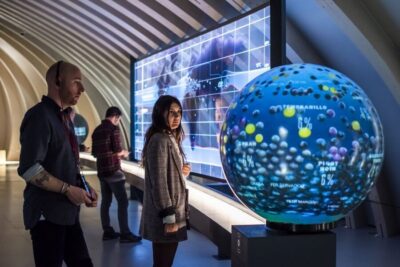
Bordeaux: Cité du Vin Entry Ticket and Wine Tasting
Read our review →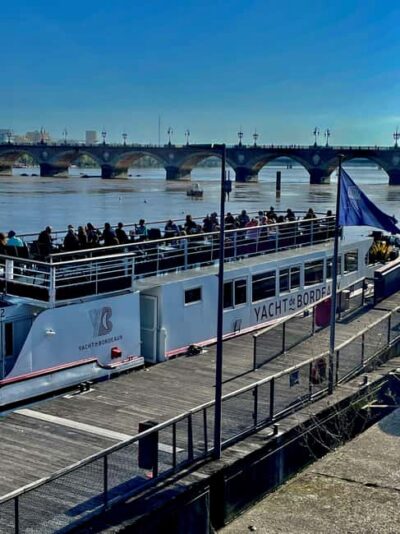
Bordeaux: River Garonne Cruise with Glass of Wine and Canelé
Read our review →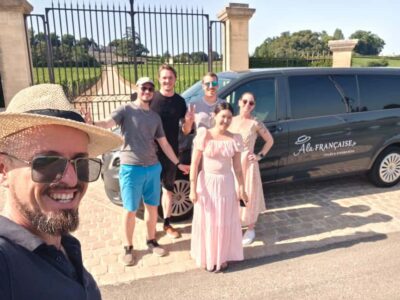
From Bordeaux: Afternoon Saint-Emilion Wine Tasting & snack
Read our review →
Medoc or Saint Emilion Wine Tasting and Chateau from Bordeaux
Read our review →
Saint Emilion Day Trip with Sightseeing Tour & Wine Tastings from Bordeaux
Read our review →
Saint-Émilion: Grand Cru Classé Winery Visit and Tasting
Read our review →
Saint Emilion Half-Day Trip with Wine Tasting & Winery Visit from Bordeaux
Read our review →
From Bordeaux: St. Emilion Village Half-Day Wine Tour
Read our review →Browse the lists this tour appears in