
Reviewed · MONTMARTRE & SACRé-CœUR TOURS
Montmartre District and Sacre Coeur – Exclusive Guided Walking Tour
Montmartre rewards slow feet. This 2.5-hour walk ties together the Moulin Rouge, artists’ homes, village lanes, Sacré-Coeur, and wide Paris views in one well-shaped outing. I especially like the small-group format and the way the route reaches places you could easily miss alone, from the Clos Montmartre vineyard to the Jardin Sauvage de Saint-Vincent. The main catch is simple: Montmartre is hilly, and the $59.69 price depends on which private or semi-private option you select.
The guides are the heart of the experience. Francois, Eden, Hugo, Tamari, Daniel, Alasdair, Florence, and Gabriele receive repeated praise for clear English, lively stories, patience, and useful advice for the rest of your Paris stay. I also like the choice of departure times, including evening departures that may give you sunset over the city.
In This Review
- Key points at a glance
- Why this Montmartre walk works well
- From Blanche to the Moulin Rouge
- Van Gogh, Rue Lepic, and the climb uphill
- Dalida Square and the quieter Montmartre
- The Clos Montmartre vineyard
- Au Lapin Agile and the bohemian past
- Sacré-Coeur and the Paris panorama
- Place du Tertre and the artist quarter
- Dali and the Bateau-Lavoir
- Abbesses and the tour’s useful ending
- Guide quality and pace
- Price, group size, and practical value
- Who should book this walk?
- Should you book the Montmartre and Sacré-Coeur tour?
- FAQ
- Where does the tour start?
- Where does the tour end?
- How long does the experience last?
- Is the tour offered in English?
- Is this a private tour?
- Is hotel pickup included?
- Does the price include admission to the Moulin Rouge or Dali museum?
- Can I enter Sacré-Coeur during the walk?
- Is the walk physically demanding?
- What happens if it rains or there is a national celebration?
Key points at a glance
- Start beneath the Moulin Rouge: The walk begins at Blanche and uses the famous cabaret as an introduction to Montmartre’s theatrical past.
- Follow the artists’ trail: You pass Van Gogh’s former home, Bateau-Lavoir, Place du Tertre, the Dali museum, and streets linked with Picasso and other artists.
- See the quieter side of the hill: The route includes Place Dalida, the wild garden of Saint-Vincent, and Montmartre’s small surviving vineyard.
- Enter Sacré-Coeur: You have time to see the basilica’s interior, including its enormous Christ mosaic, subject to security restrictions.
- Expect a real uphill walk: Cobblestones, slopes, and steps make comfortable shoes and moderate fitness important.
- Finish near Abbesses: The Art Nouveau metro entrance gives the tour a graceful final stop and a handy transport connection.
Why this Montmartre walk works well
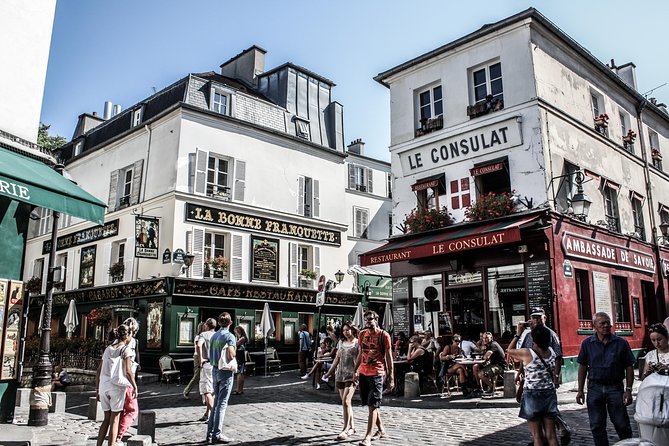
Montmartre can feel confusing at first. The hill rises sharply above Paris, its lanes twist around old buildings, and the most interesting details are often tucked behind the obvious sights. A guide gives the district shape, linking its cabarets, painters, singers, churches, gardens, and movie locations into one understandable walk.
I like that this is not only a Sacré-Coeur visit with a quick photo stop. The basilica is the big prize, but the route uses the climb to explain why Montmartre became associated with artists and bohemian life. You get the famous views, then spend time in the streets that give the neighborhood its character.
The experience is offered in English and is intended for a private group unless you choose the lower-priced semi-private option. That distinction matters. A private guide can adjust the pace, answer questions freely, and give more attention to your family or friends. A small shared group can be better value at the listed price, but you should confirm the exact option before paying.
The tour has a 5 out of 5 rating from 312 ratings, with 99 percent of customers recommending it. That strong result seems tied less to the number of sights than to the guides. Francois is repeatedly praised for humor and storytelling, Eden for warmth and care, and Hugo for clear English and his background in history. Those details matter on a walking tour, where a good guide can turn an ordinary street corner into a memorable stop.
More Walking Tours in Paris
- Paris Top Sights Half Day Walking Tour with a Fun Guide
★ 5.0 · 2,893 reviews - Montmartre Hidden Gems and Scenic Highlights Walking Tour
★ 5.0 · 2,684 reviews - Montmartre Hill French Gourmet Food and Wine Tasting Walking Tour
★ 5.0 · 2,588 reviews
From Blanche to the Moulin Rouge
Your meeting point is at Blanche, in the 18th arrondissement. From there, the guide heads toward the Moulin Rouge, whose red windmill is one of Paris’s most recognizable signs.
You do not enter the cabaret, and admission is not included. The stop lasts about 10 minutes, so think of it as an exterior introduction rather than a show visit. The guide uses the building to explain Montmartre’s entertainment culture and its appeal to artists, including Auguste Renoir.
This is a useful opening because it places you at the lively lower edge of the hill before the streets become quieter and steeper. If you hope to attend a performance at the Moulin Rouge, treat this tour as a separate experience and arrange tickets independently.
Van Gogh, Rue Lepic, and the climb uphill
The route continues to Rue Lepic, where you see the house associated with Vincent Van Gogh and his brother from 1886. The stop is outside, with no interior admission, but its value comes from the guide’s explanation of the artist’s time in Montmartre.
This part of the walk also begins to show the change in the district. You leave the broad entertainment strip and move into lanes with old façades, slopes, and corners that feel more residential. The climb is not described as extreme, but one person called it very hilly, and that is the practical warning you need.
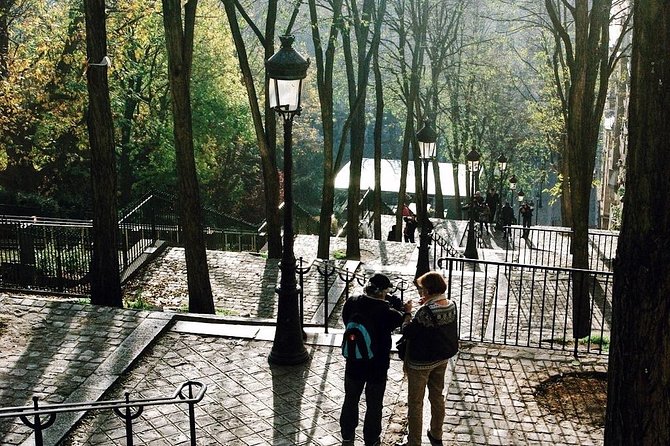
Montmartre is not a flat stroll. You will be walking for roughly two and a half hours, often on cobbles, with uphill sections and steps. I would not choose this tour for a day when you are already worn out, and I would bring water, wear shoes with a firm sole, and allow extra care in rain.
Dalida Square and the quieter Montmartre
Place Dalida offers a different mood. The square honors Dalida, the French singer, and her statue draws fans who want to pay tribute. It is a free outdoor stop, and the guide can give the square a human focus beyond the standard painter-focused story of Montmartre.
Nearby, you pass the Jardin Sauvage de Saint-Vincent. City gardeners left this sloping patch in a more natural condition so its plants, insects, and local ecosystem could develop. Elderberry trees and ivy cover parts of the garden, giving you a small break from polished monuments and tourist streets.
This is one of the route’s strongest features. You are not simply moving from one famous address to another. You also see the less formal side of the hill, where a small wild garden can be as revealing as a grand church.
More Montmartre and Sacré-Cœur walks:
- Paris: Montmartre Cheese, Wine & Pastry Guided Walking Tour
★ 4.8 · 2,255 reviews - Paris: Montmartre Highlights Walking Tour with a Local Guide
★ 4.9 · 1,668 reviews - Private Montmartre Food Tour with Wine, Cheese & Pastries
★ 5.0 · 1,027 reviews - Paris: Sacré-Coeur and Montmartre Tour with Expert Guide
★ 4.1 · 1,027 reviews
The Clos Montmartre vineyard
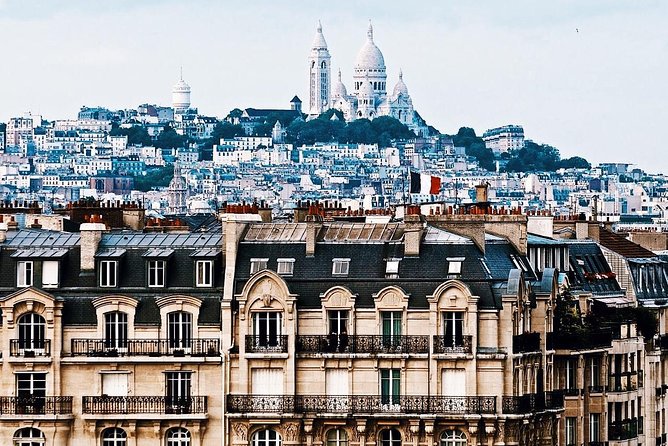
Le Clos Montmartre is a small vineyard tucked into the streets behind Sacré-Coeur. It is one of the last remaining vineyards in central Paris, and the stop adds an unexpected rural note to an urban neighborhood.
You should keep your expectations realistic. This is a viewing stop, not a wine tasting or vineyard tour, and the route does not include an admission experience. Still, it helps explain why Montmartre once had a village identity separate from central Paris.
The vineyard is especially useful for families and first-time visitors who want more than a checklist of major sights. It gives the walk a small surprise, and the guide can connect it with the old character of the district.
Au Lapin Agile and the bohemian past
Au Lapin Agile is one of Montmartre’s best-known cabarets. Its sign remains a symbol of the neighborhood’s old bohemian circle, which gathered there before 1914.
Again, you see the exterior rather than attend a performance. Admission is not included. The stop works best as part of the larger story: cabarets, cheap rooms, painters, writers, actors, and art dealers all helped give Montmartre its unusual mix of entertainment and creativity.
This is where a strong guide makes a real difference. Eden, Francois, and Alasdair are praised for bringing stories to life rather than simply reciting dates. If your interest is art, music, or Parisian social history, these explanations will likely be more valuable than the buildings alone.
Sacré-Coeur and the Paris panorama
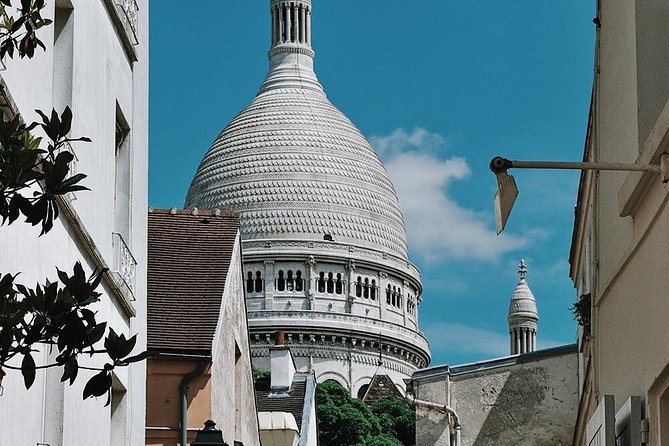
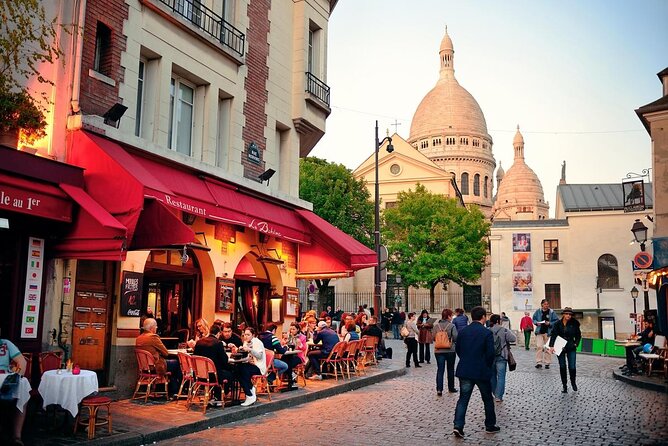
The climb reaches the Basilica of Sacré-Coeur, completed in 1914 and dedicated to the Sacred Heart of Jesus. Its white exterior is visible from many parts of Paris, but arriving on foot gives the church more impact because you have just climbed through the neighborhood that surrounds it.
The tour allows about 20 minutes inside. The basilica contains one of the world’s largest mosaics, depicting Jesus Christ, and the interior is worth seeing even if you are mainly interested in the view.
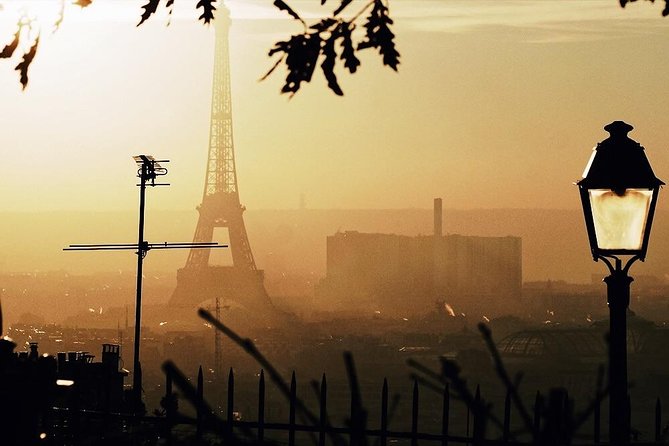
The panorama from the summit area is one of the tour’s clearest rewards. Paris spreads out below Sacré-Coeur, creating an excellent photo opportunity, especially during an evening departure when the timing and season cooperate. Sunset is not guaranteed, so book an evening slot for the atmosphere, not a promise of a perfect sky.
Security rules can affect interior access at some attractions. The route may also change during national celebrations, though the operator says an alternative route will still cover the main highlights. No refund or discount is offered for those changes.
Place du Tertre and the artist quarter
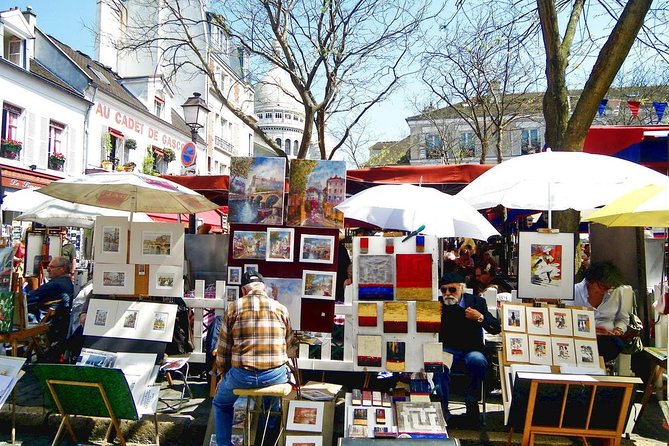
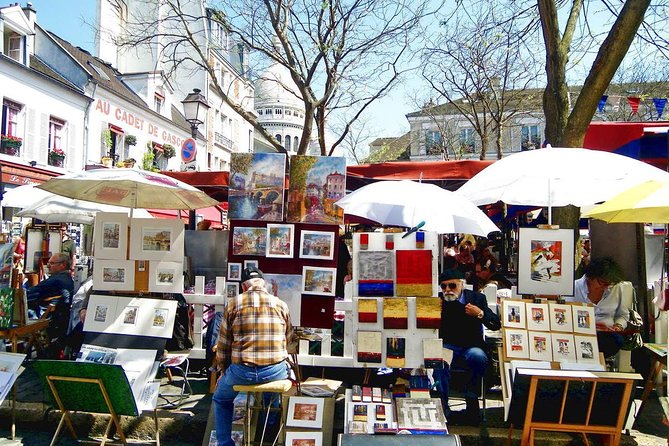
Place du Tertre sits only a few streets from Sacré-Coeur. Artists set up easels here, recalling the period when Montmartre was a center of modern art.
The square is picturesque, but it can also be one of the more crowded parts of the route. Your guide helps you read it as more than a pretty plaza. The important question is not only who paints there today, but why this particular square became tied to Montmartre’s artistic identity.
You may find the square more enjoyable if you listen first and browse later. The tour does not appear to include time for a full portrait session or extended shopping, so plan to return if you want to linger.
Dali and the Bateau-Lavoir
The walk passes the Espace Dali, a permanent museum devoted to Salvador Dali’s sculptures and engravings. It contains around 300 original works, but admission is not included, and the stop is an exterior pass-by rather than a museum visit.
That arrangement is helpful if you want a broad orientation without spending your entire afternoon indoors. If Dali is a major interest, you can note the location and return independently, but do not expect the walking tour to cover the collection in detail.
Next comes Bateau-Lavoir, an important former artist residence. From 1889, it served as a place where painters, writers, actors, and art sellers lived, worked, and exchanged ideas. This stop gives the artistic story a physical setting, even though you see the site from outside.
The route also includes La Maison de Dalida on Rue Orchampt. Dalida lived there from 1962 until 1987, and the address is linked to her death. It is a more somber stop, so the guide’s tone matters. The house adds another layer to Montmartre, showing that the neighborhood’s cultural story is not only about cheerful cafés and famous paintings.
Abbesses and the tour’s useful ending
The final stop is Place des Abbesses and its metro entrance. Designed by Hector Guimard, it is one of only two surviving Paris entrances of this type.
This is a smart place to finish. You end near public transportation rather than being left on the hill with no clear next move. Your guide may also offer suggestions for the evening, and several guides are praised for helping with plans after the walk, including places to visit and areas to avoid.
The end point is listed as Montmartre, while the route itself finishes near Abbesses. I would confirm the precise ending instructions before setting off, especially if you have a dinner reservation or another timed activity.
Guide quality and pace
The strongest pattern in the feedback is the quality of the English-speaking guides. Hugo is praised for especially clear pronunciation and for answering many questions patiently. Francois receives repeated praise for humor, energy, and his ability to tailor the walk to a group’s interests.
Eden is described as warm, thoughtful, and attentive, including during an evening walk and during difficult heat. Tamari is praised for explaining French history clearly and looking after a group during very hot weather. Daniel and Alasdair also receive strong marks for making the art and streets easy to understand.
That range of praise suggests a consistent guide team, though the exact person assigned to your booking may vary. You cannot assume you will receive a particular guide unless the company confirms it. The good news is that the feedback points to shared strengths: clear English, patience with slower walkers, humor, and useful local advice.
The pace can be adapted on a private tour, which is valuable for families. One family used the walk successfully with teenagers, while a younger child opted out because the late afternoon timing did not suit her. That is sensible planning. The tour is suitable for children who can manage the hills and listen for extended periods, but it is not designed as a playground-style activity.
Price, group size, and practical value
At $59.69 per person, this is not the cheapest way to see Sacré-Coeur. You are paying for a guide, a planned route, and the time saved by connecting many scattered places in one walk.
The price makes the most sense for a first visit, an art lover, a family that wants context, or anyone who has limited time in Paris. It is also good value for a private group if the cost is shared among several people and the guide can shape the pace around your interests.
The value is weaker if you only want to enter Sacré-Coeur and take a photograph. You can visit the basilica and public streets independently, and the tour does not include cabaret tickets, museum admission, hotel pickup, or drop-off.
Group discounts are available, and the booking options include a semi-private choice. Read the wording carefully because the private guide and private activity benefits do not apply to the save-money semi-private option. Tips are optional and not included.
The tour operates rain or shine. Bring a rain jacket or umbrella, a hat in hot weather, and a bottle of water. Large bags and suitcases are not allowed, so leave luggage elsewhere and provide a mobile phone number with the country code when booking.
Free cancellation is available until 24 hours before the local start time. Cancellations or changes inside that window are not refundable.
Who should book this walk?
I would choose this tour if you want Montmartre explained rather than merely photographed. It suits first-time visitors, families with older children, couples who enjoy an evening stroll, and anyone interested in Van Gogh, Dalida, Dali, Picasso, cabarets, or the district’s artistic past.
It is also a good choice if you like asking questions. The private format gives you room to pause, request more detail, or adjust the pace. The guides have been praised for tailoring the experience, helping slower walkers, and giving practical ideas for the rest of the evening.
I would hesitate if you have limited mobility, dislike hills, carry large luggage, or want extensive indoor visits. Several stops are outside, some admissions are not included, and a two-and-a-half-hour climb can be tiring in rain or summer heat.
Should you book the Montmartre and Sacré-Coeur tour?
Book it if you want a well-organized introduction to Montmartre with strong storytelling and a useful mix of major sights and quieter corners. The best reasons are the small-group attention, the broad route, the excellent guide feedback, and the chance to see the district’s artistic and musical sides in one outing.
Skip it if your only goal is the basilica itself or if you prefer exploring at your own speed. For most people who want context, clear English, and a manageable way to understand the hill, this is a sound Paris tour, provided you are ready for the climb.
FAQ
Where does the tour start?
The tour starts at Blanche, 75018 Paris, France.
Where does the tour end?
The end point is listed as Montmartre, 75018 Paris, France, with the route heading toward Place des Abbesses and the Abbesses metro station.
How long does the experience last?
The walking tour lasts approximately 2 hours and 30 minutes.
Is the tour offered in English?
Yes. The experience is offered in English.
Is this a private tour?
It is a private tour and activity unless you choose the save-money semi-private option. The private guide and exclusive group benefits do not apply to the semi-private choice.
Is hotel pickup included?
No. Hotel pickup and drop-off are not included. Uber or a taxi is recommended for those transfers.
Does the price include admission to the Moulin Rouge or Dali museum?
No. Admission to the Moulin Rouge and Espace Dali is not included. The walk passes these locations from outside.
Can I enter Sacré-Coeur during the walk?
The tour allows time to explore the basilica interior, and the church admission is listed as free. Increased security measures can sometimes prevent interior access.
Is the walk physically demanding?
You should have a moderate fitness level. The route includes Montmartre’s hills, cobblestones, and steps, so comfortable shoes are recommended.
What happens if it rains or there is a national celebration?
The tour operates in all weather, so dress accordingly. National celebrations can affect the route, but an alternative route will be provided to cover the main highlights.
Recently added around Paris
- Private Half-Day Guided Tour of Paris★ 4.5 · 48 reviews
- 2 hour outdoor group activity in Paris: SAINT GERMAIN★ 5.0 · 48 reviews
- Paris Dinner Show Opera Bel Canto★ 4.5 · 48 reviews
- Paris Vintage Tour by Night on a Sidecar with Champagne★ 5.0 · 48 reviews
- Paris Photoshoot: Eiffel Tower Exclusive Private Experience★ 5.0 · 48 reviews
- Secrets & Scandals of the Louvre – Limited to 6 Guests★ 5.0 · 48 reviews
- From Paris: Versailles Full-Day Guided Tour with Lunch★ 4.9 · 48 reviews
- Paris: Louvre Mona Lisa Discovery Guided Tour with Ticket★ 4.9 · 48 reviews
Montmartre & Sacré-Cœur Tours, compared.
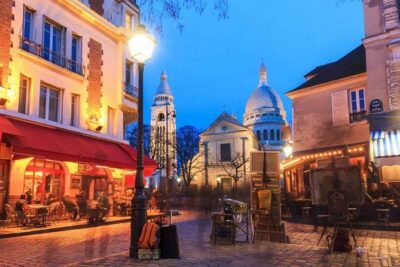
Montmartre Hidden Gems and Scenic Highlights Walking Tour
Read our review →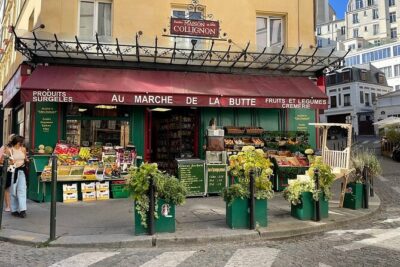
Montmartre Hill French Gourmet Food and Wine Tasting Walking Tour
Read our review →
Paris: Montmartre Cheese, Wine & Pastry Guided Walking Tour
Read our review →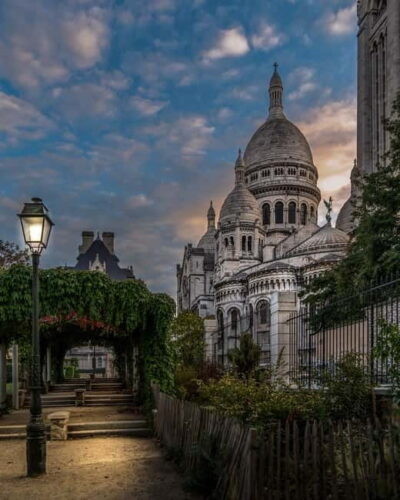
Paris: Montmartre Highlights Walking Tour with a Local Guide
Read our review →
Paris: Sacré-Coeur and Montmartre Tour with Expert Guide
Read our review →
Private Montmartre Food Tour with Wine, Cheese & Pastries
Read our review →
Paris Montmartre Food Tour – A Full French Meal by Do Eat Better
Read our review →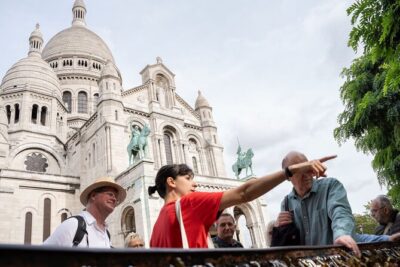
Hidden Montmartre: Paris’ Secret Streets Walking Tour
Read our review →Browse the lists this tour appears in