
Reviewed · MONTMARTRE & SACRé-CœUR TOURS
Montmartre en chansons: tour with a professional singer
Montmartre sings when you let it. This two-hour walking tour pairs Anne-Sophie’s powerful a cappella voice with stories of Edith Piaf, Charles Aznavour, Jacques Brel, Dalida, and the old cabaret quarter. I especially like the way the tour connects famous songs to real streets and buildings, and I like that Anne-Sophie lives in Montmartre and shares the neighborhood from a local point of view. The main consideration is the walking: hills, steps, and uneven streets make this a poor fit for anyone with limited mobility.
You begin behind the Abbesses Métro station and finish at the Sacré-Cœur forecourt. Along the way, Anne-Sophie sings French favorites such as La Vie en rose, L’Hymne à l’amour, and La Bohème, while pointing out places tied to Montmartre’s artistic past. At $34 per person, the price is fair if you want more than a standard sightseeing walk, though it is not the right choice if you prefer quiet museum visits or a purely historical guide.
In This Review
- Key reasons this Montmartre walk is different
- Why Anne-Sophie’s singing changes the usual Montmartre walk
- Starting at Abbesses and the Wall of Love
- Rue Lepic and the old Montmartre atmosphere
- Moulin de la Galette and Montmartre’s cabaret past
- Dalida’s home and statue
- Théâtre Lepic and the sound of old Paris
- La Maison Rose and the visual side of Montmartre
- Clos Montmartre vineyard and Lapin Agile
- La Bonne Franquette and Place du Tertre
- The final walk to Sacré-Cœur
- What you get for $34
- Who will enjoy this experience most
- Should you book Montmartre en chansons?
- FAQ
- Where does the Montmartre en chansons tour begin?
- Where does the tour finish?
- How long does the experience last?
- What languages are available?
- What songs might I hear?
- What is included in the price?
- Is the tour suitable for people with mobility impairments?
Key reasons this Montmartre walk is different
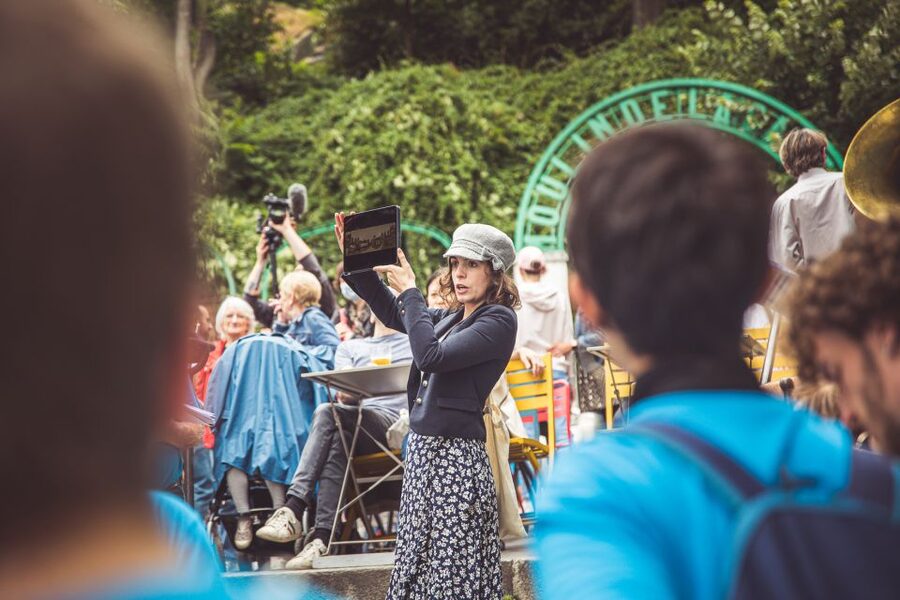
- A cappella street concerts: Anne-Sophie sings without instruments, reviving the old Paris tradition of the street singer.
- Real links to famous artists: The route visits Dalida’s former home and statue, along with places connected to Piaf, Aznavour, Brel, and other performers.
- A carefully chosen village route: You see the Wall of Love, Moulin de la Galette, La Maison Rose, Clos Montmartre vineyard, Lapin Agile, Place du Tertre, and Sacré-Cœur.
- A local guide with personal warmth: Anne-Sophie is described as bubbly, smiling, and deeply attached to Montmartre.
- French songs with English or French guiding: You can follow the stories even if you do not speak French, while still hearing the songs in their original language.
- A good evening option: The walk can be especially atmospheric at sunset or after dark, when Montmartre’s old streets take on a softer mood.
Why Anne-Sophie’s singing changes the usual Montmartre walk
Montmartre is easy to visit badly. You can climb the hill, take a few photographs, pass the caricature artists, and leave with a postcard view of Paris. That gives you the outline, but not much of the feeling.
This tour uses music to supply the missing layer. Anne-Sophie does not simply play recordings while you walk. She stops in the street and sings live, without accompaniment. Her voice is described as dense, strong, and moving, and the format creates a small pause in the city around her. People passing by may stop, while café customers turn to listen.
That matters because the songs are not random entertainment. La Vie en rose and L’Hymne à l’amour bring Edith Piaf into the walk. La Bohème points toward the romantic image of artists living and working around Montmartre. The songs help you understand why this neighborhood still trades on cabarets, painters, singers, and bohemian life.
I would choose this experience for the musical performance first and the sightseeing second. You still see many major Montmartre stops, but the walk is built around mood, anecdotes, and shared singing rather than long lectures packed with dates.
More Montmartre and Sacré-Cœur walks:
- Montmartre Hidden Gems and Scenic Highlights Walking Tour
★ 5.0 · 2,684 reviews - Montmartre Hill French Gourmet Food and Wine Tasting Walking Tour
★ 5.0 · 2,588 reviews - Paris: Montmartre Cheese, Wine & Pastry Guided Walking Tour
★ 4.8 · 2,255 reviews
Starting at Abbesses and the Wall of Love
Meet behind the exit of Abbesses Métro station. This is a useful starting place because Place des Abbesses puts you near the southern side of Montmartre, before the route climbs toward Sacré-Cœur.
The first stop is the Wall of Love, a public artwork covered with the words I love you in many languages. It is a quick visit, listed at about five minutes, but it sets the tone for a tour focused on romance, songs, and the emotional side of Paris.
Do not expect a long stop here. Anne-Sophie’s role is to give the place context and perhaps a song, then keep the walk moving. If you want posed photographs, arrive a little early, since the tour itself is not designed to linger at every location.
Rue Lepic and the old Montmartre atmosphere
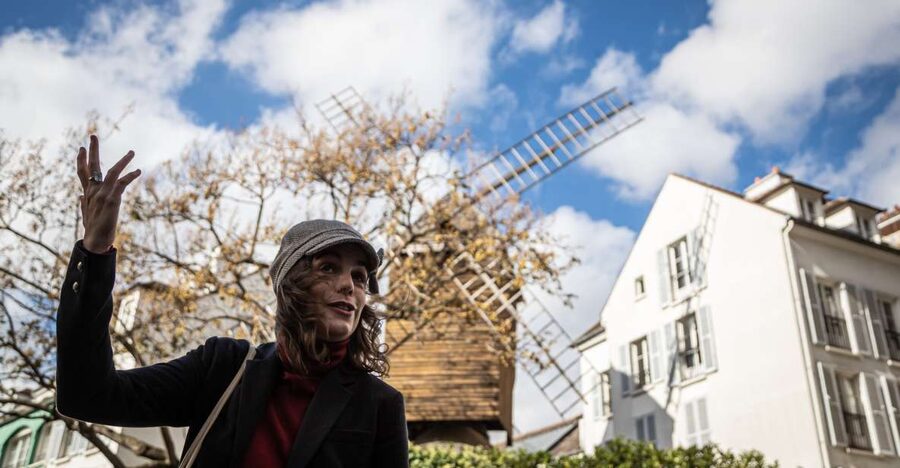
From the Wall of Love, you walk along Rue Lepic. This street helps shift the experience away from a single monument and toward the neighborhood itself.
Montmartre can feel like a village in parts, and the route is designed to show that character. Anne-Sophie talks about the cabarets, singers, and artists who helped shape the Butte, the hill on which Montmartre sits. Her local connection is important here. She lives in the area, so the stories are presented as part of a familiar neighborhood rather than as a distant chapter in a textbook.
The walk is short in distance between several stops, but you should still wear sensible shoes. The supplied advice specifically recommends hiking shoes, water, an umbrella, and a sun hat. That may sound excessive for Paris, but the hill and changing weather make practical footwear a smart choice.
Moulin de la Galette and Montmartre’s cabaret past
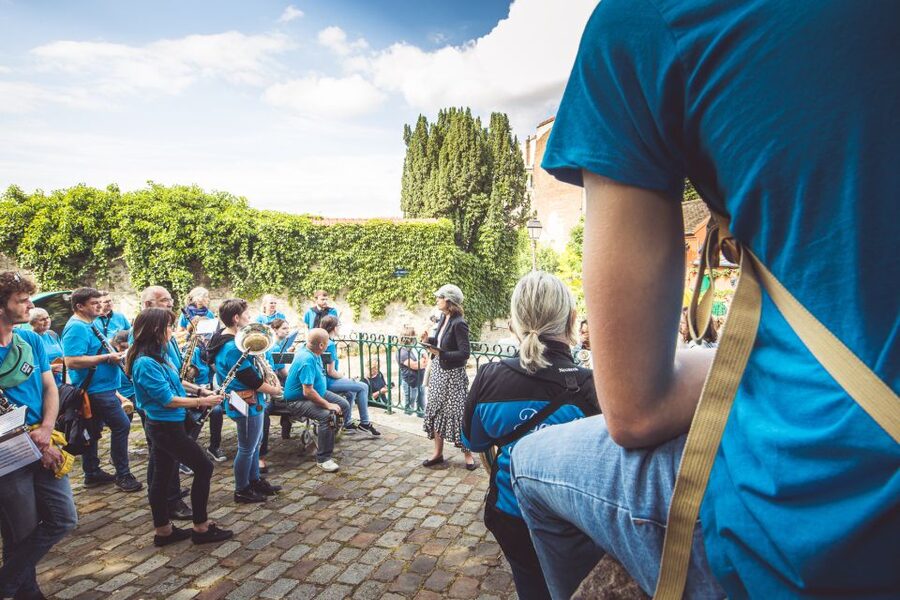
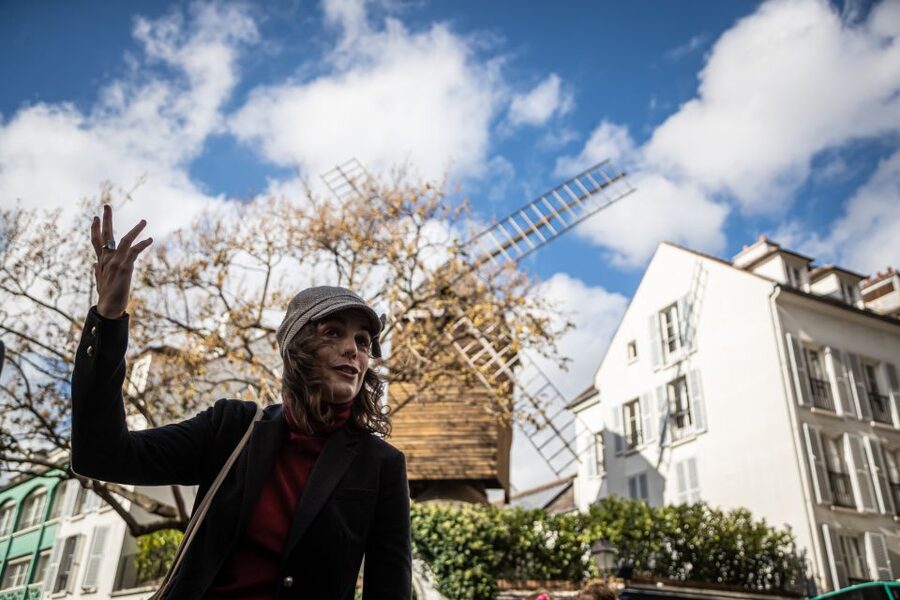
The Moulin de la Galette is one of the route’s strongest history stops. The name recalls the windmills and dance halls that once made Montmartre a place for entertainment as well as work.
Anne-Sophie connects the location with the neighborhood’s cabaret tradition and performs during the visit. This is where the tour’s format makes sense: a song beside a famous Montmartre landmark can communicate the old entertainment culture more quickly than a long explanation.
The stop is brief, around five minutes, so you should not expect an interior visit or a full museum presentation. You see the exterior setting and hear the story while the larger route continues around it.
A few more Paris trips worth weighing up
- Paris: Louvre Museum Timed-Entrance Ticket
★ 4.6 · 71,977 reviews - Disneyland® Paris 1-Day Ticket
★ 4.6 · 49,412 reviews - Paris: Versailles Palace and Gardens Full Access Ticket
★ 4.6 · 41,579 reviews - Paris: Evening River Cruise with Music
★ 4.4 · 22,721 reviews
Dalida’s home and statue
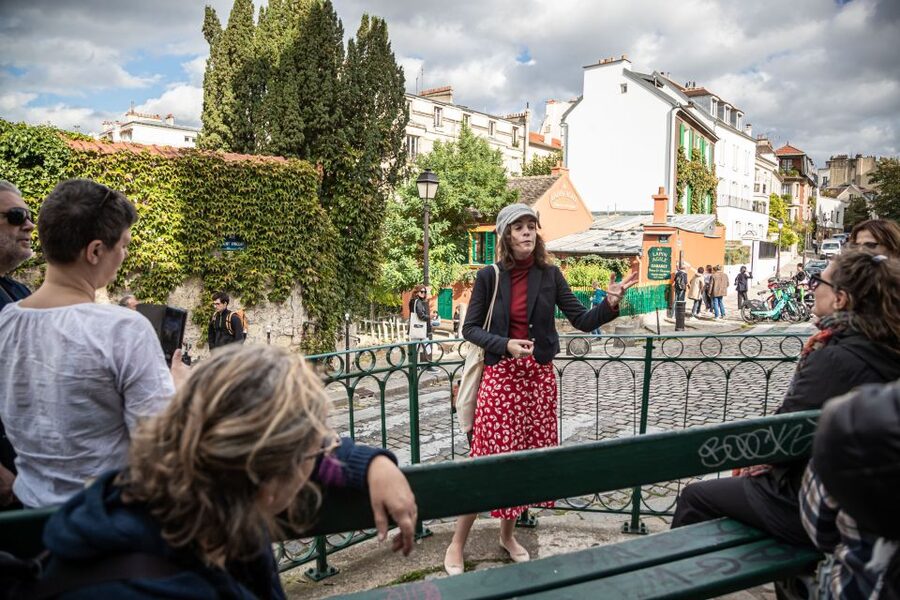
Dalida has one of the clearest personal connections to this part of Paris, and the tour gives her more than a passing mention. You visit her former home and later stop at her statue.
The statue has become a popular point of interest for music fans. Anne-Sophie uses it to explain Dalida’s place in French popular culture and in Montmartre’s public memory. The route also passes her house, creating a stronger sense of the person behind the name.
This pairing is valuable because it gives you two different views of celebrity. One stop is tied to daily life and residence. The other is a public tribute. Anne-Sophie’s stories about singers help make the route feel personal without turning it into a formal celebrity tour.
Again, these are short stops. You will get an explanation, sightseeing, and a song, but not an extended visit indoors. The appeal is the combination of place, story, and performance.
Théâtre Lepic and the sound of old Paris
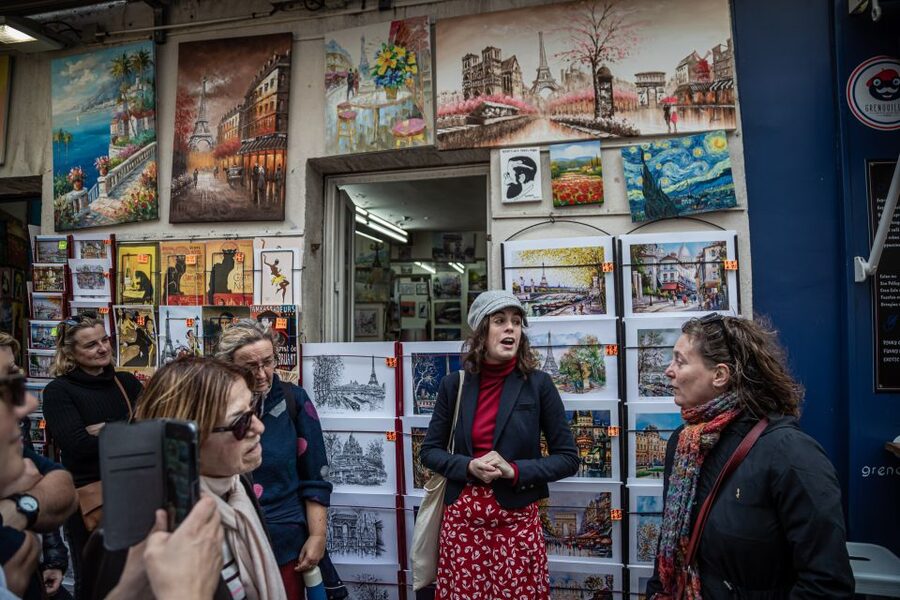
The Théâtre Lepic continues the performing-arts theme. The theater is part of the route’s effort to show that Montmartre’s creative identity is not limited to painters at Place du Tertre.
Anne-Sophie revives the tradition of street singers as she moves between landmarks. That is the central idea of the experience: the neighborhood is not only something to look at. It is a stage.
Her singing is the feature most likely to separate this walk from a standard Montmartre tour. If you enjoy French chanson, you will probably find the live performances more memorable than a list of architectural facts. If you do not enjoy musical stops, the same feature could feel like a distraction.
La Maison Rose and the visual side of Montmartre
La Maison Rose is one of Montmartre’s most recognizable sights, with its pink exterior and photogenic corner setting. It is an easy place to understand why the neighborhood attracts painters, photographers, and day visitors.
Anne-Sophie adds stories and music rather than treating it as a quick photo stop. That gives the famous view a little more meaning. You learn how the image of Montmartre has been shaped by artists, restaurants, songs, and the public’s idea of bohemian Paris.
The stop is not a meal. Food and drinks are not included, and the tour does not promise a restaurant reservation. If La Maison Rose is high on your list for lunch or dinner, plan that separately.
Clos Montmartre vineyard and Lapin Agile
The Vigne du Clos Montmartre offers a different view of the hill. This small vineyard points to the neighborhood’s older village identity and gives you a break from the busiest postcard sights.
The route then continues to Au Lapin Agile, one of Montmartre’s best-known cabaret locations. The cabaret stories are a major part of Anne-Sophie’s commentary. You hear about the singers and performers who made Montmartre a meeting point for music, art, and informal nightlife.
This is one of the places where the tour’s local approach has real value. A basic walk can show you the building. Anne-Sophie helps explain why cabarets mattered to the neighborhood and how the area’s artistic image was formed.
You should keep your expectations realistic. The tour does not include a cabaret show, drinks, or a meal. You visit the exterior, hear the stories, and continue walking.
La Bonne Franquette and Place du Tertre
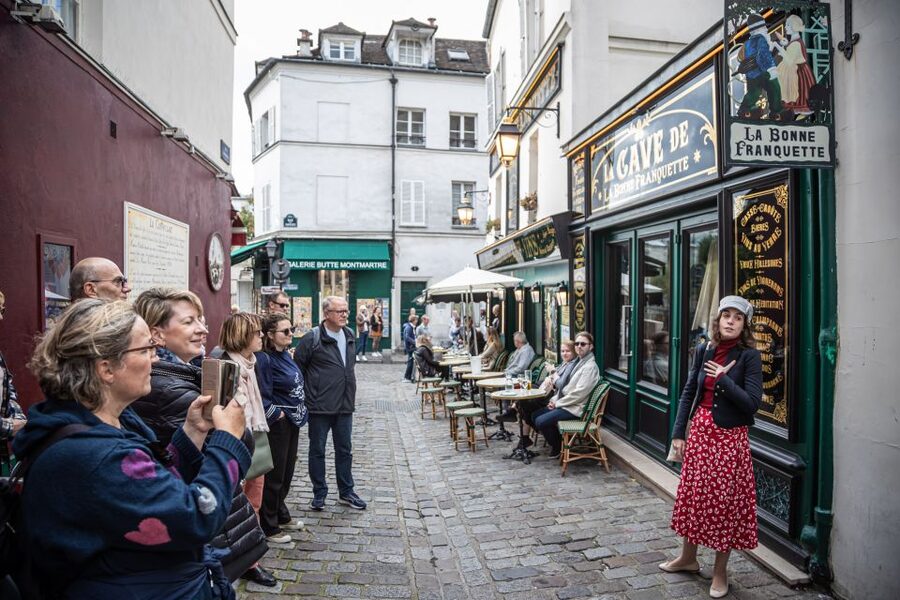
La Bonne Franquette is another traditional Montmartre address connected with the area’s dining and artistic life. It adds a food-and-social angle to the route, even though eating is not included.
Then you reach Place du Tertre, the famous square associated with artists, portraits, and outdoor painting. This is usually one of the more active parts of Montmartre, and the guided context helps you look past the sales pitches and souvenir photographs.
Anne-Sophie’s singing can change the feel of a busy square. A live chanson performance in a public place gives you a glimpse of the older street culture that Montmartre likes to remember. It also means the experience is public and somewhat spontaneous. Nearby sounds, passing pedestrians, and café activity are part of the setting.
If you want a silent, private moment at every stop, this is not the tour for you. If you like the idea of music spilling into the street, Place du Tertre may be one of the highlights.
The final walk to Sacré-Cœur
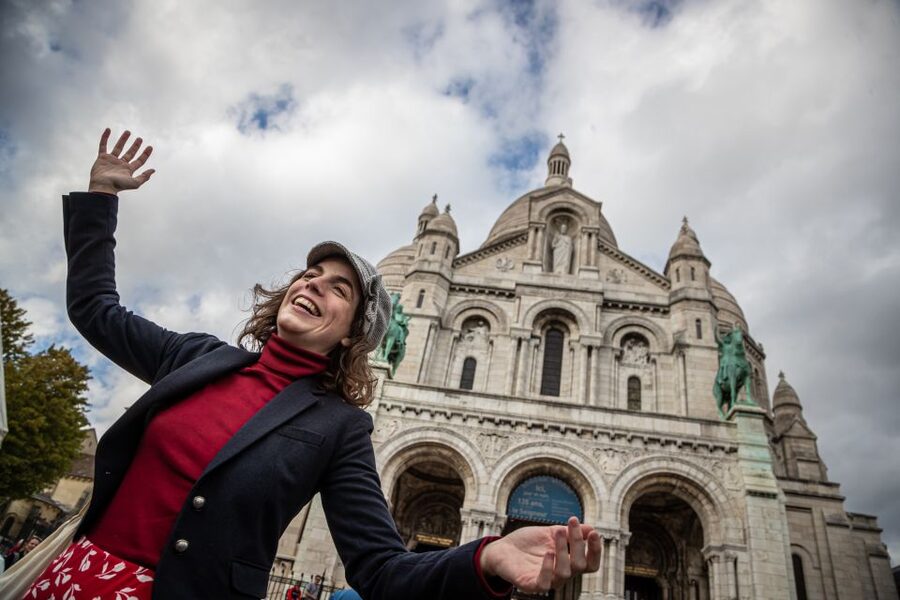
The route ends at the parvis of Sacré-Cœur Basilica. The basilica itself is listed as a walking stop rather than a full interior visit, so the focus is on arriving at the landmark and finishing above the neighborhood.
This ending works well. You move from the lower streets around Abbesses, through artists’ squares and cabaret addresses, and up to one of Paris’s most famous viewpoints. The final setting gives the two-hour walk a clear finish without adding another long lecture or indoor visit.
Remember that Sacré-Cœur sits at the top of the hill. The route is not suitable for people with mobility impairments, and anyone who finds steep streets difficult should think carefully before booking. Comfortable footwear and water are sensible. An umbrella and sun hat are useful depending on the forecast.
What you get for $34
The $34 price covers two hours with a live guide, comments on Montmartre and its singers, a selection of songs, and a broad route through the neighborhood’s main artistic sights.
I consider that good value if you would otherwise pay for a standard walking tour and separately seek out French music. You are paying for Anne-Sophie’s performance as well as her commentary, and that combination is not easily replaced by an audio guide.
The value is less convincing if your goal is only to see Sacré-Cœur and take photographs. You can visit many of these streets without a guide, and the tour does not include food, drinks, Métro tickets, hotel pickup, or entry to a cabaret.
Public tours are mainly offered on Fridays, Saturdays, and Sundays, with private tours in English or French available on request during the week and on some Sundays. Starting times vary, so check availability before planning other activities around it. The two-hour length is convenient for a morning or afternoon plan, and a late-day departure may suit you if you want Montmartre after the strongest daytime rush.
The booking terms are flexible: you can cancel up to 24 hours ahead for a full refund, and reserve now while paying later. Those terms are useful when your Paris schedule is still taking shape.
Who will enjoy this experience most
I would recommend this tour to:
- People who enjoy French chanson and want to hear it performed live.
- First-time visitors who want a guided introduction to Montmartre’s major sights.
- Returning visitors who have already seen Sacré-Cœur but want a different angle on the neighborhood.
- Couples and families looking for an easy cultural activity with a strong sense of place.
- Anyone interested in Piaf, Dalida, Aznavour, Brel, and the cabaret tradition.
- English-speaking visitors who want guiding in English without losing the original French songs.
I would think twice if you dislike singing in public spaces, need a flat route, want a private sightseeing experience, or hope to enter every building. The walk includes several brief stops, and the main reward comes from the flow between them.
The enthusiastic response to Anne-Sophie is easy to understand. She is repeatedly described as friendly, professional, pleasant, and full of energy. One recent French family outing at dusk was especially memorable because of her warm personality and beautiful voice. Another afternoon visit was praised for combining excellent singing with Montmartre’s history.
That combination is the strongest reason to book. You are not simply following a guide from landmark to landmark. You are hearing the neighborhood interpreted through the songs that helped give it a place in French culture.
Should you book Montmartre en chansons?
Book it if you want Montmartre with a human voice, not just a checklist of sights. Anne-Sophie’s a cappella performances, local connection, and stories about Piaf, Dalida, Aznavour, Brel, and the cabarets give the walk a clear identity.
At $34, it is a sensible buy for music lovers and first-time visitors who want an entertaining introduction to the hill. Bring water, dress for the weather, wear sturdy shoes, and leave room in your schedule for the uphill walking.
Skip it if you need step-free access, want a quiet historical tour, or are mainly looking for restaurant time and interior visits. For everyone else, this is a lively and unusually personal way to meet Montmartre.
FAQ
Where does the Montmartre en chansons tour begin?
The meeting point is behind the exit of the Abbesses Métro station.
Where does the tour finish?
The tour finishes at the parvis, or forecourt, of Sacré-Cœur Basilica.
How long does the experience last?
The tour lasts two hours.
What languages are available?
The live guide is available in English and French. Private tours in either language can be requested.
What songs might I hear?
The tour includes French songs such as La Vie en rose, L’Hymne à l’amour, and La Bohème.
What is included in the price?
The price includes commentary about Montmartre and its singers, live songs by a professional singer, visits to key Montmartre sights, and the two-hour guided walk.
Is the tour suitable for people with mobility impairments?
No. The experience is not suitable for people with mobility impairments. You are advised to bring hiking shoes, water, an umbrella, and a sun hat. Oversize luggage, backpacks, bikes, and electric wheelchairs are not allowed.
Recently added around Paris
- Private Half-Day Guided Tour of Paris★ 4.5 · 48 reviews
- 2 hour outdoor group activity in Paris: SAINT GERMAIN★ 5.0 · 48 reviews
- Paris Dinner Show Opera Bel Canto★ 4.5 · 48 reviews
- Paris Vintage Tour by Night on a Sidecar with Champagne★ 5.0 · 48 reviews
- Secrets & Scandals of the Louvre – Limited to 6 Guests★ 5.0 · 48 reviews
- Paris Photoshoot: Eiffel Tower Exclusive Private Experience★ 5.0 · 48 reviews
- From Paris: Versailles Full-Day Guided Tour with Lunch★ 4.9 · 48 reviews
- Paris: Louvre Mona Lisa Discovery Guided Tour with Ticket★ 4.9 · 48 reviews
Montmartre & Sacré-Cœur Tours, compared.
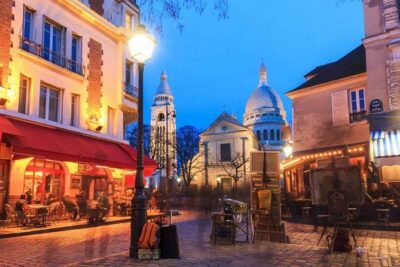
Montmartre Hidden Gems and Scenic Highlights Walking Tour
Read our review →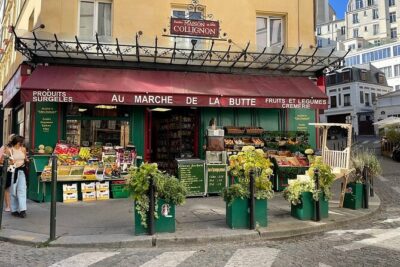
Montmartre Hill French Gourmet Food and Wine Tasting Walking Tour
Read our review →
Paris: Montmartre Cheese, Wine & Pastry Guided Walking Tour
Read our review →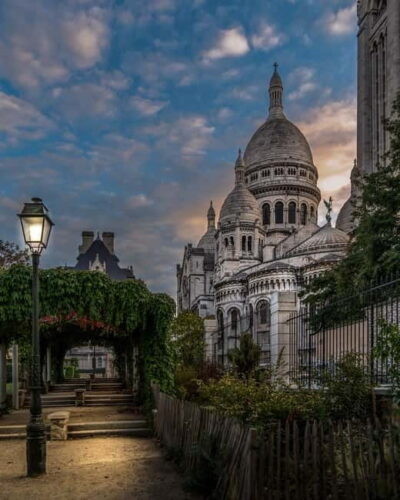
Paris: Montmartre Highlights Walking Tour with a Local Guide
Read our review →
Paris: Sacré-Coeur and Montmartre Tour with Expert Guide
Read our review →
Private Montmartre Food Tour with Wine, Cheese & Pastries
Read our review →
Paris Montmartre Food Tour – A Full French Meal by Do Eat Better
Read our review →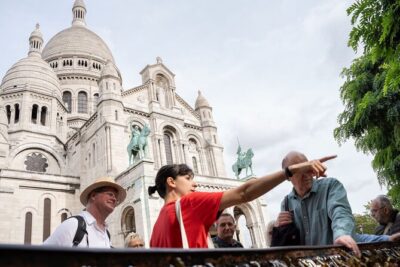
Hidden Montmartre: Paris’ Secret Streets Walking Tour
Read our review →Browse the lists this tour appears in