
Reviewed · COOKING CLASSES
Paris: Baking Insider Experience with a Professional Baker
Bread makes Paris make more sense. This two-hour class takes you inside a working bakery, where you learn to shape baguettes, roll croissants, and taste the difference between French baking styles. I like the small group of no more than eight, which gives you a real turn at the dough rather than a quick demonstration from the back of a crowded room. I also like the mix of sweet and savory baking, from baguettes and financiers to croissant dough.
The main drawback is that this is an active bakery, not a polished cooking studio. You will stand for much of the two hours, and the bakery sits up 15 steps on the second floor with no elevator. The meeting point can also vary by the option you book, so check the exact location before setting out.
This is a practical, tasty way to spend a morning or afternoon in Paris. The best part is not simply eating French bread. It is learning why one baguette differs from another, how flour and yeast affect the dough, and why laminated pastry takes patience and precision.
In This Review
- Key details before you book
- Inside a real Parisian boulangerie
- Your first taste sets up the lesson
- Baguette shaping is the most useful hands-on lesson
- Laminating croissant dough takes patience
- Financiers add a sweet, manageable project
- The guides shape the experience
- What the two-hour schedule feels like
- Is $108 a fair price?
- Who will enjoy this bakery class most?
- A few things I would clarify before booking
- Should you book it?
- FAQ
- How long does the Paris baking experience last?
- What language is the class conducted in?
- How many people are in the group?
- What baking techniques will I learn?
- Will I make baguettes and croissants?
- Are tastings included?
- Can children join the activity?
- Is the bakery accessible to wheelchair users?
- Can I cancel for a refund?
Key details before you book
- You work with three French classics: Practice baguette shaping, make or handle pastry dough, and learn how croissant dough is laminated and rolled.
- You enter a working Paris bakery: The class takes place at one of two traditional bakeries, with bakers and bakery staff working nearby.
- You get personal instruction: The group is limited to eight participants, and guides such as Pierre, Jess, Martin, David, Candice, Rachel, and Igor have been praised for keeping the class lively and inclusive.
- You taste as you learn: Snacks and bakery samples help you connect ingredients and technique with flavor.
- You may leave with your baking: Several sessions include finished baguettes, financiers, croissants, or other pastries to eat later, though the exact items can vary.
- You need to manage stairs and standing: There are 15 steps to the second floor, no elevator, and the class is not suitable for wheelchair users.
Inside a real Parisian boulangerie
The setting gives this class much of its appeal. Instead of working in a generic classroom, you learn in a traditional Paris bakery that continues its normal production around you. That means you get a look at how a neighborhood boulangerie functions, not just a lesson in how to copy a recipe.
The atmosphere can feel pleasantly practical. Bakery staff may pass through, and in some sessions the pastry chef or owner has stopped in to talk with the group. One bakery described by participants makes its products in-house and uses organic ingredients, offering an especially useful look at the work behind the counter.
This also means the space may be busy and functional. You are not promised a leisurely seat for every part of the class. Plan to stand, keep your belongings tidy, and treat the bakery as a workplace first and an attraction second.
The meeting location varies by the option you select. Since the class may take place in the Marais or another Paris bakery location, check your confirmation carefully and allow enough time to find the correct entrance.
More Cooking Classes in Paris:
- Paris: Montmartre Cheese, Wine & Pastry Guided Walking Tour
★ 4.8 · 2,255 reviews - Paris Cooking Class and Lunch with Wine plus Market Visit Option
★ 5.0 · 1,024 reviews - Paris Croissant Small-Group Baking Class with a Chef
★ 5.0 · 910 reviews
Your first taste sets up the lesson
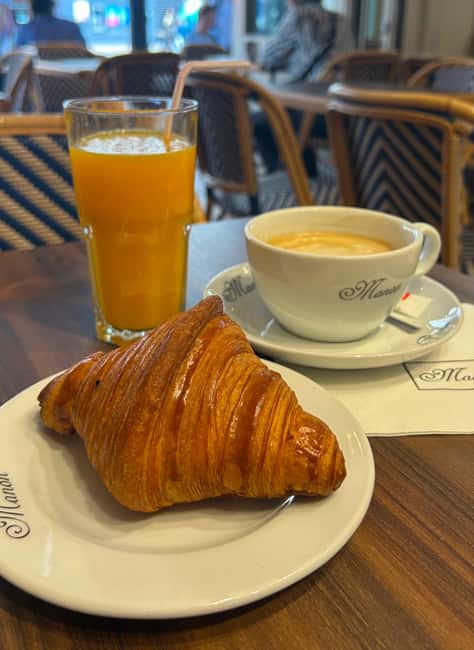
Tasting is not an afterthought here. Some sessions begin with a choice of pastry and a drink, giving you a pleasant introduction before you start handling dough. Along the way, you sample sweet and savory flavors and use those tastes to understand what the ingredients and techniques are meant to produce.
That matters because French baking is full of small distinctions. Flour type, fermentation, yeast, sourdough, butter, shaping, and baking time all affect the final result. You are not simply told that two baguettes are different. You may taste two types and discuss what changes in texture and flavor.
Come hungry. The combination of opening snacks, samples, and finished baked goods can add up quickly. Several participants especially enjoyed being able to snack on their own work through the rest of the day, so bring a bag or be prepared to carry bread and pastries if your session includes take-home items.
Baguette shaping is the most useful hands-on lesson
The baguette portion gives you an immediate feel for how much skill goes into an everyday French loaf. You learn how dough is handled and shaped, rather than watching a baker do every step for you.
The class also covers the difference between bread flours, yeast, and sourdough. This is the kind of information that changes how you look at a bakery display. A baguette is no longer just a long loaf with a crisp crust. You begin to notice how ingredients and fermentation create different results.
In one session, participants worked with two types of baguettes, discussed the differences, shaped their own loaves, and later cooked them. That sequence is especially satisfying because you can see the full path from dough to finished bread.
You should not expect to become a professional baker in two hours. You will, however, pick up useful physical skills and a better sense of what to look for when buying bread. The lesson is short enough to fit into a sightseeing day, but substantial enough to leave you with a new respect for the loaf in your sandwich.
Laminating croissant dough takes patience
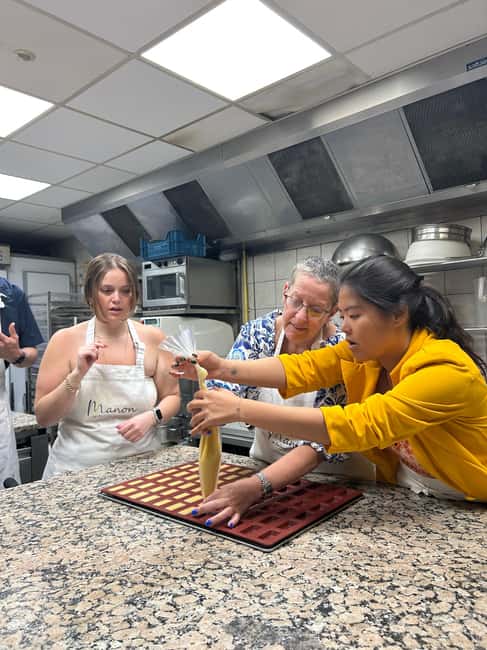
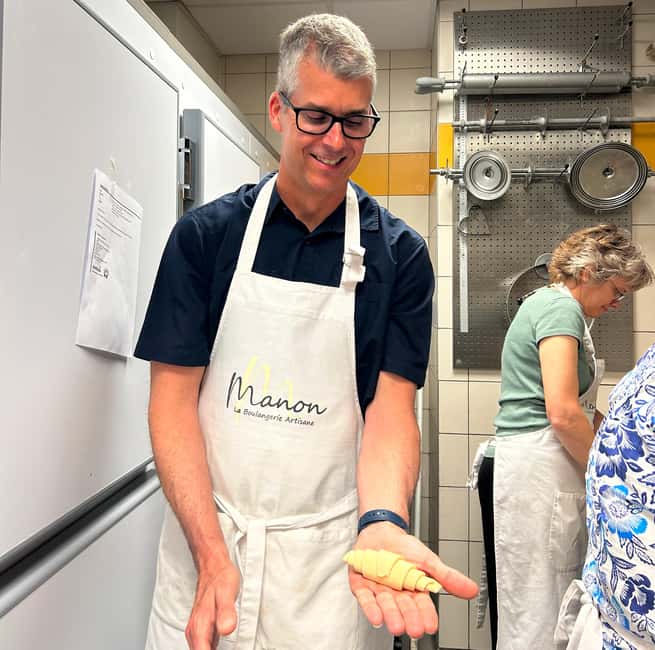
Croissant making is the most technically interesting part of the class. You learn how butter and dough are layered, a process called lamination, and practice rolling or shaping the pastry.
The guide explains how the dough is made, how the layers form, and why the pastry puffs. This helps explain why a good croissant has a light interior and distinct layers, while a rushed version can turn heavy or greasy.
The timing of this part can vary. In some sessions, participants rolled croissant dough but did not taste the croissants they shaped during the two-hour class. In others, the finished baked goods were available to take away. If tasting your own croissant is essential to you, ask what your specific session includes.
Still, the lesson has value even without a final croissant fresh from your own hands. You see why French pastry requires controlled handling and repeated rolling. The process makes that bakery display case look a little less effortless.
A few more Paris trips worth weighing up
- Paris: Louvre Museum Timed-Entrance Ticket
★ 4.6 · 71,977 reviews - Disneyland® Paris 1-Day Ticket
★ 4.6 · 49,412 reviews - Paris: Versailles Palace and Gardens Full Access Ticket
★ 4.6 · 41,579 reviews - Paris: Evening River Cruise with Music
★ 4.4 · 22,721 reviews
Financiers add a sweet, manageable project
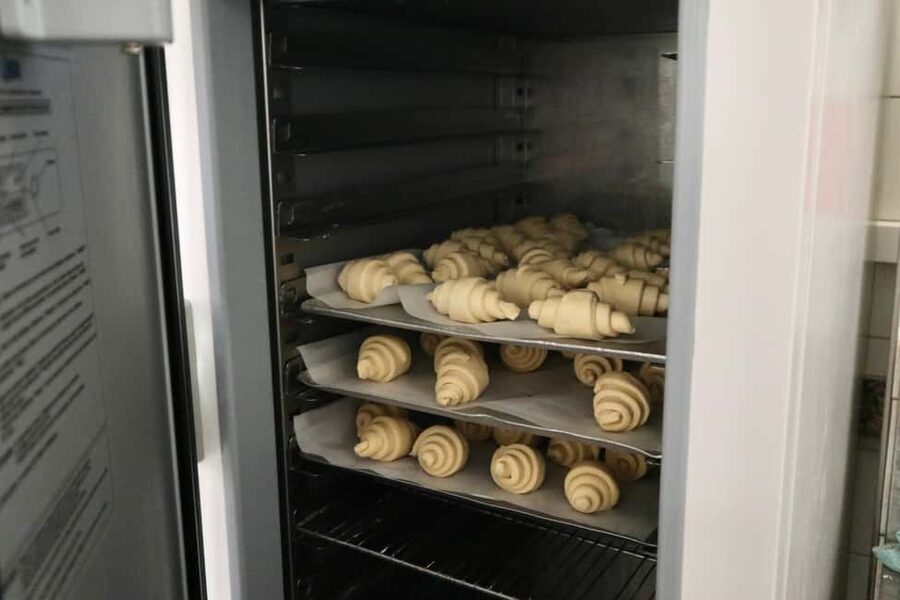
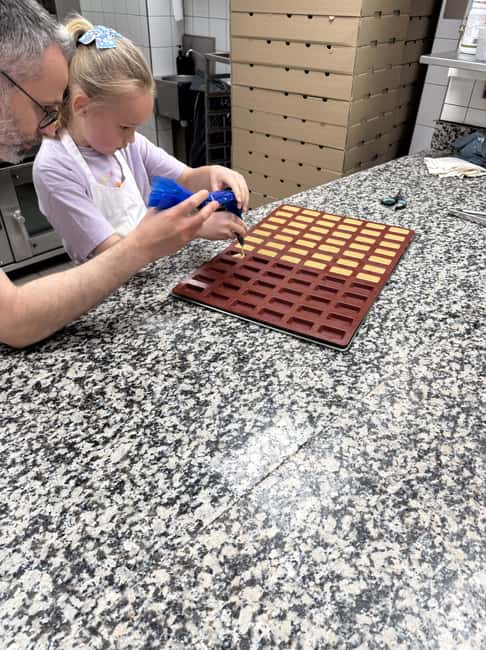
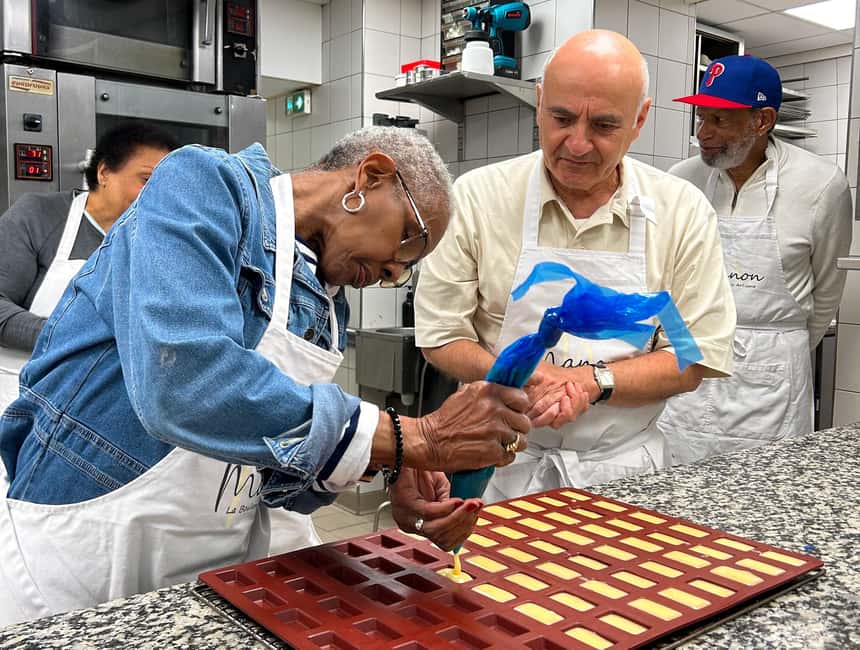
The class may also include financiers, small French cakes traditionally made with ground almonds and browned butter. They provide a useful contrast to baguette and croissant dough because the method is less about stretching and layering and more about mixing, portioning, and baking.
One session included making financiers and baking them during the class. This gives you a finished sweet to enjoy without waiting for a long fermentation or complicated pastry schedule.
The combination of three baked goods is one of the strongest features of the experience. Many cooking classes focus on one dish. Here, you move through bread, laminated pastry, and a small cake, gaining a broader picture of French baking in a compact format.
The guides shape the experience
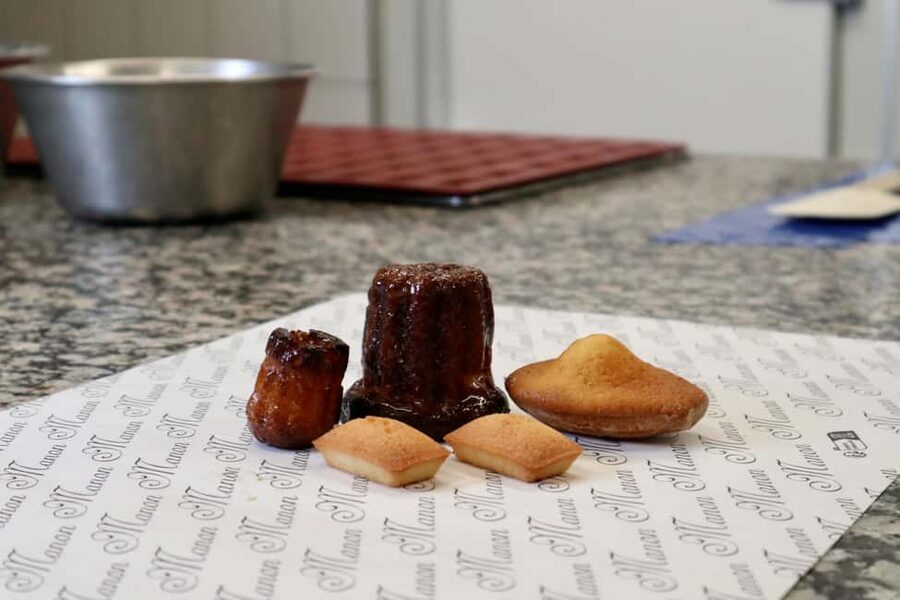
The class depends heavily on the guide, and the named instructors have earned strong praise for being warm, clear, and encouraging. Pierre has been singled out for keeping a group interested while working in the bakery, and for making the lesson both informative and welcoming. Jess has been praised for her positive energy and for helping first-time bakers feel comfortable.
Martin has led sessions that balanced bakery facts with hands-on work, while David has been especially good at explaining ingredients and techniques as participants shaped baguettes and rolled croissants. Candice and Rachel have also been noted for including children and adults alike.
That last point matters for family groups. The class can work well with mixed ages, provided the children can follow instructions and stand for the session. An 11-year-old and a 9-year-old both enjoyed the activity in separate sessions, and one guide made a point of giving each age group a turn.
A guide can explain the same dough in a dry or memorable way. Here, the teaching style appears to be one of the experience’s strongest assets. The class is not only about technique. It is also about making you feel comfortable enough to try shaping the dough yourself.
What the two-hour schedule feels like
The two-hour format keeps the class focused. You can expect a pattern something like this:
- Begin with an introduction to the bakery, ingredients, or an opening pastry and drink.
- Learn about French bread, including flour, yeast, sourdough, and differences between baguettes.
- Handle and shape baguette dough.
- Work with pastry dough and learn the basics of lamination.
- Shape or roll croissant dough.
- Prepare a sweet item such as financiers when included in the session.
- Taste baked goods and collect finished items when available.
The exact order and products can change between the two bakery locations. Do not treat this as a fixed recipe class with a guaranteed list of take-home pastries.
The class ends back at the meeting point. Since the duration is only two hours, it works well before a museum visit, after breakfast, or on a rainy day when you want a warm indoor activity. It also leaves plenty of time for lunch, though you may already be carrying a small bakery feast.
Is $108 a fair price?
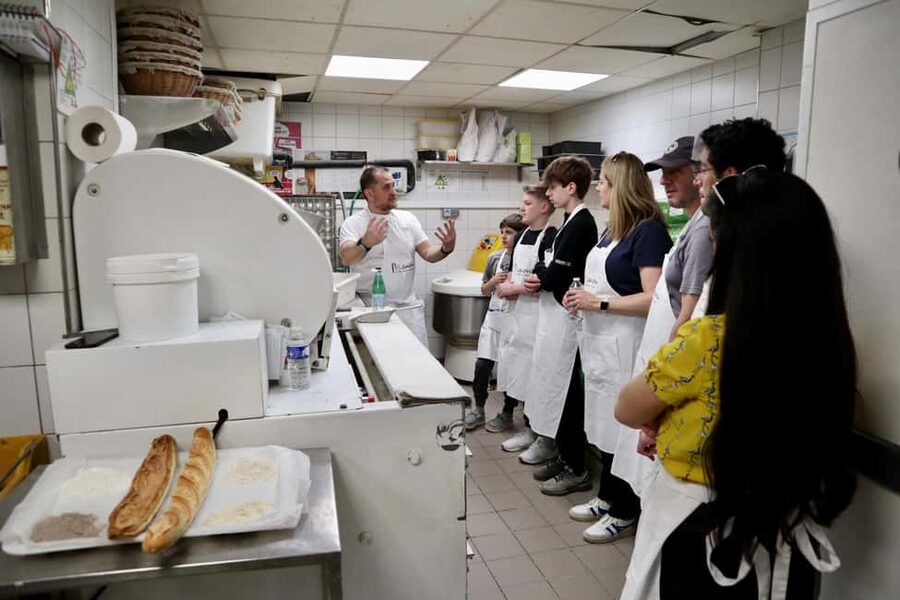
At $108 per person, this is not a cheap bakery stop. You are paying for more than bread samples, though. The price includes a two-hour hands-on lesson, an English-speaking guide, snacks, access to a working bakery, and personal instruction in a group capped at eight.
The small size makes the cost easier to justify. With eight or fewer participants, you have a better chance to shape dough, ask questions, and see what the baker is doing. A larger demonstration might cost less, but it would not offer the same amount of participation.
The value is strongest if you care about food, enjoy learning by doing, or want a Paris activity that feels different from another landmark visit. If you only want to eat a good croissant, a bakery counter will cost far less. If you want to understand the work behind the croissant and leave with practical techniques, this class offers more.
The included food also helps. Several sessions provide finished baguettes and pastries to snack on later, though the exact take-home items are not guaranteed. Consider the price worthwhile if those tastings and hands-on instruction are central to your Paris plans, not if you are simply looking for a quick breakfast.
Who will enjoy this bakery class most?
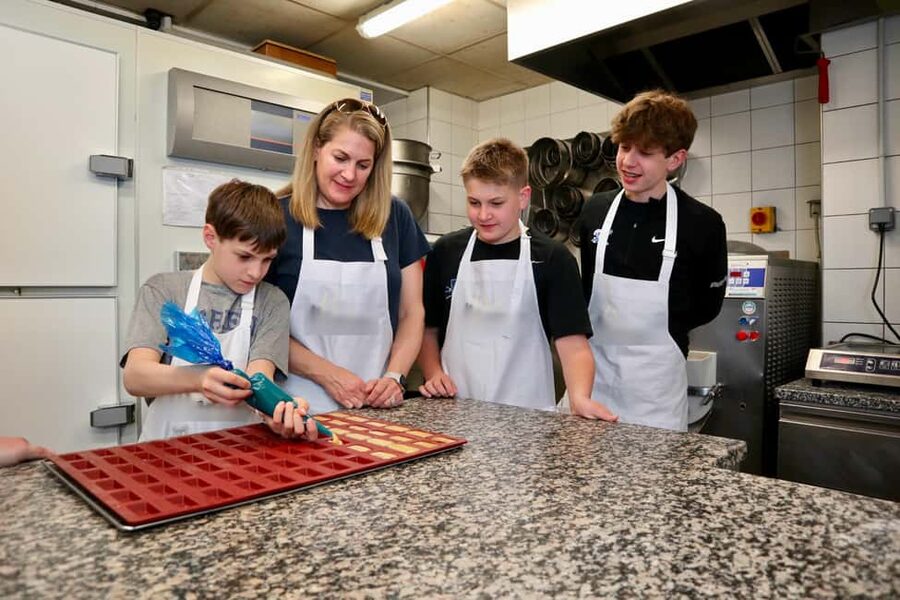
I would recommend it to first-time bakers, food-focused visitors, couples, families with older children, and anyone curious about everyday French life. It is particularly good for a mixed-age group because everyone can take a turn, from shaping bread to rolling pastry.
Children under five are free, but they cannot participate in the hands-on baking for safety reasons. That makes the activity less suitable for families with toddlers, especially since adults will need to focus on the work and the group will be in an active bakery.
The class is also a good choice for teenagers. The work is physical and immediate, and the reward is edible. You are not sitting through a long lecture about baking. You are handling dough and seeing the results.
People with limited mobility should choose another activity. The bakery requires standing for an extended period and has 15 steps to the second floor with no elevator. It is not suitable for wheelchair users.
For long hair, bring a tie or clip. One participant specifically recommended this practical detail, and it makes sense in a food-preparation space.
A few things I would clarify before booking
Because the meeting point varies, confirm the bakery address and route before you leave. Paris streets can make a short map distance feel longer, particularly if you are trying to arrive on time with a family.
Ask what you will take home if that is important to you. Some sessions include bread, financiers, croissants, or other pastries, while one session did not allow participants to taste the croissants they rolled during the class. The core lesson remains the same, but the final food experience may differ.
Also plan your clothing for standing and movement. You are taking part in bakery work, not attending a seated tasting. Comfortable shoes and tied-back hair are sensible choices.
The activity is offered in English with a live guide. That makes the technical explanations easier to follow, especially when the group is learning terms such as lamination, sourdough, and flour types.
Should you book it?
Book this experience if you want to do more than eat French bread. The small group, real bakery setting, generous tastings, and hands-on work give you a useful look at how baguettes and pastries are made.
I would book it for a rainy day, a family outing with children around nine and older, or a food-centered Paris itinerary. I would skip it if you dislike standing, have mobility needs, or want a quiet, highly polished cooking studio.
At $108, the class makes sense when you value access, instruction, and participation. You will not master French baking in two hours, but you will leave knowing more about flour, fermentation, shaping, and lamination, with the added pleasure of eating the evidence.
FAQ
How long does the Paris baking experience last?
The experience lasts two hours.
What language is the class conducted in?
The live tour guide conducts the experience in English.
How many people are in the group?
The small group is limited to eight participants.
What baking techniques will I learn?
You learn about bread flours, yeast, sourdough, baguette shaping, and laminating pastry dough. You also work with bread and croissant dough.
Will I make baguettes and croissants?
The class includes hands-on work with baguette and croissant dough, including shaping baguettes and rolling or laminating croissant dough.
Are tastings included?
Yes. Snacks and sweet and savory French tastings are included.
Can children join the activity?
Children under five are free, but they cannot take part in the hands-on baking because of safety concerns. Older children can participate, provided they can stand and follow the activity requirements.
Is the bakery accessible to wheelchair users?
No. The bakery requires standing for an extended period and has 15 steps to the second floor with no elevator. The activity is not suitable for wheelchair users.
Can I cancel for a refund?
You can cancel up to 24 hours in advance for a full refund. You can also reserve now and pay later, subject to the booking terms.
Recently added around Paris
- Private Half-Day Guided Tour of Paris★ 4.5 · 48 reviews
- 2 hour outdoor group activity in Paris: SAINT GERMAIN★ 5.0 · 48 reviews
- Paris Dinner Show Opera Bel Canto★ 4.5 · 48 reviews
- Paris Vintage Tour by Night on a Sidecar with Champagne★ 5.0 · 48 reviews
- Secrets & Scandals of the Louvre – Limited to 6 Guests★ 5.0 · 48 reviews
- Paris Photoshoot: Eiffel Tower Exclusive Private Experience★ 5.0 · 48 reviews
- Paris: Louvre Mona Lisa Discovery Guided Tour with Ticket★ 4.9 · 48 reviews
- From Paris: Versailles Full-Day Guided Tour with Lunch★ 4.9 · 48 reviews
Cooking Classes, compared.
Paris: Montmartre Cheese, Wine & Pastry Guided Walking Tour
Read our review →
Paris Cooking Class and Lunch with Wine plus Market Visit Option
Read our review →
Paris Croissant Small-Group Baking Class with a Chef
Read our review →
Paris: French Croissant Baking Class with a Chef
Read our review →
Paris Cooking Class: Learn How to Make Macarons
Read our review →
A Morning in Paris Food Tour: Croissants, Baguettes & Chocolate
Read our review →Browse the lists this tour appears in