

Reviewed · CITY TOURS
Paris City Center w/ Notre Dame interior | Exclusive Walking Tour
Paris reveals itself one bridge at a time. This private walking tour links Notre-Dame, the Louvre, and the Tuileries Gardens in one carefully packed route, while a personal guide explains how Roman Paris became the city you see today. I especially like the gentle pace and the chance to ask questions as you go. The main catch is that the Notre-Dame visit is unguided, and the entrance line can be long on busy days.
The $59.69 price is fair for a private guide, especially if you are sharing it with several people. I also like the route’s range: medieval churches, royal squares, Revolution-era sites, grand bridges, and the Louvre exterior all fit into one morning or afternoon. Still, this is a walking overview, not an inside tour of every monument, so you should book it for context and orientation rather than lengthy museum visits.
In This Review
- Key points at a glance
- Starting on Île de la Cité, the birthplace of Paris
- Inside Notre-Dame after the 2019 fire
- Sainte-Chapelle, the Palais de Justice, and the Conciergerie
- Saint-Michel and Place Dauphine: two very different Paris moods
- Pont Neuf and the statue of Henri IV
- Pont des Arts and the Louvre without museum admission
- Palais-Royal and the arc of Napoleon
- Tuileries Gardens and the final walk to Concorde
- What the private format is really worth
- Pace, weather, and practical preparation
- Who should book this Paris walking tour?
- Should you book it?
- FAQ
- How long does the Paris City Center tour last?
- Where does the tour begin?
- Where does the tour end?
- Is Notre-Dame Cathedral included?
- Is Notre-Dame admission free?
- Are Sainte-Chapelle and the Louvre included inside the tour price?
- Is this a private tour?
- Does the tour include hotel pickup?
- What should I bring?
- Can the route change?
Key points at a glance
- Notre-Dame interior access is included: You can enter the cathedral, but regulations mean your guide cannot conduct the explanation inside.
- A private format keeps the pace flexible: Your guide can adjust explanations and stops to your group, unlike a large scheduled walk.
- The route covers old Paris and royal Paris: You move from Île de la Cité and medieval Gothic architecture to the Louvre, Palais-Royal, and Napoleon’s monuments.
- Pont Neuf gives the walk a fine visual break: The bridge crosses the Seine and offers a useful view of how Paris grew around its river.
- The tour ends at Place de la Concorde: This is where the Tuileries finish and the Champs-Élysées begins, making it easy to continue sightseeing.
- Comfortable shoes matter: The tour lasts about 2 hours 40 minutes and runs in rain or shine, with no large bags or suitcases permitted.
Starting on Île de la Cité, the birthplace of Paris
You meet your guide near Cité, on Île de la Cité. This island is the right place to begin because Paris did not start as the spread-out capital you know today. The settlement once called Lutetia grew from this central point along the Seine.
Your guide sets the basic timeline here, helping you understand why the island holds so many layers of French history in such a small area. The opening portion is brief, about 10 minutes, but it gives the rest of the walk a clear frame.
This is also a practical place to begin. The meeting point is near public transportation, and the tour does not include hotel pickup. Plan to reach Cité on your own by taxi, Uber, or public transit, and allow extra time if you are unfamiliar with Paris streets.
More City Tours in Paris
- Eiffel Tower Summit Option with Seine River Cruise and City Tour
★ 3.5 · 2,176 reviews - Paris in a Day: Louvre or Orsay, Eiffel Tower, City Walk & Cruise
★ 5.0 · 1,956 reviews - Paris: City Highlights Bike Tour
★ 4.7 · 1,835 reviews
Inside Notre-Dame after the 2019 fire
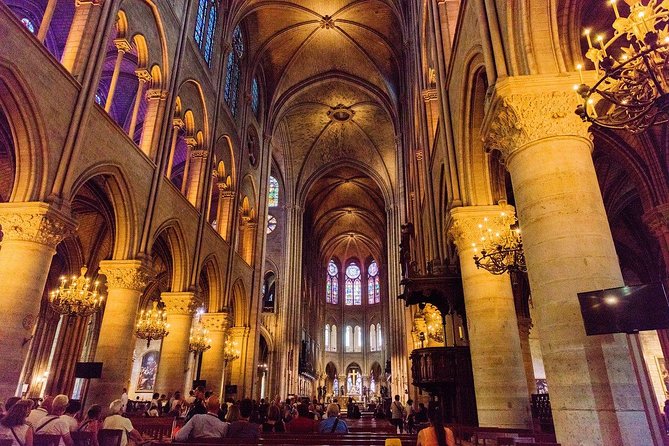
Notre-Dame is the emotional center of the experience. The cathedral suffered a major fire in 2019, and the restored interior is now open again. You receive an exterior explanation first, then enter for an unguided visit of about 10 minutes.
That distinction matters. Your guide can explain the cathedral’s Gothic design, place in Paris, and restoration outside, but cannot deliver a tour inside because of current regulations. Once you cross the threshold, you explore quietly on your own.
The cathedral entrance itself is free. The tour fee pays for the private walking service and guide, not a paid Notre-Dame admission ticket. Also, do not treat the interior visit as guaranteed in the same way as a reserved skip-the-line entry. On one especially crowded August day, the line was so long that the group chose to continue without going inside.
I would arrive prepared for that possibility. If Notre-Dame interior access is the single reason you are booking, check the current entry conditions before you go and keep your schedule flexible. If you value the cathedral’s setting, story, and exterior views as much as the interior, the tour remains useful even if the line wins.
Sainte-Chapelle, the Palais de Justice, and the Conciergerie
The route continues through the judicial heart of the island. The Palais de Justice occupies the former Palais de la Cité, and parts of the complex preserve some of the oldest surviving buildings in Paris.
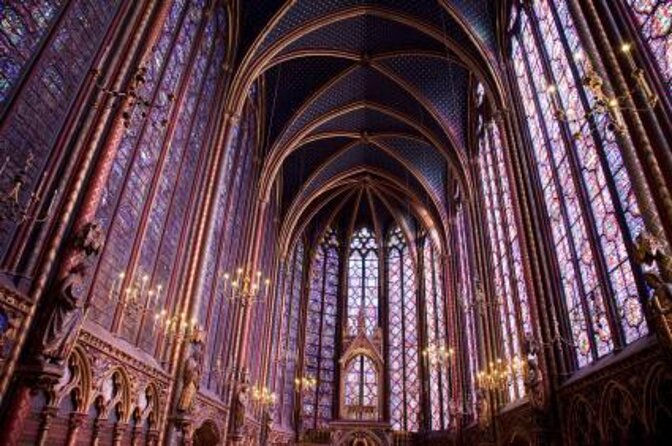
Sainte-Chapelle is next. Built in only seven years, this Gothic chapel was intended to hold important Christian relics, including Christ’s crown of thorns, acquired by Saint Louis. Its stained glass is the reason many people want to go inside, but this walking tour does not include admission to Sainte-Chapelle.
The schedule allows about 10 minutes at this stop, so treat it as an introduction, not a full chapel visit. Your guide can explain why the building was created and point out its place in medieval royal Paris. You can return later if you want a longer look.
The Conciergerie adds a darker note. It was once the oldest remaining part of the Palais de la Cité and later became one of France’s most notorious prisons. More than 1,000 people held as enemies of the Revolution were confined there, including Marie Antoinette near the end of her life.
Admission to the Conciergerie is not included. The value here is the connection between architecture and political history. You are not just looking at an old building. You are seeing where royal power, courts, imprisonment, and revolution occupied the same island.
Saint-Michel and Place Dauphine: two very different Paris moods
After the grand institutions of Île de la Cité, the walk passes the Fontaine Saint-Michel. Commissioned under Napoleon III during Haussmann’s rebuilding of Paris, the fountain shows the archangel Michael defeating the Devil.
Your guide can use this monument to explain the symbolism and the changes made to Paris during Napoleon III’s reign. The stop is free and brief, but it adds a useful visual marker as you cross from the island toward the Left Bank and the river bridges.
Place Dauphine offers a quieter contrast. Henri IV commissioned this historic square as one of his early urban projects. Tucked near the western tip of Île de la Cité, it has a more intimate feel than the major avenues that come later.
I like this part of the route because it gives you more than famous postcard sights. Place Dauphine helps you see how Paris can shift from monumental to residential within a few steps. If you enjoy local squares and old streets more than big museums, pay close attention here.
More Walking Tours in Paris
- Paris Top Sights Half Day Walking Tour with a Fun Guide
★ 5.0 · 2,893 reviews - Montmartre Hidden Gems and Scenic Highlights Walking Tour
★ 5.0 · 2,684 reviews - Montmartre Hill French Gourmet Food and Wine Tasting Walking Tour
★ 5.0 · 2,588 reviews - Paris Île de la Cité and Notre-Dame Walking Tour With Crypt
★ 5.0 · 2,272 reviews
Pont Neuf and the statue of Henri IV
The walk then crosses Pont Neuf, considered the oldest stone bridge in Paris. Its name means New Bridge, a small joke from the past that still makes sense when you remember how old the city’s other river crossings are.
The bridge is part of the Seine riverbanks recognized as a UNESCO World Heritage site. It also gives you a natural pause after several standing stops. Look back toward Île de la Cité, where the cathedral and medieval core make more sense from the water.
In the middle of Pont Neuf, you see the equestrian statue of Henri IV. The original statue dated from the 1600s but was destroyed during the French Revolution. The statue here is a later replica, an ideal detail for a guide to explain because it shows how political change could erase and later restore public symbols.
The guide is one of the tour’s strongest features. Eden is praised for her energy, clear explanations, and willingness to answer questions. Jay is described as animated and especially strong on Paris and French history. Adrien brings an engaging, personable style, and Hugo is noted for explaining history in easy-to-follow English. Other guides named in the feedback include Maria, François, Agustina, Georgia, Sergio, Marcel, Tamari, Angeline, and Augustine.
That list also tells you something practical: the exact personality of your experience depends on the guide assigned. The repeated pattern is positive, with praise for storytelling, flexibility, and strong local knowledge. If you enjoy asking questions, a private format gives those conversations room to breathe.
Pont des Arts and the Louvre without museum admission
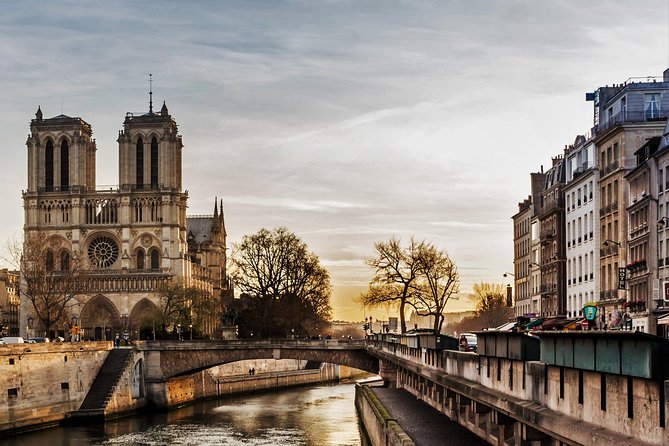
Before reaching the Louvre, you cross or pass the Pont des Arts. Built between 1801 and 1804, it was the first iron bridge in Paris and connects the Institut de France with the Louvre.
The Louvre section focuses on the palace exterior. You pass through the Cour Carrée, one of the main courtyards, and see the glass Louvre Pyramid designed by I. M. Pei. This is enough to help you understand the Louvre as both a former royal palace and the world’s most visited art museum.
The museum’s collection reaches from ancient civilizations to the mid-19th century, but museum admission is not included. You will not have time to explore its galleries during this tour, and the schedule’s 10-minute Louvre stop confirms that this is an outside orientation.
That is not a weakness if you plan to visit the Louvre separately. In fact, seeing the courtyards and entrance with a guide first can make a later museum visit less confusing. If you want a museum tour, buy that as a separate experience and reserve enough time for it. Trying to combine the two would turn a pleasant city walk into a tiring sprint.
Palais-Royal and the arc of Napoleon
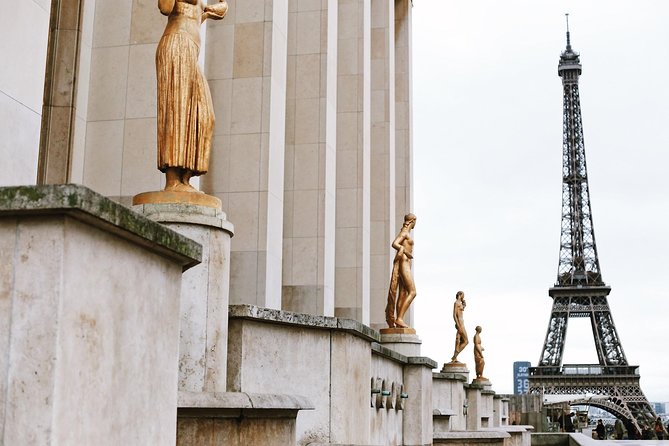
The next stop is the Domaine National du Palais-Royal, created by Cardinal Richelieu in 1633. The palace later housed royal families until Versailles became the main royal residence.
The gardens offer a calmer setting after the Louvre crowds. Contemporary sculptures and newer architectural features sit beside the older palace complex, giving your guide a chance to connect different periods of Paris design. Admission is not included, and the visit is short, so think of it as a scenic passage rather than a full palace tour.
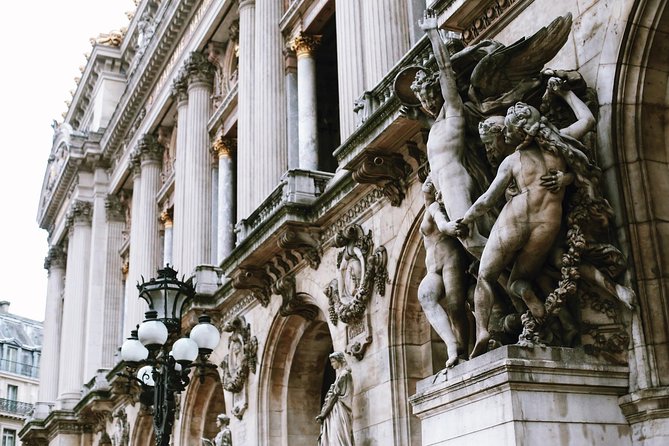
You then walk toward the Tuileries through the Arc de Triomphe du Carrousel. Napoleon built this large arch to commemorate military victories. It is smaller than the Arc de Triomphe at the far end of the Champs-Élysées, but it helps you understand the grand axis running through central Paris.
This sequence is one of the tour’s best planning choices. Instead of jumping randomly between attractions, the route moves from royal palace to imperial monument to formal garden. You can see how political power used architecture to shape the city.
Tuileries Gardens and the final walk to Concorde
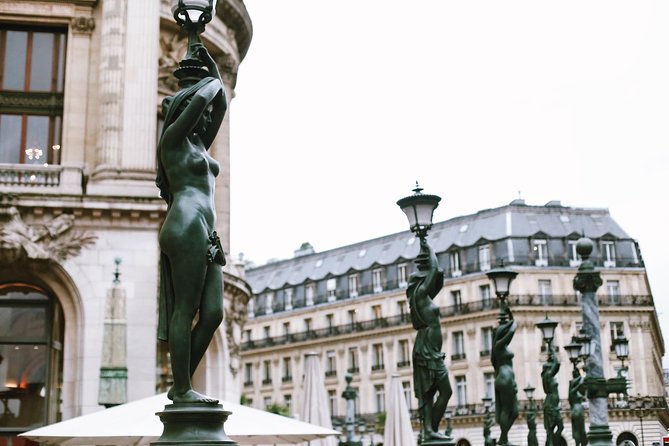
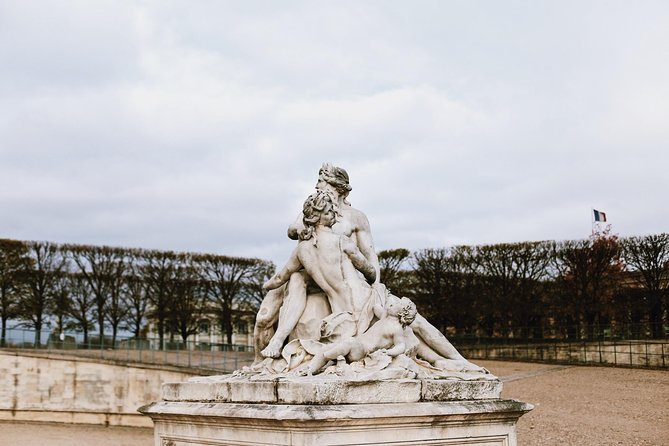
The Jardin des Tuileries is the oldest park in Paris, with roots reaching back to the 17th century. Its formal flower beds, trees, sculptures, and broad paths make it a welcome change from stone streets and busy crossings.
The tour includes a pass by the Tuileries Gardens Bookstore, a small shop with gardening and landscape design books, along with garden-themed gifts and cards. It is not a major landmark, but it gives the walk a human, everyday detail. If you like gardens, design, or small specialty shops, this is worth noticing.
The final stop is Place de la Concorde. The square is famous for its role during the French Revolution, when it served as an execution site. Today it marks the beginning of the Champs-Élysées, so you can continue along the avenue after the tour.
The stated end point is Place de la Concorde, not a hotel or return to Cité. Some descriptions refer to finishing with the Champs-Élysées, but the practical takeaway is simple: plan to end at Concorde and decide afterward if you want to walk farther. This location is convenient for continuing through central Paris.
What the private format is really worth
At $59.69 per person, the price is easiest to justify when your group includes several people. You are paying for an exclusive guide rather than a seat on a large public walk, and the guide can adjust the pace and answer questions without a crowd competing for attention.
The route lasts about 2 hours 40 minutes, although the included information also describes it as a 2.5-hour tour. In practical terms, set aside roughly three hours once you include meeting up, pauses, and the walk to your next activity.
The private setup does not mean every stop becomes a full tour. Several places, including Sainte-Chapelle, the Conciergerie, and the Louvre, are viewed from outside or passed briefly. The best value comes from the guide’s explanations and the range of sights, not from included admissions.
A semi-private option may cost less, and group discounts are available. If you are traveling alone or as a couple on a tight budget, compare the savings carefully. If you have children, older family members, or a group with mixed interests, the private format can be worth more because the guide can slow down or adapt the discussion.
Pace, weather, and practical preparation
This is an active city walk, but the pace is generally described as gentle rather than rushed. You should still have a moderate level of fitness because you will walk between 16 listed stops, stand for explanations, and remain outdoors for much of the experience.
Wear comfortable shoes. Bring water, an umbrella, and a hat in summer. The tour operates in all weather, so rain is not a reason to assume it will be canceled. One group completed the walk in pouring rain and still found the guide’s energy and explanations worthwhile, but dry footwear would certainly improve your mood.
Do not bring large bags or suitcases. Security at major Paris attractions can change, and some interiors may be unavailable even when the route includes the exterior. Provide a mobile phone number with your country code when booking so the operator can reach you if the meeting details or route need attention.
The route may change during national celebrations. An alternative route can still include the main highlights, but refunds or discounts are not provided for these changes. Check the date of your visit if a parade or major public event is expected.
Who should book this Paris walking tour?
I would choose this experience for a first or short visit to Paris, especially if you want a clear introduction to the city center. It suits families, couples, and small groups who prefer conversation over a fixed script.
It is also a good choice if Notre-Dame matters to you but you want more than a cathedral visit. The tour places the church within the story of Île de la Cité, the royal courts, the Revolution, the Seine, the Louvre, and the formal avenues that follow.
You may want something else if your main goal is to spend hours inside Sainte-Chapelle or the Louvre. Those attractions need separate admission and more time. You should also think twice if your group dislikes walking, standing, or outdoor sightseeing in uncertain weather.
The strongest guide feedback centers on personal warmth and storytelling. Eden is repeatedly praised for her energy and friendly approach. Adrien is described as engaging and entertaining, while Jay brings animated historical detail. Maria, François, Hugo, Georgia, Agustina, Sergio, Marcel, Tamari, Angeline, and Augustine are also praised for clear explanations, flexibility, and strong command of Parisian history.
Should you book it?
Book this tour if you want a private historical orientation to central Paris with Notre-Dame at the center and a finish near the Champs-Élysées. The route is broad, the pace is manageable, and the guides appear to be the main reason the experience works so well.
Keep your expectations realistic. Notre-Dame’s interior visit is unguided, museum admissions are not included, and a busy day may make entry difficult. For a first look at Paris, though, $59.69 is a reasonable price for several hours of personal guidance, a strong mix of major sights, and the chance to ask the questions that make the city easier to understand.
FAQ
How long does the Paris City Center tour last?
The experience lasts approximately 2 hours 40 minutes. The included information also describes the tour as 2.5 hours, so plan for roughly three hours in your schedule.
Where does the tour begin?
The tour begins at Cité on Île de la Cité in Paris, near public transportation.
Where does the tour end?
The tour ends at Place de la Concorde. The square marks the start of the Champs-Élysées.
Is Notre-Dame Cathedral included?
Yes. Interior access to Notre-Dame is included, but the visit inside is unguided because of regulations.
Is Notre-Dame admission free?
Yes. Entrance to Notre-Dame is free and open to all. The tour provides an independent guide service around the cathedral and access to the interior when conditions allow.
Are Sainte-Chapelle and the Louvre included inside the tour price?
No. Admission to Sainte-Chapelle and the Louvre is not included. The tour passes by or views key exterior areas of both attractions.
Is this a private tour?
Yes, when you select the private option, only your group participates and the guide is exclusively for you. A semi-private option is also available at a lower price.
Does the tour include hotel pickup?
No. Hotel pickup and drop-off are not included. The provided information recommends using Uber or a taxi for transportation to the meeting point.
What should I bring?
Wear comfortable shoes and bring water. An umbrella is useful in wet weather, and a hat is recommended during summer. Large bags and suitcases are not allowed.
Can the route change?
Yes. National celebrations can affect the route. An alternative route may be provided while still covering the main highlights, but refunds or discounts are not offered for these changes.
More Notre Dame visits
- Paris: Eternal Notre-Dame VR Experience Ticket
★ 4.4 · 1,150 reviews - Paris: Notre-Dame Cathedral Exterior Tour & Free Entrance
★ 3.7 · 1,010 reviews - Paris Highlights Bike Tour: Eiffel Tower, Louvre and Notre-Dame
★ 5.0 · 853 reviews - Early Access Paris Notre Dame Cathedral Walking Tour
★ 4.5 · 766 reviews
Recently added around Paris
- Private Half-Day Guided Tour of Paris★ 4.5 · 48 reviews
- 2 hour outdoor group activity in Paris: SAINT GERMAIN★ 5.0 · 48 reviews
- Paris Dinner Show Opera Bel Canto★ 4.5 · 48 reviews
- Paris Vintage Tour by Night on a Sidecar with Champagne★ 5.0 · 48 reviews
- Paris Photoshoot: Eiffel Tower Exclusive Private Experience★ 5.0 · 48 reviews
- Secrets & Scandals of the Louvre – Limited to 6 Guests★ 5.0 · 48 reviews
- From Paris: Versailles Full-Day Guided Tour with Lunch★ 4.9 · 48 reviews
- Paris: Louvre Mona Lisa Discovery Guided Tour with Ticket★ 4.9 · 48 reviews
City Tours, compared.
Marseille: City Sightseeing Hop-On Hop-Off Bus Tour
Read our review →
Eiffel Tower Summit Option with Seine River Cruise and City Tour
Read our review →
Paris in a Day: Louvre or Orsay, Eiffel Tower, City Walk & Cruise
Read our review →

Lyon City Hop-on Hop-off Sightseeing Bus Tour
Read our review →
Paris: Eiffel Tower Hosted Tour, Seine Cruise and City Tour
Read our review →

Paris: City and River Seine Tour on an Amphibious Bus
Read our review →Browse the lists this tour appears in