
Reviewed · MONTMARTRE & SACRé-CœUR TOURS
Paris Montmartre: 2-Hour City Tour in German
Montmartre rewards slow steps. This private, German-language walk takes you through Paris’s famous hilltop artists’ quarter, linking the Moulin Rouge, Sacré Coeur, Place du Tertre, village-like lanes, old vineyards, and lesser-known corners in two focused hours. I like the private format, which lets the guide shape the pace for your group, and I like the local stories that give the streets more meaning than a quick photo stop.
The tour is also a good choice for German-speaking visitors who want more than a standard sightseeing route. Guides such as Lucy have been praised for showing fascinating corners and telling engaging stories. The main consideration is time: two hours goes quickly, and the walk includes Montmartre’s steep streets and cobblestones. At $91 per person, it makes the most sense if you value a personal guide and a German-speaking experience.
In This Review
- Key points at a glance
- Starting beside the Moulin Rouge
- Moulin Rouge and Montmartre’s theatrical side
- The uphill route to Moulin de la Galette
- Place du Tertre and the artists of Montmartre
- Sacré Coeur and the reward at the top
- Lapin Agile and the old village atmosphere
- Vigne du Clos Montmartre, a rural reminder
- What the private format changes
- Two hours, used well
- Who should book this Montmartre walk?
- Should you book it?
- FAQ
- Where does the Montmartre tour begin?
- How do I find the guide?
- What language is the tour conducted in?
- How long does the tour last?
- Is this a private tour?
- What sights are included?
- Does the tour include entrance fees?
- Can children join the tour?
- Can I cancel for a refund?
Key points at a glance
- Private German-language walk: You get a guide for your own group rather than joining a large public tour.
- A well-chosen route: The walk connects Moulin Rouge, Moulin de la Galette, Place du Tertre, Sacré Coeur, Lapin Agile, and Montmartre’s vineyard.
- Artistic Paris in context: Picasso, Renoir, and Toulouse-Lautrec are part of the story, not just names on a sign.
- A guide named Lucy earns special praise: Her tours are noted for interesting stories and unusual corners of the neighborhood.
- The price reflects personal attention: At $91 per person, this is a premium walk, but the private format helps explain the cost.
- No extra admissions are included: Food, drinks, and entrance fees are separate, though the experience is mainly an outdoor walking tour.
Starting beside the Moulin Rouge
Your meeting point is at Blanche Metro station, on the small traffic island in front of the Moulin Rouge cabaret. Look for a guide carrying a bag with the HelpTourists logo. This is a practical starting place because the Moulin Rouge is easy to identify, and Blanche is served by Metro Line 2.
Give yourself enough time to find the traffic island. The meeting instructions are specific, but the area around the cabaret can feel busy, especially when cars, pedestrians, and tour groups all compete for space. If you arrive by Metro, come up from the station and orient yourself toward the famous red windmill.
The tour begins with one of Montmartre’s most recognizable sights. That is useful because your guide can immediately explain how this part of the neighborhood differs from the quieter upper slopes. The walk then moves uphill, away from the cabaret district and toward the older village streets.
More City Tours in Paris
- Eiffel Tower Summit Option with Seine River Cruise and City Tour
★ 3.5 · 2,176 reviews - Paris in a Day: Louvre or Orsay, Eiffel Tower, City Walk & Cruise
★ 5.0 · 1,956 reviews - Paris: City Highlights Bike Tour
★ 4.7 · 1,835 reviews
Moulin Rouge and Montmartre’s theatrical side
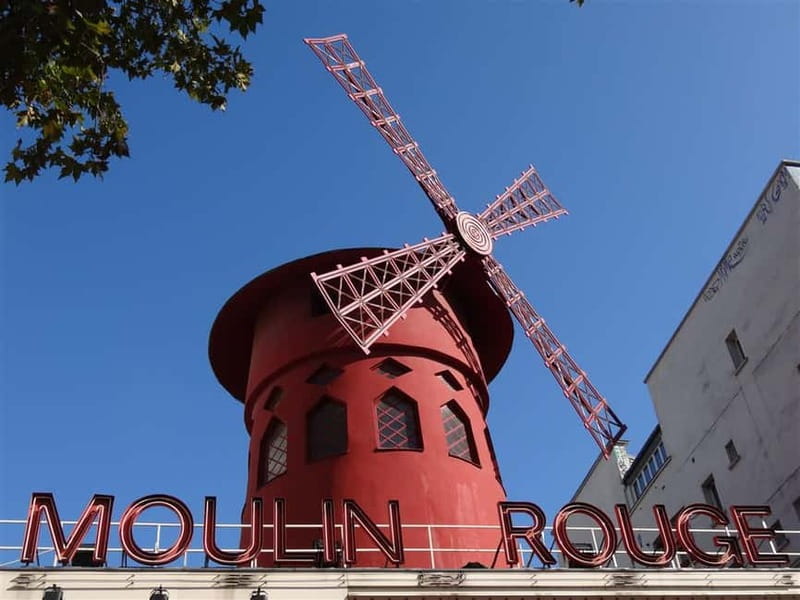
The Moulin Rouge is the first major stop. Its purple windmill and red facade make it one of Paris’s most photographed landmarks, but the building also introduces an important part of Montmartre’s identity: cabarets, performers, nightlife, and popular entertainment.
Your guide can connect the Moulin Rouge with artists such as Toulouse-Lautrec, whose work helped record the cabaret world of Paris. This is one reason a guided walk adds value. A photograph tells you what the building looks like. A story explains why the neighborhood attracted painters, writers, dancers, and people who wanted to live outside conventional Parisian society.
You should not expect a cabaret performance or an included interior visit. This is a sightseeing stop on a walking tour, and entrance fees are not included. If you want to attend a show, that requires a separate booking.
The uphill route to Moulin de la Galette
From the Moulin Rouge, the route climbs toward Moulin de la Galette. This part of Montmartre helps you see how quickly the character of the neighborhood changes. The lower streets feel tied to nightlife and entertainment. Higher up, the lanes become more closely linked with the old village and artists’ quarters.
Moulin de la Galette recalls Montmartre’s rural past and its later social life. The name is tied to a former windmill and a popular dance hall, a combination that fits the district perfectly. Montmartre was once outside Paris’s city limits and had a more rural setting before the city grew around it.
The climb is part of the experience, but it is also the physical challenge. You will encounter sloping streets and cobbled sections. Wear shoes with a firm sole, and avoid treating this as a polished, flat city stroll. The two-hour length keeps the walk manageable, but the hills still matter if you have limited mobility or prefer an easy route.
Place du Tertre and the artists of Montmartre
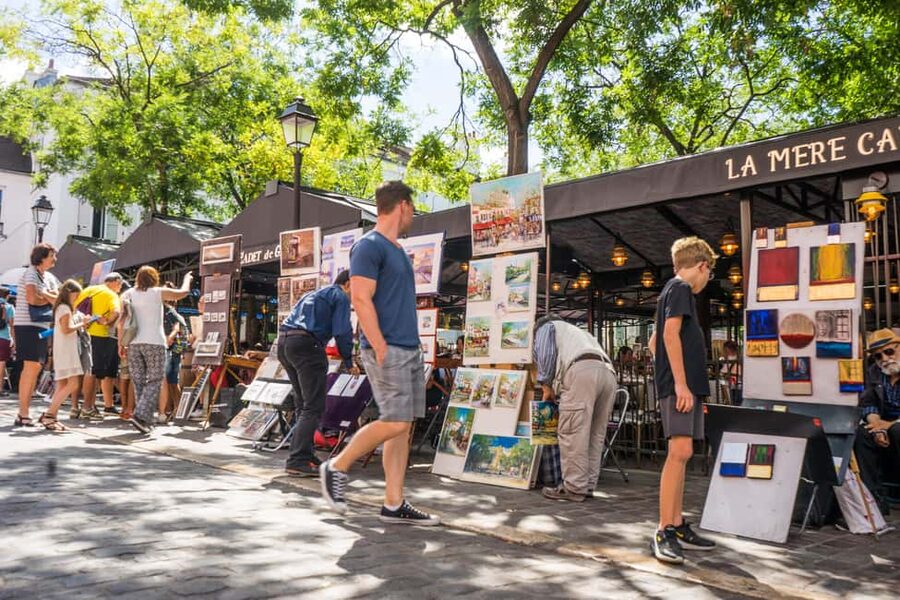
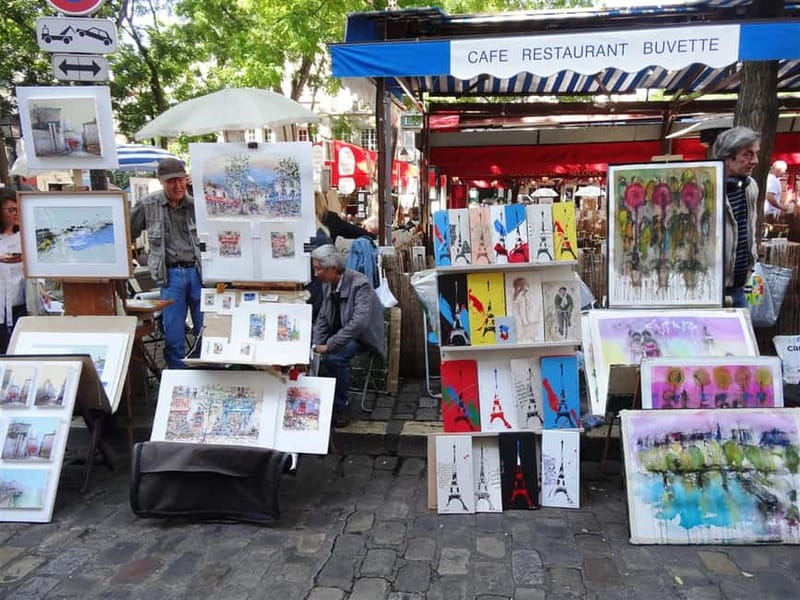
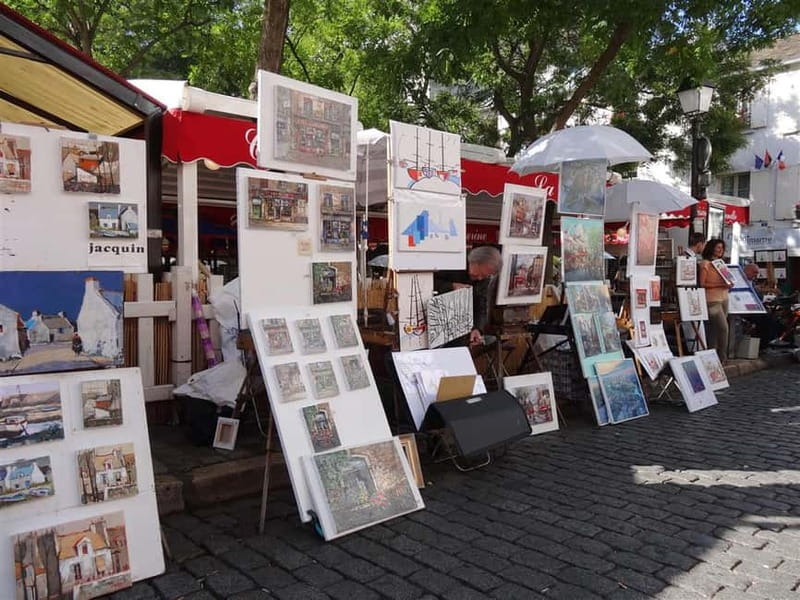
Place du Tertre is one of the tour’s central stops. This square is known for artists working at small tables, and it remains one of the clearest reminders of Montmartre’s artistic image.
It can also be crowded and commercial. That is not a flaw in itself, but it helps to arrive with realistic expectations. You are seeing a famous working square, not a secret village untouched by tourism. The value comes from understanding the place within Montmartre’s wider story.
Your German-speaking guide can add context about artists who lived or worked in the district, including Picasso, Renoir, and Toulouse-Lautrec. Their presence helped create the idea of Montmartre as the beating heart of Parisian bohemia at the start of the 20th century.
I especially like this stop for visitors who want a bridge between art and ordinary street life. The cafés, studios, narrow lanes, and public square make it easier to imagine why artists found the district appealing. You are not simply looking at a painting in a museum. You are walking through the type of setting that shaped the people who made those works.
More Montmartre and Sacré-Cœur walks:
- Montmartre Hidden Gems and Scenic Highlights Walking Tour
★ 5.0 · 2,684 reviews - Montmartre Hill French Gourmet Food and Wine Tasting Walking Tour
★ 5.0 · 2,588 reviews - Paris: Montmartre Cheese, Wine & Pastry Guided Walking Tour
★ 4.8 · 2,255 reviews - Paris: Montmartre Highlights Walking Tour with a Local Guide
★ 4.9 · 1,668 reviews
Sacré Coeur and the reward at the top
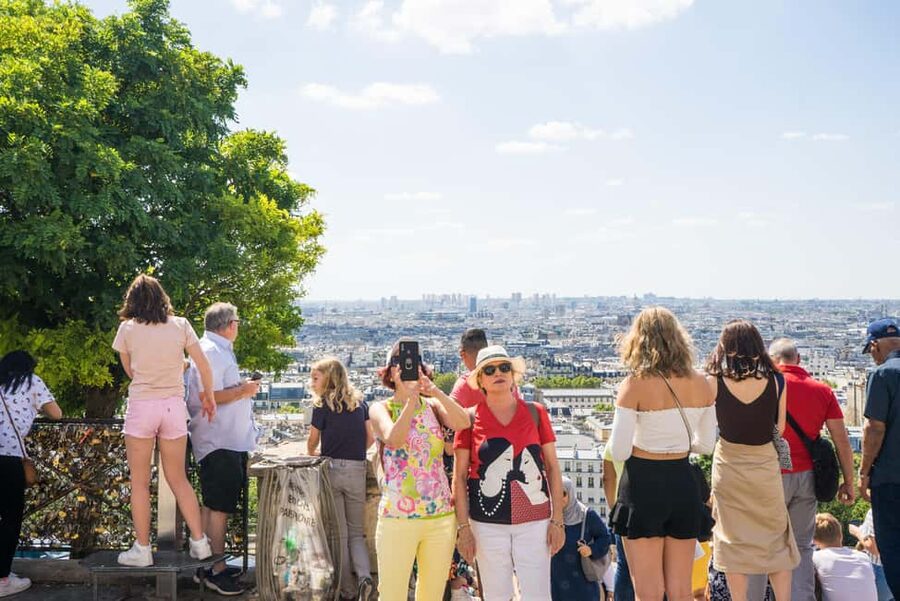
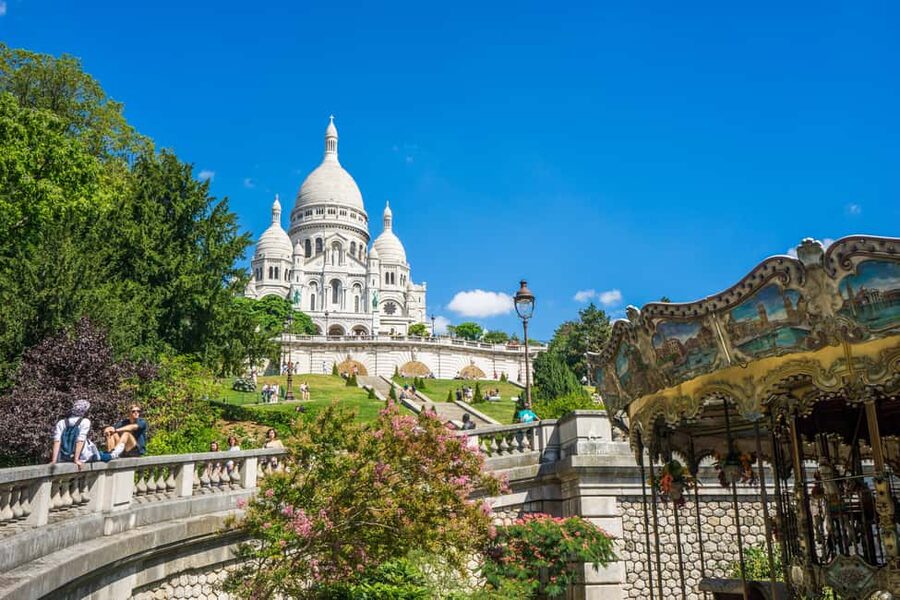
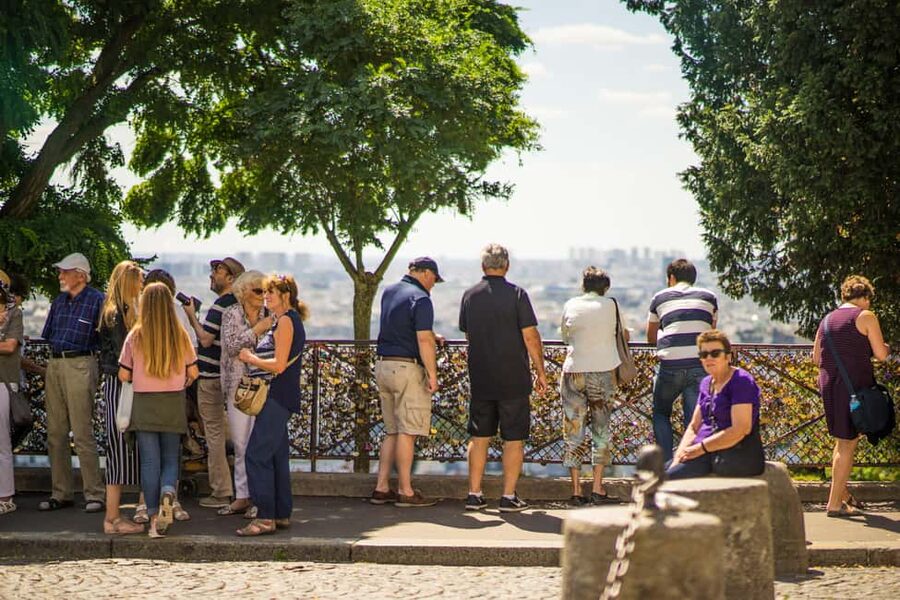
The white domes of Sacré Coeur are the visual goal of the walk. The basilica sits high above Paris, and its steps offer broad city views. After the climb, this is a natural place to pause and take in the scale of the capital.
The tour includes sightseeing at Sacré Coeur, but entrance fees are not included. The supplied details do not promise a guided interior visit, so you should think of the basilica mainly as a landmark and viewing point during this experience. If you want to go inside, check the arrangements and opening conditions separately.
The basilica also gives the tour a clear sense of direction. You start at the Moulin Rouge in the lower entertainment district and work your way through the artistic quarter to the highest part of Montmartre. That progression makes the walk feel like a small journey through several versions of the neighborhood.
The end-point information needs a little attention. The route lists the Basilica of the Sacred Heart as the finish, while the meeting instructions also say the activity ends back at the meeting point. Those details do not perfectly match, so confirm the exact end location when you book. This matters if you have a restaurant reservation, another tour, or a train to catch.
Lapin Agile and the old village atmosphere
Lapin Agile is a small, historic cabaret that fits the quieter side of Montmartre. It is associated with the district’s artistic and bohemian past and gives the walk a more intimate stop after the larger Sacré Coeur area.
This is the kind of place where a guide’s storytelling matters. The building itself may take only a few minutes to view, but its connection to artists, performers, and old Montmartre adds texture to the route. Without explanation, it can look like another attractive facade. With context, it becomes part of the neighborhood’s social story.
Do not expect an included show or interior tour here. The activity includes a walking guide, not food, drinks, or admission tickets. Treat the stop as an exterior landmark and a chance to understand the area.
Vigne du Clos Montmartre, a rural reminder
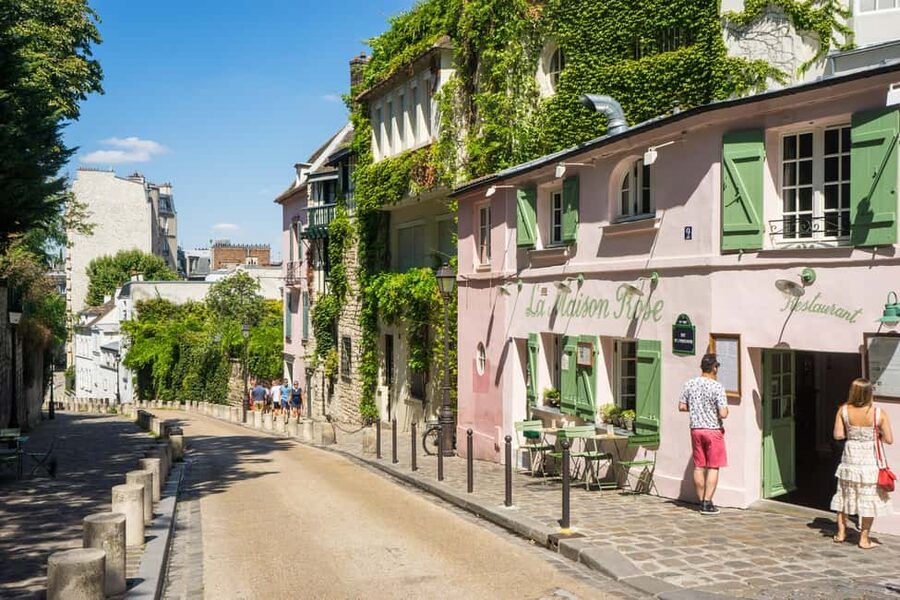
The Vigne du Clos Montmartre is one of the most unusual points on the route. Montmartre’s vineyard is a reminder that this hill was once more rural than urban. It also helps explain why the district developed a village character that still survives in its winding streets.
For me, this stop is important because it breaks the usual Paris sightseeing pattern. You get the famous basilica and cabaret, but you also see a small piece of the old hillside community. The vineyard gives the tour a local detail that is easy to miss if you only follow the main road between major landmarks.
The vineyard is not a full wine-tasting experience. Food and drinks are not included, and the tour does not advertise a tasting. Its value is visual and historical, especially for anyone interested in how Montmartre changed from rural retreat to urban artists’ quarter.
What the private format changes
A private group can make a real difference in Montmartre. The streets are narrow, the slopes are uneven, and the busiest sights can be hard to navigate in a large group. With a guide working only for your party, you can ask questions, pause for photographs, or spend more time on the stories that interest you.
The German language is another major benefit. If you understand German best, you can follow details about art, local life, and Parisian history without constantly translating in your head. That makes a short tour feel more rewarding.
The trade-off is cost. At $91 per person, this is not a budget walk, especially for one or two people. The price is easier to justify for a small private group that wants a German-speaking guide, personal attention, and a route beyond the most obvious sights.
For families, children up to age eight can participate free. That improves the value if you are traveling with young children, though the hills and cobblestones still make comfortable footwear important. The tour is only available in German, so it is not suitable if your group needs English, French, or another language.
Two hours, used well
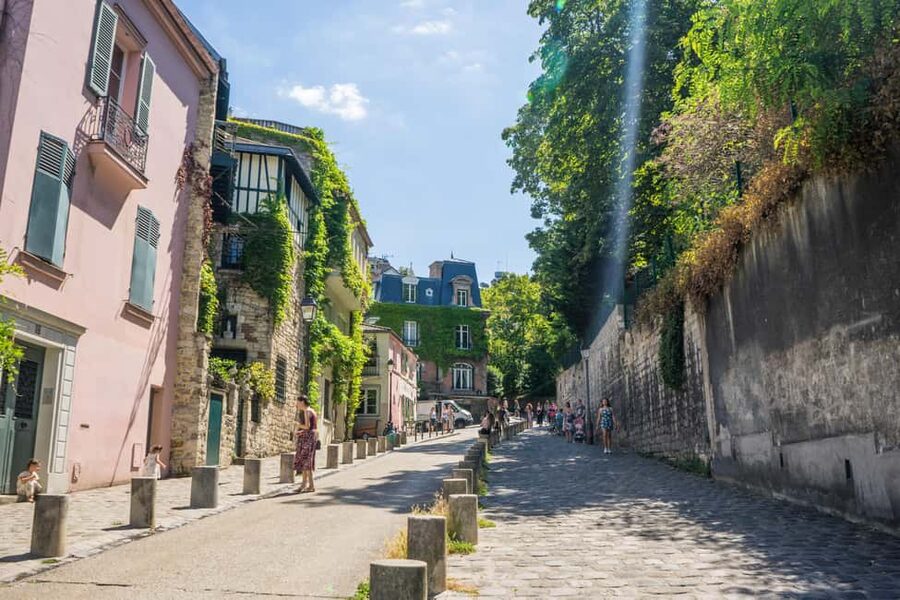
Two hours is enough to cover the named sights, but it leaves little room for a long café stop, a museum visit, or an extended interior exploration. The strength of the format is movement. You see several connected places and learn how they fit together.
I would choose an early starting time if you want a calmer feel at the main sights, though exact departure times depend on availability. The tour can also work well near the beginning of your Paris stay, since it helps you understand Montmartre’s layout and gives you ideas for returning later.
The walking pace should be comfortable for most people who can handle hills. Still, you should tell the guide if your group needs a slower pace. A private tour is most useful when you make use of that flexibility.
The experience does not include meals or refreshments. Bring your own water, especially on a warm day, since the route climbs steadily. You may find cafés and food options in the district, but any purchases are your responsibility.
Who should book this Montmartre walk?
I would recommend it to German-speaking visitors who want a personal introduction to Montmartre rather than a large group overview. It is also a good match for art lovers, first-time Paris visitors, and families with young children who benefit from a private pace.
You will get the most from it if you care about stories and connections. The route is not just Sacré Coeur followed by a photo at the Moulin Rouge. It links artists, cabarets, rural traces, village streets, and everyday Parisian life.
I would hesitate if you want a flat walk, a museum interior, or a low-cost introduction. I would also reconsider it if your German is limited, since German is the only tour language. And if you have a tight schedule after the walk, confirm the ending point because the supplied information gives both Sacré Coeur and the original meeting point as possible finishes.
The cancellation terms are useful if your plans may shift: you can cancel up to 24 hours ahead for a full refund, and you can reserve now while paying later. Those policies do not change the tour itself, but they reduce some of the risk of booking a private experience in advance.
Should you book it?
Book this tour if you want a private German-speaking guide and a focused walk through Montmartre’s best-known sights plus its quieter corners. The high rating of 4.9 from 299 reviews, along with specific praise for Lucy’s engaging stories and individual approach, supports the idea that the human guide is the main reason to choose it.
At $91 per person, it is a premium experience, not a bargain. Still, the price can be fair for a small group that wants personal attention, a clear route, and an explanation of why Montmartre feels so different from the rest of Paris. Confirm the final meeting point, wear solid shoes, and book it if the German language and private format matter more to you than saving money.
FAQ
Where does the Montmartre tour begin?
It begins at Blanche Metro station, served by Metro Line 2, on the small traffic island in front of the Moulin Rouge cabaret.
How do I find the guide?
Look for a guide carrying a bag with the HelpTourists logo.
What language is the tour conducted in?
The tour is available only in German.
How long does the tour last?
The walking tour lasts two hours.
Is this a private tour?
Yes. It is offered for a private group.
What sights are included?
The route includes the Moulin Rouge, Moulin de la Galette, Place du Tertre, Sacré Coeur Basilica, Lapin Agile, and Vigne du Clos Montmartre.
Does the tour include entrance fees?
No. Entrance fees, food, and drinks are not included.
Can children join the tour?
Yes. Children up to eight years old can participate free.
Can I cancel for a refund?
You can cancel up to 24 hours in advance for a full refund. The tour also allows you to reserve now and pay later.
More short trips in Paris
- The Père Lachaise Cemetery: Guided 2-Hour Small-Group Tour
★ 4.7 · 1,065 reviews - Paris: 2-Hour Perfume Creation Workshop
★ 4.8 · 731 reviews - Paris Louvre: 2-Hour Private Tour for Groups or Families
★ 4.6 · 639 reviews - The only Paris Wine Tasting experience you need to do – 2 hours
★ 5.0 · 265 reviews
Recently added around Paris
- Private Half-Day Guided Tour of Paris★ 4.5 · 48 reviews
- 2 hour outdoor group activity in Paris: SAINT GERMAIN★ 5.0 · 48 reviews
- Paris Dinner Show Opera Bel Canto★ 4.5 · 48 reviews
- Paris Vintage Tour by Night on a Sidecar with Champagne★ 5.0 · 48 reviews
- Secrets & Scandals of the Louvre – Limited to 6 Guests★ 5.0 · 48 reviews
- Paris Photoshoot: Eiffel Tower Exclusive Private Experience★ 5.0 · 48 reviews
- From Paris: Versailles Full-Day Guided Tour with Lunch★ 4.9 · 48 reviews
- Paris: Louvre Mona Lisa Discovery Guided Tour with Ticket★ 4.9 · 48 reviews
Montmartre & Sacré-Cœur Tours, compared.
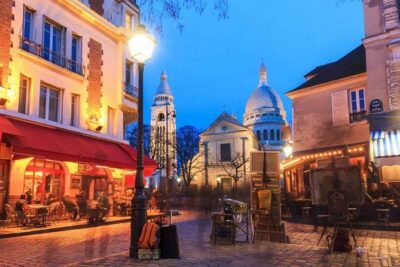
Montmartre Hidden Gems and Scenic Highlights Walking Tour
Read our review →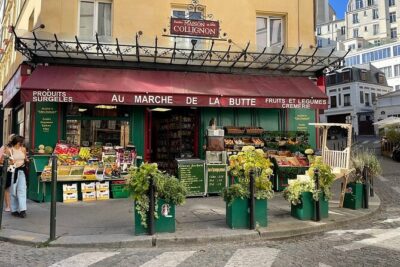
Montmartre Hill French Gourmet Food and Wine Tasting Walking Tour
Read our review →
Paris: Montmartre Cheese, Wine & Pastry Guided Walking Tour
Read our review →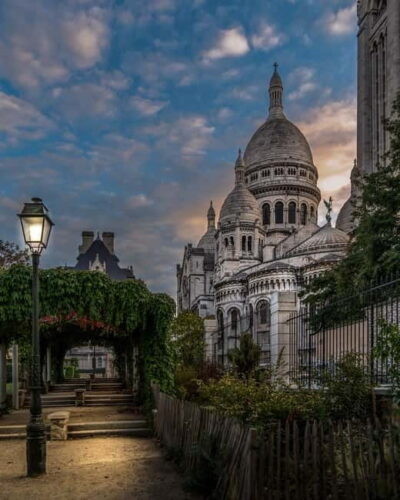
Paris: Montmartre Highlights Walking Tour with a Local Guide
Read our review →
Paris: Sacré-Coeur and Montmartre Tour with Expert Guide
Read our review →
Private Montmartre Food Tour with Wine, Cheese & Pastries
Read our review →
Paris Montmartre Food Tour – A Full French Meal by Do Eat Better
Read our review →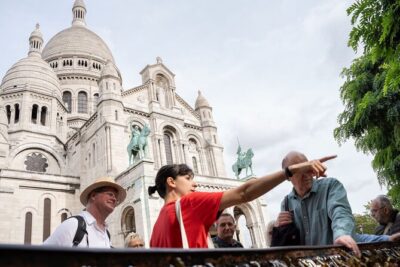
Hidden Montmartre: Paris’ Secret Streets Walking Tour
Read our review →Browse the lists this tour appears in