
Reviewed · HISTORICAL TOURS
Rouen: Guided Tour of the Historic Center
Rouen rewards slow walking. This 90-minute tour gives you a clear introduction to Normandy’s historic capital, linking Joan of Arc, medieval streets, Gothic churches, and the city’s famous astronomical clock. I especially like the local guide Elodie and the compact route through Rouen’s most important central sights. I also like that the tour explains how the city changed over time instead of treating each monument as an isolated photo stop.
The main drawback is simple: monument entry is not included. You see the cathedral, courthouse, churches, and clock from the outside, so this works best as an orientation walk rather than a substitute for visiting Rouen’s interiors. At $28 per person, the price is reasonable if you want stories and context, but less attractive if you prefer to explore silently at your own pace.
In This Review
- Key points to know before you book
- Starting at Place de la Pucelle
- Joan of Arc at Place du Vieux Marché
- The Gros-Horloge and the Renaissance street arch
- The courthouse and Rouen’s civic power
- Rouen Cathedral and three different towers
- Saint-Maclou and the Flamboyant Gothic style
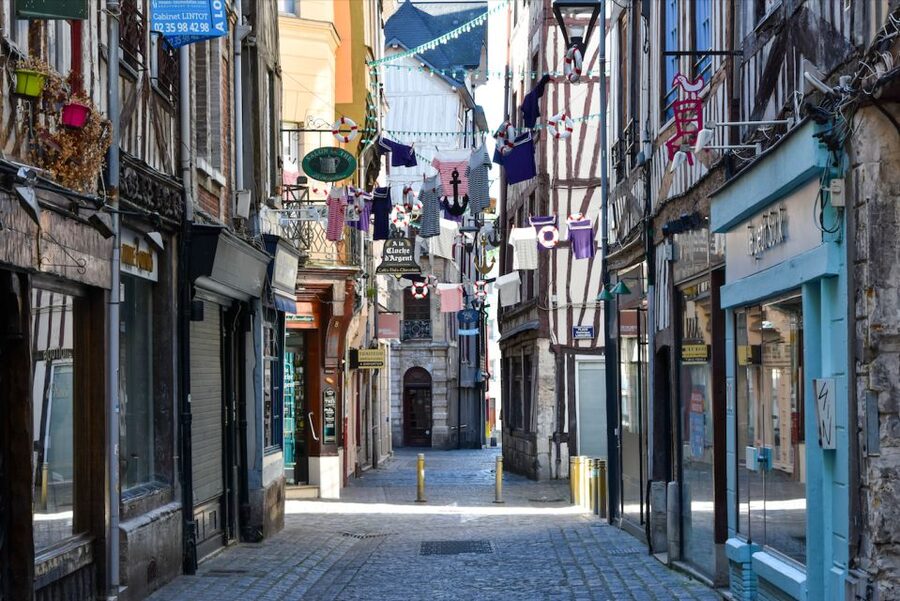
- Martainville and the daily life of medieval Rouen
- What the $28 price gets you
- Who should take this Rouen walk?
- Practical tips for a better walk
- Should you book the Rouen Historic Center tour?
- FAQ
- Where does the Rouen historic center tour begin?
- Where does the tour finish?
- How long is the guided tour?
- Which languages are available?
- Are monument entrance fees included?
- Can children join the tour for free?
- What should I bring?
Key points to know before you book
- Joan of Arc shapes the opening: Begin at Place de la Pucelle, then follow the story to Place du Vieux Marché, where the final moments of her life are explained.
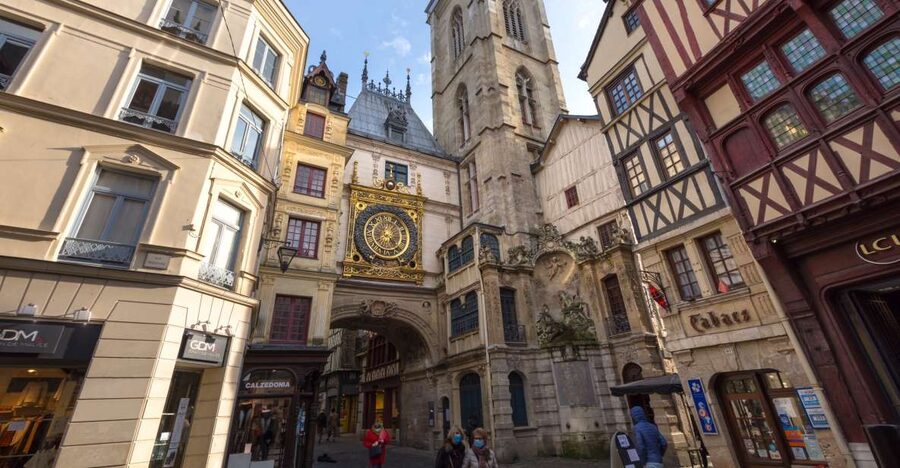
- The Gros-Horloge is more than a clock: This 14th-century astronomical clock is set within a Renaissance street arch among half-timbered buildings.
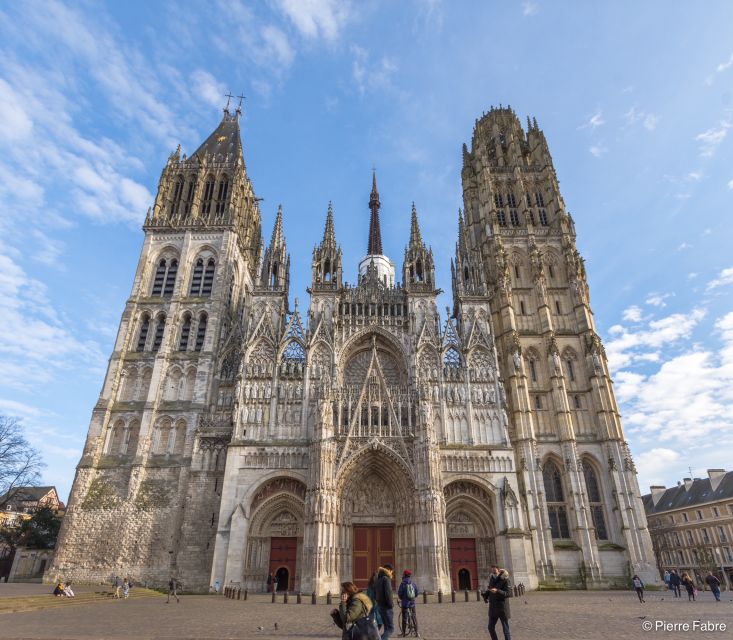
- Rouen Cathedral shows several eras at once: Its three towers use different architectural styles, while the spire rises more than 150 meters.
- Saint-Maclou is a Gothic highlight: The church offers one of France’s finest examples of Flamboyant Gothic architecture.
- Martainville adds everyday history: The final part looks at how ordinary people lived in the Middle Ages, not just how rulers worshipped or built.
- The route is short but not effortless: You walk about 3 kilometers over cobbled streets, in rain or shine, so wear solid shoes.
Starting at Place de la Pucelle
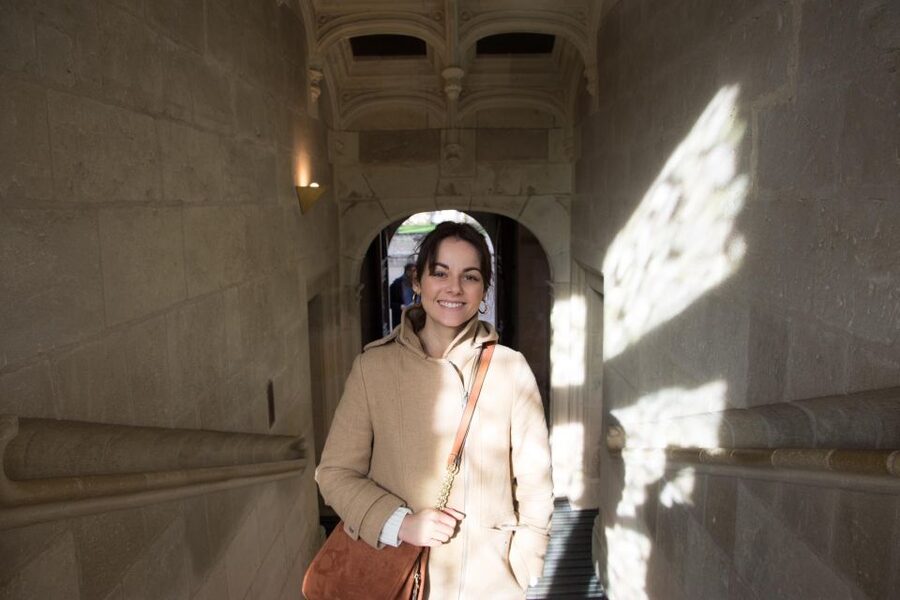
The tour begins at 4 Place de la Pucelle, in front of the Public restaurant. Look for a guide wearing a green or orange badge around the neck. This meeting detail matters in Rouen, where old streets and busy squares can make a first meeting point less obvious than expected.
Elodie leads the walk when she is scheduled, and the comments about her are consistently warm. I like the picture that emerges from the feedback: she sets a comfortable pace, explains architecture in plain English, and brings energy to stories that could otherwise feel like a list of dates. Alexandra has also led the tour, so your guide may vary.
Place de la Pucelle is a sensible starting point because the walk begins with Rouen’s past and quickly connects it to the streets around you. You do not spend the first minutes on general facts with no physical reference. Instead, the route uses the city itself as the classroom.
The tour is offered in French and English. Several English-speaking participants appreciated the clarity of the explanations, especially those who felt less confident with French. If you want a detailed academic lecture, this may feel light. If you want a friendly introduction that helps you understand what you are seeing, the format is well judged.
More Historical Tours in Normandy:
- Historic Bayeux Daily Group City Tour In English 2 hrs (Apr-Sept)
★ 5.0 · 220 reviews - Small Group Guided Tour of the Secret History of Rouen
★ 5.0 · 68 reviews - Guided Tour of the Historic Center of Rouen
★ 5.0 · 61 reviews
Joan of Arc at Place du Vieux Marché
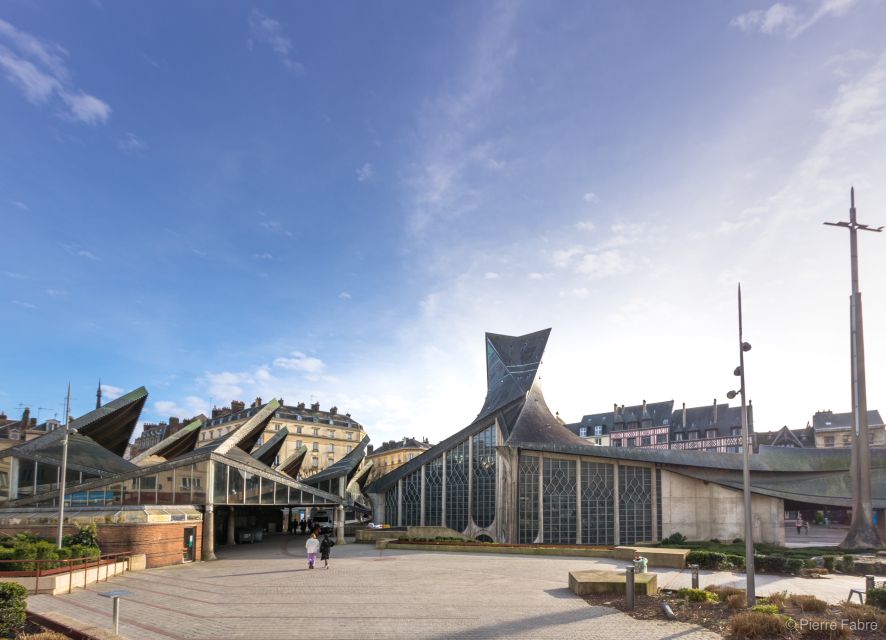
The first major stop is Place du Vieux Marché, a square tied to the final moments of Joan of Arc’s life. Her story is one of the strongest ways to begin a Rouen walk because it brings together religion, politics, war, and public memory in one place.
The square also gives you one of Rouen’s most interesting visual contrasts. Historic buildings and newer structures share the space, creating a mix of old and modern that is easy to miss when you are rushing toward the cathedral. Your guide helps separate what belongs to the city’s older fabric from what reflects later rebuilding and change.
I appreciate that this section is not presented as a single heroic tale. The tour uses Joan of Arc to show how Rouen functioned as a place of power and judgment. You get a human story first, then a wider sense of why this square matters.
There is no promise of a long stop inside a museum or a full treatment of every detail connected to Joan. The value comes from standing in the actual square while the story is explained. If you want an extensive Joan of Arc program, you would need to add another attraction on your own. For a first look at Rouen, this is an effective opening.
The Gros-Horloge and the Renaissance street arch
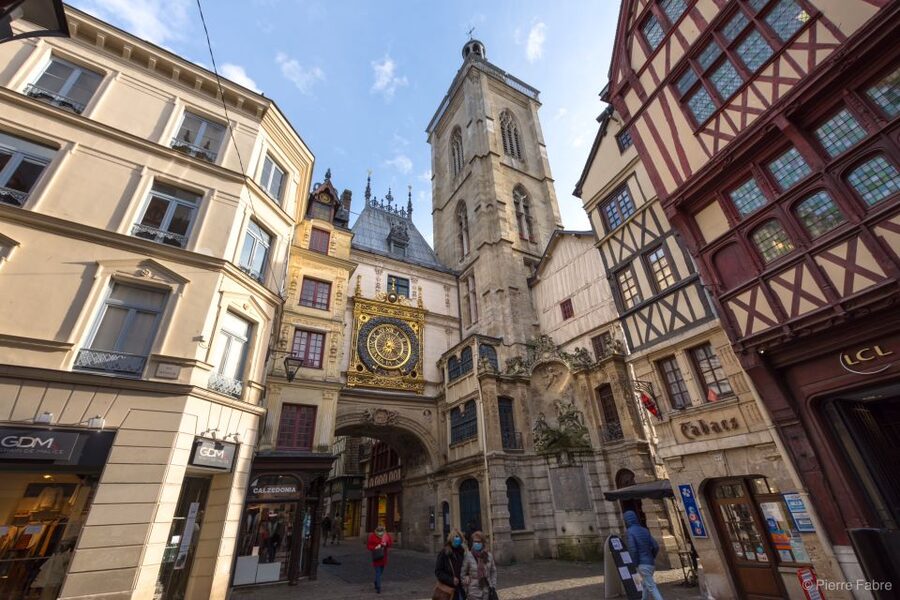
From Place du Vieux Marché, the route continues toward Le Gros-Horloge, Rouen’s famous astronomical clock. The clock dates from the 14th century and is installed within a Renaissance street arch, framed by the city’s half-timbered houses.
This is one of the tour’s best stops because the object is both useful and decorative. It was built to measure time, but its setting turns it into an architectural centerpiece. Looking up at the clock while taking in the surrounding timber-framed buildings gives you a fast lesson in how medieval and Renaissance Rouen met on the same street.
The guide explains the building and the clock rather than simply pointing at the face and moving on. That extra context is what makes a guided walk worthwhile here. On your own, you can photograph the arch in seconds. With Elodie or another guide, you get a clearer idea of why the clock became such a proud symbol of the city.
The street can be busy, and the route is on foot over old paving. Stay close enough to hear the guide, especially during explanations in the open street. This is not a private room with perfect acoustics. The tradeoff is that you are seeing the monument in its real urban setting, with Rouen carrying on around you.
The courthouse and Rouen’s civic power
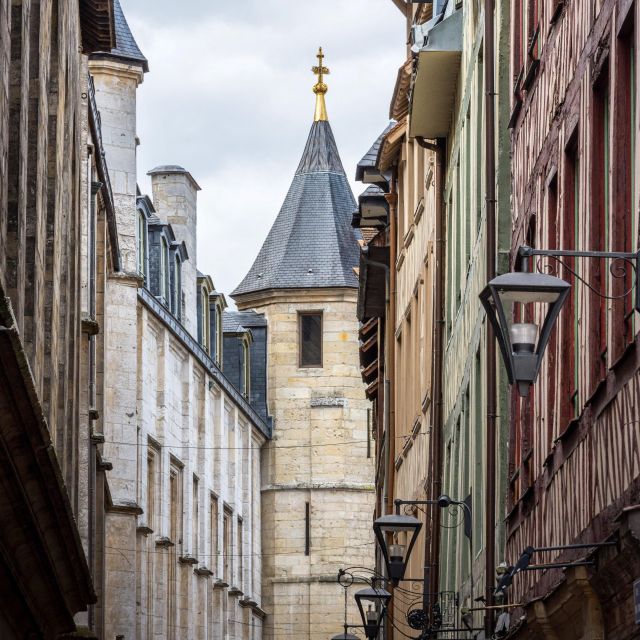
The next stop is the Courthouse of Rouen. It may not have the instant name recognition of the cathedral or Gros-Horloge, but it adds an important civic layer to the tour.
By this point, the walk has moved beyond Joan of Arc and church architecture. The courthouse helps show Rouen as a center of administration and law, not simply a pretty medieval town. Your guide explains what you are looking at from outside, giving the building a place in the city’s broader story.
This is also where the tour’s emphasis on architecture becomes useful. You are not only hearing about famous people. You are learning to read public buildings as evidence of how a city organized power.
The limitation is that the tour does not include entry to the courthouse or other monuments. If you want interiors, plan separate visits and allow extra time after the walk. The guided portion is designed to connect the exterior sights into one route.
A few more Normandy trips worth weighing up
- Normandy American D-Day Beaches Full Day Tour from Bayeux
★ 5.0 · 2,103 reviews - Normandy American D-Day Experience – Group tour from Bayeux
★ 5.0 · 1,566 reviews - Normandy Beaches Half-Day Afternoon Trip from Bayeux (A2)
★ 4.5 · 1,116 reviews - Omaha and Band Of Brothers Full Day Tour
★ 5.0 · 1,104 reviews
Rouen Cathedral and three different towers
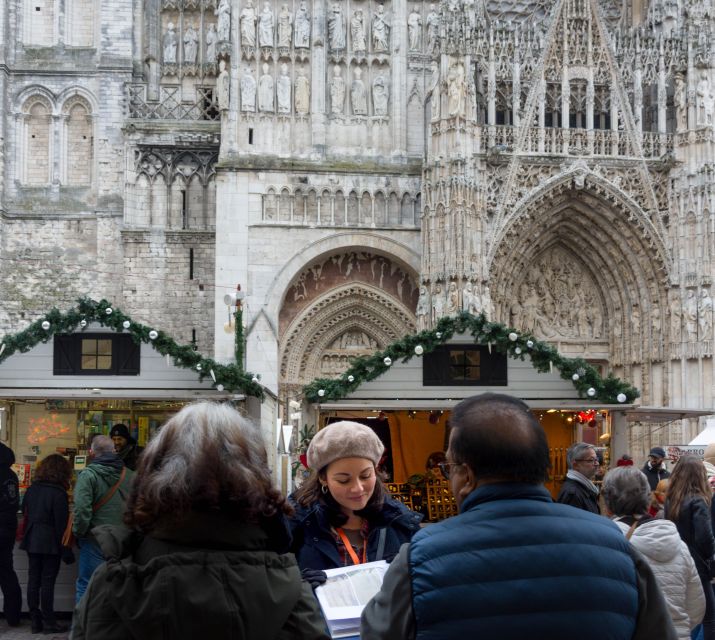
Rouen Cathedral is the visual high point of the walk. The guide stops outside this huge religious monument, whose construction took place in two phases. Its three towers are built in different architectural styles, giving the cathedral a layered appearance rather than a single, perfectly matched design.
The spire rises more than 150 meters, so you will want a moment to look straight up. It is the kind of sight that can make a short city walk feel much bigger. The cathedral also links two very different periods: the Middle Ages and 19th-century Impressionism.
That second connection gives the stop extra depth. Rouen Cathedral is not only an old church. It also became a subject for modern painters, including the kind of changing light and surface effects associated with Impressionism. The tour makes that time jump understandable without turning the walk into an art lecture.
I like the cathedral section because it explains why the building looks the way it does. Three towers in different styles could seem like a visual accident if you are walking alone. A guide gives you a way to see the changes as part of the building’s long development.
You should keep your expectations realistic. This is an exterior stop, not a cathedral visit. If you want to see the inside, arrange that separately. Still, the outside view is substantial, and the explanation helps you notice details that a quick photograph will not capture.
Saint-Maclou and the Flamboyant Gothic style
The route then leads toward Saint-Maclou Church, one of the strongest examples of Flamboyant Gothic architecture in France. Even if you are not an architecture specialist, the name gives you a useful clue: this style is known for elaborate, flame-like decorative forms.
Saint-Maclou works well on this tour because it is not treated as just another church. The guide points out the features that make the building different from the cathedral and helps you understand why Rouen is so rewarding for architecture fans. The city’s center contains several major monuments within walking distance, but they do not all belong to the same period or style.
This is one place where a guide’s pace matters. You need enough time to look, but not so much that a 90-minute walk becomes tiring. The feedback about the tour repeatedly points to a well-managed pace, including one longer-than-planned outing that was especially appreciated. That suggests some flexibility, though you should expect the standard duration to be about an hour and a half.
Cobbled streets and frequent stops make comfortable footwear essential. Bring water, a hat, and an umbrella. The walk goes ahead in wet weather, so rain is not a reason to assume the activity will be postponed.
Martainville and the daily life of medieval Rouen
The final part of the walk reaches the Martainville district. Here, the focus shifts from grand monuments to living conditions in the Middle Ages.
That change is valuable. Cathedrals and clocks tell you what a city built, but a neighborhood can suggest how people actually lived. In Martainville, the guide places ordinary daily life alongside the religious and civic buildings seen earlier.
This section helps balance the tour. Rouen can easily become a parade of famous names: Joan of Arc, the cathedral, the astronomical clock. Martainville brings the scale back down to streets, homes, and the practical realities of medieval life.
Along the way, you also hear the legend of the Abbey of Saint-Ouen and see the Saint-Ouen Abbey Church, where the tour ends. The finish gives the route a strong final landmark, even though the walk begins in a different part of the historic center.
The wording around the abbey is important. You hear a legend, not necessarily a complete institutional history. I enjoy that kind of story on a walking tour, but I would treat it as part of Rouen’s local tradition rather than a replacement for a specialist historical talk.
What the $28 price gets you
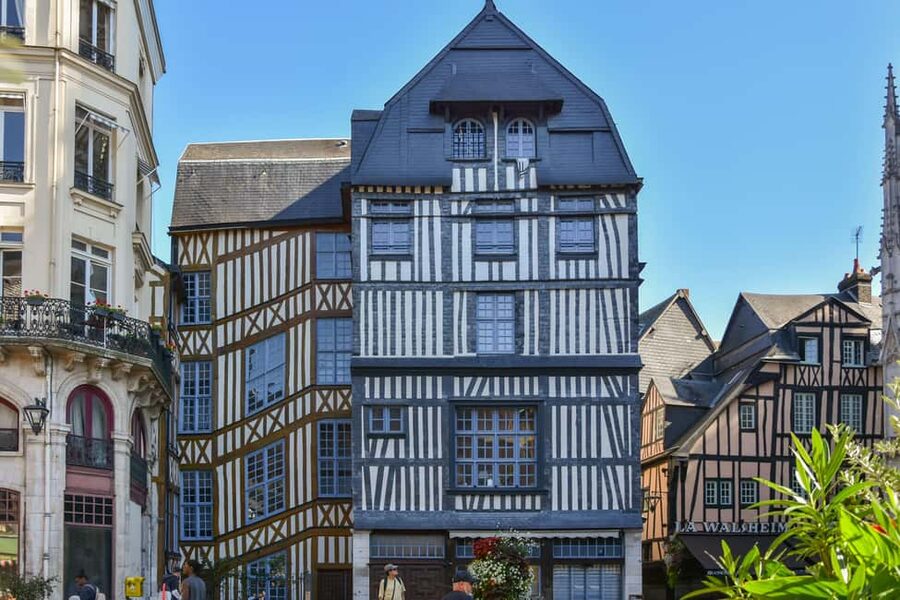
At $28 per person, this is a mid-priced short walking tour. You are paying for a live guide, a planned route, and the interpretation that ties the sights together. No attraction admissions are included, so the price should be judged against the quality of the explanation rather than the number of doors you enter.
I think the value is strongest for a first visit to Rouen. In 90 minutes, you cover the old center, the Joan of Arc story, Gros-Horloge, the courthouse, the cathedral, Saint-Maclou, and Martainville. Doing that alone is possible, but you would need to research the route and still might miss the connections between the stops.
The value is weaker if you already know Rouen well or dislike guided walks. You may prefer to spend the same time inside one monument, especially since entries are extra. Families should note that children under 14 go free and do not need a booking, which improves the price for a family group.
The activity has a 4.8 rating from 145 reviews, with especially strong praise for the guides’ enthusiasm, clear English, stories, and ability to hold a young person’s attention. One parent specifically found the walk engaging for a 12-year-old who usually gets bored with historic subjects. That is useful evidence for families, though every child responds differently to a walking tour.
Who should take this Rouen walk?
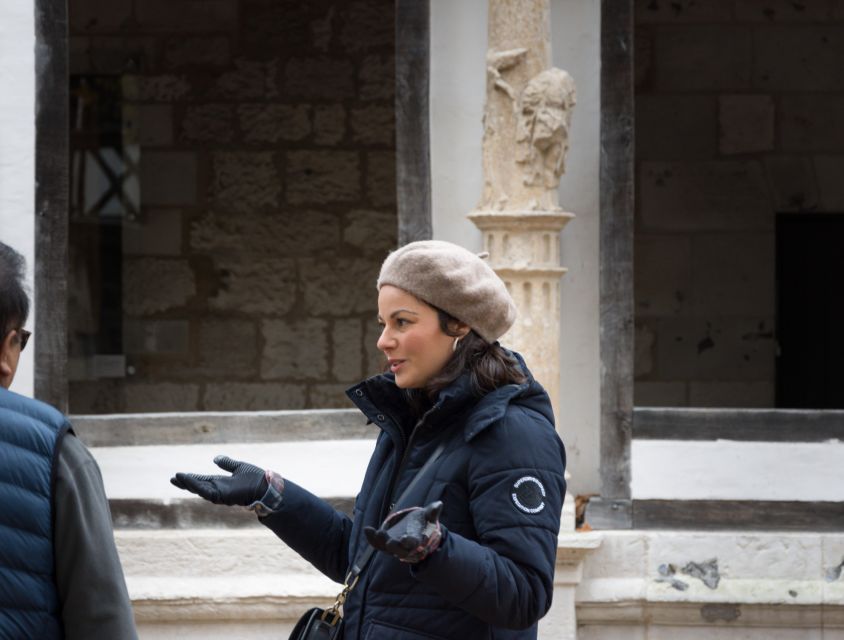
I would choose this tour if you have limited time in Normandy and want to get your bearings quickly. It gives you the city’s main historic center in a logical order, then leaves you free to return to the monuments that caught your attention.
It also suits you if architecture is interesting but not yet familiar. The cathedral’s towers, the Gros-Horloge, Saint-Maclou’s Flamboyant Gothic details, and the half-timbered streets become easier to read with a guide beside you.
Families can benefit from the short duration, free admission for children under 14, and story-based approach. The 3-kilometer distance is manageable for many people, but cobbles, rain, and repeated standing may be tiring for anyone who needs a slower or more accessible route. No accessibility details are provided, so ask the provider before booking if that is important for you.
This is not the tour for you if you want extensive interior visits, a private guide, or a deep specialist lecture on one period. It is a broad city introduction, delivered at walking speed.
Practical tips for a better walk
Meet a few minutes early at 4 Place de la Pucelle, in front of the Public restaurant. Find the guide by the green or orange badge, since the meeting point is in an active part of the center.
Wear comfortable shoes with good grip. The route covers about 3 kilometers and includes cobbled streets. Bring water, a hat, and an umbrella, because the tour runs rain or shine.
You can cancel up to 24 hours ahead for a full refund, and the reserve-now, pay-later option keeps you from paying at the time of booking. Check the available start times before you commit, since the tour lasts 90 minutes and the schedule can affect plans for cathedral visits or meals.
If English is your preferred language, confirm that you are joining an English departure. French and English are offered, and the English explanations have been praised for being clear and easy to follow.
Should you book the Rouen Historic Center tour?
Book it if you want a friendly, efficient introduction to Rouen with a local guide who can connect Joan of Arc, medieval life, civic power, Gothic architecture, and Impressionism. The combination of Elodie’s warm guiding style, the compact route, and the strong range of sights makes $28 a fair price for a first visit.
Skip it if you mainly want to enter monuments or linger at one site. Since admissions are not included, independent exploration may suit you better. For most first-time visitors, though, this walk is a smart way to understand Rouen before choosing where to spend the rest of your day.
FAQ
Where does the Rouen historic center tour begin?
The tour begins at 4 Place de la Pucelle, in front of the Public restaurant. The guide wears a green or orange badge around the neck.
Where does the tour finish?
The walk ends at Saint-Ouen Abbey Church.
How long is the guided tour?
The tour lasts 90 minutes and covers about 3 kilometers, or 1.8 miles.
Which languages are available?
The live tour is available in French and English.
Are monument entrance fees included?
No. The experience includes the guide and walking tour, but entry to monuments is not included.
Can children join the tour for free?
Yes. Children under 14 years old are free, and no booking is required for them.
What should I bring?
Bring comfortable shoes, a hat, an umbrella, and water. The tour takes place rain or shine.
Recently added around Normandy
- From Bayeux: Half-Day Normandy WWII Sidecar Tour★ 5.0 · 49 reviews
- Private Tour of American Sites with an Expert Guide from DDAY★ 5.0 · 51 reviews
- WW2 Jeep or Dodge truck tour of the Omaha Beach site★ 5.0 · 51 reviews
- Mont Saint Michel Full Day Tour from Bayeux★ 5.0 · 52 reviews
- Private Day Tour including Normandy Landing Beaches & Battlefields from Caen★ 5.0 · 53 reviews
- Bayeux: Band Of Brothers Full-Day Tour★ 4.9 · 53 reviews
- Rouen: Private custom tour with a local guide★ 4.3 · 55 reviews
- From Bayeux: D-Day American Beaches and US Airborne Day Tour★ 4.8 · 56 reviews
Historical Tours, compared.
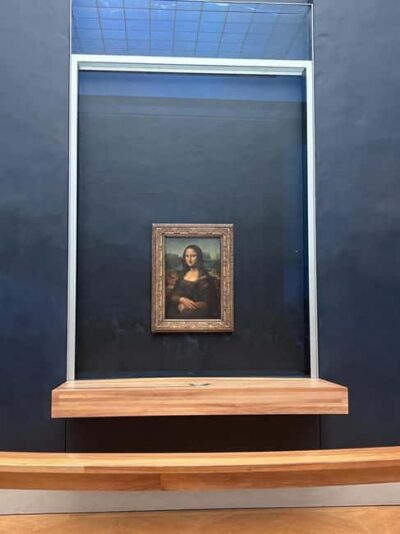
Paris: Louvre Museum Entry with History of Mona Lisa
Read our review →
Paris: Dark History and Ghostly Guided Walking Tour
Read our review →
Vieux Lyon Cultural & Historical Walking Guided Tour (English)
Read our review →
Bordeaux: Historic Center & Chartrons District Bike Tour
Read our review →
From Strasbourg: Best Of Alsace Historical Day Trip
Read our review →
Toulouse Food & History Tour with a Chef (in English)
Read our review →
Small-Group Full-Day Tour of Côte de Nuits, Côte de Beaune Vineyards and Beaune Historical District
Read our review →
Browse the lists this tour appears in