
Reviewed · WINE TOURS IN BORDEAUX
Tasting of 6 Bordeaux wines and pairing charcuterie & cheese
Bordeaux makes more sense after one good tasting. This intimate session turns a complicated wine region into something you can actually use, with six Bordeaux wines, food pairings, and clear guidance from Mathilde or Cécilia. I like the small group limit of six, and I like that the wines include both family estates using organic farming and Grands Crus Classés. The main drawback is that the charcuterie and cheese portions can be quite modest.
I also like the range: dry whites, reds from both banks, a mystery wine, and a sweet wine give you a proper look at Bordeaux beyond big red bottles. Cécilia and Mathilde explain grapes, soils, blends, classifications, aromas, and French labels in excellent English. Still, 75 minutes goes quickly, especially if the group needs explanations in both French and English or you arrive with a tight train or cruise schedule.
In This Review
- Key points at a glance
- A compact introduction to Bordeaux wine
- What happens during the 75-minute tasting
- Mathilde, Cécilia, and the teaching style
- Left Bank, Right Bank, and why the comparison helps
- The food pairing: useful, but not a meal
- The setting changes with the season
- Is $54.44 good value?
- Timing matters more than it first appears
- Who will enjoy this most?
- Practical details before you reserve
- Should you book this Bordeaux tasting?
- FAQ
- Where does the Bordeaux wine tasting start and end?
- How long does the experience last?
- How many wines are included?
- What types of Bordeaux wine will I taste?
- Is food included?
- Is the experience offered in English?
- How many people can join the tasting?
- Can I cancel for a full refund?
Key points at a glance
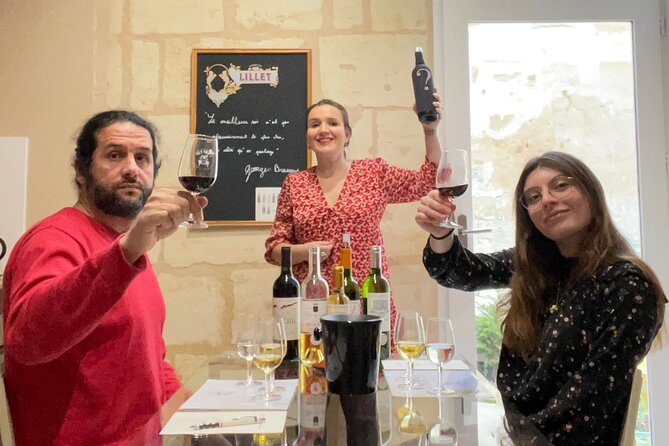
- Six glasses with a wide Bordeaux lineup: Expect dry whites, reds from the left and right banks, a mystery pour, and a sweet wine. The published breakdown appears to describe seven categories, so confirm the exact number on your date.
- A tiny group makes questions easy: The maximum is six people, giving Mathilde or Cécilia room to adjust the lesson to your level.
- Left Bank versus Right Bank becomes practical: You taste the difference rather than simply hearing a geography lecture.
- Food is part of the lesson, not a full meal: Cheese and charcuterie show how pairings work, but portions are generally bite-sized.
- A useful Bordeaux primer: You cover appellations, terroir, grape varieties, blending, classifications, aromas, and label reading.
- Good for a short Bordeaux visit: The tasting takes about 1 hour 15 minutes and returns you to 25 Av. Thiers.
A compact introduction to Bordeaux wine
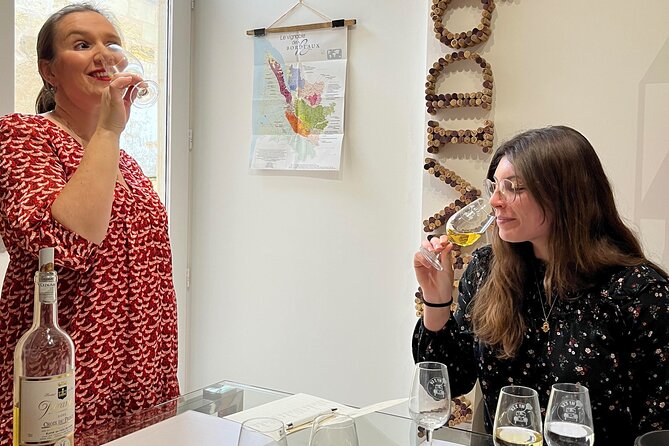
Bordeaux wine can feel like a code designed to keep beginners out. Bottles often emphasize the estate or appellation rather than the grape variety, and the famous left-bank and right-bank split affects both the blend and the style in your glass.
This tasting gives you the basic tools to read that code. Rather than simply lining up bottles, the session explains Bordeaux’s growing areas, soils, grape varieties, blending traditions, and classifications. That matters because Bordeaux is not one single wine style. A dry white, a structured red, and a sweet wine from the region can seem to come from entirely different worlds.
I especially like the focus on comparison. You taste dry whites from the left and right banks, then move through red blends connected to those same broad areas. You are not expected to memorize every appellation. Instead, you begin to notice why one wine may feel fruitier, firmer, softer, or more aromatic than another.
The mystery wine adds a playful touch. It gives you a chance to use your nose and palate before the explanation arrives. This is a better way to learn than being handed the answer first.
More Food Tours in Bordeaux
- Bordeaux: Cité du Vin Entry Ticket and Wine Tasting
★ 4.6 · 3,885 reviews - From Bordeaux: Afternoon Saint-Emilion Wine Tasting & snack
★ 4.8 · 1,581 reviews - Medoc or Saint Emilion Wine Tasting and Chateau from Bordeaux
★ 5.0 · 1,415 reviews
What happens during the 75-minute tasting
The session is short, focused, and fairly active. You are guided through the tasting rather than left with a row of glasses and a vague instruction to enjoy yourself.
The opening usually sets the stage with Bordeaux’s main ideas: appellations, terroir, grape varieties, and blends. You also learn how French labels work. That label lesson is especially useful if you plan to buy wine during your stay, since French bottles often require you to know the region or estate to understand what is inside.
The tasting then moves through a selection of six wines. The stated lineup includes one mystery wine, two dry whites representing the left and right banks, three reds that explore blends and both banks, and one sweet wine. That wording seems to count seven separate categories, while the tour description says six glasses, so I would ask for clarification if the exact wine count matters to you.
The wines come from both highly regarded classified estates and smaller family producers. Some are from organic farms. This gives the lesson a useful range: you are not tasting only prestigious labels that may be difficult to find or too expensive to buy later.
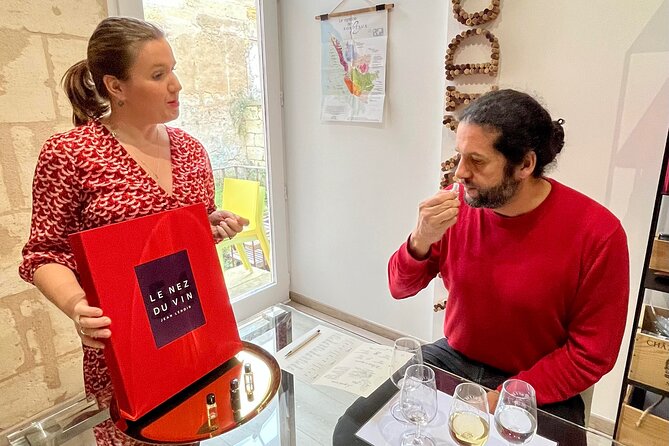
At each stage, your guide helps you look for aromas and flavors. The point is not to produce fancy tasting notes. It is to help you notice what is actually in front of you. Several guides use scent exercises, allowing you to compare familiar aromas with what you detect in the wine.
That approach works well for beginners. You may arrive thinking that only trained sommeliers can smell anything beyond wine. By the end, you have a simple method: look at the color, smell carefully, taste, and think about how the wine changes with food.
Mathilde, Cécilia, and the teaching style
The hosts are a major reason this experience earns such strong marks. Mathilde and Cécilia are trained wine professionals connected with the University of Wine, and their teaching style is described as warm, clear, and lightly humorous.
Cécilia is particularly good at explaining the left-bank and right-bank divide in plain language. Her guidance helps you connect soils, grape blends, and the styles you prefer. If you already know you like bold reds or fruit-forward wines, this comparison can help explain why.
Mathilde brings the same mix of technical knowledge and easy conversation. She has been praised for explaining regions, blending, aromas, and French labels without making the lesson feel like school. One especially useful feature is the way she adjusts the discussion to the group’s experience level.
You might also meet another host, including Ilona or Ilo, depending on the date. The teaching remains personal because the group is so small. A group of four or six can ask questions without holding up a large busload of people.
The English is clear, and the activity is offered in English. There is also a note that no Spanish classes are available from August 14 through August 24. That wording is unusual for a wine tasting, but if you need Spanish instruction during those dates, confirm the language arrangements before booking.
Left Bank, Right Bank, and why the comparison helps
The most useful part of the lesson is the side-by-side comparison of Bordeaux’s two main wine areas. You do not need to become an expert in regional geography to benefit from it.
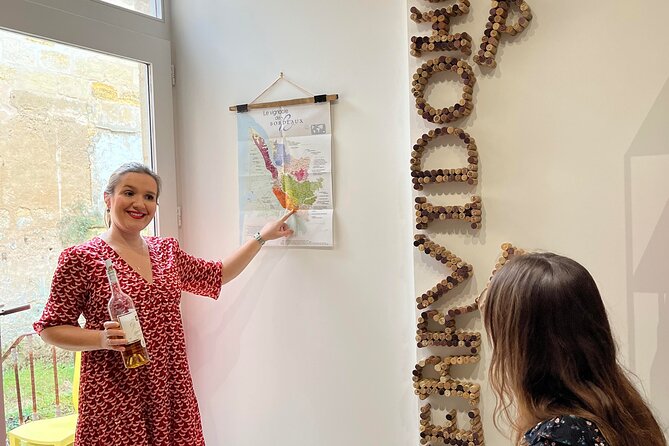
The left bank and right bank refer to areas on opposite sides of the Gironde estuary and its rivers. In Bordeaux, that distinction often points toward different grape blends, soils, and drinking styles. Your guide explains how those factors affect the wine, then gives you the chance to taste the difference.
This is where the session becomes practical. Instead of hearing that one bank favors a certain grape or style, you can ask yourself which glass you prefer. Are you drawn to a firmer, more structured red? Do you prefer a softer, fruitier one? Does a crisp dry white appeal to you more than a fuller style?
The experience does not ask you to pick a winner. Bordeaux is too varied for that. It gives you a vocabulary for making your own choice, which is much more helpful when you are standing in a wine shop later.
The blend discussion is also important. Bordeaux wines are often made from several grape varieties rather than one dominant grape named on the front label. Understanding that idea makes French wine lists less intimidating. You begin to see that a bottle’s character comes from the combination of grapes, the growing area, the vintage, and the winemaking choices.
More Wine Tours in Bordeaux
- Bordeaux: River Garonne Cruise with Glass of Wine and Canelé
★ 4.5 · 3,630 reviews - Saint Emilion Day Trip with Sightseeing Tour & Wine Tastings from Bordeaux
★ 5.0 · 1,120 reviews - Saint-Émilion: Grand Cru Classé Winery Visit and Tasting
★ 4.6 · 1,118 reviews - Saint Emilion Half-Day Trip with Wine Tasting & Winery Visit from Bordeaux
★ 4.5 · 1,034 reviews
The food pairing: useful, but not a meal
Cheese and charcuterie are included, and they serve a clear purpose. Food changes wine. A salty meat, creamy cheese, or firm cheese can make a wine taste softer, sharper, fruitier, or more balanced.
The pairing is presented as part of the lesson rather than as a full snack spread. Expect small bites of local-style meat and cheese, not lunch. Several descriptions of the experience praise the quality of the board, but some also find the amount limited. One common expectation to avoid is a separate pairing with every single glass. The food may arrive as a small selection rather than as six carefully matched courses.
That is not necessarily a flaw. The tasting costs $54.44 per person, and the main value is the wine education and the range of pours. Still, if you are booking because you want a substantial charcuterie lunch, this is the wrong choice.
Vegetarians should be especially careful. A vegetarian request was not properly honored on one occasion, with meat served despite the registration. State dietary needs clearly when booking and confirm them directly. The listed option of a picnic with local products is separate, requires reservation, and is not included in the tasting price.
The setting changes with the season
The setting is part of the charm, but it is not fixed. Depending on the season, the tasting takes place in a private courtyard, a cellar, or a furnished room.
The courtyard sounds especially appealing for a relaxed visit. It gives the session a pleasant, personal feel without the formal atmosphere of a large wine school. The cellar or indoor room may be more practical in poor weather or cooler months.
Because the exact room can change, I would not book this expecting a grand château tour. You are getting an intimate tasting space in Bordeaux, not a full estate visit among vineyards. That tradeoff is the point. If your time is limited, you receive a concentrated introduction without spending half a day traveling from winery to winery.
The wines tasted are available for sale. This is handy if you find a bottle you like, especially after learning how to read its label. One solo visitor used the advice to choose an affordable bottle for about €15, showing the practical side of the experience. You do not need to buy anything, but the option is there.
Is $54.44 good value?
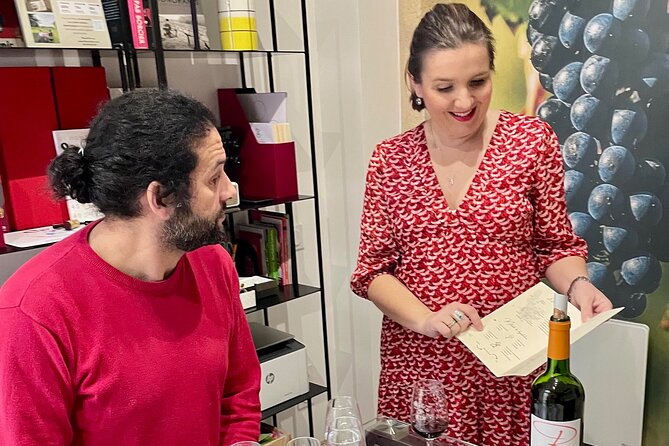
At $54.44, this is not the cheapest way to drink wine in Bordeaux. A casual bar may offer a less expensive glass, and a market can provide cheese and meat for a simple picnic.
The comparison is not quite fair, though. Here you receive roughly 75 minutes of instruction, six glasses of wine, a tasting booklet, food pairing, and access to a professional guide. The group size is capped at six, which is a meaningful benefit. You are paying for explanation and comparison, not only for alcohol.
I consider the price fair for a first Bordeaux tasting, particularly if you do not have time for a vineyard outing. It becomes better value if you use the booklet afterward, apply the label advice when buying wine, and pay attention to which styles you prefer.
The value is weaker if you already have strong wine training or mainly want a large meal. It is also less suitable if you expect generous food portions or a long, leisurely evening. One session ended early because the group had mixed French and English speakers, and another visitor felt the tasting needed an extra 30 minutes.
Timing matters more than it first appears
The experience begins at 25 Av. Thiers in Bordeaux and ends at the same meeting point. It is close to public transportation, which helps if you are staying in the city.
The standard session lasts about 1 hour 15 minutes, but you should allow extra time around it. A 75-minute tasting can be comfortable for a city visitor with an open afternoon. It can be stressful if you are coming from a cruise port or relying on a long train connection.
One visitor arrived early because the return train was soon after the scheduled start. Cécilia kindly began ahead of time, but the presentation had to be shortened to about 40 minutes. The lesson was still useful, but the rushed format reduced the pleasure of the experience.
Ask about the 11:30 a.m. session if that timing suits your plans better. I would not book this as a tight shore excursion unless you have checked every train and transfer. The tasting itself returns to the starting point, but transportation to Bordeaux and back is your responsibility.
Bookings are often made about 22 days in advance, and the rating is 4.9 from 199 ratings, with 99 percent recommending it. That suggests you should reserve ahead during busy periods, especially if you want a particular time.
Who will enjoy this most?
I would choose this for a first visit to Bordeaux, a couple wanting a calm indoor activity, solo visitors who want help choosing a bottle, and anyone who finds French wine labels confusing.
It also suits people who like learning through comparison. You taste whites and reds, consider both banks, try a sweet wine, and test your nose with the mystery pour. That range gives you more useful information than a tasting focused only on famous red Bordeaux.
It works well for mixed-experience groups too. Beginners can ask basic questions, while more experienced drinkers can discuss blends, soils, and classifications in greater detail. The hosts have been praised for keeping the atmosphere friendly rather than stiff.
I would hesitate if you need a full lunch, a vineyard walk, or a large selection of food. I would also think twice if your schedule depends on a last train or ship departure. Finally, if you want only red or only white, ask about the specialized tastings. The standard session is best when you want the full range.
Practical details before you reserve
You receive confirmation when booking, and the ticket is mobile, so there is no need to print anything. Service animals are allowed, public transportation is nearby, and most people can participate.
The activity has free cancellation if you cancel at least 24 hours before the local start time. Cancellations or changes inside that window are not refunded or accepted.
Bring an open mind rather than a fixed idea about Bordeaux. You may discover that the wine you expected to like is not your favorite, or that a less famous family estate suits your taste better than a classified name.
Should you book this Bordeaux tasting?
Yes, if you want a well-guided introduction to Bordeaux without spending a full day visiting wineries. The small group and strong teaching make the $54.44 price reasonable, and the left-bank versus right-bank comparison gives you something useful to remember.
Book it with enough time around the appointment, and keep your food expectations modest. If you want a substantial picnic, reserve that separately. If you want only one color of wine, ask about the specialized session. For most first-time Bordeaux visitors, this is a friendly, focused way to turn a complicated wine region into a set of choices you can understand.
FAQ
Where does the Bordeaux wine tasting start and end?
It starts at 25 Av. Thiers, 33100 Bordeaux, France, and ends back at the same meeting point.
How long does the experience last?
The tasting lasts approximately 1 hour 15 minutes.
How many wines are included?
The experience includes six glasses of wine. The description lists a mystery wine, two dry whites, three reds, and one sweet wine, which appears to count seven categories, so confirm the exact lineup when booking.
What types of Bordeaux wine will I taste?
The tasting includes dry whites from the left and right banks, red wines connected with blends and both banks, a mystery wine, and a sweet wine. The exact wines may vary.
Is food included?
Yes. Cheese and charcuterie are included as a food and wine pairing. The portions are intended as small tasting bites, not a full meal.
Is the experience offered in English?
Yes. The experience is offered in English. The information also notes that no Spanish classes are available from August 14 through August 24.
How many people can join the tasting?
The maximum group size is six people.
Can I cancel for a full refund?
Yes, if you cancel at least 24 hours before the experience start time. Cancellations or changes made less than 24 hours before the start are not refunded or accepted.
More Cheese Tastings in Bordeaux
- Professional – Bordeaux Wine and Cheese Tasting with a walking tour
★ 5.0 · 218 reviews - Bordeaux: Wine Masterclass with Cheese and Charcuterie Board
★ 4.9 · 184 reviews - Paris: Montmartre Cheese, Wine & Pastry Guided Walking Tour
★ 4.8 · 2,255 reviews - Private Montmartre Food Tour with Wine, Cheese & Pastries
★ 5.0 · 1,027 reviews
Recently added around Bordeaux
- The essential in Bordeaux, private tour with a local★ 4.9 · 48 reviews
- Sarlat Gourmet Tour and Market Visit★ 5.0 · 49 reviews
- Full Day Tour Saint Emilion with lunch two Chateaux and Village★ 5.0 · 49 reviews
- Bordeaux: Exclusive Private Guided Walking Tour★ 4.6 · 50 reviews
- Bordeaux:Wine Masterclass & Blending workshop with appetizer★ 4.8 · 54 reviews
- Full-day Saint-Emilion: Village, Undergrounds and Châteaux★ 4.5 · 55 reviews
- From Bordeaux: Essential Morning Tour with Wine Tasting★ 4.8 · 55 reviews
- Bordeaux Old Town & Market Local Food with Wine Tastings Tour★ 4.0 · 56 reviews
Wine Tours in Bordeaux, compared.
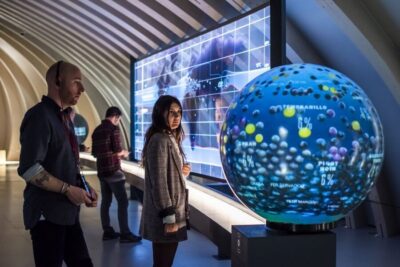
Bordeaux: Cité du Vin Entry Ticket and Wine Tasting
Read our review →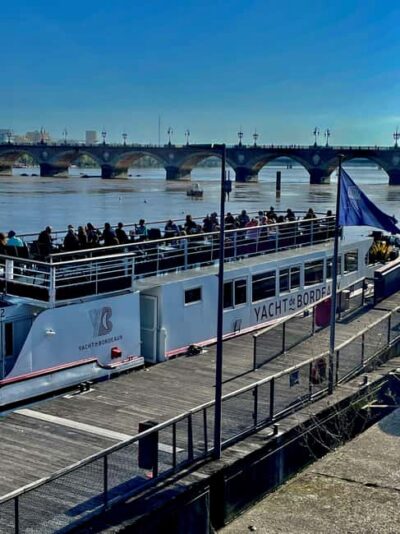
Bordeaux: River Garonne Cruise with Glass of Wine and Canelé
Read our review →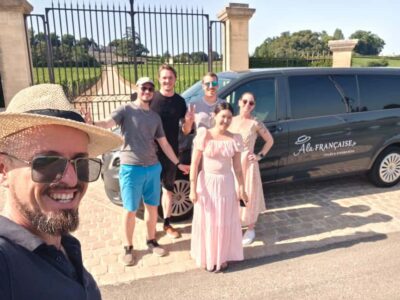
From Bordeaux: Afternoon Saint-Emilion Wine Tasting & snack
Read our review →
Medoc or Saint Emilion Wine Tasting and Chateau from Bordeaux
Read our review →
Saint Emilion Day Trip with Sightseeing Tour & Wine Tastings from Bordeaux
Read our review →
Saint-Émilion: Grand Cru Classé Winery Visit and Tasting
Read our review →
Saint Emilion Half-Day Trip with Wine Tasting & Winery Visit from Bordeaux
Read our review →
From Bordeaux: St. Emilion Village Half-Day Wine Tour
Read our review →Browse the lists this tour appears in