
Reviewed · FOOD & DRINK
Visit of Cave Immersive – tasting – Kougelhopf to Strasbourg
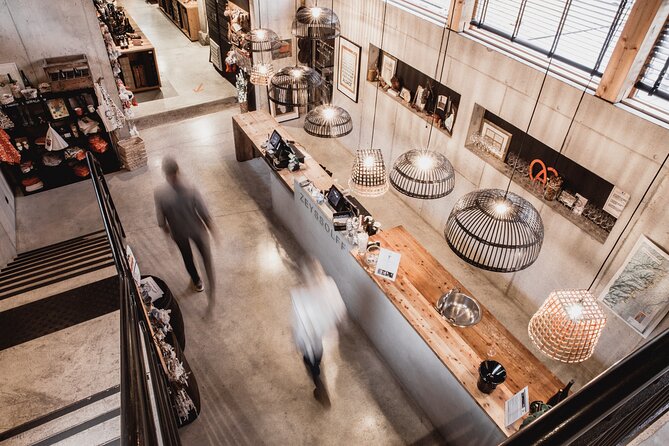
Old barrels make a memorable classroom. At Maison ZEYSSOLFF in Gertwiller, you get a behind-the-scenes look at wine-making, a guided tasting of Alsatian wines, and a 180-degree film projected across century-old oak casks. I especially like the unusual cellar presentation and the chance to pair wine with a slice of traditional kougelhopf, an Alsatian brioche. The guides, including Camille, Marie, Victor, Arthur, and Catherine in different sessions, are praised for making the visit friendly and easy to follow.
The main catch is location. This is not in central Strasbourg. It is in Gertwiller, about 17 kilometers away, with a train journey of roughly 30 to 40 minutes depending on your departure and a short walk from the local station. That extra planning is worth noting, especially on Sunday, when nearby towns may have very little open.
In This Review
- Key points before you book
- Why this small winery visit is worth the trip from Strasbourg
- Finding Maison ZEYSSOLFF in Gertwiller
- The vineyard-to-bottle explanation
- The old oak foudres and the 1897 cask
- The 180-degree film projected onto barrels
- Tasting Alsatian wine with kougelhopf
- The guides make the format work
- How long the visit takes and who will enjoy it
- Is $18.38 a good price?
- Cancellation and practical planning
- Should you book Maison ZEYSSOLFF?
- FAQ
- Where is Maison ZEYSSOLFF located?
- Is the winery in central Strasbourg?
- How can I reach the winery by public transportation?
- How long does the tour last?
- What does the tasting include?
- Is the tour offered in English?
- What is unusual about the cellar?
- How many people can join the tour?
- Can I cancel for a refund?
Key points before you book
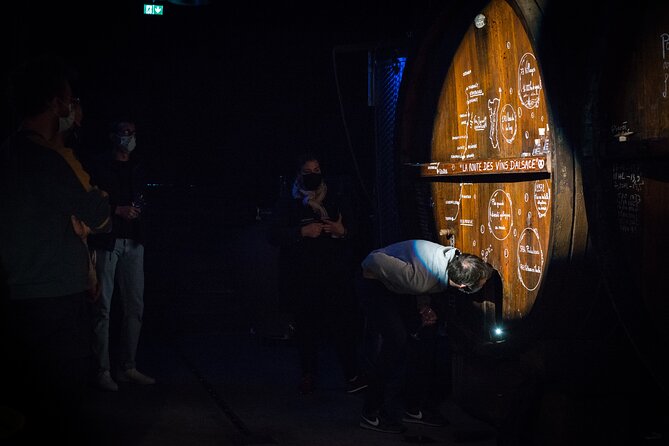
- A working cellar with century-old foudres: Maison ZEYSSOLFF still vinifies some wine in oak vessels holding more than 10,000 liters.
- The 1897 ZEYSSOLFF cask: This remarkable barrel was made for the 1900 Paris Universal Exhibition.
- A 180-degree cellar film: The movie is projected onto old wine barrels and explains the estate’s history and working philosophy.
- Wine and kougelhopf together: The tasting includes Alsatian wines and a portion of traditional brioche.
- Easy public transport access: Gertwiller station is about an eight-minute walk from the winery, according to practical visitor reports.
- Good value at $18.38: For about 90 minutes of cellar access, storytelling, film, and tasting, the price is modest.
Why this small winery visit is worth the trip from Strasbourg
Alsace is often experienced through postcard villages, half-timbered houses, and vineyard roads. Those are good reasons to come, but wine makes more sense when you see where it is made. This visit gives you that useful connection between the bottle in your hand and the cellar behind it.
I like that the experience is not limited to pouring several samples at a counter. The tour moves through the estate’s working spaces, explains how wine goes from vineyard to bottle, and uses film to give the family and winery a larger story. You get a sense of production, history, and local food in one compact visit.
The price also works in its favor. At $18.38 per person, this is considerably less than many guided food and wine outings. You are not paying for a full meal or a whole-day excursion, but you are getting a focused 90-minute activity with wine samples, a piece of kougelhopf, and access to a winery that still uses old oak foudres.
That compact format matters. If you are building a busy Alsace itinerary, you can fit the visit into a morning or afternoon without giving up an entire day. Several departure times are offered, so you have some room to match it with your train plans.
More Food Tours in Strasbourg
- Strasbourg Food Tour – A Taste of Tradition by Do Eat Better
★ 5.0 · 614 reviews - From Strasbourg: Medieval Villages & Wine Tasting Day Trip
★ 4.8 · 329 reviews - Alsace Wine Route Small Group Half-Day Tour with Tasting from Strasbourg
★ 4.5 · 291 reviews
Finding Maison ZEYSSOLFF in Gertwiller
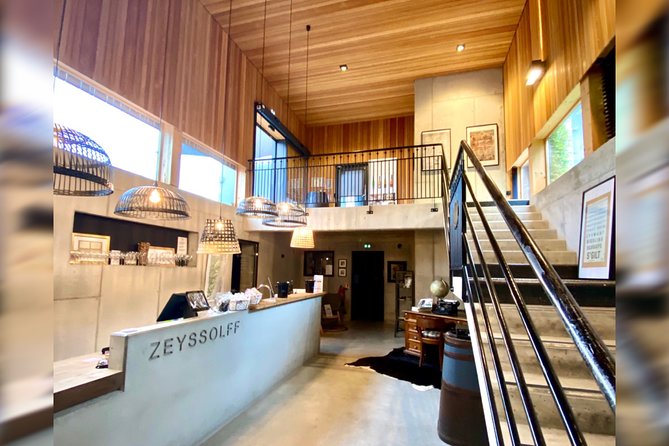
The meeting point is Au Péché Vigneron, at 156 Route de Strasbourg in Gertwiller. Be careful when planning: a tour advertised for Strasbourg can sound like a city-center activity, but the winery is outside the city.
The simplest public transport plan is the train from Strasbourg to Gertwiller. The ride is described as roughly 30 to 40 minutes, and the station is about an eight-minute walk from the winery. One person reached the area by train to Barr and then walked about 20 minutes to Gertwiller, though the Gertwiller station itself is the more direct choice when the schedule works.
A taxi or Uber is another option. The winery states that a taxi ride can cost up to about €50 for four people, rather than €50 per person. For a small group, splitting that fare may make the door-to-door convenience reasonable. Still, check the current fare and allow time for the return trip.
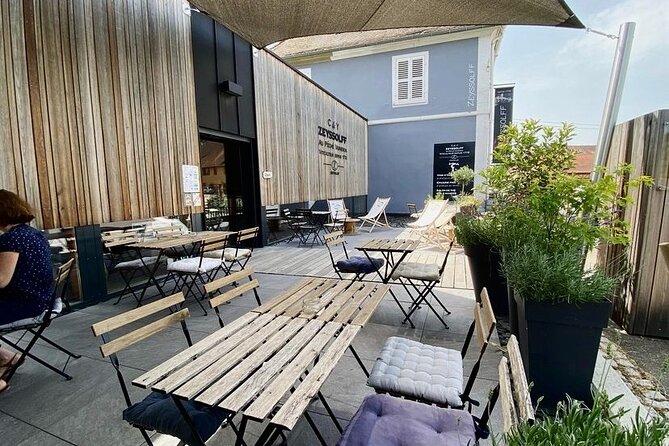
Sunday requires extra care. Gertwiller and nearby Barr can be quiet, with many businesses closed. One useful plan is to have lunch or explore elsewhere before the tour rather than assuming you can fill time in town afterward. If you arrive early, the winery may allow you to buy a glass of wine and sit on the terrace, but you should not count on every surrounding business being open.
The vineyard-to-bottle explanation
The tour is designed to show the full path from cellar to bottle. That broad approach is one reason the experience works for both beginners and people who already know a bit about wine.
If you are new to Alsatian wine, the guide helps put the region’s bottles into context. You learn about local wine-making and the steps involved in production rather than simply hearing tasting notes. The explanations have been described as clear, entertaining, and well organized.
If you already know wine, some parts may feel basic. One part of the film presentation focuses on general wine-making practices, and a few people with more experience wanted less introductory material and more detail about the winery’s technical work. That is a fair limitation. This is a welcoming public tour, not a specialist seminar for vineyard professionals.
The best feature is the connection between the explanation and the physical setting. You are not only hearing about fermentation, storage, and bottling. You are seeing the cellar and the equipment around you. That makes the information easier to remember, particularly if you have never visited a working winery.
The old oak foudres and the 1897 cask
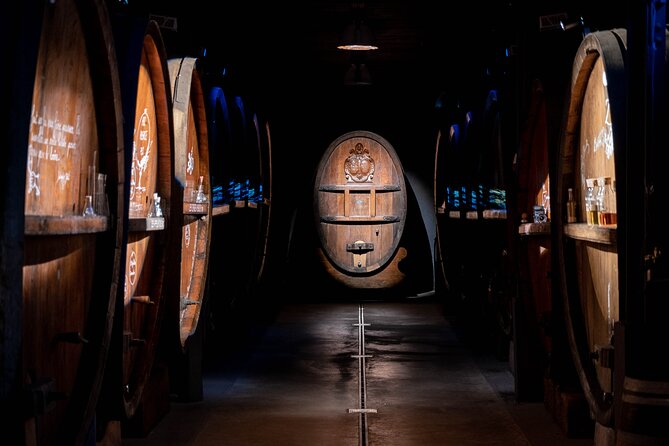
Maison ZEYSSOLFF is one of the few wineries in Alsace still using century-old oak foudres of more than 10,000 liters. These huge vessels are not small tasting-room barrels. They are serious working containers, and their size gives the cellar a sense of scale that a row of modern stainless steel tanks would not provide.
The historic centerpiece is the ZEYSSOLFF cask, made in 1897 for the 1900 Paris Universal Exhibition. That date gives you a tangible link to the estate’s past. Rather than treating history as a list of names and years, the tour puts it in front of you in the form of a large, surviving object.
The old wood is also important to the visual side of the visit. The barrels are not just storage equipment. They become part of the presentation space for the film, so the cellar’s working heritage and the newer visitor experience are tied together.
I would not expect every minute to focus on barrel construction or cellar technology. The tour spends a good amount of time on the estate’s story and philosophy. For many people, that makes the visit more personal. For serious wine students, it may leave you wanting more detail about grape varieties, fermentation choices, and aging methods.
A completely different sort of day in Strasbourg:
- Strasbourg: Euro Guided Tour by Segway
★ 4.7 · 808 reviews - Colmar, Medieval Village & Castle Small Group from Strasbourg
★ 5.0 · 769 reviews - 2-Hour Strasbourg Euro Tour by Segway
★ 5.0 · 642 reviews - From Strasbourg: Best Of Alsace Historical Day Trip
★ 4.7 · 633 reviews
The 180-degree film projected onto barrels
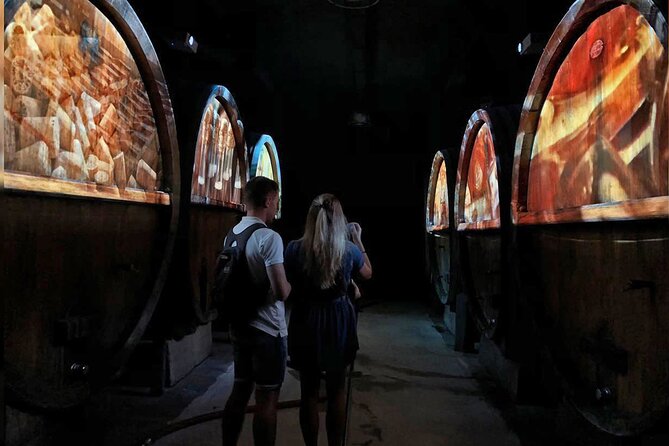
The most unusual part of the tour takes place in the cellar’s scenographic area. A 180-degree film is projected onto the old oak barrels, with sound and mapping effects used during some sequences.
This is not presented as a standard documentary about vineyard labor. It tells the story of Maison ZEYSSOLFF and explains the estate’s way of working. The curved projection across the barrels gives the presentation a theatrical quality without taking you out of the winery itself.
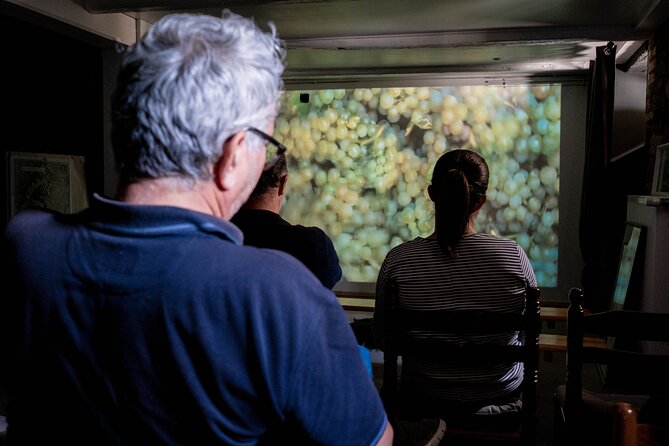
One film section explains basic wine-making practices. It may be too simple if you have taken many winery tours, but it still helps first-time visitors follow the process. The second presentation focuses more on the estate’s past and working philosophy, and it tends to leave a stronger impression.
I like this feature because it gives the tour a clear change of pace. You begin with the physical cellar, then move into a visual story that uses the barrels as its screen. It is a clever use of the space and something you are unlikely to find in an ordinary tasting room.
The film should not be the only reason you book. The wines and the cellar visit carry the experience. Think of the projection as a well-made bonus that helps explain why this particular house is worth visiting.
Tasting Alsatian wine with kougelhopf
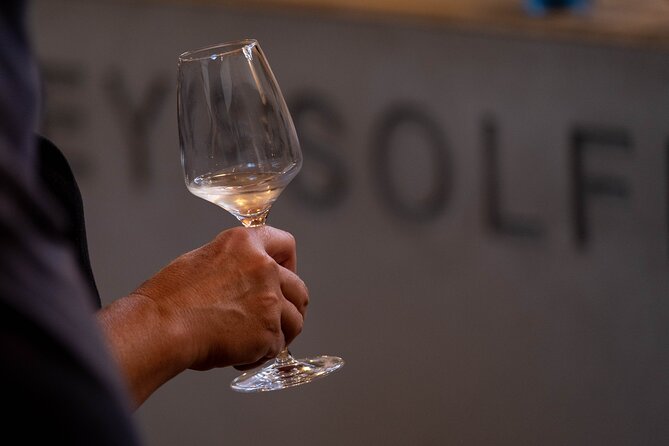
After the cellar portion, you taste a selection of the estate’s wines with guidance from your host. The pours have been described as generous, and the wines receive some of the strongest praise in the experience.
The tasting is useful even if you are not confident with wine. You can ask questions, compare samples, and connect what you have just seen with what is in the glass. Some visitors wanted more detail about texture and the character of each wine, so you should speak up if you want a closer explanation of acidity, body, sweetness, or aroma.
Alsatian wines are often the point of the trip for wine lovers, but the food pairing adds a local touch. You receive part of a kougelhopf, the ring-shaped Alsatian brioche traditionally associated with the region. It is a simple pairing, but a fitting one. You are tasting a local wine beside a local baked specialty, not an interchangeable plate of snacks.
The exact food setup can vary by booking or availability. One session included a platter shared between two people and a glass after the tasting, while another person missed out on the food pairing because it had sold out. The safest approach is to treat the included kougelhopf as the stated offering and not assume that a larger meal is part of every departure.
The winery shop gives you a chance to buy bottles and gifts afterward. Several people purchased wine to enjoy later in their trip, and one person bought gifts for family. If you are traveling by train, remember that your bottles will become part of your luggage for the rest of the day.
The guides make the format work
The human side of the tour earns repeated praise. Guides named Camille, Marie, Victor, Arthur, and Catherine have each led highly rated sessions. The descriptions of their style are consistent: friendly, patient, clear, and able to make the subject approachable.
Catherine, in particular, was praised for patiently allowing a French-language practice session when only one person attended the French tour. That suggests the staff can be flexible when a group is small. Another person received a private tour because no one else had booked, without being charged extra or having the visit canceled.
You should not assume every departure will become private. The maximum group size is 20, and the normal experience may include other people. Still, the small winery setting and the staff’s personal approach appear to keep the tour from feeling like a large production.
The guides are also important because the tour mixes several subjects: wine-making, family history, cellar equipment, regional tradition, and tasting. A dry presentation could make that combination feel scattered. A warm guide turns it into a coherent story.
How long the visit takes and who will enjoy it
The activity lasts about one hour and 30 minutes. That is long enough for a proper visit but short enough to fit around a train ride or another Alsace stop.
I would recommend it most strongly to:
- First-time wine visitors who want a simple introduction to Alsatian wine.
- Couples and small groups looking for an affordable regional activity.
- Families, since one report found the visit enjoyable even with a toddler and a family member who rarely drinks wine.
- Wine fans who enjoy old cellars, estate history, and unusual presentation.
- Visitors based in Strasbourg who are willing to make a short trip outside the city.
You may want a different experience if your main goal is a highly technical discussion of vineyard chemistry, detailed grape-by-grape analysis, or a long formal tasting. The tour is built for a broad audience. Some of its explanations are introductory, and the history section may take nearly half the visit for certain departures.
Most people can participate, and service animals are allowed. The activity is offered in English, which is helpful if you do not speak French. Confirmation is provided when you book.
Is $18.38 a good price?
Yes, provided you remember what you are buying. This is a compact winery visit, not a full-day wine route with transport from Strasbourg, a large meal, or multiple estates.
For $18.38, you receive roughly 90 minutes of guided content, access to Maison ZEYSSOLFF’s cellar, the old foudres and 1897 cask, the barrel-projected film, wine tasting, and kougelhopf. That is strong value, especially compared with arranging a private winery outing.
The low price does mean you handle your own transport. A train ticket is an additional cost, and a taxi can be much more expensive if you are traveling alone. Even so, public transport keeps the total reasonable.
The experience is often booked about 21 days ahead. I would reserve earlier if your schedule is tight, especially if you need a particular morning or afternoon departure. The tour has a maximum of 20 people, and small groups may receive extra attention, but availability can change.
Cancellation and practical planning
You can cancel for a full refund up to 24 hours before the start time. Within 24 hours, the payment is not refunded, and changes made during that period are not accepted.
Plan your route before booking. Check the train timetable in both directions, especially if you choose a Sunday departure. You do not want to rush away from the tasting because the next train is inconvenient.
Give yourself enough time to find the winery from the station. The walk is short, but arriving early is better than arriving breathless and missing the opening explanation. If you have time before the tour, you may be able to sit on the terrace with a glass of wine, though this should be treated as a possibility rather than a guaranteed part of the booking.
Should you book Maison ZEYSSOLFF?
Book it if you want an affordable, friendly introduction to Alsatian wine with more substance than a quick tasting. The old foudres, the 1897 cask, and the barrel-projected film give the visit a clear sense of place, while the kougelhopf keeps the tasting tied to local food.
I would make the trip from Strasbourg by train rather than paying for a costly private transfer. Book a morning or afternoon slot, check the return timetable, and do not plan on much activity in Gertwiller on Sunday.
Skip it only if you want an advanced wine course or if you need a Strasbourg city-center activity. For most people who enjoy regional food, local stories, and a few good glasses of wine, $18.38 buys a very worthwhile 90 minutes.
FAQ
Where is Maison ZEYSSOLFF located?
Maison ZEYSSOLFF is at Au Péché Vigneron, 156 Route de Strasbourg, 67140 Gertwiller, France.
Is the winery in central Strasbourg?
No. The winery is in Gertwiller, about 17 kilometers from Strasbourg city center.
How can I reach the winery by public transportation?
You can take a train from Strasbourg to Gertwiller. The station is about an eight-minute walk from the winery.
How long does the tour last?
The experience lasts approximately one hour and 30 minutes.
What does the tasting include?
The tasting includes samples of Alsatian wines and a portion of kougelhopf, a traditional Alsatian brioche.
Is the tour offered in English?
Yes. The experience is offered in English.
What is unusual about the cellar?
Maison ZEYSSOLFF still vinifies some wine in century-old oak foudres holding more than 10,000 liters. The cellar also contains a ZEYSSOLFF cask made in 1897 for the 1900 Paris Universal Exhibition.
How many people can join the tour?
The maximum group size is 20 people.
Can I cancel for a refund?
Yes. You can receive a full refund if you cancel at least 24 hours before the experience begins. Cancellations within 24 hours are not refunded.
Recently added around Strasbourg
- From Strasbourg: Half-Day Tour of Alsace Villages★ 4.7 · 50 reviews
- Medieval Villages and Wine Tasting from Strasbourg★ 5.0 · 55 reviews
- Strasbourg City Center Guided Bike Tour w/ Local Guide★ 5.0 · 57 reviews
- Strasbourg Food Tour : Gourmet private Tour with tastings★ 4.7 · 58 reviews
- Private Tour: From Strasbourg to Colmar, Eguisheim, Riquewhir★ 4.5 · 58 reviews
- Capture the Magic of Strasbourg with an Exclusive Photoshoot★ 4.9 · 61 reviews
- FULL DAY ALSACE PRIVATE TOUR : Tailored by your Friendly Driver★ 5.0 · 76 reviews
- Explore Strasbourg in 60 minutes with a Local★ 5.0 · 82 reviews
Food & Drink, compared.
Paris: Seine Cruise & Crepe Tasting near the Eiffel Tower
Read our review →
Authentic Parisian Gourmet Food Tour with 10 Local Dishes & Wines
Read our review →
Bordeaux: Cité du Vin Entry Ticket and Wine Tasting
Read our review →
Normandy D-Day Small-Group Day Trip with Omaha Beach, Cemetery & Cider Tasting
Read our review →
Paris: Illuminated Evening River Cruise & Waffle Tasting
Read our review →
Montmartre Hill French Gourmet Food and Wine Tasting Walking Tour
Read our review →
From Paris: Loire Valley Castles Day Trip With Wine Tasting
Read our review →Browse the lists this tour appears in