
Reviewed · WINE TOURS
Alsace Wine Route Small Group Half-Day Tour with Tasting from Strasbourg
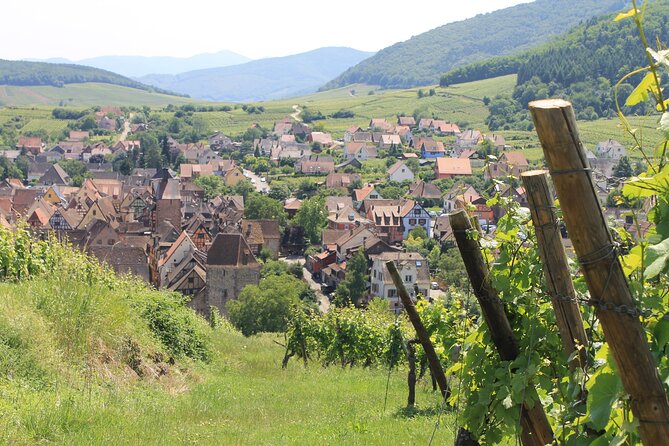
Wine country is only a short ride from Strasbourg. This four-hour outing follows the Alsace Wine Route through rolling hills near the Vosges Mountains, with tastings at two wineries and plenty of guidance on the region’s white wines. I like the small eight-person minivan, which keeps the trip personal, and I like the chance to visit family-run producers rather than only large commercial estates.
The guides are a major part of the experience. Carlos, Jerome, Laurence, Pauline, Thierry, Adam, Roman, and others have earned strong praise for explaining both the wines and the region. The main thing to consider is that food is not included, and tastings may involve many wines, sometimes around 15. Eat a proper breakfast or lunch first.
In This Review
- Key points to know before booking
- Leaving Strasbourg for the 105-mile wine route
- First winery: an introduction to Alsatian producers
- The second stop and the classic Alsatian caveau
- What you will taste, and how much
- The guides make the difference
- Is four hours enough for Alsace wine country?
- Transport, meeting point, and group comfort
- What the $157.28 price is really buying
- Practical tips for a better half-day
- Who should book this Alsace wine tour?
- Should you book it?
- FAQ
- How long does the Alsace Wine Route tour last?
- Where does the tour start?
- Where does the tour end?
- How many wineries will I visit?
- What wines might I taste?
- Is food included?
- How many people are in the group?
- Are children allowed?
- Can I cancel for a refund?
Key points to know before booking
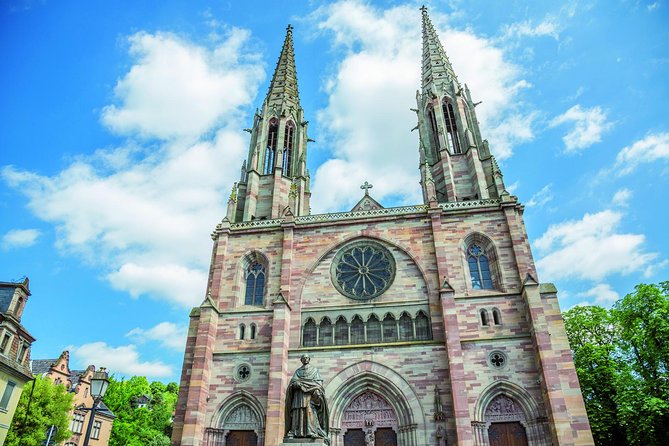
- Two wineries in four hours: You get a focused introduction to Alsace wine without giving up a full day in Strasbourg.
- Small-group transport: The air-conditioned minivan holds no more than eight people, making it easier to ask questions and hear the guide.
- A real mix of producers: The company works with many wineries, so the exact estates can change. You might visit a small family cellar, a larger estate, or both.
- White-wine country: Riesling, gewürztraminer, and other local varieties are central to the tastings, along with sparkling Crémant d’Alsace.
- No tasting snacks: Bread may appear at one stop, but you should not count on food to offset the alcohol.
- Best for adults who like wine: Children under 18 are not permitted, and at least two adults are required for the tour to run.
Leaving Strasbourg for the 105-mile wine route
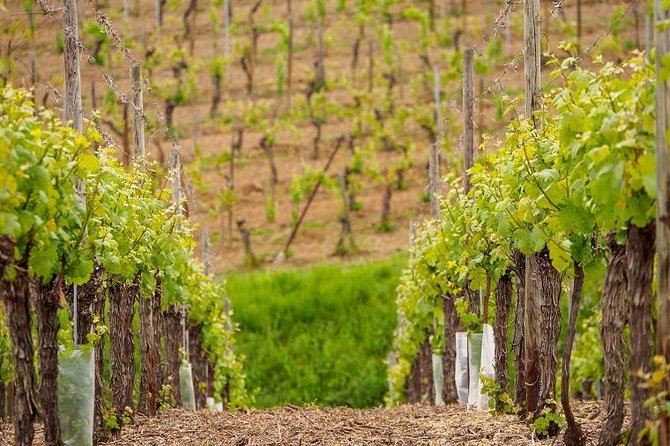
Your meeting point is at 8 Place de la Gare, the main railway station plaza in Strasbourg. From there, you board an air-conditioned minivan and head south or southwest toward the vineyards, depending on the wineries scheduled for that day.
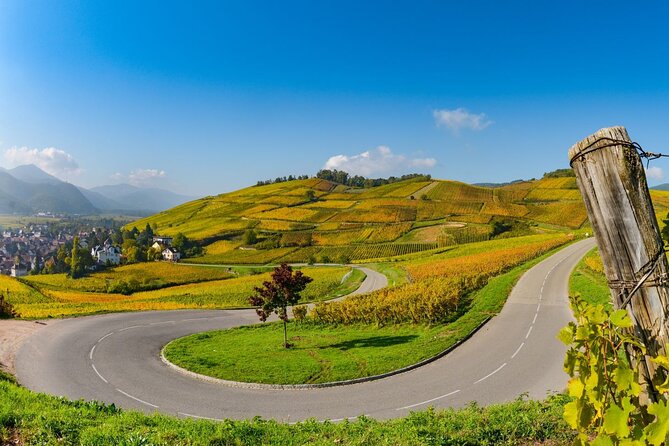
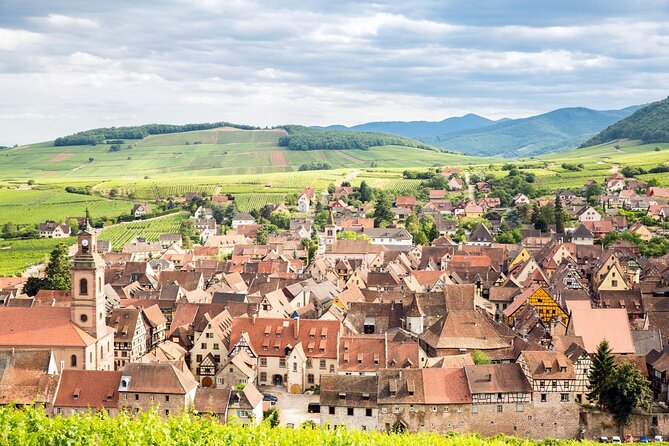
The Alsace Wine Route stretches for about 105 miles, or 170 kilometers, along the foothills of the Vosges Mountains. You will not cover the entire route in four hours. Instead, the guide uses a section of it to connect Strasbourg with villages, estates, and cellars where the wine can be explained in context.
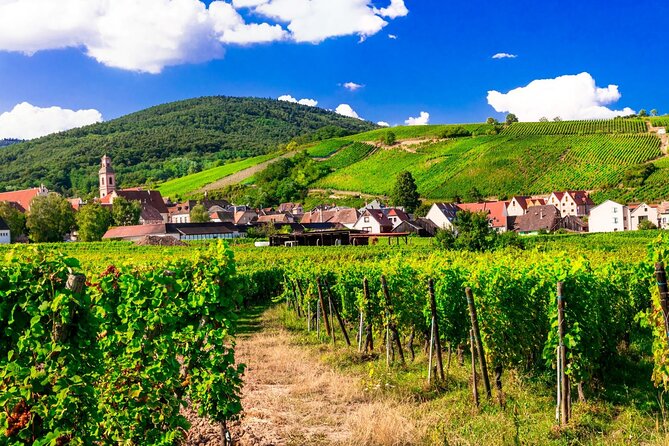
That drive is part of the pleasure. You see why Alsace wine is tied so closely to place: hills provide sun and shelter, the soil varies from one area to the next, and the region’s climate helps produce grapes with bright flavor and aroma. A good guide will point out villages and local details along the way, not simply drive from one tasting to the next.
The road time also has a practical downside. One four-star account found the village visits appealing but noted that getting to wineries means a reasonable amount of driving. With only four hours, the outing cannot offer long walks, extended vineyard tours, and generous time at several estates. This is a tasting tour with scenery, not a full agricultural tour.
More Food Tours in Strasbourg
- Strasbourg Food Tour – A Taste of Tradition by Do Eat Better
★ 5.0 · 614 reviews - From Strasbourg: Medieval Villages & Wine Tasting Day Trip
★ 4.8 · 329 reviews - Alsace Wine Route Wineries & Tasting Small Group Guided Tour from Strasbourg
★ 5.0 · 229 reviews
First winery: an introduction to Alsatian producers
The first winery gives you your initial look at local wine production. The exact stop is not fixed. Past departures have included estates such as Robert Blanck in Obernai, Fritz Schmitt in Ottrott, and Habsiger near Strasbourg.
That changing schedule can work in your favor. You may visit the same tour more than once and see a different producer each time. Some stops are small family businesses where the tasting takes place in an intimate room, and in one case, even at a kitchen table in the owner’s home. For some people, that is exactly the point: you meet the people behind the bottles instead of being processed through a large visitor center.
For others, this style may feel less polished than expected. Do not book this outing assuming every stop includes a walk through vineyards, a formal cellar tour, or a grand tasting room. Alsace has many family-run wineries, and their spaces can be modest. The personal welcome is part of the local character, but it may not match the image of a large château-style estate.
At the first tasting, your guide helps you compare the region’s grape varieties. Alsace is especially known for aromatic and crisp white wines. You may taste Riesling, gewürztraminer, and several of the other seven varieties grown in the area. The point is not just to sample wine, but to notice how grape, soil, sun, and winemaking choices affect the result.
Gewürztraminer is usually the memorable one for first-time visitors because of its strong perfume and distinctive flavor. Riesling gives you a useful contrast, with a sharper, fresher profile. The tastings may also include Crémant d’Alsace, the region’s sparkling wine. One group particularly enjoyed learning what Crémant is, making it a good reminder not to focus only on the best-known still wines.
The second stop and the classic Alsatian caveau
The second winery often provides a different perspective. You might move from a small family operation to a larger estate, or from a home-based tasting to a more traditional wine cellar. Past visits have included Robert Blanck, Fritz Schmitt, and other local producers.
The classic Alsatian caveau is one of the most appealing parts of the trip. These cellars offer a cool, sheltered place for storing and aging wine. They also give you a sense of how wine remains tied to family buildings and village life in Alsace.
Do not expect the same atmosphere at every stop. One tasting room may have a warm, personal welcome, while another may feel more formal. A single unhappy account described a host as abrupt and a presentation as too limited. That kind of unevenness is possible when the tour uses many different producers, but the company’s broad network also allows it to offer variety.
The second tasting usually expands on the first rather than repeating it. You can compare different winemaking styles, see how one estate presents its bottles, and ask more precise questions after you have already tasted several varieties. Guides such as Jerome, a sommelier, have been praised for explaining both viticulture and the story of the estates.
What you will taste, and how much
The tour includes two wine tastings. The wording is simple, but the number of pours can vary by winery. One account described tasting 15 wines over the two stops, which is a substantial amount for a half-day excursion.
That makes breakfast or lunch essential. France does not always provide cheese, crackers, or charcuterie at a tasting, since some producers prefer you to taste without strong food flavors. A little bread may be offered, but food and drinks are not included unless specifically stated.
I would treat the tastings as guided comparisons rather than a race through every bottle. Try small sips, listen to the explanations, and use the time to decide what you actually like. If you find a favorite, the wineries may be able to ship bottles internationally. Several visitors bought wine or schnapps to take home, though personal expenses are not included in the tour price.
The experience is best suited to people who already enjoy wine or want a friendly introduction to Alsatian varieties. If you rarely drink wine, the volume of samples could feel like too much. You should also remember that the minivan returns to Strasbourg after the second stop, so pacing yourself matters.
More Wine Tours in Strasbourg
- Alsace: Full-Day Wine Tour & Tastings from Strasbourg
★ 4.8 · 125 reviews - Medieval Villages and Wine Tasting from Strasbourg
★ 5.0 · 55 reviews
The guides make the difference
The guide is not just a driver. The strongest departures are led by someone who can connect the road, villages, regional politics, family wineries, and wine styles. Carlos received repeated praise for his warmth and command of the area. Jerome was appreciated for his energy and sommelier background, while Laurence was described as passionate, friendly, and generous with explanations.
Thierry, Pauline, Adam, and Roman were also singled out for clear explanations and an easy manner. That range of names matters because the provider uses a team rather than one fixed guide. Your guide may be lively and full of stories, or more reserved.
One three-star account found the guide dull and the van rides awkwardly quiet. That is a fair consideration for a tour built around several stretches of driving. If you want constant conversation and a theatrical host, the experience may depend heavily on who leads your departure. If you prefer a calm ride and time to watch the scenery, a quieter guide may suit you just fine.
The group size helps. With no more than eight people, you can ask about a grape variety, a village, or a bottle without shouting across a large coach. Solo visitors may also find it easy to meet people from other countries during the tastings.
Is four hours enough for Alsace wine country?
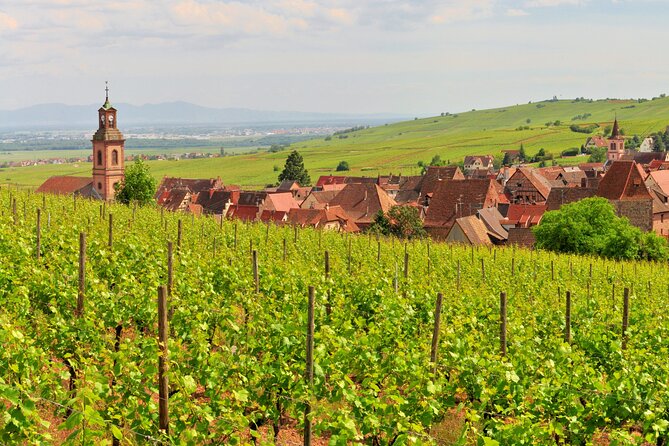
Four hours is a smart length if you want an introduction rather than an entire wine holiday. You see the countryside, visit two producers, taste a useful range of wines, and return to Strasbourg with most of your day still available.
It is also a compromise. You will not linger in every village, tour every vineyard, or stop for a meal. The tour focuses on the wine route and the producers selected for that departure. If your ideal day includes long lunches, scenic walks, and several hours at one estate, choose a full-day wine outing instead.
For a short stay in Strasbourg, the schedule works well. The morning and afternoon departure choices let you fit the trip around museum visits, a river cruise, or time in the old town. Just allow for possible waiting if another participant is late. The company says it waits no more than 10 minutes, but a delayed start can still shorten the time available on the route.
Transport, meeting point, and group comfort
The tour begins and ends at the same place, 8 Place de la Gare. There is no hotel pickup or drop-off, so you need to reach the station plaza yourself. The meeting point is near public transportation, which is useful if you are staying elsewhere in Strasbourg.
The eight-passenger minivan is one of the better features for this route. You avoid a large bus and can reach smaller estates more easily. Past departures used comfortable Mercedes vans, though the exact vehicle may vary.
The seats are comfortable enough for the half-day, but remember that some of the outing is spent on the road. Choose a seat with a good view if the scenery matters to you, and arrive on time so the group can leave promptly.
The experience is for adults only. Children under 18 are not allowed, pets cannot join, and most people can participate without special fitness requirements. At least two adults must book for the tour to operate.
What the $157.28 price is really buying
At $157.28 per person, this is not a cheap way to drink Alsace wine. The price makes more sense when you count the small-group transport, an English-speaking qualified driver-guide, two tastings, and the time saved arranging transport to wineries outside Strasbourg.
You are also paying for access to producers that may be difficult to reach without a car. The guide handles the route, explains the region, and gets you back to the city. For a short visit, that convenience has real value.
The price does not include food, extra drinks, personal expenses, insurance, or hotel transfers. Bottles bought at the wineries cost extra. Since the exact estates can change, the value depends partly on the two producers selected on your date and on the quality of the guide.
I think the cost is reasonable for wine lovers who want a compact, adults-only outing with transport included. It is harder to justify if you mainly want pretty views and only a couple of small sips. In that case, a lower-cost city tasting may be enough.
Practical tips for a better half-day
Eat before you leave. This is the most important advice, especially if your departure includes a large number of pours.
Keep your expectations flexible about the wineries. You may visit a polished estate, a family cellar, or a producer’s home. The variety is part of the appeal, but the setting and presentation will not be identical each time.
Ask your guide questions. The best value comes from learning why a Riesling from one producer tastes different from another, or how Crémant fits into Alsace wine culture. Guides such as Jerome and Carlos have been praised for making those conversations easy.
If you plan to buy bottles, ask about shipping. Some wineries can send wine internationally, which is useful if you are traveling with limited luggage space.
Finally, do not schedule something that requires a precise return time immediately afterward. The tour is planned for about four hours, but road conditions, a late arrival, or a longer tasting can affect the timing.
Who should book this Alsace wine tour?
Book it if you want a short, well-organized introduction to Alsace wine without renting a car. It is particularly good for couples, solo adults, and small groups who value personal guidance and do not mind that the exact wineries change.
It also suits curious beginners. You do not need to know the difference between Riesling and gewürztraminer before you go. The tastings and explanations give you a starting point, while the village scenery adds more than a bottle shop tasting could offer.
Think twice if you need a full meal, a guaranteed vineyard walk, or a highly formal winery setting. The guide can shape the experience, and some departures may feel less lively than others.
Should you book it?
I would book this tour if wine is one of your reasons for visiting Alsace and you have only half a day available. The small group, two winery visits, changing producer list, and strong guide feedback make it a useful way to get beyond Strasbourg.
Go with a good meal in you, an open mind about family-run cellars, and realistic expectations about driving time. At $157.28, the tour earns its price through transport, access, and local explanation, not through food or luxury. The cancellation policy is strict: the experience is normally non-refundable and cannot be amended, though a full refund or new date is offered if poor weather or an insufficient number of bookings causes the operator to cancel.
FAQ
How long does the Alsace Wine Route tour last?
The tour lasts approximately four hours.
Where does the tour start?
It starts at 8 Place de la Gare, 67000 Strasbourg, France, at the main train station plaza.
Where does the tour end?
The tour ends back at the same meeting point in Strasbourg.
How many wineries will I visit?
You will visit two wineries and take part in two wine tastings.
What wines might I taste?
The tasting can include Alsatian grape varieties such as gewürztraminer and Riesling, along with other local varieties. Crémant d’Alsace may also be included.
Is food included?
No. Food and drinks are not included unless specifically stated, and snacks are usually not provided. Eat breakfast or lunch before the tour.
How many people are in the group?
The maximum group size is eight people, transported in an air-conditioned minivan.
Are children allowed?
No. This is an adult-only experience, and children under 18 are not permitted.
Can I cancel for a refund?
The experience is non-refundable and cannot normally be changed. If the operator cancels because of poor weather or because the minimum number of participants is not reached, you will be offered another date or experience, or a full refund.
More half-day trips in Strasbourg
- From Strasbourg: Half-Day Tour of Alsace Villages
★ 4.7 · 50 reviews - From Paris: Giverny, Monet’s House, & Gardens Half-Day Trip
★ 4.5 · 2,174 reviews - From Arles: Half-Day 4×4 Camargue Safari
★ 4.7 · 1,772 reviews - Monaco, Monte-Carlo and Eze Village Small Group Half-Day Tour
★ 5.0 · 1,129 reviews
Recently added around Strasbourg
- From Strasbourg: Half-Day Tour of Alsace Villages★ 4.7 · 50 reviews
- Medieval Villages and Wine Tasting from Strasbourg★ 5.0 · 55 reviews
- Strasbourg City Center Guided Bike Tour w/ Local Guide★ 5.0 · 57 reviews
- Strasbourg Food Tour : Gourmet private Tour with tastings★ 4.7 · 58 reviews
- Private Tour: From Strasbourg to Colmar, Eguisheim, Riquewhir★ 4.5 · 58 reviews
- Capture the Magic of Strasbourg with an Exclusive Photoshoot★ 4.9 · 61 reviews
- FULL DAY ALSACE PRIVATE TOUR : Tailored by your Friendly Driver★ 5.0 · 76 reviews
- Explore Strasbourg in 60 minutes with a Local★ 5.0 · 82 reviews
Wine Tours, compared.
Authentic Parisian Gourmet Food Tour with 10 Local Dishes & Wines
Read our review →
Loire Valley Castles Day Trip from Paris with Complementary Wine
Read our review →
Bordeaux: Cité du Vin Entry Ticket and Wine Tasting
Read our review →
Bordeaux: River Garonne Cruise with Glass of Wine and Canelé
Read our review →
Montmartre Hill French Gourmet Food and Wine Tasting Walking Tour
Read our review →
Paris: Montmartre Cheese, Wine & Pastry Guided Walking Tour
Read our review →
From Paris: Loire Valley Castles Day Trip With Wine Tasting
Read our review →
From Bordeaux: Afternoon Saint-Emilion Wine Tasting & snack
Read our review →Browse the lists this tour appears in