
Reviewed · MUSEUMS
Airborne Museum Admission Ticket
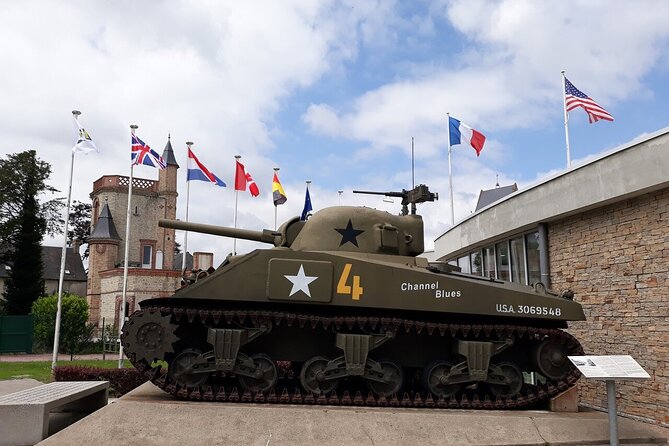
Paratroopers meet you before the exhibits do. The Airborne Museum in Sainte-Mère-Église puts the American 82nd and 101st Airborne at the center of its D-Day story, with a real C-47 aircraft, films, and an interactive Histopad guide. I like the flexible admission and the way the museum combines personal stories with physical wartime objects. The main drawback is that the ticket is not skip-the-line, so busy periods may require patience.
Give yourself about two hours, though families and history fans may want longer. I also like the Operation Neptune building, where you board a C-47 at night through a staged presentation of the June 6 parachute drop. The experience can feel dramatic, even theatrical, so visitors seeking a quiet museum of documents and artifacts may find some sections more show than scholarship.
In This Review
- Key points to know before you go
- Why Sainte-Mère-Église matters to the story
- Entering Operation Neptune inside a real C-47
- Using the Histopad to see Normandy in 1944
- What the two-hour visit feels like
- Is $13.32 a fair price?
- How this museum compares with a general D-Day visit
- The strongest features for families
- Practical points before your visit
- Who should book the Airborne Museum?
- My recommendation
- FAQ
- Where is the Airborne Museum located?
- How long does the museum visit take?
- What does the ticket include?
- Is the ticket skip-the-line?
- What are the opening hours?
- Can I cancel the booking?
Key points to know before you go
- The museum is in Sainte-Mère-Église: This Normandy town is close to Utah Beach and the landing beaches, despite some booking information grouping the experience with Mont-Saint-Michel.
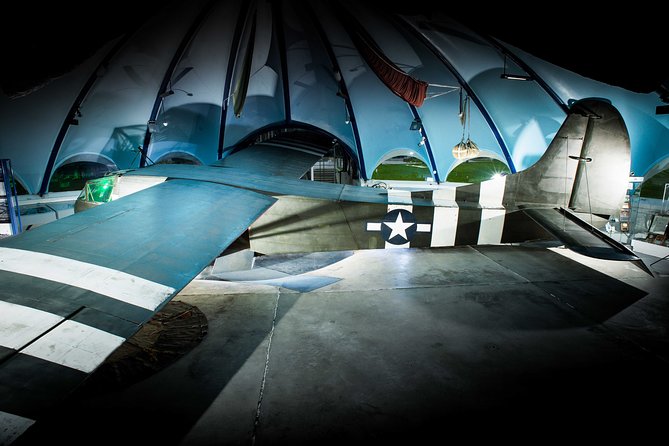
- Operation Neptune recreates the airborne landing: You enter a real C-47 and follow a 20-minute presentation about the night flight, the drop, the fighting, and liberation.
- The Histopad adds augmented reality: The tablet brings 1944 scenes into the galleries through interactive graphics and historical viewpoints.
- You set your own pace: The ticket is flexible, and the visit is self-guided rather than led by a guide.
- Plan on two to three hours: The official estimate is about two hours, while a careful visit with children can take longer.
- The ticket is good value for a focused D-Day stop: At $13.32 per person, it costs less than many large attractions, but it does not include skip-the-line entry.
Why Sainte-Mère-Église matters to the story
Sainte-Mère-Église is not just a convenient place to put a military museum. It is tied directly to the airborne phase of the Normandy invasion. American paratroopers from the 82nd and 101st Airborne landed in and around the town during the early hours of June 6, 1944.
That setting gives the museum a useful sense of place. You are not looking at a distant battle from a polished city museum. You are learning about an operation connected to the streets and fields of the Cotentin region.
The museum focuses specifically on the American airborne units, rather than trying to explain every part of the Normandy campaign. That narrow focus is helpful. You receive a clearer picture of why paratroopers were dropped behind the coast, what they faced after landing, and how their actions supported the larger Allied operation.
If you are building a full D-Day day trip, the museum works well alongside Utah Beach and other Normandy landing sites. It does not replace those outdoor locations. Instead, it gives you the airborne chapter before or after you stand on the coast where the seaborne invasion began.
More Museum Tours in Normandy:
- Caen: Guided D-Day Sites Tour & Caen Memorial Museum Ticket
★ 4.8 · 385 reviews - Mémorial de Caen Museum Admission and Guided Tour of D-Day Sites
★ 4.5 · 275 reviews - Small Group Guided D-Day Tour and Mémorial de Caen Museum
★ 5.0 · 237 reviews
Entering Operation Neptune inside a real C-47
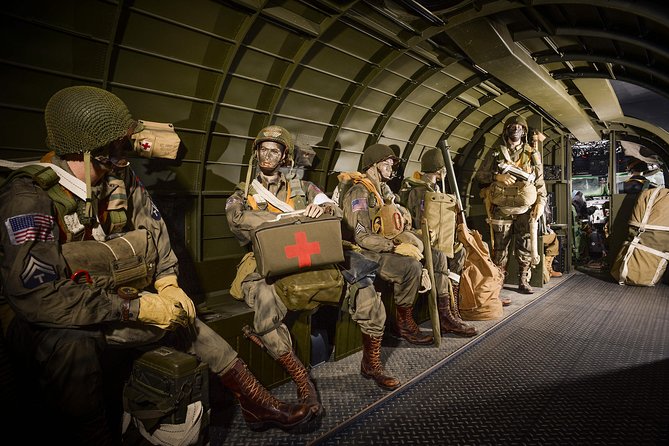
The most distinctive part of the visit is Operation Neptune. The presentation asks you to imagine the airborne assault from inside a real C-47 aircraft, the transport plane used to carry paratroopers toward Normandy.
The experience begins at night in England. From there, the presentation follows the flight toward Sainte-Mère-Église, the descent into a battle zone, and the fighting that followed. It is built to make the operation feel immediate rather than merely chronological.
A 20-minute film adds emotional context. It covers life under German occupation, the liberation of Sainte-Mère-Église, and the wider liberation of the Cotentin area. This film is one of the museum’s most praised features because it gives the military operation a human frame.
I would pay close attention to the film even if you have already visited other D-Day museums. The emphasis here is not only on maps and troop movements. It connects the invasion to occupation, fear, and the return of freedom to local communities.
The aircraft presentation also helps children understand scale. A date such as June 6, 1944 can feel abstract. Sitting inside a transport aircraft while the story moves toward the drop makes the sequence easier to picture.
There is a trade-off. Operation Neptune uses sound, film, and staged effects to create an emotional response. If you prefer a traditional museum with long written labels and quiet object study, this section may seem more like a historical attraction than a formal archive.
That does not make it shallow. It simply means the museum teaches through atmosphere as well as information.
Using the Histopad to see Normandy in 1944
The Histopad is included with admission and adds a layer of augmented reality to the self-guided visit. Through the tablet, you can view interactive scenes and hyper-realistic graphics connected to Normandy in 1944.
This matters because the museum is not limited to what sits behind glass. The Histopad helps you picture places and events as they may have appeared during the D-Day operation. It gives younger visitors something active to do, while adults can use it to connect artifacts with the events they represent.
I would treat the Histopad as a tool, not the whole visit. Look at the actual aircraft and objects first, then use the tablet to add context. If you spend the entire time looking down at a screen, you can miss the physical scale of the museum’s displays.
The interactive format is especially useful for families. Children from about six to twelve have enjoyed the museum, and the combination of films, aircraft, and tablet activity gives them several ways to stay involved. Older children may also find it easier to follow the military story when they can see events represented rather than read only paragraphs of text.
The augmented reality cannot answer every historical question, of course. It is designed for engagement and visual explanation. You may still want to read the displays carefully or pair the visit with a more detailed book or guided tour if you are studying the campaign closely.
What the two-hour visit feels like
The stated visit time is about two hours. That is a sensible minimum for seeing the main presentations, using the Histopad, and pausing at the aircraft and artifacts.
A quick visit could be shorter, but you would lose much of the value. The museum’s strength comes from the way its sections build on one another. The film gives you the human and local setting. Operation Neptune gives you the airborne assault. The Histopad then lets you examine the 1944 setting in a more active way.
Families may need two to three hours, especially if children want to spend time with the interactive features. History enthusiasts may also stay longer to revisit the films and study the displays.
Because the ticket allows a flexible visit time during opening hours, you do not have to rush in at one precise slot. That is useful on a busy Normandy day when beach visits, traffic, and weather can change your plans.
The museum is open daily during the stated season. From May 1 through August 31, hours are 9 a.m. to 7 p.m. In September, it is open from 9:30 a.m. to 6:30 p.m. From October through November 30, hours are 10 a.m. to 6 p.m.
Check the date carefully when planning. The longer summer hours make it easier to combine the museum with nearby D-Day sites. The shorter autumn schedule leaves less room for a late arrival.
A few more Normandy trips worth weighing up
- Normandy American D-Day Beaches Full Day Tour from Bayeux
★ 5.0 · 2,103 reviews - Normandy American D-Day Experience – Group tour from Bayeux
★ 5.0 · 1,566 reviews - Normandy Beaches Half-Day Afternoon Trip from Bayeux (A2)
★ 4.5 · 1,116 reviews - Omaha and Band Of Brothers Full Day Tour
★ 5.0 · 1,104 reviews
Is $13.32 a fair price?
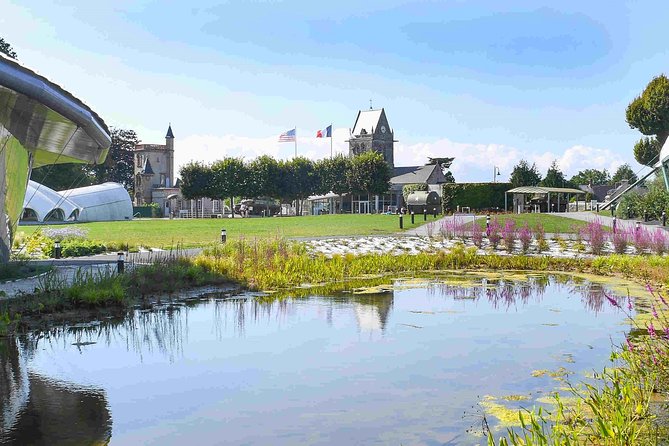
At $13.32 per person, this is a reasonably priced museum for a two-hour visit. The value comes from the combination of a real aircraft, a dedicated film, a major D-Day subject, and the included Histopad.
You are not paying only to walk through display cases. The ticket covers a structured experience with film and interactive technology. For families, that can make the price feel particularly fair because different ages can connect with different parts of the visit.
The ticket does not include skip-the-line admission. That distinction matters during the busiest summer periods. A flexible ticket lets you choose when to arrive, but it does not promise immediate entry if a queue forms.
The museum also earns its value from its location. If you are already visiting Utah Beach or the Normandy landing beaches, Sainte-Mère-Église is a practical addition to a D-Day route. The museum gives you a focused indoor stop, which is useful when weather turns wet or you need a break from outdoor sites.
I would not buy this ticket only because it is inexpensive. Buy it because the airborne story interests you. If your main goal is the naval invasion, tanks, or the German defenses on the coast, another Normandy museum may better match your priorities.
How this museum compares with a general D-Day visit
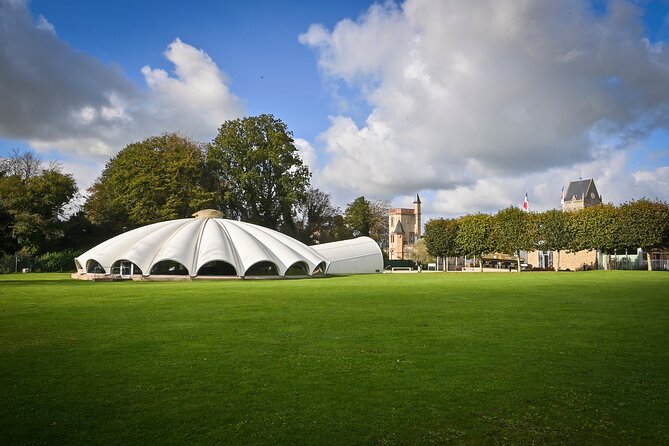
The Airborne Museum tells one part of the invasion very well. Its subject is the American paratroopers, their landing behind the beaches, and the fighting around Sainte-Mère-Église and the Cotentin region.
That focus is its advantage. You get more detail about the airborne mission than you would in a broad museum covering every Allied unit and every beach.
It is also a useful correction to the common mental picture of D-Day. Many people imagine the invasion only as landing craft approaching the shore. The airborne operation began during the night, with soldiers dropping into unfamiliar territory, often scattered and under fire. The museum makes that earlier phase easier to understand.
At the same time, you should not expect a complete account of the Normandy campaign. The museum does not cover every national force or every battle in equal depth. Pair it with a coastal site if you want the larger military picture.
For a first visit to Normandy, I would choose at least one beach museum and one inland site such as this. That combination shows how the airborne and seaborne operations worked together.
The strongest features for families
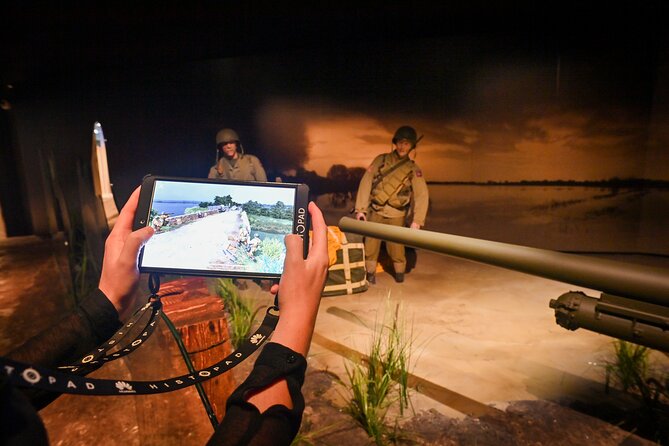
This is one of the more family-friendly ways to introduce children to D-Day, provided you prepare them for a serious subject. The aircraft gives the visit a strong physical focus, and the films provide a clear narrative.
The Histopad is the biggest help for younger visitors. It adds movement and interaction to material that can otherwise feel difficult for children to follow. The museum experience is not limited to reading long panels, which helps maintain attention.
The visit can also prompt useful questions. Why were paratroopers dropped at night? Why did they land in different places? What happened when they reached the ground? The museum gives you enough structure to start those conversations without turning the visit into a classroom lecture.
Parents should remember that the subject includes war, occupation, bombardment, and death. The supplied material does not provide a specific age recommendation, so you will need to judge the films and presentation for your own children.
The rating of 4.8 out of 5 from 424 ratings, along with a 96 percent recommendation rate, supports the view that the museum works well for a broad audience. Those numbers are not a substitute for knowing your family, but they do suggest a consistently strong experience.
Practical points before your visit
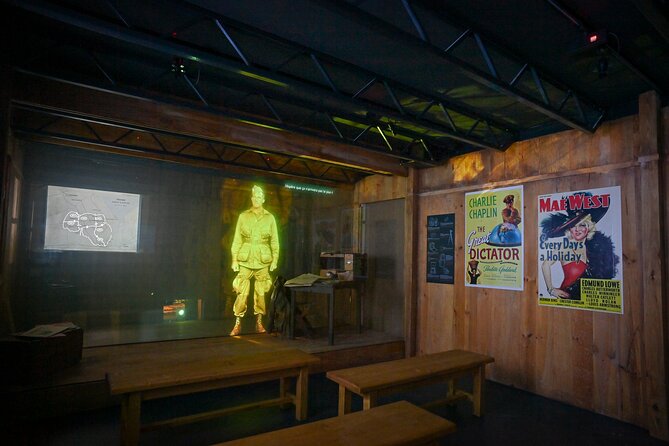
The museum is in Sainte-Mère-Église, Normandy, near Utah Beach and the Normandy landing beaches. Some booking details associate the experience with Mont-Saint-Michel, so confirm your route carefully before setting out. Sainte-Mère-Église is the place connected to this museum and its airborne story.
You receive confirmation when you book. The activity is self-guided, and the maximum group size is listed as nine people. That small group limit may help keep the visit manageable, but the ticket itself is not described as a private tour or a guided experience.
Service animals are allowed, and most people can take part. No special physical requirements are stated in the provided information, so contact the museum directly if you need details beyond that.
The ticket offers free cancellation if you cancel at least 24 hours before the experience start time. Cancellations made less than 24 hours in advance are not refunded, and changes inside that same period are not accepted. The cut-off follows local time.
I would book ahead if the museum is a fixed part of your Normandy route. The experience is booked an average of 26 days in advance, which suggests that planning early is common. Still, the admission is flexible, so you retain some freedom over the exact arrival time.
Who should book the Airborne Museum?
I recommend it most strongly to people interested in the 82nd and 101st Airborne, D-Day operations, military aviation, or the local history of Sainte-Mère-Église.
It is also a good choice for families who want a museum with films and interactive elements rather than rows of documents. The aircraft presentation and Histopad give children a clear way into the subject, while adults receive a focused account of the airborne landing.
You may want to skip it if your Normandy schedule is already packed with several military museums and you are not especially interested in paratroopers. Two hours is not excessive, but every stop takes time away from the beaches, cemeteries, and villages that make the region powerful.
My recommendation
Book the Airborne Museum if you want to understand the night-time side of D-Day and appreciate a museum that teaches through aircraft, film, and augmented reality. The $13.32 price is fair, the flexible admission helps with a busy itinerary, and the visit is long enough to feel substantial without taking an entire day.
Go with realistic expectations. This is a dramatic, interactive museum rather than a quiet research collection, and the ticket does not provide skip-the-line access. For most people visiting Sainte-Mère-Église, though, Operation Neptune and the Histopad make this a worthwhile stop, especially when paired with Utah Beach or another Normandy landing site.
FAQ
Where is the Airborne Museum located?
The museum is located in Sainte-Mère-Église, Normandy, France. It is close to Utah Beach and the Normandy landing beaches.
How long does the museum visit take?
The approximate duration is two hours. You may spend two to three hours if you watch the films carefully, use the Histopad, and visit with children.
What does the ticket include?
Admission includes access to the Airborne Museum and a Histopad with augmented reality.
Is the ticket skip-the-line?
No. Skip-the-line entrance is not included. The ticket does allow you to visit at a time that suits your schedule during opening hours.
What are the opening hours?
From May 1 through August 31, the museum is open daily from 9 a.m. to 7 p.m. From September 1 through September 30, it is open daily from 9:30 a.m. to 6:30 p.m. From October 1 through November 30, it is open daily from 10 a.m. to 6 p.m.
Can I cancel the booking?
Yes. You can cancel for a full refund at least 24 hours before the experience start time. Cancellations and changes made less than 24 hours before the start time are not accepted for a refund.
Recently added around Normandy
- From Bayeux: Half-Day Normandy WWII Sidecar Tour★ 5.0 · 49 reviews
- Private Tour of American Sites with an Expert Guide from DDAY★ 5.0 · 51 reviews
- WW2 Jeep or Dodge truck tour of the Omaha Beach site★ 5.0 · 51 reviews
- Mont Saint Michel Full Day Tour from Bayeux★ 5.0 · 52 reviews
- Private Day Tour including Normandy Landing Beaches & Battlefields from Caen★ 5.0 · 53 reviews
- Bayeux: Band Of Brothers Full-Day Tour★ 4.9 · 53 reviews
- Rouen: Private custom tour with a local guide★ 4.3 · 55 reviews
- From Bayeux: D-Day American Beaches and US Airborne Day Tour★ 4.8 · 56 reviews
Museums, compared.


Louvre Museum Masterpieces Guided Tour with Access
Read our review →
Paris: Louvre Museum Entry Ticket With Host and River Cruise
Read our review →
Les Invalides: Napoleon’s Tomb & Army Museum Entry
Read our review →
Louvre Museum – Exclusive Guided Tour (Entry Included)
Read our review →
Paris: Louvre Museum Hosted Entry and Mona Lisa Audioguide
Read our review →
Paris: Louvre Museum Tour Mona Lisa & Iconic Masterpieces
Read our review →
Browse the lists this tour appears in